Designing a New Feature for a Popular Product
Designing a new feature for a popular product is a thrilling rollercoaster! It’s a blend of meticulous planning, creative brainstorming, and intense user-focused development. This post dives deep into the process, from understanding the existing product and its users to launching the shiny new feature and beyond. Get ready for a behind-the-scenes look at what it really takes to improve something people already love.
We’ll explore the crucial steps involved, from analyzing user feedback and competitor features to designing intuitive interfaces and handling the technical challenges. We’ll even touch on the critical importance of testing, iteration, and a well-defined launch strategy. It’s more than just adding a button; it’s about enhancing the user experience and strengthening the product’s overall appeal.
Understanding the Existing Product

Source: rootquotient.com
Before diving into the design of our new feature, it’s crucial to thoroughly understand the current state of our popular product. This involves analyzing its user base, strengths and weaknesses, competitive landscape, and existing design, all informed by user feedback. This comprehensive understanding will guide our design choices and ensure the new feature seamlessly integrates and enhances the user experience.
Current User Base and Needs
Our product boasts a diverse user base, ranging from casual users to power users. Casual users primarily utilize the core functionalities for simple tasks, valuing ease of use and intuitive design. Power users, on the other hand, leverage advanced features, demanding efficiency, customization options, and robust performance. Understanding these diverse needs is paramount to designing a feature that caters to both groups without alienating either.
For example, casual users might prioritize a simplified interface, while power users might require advanced settings and shortcuts.
Product Strengths and Weaknesses, Designing a new feature for a popular product
The product’s strengths lie in its intuitive interface, reliable performance, and comprehensive feature set. Users consistently praise its ease of use and the breadth of functionalities available. However, weaknesses exist in areas such as the complexity of certain advanced features and a lack of customization options in some areas. Performance can also degrade under heavy loads, particularly for power users engaging with multiple features simultaneously.
For example, the advanced analytics dashboard, while powerful, can be overwhelming for less technically inclined users.
Competitive Analysis
Competitor products offer similar core functionalities but often excel in specific areas. Product X boasts superior customization options, while Product Y provides a more streamlined user interface. Analyzing these competitors helps us identify opportunities to differentiate our product and enhance its value proposition. For instance, Product X’s user-defined workflow system could inspire a similar, simplified feature in our product to improve user workflow.
Current Design and User Interface
The current design follows a clean and modern aesthetic, utilizing a consistent color scheme and intuitive iconography. Navigation is largely straightforward, with a clear hierarchy of menus and options. However, the layout can become cluttered when multiple features are accessed simultaneously. The information architecture could benefit from further refinement to improve discoverability and accessibility of certain features. For example, nested menus could be replaced with a more visually clear card-based system for displaying options.
User Feedback Summary
Understanding user feedback is critical for improving the product and designing new features effectively. The following table summarizes user feedback received through surveys, reviews, and support tickets:
| Feature | Positive Feedback | Negative Feedback | Suggestions |
|---|---|---|---|
| Core Functionality | Easy to use, intuitive interface | Limited customization options | Add more customization options for personalized workflows. |
| Advanced Features | Powerful and comprehensive | Complex and difficult to learn | Improve onboarding and tutorials, simplify interface for advanced features. |
| Performance | Generally reliable | Slows down under heavy load | Optimize performance for smoother experience with multiple features. |
| Customer Support | Responsive and helpful | Long wait times during peak hours | Increase support staff during peak hours or implement a better queuing system. |
Defining the New Feature: Designing A New Feature For A Popular Product
This section dives into the specifics of our proposed “Smart Scheduling” feature for the popular project management tool, “TaskMaster.” We’ll detail its functionality, the problem it solves, its target audience, and the key benefits it offers to users. The goal is to create a compelling case for its development and implementation.This new feature aims to significantly improve task management and team collaboration within TaskMaster by intelligently optimizing task assignments and deadlines.
Currently, TaskMaster allows for manual task assignment and scheduling, which can be time-consuming and prone to errors, especially in larger teams with complex projects.
Problem Solved by Smart Scheduling
The Smart Scheduling feature directly addresses the inefficiencies inherent in manual task assignment and scheduling. It tackles the problems of missed deadlines, over-allocated team members, and a lack of proactive task prioritization. By automating much of the scheduling process, it allows project managers and team members to focus on completing tasks rather than constantly juggling schedules and assignments.
This leads to increased productivity and reduced project risk.
Target Audience
The primary target audience for Smart Scheduling is project managers and team leaders who manage multiple projects and team members simultaneously within TaskMaster. Secondary users will include individual team members who benefit from clearer task assignments and optimized deadlines. The feature is designed to be scalable, accommodating both small teams working on simple projects and large organizations managing complex, multi-faceted initiatives.
For example, a marketing team managing multiple campaigns simultaneously would greatly benefit from the feature’s automated prioritization and resource allocation capabilities.
Key Benefits of Smart Scheduling
Smart Scheduling provides several key benefits: improved project timelines through optimized task scheduling; reduced workload imbalances by distributing tasks more evenly among team members; increased team productivity by minimizing scheduling conflicts and maximizing efficiency; and proactive risk management by identifying potential bottlenecks and delays before they occur. These benefits translate to improved project outcomes, reduced stress levels for team members, and a more efficient workflow overall.
User Story: The Overwhelmed Project Manager
As a project manager overseeing five concurrent projects, I often struggle to allocate tasks efficiently and meet deadlines. Currently, I spend significant time manually adjusting schedules and resolving conflicts. With Smart Scheduling, I can input all project tasks and deadlines, and the system intelligently assigns tasks to team members based on their availability, skillsets, and current workload. The system then proactively alerts me to potential scheduling conflicts or delays, allowing me to intervene and adjust as needed.
This automated process frees up my time, reduces stress, and ensures that projects stay on track.
Designing the User Interface (UI)
Designing the user interface for our new feature is crucial for its success. A well-designed UI will ensure users can easily understand and interact with the new functionality, seamlessly integrating it into their existing workflow. This section details the UI design process, from initial wireframes to the final mockups and interaction design considerations.
Wireframes
The initial wireframes focused on the layout and navigation of the new feature. We opted for a clean, intuitive design, prioritizing ease of use. The main screen presents a concise overview of key information, with clear visual cues guiding users to relevant sections. Navigation is achieved through a combination of tabs and a contextual menu, ensuring a logical and efficient flow.
For example, a user adding a new item would follow a straightforward path: main screen > add item button > item detail form > confirmation. The wireframes also incorporated responsive design principles, ensuring a consistent user experience across various screen sizes.
Mockups
Based on the approved wireframes, we developed high-fidelity mockups to showcase the visual design and user experience. We used a consistent color palette and typography, aligning with the existing product’s branding. The mockups illustrate the use of clear visual hierarchy, emphasizing important information and providing ample white space for readability. For instance, the confirmation screen uses a prominent checkmark icon and clear success message to provide immediate feedback to the user.
The overall aesthetic is modern and minimalist, prioritizing functionality and clarity.
Interaction Design
The interaction design focuses on smooth user flows and seamless transitions between screens. Micro-interactions, such as subtle animations and feedback mechanisms, are used to enhance the user experience. For example, when a user clicks a button, a subtle animation confirms the action and provides visual feedback. Transitions between screens are smooth and intuitive, using appropriate animation techniques to guide the user’s attention.
We carefully considered error handling and provided clear, informative messages in case of any issues. The goal was to create an intuitive and enjoyable user experience that minimizes friction.
UI Design Approach Comparison
We considered several UI design approaches, including minimalist, flat, and skeuomorphic designs. Ultimately, we chose a minimalist approach, emphasizing clean lines, ample white space, and a focus on essential elements. While skeuomorphic design could have been visually appealing, it would have been less efficient and could have cluttered the interface. A flat design, while modern, might have lacked the visual feedback necessary for a smooth user experience.
The minimalist approach provided the best balance of aesthetics and functionality.
Illustrations and Icons
Illustrations and icons play a crucial role in enhancing the user experience and communicating information effectively. We used a consistent style guide for all illustrations and icons, maintaining a clean and modern aesthetic. For example, the “add item” icon uses a simple plus symbol, while the “save” icon uses a stylized floppy disk. These icons are easily recognizable and intuitive, requiring minimal learning curve.
The visual style is consistent with the overall product design, maintaining a cohesive user experience. The color palette for icons is limited to the primary brand colors, ensuring visual consistency and brand recognition. Each icon’s meaning is self-, reducing the need for lengthy tooltips or instructions.
Technical Considerations
Implementing our new feature, “Smart Recommendations,” requires careful consideration of several technical aspects. This section Artikels the technical requirements, potential system impacts, and mitigation strategies for a smooth and successful integration. We’ll also explore alternative approaches and detail a phased integration plan.
The core functionality relies on a robust recommendation engine, integrating user data, product information, and real-time behavioral signals. This demands significant processing power and efficient data management, impacting both the backend infrastructure and the client-side user experience.
Technical Requirements
The Smart Recommendations feature necessitates several key technical components. These include a scalable database to handle the volume of user and product data, a high-performance recommendation algorithm, and an efficient API for seamless communication between the backend and the user interface. Additional requirements include robust logging and monitoring capabilities for performance tracking and issue detection.
Impact on Existing System Architecture
Integrating the new feature will inevitably affect the existing system architecture. The primary impact will be increased load on the database and the application servers. We anticipate a significant increase in database queries, particularly during peak usage hours. To address this, we propose implementing database sharding and load balancing to distribute the workload effectively. The current API will need to be expanded to accommodate the new endpoints required for the recommendation engine.
This expansion requires careful planning to minimize disruption to existing functionalities.
Potential Challenges and Risks
Several challenges and risks are associated with the development and deployment of this feature. One major concern is the potential for increased latency due to the added computational complexity of the recommendation algorithm. Another risk is the possibility of inaccurate recommendations, leading to user dissatisfaction. We will mitigate these risks through rigorous testing, performance optimization, and continuous monitoring of the system’s performance and the accuracy of the recommendations.
A rollback plan is in place to revert to the previous system in case of critical failures.
Alternative Technical Solutions and Feasibility
We considered several alternative approaches for implementing the recommendation engine. A purely rule-based system was initially considered, but rejected due to its limitations in adapting to evolving user preferences. A collaborative filtering approach, leveraging user interactions, was also evaluated. Ultimately, a hybrid approach combining collaborative filtering with content-based filtering was chosen, offering the best balance between accuracy and scalability.
This hybrid approach offers a better balance of personalization and scalability compared to purely collaborative or content-based systems. For example, Netflix uses a similar hybrid approach, demonstrating its effectiveness in large-scale applications.
Step-by-Step Integration Process
Integrating the new feature will follow a phased approach to minimize disruption and ensure a smooth rollout. This phased approach will allow for incremental testing and validation at each stage.
- Development and Unit Testing: Develop the core recommendation engine and conduct thorough unit testing to ensure individual components function correctly.
- Integration Testing: Integrate the recommendation engine with the existing system and perform comprehensive integration testing to identify and resolve any compatibility issues.
- User Acceptance Testing (UAT): Conduct UAT with a representative group of users to gather feedback and identify any usability issues.
- Deployment to Staging Environment: Deploy the feature to a staging environment that mirrors the production environment for final testing and performance tuning.
- Deployment to Production: Deploy the feature to the production environment, starting with a phased rollout to a subset of users before full release.
- Post-Launch Monitoring: Continuously monitor the system’s performance and the accuracy of the recommendations after launch, making necessary adjustments and improvements.
Testing and Iteration
Source: userpilot.com
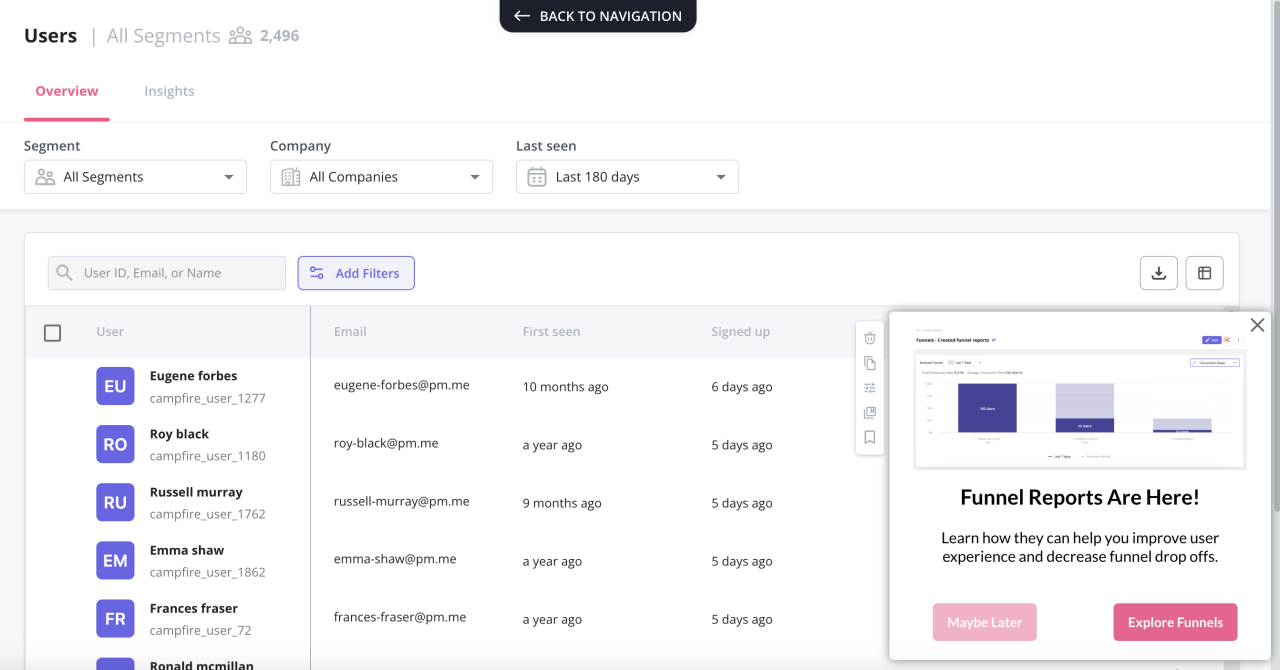
Building a new feature is only half the battle; ensuring it works seamlessly and delivers value to users is the other. This involves rigorous testing and a willingness to iterate based on the feedback we gather. Our approach combines user testing, A/B testing, and a structured feedback loop to refine the feature until it meets our high standards.
Designing a new feature for a popular product is always a challenge; you need to balance innovation with user experience. To get a sense of how to reach a massive audience, I’ve been studying the strategies outlined in this great article on getting it on with youtube , focusing on how they build community and engagement. This insight will definitely inform my approach to user acquisition for this new feature, ensuring a smoother launch and wider adoption.
Testing Plan: User and A/B Testing
Our testing strategy employs both user testing and A/B testing to gain a comprehensive understanding of the new feature’s performance and user experience. User testing will involve recruiting a diverse group of representative users to interact with the feature in a controlled environment. We’ll observe their behavior, note any pain points, and gather qualitative feedback through interviews and surveys.
Simultaneously, we will conduct A/B testing to compare the performance of the new feature against the existing functionality or a control group. This will provide quantitative data on key metrics, such as conversion rates, engagement, and task completion times. We’ll use a statistically significant sample size to ensure reliable results. For example, we might compare the click-through rate on a redesigned call-to-action button in the new feature versus the existing button in the control group.
Success Metrics
Measuring the success of the new feature requires a multi-faceted approach. We will track several key performance indicators (KPIs) including: user engagement (time spent using the feature, frequency of use), task completion rates (percentage of users successfully completing desired actions), conversion rates (if applicable, e.g., purchase completion, account creation), and user satisfaction (measured through surveys and feedback forms).
We’ll also monitor error rates and crash reports to identify any technical issues impacting the user experience. Meeting pre-defined targets for these metrics will indicate the success of the feature. For instance, if we aim for a 15% increase in conversion rates compared to the existing system, and we achieve that, it’s a clear indication of success.
Gathering User Feedback
Collecting user feedback is crucial throughout the testing phase. We’ll employ a combination of methods, including in-person usability testing sessions, remote user testing platforms, in-app feedback forms, and post-session surveys. In-app feedback prompts will allow users to provide immediate reactions while using the feature. Post-session surveys will gather more in-depth feedback on their overall experience. This multi-pronged approach ensures we capture a wide range of perspectives and experiences.
For example, we might ask users to rate their satisfaction on a scale of 1 to 5 after completing a specific task using the new feature.
Iterating on Design Based on Feedback
User feedback will be systematically analyzed and used to guide design iterations. We will prioritize feedback based on its frequency, severity, and impact on the overall user experience. A dedicated team will review all feedback, identify recurring themes, and propose design changes to address identified issues. These changes will be implemented in subsequent iterations, and the testing process will be repeated to evaluate the effectiveness of the modifications.
For instance, if consistent feedback points to confusion regarding a specific button’s functionality, we might redesign the button’s visual appearance or add clearer labels to improve clarity.
Potential Issues, Solutions, and Design Impact
| Issue | Solution | Design Impact |
|---|---|---|
| Users find the navigation within the new feature confusing. | Redesign the navigation menu to be more intuitive and visually appealing, potentially incorporating visual cues and improved labeling. | Revised navigation structure, updated UI elements (icons, labels). |
| The feature is slow to load on low-bandwidth connections. | Optimize images and code for faster loading times. Implement lazy loading for images. | Reduced image sizes, optimized code, implementation of lazy loading techniques. |
| Users report difficulty understanding a specific feature setting. | Provide clearer instructions and tooltips, possibly with illustrative examples. Consider a simpler interface for this specific setting. | Revised in-app instructions, addition of tooltips, potential simplification of the interface. |
Deployment and Launch
Getting a new feature into the hands of users is the culmination of all our hard work. A smooth and well-planned deployment is crucial for a successful launch, minimizing disruption and maximizing user adoption. This section Artikels the strategy for rolling out our new feature and ensuring a positive user experience from day one.Deployment will be a phased rollout, prioritizing a controlled release to a smaller subset of users before a wider launch.
This allows us to identify and address any unexpected issues early on, preventing widespread problems. We’ll leverage A/B testing during this phased rollout to compare the performance of the new feature against the existing functionality.
Deployment Plan
The phased rollout will consist of three stages: Stage 1: Internal testing with a small group of employees representing diverse user profiles. Stage 2: Beta release to a limited group of loyal and tech-savvy users who have opted into beta programs. Stage 3: Full release to all users. Each stage will involve monitoring key performance indicators (KPIs) such as crash rates, user feedback, and feature usage.
Based on the data gathered during each stage, we can make adjustments and fine-tune the feature before a wider release. We’ll use robust monitoring tools to track server performance and user experience during each stage of deployment.
Communication Strategy
Announcing the new feature will involve a multi-channel approach, maximizing reach and engagement. We’ll utilize in-app notifications to inform existing users, coupled with email announcements targeted at specific user segments. Social media will play a key role, using engaging visuals and concise messaging to highlight the key benefits of the new feature. Furthermore, we will create a dedicated blog post and update our help center documentation to provide comprehensive information and support.
We’ll also proactively engage with users on social media, addressing questions and concerns.
User Adoption and Engagement Monitoring
Post-launch, we’ll closely monitor key metrics to assess user adoption and engagement. These metrics include daily/monthly active users (DAU/MAU), feature usage frequency, user retention rates, and customer satisfaction scores (CSAT) gathered through in-app surveys and feedback forms. We’ll use these data points to understand user behavior and identify areas for improvement. A dedicated dashboard will provide real-time insights into these metrics, allowing for quick responses to any emerging trends or issues.
Addressing Post-Launch Issues
A dedicated support team will be available to address any post-launch issues or unexpected problems. We will establish a robust feedback mechanism, encouraging users to report bugs or provide suggestions. This feedback will be analyzed and prioritized, with critical issues addressed immediately. A rapid response system will ensure that any significant problems are resolved swiftly, minimizing disruption to the user experience.
Regular updates and patches will be released to address any identified bugs or performance issues.
Launch Timeline
Phase 1: Internal Testing
-Weeks 1-2: Thorough internal testing, bug fixing, and performance optimization.Phase 2: Beta Release
-Weeks 3-4: Limited release to beta users, gathering feedback and addressing any emerging issues.Phase 3: Full Release
-Week 5: Full rollout to all users, accompanied by a comprehensive communication campaign.Post-Launch Support
-Weeks 6-8: Ongoing monitoring, bug fixing, and addressing user feedback. Analysis of user adoption and engagement metrics.
Final Review
So, there you have it – a whirlwind tour of designing a new feature for a popular product! From initial concept to post-launch monitoring, the journey is demanding but incredibly rewarding. Remember, it’s all about understanding your users, iterating based on feedback, and ultimately creating something that enhances their experience and adds value to the product they already cherish.
Now go forth and build something amazing!
FAQ Section
How do I prioritize features for development?
Prioritize based on user needs, business goals, and technical feasibility. Use a prioritization matrix (e.g., MoSCoW method) to rank features.
What if my new feature negatively impacts existing functionality?
Thorough testing is key. If negative impacts emerge, iterate on the design or consider alternative solutions. Sometimes, a rollback plan is necessary.
How can I measure the success of a new feature?
Track key metrics like user engagement (usage frequency, time spent), conversion rates, and customer satisfaction scores (CSAT).
How do I handle negative user feedback after launch?
Respond promptly, acknowledge concerns, and Artikel steps to address the issues. Transparency and proactive communication are crucial.