Freelance Graphic Design Pitch Land Your Dream Clients
Freelance graphic design pitch: Landing that perfect client feels like winning the lottery, right? It’s a mix of nerves, excitement, and a whole lot of hoping your skills shine through. But with a killer pitch, you can transform that hope into reality. This isn’t just about sending a generic email; it’s about crafting a compelling narrative that showcases your unique talents and resonates with the client’s needs.
We’ll explore the art of the perfect pitch, from understanding the market to mastering client communication.
This post dives deep into every aspect of creating a winning freelance graphic design pitch. We’ll cover everything from understanding current market trends and pricing strategies to building a stunning portfolio and crafting persuasive value propositions. We’ll even walk through sample emails, contract templates, and effective communication techniques to help you land those dream projects and build a thriving freelance career.
Understanding the Freelance Graphic Design Market
The freelance graphic design market is a dynamic and competitive landscape, constantly evolving with technological advancements and shifting client demands. Navigating this market successfully requires a keen understanding of current trends, essential skills, effective platform utilization, and strategic pricing. This section delves into these key aspects to provide a comprehensive overview.
Current Trends in Freelance Graphic Design
The freelance graphic design field is experiencing a surge in demand for specialized skills, particularly in digital marketing and branding. Minimalist designs, bold typography, and motion graphics are highly sought after. Sustainability and ethical considerations are increasingly influencing design choices, with clients prioritizing eco-friendly practices and inclusive representation. The rise of AI tools is also impacting the industry, with designers needing to adapt and integrate these technologies into their workflows.
For example, the increasing use of AI for image generation necessitates a designer’s ability to refine and personalize these outputs, rather than simply relying on AI-generated content alone.
Key Skills and Software Proficiencies in High Demand
Proficiency in industry-standard software is paramount. Adobe Creative Suite (Photoshop, Illustrator, InDesign) remains essential, but skills in Figma, Sketch, and other collaborative design tools are also highly valued. Beyond software expertise, strong visual communication skills, branding knowledge, typography mastery, and an understanding of user experience (UX) and user interface (UI) design are crucial. Furthermore, the ability to effectively communicate with clients, manage projects efficiently, and adapt to evolving design trends are vital for success.
For instance, a designer proficient in both Adobe Illustrator for vector graphics and Figma for collaborative design projects will have a significant advantage in the competitive market.
Advantages and Disadvantages of Different Freelance Platforms
Several platforms connect freelance graphic designers with clients. Upwork and Fiverr are popular choices, offering large client bases but often involving intense competition and lower profit margins due to bidding wars. Behance allows designers to showcase their portfolios and attract direct clients, offering greater control over pricing and projects but requiring more self-promotion. Dribbble, while primarily a portfolio platform, can also lead to client acquisition.
Each platform has its own advantages and disadvantages: Upwork and Fiverr provide a wide reach, but competition is fierce; Behance and Dribbble prioritize portfolio quality, demanding a higher level of design skill but offering better opportunities for building a strong reputation and securing higher-paying clients.
Pricing Strategies Used by Successful Freelance Graphic Designers
Successful freelance graphic designers employ various pricing strategies. Hourly rates are common for projects with uncertain scopes, while project-based fees offer more predictability. Value-based pricing, where the designer charges based on the perceived value delivered to the client, can command higher rates. Package deals, offering a bundle of services at a discounted rate, can attract clients seeking comprehensive solutions.
For instance, a designer might offer a package including logo design, business card design, and social media templates at a bundled price, creating a more attractive offer than pricing each item individually. Ultimately, the chosen strategy depends on the designer’s experience, the project’s complexity, and the client’s budget. A successful approach often involves a combination of these strategies, tailored to each specific project and client.
Landing that killer freelance graphic design pitch can be tough, especially when you’re trying to stand out. Building a strong online presence is key, and that often means leveraging video. Check out this awesome guide on getting it on with youtube to learn how to boost your visibility. Once you’ve mastered the YouTube game, showcasing your design skills in video format will seriously elevate your freelance graphic design pitch game!
Crafting a Compelling Pitch
Landing your dream freelance graphic design gig often hinges on a compelling pitch. It’s not just about showcasing your skills; it’s about demonstrating you understand the client’s needs and can provide a tailored solution. This involves a well-crafted email, a professional online presence, and clearly defined value propositions.
Sample Pitch Email
This email is tailored to a fictional client, “Eco-Friendly Solutions,” a company launching a new line of sustainable cleaning products. The goal is to secure the design of their product packaging and marketing materials.Subject: Elevating Eco-Friendly Solutions with Engaging VisualsDear [Client Name],I came across Eco-Friendly Solutions’ commitment to sustainable practices, and I’m incredibly impressed. As a freelance graphic designer with a passion for environmentally conscious brands, I believe my skills align perfectly with your upcoming product launch.My portfolio, available at [Your Portfolio Link], showcases my experience in designing impactful packaging and marketing collateral that resonate with target audiences.
I’ve successfully created visually appealing and informative designs for similar brands, focusing on clean aesthetics and eco-friendly imagery.For Eco-Friendly Solutions’ new product line, I envision creating packaging that highlights the natural ingredients and sustainable manufacturing processes, while also attracting environmentally conscious consumers. My approach will involve [briefly describe your design process, e.g., incorporating natural color palettes, using recycled materials in mockups, etc.].I’ve attached my resume for your review and would welcome the opportunity to discuss your project in more detail.
Please let me know if you’re available for a brief call next week.Sincerely,[Your Name]
Portfolio Website Mockup
A well-structured portfolio is crucial for showcasing your design capabilities. Here’s a mockup using an HTML table for a responsive layout:
 Logo Design for “Tech Startup X” Logo Design for “Tech Startup X” |
Website Design for “Coffee Shop Y” |
Packaging Design for “Organic Food Z” |
Branding Design for “Boutique A” |
| Illustration for Children’s Book |
Infographic for Data Visualization |
Social Media Graphics for “Fitness Brand B” |
Poster Design for “Music Festival C” |
(Note: “placeholder.jpg” represents image placeholders. Each image should be accompanied by a concise description highlighting the project and the skills demonstrated.)
Unique Value Propositions
To stand out, your value proposition needs to be clear, concise, and compelling. Here are three examples:
- Sustainable Design Solutions: Specializing in eco-friendly design practices, using sustainable materials and minimizing environmental impact throughout the design process. This appeals to clients committed to sustainability.
- Data-Driven Design: Using analytics and market research to inform design decisions, ensuring designs are effective and achieve measurable results. This appeals to clients who value ROI.
- Collaborative and Agile Approach: Emphasizing open communication and iterative design processes, ensuring client satisfaction and project success. This appeals to clients who prioritize collaboration.
Effective Client Communication Strategies
Effective communication builds trust and ensures a smooth project workflow.
- Active Listening: Before starting the design process, thoroughly understand the client’s vision, brand identity, target audience, and specific project goals. Ask clarifying questions and actively listen to their responses.
- Regular Updates: Provide consistent updates on project progress, using a preferred communication method (email, project management software) agreed upon with the client. This keeps them informed and involved.
- Constructive Feedback: Solicit and provide constructive feedback throughout the design process. This ensures the final product meets the client’s expectations and reflects their vision.
Presenting Your Skills and Experience
Source: betterproposals.io
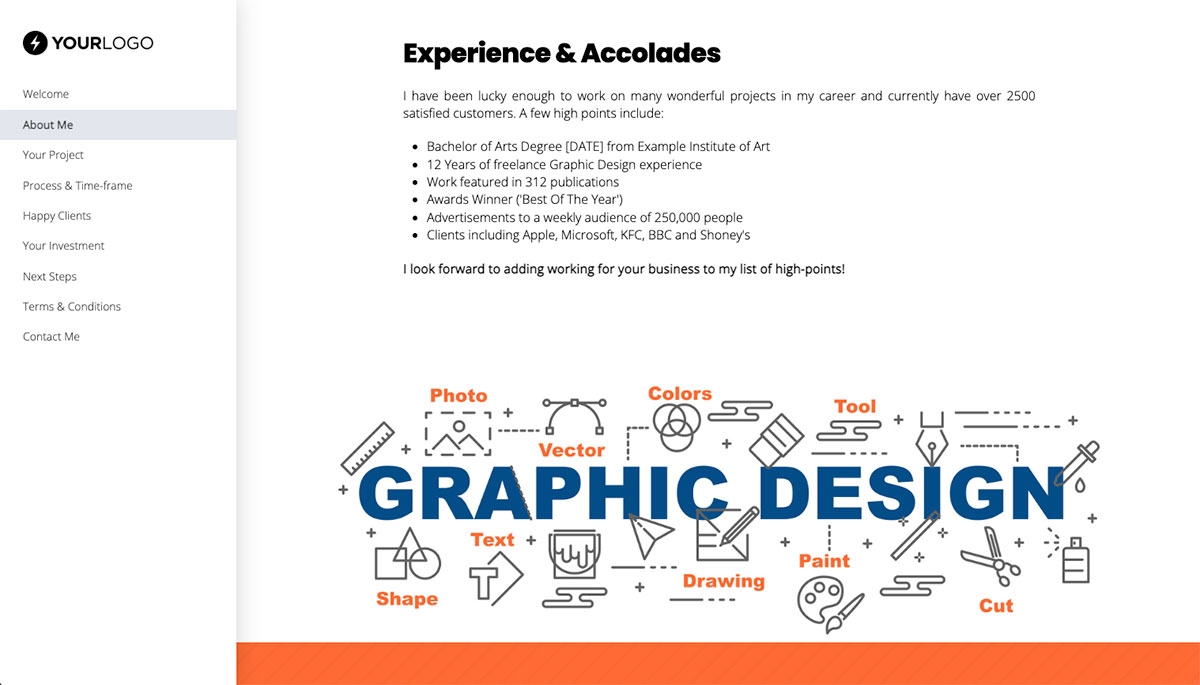
Landing a freelance graphic design gig often hinges on effectively showcasing your abilities. This isn’t just about listing skills; it’s about demonstrating your understanding of design principles, your proficiency in relevant software, and your ability to deliver exceptional results for clients. A well-structured presentation of your skills and experience will significantly increase your chances of securing that next project.
To truly impress potential clients, you need to go beyond a simple resume. Think of your pitch as a carefully curated portfolio that highlights your best work and your unique approach to design. This section details how to present your skills and experience in a compelling and persuasive manner.
Case Study: Revitalizing a Local Bookstore’s Brand
One of my most successful projects involved rebranding “The Book Nook,” a charming but outdated local bookstore. Their brief requested a modern, yet welcoming design that would attract a younger demographic while retaining the store’s established charm. Their existing logo was cluttered and their online presence lacked a cohesive visual identity.
My design process began with thorough market research, analyzing competitor branding and identifying The Book Nook’s unique selling points. I developed three distinct logo concepts, incorporating elements like open books and stylized fonts to represent knowledge and community. I also created a new color palette using warm, inviting tones. After client feedback, we finalized the logo and I developed a comprehensive brand guide, including guidelines for typography, color usage, and imagery.
This was followed by designing new marketing materials, such as posters, flyers, and social media graphics, all consistent with the new brand identity. The final outcome was a refreshed and vibrant brand that resonated with both existing and new customers. The Book Nook reported a significant increase in foot traffic and online engagement following the rebranding.
Client Testimonials
Positive client feedback is invaluable in demonstrating your reliability and skill. Here are five testimonials highlighting different aspects of my work:
- “Sarah’s creativity and attention to detail were exceptional. She completely transformed our brand, and we’ve seen a huge increase in sales since the launch of our new logo and marketing materials.”
-John Smith, Owner, The Book Nook - “Sarah was incredibly responsive and professional throughout the entire project. She delivered exactly what we envisioned, and even exceeded our expectations.”
– Jane Doe, Marketing Manager, Acme Corp - “Sarah’s design skills are top-notch. She has a great eye for detail and understands how to create visually appealing and effective designs that align with our brand.”
-David Lee, CEO, Beta Solutions - “Working with Sarah was a pleasure. She’s easy to communicate with, and she always met her deadlines. I would highly recommend her to anyone looking for a talented and reliable graphic designer.”
-Emily Brown, Project Manager, Gamma Industries - “Sarah’s ability to understand our brief and translate it into a visually stunning design was remarkable. She made the whole process seamless and stress-free.”
-Michael Davis, Creative Director, Delta Creative
Workflow Process
My workflow ensures a smooth and efficient project delivery. It begins with an initial consultation to understand the client’s needs and objectives. This is followed by a detailed project proposal outlining the scope of work, timeline, and cost. Once the project is approved, I begin the design phase, regularly providing updates and seeking feedback from the client.
The final step involves delivering the completed project files and ensuring client satisfaction.
Design Style Adaptability
I possess a strong understanding of various design styles, including minimalist, modern, vintage, and more. My ability to adapt to different styles allows me to create designs that perfectly align with the client’s brand and target audience. For instance, a minimalist design might be ideal for a tech startup aiming for a clean and modern aesthetic, while a vintage style might be more suitable for a boutique clothing store looking to evoke a sense of nostalgia.
I’m proficient in using various design software to execute these diverse styles effectively, always ensuring the final product is both aesthetically pleasing and functionally effective.
Handling Client Communication and Negotiations
Source: lokerjogja.id
Effective communication and negotiation are the cornerstones of a successful freelance graphic design business. Building strong client relationships, managing expectations, and resolving conflicts professionally are crucial for repeat business and positive referrals. This section details strategies for navigating these essential aspects of freelancing.
Managing client expectations starts from the initial consultation. Clearly define the project scope, deliverables, and timelines. Provide regular updates throughout the process, using a project management tool if necessary, to keep the client informed and engaged. Actively solicit feedback at key milestones, ensuring you understand their vision and address any concerns promptly. This proactive approach minimizes misunderstandings and ensures the final product aligns with their requirements.
Managing Client Expectations and Feedback
The key to managing client expectations is clear and consistent communication. This involves setting realistic expectations from the outset, providing regular updates, and actively soliciting feedback throughout the project lifecycle. For example, if a client requests a significant design change after the initial design approval, clearly explain the impact on the timeline and budget. Document all communication and feedback in a centralized system (email, project management software) to maintain a clear record of agreements and changes.
A well-defined project brief outlining the project scope, deliverables, and deadlines is crucial for setting expectations from the beginning.
Resolving Conflicts and Disagreements
Disagreements can arise, even with the best communication. A professional and empathetic approach is essential. Actively listen to the client’s concerns, validate their feelings, and reiterate your understanding of their perspective. Focus on finding solutions that meet both your needs and the client’s, perhaps by offering compromises or alternative solutions. If a solution can’t be reached, consider mediation or a formal dispute resolution process, depending on the severity of the conflict.
Maintaining a calm and respectful tone throughout the process is paramount.
Sample Freelance Graphic Design Contract
A well-structured contract protects both you and your client. It Artikels the project scope, payment terms, deadlines, and intellectual property rights. Here’s a sample contract structure, though you should always seek legal counsel for your specific needs:
| Clause | Description |
|---|---|
| Project Scope | Detailed description of the project, including deliverables (e.g., logo design, website mockups, social media graphics). |
| Payment Terms | Payment schedule (e.g., deposit upon signing, milestone payments, final payment upon completion). Specify the method of payment and any applicable fees or taxes. Example: 50% upfront, 50% upon final delivery. |
| Deadlines | Clearly defined deadlines for each phase of the project. Include provisions for delays and their consequences. |
| Intellectual Property Rights | Specify who owns the copyright to the final design work. Typically, the client owns the copyright once final payment is received. |
| Revisions | Artikel the number of revisions included in the project fee and the process for requesting additional revisions. |
| Termination Clause | Define the conditions under which the contract can be terminated by either party. |
| Confidentiality | A clause protecting client’s confidential information. |
| Governing Law | Specify the jurisdiction under which the contract will be governed. |
Handling Difficult Clients and Maintaining Professional Relationships, Freelance graphic design pitch
Not all clients will be easy to work with. Establish clear communication protocols early on, setting expectations for response times and communication methods. Document all interactions. If a client is consistently difficult or unreasonable, consider setting boundaries. This might involve enforcing contract terms, limiting the number of revisions, or, in extreme cases, terminating the contract.
However, always aim to maintain a professional demeanor, even in challenging situations. Remember that maintaining a positive reputation is crucial for long-term success.
Visualizing Your Pitch: Freelance Graphic Design Pitch
Source: kitchen.co
A strong visual representation is crucial for a successful freelance graphic design pitch. It’s your chance to showcase your design skills and impress potential clients before they even read your proposal. Think of your visual pitch as a silent introduction, a captivating glimpse into your creative world. It needs to be professional, memorable, and perfectly aligned with your brand.A compelling visual pitch goes beyond simply presenting your portfolio.
It’s about crafting a cohesive narrative that highlights your unique strengths and how you can solve the client’s specific design challenges. Consider this your first design project for the client – a chance to demonstrate your capabilities before you even receive the official brief.
Visual Design of a Freelance Graphic Design Pitch
My ideal visual pitch would begin with a concise, visually striking one-page summary. This would incorporate a clean, modern design using a consistent color palette that subtly reflects my personal brand. The top would feature a high-quality headshot alongside my name and a brief, impactful tagline, like “Crafting Visual Solutions That Deliver Results.” Below that, a short, impactful statement (no more than two sentences) would succinctly describe my core expertise and target audience.
This could be followed by three to four carefully curated project thumbnails showcasing diverse skills (e.g., logo design, website mockups, branding collateral). Each thumbnail would be accompanied by a short caption describing the project’s outcome and client impact. The bottom would include contact information and a call to action (e.g., “Let’s Collaborate”). The entire page would be carefully balanced, using whitespace effectively to create a clean, professional feel.
The font choice would be contemporary and easily readable, ensuring the information is easily digestible at a glance.
Mock-up of a Proposal Document
The full proposal would follow a similar aesthetic. It would be a concise, well-structured PDF document. Key information would be highlighted using a combination of visual cues and formatting. Here’s a mock-up using HTML blockquotes:
My understanding of your needs: I’ve carefully reviewed your brief and understand your need for a logo and brand guidelines that effectively communicate [Client’s Industry] to your target demographic of [Target Demographic].
My proposed solution: I will deliver a comprehensive branding package including three logo concepts, a brand style guide outlining color palettes, typography, and imagery, and mockups of key brand applications.
My timeline: The project will be completed within [Number] weeks, with key milestones delivered at [Milestones].
My fees: My fees are detailed in the attached pricing schedule, reflecting the scope of work and project complexity.
Next steps: I’d love to discuss this further with you. Please contact me to schedule a call.
The Importance of Visual Branding in a Freelance Graphic Design Pitch
Visual branding is paramount. Your pitch itself needs to embody the quality and professionalism you offer your clients. A poorly designed pitch undermines your credibility, no matter how talented you are. A visually stunning pitch, however, instantly establishes you as a professional who understands design principles and can deliver high-quality work. This builds trust and makes you stand out from the competition.
Consistency in your visual branding across all your marketing materials, including your website and social media, further reinforces your brand identity and creates a professional and cohesive image.
Incorporating Client Logos and Brand Guidelines
When pitching to a specific client, it’s crucial to demonstrate your understanding of their existing brand. This means carefully incorporating their logo into your pitch materials, but only in a way that respects their brand guidelines. Don’t simply slap their logo onto your design; use it thoughtfully, perhaps subtly watermarking your proposal or using it as a design element on the cover page.
If you have access to their brand guidelines, ensure that you are using their approved fonts, colors, and imagery consistently throughout your pitch. This demonstrates your attention to detail and your ability to work within existing brand frameworks. For example, you might use their primary brand color in subtle accents within your pitch design, showing you understand and respect their brand identity.
Failing to do this would be a significant misstep, as it suggests a lack of attention to detail and a potential disregard for the client’s brand.
Last Point
Mastering the freelance graphic design pitch is a game-changer. It’s about more than just showcasing your skills; it’s about building relationships, understanding client needs, and presenting yourself as the ideal solution. By following the strategies Artikeld here—from crafting a compelling narrative to mastering client communication—you’ll not only increase your chances of landing projects but also establish yourself as a go-to freelance designer.
So, go forth, create stunning pitches, and watch your freelance career flourish!
Detailed FAQs
How long should my freelance graphic design pitch be?
Keep it concise! Aim for a pitch that’s easy to digest, ideally no more than 2-3 pages for a proposal, and a brief email for initial contact.
What if I don’t have many testimonials yet?
Focus on showcasing the impact of your work through case studies. Even a few strong examples are better than many weak ones. You can also include references if you’ve worked with clients who are comfortable being contacted.
How do I handle price negotiations?
Clearly Artikel your pricing structure upfront. Be prepared to justify your rates based on your experience and the value you provide. Negotiations are a part of freelancing; be professional and flexible while protecting your worth.
What if a client wants something outside my skillset?
It’s okay to say no! Politely explain that you don’t have the expertise for that specific request, but you can recommend other professionals who might be a better fit. Honesty and professionalism are key.