What Does a Graphic Designer Do?
What does a graphic designer do? That’s a question with a surprisingly multifaceted answer! It’s more than just making things pretty; it’s about solving visual communication problems, crafting compelling brand identities, and ultimately, making a lasting impact. From designing logos that resonate to creating websites that engage, graphic designers are the visual storytellers of our modern world, wielding their creative skills and technical expertise to bring ideas to life.
This creative field encompasses a wide range of specializations, from web design and branding to illustration and packaging. Each project presents unique challenges and opportunities, requiring a blend of artistic talent, technical proficiency, and a deep understanding of design principles. We’ll dive into the day-to-day realities of a graphic designer’s life, exploring the skills, tools, and processes that make it all possible.
Defining the Role of a Graphic Designer: What Does A Graphic Designer Do
Graphic designers are visual communicators. They translate complex ideas and information into visually appealing and effective designs. Their work impacts how we perceive brands, products, and information across various platforms. Essentially, they shape our visual landscape.
The core responsibility of a graphic designer is to create visual solutions that meet specific objectives. This involves understanding the client’s needs, conducting thorough research, developing creative concepts, and executing those concepts through various design software and techniques. They must consider factors like typography, color theory, layout, and imagery to ensure the final design is both aesthetically pleasing and effectively communicates the intended message.
The process is iterative, involving client feedback and revisions.
The Graphic Design Creative Process
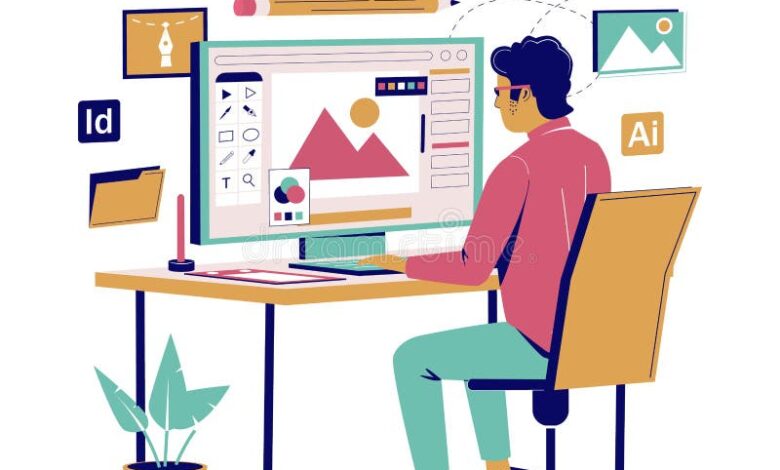
The creative process for a graphic designer is rarely linear. It often involves a cyclical approach of ideation, refinement, and testing. It typically begins with a brief from the client outlining their needs and objectives. The designer then conducts research, brainstorming ideas and sketching potential solutions. This is followed by digital execution, using software like Adobe Photoshop, Illustrator, and InDesign.
The process continues with client feedback, revisions, and ultimately, the final delivery of the design assets. This could involve multiple rounds of revisions and adjustments to ensure the design meets the client’s vision and achieves its intended purpose. For example, designing a logo might involve dozens of sketches, several digital iterations, and multiple client presentations before final approval.
Specializations within Graphic Design
Graphic design encompasses a broad range of specializations, each demanding a unique skill set.
Web Design: This focuses on the visual aspects of websites, ensuring user-friendliness and aesthetic appeal. A web designer considers user experience (UX) and user interface (UI) design principles to create intuitive and engaging online experiences. They work with HTML, CSS, and sometimes JavaScript, though that is often the purview of a web developer. A successful website combines strong visuals with seamless functionality.
So, what does a graphic designer do? We craft visuals, from logos to website layouts, to communicate effectively. A huge part of that is creating compelling thumbnails and branding for online platforms, which is why understanding video marketing is key – check out this awesome guide on getting it on with youtube to see how visual design impacts YouTube success.
Ultimately, a graphic designer’s role is to make your message visually unforgettable, whether it’s a print ad or a viral YouTube video.
For example, a web designer for an e-commerce site would focus on creating a visually appealing layout that makes it easy for users to browse products, add them to their cart, and complete their purchase.
Branding: Branding designers create the visual identity of a company or product. This includes designing logos, color palettes, typography, and overall brand guidelines. They aim to establish a consistent and memorable brand image across all platforms. A strong brand identity helps a company stand out from its competitors and build customer loyalty. For instance, the iconic Apple logo is a prime example of effective branding design; its simplicity and memorability are hallmarks of excellent branding.
Illustration: Illustrators create original artwork to enhance design projects. They can work in various styles, from realistic to abstract, and their work can be used in print, web, and other media. Illustrators often bring a unique artistic flair to designs, adding personality and visual interest. A children’s book illustrator, for example, uses their skills to create engaging visuals that capture the imagination of young readers.
Graphic Designer vs. Web Developer
| Role | Focus | Skills | Tools |
|---|---|---|---|
| Graphic Designer | Visual Communication & Aesthetics | Typography, Color Theory, Layout, Image Manipulation, Branding | Adobe Photoshop, Illustrator, InDesign |
| Web Developer | Website Functionality & User Experience | HTML, CSS, JavaScript, Database Management, Server-side scripting | Various IDEs, code editors, debugging tools |
Essential Skills and Tools
Source: baltimoredesignschool.com
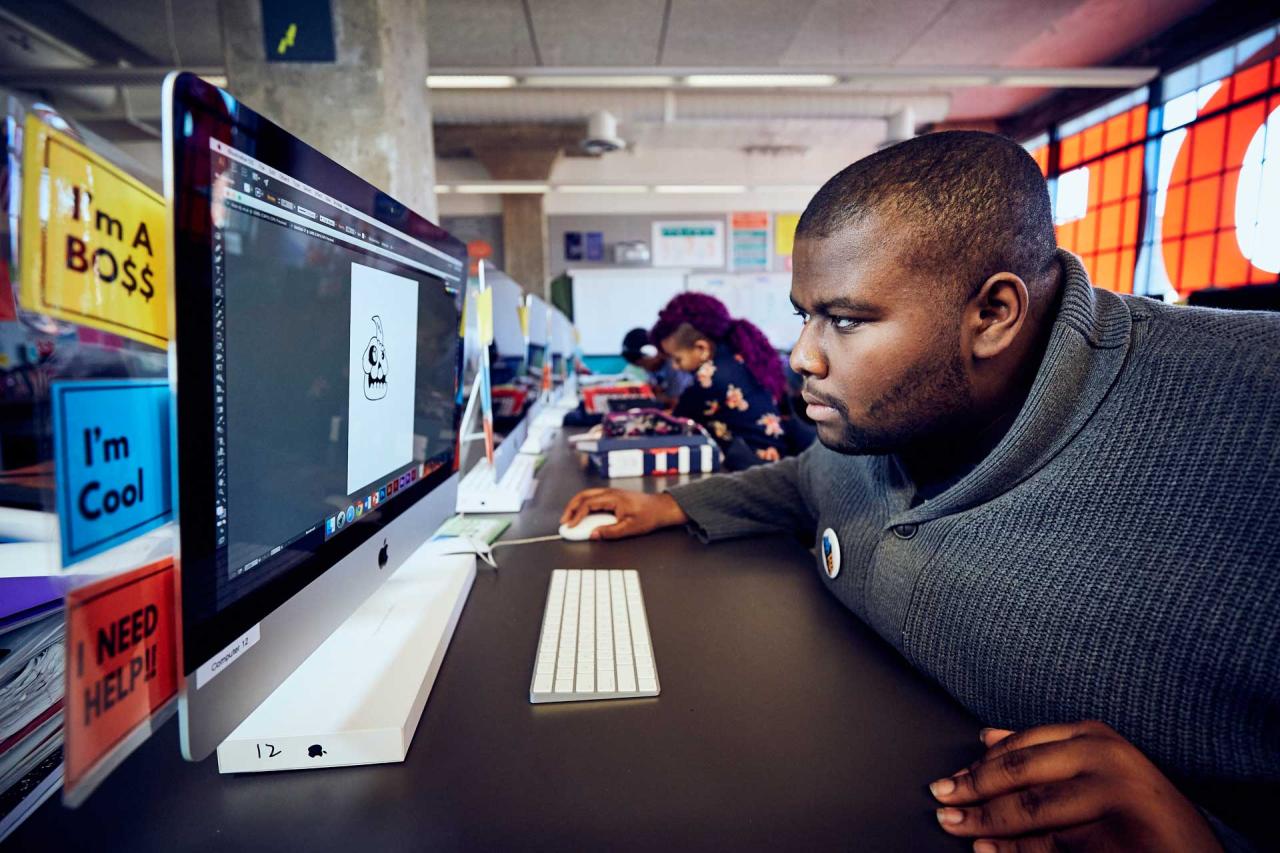
So, you want to be a graphic designer? Fantastic! But it takes more than just a good eye to succeed. This section dives into the essential skills and tools that form the foundation of a successful graphic design career. We’ll cover the technical know-how, the creative principles, and the crucial soft skills that will set you apart.Being a graphic designer requires a blend of technical proficiency, artistic sensibility, and strong interpersonal skills.
Mastering these aspects ensures you can effectively translate ideas into visually compelling designs that resonate with your target audience. Let’s explore these elements in detail.
Technical Skills
Proficiency in design software is paramount. The industry standard is the Adobe Creative Suite, encompassing applications like Photoshop for image manipulation, Illustrator for vector graphics, and InDesign for page layout. A solid understanding of these programs, including their shortcuts and advanced features, is crucial for efficiency and producing high-quality work. Beyond Adobe, familiarity with other design software, such as Figma or Sketch, can broaden your skillset and make you a more versatile designer.
Knowing how to adapt to different software environments is a valuable asset.
Design Principles
Technical skills are only half the battle. A strong grasp of design principles is equally vital. Understanding typography—choosing the right fonts and sizes for readability and visual impact—is fundamental. Color theory, including understanding color harmonies and their psychological effects, plays a crucial role in creating visually appealing and effective designs. Composition, the arrangement of elements within a design, dictates the visual flow and overall message.
Mastering these principles allows designers to create balanced, engaging, and effective designs. For example, understanding the rule of thirds can dramatically improve the visual appeal of a photograph or layout.
Soft Skills
While technical skills are essential, soft skills are often the differentiator between a good designer and a great one. Effective communication is key to understanding client needs and translating them into successful designs. Collaboration is vital, especially in team environments, requiring the ability to work effectively with other designers, developers, and clients. Problem-solving is crucial; designers constantly face challenges, requiring creative solutions to overcome obstacles and deliver exceptional results.
Strong time management and organizational skills ensure projects are completed efficiently and to a high standard. For example, the ability to effectively present design concepts and receive constructive feedback is a valuable soft skill that helps to refine the design process.
Essential Software and Hardware
The following list Artikels essential software and hardware for a graphic designer:
- Software: Adobe Creative Suite (Photoshop, Illustrator, InDesign), Figma, Sketch, possibly other specialized software depending on the niche.
- Hardware: High-resolution monitor (at least 24 inches), powerful computer with a fast processor and ample RAM, a graphics tablet (Wacom or similar) for precise design work.
The Design Process
The graphic design process isn’t a haphazard scramble; it’s a carefully orchestrated journey from initial concept to final product. Understanding this process is key to creating effective and impactful designs, whether it’s a simple logo or a complex marketing campaign. Each stage builds upon the previous one, ensuring a cohesive and successful outcome. Effective communication and collaboration with the client are woven throughout.The process typically involves several key stages: initial consultation and briefing, research and concept development, sketching and ideation, refinement and revisions, final production and delivery.
While the exact steps may vary depending on the project’s scope and complexity, these stages form the backbone of most design projects.
Logo Design: A Step-by-Step Guide
Creating a successful logo requires a methodical approach. A well-designed logo is more than just a pretty picture; it’s a visual representation of a brand’s identity, values, and personality. The following steps Artikel the typical process:
- Client Briefing and Research: Understanding the client’s business, target audience, brand values, and competitors is paramount. This stage involves thorough questioning and research to gather all necessary information.
- Concept Development and Sketching: Based on the research, several initial concepts are developed through sketching and brainstorming. These sketches explore different visual styles, typography, and color palettes.
- Digital Refinement: Selected sketches are then refined using design software (like Adobe Illustrator) to create vector-based logos. This allows for scalability without loss of quality.
- Client Feedback and Revisions: The client is presented with the refined logo options and provides feedback. This iterative process involves making adjustments based on the client’s preferences and suggestions.
- Finalization and Delivery: Once the client approves the final design, the logo is prepared in various formats (e.g., vector, raster) for different applications (website, print, social media).
Marketing Campaign Visual Development
A successful marketing campaign relies heavily on strong visuals to capture attention and communicate the message effectively. The design process for a visual marketing campaign might look like this:
- Campaign Strategy and Goals: Defining the campaign’s objectives (e.g., increase brand awareness, drive sales) is crucial before any design work begins. This includes target audience identification and key messaging.
- Mood Board and Style Guide Creation: A mood board helps establish the visual tone and style of the campaign. This involves collecting images, colors, and typography samples that reflect the brand’s identity and campaign goals. A style guide ensures consistency across all visual elements.
- Visual Asset Creation: This stage involves designing various assets such as social media graphics, website banners, print ads, and email templates. The design must be tailored to each platform’s specific requirements.
- Testing and Refinement: Before launching, the campaign visuals are tested to ensure effectiveness and optimal performance across different devices and platforms. Feedback is gathered and incorporated to refine the designs.
- Campaign Rollout and Monitoring: Once approved, the campaign visuals are launched across different channels. The campaign’s performance is monitored, and adjustments are made as needed based on data analysis.
Incorporating Client Feedback
Client feedback is integral to the design process. It’s not just about making changes; it’s about understanding the client’s vision and ensuring the design aligns with their expectations. For example, a client might initially request a very minimalist logo, but after seeing the initial concepts, they might prefer a more illustrative approach. The designer would then adapt their designs to reflect this change, presenting new options that incorporate the client’s feedback.
Throughout the process, open communication and iterative revisions are essential to ensure a successful outcome. The designer acts as a guide, offering professional advice while respecting the client’s preferences and ultimately delivering a design that meets their needs.
Types of Graphic Design Projects
Source: dreamstime.com
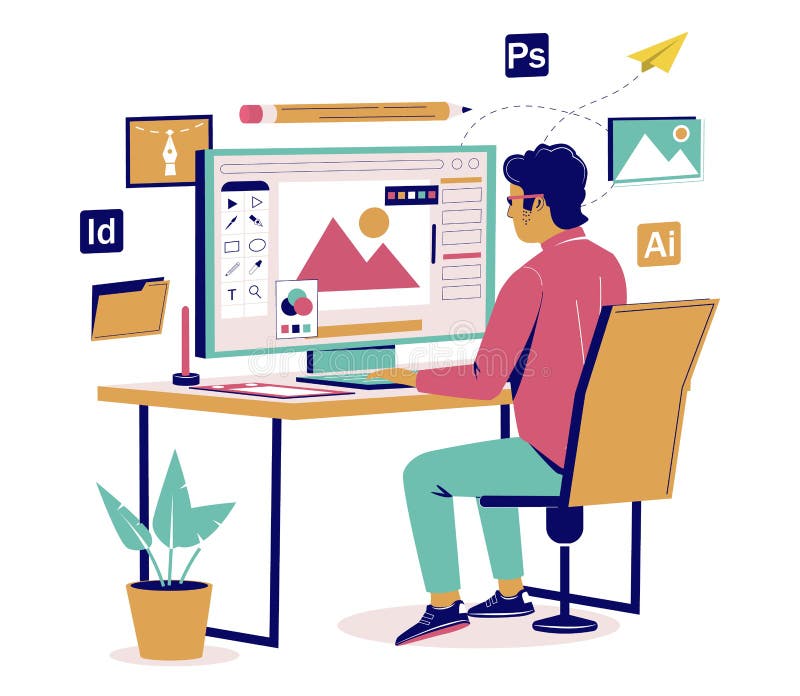
Graphic design is a wildly diverse field, encompassing a huge range of projects, each with its own unique set of challenges and rewards. From the tangible feel of a printed brochure to the interactive experience of a website, graphic designers are responsible for shaping visual communication across various platforms. Understanding these different project types is key to appreciating the breadth and depth of the profession.
The projects a graphic designer tackles can be broadly categorized by their medium and purpose. The design approach, tools, and considerations will vary significantly depending on whether the final product is print-based or digital, and what message it aims to convey.
Print Design Projects
Print design remains a vital area, despite the rise of digital media. The tactile nature of print, and its ability to create a lasting impression, ensures its continued relevance. Projects in this category often require a keen eye for detail, precise color reproduction, and an understanding of different printing techniques.
Examples include brochures, posters, flyers, business cards, packaging, and even book covers. Brochures, for instance, require a well-structured layout that guides the reader through information concisely. Posters need to grab attention quickly with bold visuals and impactful typography. Packaging design must consider not only aesthetics but also functionality and the product’s protection.
Digital Design Projects
Digital design projects offer a dynamic and interactive experience unavailable in print. They demand a deep understanding of user experience (UX) and user interface (UI) principles, along with proficiency in web design software and responsive design techniques.
Examples include websites, social media graphics, email newsletters, app interfaces, and online advertisements. Websites require careful consideration of navigation, accessibility, and visual hierarchy. Social media graphics must be concise and visually appealing to grab attention within the platform’s specific constraints. Designing for different screen sizes and devices is crucial for a seamless user experience.
Print vs. Digital Design Approaches, What does a graphic designer do
While both print and digital design aim to communicate visually, their approaches differ significantly. Print design often focuses on creating a lasting, high-quality physical product, emphasizing color accuracy, precise typography, and the tactile experience. Digital design, on the other hand, prioritizes interactivity, responsiveness, and user experience. It must adapt to various screen sizes and devices, often incorporating animation and multimedia elements.
Print relies on static visuals, while digital design embraces dynamic and interactive elements.
Example of a Successful Print Advertisement
Imagine a full-page advertisement for a high-end coffee brand. The background is a rich, dark brown, subtly textured to evoke the feeling of roasted coffee beans. Centered is a striking image of a steaming cup of coffee, perfectly lit to highlight its rich crema and aroma. The brand’s logo is elegantly placed in the upper left corner, using a sophisticated serif typeface.
Below the image, a concise tagline—”The Perfect Start”—is written in a clean, modern sans-serif font. The overall color palette is limited to browns, creams, and a touch of gold, creating a sophisticated and luxurious feel. The effectiveness stems from its simplicity, high-quality imagery, and the evocation of sensory experience, creating a desire for the product without overwhelming the viewer.
The limited color palette ensures the key elements stand out, while the sophisticated typography reinforces the brand’s premium positioning.
The Graphic Designer’s Role in Marketing and Branding
Graphic design is the silent architect of a brand’s success. It’s the unseen force that shapes perception, influences purchasing decisions, and ultimately, builds brand loyalty. A skilled graphic designer isn’t just creating pretty pictures; they’re crafting a visual language that speaks directly to a target audience, communicating the brand’s personality, values, and promises.Graphic design significantly contributes to a brand’s visual identity by establishing a consistent and memorable look and feel.
This visual identity encompasses everything from the logo and color palette to typography and imagery. A strong visual identity creates immediate recognition and helps differentiate a brand from its competitors in a crowded marketplace. Think of the instantly recognizable swoosh of Nike or the simple, yet powerful Apple logo – these are the results of meticulous graphic design work that transcends mere aesthetics and becomes synonymous with the brand itself.
Brand Consistency Across Platforms
Maintaining consistent branding across all platforms is crucial for building a cohesive and credible brand image. Inconsistency confuses consumers and dilutes the brand’s message. A graphic designer ensures this consistency by developing a comprehensive brand style guide that dictates the use of logos, colors, fonts, and imagery across various applications, including websites, social media, print materials, and packaging. Imagine a coffee shop with a sophisticated logo on its website, but using a childish font on its takeaway cups – the disconnect undermines the overall brand impression.
A graphic designer prevents such discrepancies by creating a unified visual experience.
Graphic Designers’ Role in Developing Marketing Materials
Graphic designers play a pivotal role in developing effective marketing materials. They translate marketing strategies into visually compelling designs that attract attention and encourage engagement. This includes creating brochures, flyers, advertisements, social media graphics, email newsletters, and website banners. The goal is to not only inform but also to persuade, using visual hierarchy, compelling imagery, and clear messaging to achieve marketing objectives.
For example, a well-designed brochure can effectively communicate product features and benefits, while a striking social media graphic can drive traffic to a company’s website.
Case Study: Revitalizing “Brewtiful Beginnings” Coffee Shop
Brewtiful Beginnings, a local coffee shop, was struggling with a dated and inconsistent brand image. Their logo was unclear, their website was outdated, and their marketing materials lacked cohesion. A graphic designer was brought in to revitalize their brand. The designer started by creating a new logo that captured the shop’s warm and inviting atmosphere. A fresh color palette was introduced, featuring earthy tones and a vibrant accent color.
The designer then developed a consistent brand style guide, ensuring that all marketing materials, from their website and social media posts to their coffee cups and takeaway bags, adhered to the newly established visual identity. The result? A significant increase in customer engagement and brand recognition, leading to a substantial boost in sales within six months. The revitalized brand communicated the shop’s quality and charm effectively, attracting a wider customer base and solidifying its position in the local market.
The Future of Graphic Design
The field of graphic design is in constant flux, propelled by technological advancements and evolving client needs. What was cutting-edge just a few years ago is now commonplace, and the next wave of innovation is already breaking. Understanding these emerging trends is crucial for designers looking to thrive in the future.
Artificial intelligence, virtual and augmented reality, and the ever-increasing demand for personalized experiences are reshaping how we approach visual communication. This necessitates a shift in skillsets, tools, and even the designer-client relationship.
Emerging Trends and Technologies
The integration of AI, VR/AR, and data visualization is fundamentally altering the design landscape. AI tools are already assisting with tasks like image generation, logo design, and even basic layout creation. This doesn’t mean AI will replace designers; rather, it will augment their capabilities, allowing them to focus on higher-level creative problem-solving and strategic thinking. VR and AR are opening up new avenues for immersive experiences, demanding designers skilled in creating engaging 3D environments and interactive content.
Data visualization, the art of presenting complex data in a clear and compelling visual format, is becoming increasingly important as businesses rely more on data-driven decision-making. For example, designers are creating interactive dashboards that allow users to explore data sets visually, or using infographics to communicate complex research findings to a wider audience.
In-Demand Skills for Future Graphic Designers
The future graphic designer will need a diverse skillset that blends traditional design principles with a strong understanding of emerging technologies. Beyond proficiency in Adobe Creative Suite, skills in motion graphics, UX/UI design, 3D modeling, and coding (especially JavaScript and HTML) will be highly sought after. Critical thinking, problem-solving, and strong communication skills will remain essential, as will the ability to adapt to new technologies and trends quickly.
Understanding data analysis and visualization will also become increasingly important, enabling designers to create data-driven designs that are both aesthetically pleasing and highly effective. Furthermore, designers who can demonstrate a solid understanding of ethical considerations related to AI and data privacy will be highly valued.
Evolution of the Graphic Designer’s Role
The role of the graphic designer is evolving from a purely visual artist to a more strategic and technologically adept professional. Designers will increasingly collaborate with developers, data scientists, and marketers to create holistic and integrated experiences. The traditional client brief will expand to encompass data analysis and user experience considerations. Instead of simply creating static visuals, designers will be tasked with building interactive and immersive experiences across multiple platforms.
This requires a collaborative approach and a deep understanding of the user journey. For example, a graphic designer might collaborate with a UX researcher to understand user behavior before designing a website interface, or with a data scientist to interpret and visualize complex datasets.
Predicted Changes in Graphic Design
| Skillset | Tools | Client Interactions | Project Scope |
|---|---|---|---|
| Proficiency in AI-powered design tools, UX/UI design, motion graphics, 3D modeling, data visualization, coding (HTML, CSS, JavaScript) | AI-assisted design software, VR/AR development platforms, data visualization tools, project management software | More collaborative, data-driven briefs, increased emphasis on user experience and data analysis | More integrated and immersive experiences, extending beyond traditional print and digital media to encompass interactive installations, VR/AR applications, and data-driven visualizations |
Outcome Summary
So, what does a graphic designer do? In short, they translate ideas into compelling visuals. They’re problem-solvers, storytellers, and brand architects, all rolled into one creative powerhouse. Whether it’s crafting a memorable logo, designing a user-friendly website, or developing a captivating marketing campaign, graphic designers are essential players in today’s visual-driven world. Their work shapes how we perceive brands, products, and information, making them vital contributors to our ever-evolving visual landscape.
The future of the field is bright, filled with exciting technological advancements and evolving design trends.
FAQ Corner
What software do graphic designers use most often?
The Adobe Creative Suite (Photoshop, Illustrator, InDesign) is the industry standard, but other programs like Figma and Sketch are also popular.
How much do graphic designers typically earn?
Salaries vary greatly based on experience, location, and specialization. Entry-level positions can range from $35,000-$50,000 annually, while experienced designers can earn significantly more.
Is a degree necessary to become a graphic designer?
While a formal degree can be beneficial, it’s not always required. A strong portfolio showcasing your skills and talent is often more important.
What’s the difference between a graphic designer and a web developer?
Graphic designers focus on the visual aspects of a website or application, while web developers handle the technical coding and functionality.