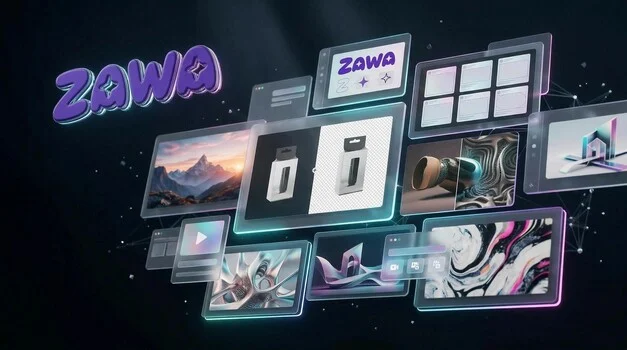
The global branding and graphic design industry, currently valued at over $45 billion, is facing a transformative shift as artificial intelligence tools move from experimental novelties to functional enterprise solutions. This evolution is fundamentally changing how businesses approach their visual identities, moving away from the traditional, weeks-long consultation processes toward instantaneous, algorithmically driven brand kits. The core philosophy of branding—balancing immediate recognition with descriptive clarity—is being tested by a new generation of AI platforms like Zawa, which promise to synthesize complex design principles into streamlined digital workflows.
The Philosophical Shift in Modern Branding
Historically, branding was a literal representation of a business’s offerings. However, the modern marketplace has seen a decisive move toward abstract recognition. Industry giants such as Apple and McDonald’s serve as the primary case studies for this transition. Apple, despite its name and iconic logo, operates within the consumer electronics and software sectors, while McDonald’s utilizes the "Golden Arches"—a geometric architectural reference—to represent a global fast-food empire. Neither logo explicitly depicts the products sold, yet they command some of the highest brand equity in the world.
This phenomenon, known as "Brand Recognition vs. Description," suggests that as a brand matures, it can shed descriptive elements. Pepsi provides a notable historical example; the company originally included the word "Cola" in its logo but eventually dropped it as the brand’s visual shorthand became globally synonymous with the product. In the contemporary digital creator economy, figures like tech reviewer MKBHD (Marques Brownlee) have built massive brands that utilize minimalist, stylistic logos that convey a "vibe" or a professional standard rather than a literal depiction of hardware.
For small businesses and independent professionals, the challenge remains: how to balance the need for immediate clarity with the desire for a sophisticated, modern aesthetic. Many startups initially opt for literal branding—incorporating icons of cameras for photographers or hammers for contractors—only to find these designs cluttered and difficult to scale as their services diversify.
The Emergence of AI-Driven Design Suites: A Zawa Case Study
As the demand for rapid rebranding grows, AI-based platforms are entering the market to address the "pain points" of traditional design: high costs, long turnaround times, and the technical barrier of professional software like the Adobe Creative Suite. Zawa, a web-based AI suite, has recently emerged as a competitor in this space, utilizing a user interface reminiscent of Canva but powered by advanced generative models.
The platform functions as an "agent-based" system, meaning it does not rely on a single algorithm but rather coordinates multiple AI services—including Midjourney for image generation, ChatGPT for text and brand strategy, and proprietary systems like Nano Banana—to deliver a comprehensive brand kit. This multi-model approach allows the system to analyze existing assets, understand stylistic prompts, and generate a cohesive visual language in a fraction of the time required by a human agency.
Chronology of an AI Rebrand
The practical application of these tools was recently documented through a comprehensive testing phase involving Darren J. Spoonley, a multi-disciplinary professional working in photography, videography, and education. The process highlights the current capabilities and speed of AI-integrated design.
Phase 1: Asset Analysis and Briefing
The process began with the submission of existing branding materials. In this instance, a legacy logo—which combined a name, a list of skills, and a camera icon—was uploaded alongside a professional headshot. The user provided a "low-friction" prompt, requesting a "modern and fresh" rebrand that maintained the core identity of the individual while elevating the aesthetic quality.
Within 60 seconds, the AI performed a dual analysis. It identified the strengths of the original logo (clear messaging) and its weaknesses (visual clutter). Simultaneously, it analyzed the user’s photo to extract a "brand persona," noting an "approachable yet expert" demeanor that could be translated into visual elements.
Phase 2: Strategic Direction and Conceptualization
Following the analysis, the system proposed a cohesive design direction. Rather than simply generating a random icon, the AI outlined a "Brand Tone" (professional, approachable, expert) and a "Visual Concept" that bridged technical media expertise with an organic, teaching-oriented style. This stage mimics the "discovery phase" of a traditional design agency, where a creative director presents a mood board and strategy before any actual drawing begins.
Phase 3: Rapid Iteration
Within two minutes of the initial brief, the platform produced four distinct design proposals. These ranged from minimalist graphic marks to typography-focused layouts. This speed represents a significant disruption to the traditional timeline, where such iterations might take a human designer several days to produce.
Phase 4: Final Asset Generation
Upon selecting a preferred direction, the system generated a full "Brand Toolkit." This included not just a logo, but social media avatars, YouTube lower thirds, podcast cover art, and photography watermarks. The entire transition from a legacy brand to a modernized identity was completed in approximately seven minutes.
Technical Infrastructure and Multi-Model Synergy
The efficiency of platforms like Zawa is rooted in their ability to act as a central hub for various AI agents. By utilizing a "central prompt" system, the platform can translate a single user instruction into specific tasks for different specialized AIs.
- Midjourney Integration: Used for high-fidelity visual generation, ensuring that logos and icons have the depth and stylistic polish expected of modern graphic design.
- Large Language Models (LLMs): Systems like ChatGPT handle the "brand voice" and strategy, ensuring that the text-based elements of the brand kit are professional and contextually relevant.
- Agent-Based Architecture: The system uses "agents" to double-check the outputs, ensuring that the generated logo aligns with the requested "modern" aesthetic and that the color palettes are harmonious.
This "all-in-one" location removes the need for users to manually prompt multiple AI tools, which often requires a high degree of "prompt engineering" skill. By streamlining the interface, these platforms are democratizing high-end design for users who may not have a background in technology or art.
Supporting Data: The Economic Impact of AI in Design
The rise of AI design tools is supported by a growing body of economic data suggesting a shift in how creative budgets are allocated. According to recent industry reports:
- Cost Efficiency: A professional branding package from a mid-tier agency can cost between $2,500 and $10,000. In contrast, AI subscription models typically range from $20 to $60 per month, representing a cost reduction of over 95% for small business owners.
- Time Savings: The average turnaround for a professional logo design is 2 to 4 weeks. AI platforms have reduced this to under 10 minutes.
- Market Adoption: A 2023 survey of small business owners found that 44% are already using AI to assist with marketing and content creation, with "visual identity" being one of the top three areas of interest.
However, this efficiency comes with trade-offs. While AI can produce "solid" and "impressive" outputs, it still struggles with high-level nuance and absolute accuracy.
Limitations and the "Human-in-the-Loop" Necessity
Despite the impressive speed of AI branding, testing has revealed significant hurdles. One primary issue is the tendency for AI to "hallucinate" or overreach when processing complex instructions. For example, during the generation of social media assets, the Zawa system was tasked with creating posts based on existing book covers. Instead of merely placing the existing covers into a layout, the AI attempted to "re-imagine" the covers, adding non-existent locations and altering the original artwork.
This highlights a critical reality: AI is currently an "assistant," not a "replacement." Manual adjustments are still required to ensure that the final outputs are factually accurate and aligned with the user’s specific history. Furthermore, the "uniqueness" of an AI logo is often debated. Since the AI is trained on existing design data, there is a risk of producing "homogenized" designs that look professional but lack the distinct "soul" or "story" that a human designer can weave into a brand.
Broader Implications for the Creative Industry
The proliferation of tools like Zawa signals a broader shift in the creative economy. We are likely entering an era of "The Hybrid Designer," where the value of a professional lies not in their ability to use a pen tool or select a font, but in their ability to curate and direct AI outputs.
For the freelance community, the "bottom end" of the market—simple logo creation and basic social media templates—is being rapidly commoditized. To survive, human designers will need to pivot toward high-level brand strategy, emotional storytelling, and complex brand ecosystems that AI cannot yet fully comprehend.
For the consumer, the barrier to entry for starting a professional-looking business has never been lower. A sole proprietor can now project the visual authority of a much larger corporation for the price of a few cups of coffee. This "democratization of professionalism" is expected to increase competition across various service sectors, as visual branding will no longer be a reliable shortcut for gauging a company’s age or budget.
Conclusion: The New Standard of Brand Creation
The experiment with Zawa demonstrates that AI has reached a level of maturity where it can produce work capable of standing up to professional scrutiny. While it is not yet a "set-and-forget" solution—requiring human oversight to correct minor errors and ensure brand consistency—it represents a quantum leap in creative productivity.
As these tools continue to evolve, the definition of a "brand" may shift once more. In a world where every business has access to a perfect, modern logo in minutes, the true value of a brand will likely return to the quality of the service and the strength of the human connection behind the icon. For now, AI branding serves as a powerful catalyst for those looking to refresh their digital identity with unprecedented speed and efficiency.


Leave a Reply