Technology has undergone a profound metamorphosis, transitioning from a tool we operate with to an environment we inhabit. Artificial intelligence, in particular, has ushered in an era of immersive and dynamic digital experiences, transforming interactions from mere transactions to nuanced conversations. Responses are no longer confined to retrieving pre-existing information; they are actively constructing new contexts and even generating novel content. This evolution has imbued technological interactions with a distinctly human-like quality, marking a pivotal moment for brands and marketing strategies worldwide.
In response to this paradigm shift, Arjan Kapteijns, former CEO of Saatchi & Saatchi Netherlands, has redefined Kevin Roberts’ seminal concept of a "Lovemark" for an AI-integrated future. His work, which explores how brands can achieve prominence in both human and AI-driven selection processes, introduces the notion of "Agentic Lovemarks." This framework provides marketers with a strategic roadmap for future brand development, emphasizing that the core objective remains the creation of emotional connections, albeit now orchestrated by sophisticated machines.
The symbiotic relationship between psychology and marketing, which dates back to the early 20th century, has long recognized the power of emotions in forging brand loyalty and driving repeat purchases. Initially focused on emotional persuasion in advertising, this understanding deepened to reveal that a robust emotional connection with a brand is a key determinant of long-term consumer allegiance. For humans to develop such connections with inanimate entities, these entities needed to become more relatable, more human-like.
This quest for humanization in branding was significantly advanced by Margaret Mark and Carol Pearson’s introduction of the 12-brand archetype model in their seminal work, "The Hero and the Outlaw," approximately 25 years ago. This framework provided marketers with a tangible, rational approach to building inherently irrational emotional connections, offering a blueprint for how a brand should look, speak, and behave to cultivate a holistic personality that resonates with consumers.
However, the landscape of brand building is rapidly evolving. What served for decades as an effective model for fostering emotional connections is now proving insufficient for the demands of the agentic economy. The inadequacy stems not from obsolescence, but from a lack of the distinctiveness and instructional clarity required in an environment where AI plays an increasingly central role. Previously, brands exercised direct control over their experiential output through technology, meticulously shaping and steering it according to their established personalities. Today, this control is increasingly ceded, both directly and indirectly, to artificial intelligence.
With AI agents poised to autonomously operate and communicate on behalf of both individuals and brands, and with human-to-brand interactions mediated by machines becoming more conversational and personalized, brands face two critical imperatives for translating their personalities into this new era.
Firstly, the inherent complexity of human communication in one-on-one conversations, characterized by subtle nuances and contextual understanding, cannot be adequately captured by the broad strokes of traditional archetypes. While archetypes remain valuable for establishing a foundational brand direction, they fall short of providing the granular detail necessary for technology to generate truly human-like interactions. Relying solely on archetypes leaves too much room for AI interpretation, akin to generating a random logo each time a user searches for a brand – an inconsistent and potentially disengaging experience.

Secondly, in this agentic economy, brands must transcend mere recognition to become genuinely "loveable" by humans. This duality is articulated by Thomas Marzano, former brand leader at Philips and ASML, in his influential manifesto, "Brand Constitutions." Marzano posits that in an agentic economy, brands need to be both "legible" to AI, enabling them to be identified and recommended by machines, and "loveable" by humans, ensuring their relevance in consumer decision-making. This principle, termed the "Legible-Lovable Law," advocates for a structured, almost technical approach to ensuring future brand relevance. It is not a departure from emotional connection but a reinforcement of it through technological enablement. Only when a brand can be accurately read, understood, and rendered by AI can it become what is termed "branded AI," guiding the AI’s verbal tone, vocabulary, voice, and behavioral responses. Without this, interactions risk remaining generic, devoid of the brand-specific emotional resonance that fosters deep connections.
To achieve this, a new model for defining brand personality is essential – one that is more detailed, contextually attuned, and less prone to interpretation. This is precisely where the PRISM model emerges as a transformative framework.
Introducing the PRISM Model
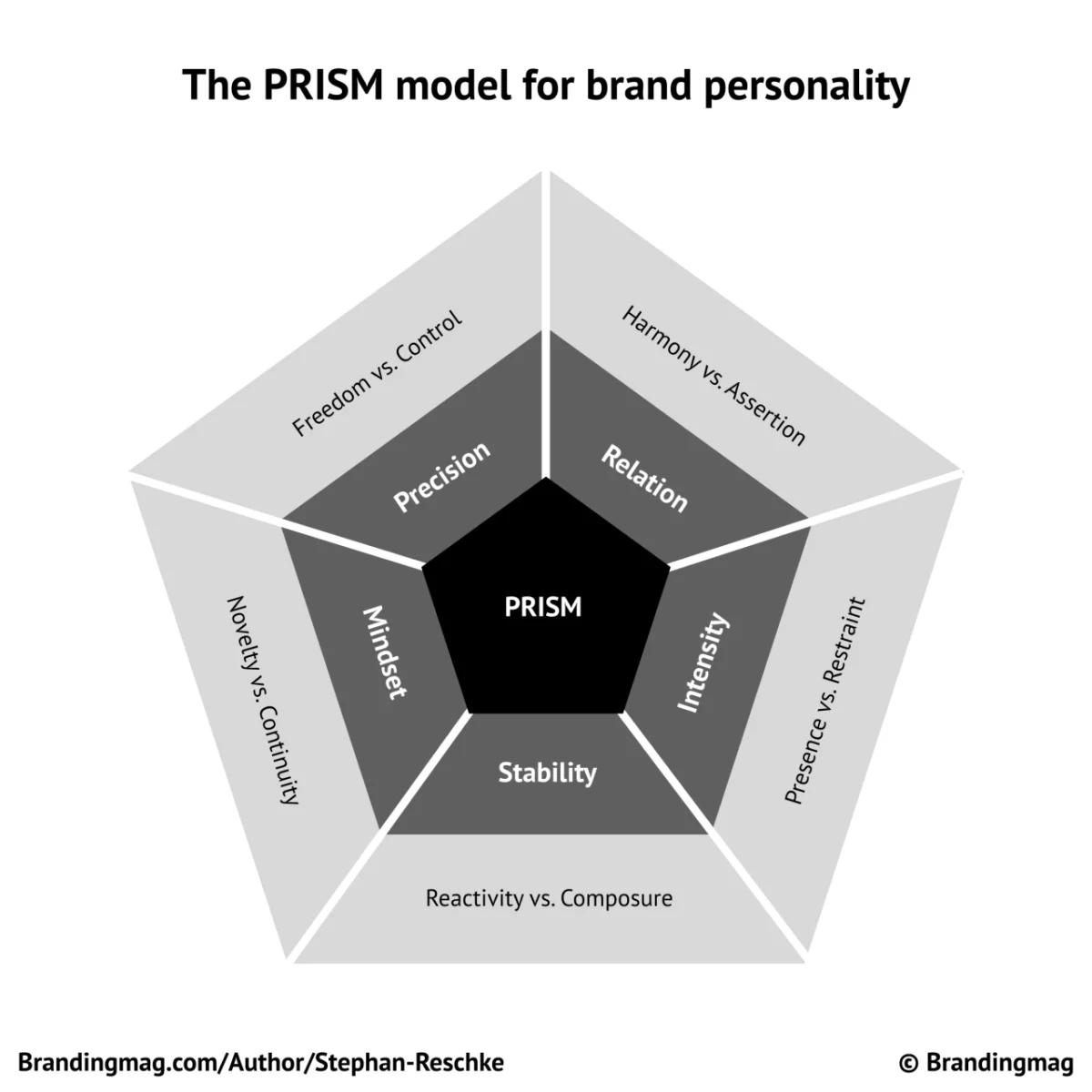
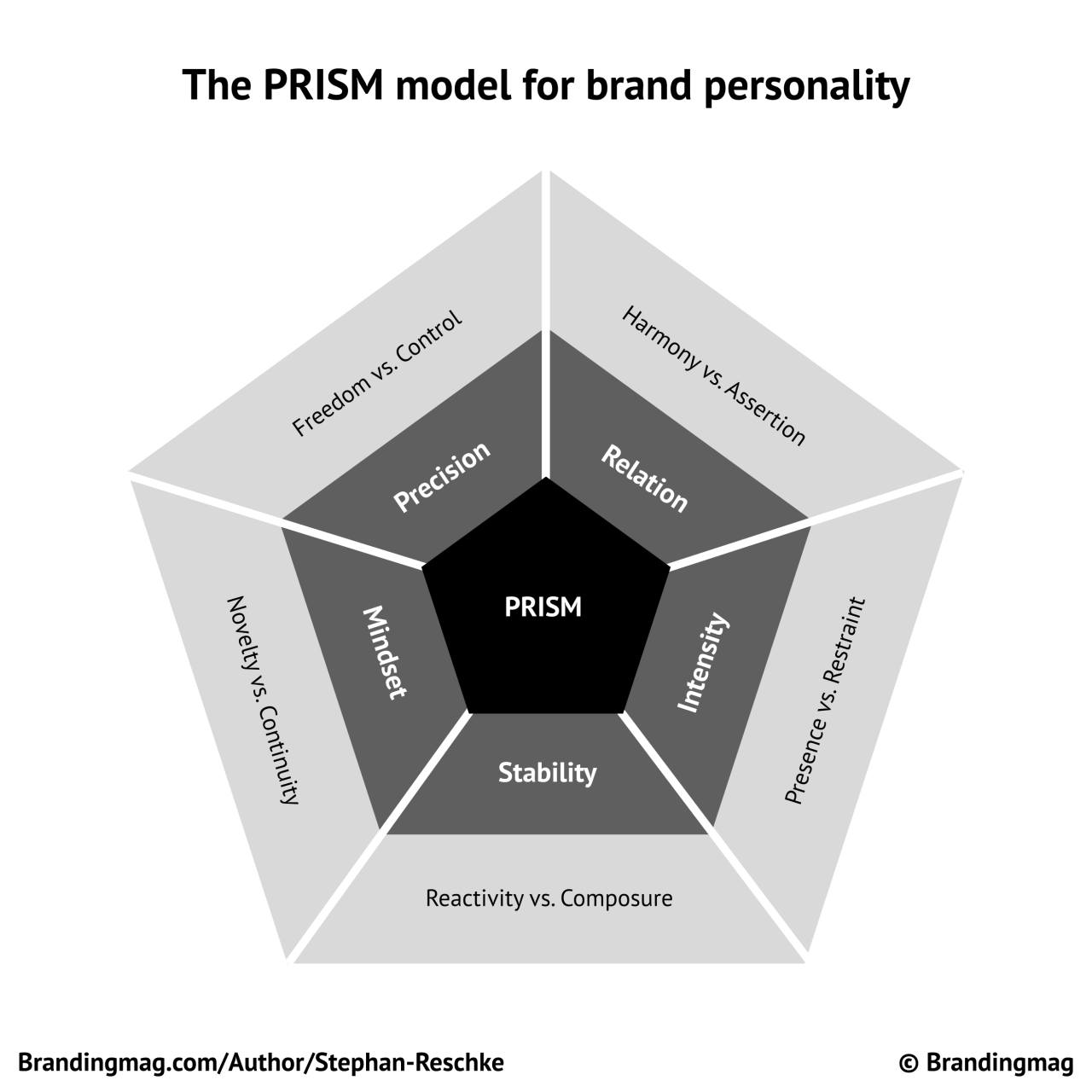
The PRISM model, developed by Stephan Reschke, adapts the widely accepted OCEAN model of human personality psychology, often referred to as the "Big Five," for application to brands. It categorizes personality across five core domains:
- Openness: Reflecting a brand’s curiosity, creativity, and willingness to embrace new experiences and ideas.
- Conscientiousness: Indicating a brand’s organization, reliability, and commitment to detail and execution.
- Extraversion: Describing a brand’s sociability, energy, and outward-facing communication style.
- Agreeableness: Gauging a brand’s cooperativeness, empathy, and inclination towards harmony.
- Neuroticism: Representing a brand’s emotional stability, resilience, and ability to manage stress or adverse situations.
Unlike the exclusive nature of archetypes, PRISM offers a comprehensive compilation of attitudes, thought processes, and mindsets that contribute to the distinctiveness and uniqueness of every human, and by extension, every brand.
Each of these five domains is further segmented into six defining characteristics. These characteristics are then evaluated on a detailed scale, imbuing the PRISM model with the necessary nuance to accurately represent the complexity of brand personalities. This granular approach ensures that brands can be defined with a level of precision that current AI systems can effectively interpret and utilize.
The PRISM model’s primary objective is to define personality in terms of mindset, communication, and behavior, making it an ideal framework for brands aiming to foster more human-like interactions. Its technical structure and comprehensive definitions provide AI agents with a legible personality guideline, enabling them to understand and act upon brand directives. This, in turn, lays the groundwork for cultivating genuine emotional connections within human-to-brand interactions mediated by machines. Essentially, the PRISM model serves as a foundational component of what Marzano describes as the "Experience Engine" within his Brand Constitutions – the concept of an individualized, real-time, and on-demand brand experience orchestrated by AI. It represents a critical element for brands aspiring to become Agentic Lovemarks.
Brand Language: The New Frontier of Brand Campaigning
As our interaction with technology increasingly shifts towards voice-driven interfaces, emphasizing hearing and speaking over seeing, language itself has become the primary touchpoint between humans and brands. This necessitates a heightened focus on developing a clear framework for how brands present themselves in this conversational environment, encompassing their vocabulary, grammatical structures, communicative tone, and overall voice.
Large Language Models (LLMs) do not process traditional marketing campaigns. Instead, they analyze data, comprehend context, and generate content. This fundamental difference underscores the indispensable role of precisely defined brand language in forging meaningful connections. The PRISM model is instrumental in this regard, serving as a lens through which a brand can articulate its digital personality and establish the foundation for branded language. It provides a clear verbal and behavioral guideline that can be directly integrated into system prompts for LLMs, rather than residing passively in static documents.
This integration empowers brands to:
- Develop a Distinctive Voice: Ensure their AI interactions are consistently aligned with their brand personality.
- Enhance Conversational Fluency: Enable AI agents to communicate in a manner that is both informative and emotionally resonant.
- Personalize Customer Experiences: Tailor interactions to individual user preferences while maintaining brand integrity.
- Build Deeper Brand Loyalty: Foster more meaningful and memorable connections that transcend transactional exchanges.
Beyond these immediate applications, the PRISM model’s outputs inform the construction of a brand’s "digital soul." This intangible essence is then embedded within a brand’s web infrastructure, allowing LLMs to read, understand, and accurately render the brand’s identity and intent.
Navigating the Future: Exploration, Exchange, and Evolution
The advent of agentic AI brings with it a mix of excitement and apprehension. Anxiety often stems from the unknown, from a lack of clarity regarding future developments. The most effective approach to navigating this uncertainty is through direct engagement: exploration, persistent questioning, experimentation, continuous learning, and, crucially, open exchange.
The PRISM model offers a valuable framework for comprehending and actively participating in this evolving future – a future where humans, agentic AI, and brands engage on a profoundly complex and deeply interconnected level. The conversations surrounding these transformative shifts have already begun. For those yet to immerse themselves, the time to dive in is now.
The implications of this shift are far-reaching. Brands that embrace the PRISM model and the principles of the Legible-Lovable Law are positioning themselves to thrive in an economy where AI mediates a significant portion of human interaction. This requires a strategic investment in understanding and defining their brand personality with a level of precision that was previously unimaginable. The potential rewards include not only enhanced customer loyalty and market differentiation but also the ability to build truly enduring relationships in an increasingly automated world. The ongoing dialogue and practical application of these new frameworks will undoubtedly shape the future of branding for years to come.
Cover image: Luste Art Group




Leave a Reply