
Water is life. People in the cities take it for granted and water their plants and grass. Here it’s precious. We think of water as a deity. This sentiment, expressed by Navajo Nation resident Tom Holiday, cuts to the heart of a profound geographic and social disparity playing out across the American Southwest. While millions of urban and suburban dwellers enjoy the modern conveniences of residential landscaping, sparkling swimming pools, and immaculate golf courses, a starkly different reality persists just miles away. More than one in three residents of the Navajo Nation—the largest Native American reservation in the United States—live without ready access to running water in their homes.
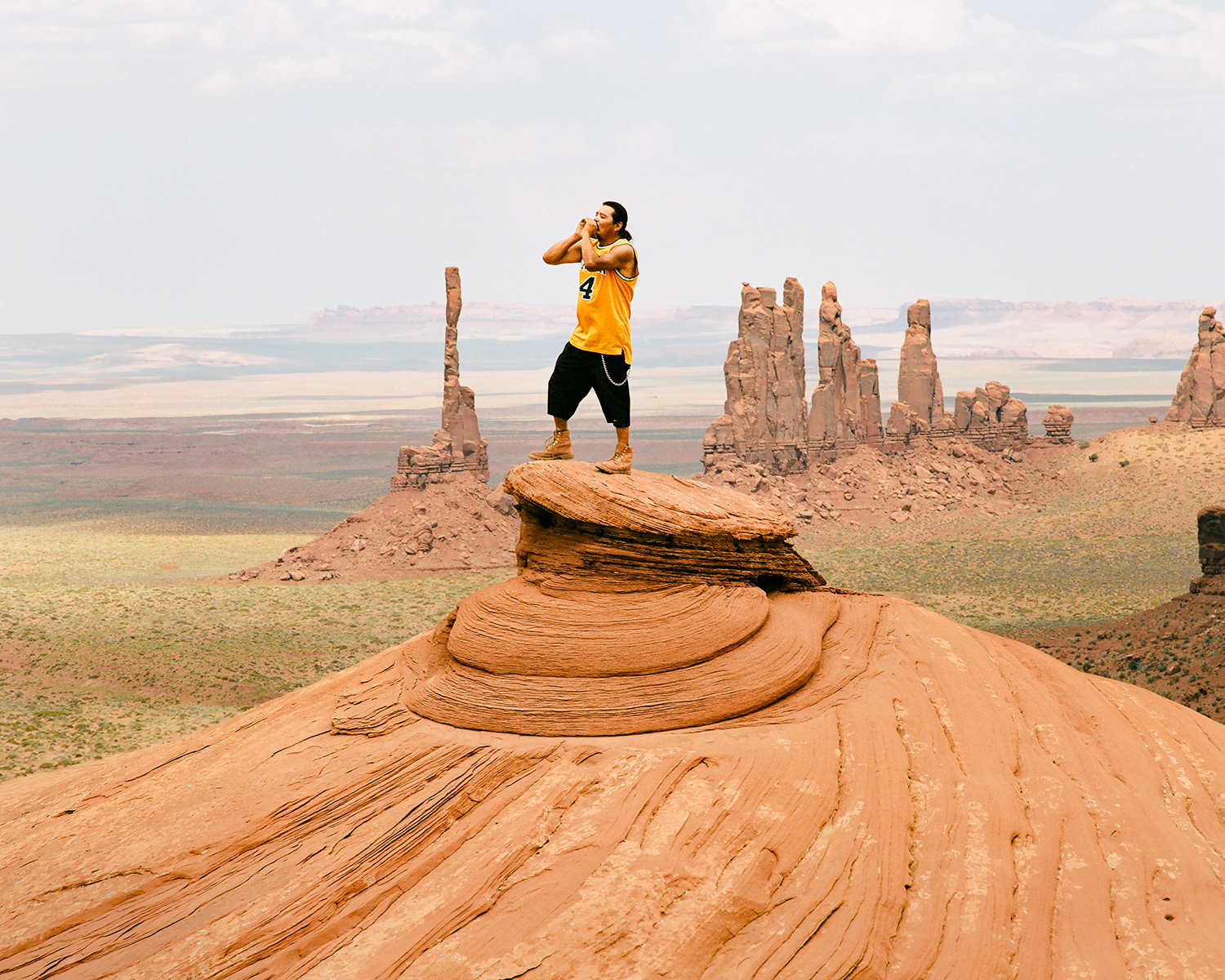
In his piercing new documentary photography project, A Question of Balance, photographer Elliot Ross explores this glaring dichotomy. Ross trains his lens on two distinct communities situated a mere 80 miles apart, both drawing from the same strained lifeline: the Colorado River Basin. Published by KGP Monolith and supported by grants from the Magnum Foundation and the Center for Contemporary Documentation, the project lays bare the systemic inequalities of resource distribution, environmental degradation, and rapid municipal expansion in an era of intensifying climate pressures.
Main Facts of the Crisis
The core of the crisis lies in access and infrastructure. In Utah’s fast-growing Washington County, predominantly Mormon communities experience a lifestyle defined by abundance. Sprawling suburban developments, lush irrigated agriculture, roughly 2,500 private swimming pools, and 17 golf courses dot the desert landscape. Among these is the newly completed $2 billion Black Desert Resort, where vast swaths of green turf defy the arid climate. According to the Washington County Water Conservancy District, roughly one in every twelve gallons of municipal water goes toward keeping this artificial greenery alive, propelling the region to rank among the thirstiest populations in the United States.
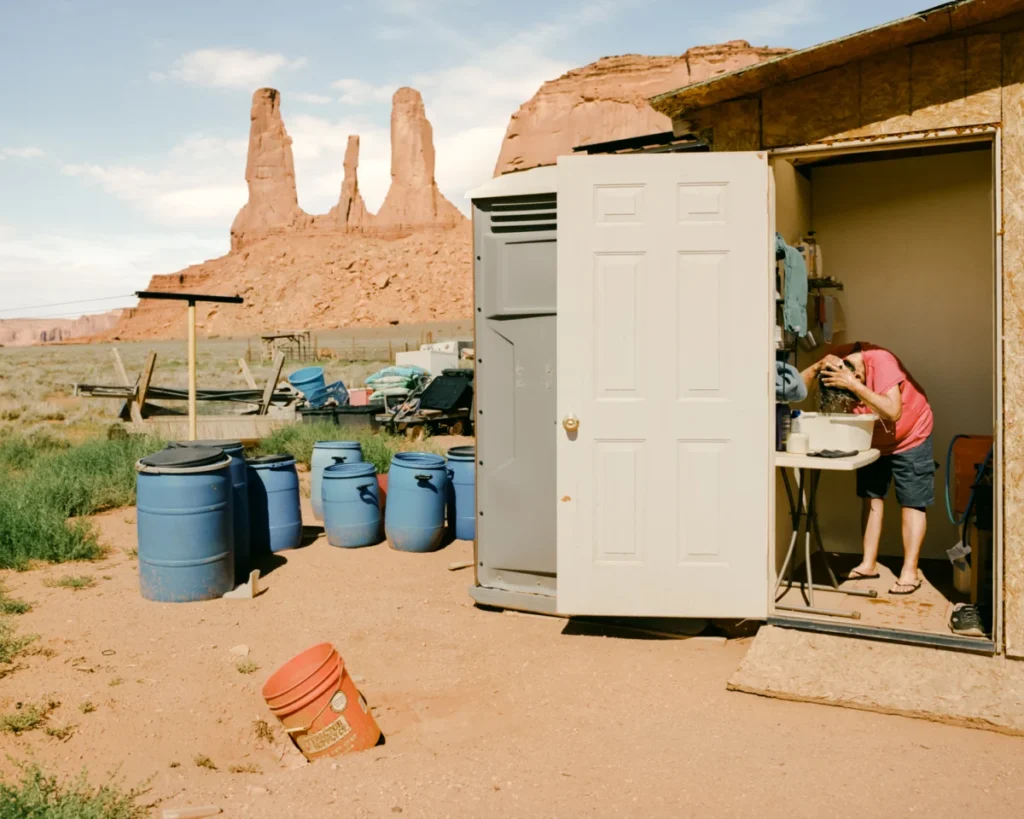
Conversely, the experience inside the Navajo Nation is one of perpetual scarcity and ingenuity born of necessity. Over a third of the Diné population must regularly haul water across punishing terrain to supply their rural households. For many, a single public spigot—such as the unassuming garden hub in Goulding, Utah, which services hundreds of residents—serves as the epicenter of daily survival. Families make the arduous journey multiple times a week, filling tanks to sustain themselves through long, punishing summers. Without the expansive municipal dams and advanced water-capture infrastructure enjoyed by their Utah neighbors, Navajo communities watch helplessly as seasonal monsoons dump precious precipitation onto parched earth without any mechanism to store it safely for large-scale use.

Historical Context and Environmental Legacy
To fully understand the water crisis in the Navajo Nation, one must examine the heavy legacy of the 20th century. Beyond the simple lack of piped infrastructure, indigenous water sources carry an invisible and deadly burden. During the Cold War, the federal government aggressively promoted uranium mining across Navajo lands to fuel the nuclear arms race. Mining companies extracted millions of tons of uranium ore, leaving behind hundreds of abandoned mines, unmitigated waste piles, and contaminated tailing sites.
Decades later, many local springs, creeks, and rivers—including stretches of the Little Colorado River where children occasionally seek relief from summer heat waves—remain laced with cancer-causing chemical elements. Arsenic, nickel, and uranium continue to contaminate the natural hydrology of the reservation. For the Diné, the struggle is not merely about securing enough water to drink, bathe, or cook; it is about finding a source that is safe from industrial poison. This historical environmental injustice compounds the modern infrastructure deficit, rendering traditional water sources hazardous to human health.

Chronology of Sprawling Growth and Rural Persistence
The divergence between Washington County and the Navajo Nation has accelerated sharply over the past half-century, driven by rapid western expansion and systemic federal neglect.
Since 1970, Washington County, Utah, has undergone a staggering transformation from a quiet agricultural enclave into one of the fastest-growing metropolitan areas in the United States. By 2022, the county’s population surged by 1,210% to nearly 198,000 residents. Projections from the Kem Gardner Policy Institute indicate that the region could eventually support a carrying capacity of up to 950,000 people. This hyper-growth is materialized in massive master-planned communities like "Long Valley," a 600-acre project spearheaded by D.R. Horton, the nation’s largest homebuilder, where desert landscapes are rapidly replaced by suburban sprawl.

Parallel to this explosive municipal expansion, rural Navajo residents have maintained a quiet, multi-generational struggle for basic utilities. While marginal milestones are achieved—such as elderly residents like 90-year-old Florence Neztsosie of Navajo Mountain, Arizona, receiving grid electricity for the first time in late 2025—access to running water remains notoriously elusive. Long-time residents like Linda Jackson recall raising children without indoor plumbing, noting that the physical labor of fetching water defined their daily domestic routines: "My kids would say, ‘Mom, did we ever have running water?’ And I would say, ‘Kids, we did all the running.’"
Supporting Data and Visual Documentation
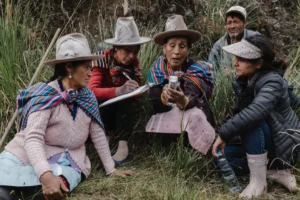
Elliot Ross’s imagery in A Question of Balance captures these disparate realities with stark, uncompromising precision. Photographs juxtapose a 2.4-acre, four-million-gallon private swimming pool—featuring a half-mile shoreline at the Desert Color master-planned community—with portraits of elders sitting in homes where every drop of water must be conserved and cataloged.

Data from regional water authorities and demographic studies underscore the imbalance:
- Water consumption: Washington County dedicates roughly 8.3% of its entire water supply strictly to maintaining golf course turf.
- Population dynamics: Washington County’s growth trajectory contrasts sharply with the static or declining infrastructure investments in remote reservation chapters.
- Logistical burden: Navajo families frequently drive anywhere from 30 minutes to over an hour just to reach a functional watering hole, spending significant portions of their income and time on basic sustenance.
Official Responses and Systemic Implications
Federal agencies, tribal governments, and local water districts have increasingly faced pressure to address these profound inequities, particularly as climate change intensifies droughts across the Colorado River Basin.

Tribal leaders and advocacy organizations have continually lobbied the federal government to fulfill trust responsibilities, pointing out that basic human rights—such as clean, running water—are unfulfilled for thousands of American citizens within reservation borders. While recent federal infrastructure packages have allocated historic funding toward expanding tribal water systems, bureaucratic hurdles, supply chain delays, and the sheer vastness of remote reservation geography mean that progress remains painfully slow.
Conversely, municipal leaders in Utah defend their water management practices by pointing to aggressive conservation measures, tiered pricing structures, and water-efficiency mandates adopted in recent years to cope with dwindling Colorado River allocations. However, critics argue that conservation efforts within booming luxury developments pale in comparison to the structural transformation needed to reallocate regional water wealth equitably.
Broader Impact and Future Outlook

The implications of A Question of Balance extend far beyond the borders of Utah and Arizona. As the American West confronts a permanent aridification trend driven by climate change, competition for every drop in the Colorado River Basin will only intensify.
The project forces a uncomfortable moral reckoning for a nation grappling with resource allocation in the 21st century. It highlights a system where luxury is subsidized by the depletion of shared regional basins, while original stewards of the land are forced to haul water in plastic tanks. Through Ross’s documentation, the personal costs of this imbalance are brought to light, transforming cold statistics into human narratives of resilience, dignity, and an enduring reverence for water as a sacred element of life.