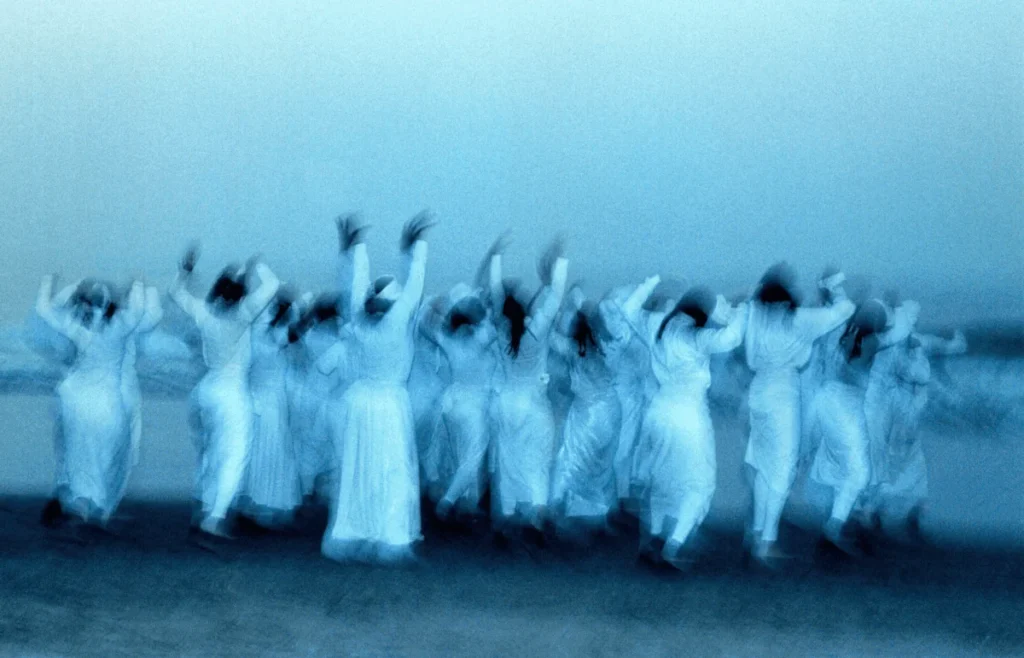

For more than sixty years, legendary photojournalist and artist Chester Higgins has dedicated his lens to capturing the profound depth, rich history, and multifaceted achievements of people of African descent. His latest retrospective, Chester Silverstein Gallery, offers a sprawling visual journey through a career that fundamentally challenged and reshaped how mainstream American media portrays Black lives. The exhibition, running through June 20, 2026, at the esteemed Bruce Silverstein Gallery in New York City, brings together iconic and rarely seen works that span the entirety of Higgins’s storied career, providing both an artistic masterclass and a vital historical archive.
Main Facts and Exhibition Overview
Chester Higgins: Shared Memories serves as a comprehensive testament to a photographer who spent nearly four decades working as a staff photographer for The New York Times. The exhibition curates decades of his fieldwork, capturing intimate domestic scenes, global spiritual ceremonies, civil rights resistance, and everyday human dignity. Higgins’s unique visual vocabulary avoids the traditional journalistic pitfalls of exoticism, pity, and class-based stereotyping. Instead, his photographs elevate the universal human experiences of joy, resilience, family, and aging. By presenting these narratives within the nation’s premier newspaper of record, Higgins altered the visual diet of millions of readers, introducing them to a more authentic and embracing representation of the African diaspora.
Chronology and Formative Years
Higgins’s journey into the medium of photography is deeply rooted in the crucible of the mid-20th-century Civil Rights movement. Raised in rural southern Alabama during an era of intense racial segregation and political upheaval, Higgins developed an early awareness of systemic inequality and the power of media narratives.

His formal entry into photography occurred while he was a student at Tuskegee University, a historically Black institution renowned for its legacy of excellence and political activism. A defining moment in Higgins’s early life occurred the day after he participated in a civil rights protest at the Alabama State Capitol in Montgomery, where demonstrators rallied against the segregationist policies of Governor George Wallace. When Higgins examined the local and national newspapers the following morning, he observed a jarring discrepancy between lived reality and media representation. Rather than depicting the student demonstrators as American citizens exercising their constitutional right to petition the government, mainstream press framing cast them as threats, utilizing tropes of criminality and aggression.
This early realization became the guiding philosophical cornerstone of his career: the understanding that a photograph inevitably reflects the inner perspective, biases, and sociological contract of the photographer. Determined to rectify this imbalance, Higgins embarked on a lifelong mission to document the global Black experience with profound empathy and integrity.

Professional Impact at The New York Times
Higgins joined The New York Times during a pivotal era when mainstream newsrooms were beginning to grapple with internal demands for racial equity and more accurate cultural representation. Over his nearly forty-year tenure at the publication, Higgins operated not merely as a recorder of events, but as an agent of cultural expansion.
During his time at the paper, Higgins frequently traveled domestically and internationally—most notably to various nations across the African continent—to document communities whose daily realities were largely invisible to Western audiences. His approach to photographing poverty and working-class struggle was revolutionary for its time. Rather than relying on tropes of victimhood, Higgins framed his subjects through the lens of human agency, focusing on posture, expression, and cultural richness.

Upon his retirement, leadership at The New York Times acknowledged his monumental influence. The newspaper’s managing editor remarked that Higgins had fundamentally changed the way the publication’s predominantly white staff perceived Black individuals, successfully expanding the institutional horizon. By placing his images before America’s political, cultural, and economic decision-makers, Higgins utilized high art and rigorous photojournalism as educational data, making complex cultural information digestible for a broad readership.
Philosophical Framework and the "Signature of the Spirit"
Central to Higgins’s artistic philosophy is his belief in the interconnectedness of nature, humanity, and the spiritual realm. Higgins often describes his creative process through the concept of the "Signature of the Spirit"—a pursuit of the invisible, multi-layered forces that govern human existence and natural reality.

Having experienced an out-of-mind perception shift during his youth, Higgins views reality as a parallel and multi-layered construct. Rather than imposing his ego upon his subjects, he views himself as an observer attuned to the underlying rhythms of nature. This philosophical detachment allows him to photograph individuals without judgment, capturing moments of transition, ceremony, and authentic human interaction. Whether documenting spiritual rituals in African nations or quiet domestic moments in urban America, Higgins seeks out the common denominator of human emotion, sustained by a shared connection to creation.
Broader Impact and Cultural Implications
The timing of Chester Higgins: Shared Memories at the Bruce Silverstein Gallery carries significant weight within contemporary cultural discourse. In an era marked by shifting conversations surrounding media literacy, visual representation, and historical memory, Higgins’s work provides a necessary antidote to pervasive miseducation and cultural reductionism.

Cultural analysts note that retrospective exhibitions of veteran photojournalists like Higgins offer crucial educational resources for contemporary artists and media practitioners. By demonstrating how visual empathy can dismantle systemic prejudice, Higgins’s six-decade archive serves as both a historical record and a blueprint for ethical storytelling.
The exhibition not only honors an extraordinary individual artistic trajectory but also challenges contemporary viewers to examine their own lenses of perception. As Chester Higgins: Shared Memories remains open to the public through June 20, 2026, it invites visitors to engage with a visual legacy that insists on the fullness, dignity, and universal humanity of people of African descent.