
The Evolution of the Baseline Standard
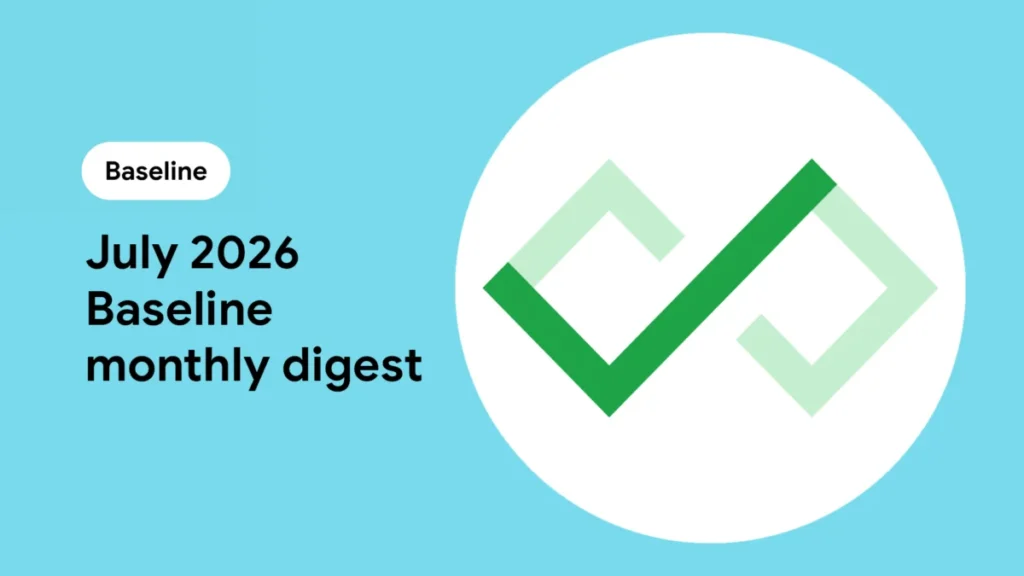
The Baseline initiative, managed by the WebDX Community Group, was established to address the chronic issue of "browser fragmentation," where features were supported in some environments but not others. By categorizing features into "Newly Available" and "Widely Available," the initiative provides developers with a clear roadmap for modernizing their codebases. As of August 2026, the ecosystem has reached a state of maturity where developers are increasingly encouraged to replace external dependencies with native browser implementations, a trend that significantly improves site performance, reduces bundle sizes, and enhances security by minimizing the reliance on unverified third-party packages.
Integrating Compliance into the Developer Workflow
A major milestone for developer productivity this month is the integration of the Baseline Features audit into Lighthouse. Lighthouse, Google’s open-source automated tool for improving web page quality, now includes a dedicated audit module that scans a site’s code to identify usage of modern platform features.
This update represents a shift toward "proactive compliance." Previously, developers had to manually cross-reference features against compatibility tables like MDN or CanIUse. With the new audit, developers receive an automated report during their CI/CD process that flags features that may not yet be "Widely Available" in their target audience’s browser range. This reduces the risk of deploying code that could break on legacy browsers while simultaneously highlighting opportunities to adopt newer, more efficient syntax that has finally crossed the threshold into widespread support.
Agentic AI and the Future of Code Audits
The role of artificial intelligence in web development continues to expand, as evidenced by recent testing conducted by Ahmad Alfy on the "modern-web-guidance" framework. Alfy’s investigation involved applying this agentic coding skill to a production-scale React application. The results provide a compelling look at how AI-driven tools are moving beyond simple code generation to performing architectural analysis.
The agentic audit identified several "stale patterns"—outdated coding practices that persist in older codebases even when modern, superior platform alternatives exist. By surfacing these, the AI allows developers to refactor technical debt with higher confidence. This methodology implies a future where maintenance is not a manual, error-prone task but a continuous, automated stream of platform alignment. As AI models become more adept at understanding the nuances of the Baseline specification, teams can expect a significant reduction in the time required to migrate legacy applications to modern standards.
Strategic Shift: APIs Replacing External Dependencies
The current industry trend is moving away from the "everything is a package" mindset that dominated the early 2020s. Developer Dennis Morello highlighted four specific APIs that reached Baseline in 2026, which have fundamentally altered the architecture of modern web applications:
- The Navigation API: This has simplified the complex world of client-side routing, allowing for more predictable page transitions and state management without the need for heavy routing libraries.
- Container Style Queries: These allow developers to style components based on the state of their container rather than the viewport, enabling truly modular and responsive design systems.
- The
:openPseudo-class: A CSS addition that simplifies the state management of elements like<details>and<dialog>, removing the need for JavaScript-heavy toggling. - Math.sumPrecise(): This provides a native, reliable way to handle floating-point arithmetic, which has historically been a point of failure for financial and scientific applications on the web.
By adopting these native APIs, developers can achieve the same functionality as third-party packages with significantly less overhead. This shift is not merely cosmetic; it is a strategic move to improve Core Web Vitals, as native implementations are almost universally faster and more memory-efficient than their JavaScript-based counterparts.
Technical Deep Dive: Newly and Widely Available Features
The August 2026 update includes several additions to the Baseline library that developers should begin integrating immediately.
Intl.Locale
Internationalization (i18n) has historically been one of the most complex aspects of web development. The arrival of Intl.Locale in Baseline simplifies the handling of Unicode locale tags. By providing a standard interface for parsing and manipulating language, script, and region sub-tags, the platform now handles the heavy lifting that previously required custom, error-prone regex parsing or large external i18n libraries.
Array.fromAsync()
Asynchronous data streams are the backbone of modern web applications. The introduction of Array.fromAsync() brings a much-needed parity to the JavaScript ecosystem. While Array.from() was efficient for synchronous data, it struggled with async iterables, often requiring verbose for await...of loops or Promise.all wrappers. Array.fromAsync() cleans up this syntax, allowing for more readable and performant handling of data fetched from APIs or streams.
CSS rect() Function
The rect() function for CSS clip paths and offset paths provides a declarative way to handle geometric shapes. By allowing developers to define shapes using inset distances from the containing block, it provides a more intuitive and readable alternative to existing clipping methods. This is particularly useful for complex layouts and animations, where precision is paramount.
Comprehensive Image Strategy
The updated MDN guide on image file types and formats serves as a critical resource for performance optimization. With the proliferation of formats like AVIF and WebP, developers often struggle to maintain an effective imagery strategy. The new documentation provides a standardized framework for selecting the right format based on browser support and compression requirements, ensuring that image-heavy sites do not compromise on load times or visual fidelity.
Broader Implications for the Web Ecosystem
The implications of these developments are twofold. First, the standardization of these APIs creates a more predictable environment for developers. When a feature reaches "Widely Available" status, it signals to stakeholders and project managers that the risk of implementation is virtually zero, justifying the investment in refactoring.
Second, the maturation of these tools points to a stabilization of the web platform. After years of rapid, often fragmented innovation, the industry is entering a phase of consolidation. The focus is shifting from "how do we get this to work" to "how do we build this sustainably."
Conclusion and Future Outlook
As of August 2026, the Baseline initiative has solidified its role as the authoritative source for platform readiness. For organizations looking to modernize their infrastructure, the combination of the new Lighthouse audits, the shift toward native APIs, and the application of agentic AI for code maintenance provides a clear path forward.
The web development community is encouraged to remain active in this transition. Feedback on the current Baseline features, as well as requests for future inclusions, can be submitted through the official web-platform-dx GitHub issue tracker. As the platform continues to evolve, the ability to rapidly integrate these updates will distinguish the most efficient and high-performing development teams. By prioritizing native browser capabilities, the industry is not only improving the end-user experience but also building a more resilient and sustainable web.