
Naming is the bedrock of digital communication, serving as the interface between abstract code and human understanding. When teams fail to establish a shared vocabulary, the resulting friction—manifesting as misaligned design systems, bloated codebases, and poor feature adoption—often costs organizations significant time and resources. As digital products scale from single-platform utilities to multi-brand ecosystems, the challenge of naming design tokens, HTML classes, and UI components has transitioned from a minor technical chore to a critical architectural requirement.

The complexity of modern development environments exacerbates this issue. Designers, developers, and product managers often operate in linguistic silos, each group utilizing its own "dialect" to describe the same interface element. This semantic fragmentation is not merely a stylistic nuisance; it is a structural failure that hinders scalability. To address this, industry leaders are increasingly adopting standardized, robust taxonomies that prioritize clarity, scalability, and, above all, the end-user’s perspective.
The Evolution of Digital Taxonomy
Historically, naming conventions in web development were largely ad-hoc, driven by individual developer preference or immediate, short-term needs. However, the rise of design systems over the last decade has necessitated a shift toward structured, systemic naming. According to industry analysis, organizations that invest in a unified naming taxonomy report a 30% reduction in "design debt"—the accumulation of inconsistent patterns and redundant code that slows down product development cycles.

The evolution of these systems generally follows a four-stage maturity model:
- The Ad-Hoc Phase: No formal naming structure; names are descriptive but inconsistent (e.g., "blue-button-big" vs. "large-primary-btn").
- The Pattern Phase: Development of basic CSS/JS naming conventions, often leveraging methodologies like BEM (Block Element Modifier).
- The Tokenization Phase: The abstraction of visual properties into design tokens (e.g., color, spacing, typography) that function across platforms.
- The Semantic Ecosystem: A fully integrated, multi-brand taxonomy where tokens are mapped to specific business logic and user-facing outcomes.
Bridging the Gap: Resources for Standardized Naming
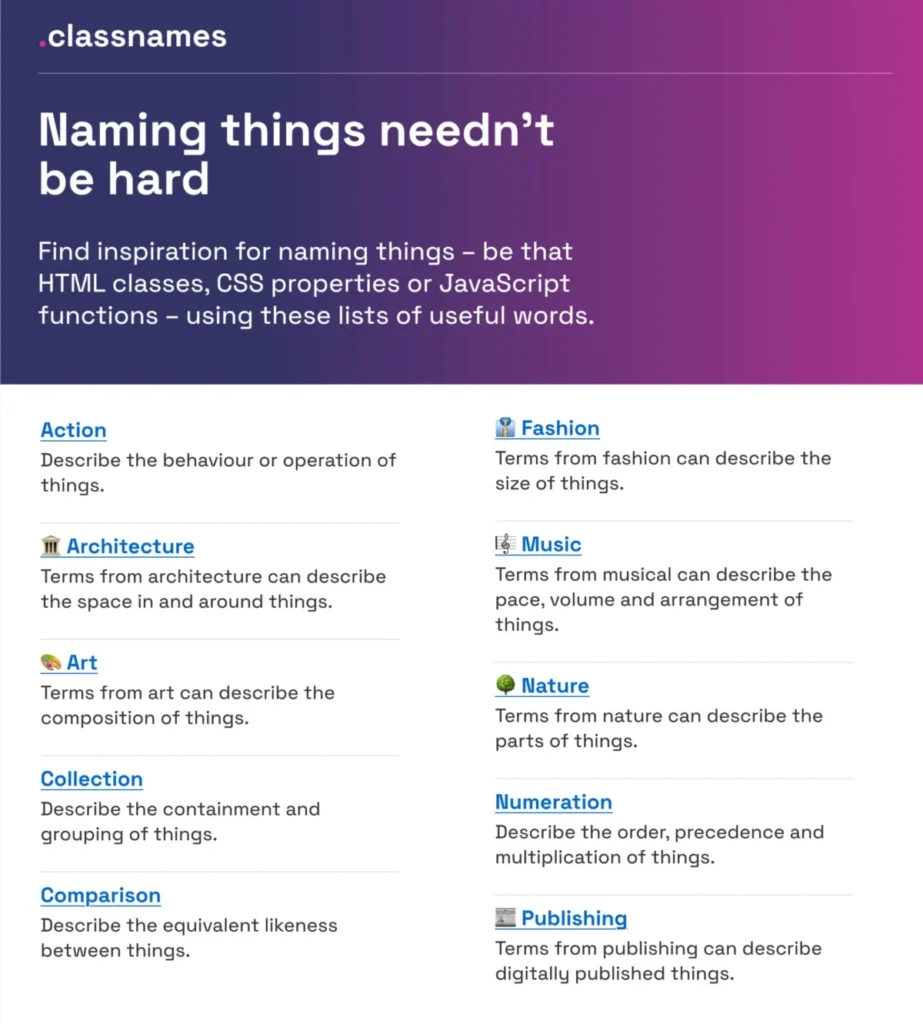
For teams struggling to standardize, several open-source resources have emerged as industry benchmarks. Tools like Classnames offer thematically grouped vocabularies that help developers move away from generic identifiers, encouraging names that describe intent rather than appearance. By categorizing terms related to behavior, hierarchy, and association, developers can avoid the "too specific vs. too generic" trap that often leads to brittle code.

Similarly, in the realm of color management, the Color Parrot repository has become a critical asset. Managing thousands of color variations across a global product requires more than just hex codes; it requires a naming structure that is intuitive. With over 30,000 unique color entries, such repositories allow teams to build a consistent color palette that remains scalable as brand requirements evolve.
Strategic Design Token Architecture: The Intuit Case Study
One of the most significant advancements in recent years is the transition from static naming to flexible, hierarchical taxonomies. A notable case study involves the team at Intuit, which supports a vast portfolio of financial products including QuickBooks, TurboTax, and Mailchimp. The challenge was to create a token system that could support diverse brand identities while maintaining a shared technical foundation.

The resulting taxonomy moves beyond simple visual naming, employing a multi-layered approach:
- Brand Tokens: Foundational values that define the specific aesthetic of a product.
- Primitive Tokens: Raw values (e.g., specific shades of blue, pixel values) that act as the building blocks.
- Semantic Tokens: Names that define the role or state of the element (e.g., "action-primary-hover").
- Component Tokens: Specific overrides applied to individual UI elements.
By decoupling the name from the visual value, Intuit achieved a system where a single variable could be updated globally without requiring manual refactoring across dozens of products. This structure aligns with the work of experts like Nathan Curtis, who has long advocated for "naming as a design activity" rather than a byproduct of implementation.

The Impact on Feature Adoption
The failure to name features effectively is a common, yet frequently overlooked, cause of low user adoption. Research in UX design suggests that if a user cannot quickly conceptualize the function of a feature based on its name, they are significantly less likely to engage with it.
The primary recommendation for product teams is to adopt "customer-centric nomenclature." Instead of naming a feature based on its technical implementation—for example, "Data Synchronization Engine"—teams should prioritize the "job-to-be-done." If user testing reveals that customers refer to a function as "automatic updates," the product team should adopt that language. Aligning the internal product nomenclature with the user’s mental model drastically reduces the learning curve and increases the discoverability of new tools.
Managing Complexity in Multi-Brand Systems
As illustrated by the Vodafone UK Design System team’s Variables Taxonomy Map, managing complex, multi-themed systems requires rigorous documentation. Their approach highlights the necessity of a "source of truth"—a visual or structural map that explains the relationship between tokens.
This level of detail is essential for onboarding new team members and ensuring that as the design system grows, it does not collapse under the weight of naming conflicts. A well-maintained taxonomy map allows teams to:

- Identify redundant tokens before they proliferate.
- Clearly demarcate between tokens used for light mode vs. dark mode.
- Maintain a clear audit trail for why specific naming decisions were made.
The Economic and Operational Implications
The implications of poor naming are not merely aesthetic; they are economic. When a development team spends an extra 15 minutes per day deciphering poorly named variables, or when a designer spends hours searching for the correct component because the library is poorly categorized, the cumulative cost is substantial.
For a team of 20 developers, even a conservative estimate of 30 minutes lost per week due to "naming confusion" translates to hundreds of hours of lost productivity annually. By implementing structured naming conventions, organizations can:

- Reduce Onboarding Time: New engineers and designers can understand the system’s logic faster if the naming is intuitive and consistent.
- Improve Collaboration: Standardized naming acts as a common language, facilitating smoother handoffs between design and engineering.
- Enhance Maintenance: Refactoring a codebase with standardized naming is significantly faster and less prone to regression errors than one filled with ambiguous identifiers.
Conclusion: Moving Toward a Unified Vocabulary
The consensus among design systems architects is clear: the most effective name is one that is both meaningful and widely understood by all stakeholders. Whether one is naming a CSS class, a Figma layer, or a new product feature, the goal remains the same: to minimize the cognitive load required to interpret the system.
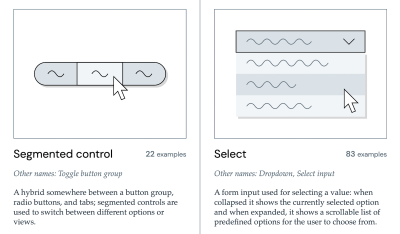
While tools and repositories like the Component Gallery and Name That UI provide excellent starting points for benchmarking common practices, the ultimate responsibility for a clear taxonomy lies with the team. By conducting regular audits, establishing clear naming guidelines, and prioritizing user-centric language, organizations can transform their design systems from a collection of parts into a cohesive, scalable asset.

As the web continues to evolve, the ability to name things with precision will remain a critical skill. It is an investment in the longevity and usability of digital products, ensuring that the technology built today remains understandable and maintainable for the teams of tomorrow. Ultimately, a strong naming strategy is the silent engine of a successful digital transformation, fostering collaboration and driving the seamless experiences that users have come to expect in an increasingly complex digital landscape.