Tag: guide

  • How to Optimize Product Pages for AI Search Visibility: A Comprehensive Guide for Ecommerce Brands

    How to Optimize Product Pages for AI Search Visibility: A Comprehensive Guide for Ecommerce Brands

    The global retail landscape is currently undergoing its most significant technological transformation since the advent of the World Wide Web. As generative artificial intelligence (AI) begins to dominate the digital interface, the traditional mechanics of product discovery are being fundamentally rewritten. Recent market research highlights a dramatic shift in consumer behavior: approximately 58% of shoppers now utilize generative AI tools, such as ChatGPT, Perplexity, and Google’s AI Mode, as their primary method for product discovery, often bypassing traditional search engines entirely. Furthermore, data from Capgemini indicates that 71% of consumers explicitly desire generative AI to be integrated into their shopping experiences, signaling a move toward "agentic commerce" where AI assistants act as intermediaries between the brand and the buyer.

    How to Optimize Your Product Pages for AI Visibility

    For ecommerce brands, this shift presents a critical challenge: the "black box" of AI recommendations. Unlike traditional search engine optimization (SEO), which relies on keywords and backlink profiles, AI-driven search—often referred to as Answer Engine Optimization (AEO) or Generative Engine Optimization (GEO)—prioritizes semantic relevance, contextual accuracy, and third-party consensus. When a user asks an AI for the "best winter jackets for women," the system does not return a list of links; it provides a synthesized response featuring specific product recommendations, pricing, material details, and a summary of user sentiment. To remain visible in this new ecosystem, brands must transition from optimizing for algorithms to optimizing for Large Language Models (LLMs).

    How to Optimize Your Product Pages for AI Visibility

    The Evolution of the Search Paradigm

    To understand the necessity of AI optimization, one must view the chronology of digital retail. In the early 2000s, search was purely transactional and keyword-based. By the 2010s, Google’s Knowledge Graph introduced entities and relationships, allowing for more "intelligent" results. Today, we have entered the era of semantic retrieval. LLMs do not simply match words; they infer intent. They analyze the relationship between a product’s specifications and a user’s specific life scenario.

    How to Optimize Your Product Pages for AI Visibility

    This evolution means that a product page is no longer just a digital brochure; it is a data source for AI training and retrieval. If an AI cannot confidently parse the information on a page, it will ignore the product entirely. Industry analysts suggest that the products surfaced by AI are those that offer the highest "confidence scores" across two primary vectors: semantic relevance (how well the product fits the query) and consensus signals (how much the internet trusts the product).

    How to Optimize Your Product Pages for AI Visibility

    Six Essential Pillars of AI-Friendly Product Pages

    To secure a position in AI-generated recommendations, ecommerce enterprises must refine their product pages to meet the specific requirements of LLM processing. This involves a combination of linguistic clarity, technical infrastructure, and social proof.

    How to Optimize Your Product Pages for AI Visibility

    1. Semantic Language and Contextual Descriptions

    Traditional SEO often led to "keyword stuffing," where phrases were repeated to satisfy search crawlers. AI models, however, utilize semantic retrieval to understand the meaning behind a query. For instance, if a consumer searches for a "vacuum for pet hair," an LLM looks beyond that specific phrase. It seeks related concepts such as "suction power for dander," "anti-tangle brush rolls," "HEPA filtration for allergens," and "performance on high-pile carpets."

    How to Optimize Your Product Pages for AI Visibility

    Brands must incorporate this natural, problem-solving language into their descriptions. By analyzing community discussions on platforms like Reddit or specialized forums, brands can identify the specific vocabulary consumers use to describe their pain points. Integrating these semantic terms allows an AI to infer that a product is the ideal solution for a highly specific user request.

    How to Optimize Your Product Pages for AI Visibility

    2. Real-Time Data Integration via Feeds and APIs

    Recency is a major factor in AI confidence. LLMs frequently cross-reference web data with merchant feeds to ensure they are not recommending out-of-stock items or incorrect prices. Stale data is a significant deterrent for AI recommenders. To combat this, leading brands are utilizing Shopify’s Catalog API, OpenAI’s Product Feed Spec, and Google’s Merchant Center. These tools provide a direct line of "truth" to the AI, ensuring that when a shopper asks for a "sofa under $1,000 available for delivery in Boston," the AI can verify the inventory and price in real-time.

    How to Optimize Your Product Pages for AI Visibility

    3. The Synthesis of Ratings and Reviews

    AI models do more than just display a star rating; they read and summarize the text of thousands of reviews to identify recurring themes. OpenAI has confirmed that its shopping research tools often surface "pros and cons" pulled directly from user feedback. If a product is frequently praised for being "lightweight" but criticized for "short battery life," the AI will include these nuances in its conversational response. Brands must encourage detailed, attribute-specific reviews and display them in a structured format that AI crawlers can easily ingest.

    How to Optimize Your Product Pages for AI Visibility

    4. Contextual Use Cases and Scenario-Based Marketing

    AI search thrives on specificity. A vague description such as "high-quality charger" is less likely to be recommended than one that specifies "ultra-compact 3-in-1 charger optimized for international travel and carry-on restrictions." Brands should shift their marketing focus from "what the product is" to "when and why someone needs it." By identifying the "triggers" for a purchase—such as a specific hobby, a weather event, or a life milestone—and explicitly mentioning them on the product page, brands help the AI match the product to the user’s situational intent.

    How to Optimize Your Product Pages for AI Visibility

    5. Third-Party Validation, Awards, and Certifications

    Trust is the currency of AI recommendations. LLMs are programmed to avoid "hallucinations" and unreliable claims. Consequently, they prioritize products that have been verified by reputable third parties. An analysis of 50 leading ecommerce brands revealed that 82% of those with high AI visibility prominently featured awards or certifications on their pages. Whether it is a "Best of 2024" award from a major publication, a safety certification (like UL or CE), or a sustainability badge (like Fair Trade), these signals provide the "consensus" the AI needs to recommend a product with confidence.

    How to Optimize Your Product Pages for AI Visibility

    6. Technical Precision: Schema Markup and Structured Attributes

    While AI models are becoming better at reading natural language, they still rely heavily on structured data. Schema.org markup (specifically the "Product" and "Offer" types) allows a brand to tell the AI exactly what the price, currency, availability, and specifications are in a machine-readable format. This technical layer acts as a map for the AI, ensuring it does not have to "guess" the details of a product, thereby increasing the confidence score of the recommendation.

    How to Optimize Your Product Pages for AI Visibility

    Industry-Specific Optimization Strategies

    The criteria for AI visibility are not uniform across all sectors. Different industries require emphasis on different data points to satisfy the AI’s logic.

    How to Optimize Your Product Pages for AI Visibility
    • Fashion and Apparel: AI prioritizes fit, material composition, and "style match." Product pages must include detailed sizing guides, fabric weights (e.g., "12oz heavyweight cotton"), and care instructions.
    • Health and Wellness: Safety and ingredients are paramount. AI looks for "Non-GMO," "Third-party lab tested," and explicit dosage instructions. Trust signals in this category are non-negotiable.
    • Electronics and Technology: This sector is spec-heavy. AI compares products based on technical attributes like "mAh battery capacity," "nit brightness," and "processor speed." These must be presented in clear, tabular formats.
    • Home and Furniture: Dimensions and configuration options are the primary focus. An AI needs to know the exact width, depth, and height to answer a user’s question about whether a piece will fit in a specific room.
    • Outdoor and Sports: Durability and performance in specific environments (e.g., "waterproof up to 10,000mm," "rated for -20°C") are the key metrics for AI discovery.

    The Broader Implications for the Future of Retail

    The rise of AI search represents a move toward a more "frictionless" economy. As Google rolls out its Universal Commerce Protocol and OpenAI enhances its "Shopping Research" mode, the boundary between searching for a product and purchasing it is blurring. We are moving toward a future where a consumer might say to their device, "Find me a sustainable, waterproof hiking boot for my trip to Iceland next week and buy the one with the best reviews," and the AI assistant will execute the entire transaction.

    How to Optimize Your Product Pages for AI Visibility

    For brands, the implication is clear: those who fail to optimize their data for AI consumption will become invisible. This transition requires a holistic approach that blends technical SEO, traditional PR (to earn those crucial third-party awards), and customer-centric copywriting.

    How to Optimize Your Product Pages for AI Visibility

    Conclusion: The Path to AI Visibility

    Optimizing for AI is not a one-time task but an ongoing strategy of data refinement. Brands must begin by auditing their existing product pages against the "confidence requirements" of current LLMs. By providing clear, structured, and verifiable information, companies can ensure their products are not just listed on the web, but are actively recommended by the AI assistants that are increasingly making decisions for the modern consumer. The era of the "link" is ending; the era of the "answer" has begun. Brands that provide the best, most trustworthy answers will be the ones that thrive in this new agentic era of commerce.

  • Mastering the Digital Soundscape: A Comprehensive Guide to Trending Instagram Audio and Strategic Content Optimization for April 2026

    Mastering the Digital Soundscape: A Comprehensive Guide to Trending Instagram Audio and Strategic Content Optimization for April 2026

    The integration of specific audio markers has transitioned from a creative luxury to a fundamental requirement for digital visibility on Meta-owned platforms, particularly as Instagram’s algorithm continues to favor audio-centric metadata across its diverse posting formats. In the second quarter of 2026, the strategic selection of trending audio has become the primary driver for content appearing on the Instagram Explore page and the specialized Reels feed. This shift is characterized by a significant technological update: the expansion of audio integration beyond Reels to include carousels and single-photo posts. This maneuver allows static and multi-image content to bypass traditional feed limitations, making them eligible for the high-traffic Reels discovery engine and effectively expanding a creator’s or brand’s reach by an estimated 40 percent compared to non-audio-enhanced posts.

    The Evolution of Instagram’s Audio-Centric Algorithm

    The current digital landscape in April 2026 reflects a multi-year pivot by Meta to compete with short-form video competitors. By allowing audio to serve as a bridge between static imagery and video feeds, Instagram has created a unified discovery ecosystem. Analysts observe that posts utilizing "Trending" labeled audio—identifiable by the rising arrow icon—experience a higher velocity of engagement within the first hour of publication. This is not merely a matter of aesthetic preference but a functional component of SEO (Search Engine Optimization) within the app. Audio tracks now act as searchable tags; when a user clicks on a sound, they are presented with a gallery of all content using that specific clip, providing a secondary discovery pathway that rivals traditional hashtags.

    For brands and independent creators, the challenge lies in identifying these trends before they reach a point of saturation. The lifecycle of a trending sound in 2026 has compressed to approximately 10 to 14 days, requiring rapid content production cycles to capitalize on peak viral windows.

    Top 13 Trending Tracks and Audio Clips: April 2026 Analysis

    The following tracks have been identified as the high-velocity leaders for the current month, categorized by their utility and the specific demographics they engage.

    1. PINKY UP by KATSEYE

    The global girl group KATSEYE has secured a dominant position in the April charts with "PINKY UP." Characterized by high-energy percussion and bold synthesizer arrangements, the track has sparked a global dance challenge. The "pinky up" movement—a specific choreographic cue—has become a visual shorthand for luxury, confidence, and precision. Data suggests that content utilizing this track sees high retention rates, as users often re-watch clips to learn the choreography.

    2. Sunny by Boney M.

    In a resurgence of "vintage-core" aesthetics, the 1976 classic "Sunny" by Boney M. has been repurposed for a high-concept comedic trend. The "office is on fire" meme involves creators filming themselves calmly retrieving non-essential but personally significant items—such as high-end espresso machines or specific desk ornaments—while a simulated crisis occurs. This trend has been particularly successful for corporate B2B brands looking to humanize their digital presence through self-deprecating humor.

    3. YAHWEH by Forrest Frank

    Forrest Frank continues to define the "Sunshine Pop" and "Christian Summer" genres. "YAHWEH" utilizes a reggae-inspired rhythm that appeals to lifestyle influencers. The audio is frequently paired with high-saturation outdoor cinematography, "day-in-the-life" vlogs, and wellness content. Its success highlights a growing demand for "low-cortisol" content that emphasizes tranquility and positive reinforcement.

    4. Bottom Of Your Boots by Ella Langley

    The country music sector remains a powerhouse on social media. Ella Langley’s "Bottom Of Your Boots" gained momentum following a high-profile appearance on the This Past Weekend podcast. The track is predominantly used for lip-sync videos and "Southern Gothic" or "Soft Country" aesthetic montages, signaling a trend toward authentic, narrative-driven storytelling in short-form media.

    5. Original Audio: Chris Brown and Usher

    The announcement of a collaborative tour between R&B titans Chris Brown and Usher has generated a high-utility "hype" sound. The audio, featuring revving engines and cinematic transitions, is being utilized by news outlets and event promoters to signal "main event" moments. It serves as an effective tool for building anticipation for product launches or major announcements.

    6. A Good Day Humming by Mimi Chill Music

    Catering to the "Slow Living" movement, this acoustic track featuring soft humming is the preferred choice for "aesthetic" accounts. It is statistically the most used track for morning routines, interior design showcases, and pet-related content. The minimalist nature of the audio allows the visual content to remain the primary focus while providing a cohesive emotional backdrop.

    7. Titanium x Please Me (Slowed) by TRUE CHAD

    This mash-up has facilitated the "Stress-O-Meter" trend. The audio structure allows creators to contrast a high-stress scenario (using the upbeat tempo) with a sudden transition to a relaxing or humorous "antidote" (the slowed-down section). This format is highly effective for educational content and "relatability" marketing.

    13 Trending Sounds on Instagram in April 2026 (+ How to Use Them)

    8. Planet Rock by Afrika Bambaataa

    Following the passing of hip-hop pioneer Afrika Bambaataa in early April 2026, his 1982 hit "Planet Rock" has seen a massive cultural resurgence. Beyond its use as a memorial tribute, the track is being utilized to showcase the evolution of electronic music and breakdance culture. Its presence in the trending charts reflects the platform’s role as a space for cultural education and historical preservation.

    9. april by ILOVEFLOWERS

    Seasonal audio remains a staple of the Instagram ecosystem. This soft piano track is currently being utilized for spring-themed content, including gardening, floral arrangements, and travel vlogs. Its versatility makes it a "safe" choice for creators who wish to align with seasonal trends without committing to a specific meme format.

    10. Original Audio: emmyyberry

    This mash-up, created by a ballerina-turned-powerlifter, combines Green Day’s "Brain Stew" with a punchy voiceover from the series Heated Rivalry. It has become the definitive anthem for the "Fitness and Empowerment" niche. The sound is primarily used to document "Personal Records" (PRs) in weightlifting and to challenge gender stereotypes in sports.

    11. Runway by Lady Gaga and Doechii

    As the lead single from the The Devil Wears Prada 2 soundtrack, "Runway" is the premier choice for fashion and transformation content. The lyrics emphasize self-expression and confidence, making it the standard audio for "outfit of the day" (OOTD) transitions and professional modeling portfolios.

    12. COCONUT (feat. Eem Triplin) by SAILORR

    This track represents the "community-building" aspect of Instagram audio. It is currently the subject of a viral dance challenge that varies from professional studio routines to casual, instructional "learn-with-me" videos. The track’s rhythmic complexity makes it a favorite for creators focusing on high-level editing and synchronization.

    13. Original Audio: browsbyzulema

    This "audio tool" features a rhythmic pause followed by the command "world, stop." It is a functional sound designed for "The Reveal." It is most effective in beauty tutorials, home renovations, and art process videos, where the audio provides a dramatic beat before showing the final product.

    Chronology of Audio Trends: Q1 to Q2 2026

    The trajectory of audio trends in 2026 shows a clear shift from purely musical clips to "utility audio"—sounds designed to trigger specific visual actions.

    • January–February 2026: Dominance of AI-generated lo-fi beats and "pov" storytelling audios.
    • March 2026: Rise of "Cinematic Realism," where high-fidelity environmental sounds (ASMR) began trending over traditional music.
    • April 2026: The current "Hybrid Era," where nostalgia (Boney M.) meets contemporary pop-culture milestones (KATSEYE and The Devil Wears Prada 2).

    Supporting Data: The Impact of Audio on Engagement

    Internal data from social media management platforms indicates that posts using trending audio in April 2026 have a 22% higher "Save" rate—a metric Meta currently weighs heavily in its ranking algorithm. Furthermore, carousels that utilize audio have shown a 15% increase in "slide completion" rates, suggesting that background music encourages users to view all images in a set rather than scrolling past.

    Industry experts at Buffer and other analytics firms note that "Original Audio" (user-created clips) now accounts for 35% of the trending charts, a significant increase from 2024. This suggests that the barrier to entry for "going viral" has shifted from having a high production budget to having a unique or "meme-able" auditory concept.

    Strategic Methodology: Finding and Utilizing Sounds

    To maintain a competitive edge, creators are encouraged to utilize the "Professional Dashboard" on Instagram. This feature now includes an "Original Audio" tab that predicts upcoming trends based on early-stage velocity data.

    1. Identify the "Rising Arrow": Only sounds with the upward-slanting arrow icon are technically "trending" in the algorithm’s eyes.
    2. Volume Management: When using audio for vlogs or tutorials, creators should set the trending track to a low volume (5–10%) while maintaining their original voiceover at 100%. This allows the post to be categorized under the trending sound’s metadata without distracting the audience.
    3. Cross-Format Synergy: A single trending sound should be used across a Reel, a Carousel, and a Story to reinforce the account’s association with that specific trend in the eyes of the algorithm.

    Broader Impact and Industry Implications

    The reliance on audio as a discovery tool has profound implications for the music industry. Record labels now prioritize "social-ready" snippets—15 to 30-second hooks—over traditional full-length song structures. Additionally, the resurgence of legacy tracks like "Sunny" and "Planet Rock" demonstrates the "long-tail" economic value of music catalogs in the digital age.

    For the user, this evolution means the Instagram experience is increasingly immersive and auditory. For the marketer, it necessitates a move toward "sound-on" content strategies. As Meta continues to refine its discovery engine, the ability to synthesize visual storytelling with trending auditory markers will remain the primary differentiator between stagnant accounts and those achieving viral growth in the 2026 digital economy.

  • WhatsApp Marketing for Small Business: A Strategic Guide to High-Impact Conversational Commerce

    WhatsApp Marketing for Small Business: A Strategic Guide to High-Impact Conversational Commerce

    The landscape of digital engagement is undergoing a fundamental shift as small businesses move away from the saturated environments of traditional social media feeds and toward the intimacy of direct messaging. According to the 2026 Social Media Content Strategy Report, 46% of marketers are actively increasing their investment in WhatsApp this year, identifying it as a critical channel for capturing high-intent users. While many smaller enterprises initially utilized the application as a simple customer service inbox, the current trend indicates a transition toward using the platform to facilitate the entire customer journey, from initial product discovery to post-purchase loyalty.

    The Evolution of Conversational Marketing

    WhatsApp marketing involves the strategic use of the WhatsApp Business app or the WhatsApp Business Platform (API) to promote products, provide customer support, and facilitate sales through direct, one-on-one communication. As a text-first powerhouse, WhatsApp has secured its position as the second most popular network for text-driven social media, accounting for 26% of all such interactions globally. This environment is uniquely suited for conversational marketing—a model that prioritizes real-time dialogue over static broadcasting.

    The platform’s utility is divided into two distinct tiers. The WhatsApp Business App is designed for local, small-scale operations, allowing for a single-user interface and basic automation. Conversely, the WhatsApp Business Platform (API) is engineered for scaling enterprises, offering multi-user access, integration with Customer Relationship Management (CRM) systems, and advanced chatbot capabilities. This dual-track approach ensures that as a small business grows, its communication infrastructure can evolve in tandem.

    Global Adoption and Market Data

    The decision to pivot toward WhatsApp is backed by significant consumer behavior data. WhatsApp currently ranks as the fourth most utilized social platform globally, boasting over 2 billion active users. However, its dominance is even more pronounced in specific regional markets. In the United Kingdom, for instance, it is the premier social platform with an 81% usage rate. In the United States, while the usage rate sits at approximately 52%, the platform records the highest weekly brand interaction frequency, with 85% of users engaging with businesses on a weekly basis.

    Data from the Q2 2025 Consumer Pulse Survey Analysis indicates that the platform’s primary audience consists of Gen Z, Millennials, and Gen X, representing the most economically active consumer demographics. Furthermore, 49% of global users interact with brands on the network multiple times per week. In the UK, this engagement is even more frequent; 31% of consumers report contacting brands via WhatsApp multiple times per day.

    The efficiency of the platform is largely attributed to its high open rates. Unlike email marketing, which often suffers from low visibility due to spam filters and overcrowded inboxes, WhatsApp messages are typically read within minutes of delivery. This "stickiness" creates a high-trust environment where businesses can bypass algorithmic noise and reach the customer’s most personal digital space.

    Operational Chronology: From Setup to Scaling

    For a small business to successfully integrate WhatsApp into its marketing mix, a structured chronological approach is required to ensure compliance and brand consistency.

    WhatsApp marketing for small business: Strategies that work

    Phase 1: Establishing the Foundation

    The initial stage involves the creation of a professional Business Profile. Unlike a personal account, a Business Profile includes essential metadata: business description, category, email address, website, and physical location. This transparency is vital for building trust. During this phase, businesses must also prepare their digital assets, such as high-quality profile photos and a synchronized product catalog.

    Phase 2: Compliance and Opt-in Collection

    WhatsApp maintains strict policies regarding unsolicited messaging. Businesses must establish an explicit opt-in flow before initiating promotional broadcasts. Common methods for gathering consent include adding a "Message Us" button to the company website, utilizing "Click-to-WhatsApp" ads on Facebook and Instagram, and including QR codes on physical packaging or in-store signage. Documenting these opt-ins with dates and methods is a critical step for maintaining regulatory compliance.

    Phase 3: Automation and Workflow Optimization

    Once the audience is established, small teams must implement automation to manage message volume. Key features include:

    • Quick Replies: Pre-saved responses for frequently asked questions, such as shipping times or return policies.
    • Away Messages: Automated notifications that manage customer expectations during non-business hours.
    • Labels and Tags: Visual organization tools that categorize customers by status (e.g., "New Lead," "Pending Payment," or "VIP").
    • Catalogs and Collections: An in-app storefront that allows customers to browse products without leaving the chat interface.

    Strategic Segmentation and Campaign Management

    A one-size-fits-all approach is generally ineffective on a platform as personal as WhatsApp. Successful small businesses utilize audience segmentation to ensure relevance. Data suggests that segmenting by purchase history, geographic location, and engagement level significantly improves conversion rates.

    The Lifecycle of a WhatsApp Campaign

    A high-impact marketing plan typically follows a defined journey:

    1. The Welcome Journey (Days 1–7): Introducing the brand and providing an initial incentive, such as a discount code, to drive the first purchase.
    2. The Abandoned Cart Sequence (2–72 Hours): Recovering lost sales by sending reminders to users who left items in their digital carts. High-intent messages sent within the first four hours have the highest recovery rates.
    3. The Post-Purchase Journey (Immediate – Day 14): Building trust through order tracking updates and requesting feedback or reviews.
    4. The Re-engagement Journey (Weeks 1–4): Winning back inactive customers with exclusive "miss you" offers or updates on new product arrivals.

    Comparative Analysis: Business App vs. API

    For many small teams, the choice between the free Business App and the paid API is a pivotal strategic decision. The Business App is sufficient for teams of fewer than five people and is ideal for freelancers or local startups. It requires no technical setup and offers essential tools like catalogs and broadcast lists.

    However, industry analysts suggest that businesses should transition to the API when they encounter specific "friction points." These include the need for more than five team members to access the inbox simultaneously, a requirement to integrate with an existing CRM (like Salesforce or HubSpot), or the need to send high-volume broadcasts to more than 256 contacts at once. The API unlocks the ability to use "Quick Reply" buttons and interactive list messages, which significantly lower the barrier for customer response.

    Measuring Return on Investment (ROI)

    The success of WhatsApp marketing is measured through a combination of engagement metrics and revenue attribution.

    WhatsApp marketing for small business: Strategies that work

    Delivery and Read Rates

    Businesses should aim for a delivery rate above 95% and a read rate exceeding 90%. A drop in these metrics often indicates "message fatigue," suggesting that the frequency of communication is too high or the content is no longer relevant to the audience.

    Click-Through and Response Rates

    For messages containing links, a 20–30% click-through rate (CTR) is considered the industry benchmark for product-related content. Response rates provide insight into the effectiveness of the "Call to Action" (CTA). Clear, singular instructions—such as "Reply YES to confirm"—outperform messages with multiple competing options.

    Revenue Attribution

    Small businesses can track the financial impact of WhatsApp through unique discount codes, UTM-tracked links, and direct sales facilitated via the in-app catalog. Beyond direct sales, the platform’s impact on customer service efficiency is a significant factor in ROI. By resolving inquiries via WhatsApp, businesses can reduce the cost of phone-based support and improve overall customer satisfaction scores (CSAT).

    Broader Implications and Future Outlook

    The rise of WhatsApp marketing reflects a broader shift toward "social commerce," where the boundaries between social interaction and financial transactions are increasingly blurred. For small businesses, this platform offers a leveling of the playing field, allowing them to provide a "white-glove" personalized experience that was previously the domain of luxury brands with large customer service departments.

    As we move toward 2026, the integration of Artificial Intelligence (AI) within the WhatsApp Business Platform is expected to further transform the sector. Small teams will increasingly use AI-driven chatbots to handle routine inquiries, allowing human agents to focus on high-value sales conversations. Furthermore, the expansion of WhatsApp Pay in markets like Brazil and India hints at a future where the entire transaction—from discovery to payment—occurs within a single encrypted chat thread.

    In conclusion, WhatsApp marketing is no longer a peripheral strategy but a central pillar of modern small business operations. By combining high-trust communication with automated efficiency, small enterprises can build lasting relationships with their customers in the space they value most. The transition from reactive messaging to a proactive, data-driven marketing engine represents the next frontier for small business growth in an increasingly digital economy.

  • How to Get More Views on YouTube in 2026: A Comprehensive Guide to Channel Growth and Audience Engagement

    How to Get More Views on YouTube in 2026: A Comprehensive Guide to Channel Growth and Audience Engagement

    The digital landscape of 2026 presents a YouTube ecosystem that is more sophisticated, competitive, and data-driven than at any point in the platform’s history. With over 2.7 billion monthly active users and a recommendation engine powered by advanced neural networks, the challenge for creators has shifted from simply "being seen" to "being sustained." For new and established creators alike, achieving consistent viewership requires a multifaceted approach that prioritizes high-concept ideation, psychological triggers in packaging, and a deep technical understanding of the platform’s dual-format nature. Industry experts and successful creators now emphasize that while the barrier to entry remains low, the ceiling for quality and strategic planning has risen significantly.

    13 Ways to Get More Views on YouTube in 2026

    The Evolution of Content Ideation: The Familiar-Unexpected Framework

    The foundation of a high-growth YouTube channel in 2026 begins long before a camera is powered on. Market saturation in traditional niches like productivity, lifestyle, and gaming has forced a transition toward the "Familiar-Unexpected" framework. This strategy dictates that a video topic must be grounded in a concept the audience already recognizes (the familiar) but offers a perspective or execution they have never seen (the unexpected).

    13 Ways to Get More Views on YouTube in 2026

    According to YouTube creator Cara Nicole, understanding the ideal viewer is the first step in this process. "You need to understand your ideal viewer," Nicole states, suggesting that creators must identify what news and cultural trends their audience is currently tracking. This sentiment is echoed by productivity expert Ali Abdaal, who advises creators to find a "competitive edge" in domains such as depth of research, storytelling, or relatability. In a 2026 market, "imitation" is a recipe for stagnation; "adaptation" is the key to survival.

    13 Ways to Get More Views on YouTube in 2026

    To identify these breakout ideas, creators are increasingly turning to advanced search analysis. This involves utilizing Google’s "People Also Ask" sections and YouTube Studio’s "Trends" tab to find gaps in the current content market. A proven tactic for 2026 involves "competitor analysis 2.0," where creators look for "outlier" videos on rival channels—content that has significantly more views than the channel has subscribers. This disparity is a clear indicator that the YouTube algorithm has identified a high-interest topic and is pushing it to a broader audience.

    13 Ways to Get More Views on YouTube in 2026

    The Architecture of the Viewer Journey: The TV Show Model

    One of the most significant shifts in YouTube strategy over the last five years is the move away from isolated video uploads toward a "content series" or "TV show" model. Rene Ritchie, a prominent voice in the creator economy, argues that binging is the fastest way to grow a channel. If a viewer watches one video, the channel’s primary goal should be to ensure they watch three or four more in immediate succession.

    13 Ways to Get More Views on YouTube in 2026

    This "viewer journey" is facilitated through the strategic use of playlists and recurring themes. For example, if a creator produces a video on home maintenance, a successful 2026 strategy involves creating a cluster of related content—such as "Common Mistakes," "Essential Tools," and "Pro-Level Tips"—rather than jumping to an unrelated topic like travel or cooking. This thematic consistency signals to the algorithm that the channel is an authority on a specific subject, increasing the likelihood of the content being suggested to similar audiences.

    13 Ways to Get More Views on YouTube in 2026

    Case studies from creators like Makari Espe demonstrate that challenge-based series—where a creator documents a multi-day or multi-week journey—create a "domino effect" of views. When one video in the series gains traction, it serves as a funnel for the entire playlist, exponentially increasing total watch time and subscriber conversion rates.

    13 Ways to Get More Views on YouTube in 2026

    The Psychology of Packaging: Thumbnails and Titles as Hooks

    In the 2026 attention economy, the "packaging" of a video—its thumbnail and title—is considered just as important as the video content itself. Data from the agency Snowball indicates that up to 40% of a creative team’s effort should be focused on the pre-production of these two elements. Ryan Hashemi, who has overseen billions of views for Jubilee and other major channels, asserts that if a "must-click" title and thumbnail do not exist before filming starts, the video should not be made.

    13 Ways to Get More Views on YouTube in 2026

    The technical requirements for a high-performing thumbnail in 2026 have evolved. Optimization now involves high-contrast imagery, minimal text, and a focus on "curiosity gaps." A curiosity gap is the space between what a viewer knows and what they want to know. Titles that leverage keywords while simultaneously posing a question or presenting a high-stakes scenario perform 35% better than purely descriptive titles.

    13 Ways to Get More Views on YouTube in 2026

    Furthermore, the integration of AI in 2026 allows YouTube to index not just the metadata but the visual and audio content of the video. This means that titles must be "search-friendly" without losing their human appeal. Creators are encouraged to use primary keywords naturally in the title while using the first two lines of the description to provide context that the algorithm can parse for search results.

    13 Ways to Get More Views on YouTube in 2026

    Technical SEO and the Role of AI Indexing

    While the "home feed" and "suggested videos" drive the majority of viral traffic, search remains the primary discovery tool for new creators. To rank higher in 2026, creators must optimize across four specific placements:

    13 Ways to Get More Views on YouTube in 2026
    1. Video Natural inclusion of primary target keywords.
    2. Description: A blend of primary and secondary keywords, formatted for readability.
    3. Video Tags: A mix of broad niche terms and specific "long-tail" keywords (phrases with three or more words).
    4. Subtitles/Audio: Verbalizing keywords within the script so that YouTube’s AI can index the audio track.

    The use of long-tail keywords is particularly critical for smaller channels. Instead of trying to rank for a broad term like "fitness," a creator might target "low-impact morning yoga for office workers." This specificity reduces competition and ensures that the views gained are from a highly relevant, engaged audience.

    13 Ways to Get More Views on YouTube in 2026

    The Dual-Format Ecosystem: Balancing Long-Form and Shorts

    The year 2026 marks the full maturation of YouTube Shorts as a discovery engine. However, the relationship between Shorts and long-form content has become more complex. Successful creators now use Shorts as "trailers" or "teasers" for their main content. According to Paul Zalewski, co-founder of the Fathercraft channel, the key is to create "unique-value-driven content" for each format rather than simply cutting a long video into smaller pieces without context.

    13 Ways to Get More Views on YouTube in 2026

    Data regarding posting times has also revealed a stark contrast between the two formats. Research indicates that long-form videos typically see peak engagement during morning hours (8:00 AM to 11:00 AM), particularly on Sundays and Tuesdays. Conversely, YouTube Shorts engagement peaks in the evenings (6:00 PM to 11:00 PM), with Friday and Saturday being the most active days. This divergence suggests that audiences consume these formats during different parts of their daily routine—long-form during dedicated "lean-back" time and Shorts during "in-between" moments or evening scrolling.

    13 Ways to Get More Views on YouTube in 2026

    Collaborative Growth and Cross-Platform Synergy

    Collaborations in 2026 have moved beyond simple shout-outs. High-impact partnerships now involve "cross-pollination," where two or more creators in the same niche produce a unified project that is split across their respective channels. This forces the audience to visit multiple channels to get the full story, significantly increasing the subscriber conversion rate.

    13 Ways to Get More Views on YouTube in 2026

    Additionally, the promotion of YouTube content across other platforms like Instagram, TikTok, and email newsletters remains a vital part of a growth strategy. Buffer and other social media management tools have become essential for creators to schedule teasers and behind-the-scenes content that drives traffic back to the "main hub" on YouTube. The goal is to create a "surround-sound" effect where the audience encounters the creator’s brand across multiple touchpoints.

    13 Ways to Get More Views on YouTube in 2026

    Analytics and the Economics of Viewership

    To sustain growth, creators must become proficient in analyzing their "Retention Curves." The first 30 seconds of a video are the most critical; this is where the "hook" must be delivered. YouTube’s current view-counting methodology places high value on "legitimate" watch time, often requiring a viewer to stay for at least 30 seconds for the view to be fully logged and factored into the recommendation algorithm.

    13 Ways to Get More Views on YouTube in 2026

    From a monetization perspective, the "pay per view" model remains a misconception. Earnings are driven by RPM (Revenue Per Mille), which measures how much a creator earns per 1,000 views after YouTube takes its cut. In 2026, RPMs vary wildly based on the niche. Finance and technology channels often see much higher RPMs than entertainment or lifestyle channels because the advertisers in those spaces are willing to pay more to reach a specific demographic. To enter the YouTube Partner Program and begin earning, creators must still meet the threshold of 1,000 subscribers and either 4,000 watch hours in a year or 10 million Shorts views in 90 days.

    13 Ways to Get More Views on YouTube in 2026

    Conclusion: The Long Game of 2026

    The overarching theme for YouTube success in 2026 is endurance. Unlike the viral "flash-in-the-pan" success seen on other platforms, YouTube rewards consistency and the "compounding effect" of a deep video library. Evergreen content—videos that remain relevant for years—acts as the steady backbone of a channel’s traffic, while trending content serves as the accelerator.

    13 Ways to Get More Views on YouTube in 2026

    As the platform continues to integrate AI-driven search and recommendation features, the creators who will thrive are those who treat their channel as a professional media outlet. This involves a commitment to high production values, strategic SEO, psychological audience engagement, and a relentless focus on the viewer’s experience. In the words of industry veteran Ryan Hashemi, "YouTube isn’t something you dip a toe into. It rewards consistency and compounds significantly over time." For those willing to master the nuances of the 2026 algorithm, the potential for global reach and influence remains unparalleled in the digital age.

  • The Comprehensive Guide to Modern SEO Audits in an AI-Driven Search Landscape

    The Comprehensive Guide to Modern SEO Audits in an AI-Driven Search Landscape

    An SEO audit is a methodical examination of a website’s overall search engine performance, encompassing its technical foundation, content quality, and visibility within search results. Historically, these audits primarily focused on identifying and rectifying issues that hindered traditional "blue-link" rankings in Google Search. However, the advent of artificial intelligence (AI) in search engines has profoundly reshaped how users discover brands and interact with information online. Consequently, modern SEO audits have evolved to include critical new dimensions, such as evaluating entity signals, assessing brand visibility in AI-generated answers, and analyzing content performance within generative AI platforms.

    This guide delves into the contemporary approach to conducting an effective SEO audit, providing clear steps, practical examples, and a comprehensive checklist designed to empower SEO professionals across all skill levels to drive measurable traffic growth and achieve business objectives in this new era of search.

    Understanding the Core of an SEO Audit and Its Evolving Significance

    At its fundamental level, an SEO audit is a structured review designed to pinpoint technical, on-page, content, and link-related issues that impede a website’s performance in search engines. These findings are then translated into a prioritized action plan to unblock traffic, improve rankings, and, most importantly, boost conversions. For businesses and their SEO teams, conducting regular audits is not merely a best practice; it is a strategic imperative for identifying growth opportunities that align directly with overarching business goals.

    Traditionally, an audit would scrutinize elements like crawlability, indexability, metadata optimization, and backlink profiles. While these remain foundational, the landscape of search has undergone a transformative shift with the integration of AI. Major search engines like Google are increasingly relying on sophisticated AI models to understand context, intent, and entities, moving beyond simple keyword matching. This necessitates a broader audit scope that considers how content is interpreted by these advanced algorithms and how brands appear in AI-generated summaries, conversational interfaces, and answer boxes—a practice now often referred to as Answer Engine Optimization (AEO) and Generative Engine Optimization (GEO).

    SEO audits: How to conduct one that drives traffic growth [+ checklist]

    SEO specialists typically conduct these audits at regular intervals—quarterly or annually—or engage third-party consultants for an objective "fresh pair of eyes." The ultimate goal is to transform audit findings into a strategic roadmap that directly supports key performance indicators such as traffic growth, lead generation, and pipeline acceleration.

    A comprehensive audit now includes:

    • Technical Health: Evaluating crawlability, indexability, page speed, Core Web Vitals, structured data implementation, and overall site architecture. These elements form the bedrock of search engine accessibility and user experience.
    • On-Page SEO: Scrutinizing metadata, heading structures, internal linking strategies, URL optimization, and the effective clustering of topics and keywords.
    • Content Quality & Depth: Assessing E-E-A-T (Experience, Expertise, Authoritativeness, Trustworthiness) signals, topical authority, content freshness, identification of duplication or thin pages, and pinpointing content gaps relative to user intent and competitive offerings.
    • Top-Performing Pages Analysis: Identifying pages that consistently generate high traffic or impressions, with a focus on opportunities to enhance click-through rates (CTR) and improve rankings further.
    • Revenue-Generating Pages: Concentrating on product, service, or conversion-oriented pages that have the highest commercial impact, and diagnosing factors that prevent them from achieving higher rankings.
    • Highest-Conversion Pages: Analyzing pages with strong conversion rates to identify scalable elements, replicable strategies, or areas for further optimization.
    • CRO Recommendations: Providing insights into layout friction, user experience (UX) issues, clarity of calls-to-action (CTAs), messaging effectiveness, and engagement metrics.
    • Backlink Profile & Gaps: Assessing the authority and quality of inbound links, identifying toxic links, and uncovering opportunities to acquire valuable links that competitors leverage.
    • Brand and Entity Signals: A crucial modern component, evaluating how clearly a brand is understood and categorized by both traditional search engines and advanced AI models. This ensures accurate representation in knowledge panels and AI-generated responses.
    • AI Search Visibility: Directly examining how a site’s content appears in AI-generated answers, using specialized tools to gauge performance in generative search environments.

    The Evolving Landscape: AI’s Impact on Search and the Audit Process

    The rise of generative AI, exemplified by models like ChatGPT and the integration of features like Google’s Search Generative Experience (SGE), marks a pivotal shift in information retrieval. No longer are users solely presented with a list of ten blue links; they often receive direct, synthesized answers or conversational responses. This fundamentally changes the objective of SEO.

    For instance, Google’s introduction of Core Web Vitals in 2021 underscored the importance of user experience, but the current wave of AI integration goes deeper. It demands that content not only be technically sound and user-friendly but also inherently authoritative, contextually rich, and structured in a way that AI can easily understand and trust as a reliable source for its generated answers. Analysts predict that an increasing percentage of search queries will be answered directly by AI, bypassing traditional organic results for many informational queries. This trend necessitates that SEO audits move beyond merely optimizing for keyword rankings to optimizing for "answerability" and "entity recognition."

    The Strategic Imperative: Why Modern SEO Audits Matter More Than Ever

    SEO audits: How to conduct one that drives traffic growth [+ checklist]

    In a competitive digital marketplace, a static website is a dying one. Regular, comprehensive SEO audits provide a dynamic mechanism for continuous improvement and competitive advantage. Neglecting audits can lead to declining traffic, missed conversion opportunities, and a gradual erosion of brand visibility.

    • Risk Mitigation: Audits identify critical issues like security vulnerabilities, broken checkout processes, or incorrect product information that can have immediate and severe business consequences beyond just SEO.
    • Competitive Edge: By analyzing competitor backlink profiles, content strategies, and AI visibility, audits reveal untapped opportunities and allow businesses to adapt proactively. The market for SEO services is projected to continue its significant growth, reflecting the increasing recognition of its importance in digital strategy.
    • Resource Optimization: A well-prioritized audit helps allocate limited marketing and development resources to tasks that yield the highest impact, preventing wasted effort on low-value activities.

    A Systematic Approach: The Five-Step SEO Audit Framework

    An effective SEO audit is not a haphazard collection of checks but a carefully orchestrated process. The following five-step framework ensures focus and translates data into actionable strategy, explicitly incorporating the demands of AI-driven search. It’s important to remember that while this is called an "SEO audit," it intrinsically includes AEO (Answer Engine Optimization) and GEO (Generative Engine Optimization) to reflect how modern users interact with brands.

    Step 1: Outline Business Goals and Audit Intent
    The foundational step involves defining why the audit is being conducted and what specific business problem(s) it aims to solve. Every audit must be rooted in business goals, not just a list of technical checks. While improving website traffic and conversions are universal SEO objectives, the specific underlying issues must be clarified. This might involve recovering from a traffic drop, boosting conversions for a new product, or establishing authority in a nascent market segment.

    • How to do it: Engage stakeholders (marketing, sales, product teams) to understand current challenges, upcoming campaigns, and overall business priorities. Ask probing questions: "What metrics have declined?" "Are there new product launches struggling to gain visibility?" "Which audience segments are we failing to reach?" The audit’s scope should then be shaped around these defined objectives.

    • Chronological Context: This initial alignment ensures that all subsequent data gathering and analysis are focused and relevant, preventing the audit from becoming a purely academic exercise. It acts as the guiding star for the entire process.

      SEO audits: How to conduct one that drives traffic growth [+ checklist]

    Step 2: Research and Comprehensive Data Gathering
    This phase is dedicated to collecting all quantitative signals that illustrate the website’s performance. It forms the empirical layer of the audit. This is where the "cookie-cutter SEO" phase takes place, with tools doing the heavy lifting.

    • Data Sources:

      • Google Search Console (GSC): Provides critical data on crawl errors, indexing status, search queries, impressions, clicks, and Core Web Vitals.
      • Google Analytics (GA4): Offers insights into user behavior, traffic sources, conversion paths, and engagement metrics.
      • Website Crawlers (e.g., Screaming Frog, Semrush Site Audit): Identify technical issues like broken links, redirect chains, duplicate content, missing metadata, and site architecture problems.
      • Backlink Analysis Tools (e.g., Semrush, Ahrefs): Reveal backlink profiles, domain authority, toxic links, and competitor link strategies.
      • Keyword Research Tools (e.g., Semrush, Ahrefs): Uncover ranking keywords, search volume, keyword gaps, and topic opportunities.
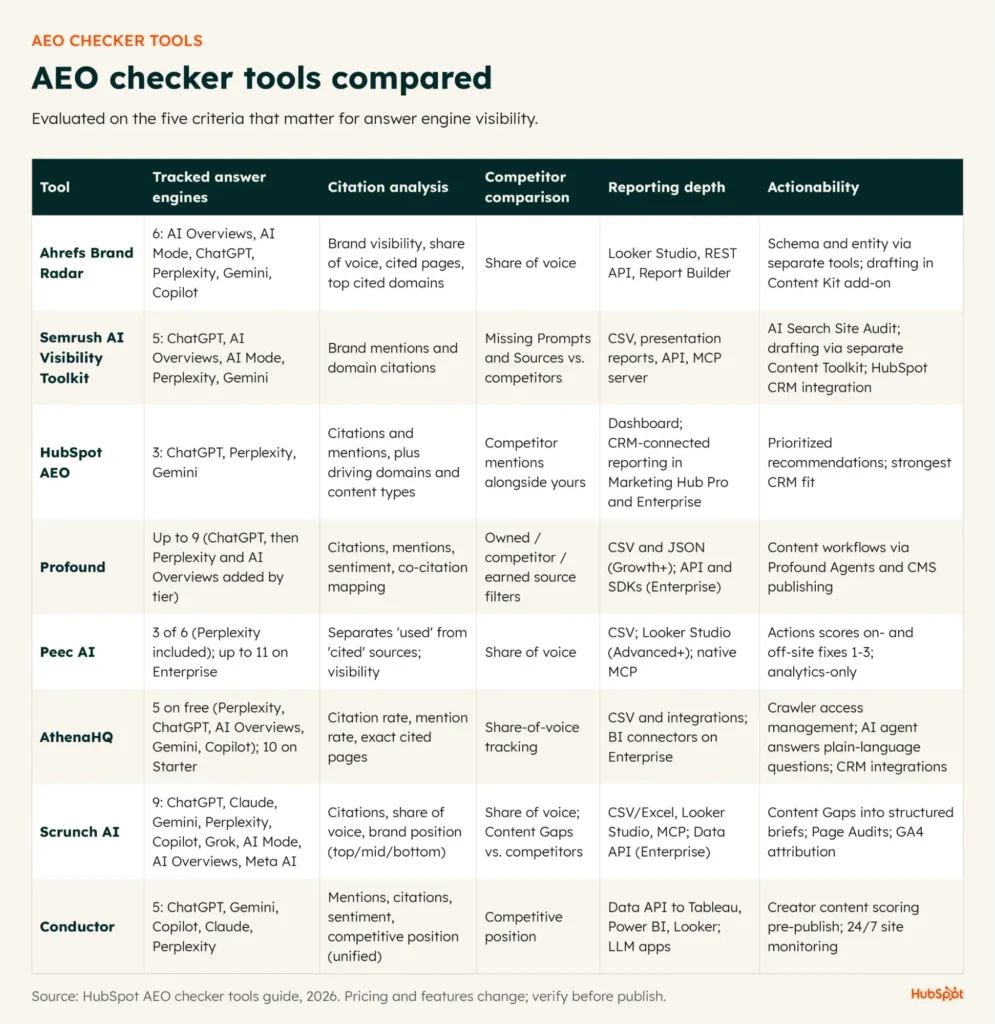
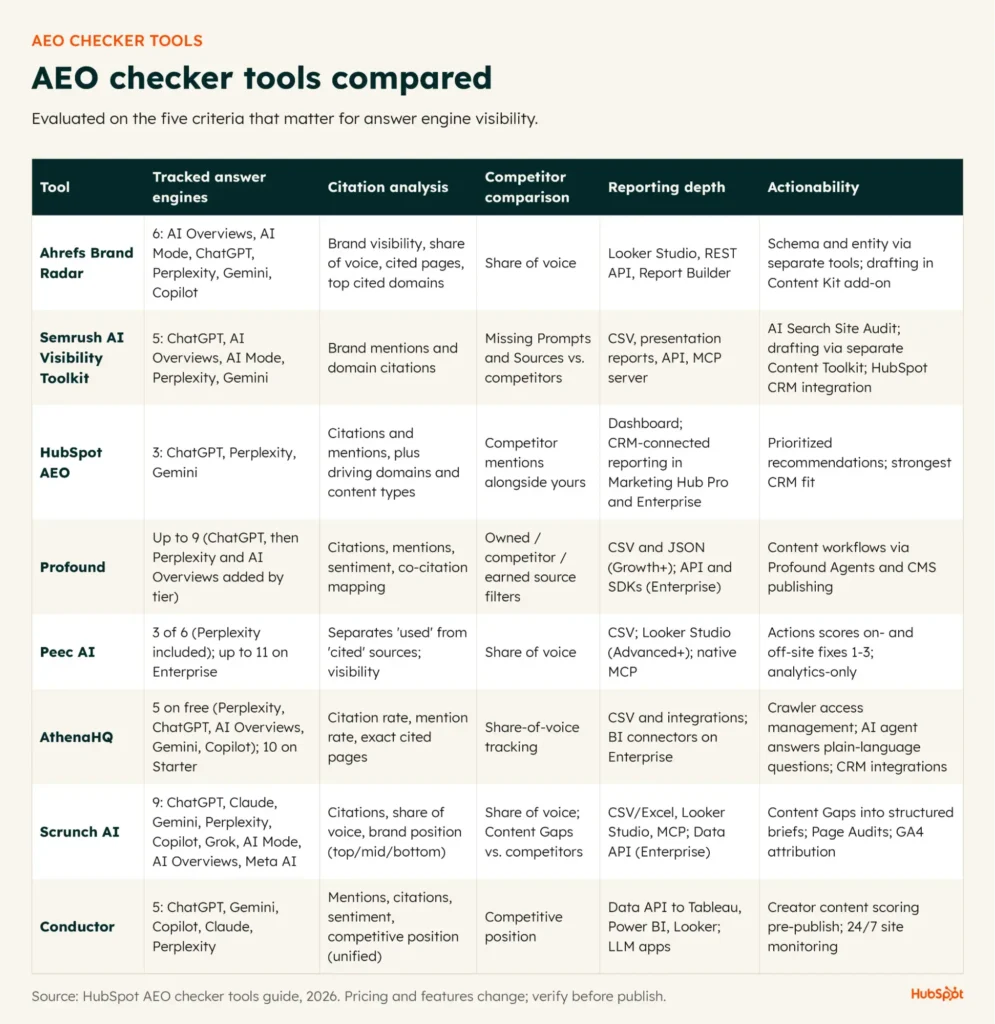
      • AI Search Graders (e.g., HubSpot AEO Grader): Specifically analyze brand and entity visibility within AI-generated search results and generative engines.
    • Pro Tip: Consolidate all data into a central repository, such as a Google Sheet or dedicated dashboard. This serves as a vital benchmark for future audits, allowing for easy comparison and measurement of progress in metrics like rankings, traffic, and AI visibility.

    Step 3: In-Depth Human Analysis of Research
    This is where raw data transforms into actionable insights, moving beyond what automated tools can provide. It’s the strategic layer where an experienced SEO professional "reads between the lines," connecting patterns, understanding the root causes of issues, and anticipating their impact on traffic, rankings, conversions, and AI visibility.

    • Analytical Process:

      • Identify Trends & Anomalies: Look for significant drops or spikes in traffic, indexing issues, unexpected content performance, or unusual backlink activity.
      • Connect the Dots: For example, a sudden drop in rankings might correlate with a Google algorithm update or a recent site migration.
      • Evaluate Against Goals: Always refer back to the business goals defined in Step 1. How do these data points affect those objectives?
      • Assess AI Readiness: Analyze content through the lens of E-E-A-T and entity clarity. Is the brand’s expertise clearly signaled? Is content structured for easy AI consumption?
      • Competitive Analysis: Compare the site’s performance across all audit areas against key competitors, especially regarding AI visibility and entity recognition.
    • Critical Aspect: Align SEO insights with the broader business strategy, including product priorities, revenue-driving pages, seasonal demand, marketing campaigns, and sales goals. This ensures the audit remains grounded in commercial reality.

      SEO audits: How to conduct one that drives traffic growth [+ checklist]

    Step 4: Huddle with Stakeholders for Alignment
    This phase bridges SEO insights with the operational realities of the business. It’s an opportunity to collaborate with stakeholders, validate assumptions, fill knowledge gaps, and ensure that the recommendations are practical within the context of existing strategy, team capacity, and upcoming initiatives.

    • Purpose: The SEO specialist, having gained a deep understanding of the site’s performance, presents preliminary findings. This meeting is not about delivering the final plan but about discussing the implications of the data. It’s a moment to confirm or adjust initial priorities based on newfound insights or evolving business needs. For instance, the data might reveal an untapped audience segment or a high-potential content cluster not previously considered.

    • How to do it: Prepare a concise summary of key findings and potential implications. Facilitate an open discussion to gain buy-in and refine the strategic direction. Crucially, secure stakeholder agreement on the overall strategic direction before proceeding to build the detailed action plan.

    Step 5: Refine the Audit and Build an Actionable Plan
    This is the culmination of the audit process, transforming insights into a concrete, executable strategy. It’s not enough to merely list issues; the true value of an audit lies in translating those findings into structured actions with assigned owners, realistic timelines, and clear expected outcomes.

    • Plan Components:

      • Prioritized Recommendations: Categorize issues by impact (high, medium, low) and effort (quick win, moderate, significant).
      • Detailed Action Items: Each recommendation should specify what needs to be done, how it should be done, and why it matters (linking back to business goals).
      • Assigned Ownership: Clearly designate who is responsible for each task (e.g., content team, development team, SEO specialist).
      • Timelines & Deadlines: Establish realistic deadlines for completion.
      • Expected Outcomes: Quantify the anticipated results for each major action (e.g., "increase organic traffic by X%," "reduce bounce rate by Y%," "improve AI answer box visibility for Z keywords").
      • Measurement Plan: Outline how the success of implemented changes will be tracked and reported.
    • Outcome: A well-structured plan makes the audit a living document, a weekly roadmap for action rather than a report filed away. For long-term implementation, managing these actions within a project management tool like Asana or Jira can significantly improve efficiency and accountability.

      SEO audits: How to conduct one that drives traffic growth [+ checklist]

    Prioritizing for Impact: Interpreting Your SEO Report and Fixing Issues

    Once audit findings are compiled, the critical next step is to prioritize them strategically based on impact, effort, and business alignment.

    1. Unblock Crawling and Indexing: Top priority must be given to any issues preventing search engines from accessing or indexing key pages. These fundamental technical errors (e.g., accidental noindex tags, broken internal links, faulty robots.txt rules) can instantly suppress visibility. Fixing them often yields the fastest and most significant traffic recovery. This aligns with the "Maslow’s Hierarchy of Needs for SEO," where crawlability and indexability form the base.

    2. Flag Issues with True Business Risk: Certain findings demand immediate attention due to direct revenue or reputational implications. Security vulnerabilities, broken checkout flows, incorrect pricing, or inaccessible forms are non-negotiable priorities that directly affect conversions and customer trust.

    3. Align Tasks with Business Goals: Prioritize content clusters and pages that directly support the company’s specific, SMART (Specific, Measurable, Attainable, Relevant, Time-bound) goals—whether it’s targeting a new audience, promoting a flagship product, or expanding into a new region. An SEO audit must always reflect and serve the business’s strategic direction.

    4. Identify Content Updates for Multiple Channels: Prioritize content that offers compounding value by serving multiple marketing channels (SEO, email nurturing, sales enablement, product education). A single high-quality asset, especially when part of a defined content cluster, can address gaps across various touchpoints. Tools like HubSpot’s free AI content writer can assist in this content amplification.

      SEO audits: How to conduct one that drives traffic growth [+ checklist]
    5. Tackle High-Impact, Low-Effort Wins First: Look for actions that require minimal time (e.g., under 30 minutes) but deliver measurable improvements. Updating a title tag, adding a favicon, compressing images, or deleting an irrelevant, outdated page can quickly build momentum and demonstrate early success, motivating the team.

    6. Cluster Recommendations into Sprints: Group related issues into thematic "sprints" (e.g., "page speed sprint," "schema sprint," "content refresh sprint"). This approach enhances team focus, reduces context switching, and streamlines implementation, allowing for faster delivery of improvements and easier reporting on completed initiatives.

    7. Focus Developer Time on Sitewide, Template-Level Issues: Developer resources are often limited, making strategic allocation crucial. Prioritize fixes that affect the entire site or specific templates, such as sitewide speed optimizations, comprehensive schema improvements, navigation restructuring, or JavaScript cleanup. These changes can positively impact hundreds or thousands of URLs simultaneously. For teams looking to enhance their capabilities, HubSpot Academy’s SEO Course offers comprehensive training.

    Essential Tools for the Modern SEO Auditor

    The right toolkit significantly enhances the speed, accuracy, and prioritization capabilities of an SEO audit.

    • HubSpot AEO Grader: This free tool is indispensable for modern audits, specifically assessing brand and entity visibility in AI search results. It evaluates how a brand appears in generative engines, answer boxes, and conversational interfaces, directly addressing the AEO/GEO components. It measures entity strength, content signals, structured data, and authority markers—all crucial for AI-generated responses.

      SEO audits: How to conduct one that drives traffic growth [+ checklist]
      • Best for: Marketers seeking to move beyond traditional rankings and understand AI’s perception of their brand.
      • Pricing: Free.
    • HubSpot Website Grader: A free, user-friendly tool offering a quick snapshot of a site’s SEO health, performance, mobile usability, and security. It aligns perfectly with identifying "quick wins" by surfacing immediate fixes related to speed, metadata, and basic technical hygiene.

      • Best for: Marketers needing a simple, high-level overview before delving into more complex analyses.
      • Pricing: Free.
    • Semrush: A comprehensive SEO platform widely regarded for its depth in keyword research, competitive analysis, backlink auditing, content insights, and site auditing. It now includes AI/LLM-driven recommendations.

      • Best for: Marketers and consultants requiring extensive data for keyword analysis, competitor insights, and robust reporting across various SEO facets.
      • Pricing: Plans typically start around $165/month (billed annually).
    • Screaming Frog SEO Spider: A must-have for technical audits, this fast, locally installed crawler scans websites to uncover major technical issues like orphan pages, broken links, redirect chains, thin content, and missing metadata.

      • Best for: Technical SEOs who need precise, crawl-based insights and have the expertise to interpret raw data.
      • Pricing: Free version available; licensed version for $279/year.
    • HubSpot Marketing Hub & Content Hub: These integrated platforms empower marketers to implement audit findings efficiently.

      • HubSpot Content Hub: A CMS with built-in AI-powered SEO recommendations, content suggestions, and intelligent content tools. It’s ideal for optimizing metadata, improving on-page signals, and managing content clusters, especially with features like Breeze AI for automated content production.
      • HubSpot Marketing Hub: A comprehensive marketing platform that integrates SEO tools directly with website data, content strategy, and reporting. It facilitates tracking performance, analyzing SEO growth, managing content clusters, assigning tasks, and measuring the impact of audit implementations on traffic and conversions.
      • Best for: Teams seeking an integrated platform to not only identify issues but also to directly implement and track their SEO strategy within a unified ecosystem.
      • Pricing: Marketing Hub offers a free plan; Starter ($9 per seat/month), Professional ($800/month), and Enterprise ($3,600/month).

    Frequently Asked Questions About Modern SEO Audits

    How long does an SEO audit typically take?
    Most SEO audits range from two to eight weeks, depending on the website’s size, complexity, and the desired depth of coverage. Smaller sites might be completed in a few days, while enterprise-level sites with thousands of URLs and intricate technical structures naturally require more time. The analysis and stakeholder alignment phases are often the most time-consuming and crucial, as they demand critical thinking and creative problem-solving. Rushing these stages risks overlooking significant opportunities or misinterpreting data.

    SEO audits: How to conduct one that drives traffic growth [+ checklist]

    Is a developer necessary to complete an SEO audit?
    SEO specialists are responsible for running the audit—diagnosing and documenting technical issues. However, developers are frequently essential for implementing many of the identified fixes. Complex technical adjustments, such as template-level changes, Core Web Vitals improvements, structured data implementation, or JavaScript cleanup, typically require development expertise. The audit identifies the work; the development team executes it.

    How often should an SEO audit be conducted?
    Most businesses benefit from regular audits: quarterly, biannual, or at least annually. Consistent audits are vital for maintaining and growing search performance over time. Companies in rapidly evolving industries, those with frequent content updates, or businesses significantly impacted by AI search shifts may require more frequent checks. At a minimum, a full audit once per year is recommended to benchmark performance and detect any unexpected declines.

    What tools are available for a free SEO audit?
    A basic audit can be performed using several free tools:

    • Google Search Console: For crawlability, indexing, and core web vitals.
    • Google Analytics: For traffic and user behavior data.
    • HubSpot Website Grader: For a quick overview of technical and on-page issues.
    • HubSpot AEO Grader: For insights into AI search visibility.
    • Google PageSpeed Insights: To analyze and improve page loading performance.
      These tools collectively cover essential areas: crawlability, indexability, content quality, and AI search visibility.

    What distinguishes an SEO audit from a general website audit?
    An SEO audit is highly specialized, focusing specifically on elements that influence search engine rankings, organic visibility, and conversions. This includes technical health, content quality, backlink profiles, and AI search visibility. A website audit, conversely, is a broader evaluation that might encompass user experience (UX) design, overall accessibility, conversion rate optimization (CRO), branding consistency, site navigation, and general site performance. Essentially, an SEO audit can be considered a specialized component within a more comprehensive website audit. Both can be combined, but the SEO audit is directly tied to improving search performance and driving traffic growth.

    Modern SEO Audits Go Beyond Blue Links

    A meticulously executed SEO audit is far more than a problem-spotting exercise; it transforms a website into a potent growth engine. By comprehensively reviewing technical health, content quality, authority signals, and critically, AI search visibility, businesses can uncover immediate "quick wins," formulate robust long-term strategies, and construct an actionable roadmap that directly fuels traffic, conversions, and pipeline growth.

    SEO audits: How to conduct one that drives traffic growth [+ checklist]

    It is paramount to remember that contemporary audits transcend the traditional focus on "blue links." They rigorously evaluate how effectively a brand appears in generative search results and whether its content is accurately understood and categorized as a distinct entity by sophisticated AI models. For businesses seeking a swift, precise assessment of their current standing, tools such as HubSpot Website Grader and HubSpot AEO Grader offer convenient ways to gauge both SEO fundamentals and crucial AI visibility within minutes.

    From the perspective of seasoned practitioners, the most impactful audits are those deeply rooted in specific business objectives and executed through collaborative effort. The moment when data unequivocally aligns with stakeholders’ intuitive understanding—or, conversely, reveals something entirely unexpected—is often the most energizing. A truly successful audit leaves teams feeling focused, confident, and invigorated, armed with a clear path forward. This is the hallmark of an exceptional audit: one that not only diagnoses issues but inspires decisive action and delivers tangible, measurable results.

Grafex Media
Privacy Overview

This website uses cookies so that we can provide you with the best user experience possible. Cookie information is stored in your browser and performs functions such as recognising you when you return to our website and helping our team to understand which sections of the website you find most interesting and useful.