
The terminology used within a digital product ecosystem functions as the primary bridge between cross-functional teams, shaping both the internal development process and the end-user experience. In the realm of software engineering and interface design, naming is frequently cited as one of the most persistent challenges, often leading to technical debt, cognitive load, and friction during cross-team collaboration. When design systems, codebases, and user-facing features lack a standardized taxonomy, the result is a fragmented product that is difficult to maintain and even harder for users to navigate.

The Linguistic Challenge of Digital Architecture
The difficulty of naming stems from the balance between abstraction and specificity. A name that is too generic—such as "box" or "item"—fails to convey purpose or intent, leading to ambiguity in documentation. Conversely, a name that is hyper-specific—such as "blue-primary-sidebar-button-v2"—limits reusability and creates a rigid structure that breaks under the pressure of iterative design.
Historical analysis of software development cycles shows that inconsistent naming conventions are a leading cause of "translation error" between departments. When a designer refers to a component as a "navigation card" while a developer labels it an "overflow-container" in the codebase, the resulting misalignment in documentation and maintenance is inevitable. Recent industry shifts toward Design Operations (DesignOps) have attempted to formalize this, treating the language of a design system as a critical, version-controlled asset rather than an afterthought.

Resources for Standardized Naming Conventions
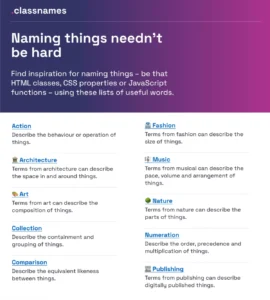
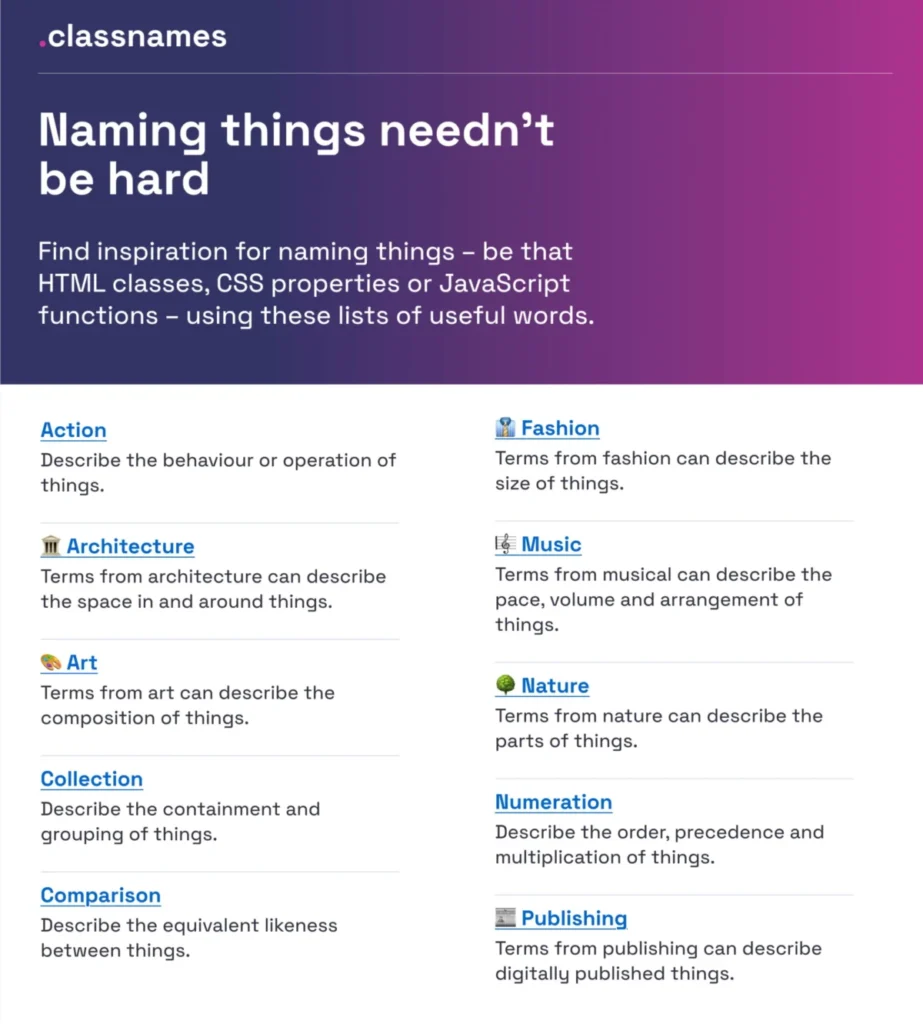
To combat the inherent subjectivity of naming, professionals have turned to centralized resources that provide thematic and structural guidance. For those seeking to move beyond functional descriptions, tools like Classnames serve as essential repositories. These resources offer taxonomies categorized by behavior, association, and even conceptual themes—such as architecture, nature, or music—which can help teams establish a cohesive "brand voice" for their code.
The necessity of these tools is supported by data from the 2023 State of Design Systems report, which found that 62% of organizations with mature design systems cite "consistent naming" as their top priority for maintaining scalability. By using structured naming, teams reduce the time spent on developer onboarding and minimize the likelihood of CSS specificity wars.

Color Systems and Tokenization
The management of color in complex applications has evolved from simple hex codes to robust, multi-layered design tokens. A design token represents a single design decision, such as a color value or a spacing unit, which can be shared across multiple platforms. David Aerne’s comprehensive color-naming repository, which now catalogs over 30,000 unique color entries, exemplifies the industry’s shift toward programmatic color management.
This transition allows for "theme-aware" interfaces. By mapping color tokens—such as surface-primary or action-text-disabled—to specific brand values, organizations can switch between light and dark modes, or even re-skin an entire application, without modifying the underlying component architecture. This separation of concerns is the gold standard in modern enterprise software.

The Intuit Case Study: Scaling Complexity
A notable milestone in the evolution of token architecture occurred when Intuit, the parent company of brands including QuickBooks and TurboTax, faced the challenge of standardizing design tokens across a vast product portfolio. The primary difficulty was creating a system that could accommodate different brand identities while sharing a common technical foundation.
The resulting taxonomy, as documented by product engineers, moved away from purely visual naming (e.g., "blue-500") toward semantic naming (e.g., "color-brand-action"). This shift allowed the design system to remain flexible. By implementing a layered taxonomy—spanning from primitive tokens to semantic tokens and component-specific tokens—Intuit successfully reduced the "discovery time" for new features by nearly 30% across their product teams.

Bridging the Gap: UI Component Libraries
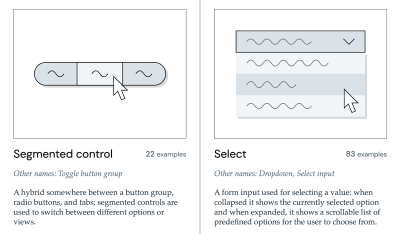
The emergence of resources like the Component Gallery has provided a much-needed industry benchmark for UI terminology. By cataloging how established companies name common interface elements—such as accordions, breadcrumbs, or modals—these galleries act as a dictionary for design systems.
This collaborative approach to standardization serves as a deterrent to the "reinvention of the wheel." When a team is tasked with building a new notification component, they no longer need to speculate on the nomenclature. They can look at industry standards to see how similar entities are categorized, ensuring that their internal documentation remains intuitive for new hires and external contributors.
The Role of User-Centric Naming in Feature Adoption
While technical naming is vital for internal efficiency, the naming of features presented to the end-user requires a different set of psychological considerations. Research into feature adoption rates indicates that users are more likely to engage with tools that use "outcome-based" language rather than "feature-based" language.
For example, a button labeled "Export Data" is functionally accurate but opaque. A button labeled "Generate Monthly Report" describes the job-to-be-done, which aligns more closely with the user’s mental model. According to UX research studies, aligning interface language with the user’s vernacular can increase feature discovery by as much as 15% in complex SaaS environments. The key, according to experts like Erin Gannon, is to conduct user interviews to understand the vocabulary users already associate with the problem they are trying to solve.

Strategic Implications for Organizations
The implications of robust naming strategies extend far beyond aesthetics or clean code. Organizations that invest in a formal taxonomy map, such as the one developed by the Vodafone UK Design System team, gain a significant competitive advantage in long-term maintenance. These maps provide a bird’s-eye view of how tokens connect from brand primitives to specific page-level implementations.
From a management perspective, this represents a reduction in operational risk. When naming is standardized, the "bus factor"—the risk of knowledge being lost when a key team member leaves—is significantly mitigated. The codebase becomes self-documenting, and the design system acts as a reliable source of truth.

Moving Forward: The Future of Semantic Design
As artificial intelligence and automated design tools become more integrated into the software development lifecycle, the importance of consistent naming will only increase. Large Language Models (LLMs) rely on semantic clarity to interpret code and design intent. A system with a clear, logical taxonomy is more effectively optimized by AI-driven tools, whereas an inconsistent, "messy" system remains a barrier to automation.
Tools like the "Design Token Naming Guide" and interactive builders are the first steps in a broader move toward machine-readable design systems. As we look toward the future, the goal remains the same: to minimize the cognitive friction between the human architect and the machine, and between the product team and the user.

Conclusion
Naming is not merely a linguistic exercise; it is a fundamental architectural decision that dictates the scalability and maintainability of digital products. By adopting standardized conventions, utilizing existing industry taxonomies, and prioritizing the user’s language, teams can eliminate the confusion that plagues modern development. While the process requires time and upfront rigor, the long-term payoff is a more cohesive, efficient, and user-friendly digital environment. As the web continues to evolve in complexity, those who prioritize clear, intentional communication through their design and code will be the best positioned to build products that endure.