
Naming is one of the most persistent challenges in software development and digital design. While seemingly trivial, the language used to identify UI components, design tokens, and variables serves as the foundation for team communication, cross-functional collaboration, and the overall maintainability of digital products. When terminology is inconsistent, it creates a "Tower of Babel" scenario where designers, developers, and product managers struggle to align on the same concepts, leading to significant inefficiencies and technical debt.

The Linguistic Challenge in Digital Architecture
The cognitive impact of naming cannot be overstated. In psychology, the Sapir-Whorf hypothesis suggests that the language we use shapes our perception of reality. In a professional context, if a team labels a UI element vaguely—such as "box" or "item"—the lack of specificity limits how that element can be conceptualized or reused. Conversely, names that are too rigid, such as "blue-header-button-v2," prevent scalability and force developers to create new components rather than repurposing existing ones.
This linguistic friction is the primary driver behind the shift toward standardized design systems. Over the past decade, as organizations have moved from static design files to modular, code-based systems, the need for a common vocabulary has become a critical business requirement. A study by McKinsey & Company on the "Business Value of Design" highlights that organizations with strong design integration—which requires robust, shared language—outperform their peers by as much as 32% in revenue growth.

Navigating the Taxonomy of Design Tokens
Design tokens act as the atomic units of a design system, representing visual properties like spacing, color, and typography. A well-constructed token taxonomy is essential for maintaining brand consistency across multiple platforms. Intuit, the parent company of products like QuickBooks and Mailchimp, serves as a prime example of the importance of this architecture. Faced with the challenge of managing a diverse ecosystem of products, their team moved away from brand-specific, hard-coded values to a tiered, flexible taxonomy.
By utilizing a structure that moves from "Primitive" tokens (the raw value, such as #000000) to "Semantic" tokens (the usage, such as "background-primary"), teams can update the look and feel of an entire suite of products by changing a single reference point. This approach, championed by industry leaders like Nathan Curtis, has become the industry standard for enterprise-level design operations.

Standardizing UI Component Nomenclature
The "Component Gallery," curated by Iain Bean, provides a longitudinal view of how industry standards for UI components have evolved. Currently, the repository tracks over 50 distinct components, including accordions, modals, and tooltips. The data shows a growing trend toward descriptive, functional naming conventions that prioritize accessibility and behavior over mere aesthetic appearance.
For instance, naming an element "nav-item" is significantly more effective than "top-blue-thing." The former describes the function within the information architecture, while the latter describes a visual state that is subject to change. This shift is critical for accessibility; semantic naming makes it easier for screen readers and automated testing tools to interpret the page structure correctly.

Practical Resources and Methodologies
For teams struggling to find a common language, several curated resources offer structured guidance:
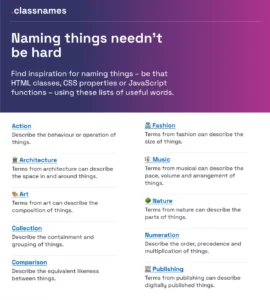
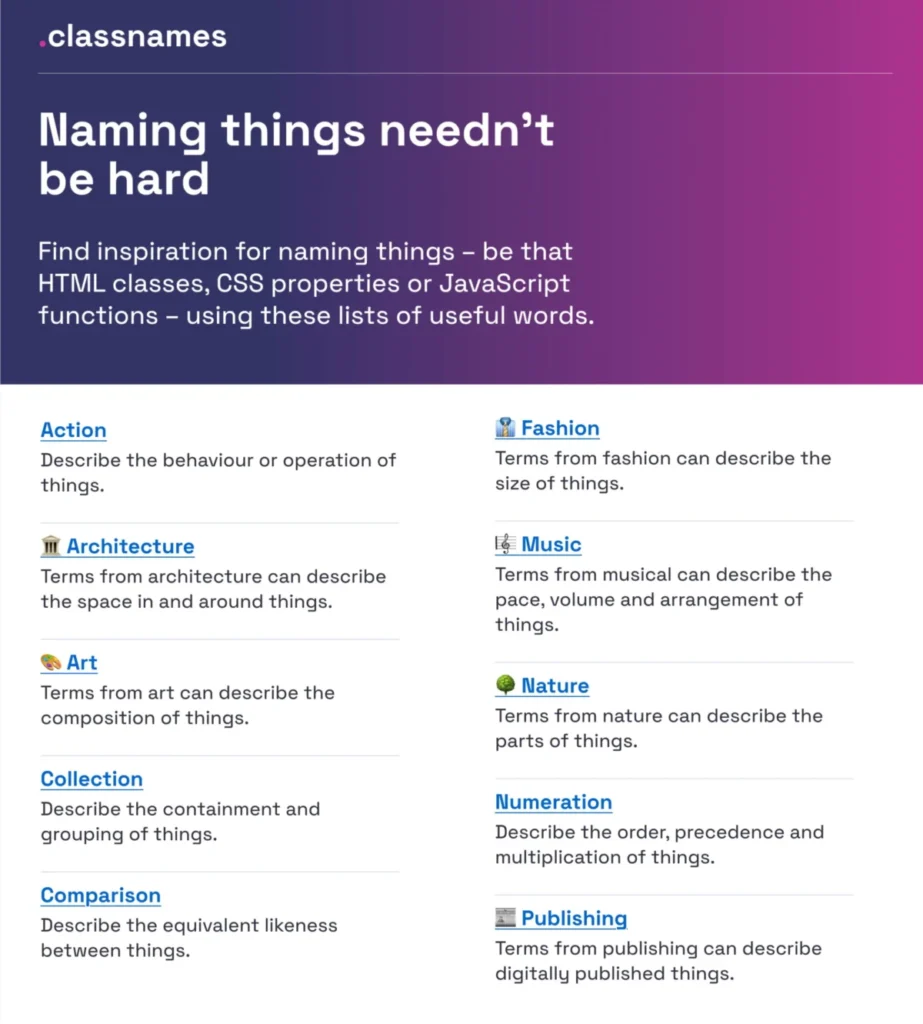
- Classnames: This resource provides thematic groupings of terms for CSS classes and JavaScript functions. It encourages teams to look toward domains like architecture, music, and nature to find words that accurately describe the hierarchy and behavior of their code.
- Color Parrot: With a database exceeding 30,000 entries, this tool helps standardize color names, preventing the common issue where "Dark Blue" and "Midnight" refer to the same hex code in different parts of a project.
- Onym: An open-source repository designed specifically for product naming. It provides methodologies for vetting names, ensuring that both internal variables and external-facing product names are clear, memorable, and distinct.
- The Vodafone Variables Taxonomy Map: This resource demonstrates how to map variables across a complex, multi-brand environment. By breaking down the anatomy of tokens into brand, primitive, and semantic layers, teams can ensure that their naming structure remains resilient as the organization grows.
The Role of User-Centric Naming
A significant cause of low feature adoption is often not the functionality of the feature itself, but its nomenclature. When features are named using internal jargon or "developer-speak," users often fail to understand the value proposition, leading to low engagement metrics.

Erin Gannon’s research into feature naming emphasizes the "Jobs-to-be-Done" (JTBD) framework. By interviewing users and identifying the specific language they use to describe the problems they are solving, teams can align their feature names with the user’s mental model. This practice of "mirroring" the user’s vocabulary reduces the cognitive load required to learn new software, directly impacting user retention and satisfaction scores.
Implications and Future Outlook
The industry is currently witnessing a transition toward automated, AI-assisted naming conventions. As Large Language Models (LLMs) become more integrated into IDEs and design tools, the potential to suggest standardized, accessible names based on existing documentation is increasing. However, technology alone cannot solve the fundamental communication gap.

The most effective systems are those that facilitate "conversational design." When a designer and a developer sit down to discuss a component, the name they agree upon must be documented and socialized. A failure to do so results in a "naming drift," where the documentation reflects one set of terms while the codebase reflects another.
To mitigate this, organizations should treat their design system as a living product. This involves:

- Regular Audits: Periodically reviewing the naming structure to remove obsolete terms.
- Documentation: Maintaining a central "Source of Truth" that defines each component and variable.
- Cross-Functional Workshops: Regularly bringing together design, engineering, and product teams to refine the terminology.
Conclusion
Naming is a high-leverage activity. By investing time into creating a logical, scalable, and human-centric naming convention, organizations can significantly reduce the "friction of development." The resources provided by platforms like the Component Gallery, Classnames, and the various design token guides are not just tools; they are essential infrastructure for building resilient digital products. As the web continues to evolve toward more complex, multi-modal, and accessible interfaces, the importance of a clear, shared, and well-understood language will only continue to rise. Companies that prioritize this clarity will find themselves more agile, more collaborative, and better equipped to deliver consistent user experiences at scale.