
The rapid evolution of consumer electronics often leaves behind fully functional hardware burdened by the arbitrary limits of abandoned software support cycles. For decades, once a manufacturer officially ceased support for a digital camera, owners had to accept its feature set as permanently frozen in time. However, a recent technological shift driven by artificial intelligence-assisted coding is challenging that paradigm. Developer Marcus Low has demonstrated a novel approach to retrofitting discontinued digital cameras, using modern AI coding agents to reverse-engineer proprietary firmware and introduce custom capabilities to aging hardware platforms.
This emergent trend highlights a growing intersection between legacy hardware preservation and modern machine learning tools. By leveraging advanced language models to disassemble and rewrite low-level camera code, independent developers are effectively bypassing the traditional software gates maintained by original equipment manufacturers (OEMs). The implications of these DIY modifications extend far beyond simple convenience, touching on consumer electronics longevity, the right to repair, and the untapped software capabilities dormant within older photographic equipment.
Chronology of Firmware Experimentation
The trajectory of Low’s firmware modifications began not with a high-end digital single-lens reflex camera, but with a niche compact shooter: the Sigma DP2x. Released in the early 2010s, the Sigma DP2x features a large Foveon sensor paired with an extending lens barrel. Every time the camera is powered on and off, an internal mechanical gear train drives the lens extension and retraction sequence, regardless of whether a photograph is captured.
In mechanical engineering terms, moving parts are inherently subject to wear and tear. For compact cameras with telescoping lenses, the mechanical failure of the lens mechanism—frequently referred to colloquially as a "lens error"—is a primary cause of permanent hardware failure. Recognizing this vulnerability, Low targeted the DP2x for his inaugural AI-assisted firmware project.
Using an AI coding assistant, he successfully modified the DP2x firmware to keep the lens extended permanently when the camera is powered down. By eliminating redundant mechanical extension and retraction cycles during casual power-cycling, the modification reduces physical wear on the motor and gear assembly. Alongside this longevity patch, the project introduced a built-in shot counter and other minor modernizations, collectively published as the DP2x Longevity Firmware Update.
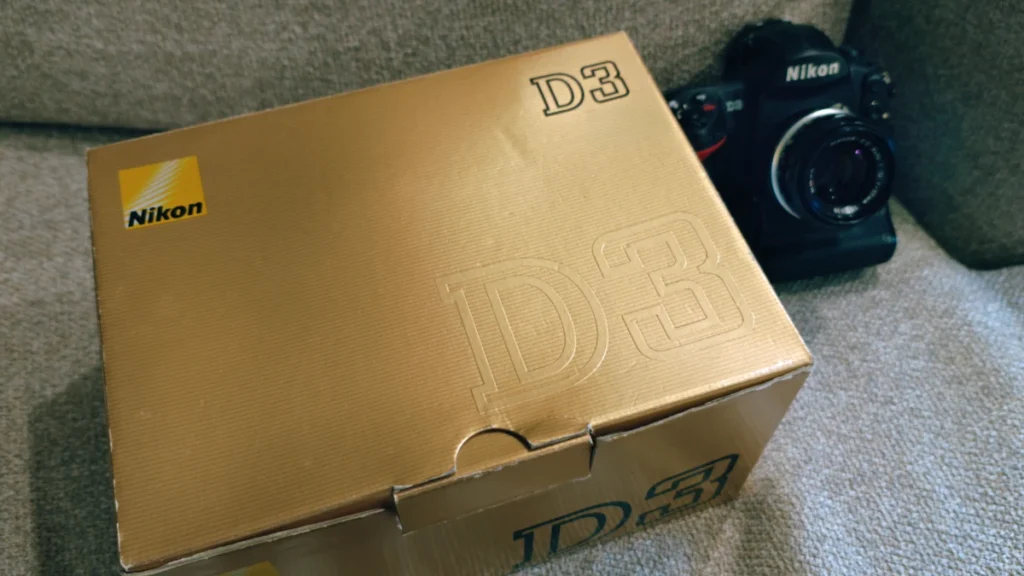
Building upon the insights gained from the Sigma project, Low identified a crucial architectural link: the Sigma DP2x operates on a Fujitsu FR-family processor, an architecture shared by the sub-CPU of the legendary Nikon D3 flagship DSLR, released in 2007. Recognizing that his previously developed disassembly tools, annotation scripts, and AI-assisted mapping techniques could be cross-applied, Low initiated Project Trap Focus for the Nikon D3.
Technical Breakdown of Project Trap Focus
The Nikon D3 was a revolutionary professional flagship when it debuted, boasting a rugged chassis, a robust 12-megapixel full-frame sensor, and exceptional low-light performance. Yet, as with most professional DSLRs of its era, its software capabilities were strictly defined by the engineering standards of 2007.
Project Trap Focus addresses a specific operational hurdle for photographers utilizing vintage manual-focus lenses on modern autofocus bodies: the cumbersome nature of confirming focus manually before tripping the shutter. Under standard operating conditions, a photographer manually adjusts the lens focus ring until the in-focus indicator light appears in the optical viewfinder, visually processes that confirmation, and then manually depresses the shutter button.
The newly patched sub-CPU firmware fundamentally alters this interaction. Once configured, the photographer holds the shutter release button down completely while manually turning the focusing ring. The moment the camera’s internal phase-detection autofocus sensors register sharp focus and illuminate the viewfinder confirmation dot, the camera automatically trips the shutter without requiring any additional physical input from the operator.
While the concept of trap focus is not entirely novel—Pentax famously integrated a nearly identical feature known as "Catch-in Focus" into several of its K-mount DSLRs—it was notably absent from Nikon’s professional lineup. Low’s firmware successfully bridges this operational gap by tapping into the D3’s existing focus-confirmation and shutter-release logic, adapting it for manual-focus operation via a modified sub-CPU firmware build.
Evaluating the Functional Benefits
Proponents of the Trap Focus modification argue that removing human reaction times from the exposure sequence yields measurable technical advantages, particularly when working with ultra-fast prime lenses under shallow depth-of-field conditions.
Human visual reaction time typically ranges between 200 and 250 milliseconds, not accounting for the physical movement required to depress a shutter button. When shooting with a 50mm lens at an aperture of f/1.4 at a distance of 1.5 meters, the total depth of field on a full-frame sensor is a mere 7 to 8 centimeters. In such scenarios, natural subjects moving, breathing, or minor bodily sway by the photographer can easily shift the focal plane out of the razor-thin acceptable zone within a quarter of a second. By handing the shutter actuation decision directly over to the camera’s internal focus confirmation logic, the system reacts instantaneously when the phase-detection sensor registers alignment.
Furthermore, keeping the shutter button fully depressed prior to exposure eliminates the downward mechanical jab often exerted by the photographer’s finger at the exact moment of capture. At slower shutter speeds, this sudden physical pressure can induce micro-jitter. Because the Nikon D3 lacks in-body image stabilization, and many vintage manual-focus lenses completely lack optical stabilization, any reduction in physical camera movement contributes to sharper image capture.
Additionally, the modification circumvents the inherent limitations of standard DSLR focusing screens. Bright focusing screens on professional bodies are historically optimized to provide a bright viewing experience for autofocus systems rather than rendering the true, razor-thin depth of field associated with extremely fast manual lenses. At apertures wider than f/2.8, optical viewfinders can sometimes project an image that appears deceptively sharper than what is actually being recorded by the digital sensor. By relying on the dedicated phase-detection autofocus module rather than visual estimation through the viewfinder, the camera registers focus using its internal sensor matrix.
Industry Implications and the Broader Context of Firmware Modifications
The emergence of AI-assisted firmware hacking raises important questions regarding the longevity and sustainability of digital photographic equipment. Manufacturers operate under strict commercial imperatives that prioritize new hardware sales over retroactive software updates for legacy models. Consequently, highly capable camera bodies like the Nikon D3, Nikon D3X, and Nikon D700 are frequently relegated to the secondhand market, constrained entirely by their factory-set feature limitations.
Independent firmware modifications demonstrate that much of the hardware required for advanced functions is already physically present within older camera bodies, lying dormant behind closed software architectures. Low’s ongoing experimentation extends beyond trap focus; he has concurrently explored experimental main-CPU patches capable of displaying accurate shutter counts directly on the firmware version screen and integrating proprietary color profiles, such as the classic Nikon D2X Picture Controls, into the D3 architecture.
Despite the technical achievements, these practices carry inherent operational risks. Installing unofficial, modified firmware bypasses manufacturer safety checks, introducing the very real possibility of bricking the hardware. Because recovery typically requires a functional boot sequence capable of running a firmware updater, a corrupted flash procedure can permanently neutralize an expensive piece of photographic gear. Major camera manufacturers, including Nikon and Sigma, do not endorse, support, or take liability for unauthorized firmware modifications.
Conclusion and Future Outlook
The convergence of artificial intelligence tools and reverse-engineering techniques marks a turning point for the digital camera secondary market. While commercial manufacturers will likely continue to restrict software updates to active product lines, the technical barrier to entry for independent developers is dropping significantly.
Whether community-driven firmware patching will scale to mainstream adoption remains uncertain. However, projects like the DP2X Longevity Update and the Nikon D3 Trap Focus modification prove that the phrase "the manufacturer won’t add it" no longer dictates the absolute lifespan of digital hardware capabilities. As AI coding agents become more sophisticated, the boundary between factory-locked obsolescence and consumer-driven software customization will continue to blur, offering new avenues to preserve and enhance the tools of modern photography.