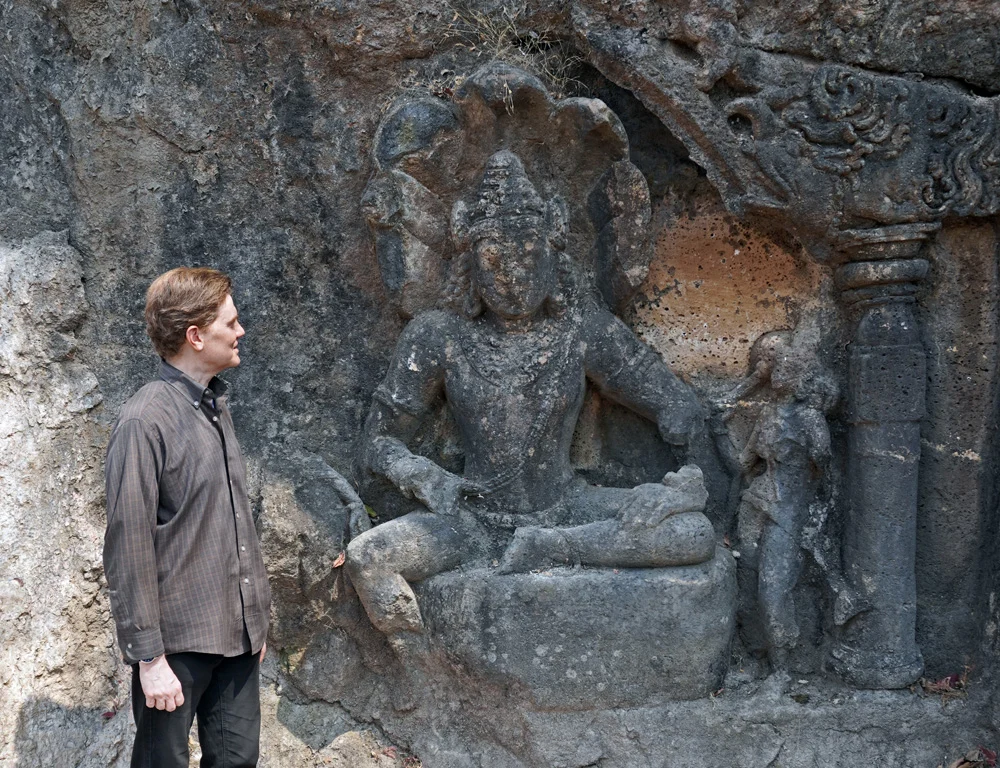

For more than twenty-five years, Dr. David S. Efurd, a two-time Fulbright recipient, associate professor, and chair of art and art history, has dedicated his academic career to a meticulous examination of the Buddhist, Hindu, and Jain cave sites carved into the volcanic basalt cliffs of western India. Armed with a notebook, a measuring tape, and a handheld camera, Efurd has systematically surveyed more than 80 archaeological sites and amassed an archive exceeding 10,000 photographs. This comprehensive digital collection, now accessible globally through Artstor, preserves the intricate architecture, monumental stone sculptures, and subtle spatial nuances of sacred spaces dating as far back as the second century BCE.
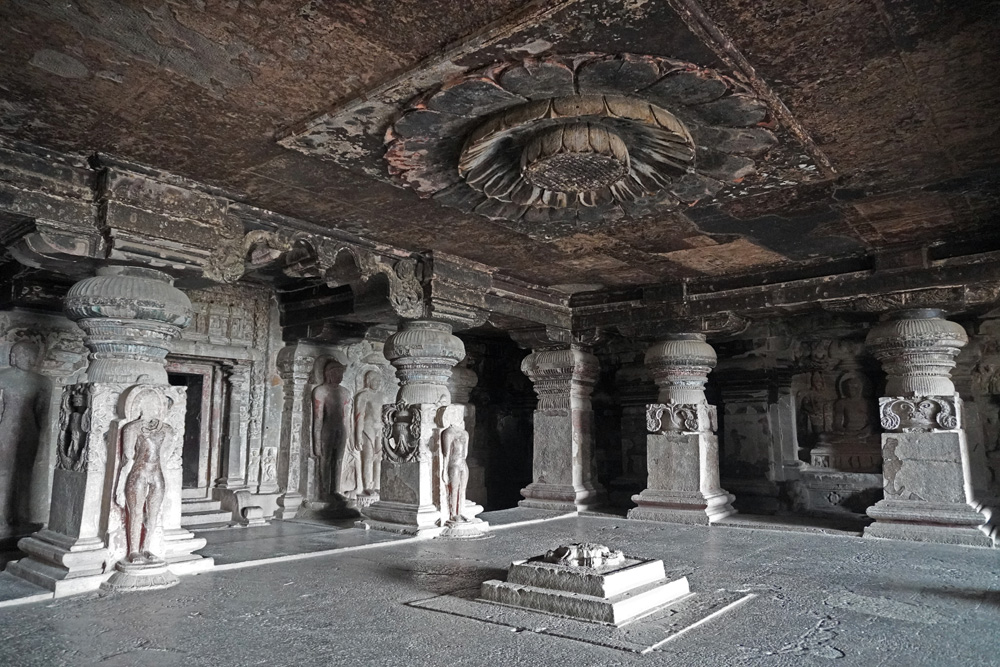
Efurd’s extensive documentation offers unprecedented visual and structural insights into these subterranean and cliffside monuments. Operating on the principle of "slow looking"—a contemplative methodology usually reserved for museum gallery viewing—he routinely spends consecutive days within individual caves. This deliberate, unhurried pace allows him to transcend the superficial observations of casual tourism, capturing not merely the historical milestones of ancient Indian architecture, but the living, breathing essence of spaces that continue to intersect with modern religious devotion and heritage conservation.
Chronology of Exploration: From Walter Spink to Modern Digital Archives

The genesis of Efurd’s lifelong scholarly pursuit traces back to a pivotal encounter a quarter-century ago with the late Walter Spink, widely recognized as the world’s foremost authority on the Ajanta Caves. Spink maintained a year-round presence near the Ajanta complex, hosting annual summer site seminars for scholars and students. During one such excursion, Spink led his group away from the famous later-period monuments of Ajanta and Ellora to the rugged, ruined site of Pitalkhora.
Dating to the second and first centuries BCE, Pitalkhora stands among the earliest surviving rock-cut cave complexes in western India. Completely captivated by the fragmentary remains and what they implied about ancient engineering and monastic life, Efurd embarked on a scholarly trajectory that would span decades. Over the ensuing twenty-five years, his research evolved from student fieldwork into a systematic, multi-nation photographic survey encompassing rock-cut architecture across India, Sri Lanka, China, and Korea. Today, his extensive cataloging serves as a vital bridge between 19th-century colonial-era archaeological records and 21st-century digital preservation initiatives.

Geological Mastery and the Socio-Economic Geography of the Ghats
The selection of western India’s sheer basalt cliffs for monumental monastic complexes was far from arbitrary. It represented a sophisticated synthesis of geological awareness, economic strategy, and religious pragmatism. Geologically, the region is defined by the Deccan Traps—vast, thick expanses of volcanic basalt formed millions of years ago. This uniform, durable stone permitted ancient builders to excavate vast halls, multi-story monastic residences, and towering pillars directly into the living rock with an exceptionally low risk of structural collapse.

These monolithic sanctuaries served a crucial practical function during the vassa, the traditional three-month monsoon season. As torrential rains battered the subcontinent, Buddhist monks, who spent the remainder of the year wandering and preaching, took up fixed residence in these dry, weather-resistant stone shelters.
However, these monasteries were strategically positioned to avoid complete isolation. Efurd’s research emphasizes that the cave sites were invariably located in close proximity to major ancient trade routes, urban centers, and agricultural villages. This geographic positioning fostered a symbiotic socio-economic relationship between the monastic and lay communities. While the laity sustained the monks through daily alms-giving, food supplies, and patronage, the monastic community reciprocated by offering spiritual guidance, performing religious rituals, and providing the laity with opportunities to accumulate spiritual merit.

Engineering Sunlight: Solar Alignments and Mathematical Proportions
Among the most technically astonishing discoveries highlighted in Efurd’s archive is the intentional incorporation of solar geometry into the architectural design of several primary caves. Working from observations initially pioneered by Walter Spink, researchers have documented precise astronomical alignments within specific caitya halls—sanctuaries housing sacred relic monuments (stupas).

At Ajanta, two distinct caves feature massive, circular horseshoe-shaped windows, known as caitya windows, carved into their exterior facades. These apertures are meticulously engineered so that once a year, during the winter solstice, a direct beam of sunlight pierces the dark interior and illuminates the sculpted image of the Buddha on the central stupa. A similar phenomenon occurs twice annually at a cave in nearby Ellora, where a narrower aperture filters a concentrated band of sunlight directly onto the face of the central Buddha sculpture during the spring event known as Kirnotsav, or the festival of the sun’s rays. These complex alignments demonstrate an advanced understanding of solar cycles and spatial geometry by ancient engineers of the first millennium CE.
Efurd’s current research expands upon these engineering marvels by analyzing the mathematical proportions governing major structures, such as the grand caitya hall at Karle. By combining precise architectural measurements with photographic documentation, his work challenges the historical Western assumption that irregularities in rock-cut architecture stemmed from a lack of planning. Instead, his data reveals a sophisticated, underlying system of proportional relationships and geometric harmony.

Decoding Monastic Life and Iconography
While massive, heavily ornamented halls naturally draw the attention of contemporary tourists, Efurd’s scholarship emphasizes the equally significant, modest architecture where monks conducted their daily routines. Many sites feature interconnected residential modules consisting of small cells carved directly into the basalt walls. These sparse quarters typically include rock-cut sleeping platforms, small niches for oil lamps, and low stone benches likely utilized for seated meditation and study. Nearby water cisterns, drainage channels, and rock-cut refectories underscore the self-sustaining nature of these ancient monastic communities.

The artistic programs within these caves evolved significantly over centuries. Early sites from the second and first centuries BCE rarely depicted the human form of the Buddha, relying instead on aniconic symbols such as the Triratna (the "triple gem" representing the Buddha, the Dharma, and the Sangha), sacred railings denoting consecrated ground, and protective nature spirits known as yakshas. Over time, as sculptural traditions shifted during the fourth and fifth centuries CE, depictions of Buddhas and enlightened Bodhisattvas became prevalent.
Additionally, many early sites prominently feature mithuna—amorous couples depicted in states of embrace. While sensual imagery might seem incongruous within an ascetic Buddhist context, ancient architectural traditions regarded these figures as powerful auspicious symbols representing fertility, abundance, and cosmic harmony, ultimately subordinated to the overarching spiritual authority of the Dharma.

Preservation, Living Heritage, and Modern Implications
As Buddhism gradually declined in influence across the Indian subcontinent, the operational destiny of these rock-cut complexes shifted dramatically. While remote and isolated sites like Ajanta were largely abandoned and swallowed by surrounding jungle foliage—remaining known only to local populations—more accessible complexes experienced continuous repurposing. Prominent sites such as Karle were actively appropriated by neighboring Hindu communities, who rededicated Buddhist halls for Brahmanical worship and began venerating former Buddhist icons as manifestations within the Hindu pantheon.

Today, the vast majority of these architectural marvels are classified as protected historical monuments under the jurisdiction of the Archaeological Survey of India (ASI) and various regional archaeological departments. This official designation creates a complex administrative and cultural balancing act: preserving fragile antiquities while respecting the unbroken continuity of religious expression.
Modern visitors, pilgrims, and resident ascetics frequently share space within these ancient excavations. Contemporary management policies typically require visitors to remove their footwear before entering sacred zones—a protocol strictly observed across Buddhist, Hindu, and Jain sites alike—while balancing tourism access with active ritual practice. Dr. Efurd notes that practitioners of these diverse spiritual traditions remain remarkably welcoming to scholars and visitors who approach the sites with cultural sensitivity, attentiveness, and respect.

Broader Impact and Future Horizons
The integration of Dr. David S. Efurd’s archive into digital repositories like Artstor marks a critical advancement in the global study of Asian art history and archaeology. By providing scholars, students, and conservationists with high-resolution visual data coupled with meticulous dimensional analysis, the archive safeguards an irreplaceable cultural record against environmental degradation, weathering, and the inevitable passage of time.

Furthermore, Efurd’s ongoing fieldwork suggests that the historical map of western India’s rock-cut architecture remains incomplete. Isolated discoveries—such as the recent unearthing of a buried nagaraja (serpent king) sculpture at the Ghatotkacha caves following the removal of monsoon debris—indicate that substantial subterranean structures, entire lower stories, and undocumented archaeological treasures still lie hidden beneath centuries of sediment. Through the combined application of rigorous academic research, respectful fieldwork, and the meditative practice of slow looking, scholars continue to unlock the enduring secrets carved into the volcanic cliffs of antiquity.