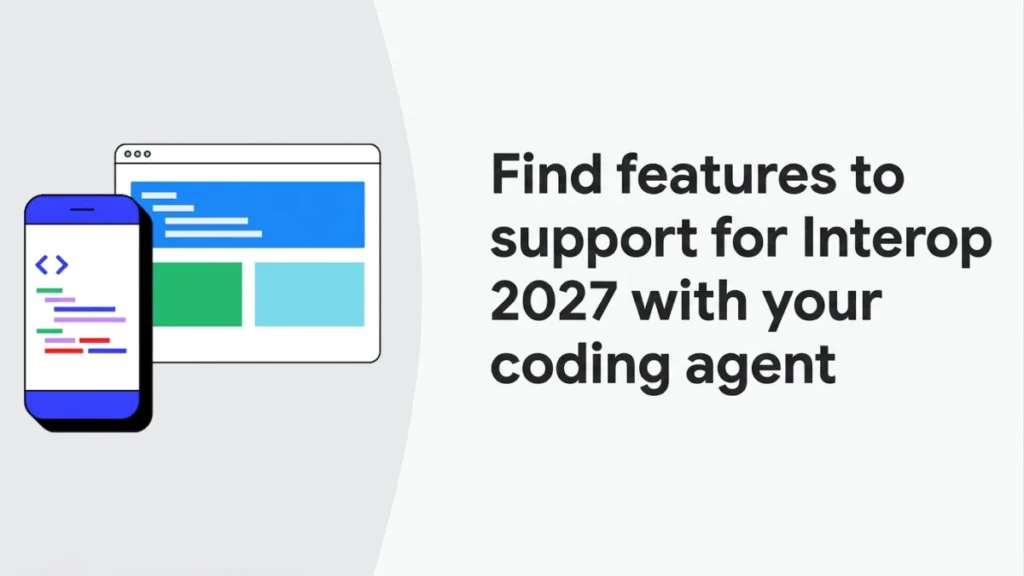

Web developers are frequently tasked with the heavy burden of maintaining legacy codebases, a process often characterized by the use of complex polyfills, proprietary workarounds, and restrictive library dependencies. As the digital landscape evolves, the demand for a unified, interoperable web—where features behave consistently across all major browser engines—has never been higher. The Interop initiative, a collaborative project involving major browser vendors, has emerged as the primary mechanism for addressing these pain points. With the proposal phase for Interop 2027 currently underway, developers are being encouraged to leverage modern AI-assisted coding agents to identify critical feature gaps, thereby ensuring that the next cycle of browser development directly reflects the practical needs of the web development community.
The Evolution of Interop Initiatives
The Interop project began as a concerted effort to eliminate the "cross-browser compatibility" headache that has plagued web developers for decades. By focusing on a specific set of "focus areas" each year, browser vendors—including those behind Chrome, Firefox, Safari, and Edge—agree to prioritize the implementation and stabilization of specific web standards. This coordinated approach has historically led to significant improvements in areas such as CSS Grid, Flexbox, and various JavaScript APIs, drastically reducing the amount of defensive coding required to achieve consistent cross-platform results.
The process for selecting these focus areas is intentionally democratic. Browser vendors look to the developer community to highlight where current implementations fall short or where the lack of a standardized API is forcing developers to rely on inefficient, custom-built solutions. As of September 18, 2026, the proposal period for Interop 2027 has entered its final stretch, with a strict submission deadline of September 23, 2026.
Leveraging AI for Standards Advocacy
Identifying which features to support can be a daunting task for individual developers. Scouring GitHub repositories, analyzing W3C specifications, and cross-referencing browser support tables often requires a significant investment of time that many professionals cannot spare. To bridge this gap, developers are increasingly turning to AI-powered coding agents. These tools, when provided with the correct context, can scan local codebases to identify patterns of "technical debt" that could be resolved by new, standardized web features.
By utilizing a structured prompt, a developer can task an AI agent with auditing their project for potential Interop 2027 candidates. This process involves three distinct layers of analysis. First, the agent performs a comprehensive audit, identifying polyfills, CSS @supports blocks, and JavaScript workarounds that signal the presence of browser-specific limitations. Second, the agent correlates these findings against the active list of Interop proposals on GitHub. Finally, it identifies "unproposed gaps"—areas where a standardized solution is technically feasible and supported by existing W3C or WHATWG specifications but lacks a formal push for implementation.
The Strategic Value of Data-Driven Proposals
The effectiveness of the Interop initiative relies on the quality and specificity of the proposals submitted. A well-crafted proposal is not merely a request for a feature; it is a data-backed argument for why a specific API or CSS capability is essential for modern web development. Proposals that provide concrete evidence of developer pain—such as the number of lines of code or external libraries that could be eliminated by native implementation—are significantly more likely to gain traction among browser engine engineers.
For instance, if an AI audit reveals that a project is forced to import a 50KB library to handle a specific type of date manipulation or layout behavior, that finding becomes a powerful data point. When aggregated across thousands of developers, these individual requirements form a clear roadmap for what the web platform must provide next. The goal of using an AI agent is to convert anecdotal frustration into actionable, quantifiable evidence that browser vendors can use to justify resource allocation.
The Chronology of Interop 2027
The timeline for Interop 2027 follows a rigorous schedule designed to ensure that development cycles are well-defined.
- Early September 2026: The proposal submission window opens, allowing community members to submit new focus areas via the official GitHub repository.
- September 18, 2026: As the deadline approaches, stakeholders release updated documentation and tooling, such as the recommended audit prompts, to help developers finalize their contributions.
- September 23, 2026: The deadline for all new proposals. Submissions after this date are generally not considered for the 2027 cycle.
- Post-September 2026: A period of review and consolidation follows, where browser vendors and standards bodies evaluate the feasibility, impact, and consensus around the proposed focus areas.
- Early 2027: The final list of focus areas for Interop 2027 is published, and browser vendors begin the implementation and testing phase.
Broader Implications for the Web Ecosystem
The implications of the Interop initiative extend far beyond individual developer productivity. When browsers achieve high levels of interoperability, the barrier to entry for new web applications is lowered, and the performance overhead associated with polyfills and heavy client-side libraries is reduced. This contributes to a faster, more accessible web, which is particularly critical in regions with limited bandwidth or hardware constraints.
Furthermore, the integration of AI tools into the standards-setting process represents a shift in how web technology evolves. By automating the identification of platform gaps, the community can ensure that browser development is responsive to the actual, current state of web engineering. It shifts the burden of proof from developers having to manually track down incompatibilities to a system where those incompatibilities are automatically flagged and proposed for resolution.
Official Guidance and Best Practices
The web platform’s standards bodies maintain a strict set of criteria for what constitutes a viable proposal. For a feature to be considered, it must generally possess a stable specification, have at least one engine implementation already in progress or completed, and include existing Web Platform Tests (WPT) to ensure that future development can be validated.
Developers are encouraged to consult the official "proposal_guide.md" on the web-platform-tests repository. This document serves as the "gold standard" for submissions, ensuring that proposals are formatted correctly and contain the technical depth required by engine engineers. By aligning their AI-generated findings with these guidelines, developers ensure that their contributions are not just heard, but are also technically ready for adoption.
As the September 23 deadline looms, the role of the individual developer remains paramount. The web platform is, ultimately, a product of the collective requirements of those who build upon it. By utilizing the available AI tools to identify and advocate for necessary changes, developers can directly influence the capabilities of the browsers that will define the web experience for years to come. Whether the focus is on improving CSS layout engines, expanding the capabilities of the DOM, or standardizing emerging media APIs, the Interop 2027 process offers a unique window of opportunity to leave a lasting impact on the digital infrastructure of the future.