Tag: brand

  • The Evolution of Corporate Reputation Management: How AI Brand Monitoring is Redefining Global Brand Health

    The Evolution of Corporate Reputation Management: How AI Brand Monitoring is Redefining Global Brand Health

    The global digital landscape has reached a point of saturation where manual brand monitoring is no longer a viable strategy for enterprise-level organizations. In an era where the volume of online content increases exponentially every 24 hours, the traditional methods of tracking brand mentions through keyword alerts and manual spreadsheets have been rendered obsolete. As online culture accelerates, corporate reputation has become more volatile, requiring a fundamental evolution in how brands perceive, track, and protect their public image. This shift is driven by the emergence of sophisticated artificial intelligence (AI) and agentic systems that can process data at a scale and speed previously unimaginable to human marketing and communications teams.

    The Shift from Manual Tracking to AI-Driven Intelligence

    For decades, brand health was measured through periodic surveys, focus groups, and basic media clipping services. The rise of social media in the 2010s introduced "social listening," which allowed teams to track specific keywords. However, the current media environment is significantly more complex. Today, brand mentions are no longer confined to news outlets and social feeds. AI chatbots such as OpenAI’s ChatGPT, Google’s Gemini, and Anthropic’s Claude have become primary drivers of brand awareness and consumer traffic. These Large Language Models (LLMs) synthesize information from across the entire internet, presenting brand identities to users in conversational formats that traditional tracking tools cannot see.

    This transformation creates new layers of brand risk. As generative AI lowers the barrier to content creation, the sheer volume of text, video, and deepfake media is rising at an unprecedented rate. AI chatbots are frequently answering nuanced questions about brands—ranging from product quality to ethical stances—without the brand owners ever knowing the queries occurred. Consequently, AI brand monitoring has transitioned from a competitive advantage for early adopters to a mandatory standard for any organization seeking to maintain its market position in the age of generative intelligence.

    Understanding AI Brand Monitoring and Data Synthesis

    AI brand monitoring is defined as the automated synthesis of the entire digital ecosystem into a single, cohesive view of brand health. Unlike traditional tools that provide a fragmented list of mentions, AI-powered systems process massive datasets across news outlets, social platforms, forums, and review sites simultaneously. This processing power allows organizations to move beyond basic volume metrics. In the past, a spike in activity might signal a crisis, but teams would spend hours or days investigating the cause. AI now performs this "heavy lifting" instantly, grouping thousands of disparate conversations into logical themes and narratives.

    By identifying the "reason" behind the data, AI allows for the detection of trends and patterns before they escalate into mainstream crises. This is particularly crucial given the nuance of human language. Traditional keyword monitoring is often blind to context, sarcasm, or cultural subtleties. LLMs, however, possess the linguistic sophistication to understand sentiment without needing a perfectly refined keyword list. This capability saves communications teams hundreds of hours of manual research, providing the necessary context to understand not just what is being said, but why it is being said and how it might impact the bottom line.

    The Rise of Agentic AI and Autonomous Monitoring

    The most significant advancement in this field is the move toward "agentic AI." While standard AI tools can summarize data when prompted, AI agents are designed to function autonomously within a workflow. These agents do not require constant human oversight or manual dashboard checks. Instead, they are assigned specific tasks—such as monitoring for shifts in audience engagement or detecting changes in news coverage—and they execute those tasks 24/7.

    For example, an AI agent can be programmed to scan for any new narrative that mentions a brand and begins to gain significant traction. If a social media post or news article reaches a certain threshold of engagement, the agent investigates the cause, synthesizes the context, and alerts the relevant stakeholders immediately. This proactive approach allows teams to react to what actually matters, filtering out the "noise" of social media to focus on high-impact events.

    Paul Quigley, General Manager of Sprout Listening and NewsWhip, notes that agentic systems like the Trellis Monitoring Agent are designed to remove the most stressful elements of communication roles. Historically, when a negative story broke, professionals had to scramble to quantify the damage. Now, the system provides an immediate report, placing human decision-makers in the "driving seat" from the moment an incident begins to trend.

    A Chronology of Brand Monitoring Evolution

    The transition to AI-powered monitoring can be viewed through a clear historical timeline:

    1. The Clipping Era (Pre-2000s): Brands relied on physical press clippings and manual television monitoring. Insights were delayed by days or weeks.
    2. The Digital Alert Era (2000–2010): Google Alerts and basic RSS feeds introduced real-time notifications based on exact keyword matches.
    3. The Social Listening Era (2010–2020): Tools began to aggregate social media data, offering basic sentiment analysis (Positive/Negative/Neutral) and volume charts.
    4. The Generative AI Era (2022–2024): The launch of ChatGPT and other LLMs shifted the focus to narrative synthesis, understanding intent, and monitoring "zero-click" content.
    5. The Agentic AI Era (2025 and beyond): Autonomous agents now handle the monitoring, analysis, and reporting phases, leaving humans to focus solely on high-level strategy and response.

    AI-Powered Sentiment Analysis and the "Why" Behind the Data

    One of the primary failings of traditional sentiment analysis was its "tone deafness." Early algorithms often flagged a sarcastic comment—such as a customer saying "Great job!" regarding a three-week shipping delay—as positive. AI-powered sentiment analysis bridges this gap by identifying underlying intent. By analyzing the relationship between words and the broader context of a conversation, AI can accurately report on the emotional state of a target audience.

    This clarity is vital for customer care and PR efforts. When an organization can see the intent behind the sentiment, it can decide when to intervene with a high-touch human response and when to allow an organic conversation to resolve itself. This ensures that corporate resources are focused where they can drive the most significant impact, rather than wasting energy on low-stakes digital chatter.

    The New Frontier: Tracking Visibility in AI Search and AIOs

    As search behavior shifts, the industry is seeing the rise of "Zero-Click" content. Studies as of early 2026 indicate that AI Overviews (AIOs) in search engines significantly reduce the number of users who click through to a brand’s actual website. Instead, the AI provides a summary of the brand’s offerings or reputation directly on the search results page.

    This has necessitated a new discipline: Generative Engine Optimization (GEO). Brands must now monitor how they are cited within AI-generated answers. If a competitor is consistently cited as the "best" in a category while a brand is omitted, it represents a critical content gap. Monitoring these AI overviews allows organizations to see inconsistencies in how their brand is represented and take steps to provide the clear, authoritative data that LLMs need to accurately reflect their messaging.

    Leading Tools in the AI Brand Monitoring Sector

    Several platforms have emerged as leaders in this technological shift, each offering specialized capabilities for different enterprise needs:

    • Sprout Social (Trellis & NewsWhip): This platform utilizes the Trellis Monitoring Agent to track news and social coverage across major networks including X, TikTok, Bluesky, and Reddit. Its "Smart Inbox" uses AI to detect spikes in message volume compared to hourly averages, serving as a primary early warning system for customer-facing crises.
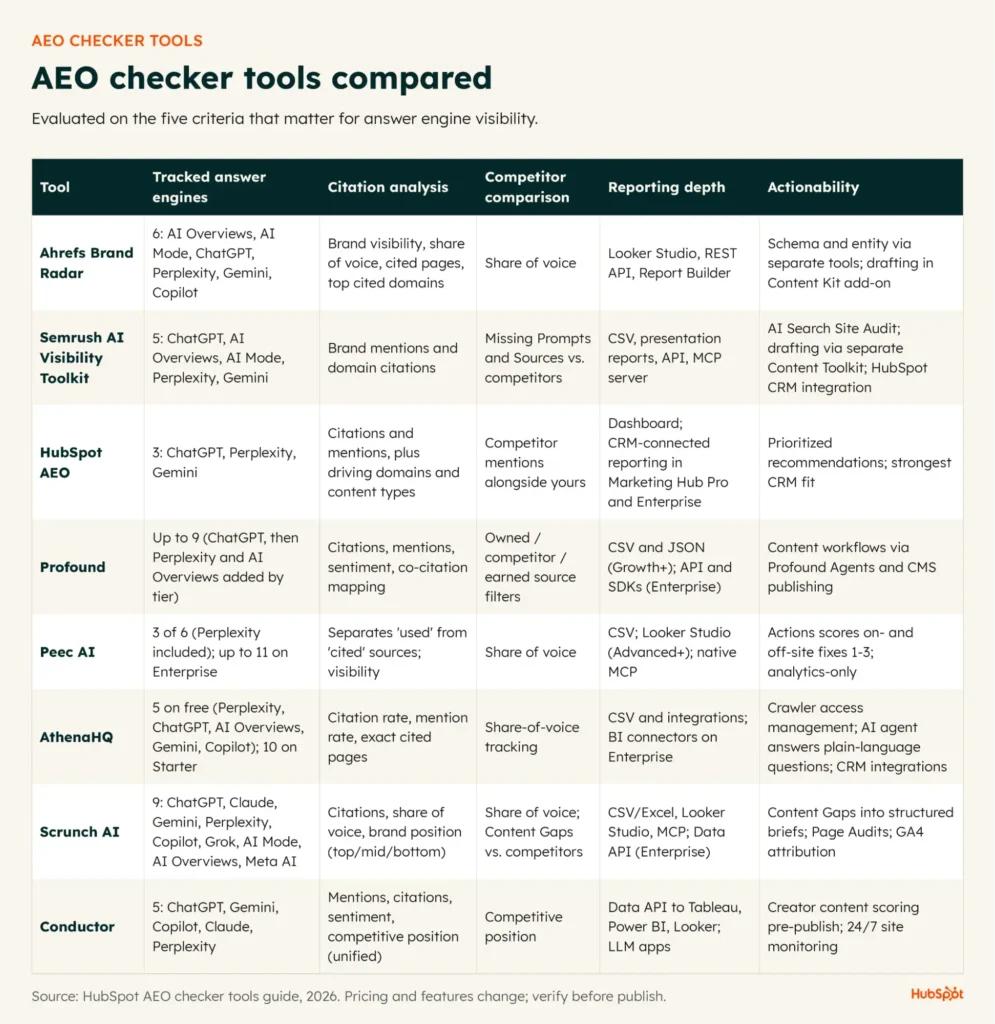
    • Semrush Enterprise AIO: Focused heavily on the intersection of SEO and AI, this tool monitors brand visibility within Google AI Overviews and ChatGPT. It maintains a database of over 213 million LLM prompts, helping brands align their content with the specific questions users are asking AI bots.
    • Profound: A specialized platform for "Answer Engine Optimization" (AEO). Profound tracks how AI bots crawl website content and how they recommend products in AI-generated shopping lists. It provides "Agent Analytics" to help teams understand how their brand narrative is being reconstructed by autonomous bots.

    Broader Impact and Strategic Implications

    The move toward AI brand monitoring represents a fundamental shift from reactive to proactive crisis management. In the modern digital ecosystem, a single viral post or an inaccurate AI-generated summary can redefine a global reputation in seconds. Maintaining a resilient brand now requires an "always-on" pulse that can only be sustained through automation.

    Furthermore, the integration of "human-in-the-loop" systems ensures that while AI handles the data processing, human stakeholders retain control over high-level strategy. Humans define the thresholds for alerts—such as being notified only if more than 20 articles are published on a specific topic within an hour—ensuring that the technology serves as a mechanism for reason rather than a source of panic.

    Ultimately, the data suggests that the cost of inaction is high. Brands that fail to adopt AI monitoring risk being blindsided by narratives they cannot see and questions they do not know are being asked. By leveraging these tools, organizations can move beyond reporting on the past and begin to actively shape the future of their brand health in an increasingly automated world.

  • The Content Conundrum: How AI is Reshaping Brand Responsibility and Posing New Risks for Content Teams

    The Content Conundrum: How AI is Reshaping Brand Responsibility and Posing New Risks for Content Teams

    Six months ago, a company’s content team published a comprehensive guide detailing data security best practices. In the intervening period, internal policies evolved significantly. Now, when a customer poses a routine question to the company’s support chatbot, the bot confidently retrieves information from that outdated guide, presenting it as current policy. This discrepancy forces the support team to not only address the customer’s original query but also to explain why an official brand communication is no longer accurate.

    This scenario, once a niche concern, is rapidly becoming a widespread challenge as Artificial Intelligence (AI) integrates more deeply into customer service, e-commerce, and search functionalities. Large Language Models (LLMs), the engines behind many AI applications, draw heavily from published brand materials to answer user questions and influence purchasing decisions. Consequently, outdated or incomplete content can lead to severe repercussions. A stark indicator of this growing concern is the finding by The Conference Board’s October 2025 analysis, which revealed that 72% of S&P 500 companies now identify AI as a material business risk, a dramatic surge from just 12% in 2023. This indicates a fundamental shift in how businesses perceive and are impacted by AI.

    The pressure is palpable for content teams. Marketing collateral, which historically focused on engagement and reach, now carries a far greater weight of responsibility, extending into areas of accuracy, compliance, and legal liability.

    The Genesis of the Shift: AI’s Indiscriminate Consumption

    At the heart of this emerging challenge lies the fundamental operational mechanism of AI systems. These sophisticated models do not inherently distinguish between a brand’s latest product update and a blog post published years prior; they treat all indexed content as equally valid source material. This creates a compounding problem. When AI platforms such as ChatGPT, Perplexity, or Google’s AI Overviews ingest content from a company’s digital library, crucial contextual elements like disclaimers, publication dates, and nuanced qualifications often disappear.

    This phenomenon directly contributes to the kind of misinformation scenarios described earlier. Imagine a customer researching travel insurance. An AI overview might aggregate information from a five-year-old blog post about policy exclusions, presenting it as current. Without the original date or the context of evolving insurance regulations, the customer could be misled about coverage options, leading to significant dissatisfaction and potential disputes.

    For industries operating under stringent regulatory frameworks, the potential for exposure is profoundly amplified. Financial services firms might find themselves subject to scrutiny from bodies like the Securities and Exchange Commission (SEC) if AI-generated advice contradicts official regulations. Similarly, healthcare organizations grappling with the intricacies of HIPAA compliance could face serious repercussions if patient-facing guidance, surfaced through AI, proves to be outdated or inaccurate, requiring extensive post-publication corrections and potentially leading to privacy breaches.

    The New Frontier of Content Risk: Unforeseen Liabilities

    Content teams, historically tasked with crafting compelling narratives and driving brand awareness, did not necessarily anticipate becoming de facto compliance officers. However, the pervasive integration of AI has thrust them into this role, whether by design or by accident.

    A compelling cautionary tale emerged a couple of years ago involving Air Canada. In a 2024 ruling, a British Columbia civil tribunal held the airline liable after its website chatbot provided incorrect information regarding bereavement fares. The chatbot had promised a discount that was no longer applicable under the airline’s current policies. When Air Canada subsequently refused to honor the discount, the customer pursued a claim and prevailed. The tribunal’s decision established that the company bore responsibility for the chatbot’s statements, irrespective of the information’s origin or generation method. This incident, which began with outdated guidance surfaced by AI, rapidly escalated into a significant legal and public accountability issue.

    The risks associated with AI-driven content can broadly be categorized into several key areas:

    • Inaccuracy and Outdated Information: As highlighted by the Air Canada case, AI systems can readily surface information that is no longer current or correct, leading to customer confusion and potential disputes.
    • Misinterpretation and Lack of Nuance: LLMs can strip away context, nuance, and disclaimers, presenting information in a way that misrepresents the original intent or limitations. This is particularly problematic for complex or sensitive topics.
    • Bias and Hallucination: AI models can inadvertently perpetuate biases present in their training data or "hallucinate" information that is not factually grounded, leading to the dissemination of misinformation.
    • Copyright Infringement and Plagiarism: If AI models are trained on copyrighted material without proper licensing or attribution, their outputs could potentially infringe on intellectual property rights.
    • Security Vulnerabilities: AI systems themselves can be targets of attack, and if compromised, could be used to disseminate malicious or misleading information, posing a significant security risk.

    The implications of these risks are substantial. McKinsey’s 2025 State of AI survey revealed that 51% of organizations already utilizing AI have experienced at least one negative consequence from its deployment, with inaccuracy being the most frequently cited issue. This underscores a structural exposure that content teams are now, intentionally or unintentionally, inheriting.

    Workflow Mismatches: The Gap in Content Governance

    The current operational frameworks for many content teams were not designed to manage these emergent AI-related risks. Their evolution has been driven by metrics such as speed, volume, engagement, and traffic acquisition. Established workflows that effectively serve these goals can, paradoxically, work against the imperative of accuracy governance. Publishing calendars often prioritize velocity, and editorial reviews traditionally focus on voice, clarity, and brand consistency rather than deep factual verification against dynamic external factors.

    Furthermore, legal approval processes, often designed for discrete, time-bound campaigns, may not adequately extend to the management of evergreen content libraries that AI systems mine indefinitely. This creates a significant gap in accountability. The question of who is responsible for updating a three-year-old blog post when regulations shift, or who audits help documentation as product features evolve, often goes unanswered within traditional organizational structures. In most companies, clear accountability for the ongoing accuracy of AI-consumable content simply does not exist.

    Content teams find themselves at the epicenter of this operational vacuum. They are the creators of the assets that AI systems consume, yet they often lack the explicit mandate, the necessary tools, or the dedicated headcount to effectively manage the downstream risks.

    Adapting to the AI Era: Building Content Risk Triage Systems

    Organizations that are successfully navigating this evolving landscape are proactively building what can be termed a "Content Risk Triage System." This involves implementing four interlocking practices designed to maintain publishing velocity while effectively managing exposure to AI-related risks.

    The foundational element of such a system is Dynamic Content Auditing and Tagging. This goes beyond traditional content audits by incorporating AI-specific considerations. Content assets are not only evaluated for accuracy and relevance but are also tagged with metadata that clarifies their currency, intended audience, and any associated disclaimers. This tagging system allows AI models, or human curators overseeing AI outputs, to better understand the context and applicability of the information. For instance, a financial advice article might be tagged with "historical context," "regulatory disclaimer applies," or "updated as of [date]."

    Secondly, Automated Content Monitoring and Alerting becomes crucial. This involves deploying tools that continuously scan content libraries for potential inaccuracies, policy changes, or regulatory updates that might render existing content obsolete or misleading. When such changes are detected, the system should automatically alert the relevant content owners, flagging assets for immediate review and potential revision. This proactive approach prevents the slow decay of content accuracy that AI systems can exploit.

    The third pillar is AI-Assisted Content Verification and Fact-Checking. While AI can be the source of risk, it can also be a powerful tool for mitigation. Implementing AI-powered fact-checking tools that can cross-reference claims against trusted, up-to-date sources can significantly enhance the accuracy of content before it is published or updated. These tools can flag inconsistencies, identify potential misinformation, and even suggest more accurate phrasing. This augmentation of human review capabilities is essential for maintaining speed without compromising quality.

    Finally, establishing Clear Ownership and Escalation Pathways is paramount. Within the content risk triage system, clear lines of accountability must be drawn for different types of content and different stages of the content lifecycle. This includes defining who is responsible for initial content creation, who oversees ongoing accuracy checks, and who has the authority to approve significant updates or retractions. Robust escalation pathways ensure that when potential risks are identified, they are promptly routed to the appropriate decision-makers, whether they are within the content team, legal, compliance, or product departments.

    Strategic Steps for Content Leaders

    Content leaders are now tasked with implementing practical systems that reduce risk without bringing publishing operations to a standstill. Three critical steps provide a reasonable jumping-off point for this strategic adaptation:

    1. Establish a Content Risk Classification Framework: The first imperative is to categorize content based on its potential risk profile. This involves identifying content that makes specific, verifiable claims (e.g., pricing, product capabilities, compliance statements, health or financial guidance) versus content that is more opinion-based or evergreen in nature. High-risk content should be subjected to more rigorous review processes, potentially involving legal and compliance teams earlier in the workflow. This tiered approach ensures that resources are allocated effectively and that critical content receives the necessary scrutiny.

    2. Integrate AI Output Verification into Editorial Workflows: As AI becomes a standard tool for content creation, its outputs must be rigorously verified. This means that even AI-generated drafts should undergo human review for accuracy, bias, and adherence to brand guidelines and regulatory requirements. Establishing clear protocols for fact-checking AI-generated content, cross-referencing its claims with authoritative sources, and ensuring proper attribution where necessary is no longer optional. This also extends to understanding how AI might interpret and present existing content, requiring proactive checks of AI search results and chatbot responses.

    3. Foster Cross-Departmental Collaboration: Addressing content risk in the AI era necessitates a collaborative approach. Content teams cannot operate in isolation. They must build strong working relationships with legal, compliance, product, and IT departments. This collaboration should focus on developing shared understanding of AI risks, defining roles and responsibilities, and co-creating robust content governance policies. Regular interdepartmental meetings, joint training sessions, and shared documentation platforms can facilitate this crucial synergy. For organizations seeking additional support in embedding editorial governance and maintaining publishing velocity, Contently’s Managing Editors can serve as an embedded layer of expertise, helping teams uphold accuracy standards without compromising speed.

    The financial and reputational cost of rectifying content inaccuracies after they have permeated AI systems and reached the public is invariably far higher than the investment required for proactive management. Instead of dedicating the next quarter to damage control and crisis communication, organizations should prioritize the implementation of proactive systems today. This strategic resolution offers a sustained benefit that will pay dividends throughout the year, fostering trust and mitigating the inherent risks of the AI-driven information landscape.

    For organizations looking to build content operations that scale responsibly and effectively in this new paradigm, exploring Contently’s enterprise content solutions can provide the necessary framework and support.

    Frequently Asked Questions (FAQs)

    How do I identify potential risk exposure within my content library?

    Begin by conducting a thorough audit of content that makes specific claims, such as pricing details, product capabilities, compliance statements, or health and financial guidance. Subsequently, identify assets that AI systems frequently cite by posing queries on platforms like ChatGPT, Perplexity, and Google AI Overviews. Content that consistently appears in AI-generated responses carries the highest exposure and should be prioritized for accuracy verification.

    What resources are necessary for a small content team lacking dedicated compliance support?

    At a minimum, assign clear ownership for content accuracy reviews on a quarterly basis. Develop a simplified risk classification system to route high-stakes content through additional review processes before publication. Document your verification procedures meticulously to demonstrate due diligence if questions arise. These foundational steps can be implemented without requiring additional headcount, focusing instead on intentional workflow design.

    How can legal and compliance teams be engaged effectively without impeding workflow velocity?

    Integrate a tiered review process into your workflow from the outset. Clearly define which content types necessitate legal sign-off versus those that can proceed with editorial approval alone. Create standardized templates and pre-approved language for recurring types of claims to expedite legal reviews over time. The objective is to ensure appropriate oversight, rather than creating universal bottlenecks.

  • The Millennial Resurgence: Decoding the Shifting Dynamics of Social Media Engagement and Brand Loyalty for 2026

    The Millennial Resurgence: Decoding the Shifting Dynamics of Social Media Engagement and Brand Loyalty for 2026

    The cultural pendulum, which for years swung decisively toward the younger Gen Z demographic, is beginning to stabilize as Millennials reassert their influence over the digital landscape. Once frequently caricatured for their affinity for side parts, skinny jeans, and the Valencia filter, the generation born between 1981 and 1996 is undergoing a significant reputational rehabilitation. Industry analysts and social media strategists now recognize this cohort not as a fading demographic of the past, but as the pioneering architects of modern digital culture whose spending power and platform loyalty are becoming the primary targets for global brands.

    As the first generation to grow up at the intersection of the analog and digital eras, Millennials possess a unique psychological relationship with social media. They remember the world before the ubiquity of followers and filters, which has cultivated a perspective that treats social platforms as emotional infrastructure rather than mere utility. According to recent market research, this generation is now entering its peak earning years, and their interaction with brands on social media is projected to reach unprecedented levels by 2026.

    The Evolution of the Digital Pioneer: From MySpace to Global Behemoths

    To understand the current Millennial influence, it is necessary to examine the chronology of their digital integration. Unlike Gen Z, who are "digital natives" born into a world of smartphones, Millennials were the "early adopters" who navigated the transition from dial-up modems to mobile-first ecosystems.

    In the early 2000s, Millennials defined the social landscape through platforms like AOL Instant Messenger (AIM) and MySpace. These platforms introduced the concepts of digital identity, curated profiles, and the "soundtrack" of one’s life. By the time Facebook and Instagram launched, this generation had already mastered the art of digital self-presentation. Monica Dimperio, a prominent brand builder and founder of the consultancy Hashtag Lifestyle, notes that Millennials literally invented the "photo dump"—a carousel of images meant to convey a specific vibe or aesthetic.

    How millennials use social media: What marketers need to know

    "Millennials grew up both with and without social," Dimperio explains. "We remember the world before filters and followers, so our relationship with it is deeply emotional. We built the culture that Gen Z now thrives in." This foundational experience has resulted in a generation that values presentation, meaning, and "vibe" over the raw, often chaotic spontaneity favored by younger users.

    Statistical Landscape: Analyzing the 2026 Social Media Forecast

    The 2026 Social Media Content Strategy Report provides a data-driven look at why brands are pivoting back to Millennial-centric strategies. The data reveals that 83% of Millennials plan to maintain or increase their level of interaction with brands on social media over the next year—the highest percentage of any age demographic.

    The platform preferences for this group remain distinct. According to the Q1 2026 Sprout Pulse Survey, Instagram remains the dominant force, utilized by 76% of the demographic. This is followed closely by Facebook at 70% and YouTube at 69%. While TikTok is often viewed as a Gen Z stronghold, Millennials report that it has become their favorite channel for product discovery, though they still turn to Facebook for customer care and Reddit or X (formerly Twitter) for news updates.

    The motivation behind this usage is rooted in a desire for connection and "companionship." Roughly 92% of Millennials use social media to keep up with cultural moments, which they view as shared touchstones that foster a sense of community. In an era of increasing social isolation, Millennials utilize these platforms to stay in touch with distant friends, remember birthdays, and feel less alone during solitary activities.

    The Rejection of "AI Slop" and the Demand for Human Authenticity

    One of the most significant shifts in Millennial behavior is a growing hostility toward automated and artificial intelligence-generated content. As brands increasingly turn to AI to streamline content creation, they risk alienating the Millennial consumer. The Q4 2025 Sprout Pulse Survey indicates that Millennials believe human-generated content should be the top priority for brands in the coming year.

    How millennials use social media: What marketers need to know

    The backlash is already visible in consumer habits: 44% of Millennials have already unfollowed, blocked, or muted brands that post content perceived as "AI slop"—low-quality, algorithmically generated posts that lack a human touch. Dimperio attributes this to a deep-seated nostalgia for the "golden age" of the internet, characterized by niche blogs and original memes that were not curated by complex algorithms.

    "Originality still matters to us because we know what human creativity looks like," Dimperio states. This skepticism creates a paradox for marketers; while AI can increase efficiency, it can simultaneously erode the brand loyalty that Millennials are known for. To win over this demographic, brands must produce content that sounds relatable and authentic, often leveraging employee-generated content or trusted influencers who share the generation’s values.

    The Collapse of the Sales Funnel: Social Commerce in 2026

    The traditional marketing funnel—moving from awareness to consideration to purchase—has effectively collapsed for the Millennial consumer. In the modern social media environment, discovery, research, and purchase often occur within a single scrolling session.

    This "peer pressure marketing" is highly effective. Millennials are frequently exposed to products multiple times through paid advertisements and algorithmic suggestions until a purchase is made. However, the most effective conversion tool remains organic recommendation. When a product is suggested by a trusted creator or a friend, it provides a "refreshing" break from the constant barrage of corporate sales pitches.

    Furthermore, Millennials are increasingly looking for a seamless transition between digital and physical storefronts. They value the "In Real Life" (IRL) experience but expect the digital persona of a brand to match its physical presence. A brand that feels "cool" on Instagram but provides a disconnected or poor experience in a brick-and-mortar store will likely lose the hard-won loyalty of this demographic.

    How millennials use social media: What marketers need to know

    Ethical Consumption and the Mandate for Social Responsibility

    Millennials remain the generation most likely to demand that brands take a public stand on social and political issues. The Q1 2026 Sprout Pulse Survey found that 27% of Millennials expect brands to take a stand on global issues, while 23% want brands to act as resources for industry-specific problems.

    This is not merely a preference but a factor in purchasing decisions. One-third of Millennials report they will stop buying products if a brand’s values clash with their own, and 20% actively seek out brands that align with their personal ethics. This demographic has used social media to amplify social movements for nearly two decades, and they view their purchasing power as an extension of their activism. For brands, the key is avoiding "performative activism" and instead focusing on issues that directly impact their specific community or industry.

    Case Studies: Brands Masterminding the Millennial Connection

    Several brands have successfully navigated the complexities of Millennial marketing by establishing clear, human-centric identities that resonate with the generation’s aesthetic and ethical preferences.

    1. Sézane: The Appeal of "Classic Elegance"
    The French fashion brand Sézane has built a cult following among Millennial women by leaning into the "Parisian wardrobe" aesthetic. By using models with body types that reflect their core audience and focusing on "comfort-first" style, the brand taps into the early influences that shaped Millennial taste. Their use of user-generated content and creator-led marketing makes the brand feel like a community rather than a corporation.

    2. Ceremonia: Founder-Led Storytelling
    Ceremonia, a clean hair care brand rooted in Latinx heritage, leverages the personal story of its founder, Babba C. Rivera. As a Millennial herself, Rivera’s transparency about the brand’s mission and the sourcing of its products appeals to the generation’s desire to know who they are buying from. The brand’s visual identity—polished, warm, and coordinated—is described by analysts as "Millennial-coded," emphasizing quality and heritage.

    How millennials use social media: What marketers need to know

    3. Graza: The "Fancification" of Staples
    Graza has disrupted the pantry staple market by turning olive oil into a lifestyle product. Through partnerships with other Millennial-favored brands like Fishwife and the use of mockumentary-style social content, Graza demonstrates a self-aware humor that resonates with consumers who value both high quality and a sense of personality.

    Strategic Implications for the Future

    As Millennials move into middle age, they are transitioning from being the "new kids" to the "market stabilizers." They are the most skeptical generation but also the most loyal once a brand has earned their trust. For social media managers and CMOs, the directive for 2026 is clear: move away from the frantic pursuit of fleeting trends and toward the cultivation of a unique, consistent brand character.

    The resurgence of Millennials on social media represents a return to the fundamentals of digital connection. This generation is not looking for a sales pitch; they are looking for "a friend with taste." Brands that can provide educational content, foster niche communities, and maintain a human touch in an increasingly automated world will find themselves rewarded with the most significant spending power in the current global economy. Ignoring the generation that built social media culture is no longer a viable strategy for any brand seeking long-term resonance.

  • Navigating the New Frontier of Fintech AI Search Visibility and Brand Accuracy

    Navigating the New Frontier of Fintech AI Search Visibility and Brand Accuracy

    The financial technology sector is currently navigating a fundamental shift in how consumers discover and evaluate products, as artificial intelligence search engines implement significantly stricter verification thresholds for fintech brands compared to other industries. Because financial services fall under the critical "Your Money or Your Life" (YMYL) category, large language models (LLMs) and generative search engines are programmed to apply rigorous filters before mentioning, citing, or recommending specific fintech products. This evolution in search behavior—where 54% of Americans now utilize tools like ChatGPT for financial research—has forced a reimagining of digital presence, moving beyond traditional search engine optimization (SEO) toward a more complex framework of "Generative Engine Optimization" (GEO).

    Fintech in AI Search: How to Be the Trusted & Featured Brand

    For fintech companies, the risk of misrepresentation in AI search results is a primary concern. Unlike traditional search engines that provide a list of links, AI search draws from a brand’s own website as well as the wider web, including forums, news sites, and regulatory records. When these sources provide conflicting information, AI systems may hallucinate, provide outdated fee structures, or pair a brand’s name with negative sentiment gathered from unverified third-party sources. Consequently, the goal for modern fintech marketing is no longer just appearing in search results, but ensuring that the brand is represented with absolute accuracy across the three primary types of AI visibility: brand mentions, citations, and product recommendations.

    Fintech in AI Search: How to Be the Trusted & Featured Brand

    The Three Pillars of AI Visibility in the Financial Sector

    Visibility in the AI era is segmented by the level of intent and trust the model assigns to a brand. The first pillar, brand mentions, occurs when an AI system includes a company’s name in a general answer. This typically happens during the awareness stage of the consumer journey. For instance, when a user asks about the benefits of "Buy Now, Pay Later" (BNPL) services, the AI might mention platforms like Klarna or Affirm to illustrate the category. While not an explicit endorsement, these mentions utilize the "mere exposure effect," building familiarity so that by the time a user reaches a decision point, the brand is already a recognized entity in their mental landscape.

    Fintech in AI Search: How to Be the Trusted & Featured Brand

    The second pillar, citations, represents a higher tier of value. This occurs when an AI uses a brand’s specific pages or documentation to support its answer, often appearing as footnotes, inline links, or source thumbnails. In the fintech space, being cited by an LLM serves as an implied endorsement of the brand’s authority and expertise. When an AI pulls data directly from a company’s technical documentation or help center, it allows the brand to influence the technical narrative of the response. However, market data suggests that while citations boost credibility, they do not always drive direct traffic, as many users prefer to continue their dialogue within the AI interface rather than clicking through to the source.

    Fintech in AI Search: How to Be the Trusted & Featured Brand

    The third and most impactful pillar is product recommendations. This is where the AI provides a curated shortlist of products for high-intent queries, such as "best budgeting apps" or "top-rated international transfer services." These recommendations are the ultimate goal for fintech brands because they directly influence the final selection process. Appearing in these lists requires the AI to have a high level of confidence in the brand’s legitimacy and current standing.

    Fintech in AI Search: How to Be the Trusted & Featured Brand

    The Logic of LLM Selection: Consensus and Consistency

    To decide which fintech brands to feature, AI systems rely on two primary signals: consensus and consistency. This methodology acts as a digital filter, protecting users from potentially fraudulent or unstable financial services.

    Fintech in AI Search: How to Be the Trusted & Featured Brand

    Consensus is achieved when multiple reputable, high-authority sources mention a brand and its products in a positive or neutral context. LLMs assess social proof by scanning editorial reviews from major financial publications, user feedback on platforms like G2 or Trustpilot, and discussions in specialized communities like Reddit or the myFICO Forum. The stronger the consensus across these diverse nodes, the more likely the AI is to recommend the brand. Conversely, if major news outlets consistently highlight regulatory hurdles or service outages, the AI will likely incorporate those warnings into its summary.

    Fintech in AI Search: How to Be the Trusted & Featured Brand

    Consistency, the second signal, refers to the alignment of facts across the internet. For a fintech brand to be trusted by an AI, its core details—such as pricing, interest rates, security features, and withdrawal limits—must be uniform across its own website and all third-party coverage. Inconsistencies, such as a review site listing a 3% fee while the brand’s homepage lists 2%, create a "trust gap." When faced with such contradictions, AI models often become cautious, either omitting the brand entirely or adding qualifying language like "reports vary on current fee structures," which can significantly undermine consumer trust.

    Fintech in AI Search: How to Be the Trusted & Featured Brand

    Content Categories That Drive AI Trust

    Market analysis indicates that three types of content carry the most weight in the fintech AI ecosystem. The first is owned content, which includes the brand’s website, technical documentation, and help centers. AI systems treat these as the "primary source of truth" for product mechanics. Fintech leaders like Intuit and TurboTax have optimized this by creating extensive landing pages that detail every aspect of their guarantees, security protocols, and filing processes. By providing structured, easy-to-parse data, they ensure the AI has a reliable foundation for its answers.

    Fintech in AI Search: How to Be the Trusted & Featured Brand

    The second category is earned media and reviews. LLMs use these to cross-check a brand’s internal claims against the reality of the user experience. A significant trend in the industry is the use of original research to drive earned media. For example, KPMG’s "Pulse of Fintech" reports are frequently cited by journalists at Bloomberg and CNBC. These citations create a ripple effect: when reputable news organizations cite a brand’s research, the AI model registers that brand as a high-authority source in the financial sector.

    Fintech in AI Search: How to Be the Trusted & Featured Brand

    The third and perhaps most critical category for fintech is official records. These are public documents that confirm a brand’s legal authorization to operate, such as FDIC membership, licenses from the Federal Reserve, or filings with the Consumer Financial Protection Bureau (CFPB). When a user asks about the safety of a platform like Wise, AI systems like Perplexity scan regulatory databases to verify that the company is a licensed money transmitter. For fintech brands, making these regulatory details explicit and easy for AI bots to retrieve is a vital trust-building exercise.

    Fintech in AI Search: How to Be the Trusted & Featured Brand

    Strategic Implications for Fintech Leadership

    The shift toward AI-driven financial research presents both a challenge and a massive opportunity. A study by Microsoft found that AI-referred traffic converts at three times the rate of other channels, including traditional search and social media. This high conversion rate is attributed to the fact that users arriving via AI have often already been "pre-sold" by the model’s synthesis of the brand’s value proposition.

    Fintech in AI Search: How to Be the Trusted & Featured Brand

    To capitalize on this, fintech brands are increasingly investing in "Trust Centers" and structured FAQ sections. These hubs serve as a central repository for the facts the brand wants the AI to prioritize. Furthermore, proactive reputation management has become a technical necessity. Brands must now monitor not just what the media says, but what the AI thinks the media is saying. This involves auditing AI responses for "narrative drivers"—the specific questions and sentiments that appear most frequently in LLM outputs.

    Fintech in AI Search: How to Be the Trusted & Featured Brand

    Industry analysts suggest that the "long tail" of the internet is becoming more relevant for fintech brands. Because AI models do not "forget" old information, outdated forum posts or expired PDF brochures can continue to haunt a brand’s AI profile for years. Effective AI strategy now requires a "clean-up" phase, where companies aggressively redirect or remove outdated documentation and participate directly in community conversations on platforms like Reddit to provide current, accurate information.

    Fintech in AI Search: How to Be the Trusted & Featured Brand

    Conclusion: The Future of Fintech Discovery

    As artificial intelligence continues to integrate into the daily financial lives of consumers, the barrier to entry for fintech visibility will only grow higher. The "Your Money or Your Life" designation ensures that only the most consistent, transparent, and verified brands will survive the filter of generative search.

    Fintech in AI Search: How to Be the Trusted & Featured Brand

    The transition from traditional SEO to AI-centric visibility represents a move from keyword-matching to narrative-influence. Fintech brands that succeed in this new era will be those that treat their digital footprint as a holistic ecosystem—one where owned data, third-party reviews, and regulatory transparency work in unison to provide a single, undeniable story of reliability. In a world where an AI-generated answer is often the first and most influential touchpoint, accuracy is no longer just a compliance requirement; it is the most powerful marketing tool a fintech brand possesses.

  • Navigating the AI Landscape: How Your Brand’s Digital Footprint Influences Artificial Intelligence Recommendations

    Navigating the AI Landscape: How Your Brand’s Digital Footprint Influences Artificial Intelligence Recommendations

    The burgeoning influence of Artificial Intelligence (AI) on how consumers discover and evaluate brands presents a critical challenge for businesses. As prospective clients increasingly turn to AI-powered tools for research, the sources that AI relies upon to generate recommendations are becoming paramount. This article delves into the intricate relationship between a brand’s online presence, its off-site signals, and the way AI models, such as those powering search engines and chatbots, surface and prioritize information. Understanding this dynamic is no longer a niche SEO concern; it is a fundamental aspect of modern digital strategy.

    The fundamental premise is straightforward: when a potential customer researches a product or service category using AI, the AI’s recommendations are not generated in a vacuum. While a company’s own website serves as a primary training ground for AI to understand its offerings, the AI’s broader knowledge base is built upon the entirety of the web. This means that external sources play a significant, often decisive, role in shaping AI-driven recommendations.

    Data from industry analysis platforms, such as that provided by Profound, indicates a significant reliance on various web sources by AI models. While platforms like Reddit are frequently cited in AI responses, suggesting a broad impact, the true influence of any given source is highly context-dependent. This data underscores a crucial point: not all external citations are created equal, and their relevance is intrinsically tied to the specific search query and the category being investigated.

    What Shapes AI Recommendations for Your Vertical? Peek Inside AI Sources with 3 Prompts (Off-Site AI Search Optimization)

    The Nuance of AI Recommendations: Beyond General Popularity

    The common misconception is that widespread popularity of a platform, such as Reddit, automatically translates to its importance in AI recommendations for every business. However, the reality is far more nuanced. AI models are trained to identify relevant information based on the specific intent and keywords within a user’s prompt. Therefore, a source only matters if the AI actively consults it when a buyer is searching for brands within a particular industry or for specific solutions.

    This principle can be analogized to social media marketing. While a broad social media presence is beneficial, not every platform is equally effective for every business. The notion that every brand needs a dedicated Reddit strategy simply because it’s a commonly cited source is akin to asserting that every business requires a Facebook page due to its user base – an approach that overlooks strategic relevance.

    The key takeaway is that businesses should not indiscriminately pursue every visible citation source. Instead, the focus must be on identifying which external sources consistently inform AI answers for the specific use cases of their target buyers. This targeted approach allows for a more efficient and effective allocation of resources towards channels that can realistically be influenced. The starting point for this strategic endeavor should not be the sources themselves, but rather the prompts that buyers are likely to use.

    What Shapes AI Recommendations for Your Vertical? Peek Inside AI Sources with 3 Prompts (Off-Site AI Search Optimization)

    A Methodical Approach to Uncovering AI’s Information Ecosystem

    To effectively understand which off-site sources shape AI responses, a systematic, four-step process can be employed. This methodology aims to provide actionable insights into the AI’s information-gathering habits within a specific industry context.

    Step 1: Generating Buyer-Specific Commercial-Intent Prompts

    The first critical step involves crafting prompts that accurately reflect how a potential buyer would inquire about solutions or vendors within a particular category. These prompts should embody genuine commercial intent, mimicking the language and considerations of someone actively evaluating options. The accuracy of these prompts is heavily dependent on the quality of input provided, including detailed buyer personas, industry specifics, and existing keyword research.

    For businesses struggling to define these buyer profiles, a supplementary prompt can be utilized: "Visit [website] and infer the most likely ICP. Then list the buyer profile, industry and additional context. Keep the total response under 90 words, use compact phrases (no paragraphs) and skip the explanation and commentary." This aids in extracting essential details to refine the core buyer-specific prompt generator.

    What Shapes AI Recommendations for Your Vertical? Peek Inside AI Sources with 3 Prompts (Off-Site AI Search Optimization)

    The subsequent prompt, designed for tools like ChatGPT, aims to generate ten distinct buyer-style prompts. These prompts are intentionally designed to be short, natural, and commercially specific, typically under 12-15 words. They should span various buying stages, from initial discovery and shortlist creation to comparison, validation, and considerations around implementation risk and return on investment (ROI). Crucially, these prompts are designed to exclude purely educational, exploratory, or trend-based queries, focusing instead on the decision-making process. Each generated prompt is accompanied by an instruction to utilize current web information and subsequently include a list of cited sources and the brands identified in the AI’s response.

    The output of this step is a set of realistic prompts that simulate a buyer’s journey, providing the foundation for subsequent AI interactions. The prompts are structured to elicit responses that include explicit references to the sources AI uses, making the analysis of its information ecosystem possible.

    Step 2: Executing AI "Prompt Runs"

    With a curated list of buyer-specific prompts, the next stage involves running these queries through AI models. Google’s AI Mode and Gemini are recommended due to Google’s market dominance and the increasing integration of AI into search. However, the methodology is adaptable to other large language models (LLMs).

    The process requires executing each of the ten generated prompts sequentially within the same AI conversation. This approach is crucial for maintaining context and ensuring that the AI’s responses build upon each other, providing a more comprehensive view of its information retrieval patterns. Each prompt execution will yield a response, ideally including the brands identified and the sources AI consulted.

    What Shapes AI Recommendations for Your Vertical? Peek Inside AI Sources with 3 Prompts (Off-Site AI Search Optimization)

    While this process might seem tedious, it is essential for gathering empirical data. The iterative nature of these "prompt runs" helps to mitigate the inherent non-deterministic nature of AI outputs, where the same prompt can yield different results. By conducting multiple runs, a more reliable directional signal regarding influential sources can be obtained. As industry expert Britney Muller notes, "The ’10/10 runs’ approach is a solid instinct, because AI outputs as you know are non-deterministic. The same prompt can give you different answers each time. Ten runs give you a better, but still a very crude directional signal. It’s really not statistical certainty."

    Step 3: Archiving Responses and Sources

    Following the prompt execution phase, the collected data needs to be systematically organized. A dedicated prompt is used to distill the essential information from each AI response: the original prompt, the brands identified, and the specific off-site sources cited.

    This prompt, when executed within the same AI conversation after the final prompt run, generates a plain text archive. This archive is designed to be easily copied and pasted for subsequent analysis. It meticulously lists each prompt run, the brands that appeared in the AI’s response, and the URLs of the sources it referenced. This structured output eliminates extraneous conversational elements, providing a clean dataset focused on the core information required for analysis.

    The prompt for this step is carefully worded to ensure that only the requested data is extracted, including preserving all links and formatting. This ensures that the archived data is ready for the final analytical phase. The output is typically presented within a code block for ease of use.

    What Shapes AI Recommendations for Your Vertical? Peek Inside AI Sources with 3 Prompts (Off-Site AI Search Optimization)

    Step 4: Analyzing Off-Site Source Influence and Prioritizing Actions

    The final and most crucial step involves analyzing the archived data to identify patterns and determine the most influential off-site sources for a given category. This analysis is best conducted using a robust AI model, such as ChatGPT, by pasting the generated archive along with a comprehensive audit prompt.

    This prompt instructs the AI to act as an auditor, identifying recurring themes in sources, source types, and brand visibility. It emphasizes that the analysis should be based on observed patterns rather than definitive pronouncements, acknowledging the inherent variability in AI outputs. The audit prompt also directs the AI to consider the presence and visibility of the user’s own brand within the generated responses, using this as a secondary lens for interpretation.

    The output of this analysis is multifaceted, providing:

    1. Key Patterns: A summary of the most significant recurring source types and brand mentions.
    2. Off-Site Source Priority Table: A markdown table ranking the top five off-site source categories most likely to influence AI answers. This table includes example sources, justification for their importance, and recommended off-site actions. The ranking is based on recurring visibility and influence across the prompt runs.
    3. Competitive Readout: An overview of which brands appear most frequently, which seem to have strong third-party support, and which smaller brands might be outperforming.
    4. Brand Gap Readout: An assessment of the user’s own brand’s visibility, its supporting sources, areas of underrepresentation compared to competitors, and opportunities for improvement.
    5. Evidence Quality Notes: Observations on factors that might affect the confidence of the analysis, such as the prevalence of brand-owned citations or low-quality sources.
    6. Prioritized Action Plan: A concise list of the top three highest-impact off-site actions to improve brand visibility in AI recommendations, including expected benefits and dependencies.

    This comprehensive analysis provides a strategic roadmap, highlighting actionable steps to enhance a brand’s presence within the AI-driven information ecosystem.

    What Shapes AI Recommendations for Your Vertical? Peek Inside AI Sources with 3 Prompts (Off-Site AI Search Optimization)

    The Role of "Memory" in AI Recommendations

    Beyond the data gathered through active searching, AI models also possess a form of "memory" derived from their pre-training data. This pre-training is the foundation upon which models like ChatGPT are built, and it means that AI can sometimes recommend brands based on its existing knowledge without conducting a live web search.

    This "pre-trained" knowledge base often heavily favors established brands and entities that have a significant presence in major publications, news outlets, and other high-authority websites. The rationale is that these sources are more likely to be included in the vast datasets used for training AI models. Consequently, traditional public relations (PR) and media outreach remain crucial components of an AI search strategy.

    To gauge what an AI model "remembers" about a brand without performing a live search, a custom GPT can be created with the "Web Search" function disabled. This specialized tool, such as the "Orbit’s No-Search Brand Visibility GPT," allows for a clean test of the AI’s pre-trained knowledge. By inputting a brand name, industry, and geography, businesses can ascertain what information the AI has retained from its foundational training data.

    What Shapes AI Recommendations for Your Vertical? Peek Inside AI Sources with 3 Prompts (Off-Site AI Search Optimization)

    If the AI’s memory of a brand is limited, it underscores the importance of traditional PR efforts. High-profile press placements and compelling storytelling through credible sources are vital for embedding a brand within the AI’s knowledge base. In this context, reputable media outlets are often weighted more heavily than company-owned websites during the training process, making them instrumental in building brand recognition within AI models.

    Conclusion

    In an era where AI is increasingly shaping consumer discovery, businesses must adopt a strategic approach to their online presence. The effectiveness of AI recommendations hinges on a nuanced understanding of how AI sources information. By moving beyond generalized assumptions about platform popularity and focusing on category-specific, query-driven analysis, brands can identify and prioritize the off-site signals that truly matter.

    The four-step methodology outlined provides a practical framework for this analysis, enabling businesses to uncover the AI’s information ecosystem and develop targeted strategies. Coupled with an awareness of AI’s pre-trained knowledge, a robust approach that integrates both active SEO tactics and traditional PR can ensure that a brand is not only discoverable but also favorably recommended when potential customers turn to artificial intelligence for their needs. This strategic foresight is no longer optional; it is essential for navigating the evolving landscape of digital commerce and brand perception.

  • TinyWins Forges Joby Aviation’s Brand Identity, Rooting Emotional Trust in Mid-Century Aviation Aesthetics for the Electric Air Taxi Era

    TinyWins Forges Joby Aviation’s Brand Identity, Rooting Emotional Trust in Mid-Century Aviation Aesthetics for the Electric Air Taxi Era

    California-based design studio TinyWins has completed a monumental undertaking, crafting the comprehensive brand identity for Joby Aviation, a pioneer in the electric vertical take-off and landing (eVTOL) aircraft sector. This ambitious project transcended a mere corporate rebranding, venturing into the uncharted territory of establishing a consumer-facing identity for an entirely new category of transportation – the electric air taxi. The core challenge, as identified by TinyWins, was to cultivate emotional trust and public acceptance for a service with no pre-existing user behavior or established infrastructure, such as skyports, before a single passenger ever booked a seat. To achieve this, the studio strategically drew profound inspiration from the "golden age" of aviation design, infusing the Joby Aviation brand with a sense of historical gravitas, reliability, and aspirational elegance.

    The project’s scope was extensive, encompassing strategy, identity development, website design, mobile application interface, intricate wayfinding systems for future skyports, and the distinctive aircraft livery. This holistic approach was critical for Joby Aviation, a company at the forefront of a nascent industry poised to redefine urban and regional mobility. The eVTOL market, projected by Morgan Stanley to reach $1 trillion by 2040 and $9 trillion by 2050, demands not only technological innovation and stringent safety certifications but also a compelling narrative and visual language that can bridge the gap between futuristic concept and everyday reality. Building consumer confidence and an emotional connection is paramount for a sector introducing a mode of transport previously confined to science fiction.

    The Genesis of a New Aviation Era: Joby Aviation’s Vision

    Joby Aviation, founded in 2009 by JoeBen Bevirt, has been a quiet but persistent force in the development of eVTOL aircraft for over a decade. The company’s vision is to provide fast, quiet, and emissions-free air transportation services, significantly reducing travel times in congested urban environments and connecting communities previously underserved by conventional aviation. Their proprietary aircraft is designed for piloted, five-person journeys (one pilot, four passengers) at speeds up to 200 mph, with a range of over 150 miles on a single charge. This technological leap represents a significant departure from traditional aviation, requiring novel approaches to engineering, manufacturing, regulatory compliance, and, crucially, public perception.

    Joby’s journey has been marked by significant milestones, including substantial investment from strategic partners like Toyota, and the acquisition of Uber Elevate in 2021, which brought with it a team of experienced professionals and a robust software platform for air taxi operations. The company has also made considerable progress in its certification pathway with the Federal Aviation Administration (FAA), receiving its G-1 certification basis and a Part 135 Air Carrier Certificate, essential steps toward commercial operations. Despite these technical achievements, the ultimate success of Joby and the broader eVTOL industry hinges on widespread public acceptance and the establishment of a trusted, recognizable brand. This is where TinyWins’ contribution becomes invaluable.

    The Branding Imperative: Cultivating Trust in an Unknown Future

    TinyWins Defines Joby Aviation Brand Identity for Air Taxi Era

    For any disruptive technology, the initial hurdle is often not technical feasibility but societal adoption. Electric air taxis, while offering immense potential benefits, also confront inherent human anxieties associated with flying, new technologies, and the perceived safety of autonomous or semi-autonomous systems. Traditional aviation has had over a century to build its safety record and cultural iconography. eVTOL companies, by contrast, must compress this trust-building process into a condensed timeframe.

    TinyWins recognized that the brand identity needed to serve as an emotional anchor, providing familiarity and reassurance amidst radical innovation. The decision to reference aviation’s "golden age" was a strategic masterstroke. This period, roughly from the 1930s to the 1960s, is often romanticized for its pioneering spirit, the glamour of air travel, and the sleek, optimistic design language that characterized everything from aircraft interiors to airport architecture. By tapping into this collective memory, TinyWins aimed to imbue Joby Aviation with a sense of established reliability and aspirational wonder, bypassing the skepticism often directed at entirely novel concepts.

    Early conversations within TinyWins explicitly referenced iconic examples of mid-century design excellence. Eero Saarinen’s TWA Flight Center at JFK Airport, a masterpiece of fluid concrete forms, symbolized the optimism and futuristic vision of air travel. Swissair’s meticulous guidelines, developed by Rudolf Bircher, exemplified precision, clarity, and a commitment to passenger experience. Lufthansa’s identity, emanating from the influential HfG Ulm school of design, showcased systematic thinking and timeless functionality. The British Airports Authority system, crafted by Jock Kinneir and Margaret Calvert, set the gold standard for clear, intuitive wayfinding. These historical touchstones provided a rich lexicon of design principles that emphasized clarity, elegance, human scale, and an unwavering focus on the user experience – qualities that are as relevant to a modern air taxi service as they were to post-war jet travel.

    TinyWins’ Holistic Approach: From Strategy to Skyport Concepts

    TinyWins’ engagement with Joby Aviation was comprehensive, reflecting the complexity of launching a new category. The studio’s methodology began with foundational brand strategy, likely involving in-depth market analysis, competitive landscape mapping (even if nascent), and precise definition of Joby’s target demographic and core values. This strategic bedrock informed every subsequent creative decision.

    The creative direction, under the leadership of Creative Director May Kodama, meticulously translated the "golden age" inspiration into contemporary relevance. This heritage shaped every detail of the Joby Aviation identity, ensuring a cohesive and compelling brand presence across all touchpoints.

    Core Identity Elements: Crafting a Visual Language of Trust

    TinyWins Defines Joby Aviation Brand Identity for Air Taxi Era
    • Custom Typeface: A bespoke typeface, developed in collaboration with Family Type, forms a critical component of Joby’s visual language. Custom typography offers exclusivity and allows for precise control over readability and emotional resonance. A typeface inspired by mid-century aesthetics would typically feature clean lines, balanced proportions, and a sense of enduring quality, avoiding ephemeral trends. This choice reinforces the brand’s commitment to precision and timelessness, crucial for an aviation company.
    • Color Palette: The decision to derive the color palette "from Californian skies" is deeply symbolic. It grounds Joby Aviation in its geographical origins while evoking a sense of lightness, freedom, and the natural beauty of flight. Such a palette might feature serene blues, soft grays, and perhaps warm golden tones, communicating calmness, aspiration, and environmental consciousness – aligning perfectly with Joby’s sustainable mission.
    • The "Smile" Device: This signature graphic element emerged serendipitously during a presentation when May Kodama observed the inherent warmth of rounded photo frames, remarking, "It feels so Joby." The name stuck, and the "Smile" became a distinctive visual motif. This accidental discovery speaks to the organic nature of creative development and the power of intuitive insight. The "Smile" likely adds a human, approachable, and optimistic touch to the brand, counterbalancing the high-tech nature of the aircraft and fostering a sense of welcome and ease for potential passengers. It functions as a subtle, friendly invitation into the future of flight.

    Designing for the Non-Existent: Wayfinding and Skyport Concepts

    One of the most innovative aspects of TinyWins’ project was designing wayfinding systems for Joby Aviation skyports that have not yet been built. This required foresight, imagination, and a deep understanding of user experience principles, drawing from the masters of information design. Principles from Massimo Vignelli, renowned for his systematic clarity and "design is common sense" philosophy; Otl Aicher, whose iconic pictograms for the Munich Olympics epitomized universal understanding; and Saul Bass, celebrated for his powerful graphic simplicity and emotional impact, were sourced.

    This proactive approach ensures that when skyports do materialize, the passenger journey will be intuitive, stress-free, and branded consistently. Wayfinding in an aviation context is critical for safety and efficiency, and by designing it alongside the core identity, TinyWins guarantees a seamless physical and digital experience. This foresight demonstrates an understanding of the end-to-end customer journey, from booking an air taxi on an app to navigating a skyport and boarding an aircraft.

    Extending the Brand: Aircraft Livery and Digital Presence

    The brand identity system developed by TinyWins is robust enough to cover an expansive range of applications. The aircraft livery, the exterior design of the eVTOL aircraft itself, required careful consideration of aesthetics, aerodynamics, and brand visibility from both the ground and the air. The design would need to convey Joby’s brand attributes while also being visually striking and memorable.

    The digital interfaces, including a mobile app and a "cinematic website" developed with INK Studio, are crucial for passenger interaction, booking, and information. These platforms must be intuitive, highly functional, and visually consistent with the broader brand, translating the physical elegance of the aircraft and skyports into a digital realm. The "cinematic" approach for the website suggests a rich, immersive experience designed to tell Joby’s story and evoke the dream of flight.

    Photography themes further enrich the brand’s narrative. "Shot from Above" frames the experience from an aspirational, future-oriented perspective, highlighting the unique vantage point of air travel. "Head in the Clouds" grounds the brand in relatable human experience, perhaps showcasing passengers enjoying the journey or the feeling of freedom. Together, these themes balance the technological novelty with everyday life, pointing toward a credible and desirable future.

    TinyWins Defines Joby Aviation Brand Identity for Air Taxi Era

    Broader Implications and Industry Impact

    TinyWins’ comprehensive branding work for Joby Aviation carries significant implications for both the company and the nascent eVTOL industry.

    • For Joby Aviation: This strong, well-conceived brand identity positions Joby as a mature, trustworthy leader in a market that is still largely conceptual for the general public. It provides a distinct competitive advantage, fostering investor confidence, attracting top talent, and laying the groundwork for widespread public acceptance. A clear, emotionally resonant brand can accelerate market adoption by making the unfamiliar feel familiar and desirable. It also allows Joby to differentiate itself from a growing field of eVTOL competitors, many of whom are still focused primarily on engineering challenges.
    • For the eVTOL Industry: TinyWins’ project sets a high benchmark for branding in new, disruptive categories. It underscores the critical role that design and brand strategy play in shaping public perception and accelerating the commercialization of advanced technologies. As more eVTOL companies approach commercialization, they will face similar challenges in building trust and creating a relatable identity. Joby’s brand, by successfully leveraging historical aviation aesthetics while embracing modern design principles, offers a compelling case study for navigating this complex landscape. It demonstrates that visionary technology requires an equally visionary brand to achieve its full potential.
    • For Brand Identity Agencies: The Joby Aviation project showcases the expanded scope and strategic importance of design studios. They are no longer just tasked with refreshing existing brands but are becoming integral partners in the creation of entirely new categories and industries. This type of project demands a deep understanding of technological innovation, regulatory environments, human psychology, and cultural narratives, pushing the boundaries of traditional branding.

    The Future Takes Flight

    While TinyWins has successfully provided Joby Aviation with a compelling visual language for the dream of flight, the journey for electric air taxis is far from over. Significant hurdles remain, including full FAA type certification, scaling manufacturing to meet projected demand, establishing robust operational logistics, and navigating the evolving regulatory landscape globally. The competitive field is also intensifying, with numerous companies vying for market share.

    However, with a meticulously crafted brand identity that evokes trust, aspiration, and a connection to aviation’s storied past, Joby Aviation is exceptionally well-equipped to navigate these challenges. TinyWins has not just rebranded a company; it has helped to define the aesthetic and emotional blueprint for an entire category, ensuring that as electric air taxis transition from concept to reality, they arrive not just as technological marvels, but as trusted, desirable, and familiar elements of our future transportation ecosystem. The "Smile" device, simple yet profound, encapsulates the optimism and human-centric approach that will be essential for the widespread adoption of this exciting new mode of travel.

Grafex Media
Privacy Overview

This website uses cookies so that we can provide you with the best user experience possible. Cookie information is stored in your browser and performs functions such as recognising you when you return to our website and helping our team to understand which sections of the website you find most interesting and useful.