
The long-established playbook for Search Engine Optimization (SEO), primarily centered on earning backlinks to climb rankings and capture clicks, is undergoing a profound transformation. As artificial intelligence (AI) rapidly reshapes how digital content is discovered and consumed, a new mechanism is now determining content visibility: citations. Unlike traditional link-building, where other publishers vouch for a page’s authority, citations in Answer Engine Optimization (AEO) signify that AI answer engines are directly selecting content as the source behind their generated responses.
This fundamental shift carries tangible stakes for businesses and content creators alike. When platforms like ChatGPT, Perplexity, or Google’s AI Overviews cite a specific page, it transcends a mere ranking boost in a list of blue links. Instead, the cited content effectively becomes the answer for a burgeoning segment of buyers who increasingly bypass traditional search results. The emergence of AEO tools and best practices, designed to measure and optimize this critical visibility, means that citations are no longer a theoretical concept but a trackable, improvable metric directly tied to sales pipelines and return on investment. This article will delve into the intricate mechanisms by which AI engines select citations, the characteristics of content that earn them, and how to construct a robust citation strategy for measurable AI visibility.
The Seismic Shift in Search: Why Citations Dominate AEO
The landscape of digital search has fundamentally reconfigured itself with the advent of advanced AI. Data from HubSpot’s 2026 State of Marketing Report reveals that 49% of marketers acknowledge a decrease in web traffic from traditional search due to the rise of AI-generated answers. Paradoxically, 58% of these marketers report that AI referral traffic carries significantly higher intent than its traditional search counterpart. This observation is echoed by real-world performance; at HubSpot, while blog traffic has seen a decline, leads originating from Large Language Models (LLMs) have surged by an astounding 1,850%, converting at a rate three times higher than traditional leads. This compelling conversion gap underscores why citations warrant immediate and serious attention from every marketing team.
Furthermore, a significant portion of the buyer’s journey is now mediated by AI. HubSpot’s data indicates that 42% of CRM software buyers currently integrate AI search into their evaluation process. When nearly half of potential customers are consulting AI platforms like ChatGPT or Perplexity instead of conventional search engines, being cited within these AI-generated answers transitions from a vanity metric to a direct driver of pipeline growth.
Understanding Citation’s Role in AEO:
AI answer engines select citations based on several critical factors: trustworthiness, content structure, semantic clarity, factual density, and recency. When an LLM like ChatGPT, Gemini, or Perplexity formulates a response, it draws upon sources it deems authoritative, well-organized, and unambiguous. A citation, in this context, signifies that the content provided the answer, or at least a crucial component of it.
The distinction between AI’s content evaluation and traditional search engine ranking is paramount. Traditional search engines primarily rely on backlinks, keyword relevance, and domain authority to rank content. AI engines, however, prioritize direct answerability, factual accuracy, and the ability to extract precise information. Both systems are important, but as 41% of marketers prioritize updating their SEO strategies for current search changes, understanding this divergence is critical. A page might possess strong backlinks but remain invisible to an AI answer engine if its content is not structured for machine readability and direct answer extraction.
Citations, while vital, are but one metric in the broader AEO ecosystem. A comprehensive understanding of AEO success also includes AI visibility score, AI referral traffic, conversion rates from AI-driven leads, and the overall AI-driven pipeline and revenue. Citations serve as a foundational proof point, indicating that a content strategy is effectively aligned with how AI engines discover, process, and surface information.
How AI Engines Process and Select Sources
The process by which AI answer engines select citations diverges significantly from traditional Google ranking algorithms. When a user queries ChatGPT, Claude, or Perplexity, the underlying mechanism involves more than simply matching keywords to indexed pages.

The AI Answer Generation Process:
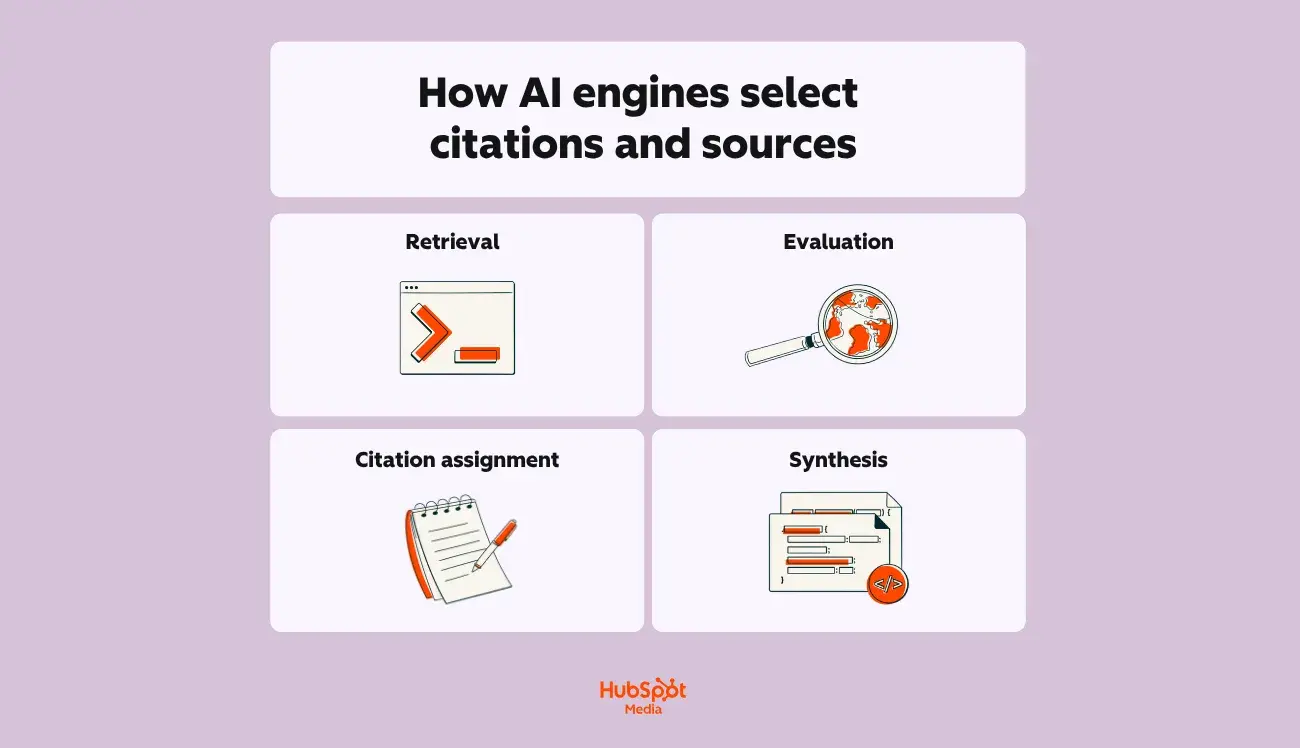
- Query Interpretation: The AI first interprets the user’s intent and question, often translating it into a more precise query for internal retrieval.
- Information Retrieval: The AI then accesses its vast knowledge base, which includes indexed web content, proprietary data, and internal models, to find relevant information snippets.
- Synthesis and Generation: It synthesizes this retrieved information, generating a coherent, comprehensive answer.
- Source Attribution (Citation): Crucially, the AI identifies and attributes the specific sources that contributed to its generated answer, often highlighting the most authoritative or factually dense passages.
Each AI agent type handles this process with subtle variations. ChatGPT often integrates sources seamlessly into its summary, providing attributions upon request or within its conversational flow. Perplexity AI is known for its prominent display of sources, often embedding links directly within the generated answer. Google’s AI Overviews aim for an integrated experience, blending generated answers with cited sources at the top of traditional search results.
Across these platforms, the core selection criteria converge on five heavily weighted signals:
- Factual Density and Accuracy: Content rich in verified facts and precise data.
- Semantic Clarity and Conciseness: Easily understandable, unambiguous language that directly addresses a query.
- Structured Data and Readability: Content organized with clear headings, lists, tables, and often schema markup, facilitating machine extraction.
- Recency and Freshness: Up-to-date information, particularly for rapidly evolving topics or data.
- Authoritativeness and Trustworthiness (E-E-A-T): Content published by recognized experts or credible institutions.
To facilitate this process, structured data and schema markup are increasingly vital. Pages lacking elements like FAQ schema, How-To schema, or clear definitions within their HTML are making it more challenging for AI engines to confidently extract and attribute content, regardless of the quality of the written text. This echoes best practices for Search Generative Experience (SGE) optimization, now extending to broader AEO. Ultimately, AI engines are not merely counting backlinks; they are evaluating whether content offers the clearest, most structured, authoritative, and current answer to a given question.
Content That Commands Citation: The Rise of Expertise and Specificity
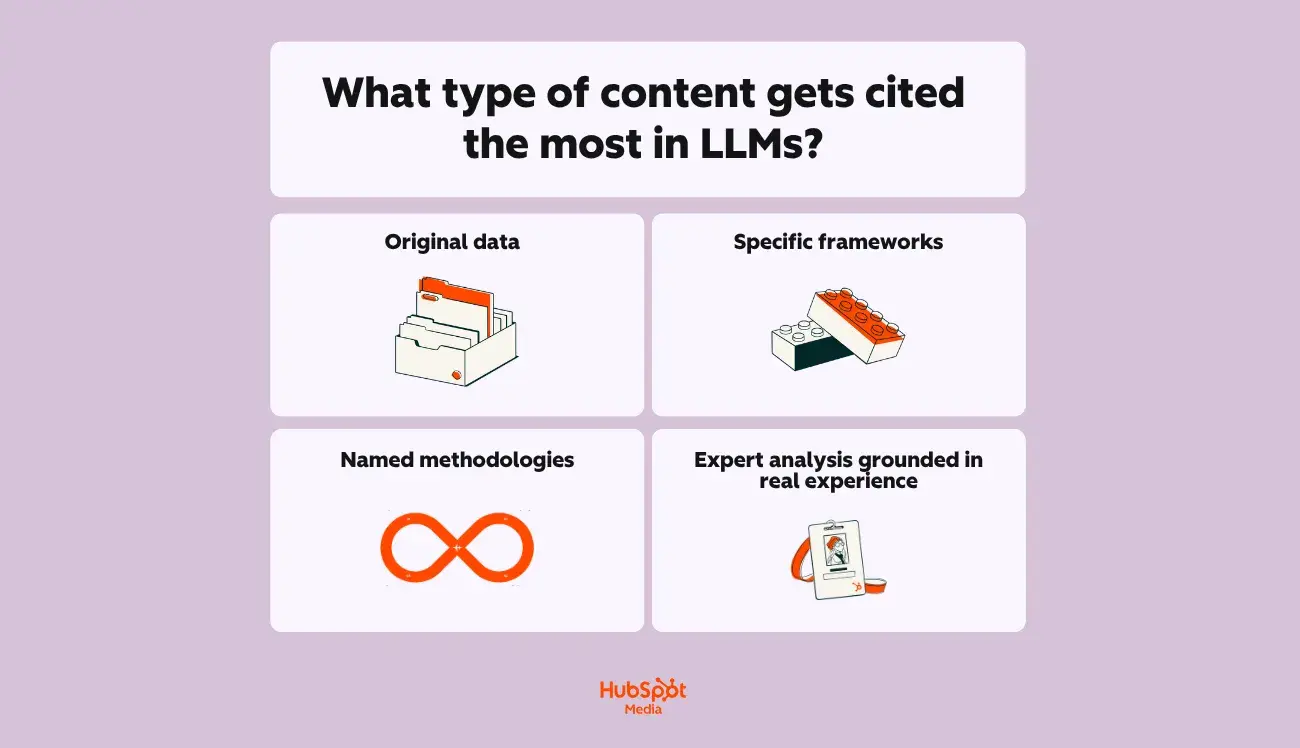
The era of generic, AI-generated "fluff" content achieving meaningful visibility is rapidly drawing to a close. AI engines, capable of producing passable surface-level answers independently, do not need to cite content that merely restates commonly known information. Instead, they actively seek and cite sources that contribute something they cannot generate independently. This includes:
- Hyper-specific Expertise: Deep dives into niche topics that demonstrate profound knowledge.
- Original Research and Proprietary Data: Unique studies, surveys, or datasets that offer novel insights.
- Unique Frameworks or Methodologies: New approaches or models developed by the content creator.
- First-hand Experience: Practical insights, case studies, or actionable advice derived from direct involvement.
- Novel Insights and Perspectives: Content that challenges existing paradigms or offers fresh angles on established topics.
In essence, citations reward depth and distinctiveness over mere volume.
The Dominance of Earned Content:
A 2026 study by Search Engine Journal reveals a pivotal insight: across all AI platforms, "earned content" accounts for the largest share of citations, with user-generated content (UGC) also gaining significant representation. Earned content, defined as content about a brand created by third parties (press mentions, reviews, organic social posts), signals external validation that AI highly values.
This means that content most likely to be cited by AI engines extends beyond what a brand publishes on its own domain. It includes:
- Third-party coverage: Mentions in reputable news outlets, industry blogs, or expert roundups.
- User reviews and testimonials: Authentic feedback on products or services.
- Community discussions: Engagement and insights shared on forums, social media, or dedicated platforms.
- Academic papers and research: Scholarly contributions that validate information.
The implication for AEO is profound: a comprehensive content strategy must encompass a mix of owned content (published on a brand’s domain), earned media, and active participation in relevant UGC platforms. Companies that diversify their content efforts beyond their immediate digital footprint, fostering genuine engagement and earning external validation, are significantly more likely to be cited by AI search engines. For instance, a B2B SaaS company that invests in thought leadership pieces published on industry-leading sites and actively engages in professional online communities may see higher AI citation rates than one solely focused on its blog.
Democratization of Authority:
One of the most encouraging findings from Search Engine Journal’s analysis is that AI engines cite across a wide quality spectrum, not exclusively from elite publishers. While higher-quality sources are preferred, AI frequently cites middle-tier sources when they provide the clearest, most specific answers. This suggests that smaller businesses or specialized publications can earn citations by producing content that is more specific, better structured, and more factually dense than what larger competitors might offer on the same topic. The focus shifts from sheer domain authority to the direct utility and precision of the information provided.
However, content attributes that actively hinder citation must also be recognized. Outdated statistics, references to deprecated tools, and old screenshots are "citation killers," as AI prioritizes recency and accuracy. Similarly, content that is overly promotional, lacks clear definitions, or is poorly structured with ambiguous headings will struggle to be extracted and attributed by AI engines.
Building a Citation-Earning Content Strategy:
An effective AEO content strategy must be deliberate and span owned, earned, and community-driven content. Key priorities include:
- Prioritizing Unique Value: Focus editorial efforts on topics where the brand can offer proprietary data, original research, unique insights, or deep expertise that AI cannot easily replicate.
- Optimizing for Machine Readability: Implement clear content structures, utilize semantic HTML, and incorporate schema markup (e.g., FAQ, How-To, Article schema) to facilitate AI extraction and understanding.
- Maintaining Freshness and Depth: Establish a rigorous content update schedule, especially for data-driven or evolving topics, to ensure information remains current and relevant.
- Diversifying Content Channels: Beyond owned blog posts, actively seek opportunities for third-party coverage, engage in industry forums, and encourage user-generated content.
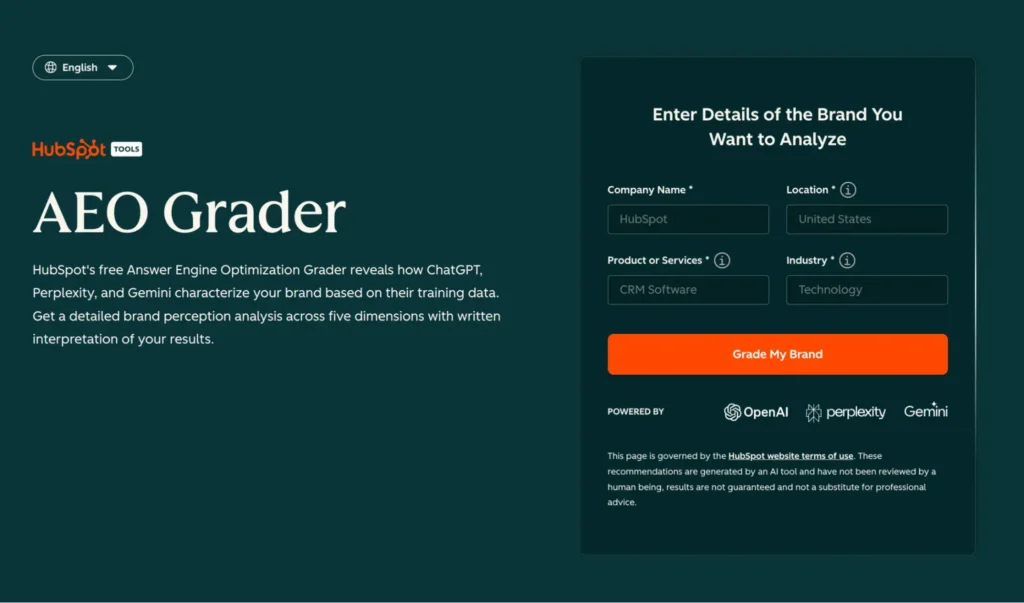
- Leveraging AEO Tools: Integrate platforms like HubSpot’s AEO Grader and Marketing Hub to identify content gaps, track citation performance, and connect AI visibility to business outcomes.
Ultimately, AEO citations depend on whether content genuinely adds to the collective knowledge landscape or merely restates existing information. AI engines, with access to the sum of published information, will prioritize sources that contribute something distinct and verifiable.
Citations and Backlinks: A Complementary Approach
A common question in this evolving landscape is whether citations replace backlinks. The answer is unequivocally no. Citations in AEO and backlinks in traditional SEO serve distinct functions within different systems, and both retain significant value. Backlinks signal to traditional search engines that other sites endorse content, influencing rank position in a list of results. Citations, conversely, inform AI answer engines that content is the direct source behind a specific claim in a generated answer. Audiences are split across both discovery channels, necessitating a dual strategy.
How They Work Together:
- Backlinks: Continue to drive organic search traffic from traditional "blue link" results, contributing to domain authority and overall online presence.
- Citations: Generate high-intent referral traffic from AI-generated answers, capturing users who bypass traditional search.
- Synergy: Content that earns strong backlinks often possesses inherent quality and authority that makes it more likely to be considered trustworthy by AI for citation. Conversely, content structured for clear AI extraction might naturally attract backlinks due to its utility.
AEO citations are additive, not a replacement. Marketing teams that abandon link-building risk losing traditional search visibility, while those who ignore citations will become invisible in the growing realm of AI answers. The optimal approach involves running both strategies in parallel, leveraging integrated platforms like HubSpot Marketing Hub and HubSpot AEO to track performance across both organic search traffic and LLM referral traffic, preventing over-indexing on either signal.
Measuring AEO Success and Future Outlook
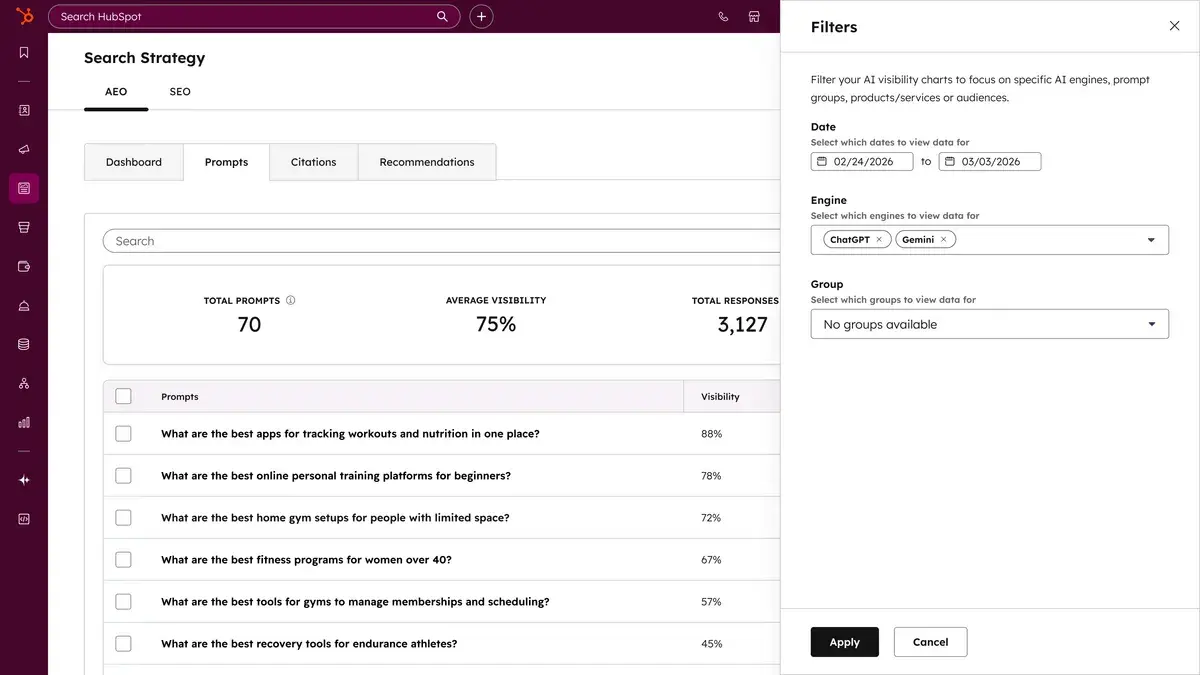
Tracking AI citations requires dedicated monitoring, as they typically do not appear in traditional SEO tools like Google Search Console or standard rank trackers. Specialized AEO platforms, such as HubSpot’s AEO product, are designed to identify when and where content is cited by AI engines, providing critical metrics like citation count, AI visibility score, and AI referral traffic. Manual monitoring, while possible, is less efficient for scaled operations. Building citation tracking into monthly reporting cadences alongside organic keyword rankings and traffic metrics is now essential for a holistic view of digital performance.
The Future of Content and Search:
- Paywalls: Content behind hard paywalls generally cannot be cited by AI answer engines, as AI retrieval systems are blocked from accessing and processing the content. Publishers must consider hybrid models, such as freemium content or "soft" paywalls, to balance revenue generation with AI visibility.
- Human-First Content: The imperative remains to "write for humans first." The attributes that AI engines reward—clarity, factual density, strong structure, and genuine usefulness—are precisely those that make content valuable to human readers. Attempts to "write for AI" by keyword-stuffing or manipulating formats often result in awkward, unreadable content that underperforms with both human and AI audiences. A reliable gut-check test is to read content aloud: if it sounds like a human expert explaining a concept clearly, it’s likely well-structured for both.
- Continuous Adaptation: The AI landscape is evolving at an unprecedented pace, necessitating continuous adaptation of content strategies. What works today may require refinement tomorrow as AI models advance and user behaviors shift.
Citations are the most direct proof that content is structured, authoritative, and current enough to be selected as an AI engine’s source of truth. However, they are part of a broader ecosystem of AI visibility metrics, including AI visibility score, AI referral traffic, conversion rates from AI leads, and AI-driven pipeline and revenue. Together, these metrics provide a comprehensive picture of whether a content strategy is effectively addressing how buyers seek answers in the modern digital age.
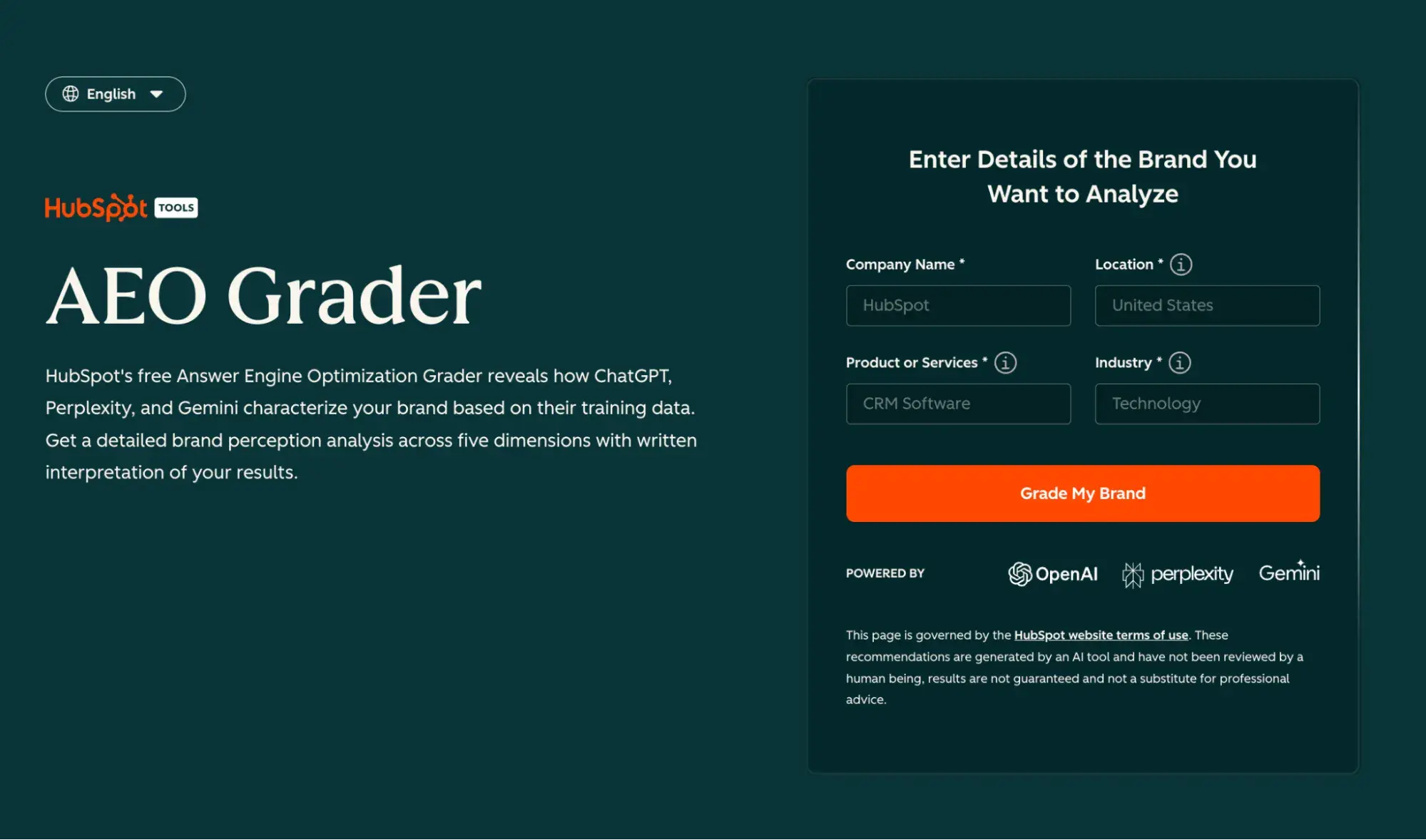
The infrastructure to measure and optimize for this new reality exists. HubSpot’s AEO Grader enables the measurement of AI citation visibility, while Content Hub provides the structural foundation for publishing citation-ready content at scale. Marketing Hub then connects AI referral traffic directly to the pipeline, enabling businesses to prove tangible ROI beyond mere impressions. The shift is undeniable, and the question for every organization is whether their content strategy will evolve to meet this new era of AI-driven discovery.
Ready to see how your content performs in AI search? Get started with HubSpot’s AEO Grader today.