
The rapid evolution of the digital landscape has made Artificial Intelligence (AI) a non-negotiable component of modern marketing strategies, particularly for small businesses striving to maintain competitiveness and expand their digital footprint. A recent report by HubSpot, "AI Trends for Marketers," underscores this paradigm shift, revealing that a significant two-thirds of marketers globally now integrate AI into their professional roles. This figure climbs even higher among American marketers, with 74% leveraging AI to navigate complex digital environments. For small businesses, often operating with lean teams and constrained resources, the strategic adoption of AI-powered Search Engine Optimization (SEO) tools is no longer a luxury but an essential investment—either in time spent mastering new technologies or in financial capital for advanced platforms.
The Evolving Landscape of Search Engine Optimization
SEO has undergone a profound transformation, moving beyond simple keyword stuffing and basic link building to a sophisticated interplay of technical optimization, high-quality content, and user intent. The advent of AI has accelerated this evolution, with search engines like Google continuously integrating advanced AI models such as BERT, MUM, and the burgeoning Search Generative Experience (SGE). These AI advancements enable search engines to understand context, nuance, and user intent with unprecedented accuracy, fundamentally reshaping how content is discovered and consumed. For small businesses, this means the traditional goal of "ranking for keywords" is now complemented by the imperative of "being the most comprehensive and authoritative answer" to user queries, whether those queries are posed to a traditional search bar or an AI chatbot. This shift necessitates a new toolkit, one that can process vast amounts of data, automate mundane tasks, and provide actionable insights that lean teams can readily implement.
Strategic Framework for AI SEO Tool Selection
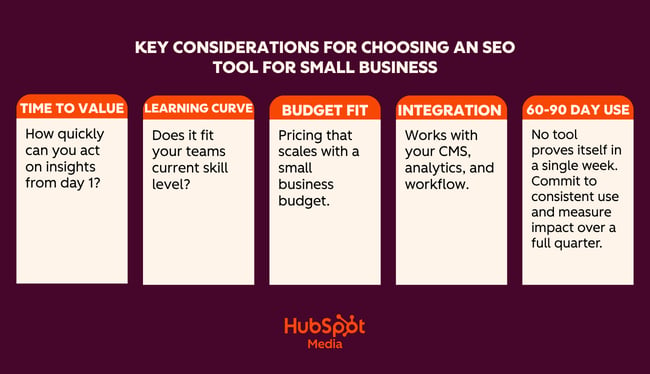
Navigating the crowded market of AI SEO tools requires a strategic approach, particularly for small businesses that cannot afford to waste resources on ineffective solutions. Industry experts consistently highlight several critical considerations for selecting tools that deliver genuine value:

-
Time-to-Value: For small businesses with limited dedicated SEO personnel, the speed at which a tool delivers tangible results post-setup is paramount. Tools requiring extensive configuration or external consultation may prove more burdensome than beneficial. The ideal AI SEO solution offers rapid deployment and immediate insights. For instance, free tools like Google Search Console (GSC) offer invaluable data within 24 hours of integration, making them a universal necessity. In contrast, comprehensive platforms like HubSpot, while requiring a more significant initial setup and potentially a cash investment, deliver a broader range of sophisticated features that can be business-critical in the long run. The trade-off between quick wins and deeper, integrated functionality must be carefully evaluated against immediate operational needs and long-term strategic goals.
-
Learning Curve: The most powerful tool is useless if a team cannot effectively wield it. Enterprise-grade SEO platforms, while feature-rich, can overwhelm small business users with unnecessary complexity. Solutions optimized for lean teams prioritize guided workflows, provide plain-language recommendations, and outline clear next steps, rather than presenting raw data that demands expert interpretation. The goal is empowerment, not intimidation, enabling non-specialists to perform complex SEO tasks confidently.
-
Cost-Effectiveness and Scalability: Budget constraints are a constant reality for small businesses. The strongest AI SEO solutions exist at the intersection of affordability, team usability, and problem-solving capability. Businesses must assess not only the immediate cost but also the long-term implications, considering potential upgrade paths and whether future packages will remain within budget. A tool that effectively addresses a significant bottleneck and scales with business growth represents a sound investment, whereas frequent tool switching due to budgetary limitations can incur substantial hidden costs in time and disruption.
-
Seamless Integration: The efficiency of digital operations is greatly enhanced when tools integrate harmoniously with existing systems. As noted by MuleSoft, 86% of IT leaders caution that AI agents can introduce complexity rather than value without proper integration. When SEO data flows seamlessly into a Content Management System (CMS), Customer Relationship Management (CRM), or marketing automation platform, adoption rates increase, and workflows are streamlined. This connectivity transforms individual tools into a cohesive ecosystem, improving data accuracy, enhancing existing processes, and fostering greater team engagement.
-
Sustained Utility: The 60-90 Day Test: Initial enthusiasm for a new tool can often overshadow its practical, long-term utility. A more reliable measure of value is whether a team continues to use the tool consistently at the 60- to 90-day mark, and whether they can attribute specific, measurable outcomes to its contribution. Small businesses should leverage trial periods or monthly payment options to thoroughly test a tool’s fit within their workflows before committing to annual contracts.
AI’s Transformative Impact on SEO Workflows: Augmentation and Automation
AI is not poised to replace human SEO specialists but rather to augment their capabilities, automating tedious tasks and providing data-driven insights that amplify human strategy.
-
Content Generation and Scaling: AI can rapidly generate blog posts, FAQs, service page copy, and meta descriptions, offering a significant time-saver for businesses struggling with consistent content output. For factual or evergreen topics, AI can produce solid drafts. However, the critical role of human oversight remains indispensable. AI lacks genuine experience, nuanced understanding of a brand’s unique value proposition, or the ability to convey true thought leadership. Editors must review and personalize every AI-drafted piece to ensure factual accuracy, maintain brand voice, and imbue content with the E-E-A-T (Experience, Expertise, Authoritativeness, Trustworthiness) signals that Google increasingly prioritizes. The implication is clear: AI acts as a powerful co-pilot, but human expertise steers the narrative.
-
Advanced Keyword Research and Topic Discovery: AI tools excel at generating broad keyword ideas, identifying question clusters, and unearthing related topics that might otherwise be overlooked. This can significantly reduce the manual research burden. Nevertheless, human validation is crucial. AI often suggests keywords without granular search volume data, requiring marketers to cross-reference with tools like Google Keyword Planner to confirm demand and competitive viability. While AI can brainstorm extensively, human strategists are essential for clustering these ideas into coherent content strategies and performing in-depth Search Engine Results Page (SERP) analysis.
-
On-Page Optimization and Technical Audits: AI can efficiently analyze existing webpages, suggesting improvements to title tags, meta descriptions, heading structures, and overall readability. For small businesses with numerous underperforming pages, this audit-and-improve workflow can yield meaningful results without requiring a large budget or dedicated technical SEO expertise. For crucial pages, however, a layer of human review is paramount to ensure that AI-generated optimizations align with strategic goals and don’t inadvertently detract from user experience or brand messaging. AI streamlines the detection and suggestion of fixes, allowing human specialists to focus on high-impact, strategic refinements.
Pivotal AI SEO Solutions for Small Businesses
The market offers a diverse array of AI SEO tools, each addressing specific needs within the broader SEO workflow. For small businesses, the key is to identify solutions that genuinely solve their most pressing challenges.
1. Comprehensive Platforms & Technical SEO
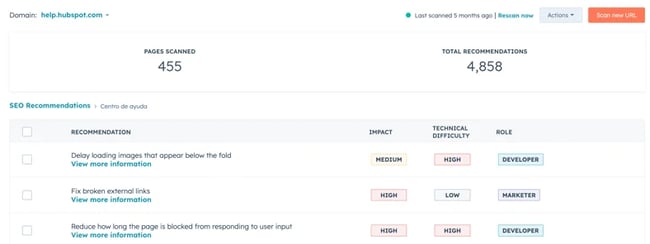
- HubSpot SEO Recommendations: Integrated within HubSpot’s Marketing Hub, this tool stands out for its user-friendly approach to technical SEO. Unlike standalone crawlers that present raw data, HubSpot explains why an issue is flagged, its impact on search performance, and the specific action required to resolve it. This prioritization of actionable insights makes it ideal for non-experts. The direct connection to the content editor, CRM, and reporting dashboard ensures that every SEO fix and content update is tied to tangible business outcomes, from organic sessions to closed deals. It automatically scans for common ranking suppressors like broken links, missing meta descriptions, and slow-loading pages, providing clear guidance for resolution.
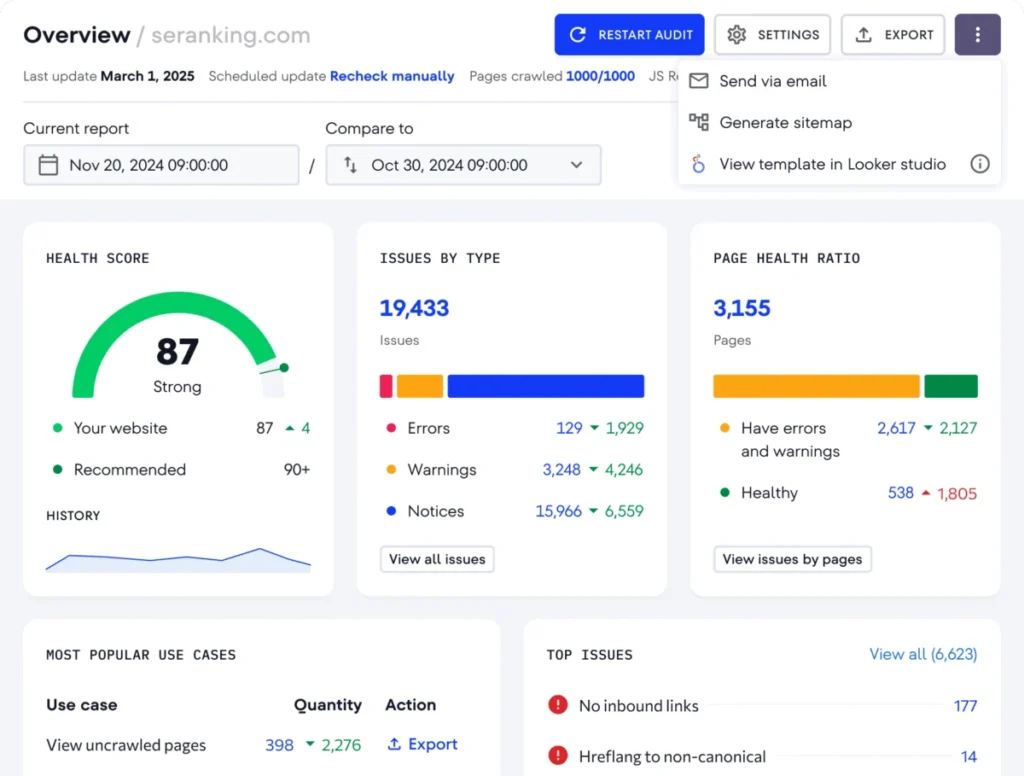
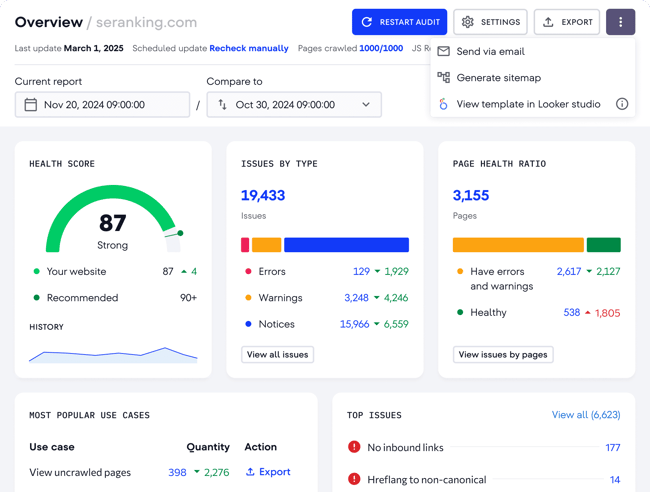
- SE Ranking: This comprehensive, AI-powered platform provides a robust suite of tools including keyword tracking, site audits, competitive research, and backlink analysis. It strikes an excellent balance between feature depth and accessible pricing, making it a strong contender for small businesses or agencies managing multiple client projects. Its clean interface and actionable recommendations empower teams without an in-house SEO specialist to interpret complex data and implement effective strategies. While not at the enterprise level of platforms like Semrush or Ahrefs, SE Ranking offers comparable functionality tailored for smaller budgets.
2. Content Strategy & AI-Powered Creation
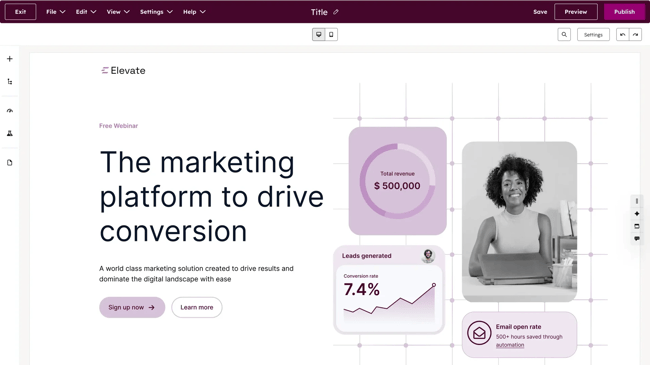
- HubSpot Content Hub (with Breeze AI): This platform unifies content strategy, creation, optimization, and performance measurement. A standout feature is the topic cluster tool, which helps businesses organize content around authoritative pillar pages supported by interconnected cluster content. This structure signals topical authority to search engines, a reliable method for compounding organic traffic. Breeze, HubSpot’s embedded AI layer, acts as a co-pilot, assisting writers in drafting, refining, and optimizing on-brand content. It can generate structured drafts, suggest internal links, and even repurpose existing content across various formats and channels with its Content Remix feature. Critically, HubSpot’s Brand Voice capability allows Breeze to generate content within predefined tone and language parameters, ensuring consistency and protecting brand identity.
- Yoast SEO (for WordPress): As a widely adopted WordPress plugin, Yoast offers real-time on-page SEO guidance directly within the content editor. It provides analysis for focus keyphrases, readability scores, and technical elements like XML sitemaps. Its accessibility and affordability, particularly the robust free version, make it an excellent starting point for small businesses using WordPress. While not a full SEO platform for comprehensive research or competitor analysis, Yoast excels as an optimization assistant, helping teams polish and improve existing content.
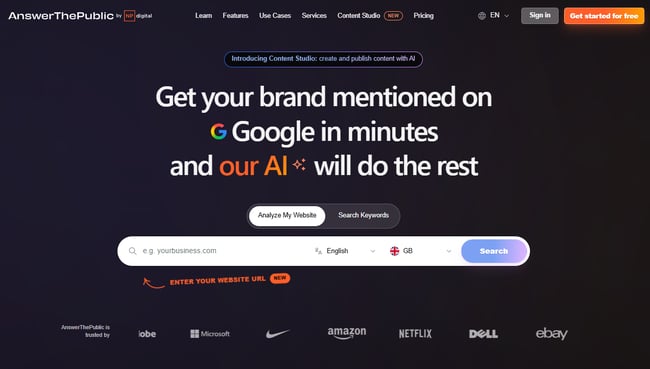
- AnswerThePublic: This content ideation tool leverages Google autocomplete data to visualize questions, prepositions, comparisons, and related searches around a given topic. It quickly generates a comprehensive map of what an audience is actively searching for, making it invaluable for content calendar planning and uncovering new content opportunities. Its visual format is engaging and helps identify natural topic cluster structures. While offering free daily searches, paid plans provide more extensive features and export capabilities.
3. Performance Tracking & Answer Engine Optimization (AEO)

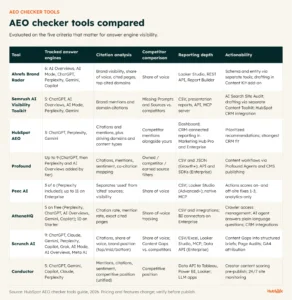
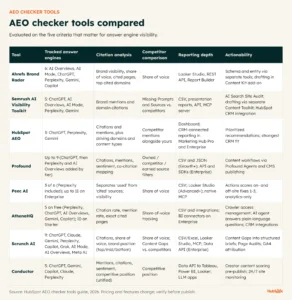
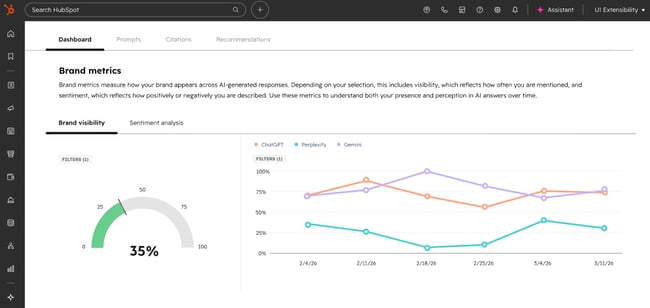
- HubSpot AEO: Recognizing the rise of AI answer engines, HubSpot AEO specifically monitors how a brand appears in AI-generated answers from platforms like ChatGPT, Perplexity, and Gemini. Its unique CRM integration allows it to suggest context-aware prompts based on industry, competitors, and customer segments. The platform tracks brand mentions, descriptions, competitor comparisons, and identifies visibility gaps, providing a brand visibility scorecard. This tool is crucial for businesses looking to optimize not just for traditional search but also for the burgeoning AI-driven search experiences.
- HubSpot AEO Grader: A free, fast diagnostic tool, the AEO Grader provides an immediate snapshot of how AI engines perceive a brand. By inputting company details, it analyzes visibility across multiple AI platforms and produces a composite score across five dimensions: Relevance, Accuracy, Comprehensiveness, Authority, and Uniqueness. It serves as an excellent starting point for businesses new to AI visibility, offering clear, plain-English insights to inform subsequent AEO strategies.
- Google Analytics (GA4): As a free, foundational analytics platform, GA4 tracks traffic sources, user behavior, and conversion outcomes. Its AI-powered insights provide predictive capabilities and help segment audiences, including those referred by AI sources. GA4 is indispensable for understanding the impact of AI traffic and measuring conversions, offering an affordable way to gauge the effectiveness of AEO strategies.
- Google Search Console (GSC): Another free, indispensable tool from Google, GSC provides direct data on search performance. It reveals which queries drive impressions and clicks, indexes page status, flags technical issues, and reports on Core Web Vitals. GSC’s plain-language insights empower small teams without deep SEO expertise to monitor and understand their website’s performance directly from the source, making it a non-negotiable setup on day one for any website.
Strategic Considerations for AI SEO Adoption
For small businesses, the integration of AI into SEO is not merely about adopting new tools but about fundamentally rethinking strategy.
-
The Necessity of Multiple Tools: While no single tool encompasses the entire SEO workflow, small businesses often find themselves using a curated combination of two to three tools. The objective is to identify solutions that fill specific, critical gaps in their workflow without duplicating functionalities or creating "tool sprawl." A strategic combination often involves a foundational analytics tool (GA4, GSC), a comprehensive SEO platform (HubSpot, SE Ranking), and specialized content ideation or optimization tools (AnswerThePublic, Yoast).
-
Optimizing for AI Citations: To be cited in AI answers, content must be structured, specific, and authoritative. Clear definitions, step-by-step guides, and direct answers to common questions provide AI systems with readily digestible information. Furthermore, consistently demonstrating E-E-A-T signals through original research, expert opinions, and verifiable data significantly enhances the potential for AI visibility.
-
Maintaining Brand Voice with AI: Protecting brand identity is paramount. The most effective approach involves developing a comprehensive brand voice guide that AI tools can reference. Platforms like HubSpot’s Breeze allow teams to input specific tone, language, and terminology parameters, ensuring that AI-generated content aligns with the brand’s established identity before human review and finalization.
-
Justifying Paid Tool Investment: The decision to invest in paid AI SEO tools should be driven by identified workflow bottlenecks that free tools cannot resolve. A paid tool should demonstrably pay for itself through saved human hours, increased marketing conversions, problem-solving across the business, and a direct contribution to measurable business growth. For instance, an integrated platform like HubSpot makes sense when a business is ready to connect content production, SEO recommendations, and revenue attribution within a single, unified environment.
Conclusion
The landscape of digital marketing is irrevocably shaped by Artificial Intelligence, and for small businesses, embracing AI SEO tools is no longer optional but an imperative for sustained growth and digital dominance. The strategic adoption of these tools allows lean teams to automate routine tasks, gain deeper insights into user intent, and optimize content for both traditional search engines and emerging AI answer engines.
For small businesses seeking to simplify their tech stack without compromising on capabilities, integrated platforms like HubSpot offer a compelling all-in-one solution. Its Marketing Hub provides comprehensive SEO recommendations, Content Hub with Breeze AI streamlines content creation and strategy, and HubSpot AEO monitors crucial AI visibility. When combined with the free CRM for robust revenue attribution, HubSpot consolidates functionalities typically spread across multiple disparate tools, reducing complexity and driving tangible results. By strategically leveraging AI, small businesses can transform resource constraints into competitive advantages, ensuring their message resonates effectively in an increasingly intelligent digital world.