Tag: dominance

  • Photo Book Speed Date Fosters In-Person Connections and Creative Community Building in the Age of Digital Dominance

    Photo Book Speed Date Fosters In-Person Connections and Creative Community Building in the Age of Digital Dominance

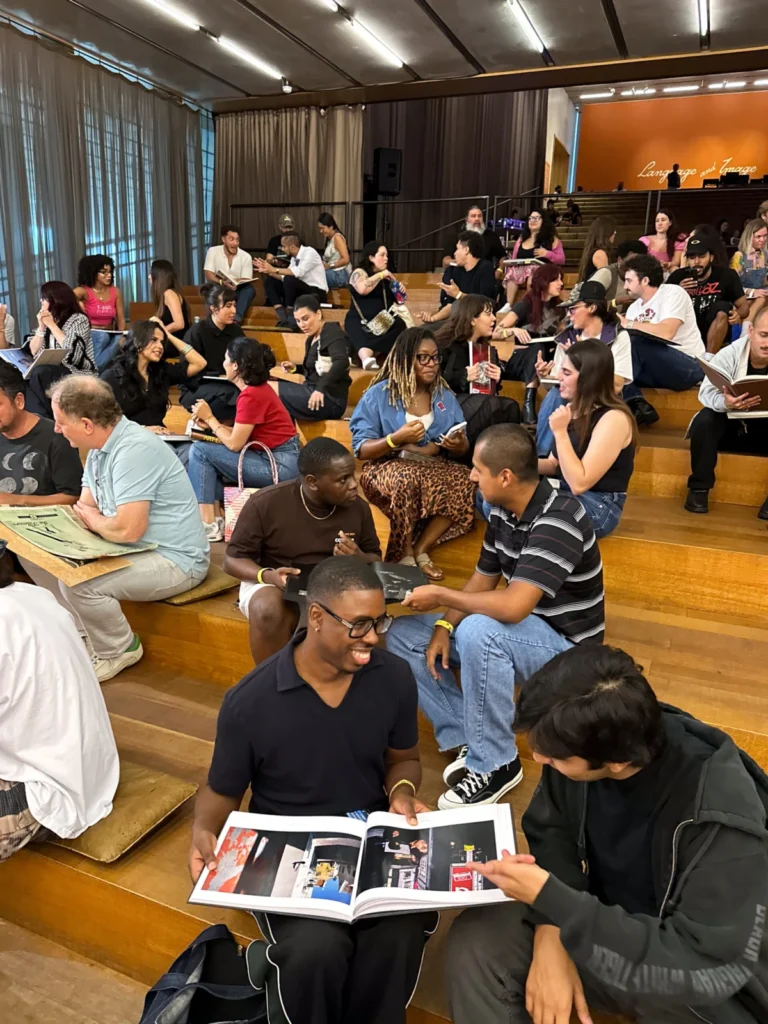
    The intersection of tactile media and social networking has found a new, physical headquarters in the heart of the Miami art scene. As the contemporary landscape becomes increasingly saturated with generative artificial intelligence and algorithmic social media feeds, Miami-based photographer Josh Aronson has introduced an initiative titled Photo Book Speed Date. This program, which recently held a high-profile session at the Pérez Art Museum Miami (PAMM), reimagines the traditional speed-dating format as a democratic, fast-paced exchange of photographic ideas and physical books. The project aims to combat the isolation of the digital era by fostering deep, meaningful connections through the shared experience of physical art objects.

    The Genesis of a Democratic Art Event

    The origins of Photo Book Speed Date trace back to 2022, a period when the art world was grappling with the return to physical spaces following the height of the global pandemic. Aronson, an established photographer whose work often explores themes of community and identity, was preparing for an exhibition at a commercial gallery. Faced with the traditional prospect of an artist’s talk—a format he perceived as potentially self-gratifying and exclusionary—Aronson sought a more participatory alternative.

    Photo Books and Speed Dating: Connection Forged Through An Unlikely Pair

    The inspiration for the project was partially rooted in the work of artist Shaniqwa Jarvis, who had hosted speed-date-style photography nights in New York City. Aronson took this concept and modified it to focus specifically on the photo book, a medium he considers essential to the photographic craft. The first experimental event took place on a rainy Wednesday during the week of Thanksgiving in 2022. Despite the inclement weather and modest expectations, the event saw an immediate surge in interest. The gallery space quickly filled beyond capacity, with participants engaging in timed rotations that forced a concentrated, high-energy dialogue about photography.

    Chronology and Evolution of the Initiative

    Since its 2022 debut, Photo Book Speed Date has evolved from a niche gallery experiment into a structured program capable of filling major institutional spaces.

    1. Late 2022: The Pilot Phase. The initial event demonstrated that there was a significant appetite for "third place" environments—social spaces separate from home and work—where artists could meet without the pressure of commercial transactions.
    2. 2023–2024: Community Integration. During this period, the event became a staple of the Miami creative ecosystem. Aronson refined the logistics, moving from simple chairs in a row to more organized rotations that allowed for five to ten minutes of interaction per pairing.
    3. 2025: Institutional Adoption. The partnership with the Pérez Art Museum Miami (PAMM) marked a significant milestone. By moving the event into a world-class museum setting, Aronson successfully challenged the often-intimidating nature of high-art institutions, making them accessible to local practitioners and enthusiasts.
    4. 2026: Global Expansion. Plans are currently underway to take the program on a global tour. The 2026 itinerary includes a West Coast debut in California, a return to New York City, and various international museum venues, signaling a growing global demand for analog social experiences.

    The Mechanics of the Exchange

    The operational framework of Photo Book Speed Date is intentionally simple. Participants are invited to bring one photo book that holds personal or professional significance. This could be a classic monograph by a master photographer, a rare self-published zine, or a contemporary volume that informs the participant’s own creative practice.

    Photo Books and Speed Dating: Connection Forged Through An Unlikely Pair

    Once the event begins, participants are seated across from one another in rows. A timer is set—usually for five to ten minutes—during which pairs share their chosen books. The dialogue typically centers on three core questions: Why this book? What does it mean to you? How does it relate to your own work? When the timer sounds, one row of participants moves to the next seat, initiating a new conversation with a different person and a different book.

    This format strips away the hierarchy often found in the art world. In this setting, a student photographer might find themselves across from a veteran curator or a published professional. The shared object—the book—acts as a social lubricant, providing a focal point that eases the social anxiety often associated with networking events.

    Supporting Data: The Resurgence of the Analog

    The success of Photo Book Speed Date aligns with broader cultural and economic trends regarding physical media. Despite the convenience of digital photography, the market for physical photo books has shown remarkable resilience. According to industry reports on independent publishing, the "zine" and small-press photo book movement has seen a 15% increase in participation at international book fairs over the last five years.

    Photo Books and Speed Dating: Connection Forged Through An Unlikely Pair

    Furthermore, psychological studies on "digital fatigue" suggest that younger demographics, specifically Gen Z and Millennials, are increasingly seeking tactile experiences to counteract the ephemeral nature of social media. The "sensory engagement" of a book—the weight of the paper, the smell of the ink, and the pacing of the layout—provides a cognitive depth that scrolling through an Instagram feed cannot replicate. Aronson’s initiative taps into this "Analog Renaissance," positioning the photo book as a vital tool for social and intellectual grounding.

    Implications for the Miami Creative Ecosystem

    Miami has long been recognized for its high-octane art market, dominated by events like Art Basel Miami Beach. However, local artists have often pointed to a lack of sustainable, year-round community infrastructure. Photo Book Speed Date addresses this gap by creating a recurring space for local talent to coalesce.

    The impact of these events extends beyond professional networking. Aronson notes that the program has facilitated a wide range of relationships, from romantic connections to professional collaborations between photographers, publishers, and curators. By hosting these events in museums like PAMM, the project also serves an "institutional bridge" function. It invites the local community to claim ownership of museum spaces, transforming them from static viewing galleries into active sites of social production.

    Photo Books and Speed Dating: Connection Forged Through An Unlikely Pair

    Analysis of the "Third Place" and Social Connectivity

    Sociologically, the decline of the "third place"—the communal spaces where people gather outside of home (the first place) and work (the second place)—has been linked to rising levels of urban loneliness. Photo Book Speed Date functions as a temporary, pop-up third place.

    The fast-round format is particularly effective in the current attention economy. By limiting interactions to ten minutes, the event mimics the "snackable" nature of digital content but imbues it with the high-stakes intimacy of face-to-face contact. This creates a "primer" for deeper connection; while the initial conversation is brief, participants frequently exchange contact information or continue their discussions long after the official timer has stopped.

    Official Responses and Participant Perspectives

    While formal statements from institutional partners emphasize the "engagement" and "outreach" metrics of the program, the informal feedback from the photography community highlights a sense of relief. Photographers often work in isolation, and the digital platforms intended to connect them frequently become sources of professional comparison and anxiety.

    Photo Books and Speed Dating: Connection Forged Through An Unlikely Pair

    Participants have reported that the act of explaining a book to a stranger helps them clarify their own artistic values. "You learn so much about people by looking at what they love," Aronson observed regarding the event’s participants. This sentiment is echoed by attendees who find that the books they bring act as a "creative mirror," reflecting their influences and aspirations in a way that a digital portfolio cannot.

    Future Outlook: 2026 and Beyond

    As Photo Book Speed Date prepares for its 2026 tour, the project stands as a blueprint for how art can be used to rebuild social fabric. The upcoming editions in California and New York are expected to incorporate local publishing houses and independent bookstores, further integrating the event into the regional literary and artistic landscapes.

    The long-term goal of the project remains the expansion of access. By keeping the requirements minimal—a chair, a timer, and a book—Aronson hopes to inspire others to host similar programs in their own cities. In an era where the definition of "connection" is increasingly mediated by screens, Photo Book Speed Date offers a compelling argument for the enduring power of the physical object and the necessity of the human encounter.

    Photo Books and Speed Dating: Connection Forged Through An Unlikely Pair

    The project’s trajectory suggests that the future of the art world may not lie solely in high-tech immersive experiences or AI-generated galleries, but in the return to the fundamental elements of human culture: the book, the table, and the conversation. As Aronson concludes, it is the "turn" of the current generation of artists to create the spaces they wish to see, ensuring that the creative ecosystem remains rooted in tangible, shared reality.

  • US Digital Advertising Revenue Hits Record $294.6 Billion in 2025 as Search Dominance Faces New Challenges from Video and AI

    US Digital Advertising Revenue Hits Record $294.6 Billion in 2025 as Search Dominance Faces New Challenges from Video and AI

    The United States digital advertising market reached a historic milestone in 2025, with total annual revenue climbing to a record-breaking $294.6 billion. According to the latest comprehensive report released by the Interactive Advertising Bureau (IAB) in collaboration with PwC, the industry demonstrated remarkable resilience and adaptability in a year defined by the rapid integration of artificial intelligence and shifting consumer behaviors. While search advertising maintained its position as the largest single force within the digital ecosystem, its growth trajectory showed signs of stabilization, allowing faster-moving formats like social media and digital video to capture a larger share of the expanding market.

    The $294.6 billion figure represents a significant leap for the industry, reflecting a market that has matured yet continues to find new avenues for monetization. Despite the absence of major cyclical drivers—such as a presidential election or the Olympic Games, which provided a substantial boost to the 2024 figures—the 2025 fiscal year saw consistent upward momentum. This growth was particularly pronounced in the latter half of the year, signaling a robust appetite for digital placements among brands ranging from global conglomerates to direct-to-consumer startups.

    The Evolution of Search Dominance

    For over two decades, search has been the undisputed anchor of the digital advertising world. In 2025, it remained the primary destination for marketing budgets, generating $114.2 billion in revenue. This accounted for 38.8% of the total digital advertising spend in the United States. However, the narrative surrounding search is changing. The report highlights a deceleration in growth for the format, which rose by 11% in 2025, a notable decrease from the 15.9% growth rate recorded in 2024.

    Industry analysts attribute this cooling of search growth to several factors. First is the maturation of the market; with nearly 40% of the total spend already allocated to search, the ceiling for exponential growth is naturally lower. Second, and perhaps more significantly, is the disruption caused by generative artificial intelligence. As consumers increasingly turn to AI-driven chatbots and discovery engines for information, the traditional "ten blue links" model of search is being challenged. Advertisers are beginning to re-evaluate how they reach users in an environment where an AI might provide a direct answer rather than a list of websites, leading to a diversification of budgets into other performance-driven channels.

    Accelerated Growth in Social Media and Digital Video

    While search saw a controlled expansion, the social media and digital video sectors experienced explosive growth. Social media advertising revenue surged by 32.6% to reach $117.7 billion. This surge effectively places social media in a neck-and-neck race with search for market supremacy. The rise is largely credited to the continued dominance of short-form video content and the sophisticated targeting capabilities of major platforms that allow brands to integrate seamlessly into user feeds.

    Digital video, as a standalone category, was the fastest-growing major format of the year. Revenue in this segment jumped 25.4% to $78 billion. The shift toward Connected TV (CTV) and the migration of traditional television budgets to digital streaming services have fundamentally altered the landscape. Brands are increasingly viewing digital video not just as a tool for top-of-funnel awareness, but as a high-performance medium capable of driving direct sales through interactive and shoppable ad units.

    U.S. search ad revenue reached $114.2 billion in 2025

    The Programmatic Powerhouse and Automation

    The 2025 data underscores the near-total transition of the industry toward automated buying. Programmatic advertising revenue increased by 20.5%, totaling $162.4 billion. This means that more than half of all digital advertising dollars are now flowing through automated systems. The continued shift toward programmatic reflects the industry’s demand for efficiency, real-time optimization, and data-driven precision.

    The rise of programmatic is inextricably linked to the advancements in machine learning and AI. Throughout 2025, "black box" advertising solutions—where algorithms determine the best placement, timing, and creative version for an ad—became the standard rather than the exception. While this has improved performance metrics for many advertisers, it has also raised concerns regarding transparency and the ability of human marketers to audit the decision-making processes of these automated platforms.

    A Chronology of Growth: 2025 Quarterly Performance

    The trajectory of the 2025 market was characterized by a steady acceleration as the year progressed. The first quarter of the year began with a respectable 12.2% growth rate, as businesses navigated the early-year economic outlook. By the second and third quarters, confidence in consumer spending remained high, and the integration of AI tools began to show tangible ROI for early adopters.

    The fourth quarter of 2025 was particularly remarkable, bringing in $85 billion in revenue—a 15.4% increase compared to the same period in the previous year. This performance is noteworthy because Q4 2024 had been bolstered by record-breaking political spending. The fact that 2025 surpassed those figures without a similar political stimulus suggests a deep-seated structural growth in the digital economy. The holiday shopping season proved to be a major catalyst, with retail media networks and social commerce platforms capturing a significant portion of the "Golden Quarter" spend.

    Market Concentration and the "Big Tech" Advantage

    One of the most striking revelations in the IAB/PwC report is the increasing concentration of wealth within the digital advertising sector. The top 10 companies now control 84.1% of all U.S. digital ad revenue. This is an increase from 80.8% in 2024, indicating that the largest players are not only maintaining their lead but actively pulling away from the rest of the market.

    This concentration is driven by the "walled garden" effect. The companies at the top—including Google, Meta, Amazon, and Microsoft—possess vast troves of first-party data that have become indispensable in a privacy-centric era. As third-party cookies have faced deprecation and privacy regulations have tightened, advertisers have flocked to the platforms that can provide verified user identities and closed-loop measurement. Furthermore, these companies have the capital to lead the AI revolution, offering proprietary tools that smaller competitors struggle to replicate.

    The AI Paradigm Shift

    In 2025, artificial intelligence transitioned from a buzzword into the foundational architecture of the advertising industry. It is no longer a secondary tool used for minor optimizations; it is the primary engine driving discovery, media buying, and measurement.

    U.S. search ad revenue reached $114.2 billion in 2025

    For consumers, AI has fragmented the journey. A purchase that once began with a simple Google search might now start with a conversation with an AI assistant, a discovery on a social media algorithm, or a recommendation within a retail app. For advertisers, this fragmentation requires a more holistic approach to media planning. The report suggests that the most successful brands in 2025 were those that moved away from siloed channel management and toward "fluid" budgeting, where AI dynamically allocates spend across platforms based on real-time performance.

    Industry Reactions and Strategic Implications

    The reaction from the marketing community to these findings has been a mixture of optimism and caution. Industry leaders note that while the record-breaking revenue is a sign of a healthy ecosystem, the slowing growth of search and the rise of automated buying create new challenges for accountability.

    "Search is still the most scalable intent-based medium we have," noted one digital agency executive in response to the data. "But we are entering an era where ‘intent’ is being captured in more places. If a user discovers a product on TikTok and then buys it through an Amazon ad, the traditional search model loses that credit. Marketers are now obsessed with proving ‘incrementality’—ensuring that their ad spend is actually driving new sales rather than just claiming credit for sales that would have happened anyway."

    The shift toward video and social also necessitates a change in creative strategy. Brands are being forced to produce higher volumes of content to satisfy the "content-hungry" algorithms of social and video platforms. This has led to an explosion in the use of generative AI for creative assets, allowing brands to test thousands of variations of an ad to see which resonates best with specific audience segments.

    Broader Impact and Future Outlook

    The 2025 IAB/PwC report serves as a roadmap for the future of the digital economy. The data suggests that the market is moving toward a state of "constant optimization," where the lines between different ad formats continue to blur. Retail media, for instance, often straddles the line between search and display, while social commerce blurs the line between entertainment and shopping.

    As the industry looks toward 2026, the focus will likely remain on privacy-compliant data strategies and the further refinement of AI tools. The high concentration of revenue among the top 10 players may also invite further regulatory scrutiny, as policymakers examine the competitive landscape of the digital age.

    For now, the $294.6 billion milestone stands as a testament to the central role that digital advertising plays in the American economy. It is the primary engine of growth for small businesses and global brands alike, and its evolution continues to mirror the fundamental changes in how humans interact with technology and each other. The slowing of search and the surge of video and social are not merely shifts in budget; they are reflections of a world that is becoming more visual, more automated, and more integrated with artificial intelligence.

Grafex Media
Privacy Overview

This website uses cookies so that we can provide you with the best user experience possible. Cookie information is stored in your browser and performs functions such as recognising you when you return to our website and helping our team to understand which sections of the website you find most interesting and useful.