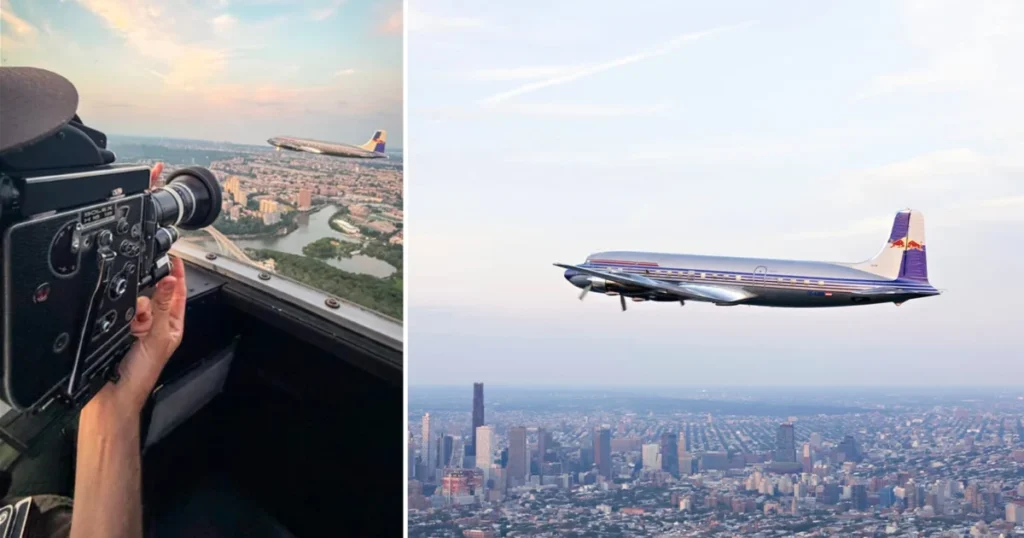

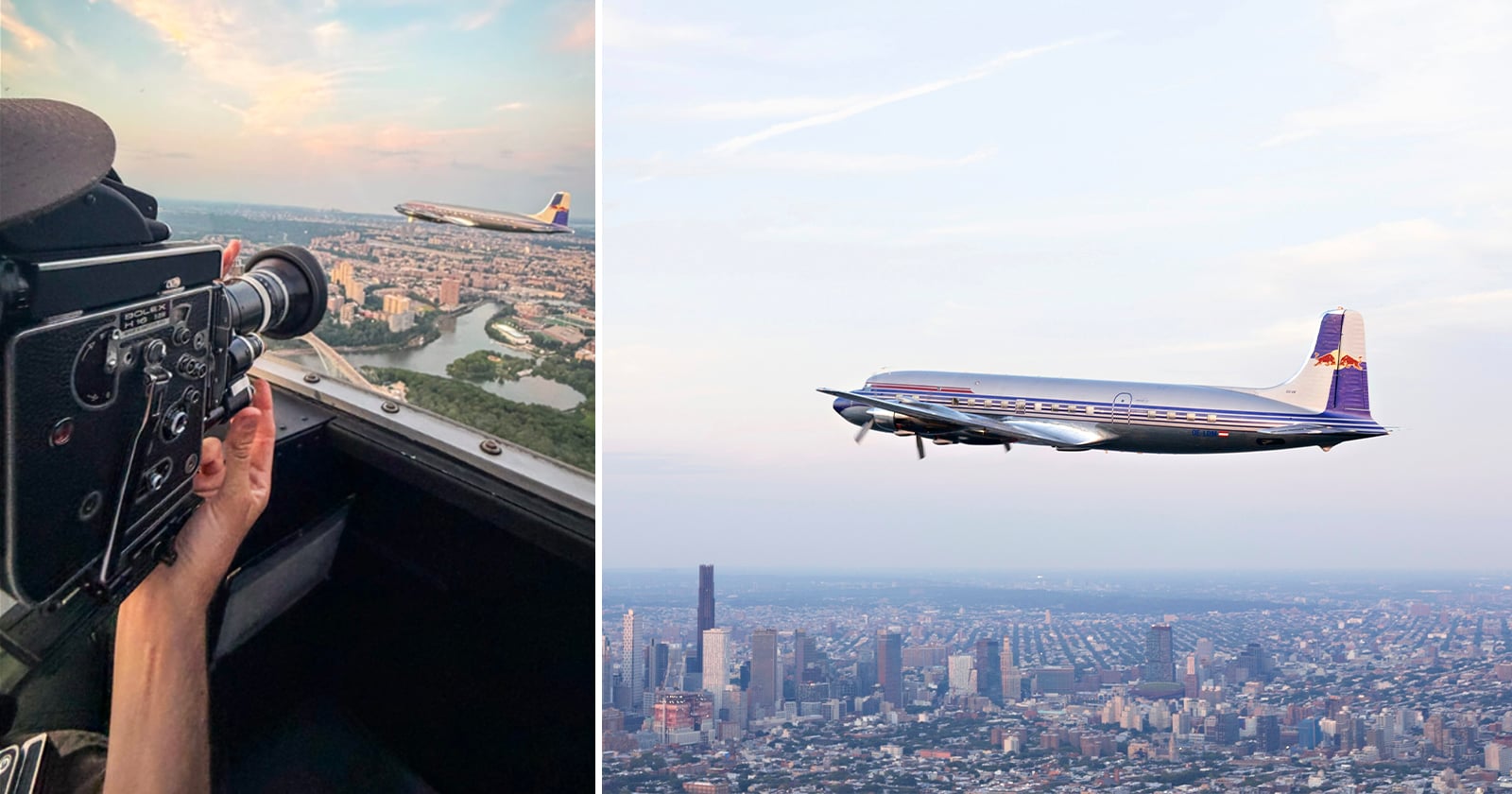
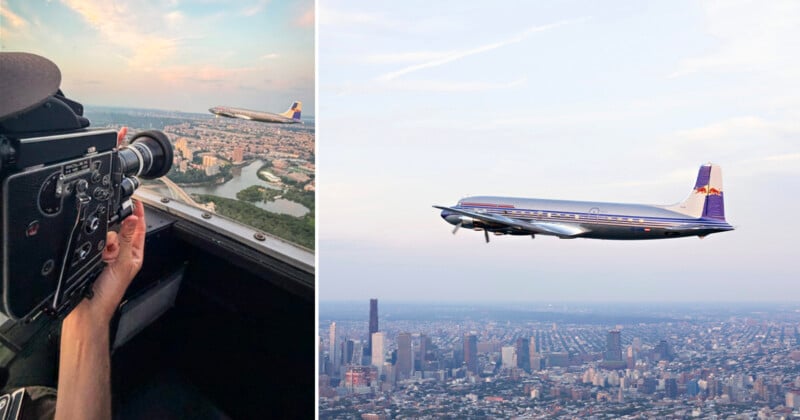
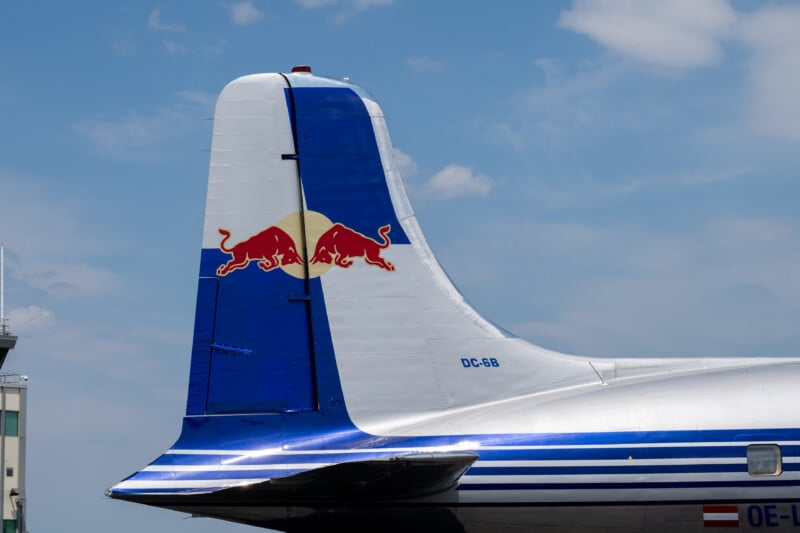
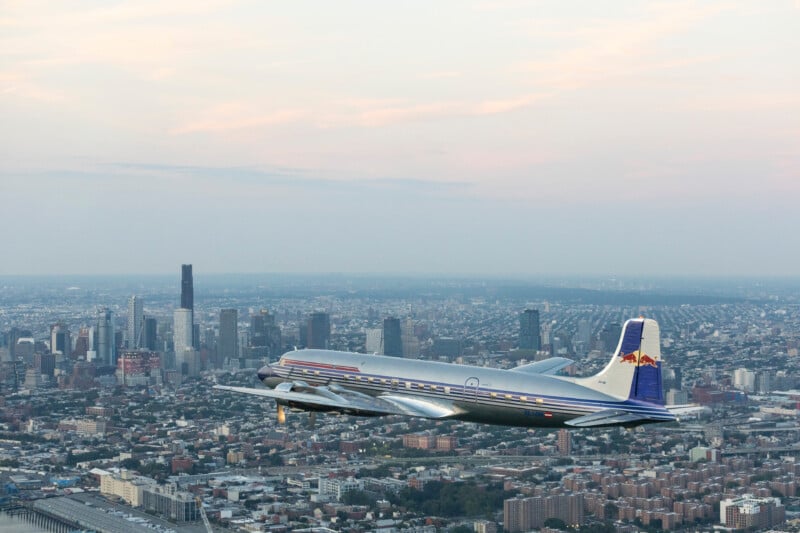
The return of the Douglas DC-6B to the United States marks a significant milestone in aviation heritage, as the historic aircraft, a cornerstone of Red Bull’s Flying Bulls collection, touched down on American soil for the first time since its manufacture in 1958. Originally produced in Santa Monica, California, this specific DC-6B has spent decades traversing the globe, eventually becoming a centerpiece of the Hangar-7 aviation museum in Salzburg, Austria. To document its homecoming, the Red Bull Aviation production team eschewed modern digital convenience in favor of a specialized project titled "DC-6 x Bolex," utilizing vintage 16mm motion picture cameras to capture the aircraft’s flight over the iconic New York City skyline.
The decision to pair a mid-century aircraft with cinematography equipment from the same era was a calculated effort to align the visual medium with the historical context of the subject. By using Bolex cameras, the production team aimed to produce a "time capsule" effect, ensuring that the texture, grain, and color science of the footage reflected the golden age of piston-engine aviation. This initiative highlights a growing trend in high-end brand storytelling where analog authenticity is prioritized over digital perfection to evoke a specific emotional and historical resonance.
The Historical Significance of the Douglas DC-6B
The Douglas DC-6B is widely regarded by aviation historians as the pinnacle of piston-engine airliner design. Developed as a stretched version of the DC-6, the "B" variant was optimized for passenger service, offering unprecedented reliability and efficiency before the industry transitioned to the "Jet Age" led by the Boeing 707 and Douglas DC-8. Between 1946 and 1958, approximately 700 DC-6 units were produced, but only a handful remain in airworthy condition today.
The specific aircraft in the Red Bull fleet, registration N90361, carries a storied provenance. Manufactured in 1958, it was one of the last DC-6Bs to roll off the Santa Monica assembly line. Its history includes serving as a luxury transport for high-profile figures, most notably Yugoslavian President Josip Broz Tito. After a period of service in Africa and subsequent restoration, the aircraft was acquired by The Flying Bulls in the early 2000s. Its 2026 return to the United States represents not just a logistical feat but a symbolic journey back to its place of origin, celebrating nearly seven decades of continuous flight.
Technical Execution: The DC-6 x Bolex Project
To achieve a visual aesthetic that matched the 1958 aircraft, the production team selected two specific Bolex models: a Bolex H16 Rex 3, manufactured in 1963, and a Bolex H16 SBM from 1970. While these cameras post-date the aircraft’s manufacture by a few years, they represent the peak of 16mm film technology used for documentary and newsreel footage during the era when the DC-6B was a common sight in American skies.
The cinematography, led by Khyber Jones, relied on Kodak VISION3 50D and 250D film stocks. These choices were dictated by the lighting conditions over New York City. The 50D stock was utilized for daylight sequences to provide a fine-grained, high-contrast look, while the 250D was employed during an 8:00 PM evening flight to handle the lower light levels and the golden hour transition.
Filming from a secondary aircraft—a World War II-era A26 Invader—the crew faced substantial technical hurdles. Aerial cinematography with vintage gear involves managing high-vibration environments without the aid of modern electronic stabilization or digital "instant replays." The team had to rely on manual focus and exposure settings while positioned in the nose of the A26, a vantage point that offered an unobstructed view of the DC-6B but exposed the filmmakers to the physical rigors of formation flying.
Chronology of the 2026 Transatlantic Journey
The DC-6B’s return to the United States was the result of months of planning and maintenance. The timeline of the event illustrates the complexity of operating vintage heavy aircraft over long distances:
- Spring 2026: Extensive pre-flight inspections and engine overhauls were conducted at Hangar-7 in Salzburg, Austria.
- Early July 2026: The aircraft departed Europe, utilizing a northern route with stops in Iceland and Greenland for refueling, a path reminiscent of early transatlantic commercial aviation.
- July 11, 2026: The DC-6B entered U.S. airspace and performed its first ceremonial flyover of Manhattan.
- July 14, 2026: The aircraft was stationed at Morristown Airport in New Jersey, serving as a base for media operations and passenger flights.
- Late July 2026: Following the New York leg, the aircraft is scheduled for a series of appearances at major U.S. aviation events, including the EAA AirVenture in Oshkosh, Wisconsin.
Operational Logistics and Pilot Perspective
The success of the "DC-6 x Bolex" project was dependent on the precision of the flight crews. Formation flying with a large, four-engine transport like the DC-6B requires a high degree of coordination, particularly when the camera ship is a faster, more agile military surplus aircraft like the A26 Invader. Pilots from Million Air, the company responsible for operating the camera plane, worked in tandem with Red Bull’s aviators to maintain the "sweet spot"—the exact distance and angle required for the 16mm lenses to frame the DC-6B against the New York skyline.
The Red Bull Aviation team noted that the most surreal moment of the mission occurred over Central Park. Flying at a lower altitude permitted for such specialized operations, the DC-6B’s silver-and-blue livery reflected the greenery of the park and the glass of the surrounding skyscrapers. This specific sequence was captured on the H16 Rex 3, providing a grainy, organic texture that contrasts sharply with the high-definition digital footage typically seen in modern social media content.
Analysis: The Enduring Appeal of Analog in the Digital Era
The decision to use film for this project reflects a broader movement within the creative industries to reclaim "tactile" media. In an era where 8K digital sensors can capture every minute detail, the imperfections of 16mm film—its organic grain, slight gate weave, and specific color saturation—are increasingly viewed as assets rather than flaws. For Red Bull, a brand built on high-energy, modern extreme sports, the DC-6 x Bolex project serves as a sophisticated brand extension that honors tradition and engineering history.
From a technical standpoint, the project demonstrates that vintage tools remain viable for high-stakes production. The footage was processed at the Kodak Lab in New York City, one of the few remaining facilities capable of handling motion picture film with the necessary precision. The production team opted for a minimal color grade, choosing to preserve the natural characteristics of the VISION3 stock as it was captured. This "purist" approach ensures that the footage serves as a genuine tribute to 1950s cinematography.
Statements from the Production Team
In communications regarding the project, the Red Bull Aviation team emphasized that the initiative was born out of a "love and appreciation for film photography." They stated that the goal was to "celebrate the plane by capturing it with cameras from the same era it was built." The team further remarked that the vintage cameras acted as a "shield," allowing the cinematographers to focus on the artistic task at hand despite the inherent nervousness of filming from the nose of a World War II aircraft in bumpy conditions.
The crew also expressed a hope that the project would inspire other creators to look beyond current technological trends. Their message to the creative community was one of authenticity: "More people just need to create just because they want to and not because they think that’s what they’re supposed to. Stay true to yourself."
Future Implications for Aviation Heritage
The successful return of the DC-6B and the subsequent media coverage generated by the Bolex footage highlight the importance of "living history" in the aviation sector. Maintaining a four-engine radial aircraft in the 21st century is an immense financial and technical undertaking, requiring specialized parts that are no longer in production and a dwindling pool of mechanics familiar with 1950s technology.
Projects like "DC-6 x Bolex" provide the necessary public engagement to justify the continued operation of these "warbirds" and vintage airliners. By presenting the aircraft in a visually stunning, historically accurate format, Red Bull Aviation ensures that the legacy of the Douglas Aircraft Company and the era of the Great Propeller Transports remains accessible to a new generation of enthusiasts.
As the DC-6B continues its American tour, it remains a flying testament to mid-century engineering. The footage captured over New York City will likely become a definitive visual record of the aircraft, bridging the gap between its 1958 origins in California and its 2026 return as an international icon of aviation history. Through the lens of a Bolex camera, the DC-6B has not just returned to the United States; it has returned to the era that defined it.