Tag: costs

  • Meta Increases Quest VR Headset Prices Amid Rising Component Costs and Strategic Pivot Toward Artificial Intelligence

    Meta Increases Quest VR Headset Prices Amid Rising Component Costs and Strategic Pivot Toward Artificial Intelligence

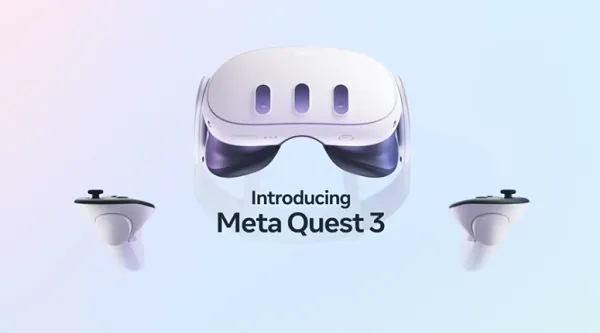
    Meta Platforms Inc. has officially announced a significant price adjustment for its Quest virtual reality (VR) lineup, signaling a shift in both its manufacturing economics and its long-term corporate priorities. The price hikes, which range from $50 to $100 depending on the specific model, affect the recently released Meta Quest 3 and the entry-level Meta Quest 3S. Under the new pricing structure, the flagship Meta Quest 3 will see its retail price climb from $499.99 to $599.99. Meanwhile, the budget-friendly Meta Quest 3S 128GB model will increase from $299.99 to $349.99, and the 256GB variant of the Quest 3S will move to $449.99. This move comes at a precarious time for the VR industry, which has struggled to maintain the explosive growth seen during the early pandemic years, and reflects the mounting pressure on Meta’s Reality Labs division to curb its staggering financial losses.

    In an official statement addressing the price revisions, Meta cited the escalating costs of high-performance hardware components as the primary driver behind the decision. The company specifically highlighted the global surge in the price of critical electronics, such as memory chips and specialized processors, which have been impacted by supply chain complexities and a shift in global semiconductor demand. "The global surge in the price of critical components—specifically memory chips—is impacting almost every category of consumer electronics, including VR," the company stated. Meta emphasized that these adjustments are necessary to maintain the quality of the hardware, software ecosystem, and ongoing technical support that users expect from the Quest platform. While Meta has historically been willing to subsidize the cost of its hardware to encourage mass-market adoption, the current economic climate and the company’s internal reallocation of resources appear to have reached a tipping point where such subsidies are no longer sustainable.

    The Economic Context of Rising Hardware Costs

    The decision to raise prices is rooted in a broader macroeconomic landscape that has plagued the technology sector for the past two years. The semiconductor industry, in particular, has faced a volatile environment. While the catastrophic shortages of the 2020-2022 era have largely subsided, the nature of demand has shifted. The explosive growth of generative artificial intelligence (AI) has led to a massive demand for high-bandwidth memory (HBM) and advanced DRAM, often at the expense of consumer-grade electronics components. As companies like Nvidia, Microsoft, and Google scramble to secure components for AI data centers, the cost of silicon and memory modules has remained stubbornly high for other hardware manufacturers.

    Furthermore, global logistics and the cost of raw materials have been influenced by geopolitical instability and fluctuations in energy prices. For a product like the Meta Quest 3, which relies on high-resolution pancake lenses, sophisticated sensors, and the Qualcomm Snapdragon XR2 Gen 2 chipset, the margin for error in pricing is razor-thin. Industry analysts suggest that Meta may have been selling the Quest 3 at near-cost or even at a loss since its launch to gain a competitive edge over rivals like Apple’s Vision Pro. However, with Meta’s Reality Labs division reporting operating losses exceeding $16 billion annually in recent fiscal years, investors have intensified their demands for a clearer path toward profitability.

    A Chronology of Meta’s VR Evolution and Strategic Shifts

    To understand the significance of this price hike, one must look at the timeline of Meta’s involvement in the hardware space. When the company rebranded from Facebook to Meta in October 2021, CEO Mark Zuckerberg staked the future of the company on the "Metaverse"—a persistent, shared 3D virtual space. At that time, the Quest 2 was the market leader, priced aggressively at $299 to dominate the consumer sector.

    However, the roadmap has seen several pivots since then:

    • 2022: Meta raised the price of the Quest 2 by $100, citing similar inflationary pressures, before eventually lowering it again as newer models approached.
    • Late 2023: The Quest 3 launched, offering significant mixed reality (MR) improvements but at a higher base price of $499, moving the device further away from the "impulse buy" category.
    • 2024: Meta introduced the Quest 3S as a more affordable entry point to replace the aging Quest 2. Almost immediately following its introduction, the company has now been forced to adjust the pricing upward.
    • Present Day: The shutdown of key social VR initiatives and the pivot toward AI infrastructure marks a distinct departure from the "Metaverse-first" strategy of 2021.

    This timeline suggests a company that is increasingly pragmatic. The idealism of the early Metaverse era is being replaced by the hard realities of hardware manufacturing and the immediate, lucrative potential of artificial intelligence.

    The Pivot from the Metaverse to Artificial Intelligence

    Perhaps more telling than the rising cost of memory chips is the internal shift in Meta’s focus. For years, the "Metaverse" was the buzzword that defined every earnings call. Today, that word has been largely supplanted by "AI." Meta is currently in the midst of a massive infrastructure build-out, committing an estimated $600 billion toward AI development and data center expansion over the next three years. The goal is to achieve what Zuckerberg describes as "virtual superintelligence," integrating AI into every facet of the company’s apps, from Instagram and WhatsApp to its hardware.

    Meta raises the price of its Quest VR headsets

    Evidence of this shift is visible in the recent decommissioning of Horizon Worlds’ social VR elements. Once touted as the "front door" to the Metaverse, Horizon Worlds was intended to be a sprawling social network in VR. Last month, Meta announced it would stop updating the platform’s social VR features, effectively moving it into a maintenance mode where it will likely become unstable over time. Instead, Meta is channeling its engineering talent into the development of AI-powered wearables, such as the Ray-Ban Meta smart glasses, which have seen surprising commercial success compared to the bulkier VR headsets.

    The price hike on Quest units may be a tactical move to reduce the financial drain of the VR division while the company doubles down on AI. By making the VR hardware more self-sustaining through higher retail prices, Meta can divert more capital toward the GPUs and energy resources required to train its Llama large language models.

    Industry Reactions and Market Implications

    The reaction from the VR community and industry analysts has been mixed. On one hand, tech enthusiasts understand the reality of inflation and component costs. On the other hand, developers who create games and applications for the Quest platform are concerned that higher entry prices will slow the growth of the user base. The success of a VR ecosystem depends heavily on "network effects"—the more people who own the hardware, the more profitable it is for developers to build software, which in turn attracts more users.

    "Meta’s strength was always its accessibility," says one industry analyst. "By moving the entry point from $299 to $349 and the flagship to $600, they are entering a price bracket where consumers are much more discerning. This could create an opening for competitors or simply lead to a stagnation in the VR gaming market."

    Furthermore, the price hike widens the gap between Meta’s offerings and the high-end Apple Vision Pro, which retails for $3,499. While Meta remains the undisputed leader in volume, the lack of a true "low-cost" gateway into VR could hinder the technology’s move from a niche hobby to a mainstream utility.

    Official Responses and Future Outlook

    Despite the price increases and the pivot toward AI, Meta insists that it is not abandoning the VR or AR space. In its announcement, the company reiterated its commitment to the category, stating: "We remain committed to investing in VR and leading the category because we believe this is the future of computing. We have a long-term roadmap full of new hardware and experiences, and this adjustment helps us stay on track to deliver that future."

    Zuckerberg has also teased the development of "Orion," a prototype for true augmented reality (AR) glasses that could eventually replace the need for both smartphones and VR headsets. This suggests that Meta views the current Quest lineup as a bridge to a future where AI and AR converge.

    In the short term, consumers can expect fewer "doorbuster" deals on VR hardware. As Meta focuses on the "superintelligence" of its AI models, the Quest VR headsets are being repositioned as premium specialty devices rather than subsidized mass-market toys. Whether the market will sustain these higher prices—or if this marks the beginning of the end for Meta’s dominance in the immersive space—will depend on how effectively the company can integrate its new AI capabilities into the VR experience. For now, the "Metaverse" remains a distant, and increasingly expensive, vision.

Grafex Media
Privacy Overview

This website uses cookies so that we can provide you with the best user experience possible. Cookie information is stored in your browser and performs functions such as recognising you when you return to our website and helping our team to understand which sections of the website you find most interesting and useful.