
Tag: darkroom

  • Streamlining the Digital Darkroom: A Comprehensive Evaluation of the Ulanzi D200X Creative Deck and Ulanzi Dial Workflow Solutions

    Streamlining the Digital Darkroom: A Comprehensive Evaluation of the Ulanzi D200X Creative Deck and Ulanzi Dial Workflow Solutions

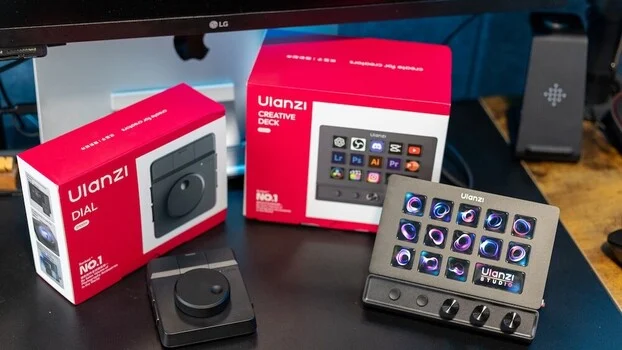
    The landscape of professional digital content creation is currently undergoing a significant shift, as photographers and videographers seek to mitigate the increasing amount of time spent in post-production. While the primary allure of the creative profession remains the act of capturing imagery, the reality for most modern professionals involves a disproportionate amount of time dedicated to "desk work"—editing, file management, and administrative tasks. In response to this demand, hardware manufacturers have introduced a new category of "creative consoles" designed to bridge the gap between software complexity and physical intuition. Among the latest entries in this competitive market are the Ulanzi D200X Creative Deck and the Ulanzi Dial, two devices that aim to redefine workflow efficiency through tactile control and programmable automation.

    The Rise of the Tactile Interface in the Creator Economy

    The emergence of dedicated editing consoles is not a new phenomenon; high-end broadcast suites have utilized specialized hardware for decades. However, the democratization of these tools has accelerated alongside the growth of the global creator economy, which is projected to reach a valuation of nearly $480 billion by 2027. Devices like the Elgato Stream Deck and Loupedeck originally paved the way for consumer-grade macro pads, but Ulanzi, a brand traditionally known for its photography accessories and lighting solutions, has entered the fray with a focus on affordability and integrated functionality.

    The core objective of these devices is the reduction of "micro-frictions"—the small, repetitive actions such as navigating menus or performing multi-key shortcuts that, when compounded over a standard eight-hour editing session, result in significant time loss and cognitive fatigue. By consolidating these actions into single-button presses or rotary movements, these tools promise to return the creator to the field sooner.

    Technical Architecture: The Ulanzi D200X Creative Deck

    The Ulanzi D200X represents an evolution of the company’s previous D200 model, positioning itself as a multifaceted hub rather than a simple shortcut pad. The unit features 13 customizable LCD buttons, a larger central display button, and two physical dials. Unlike its predecessor, the D200X utilizes a fixed-angle base, prioritizing stability on the desk over adjustable viewing angles.

    Beyond its role as a controller, the D200X functions as a hardware hub. It incorporates built-in SD and microSD card readers, alongside USB-C and USB-A ports. This integration addresses a common pain point for laptop-based editors: the proliferation of dongles and external hubs. By placing high-speed data transfer points directly within the controller, Ulanzi has streamlined the physical desktop environment.

    The device is powered by the Ulanzi Studio software, which is compatible with both macOS and Windows. This software allows users to map complex hotkeys, system commands, and software-specific actions to the tactile buttons. The central display button serves as a diagnostic monitor, capable of displaying real-time system statistics such as CPU usage, RAM allocation, and GPU temperatures—data points that are critical for editors working with high-resolution 4K or 8K video files.

    The Ulanzi Dial: Specialized Control for Motion Media

    While the D200X is a general-purpose command center, the Ulanzi Dial is a more specialized tool aimed at precision tasks. Priced at approximately $35, the Dial provides a single, large rotary encoder and programmable buttons in a compact, wireless form factor.

    In the context of video editing—specifically within platforms like Final Cut Pro, Adobe Premiere Pro, and DaVinci Resolve—the Dial addresses the inherent limitations of the computer mouse. Scrubbing through a timeline or performing frame-by-frame color grading requires a level of granularity that a standard mouse often fails to provide. The Dial’s ability to map secondary functions to its buttons effectively doubles its utility, allowing users to switch between timeline zooming and clip trimming with a single click.

    The Dial utilizes Bluetooth 5.0 for connectivity, offering a clutter-free experience. Its minimalist design is reflective of a broader industry trend toward "low-profile" peripherals that do not dominate the desk space but provide immediate utility during intensive editing phases.

    Workflow Integration and Practical Application

    Testing of these devices in a real-world professional environment reveals a distinct dichotomy between hardware capability and user habituation. For a photographer or videographer accustomed to decades of keyboard shortcuts, the transition to a hardware console involves an initial "productivity dip." This is the period during which the user must consciously override muscle memory to reach for the console rather than the keyboard.

    However, once integrated, the D200X demonstrates clear advantages in administrative and repetitive workflows. For instance, the ability to launch specific web-based resources—such as client galleries, stock footage sites, or project management tools—with a single button press eliminates the need for bookmark navigation. In software like Adobe Lightroom, the physical dials provide a more organic feel for adjusting exposure and contrast, mimicking the tactile experience of traditional darkroom equipment.

    The SD card reader integration also provides a chronological benefit. In a typical workflow, the time elapsed between returning from a shoot and beginning the ingest process is often hindered by the search for a card reader. By having the reader built into the primary interface, the "time-to-edit" is measurably reduced.

    Market Positioning and Competitive Analysis

    The creative peripheral market is currently bifurcated into premium professional tools and entry-level hobbyist gear. The Ulanzi D200X and Dial occupy a middle ground, offering professional-grade features at a price point that is accessible to independent freelancers.

    Feature Ulanzi D200X Elgato Stream Deck MK.2 Loupedeck Live
    Price (approx.) $120 – $150 $150 $260
    Keys 14 (Customizable LCD) 15 (Customizable LCD) 12 (LCD) + 6 Dials
    Integrated Hub Yes (SD/microSD/USB) No No
    Build Material Composite Polymer Plastic Metal/Plastic
    Software Ulanzi Studio Stream Deck App Loupedeck Software

    The D200X’s inclusion of a hardware hub gives it a unique competitive advantage over the Elgato Stream Deck, which remains the industry standard for button-based macro pads. However, Elgato’s software ecosystem and third-party plugin support remain more robust, providing a deeper level of integration with streaming platforms like OBS and Twitch.

    Challenges in Implementation

    Despite the technical merits, several "setup frictions" persist. For macOS users, the initial installation of the Ulanzi Studio app requires navigating several layers of system security and privacy permissions, particularly regarding screen recording and accessibility. These are necessary for the device to "see" which application is currently in focus and to trigger the appropriate profile, but they represent a barrier to entry for less tech-savvy users.

    Furthermore, ergonomic considerations suggest that while the visual icons on the LCD buttons are helpful, the viewing angle can occasionally obscure text labels. A firmware-level update allowing for the repositioning of text within the button display would likely resolve this issue.

    Broader Impact and Industry Implications

    The rise of these devices signifies a broader trend in the professionalization of the home office. As remote work and independent content creation become permanent fixtures of the global economy, the demand for "studio-grade" efficiency in a domestic setting has skyrocketed.

    From an ergonomic perspective, the use of dials and dedicated buttons can reduce the risk of Repetitive Strain Injury (RSI) by distributing the physical workload away from the mouse-hand and toward a more balanced, two-handed operation. This health-centric benefit is often overlooked but remains a critical factor for professionals who spend upwards of 40 hours a week at a digital workstation.

    Furthermore, the price-performance ratio of the Ulanzi Dial suggests that high-quality tactile control is no longer a luxury reserved for high-budget production houses. This democratization allows emerging creators to adopt professional workflows earlier in their careers, potentially raising the overall quality of digital media across the board.

    Conclusion and Verdict

    The Ulanzi D200X and the Ulanzi Dial are representative of a maturing market for creative peripherals. The D200X serves as a comprehensive "central nervous system" for the desk, combining connectivity, monitoring, and software control into a single, well-built unit. Its value proposition is strongest for professionals who manage a diverse range of tasks—from high-volume photo editing to administrative business management.

    The Ulanzi Dial, by contrast, is a surgical tool. Its focus on timeline navigation and precision adjustment makes it an essential accessory for videographers, particularly those working on a budget. It offers a low-stakes entry point into the world of tactile editing without the complexity of a full-scale console.

    While neither device can replace the fundamental skills of composition, lighting, or storytelling, they successfully remove the mechanical obstacles that stand between the creator and their finished work. The ultimate success of these tools depends on the user’s willingness to adapt their habits, but for those who make the transition, the result is a more fluid, efficient, and physically comfortable creative process. As software continues to grow in complexity, the role of dedicated hardware in managing that complexity will only become more vital.

Grafex Media
Privacy Overview

This website uses cookies so that we can provide you with the best user experience possible. Cookie information is stored in your browser and performs functions such as recognising you when you return to our website and helping our team to understand which sections of the website you find most interesting and useful.