
Tag: florida

  • Josh Aronson Reclaims the American Landscape Through the Lens of Florida Boys

    Josh Aronson Reclaims the American Landscape Through the Lens of Florida Boys

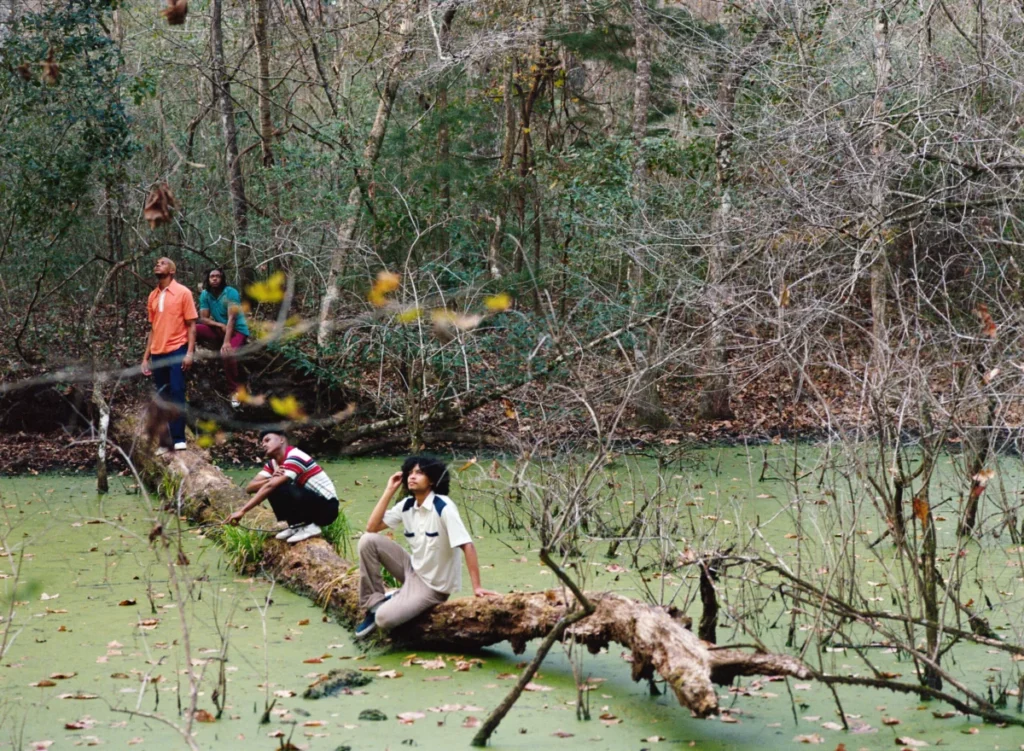
    The intersection of identity, geography, and the historical weight of the American landscape forms the backbone of "Florida Boys," a multi-year photographic odyssey by Miami-based artist Josh Aronson. Born in Toronto in 1994 and raised in the Sunshine State, Aronson has spent the better part of a decade interrogating what it means to belong to a place that often feels exclusionary. His latest body of work, which has garnered significant attention from major publications such as The New York Times, Vogue, and The Guardian, moves beyond mere documentation. Instead, it utilizes the medium of photography to stage a new version of Americana—one that centers on young Black and Brown men, queer and straight alike, within the untamed backwoods of Florida.

    ‘Florida Boys’ Find Themselves in the Backwoods of the State

    Aronson’s work arrives at a pivotal moment in the discourse surrounding American conservation and the "great outdoors." For decades, the visual language of the American wilderness was dominated by a specific demographic, often excluding the very communities that Aronson now brings to the forefront. By placing urban youth from Miami into the swamps, forests, and rock-lined beaches of rural Florida, Aronson is not just taking pictures; he is conducting a social experiment in belonging.

    The Insider-Outsider Perspective and the Quest for Belonging

    Josh Aronson’s personal history is central to the thematic depth of "Florida Boys." Despite being raised in Florida, his Canadian birth and his family’s lack of multi-generational roots in the state created a persistent sense of being an "insider-outsider." This duality is a common experience in Florida, a state where, according to U.S. Census data, nearly 20% of the population is foreign-born, and a significant portion of the domestic population consists of transplants from the Northeast and Midwest.

    ‘Florida Boys’ Find Themselves in the Backwoods of the State

    "Making photographs is, for me, a way to reclaim a sense of belonging," Aronson noted in a recent reflection on his work. "Photography allows me to imagine belonging somewhere and to make that fantasy a bit more real through the act of visualizing it."

    In "Florida Boys," Aronson casts young men as surrogates for his own experience. Many of his subjects are first-generation Americans or the children of immigrants living in the greater Miami area. These individuals often share Aronson’s lack of "quintessential" outdoorsy coming-of-age experiences—the camping trips, the hiking, and the uninhibited exploration of the wilderness that are often portrayed as the default American childhood. By staging these scenes, Aronson and his collaborators "play pretend," creating a reality where they are at ease in nature and in harmony with one another.

    ‘Florida Boys’ Find Themselves in the Backwoods of the State

    Historical Context: The Hierarchy of the American Landscape

    A significant portion of Aronson’s project is dedicated to deconstructing the "neutrality" of nature. While the wilderness is often framed as a universal haven, Aronson’s research into the history of American conservation revealed a more complex and exclusionary reality. The early 20th-century conservation movement in the United States, led by figures such as Theodore Roosevelt and Madison Grant, was often intertwined with the eugenics movement and the displacement of Indigenous populations.

    Historical data shows that the establishment of many National Parks and state-protected lands involved the forced removal of Native American tribes. Furthermore, during the Jim Crow era, many public parks and beaches in Florida were strictly segregated, a legacy that continues to influence who feels "safe" or "welcome" in rural natural spaces today. Aronson’s work acknowledges this "hierarchy of who could rest, roam, or feel safe," and seeks to expand the collective image of the American steward.

    ‘Florida Boys’ Find Themselves in the Backwoods of the State

    By bringing Black and Brown men into these landscapes, Aronson is directly challenging the historical default of whiteness in the "great outdoors." His photos depict moments of tenderness, care, and play—emotions that are often stripped from the public perception of young men from urban environments.

    The Chronology of a Five-Year Project

    The "Florida Boys" series was not a spontaneous endeavor but a meticulously planned five-year project. Aronson’s process is characterized by heavy research and a distinct separation between the "maker" and the "editor" modes of artistic production.

    ‘Florida Boys’ Find Themselves in the Backwoods of the State

    Phase 1: Research and Scouting (Years 1-2)

    Aronson spent hundreds of hours scrolling through digital archives and social media hashtags such as #FloridaWild and #VisitFlorida. He treated the state as a foreign territory, plotting multi-day routes to scout locations he had never visited during his youth. This phase involved collecting ephemera—maps, postcards, and travel brochures—that would later inform the aesthetic of his exhibitions.

    Phase 2: Staging and Production (Years 2-5)

    Unlike traditional documentary photography, Aronson’s scenes are staged. He brings his subjects from the urban sprawl of Miami into rural settings, creating what he calls "film stills." This cinematic approach allows him to control the narrative, emphasizing "core memories" and "friendship" over the "Florida Man" tropes often found in news media.

    ‘Florida Boys’ Find Themselves in the Backwoods of the State

    Phase 3: The Three-Year Delay

    In a move that deviates from the modern norm of instant digital gratification, Aronson chose not to develop his film for three years after shooting. This delay was a deliberate strategy to sustain his curiosity and prevent self-judgment from interfering with the creative process. When he finally developed the film, he described the experience as "rediscovering a diary I’d forgotten I was writing."

    Methodology: The Cinematic Still and Artistic Influence

    Aronson’s background in film is evident in the composition and lighting of "Florida Boys." The images possess a dreamlike, high-contrast quality that blurs the line between reality and fiction. He cites the influence of photographers like Justine Kurland, specifically her "Girl Pictures" series, which reimagined the American landscape through the lens of runaway girls. Similarly, the influence of Ryan McGinley is seen in Aronson’s portrayal of youth as a space for freedom and collaboration.

    ‘Florida Boys’ Find Themselves in the Backwoods of the State

    The technical execution of the project involved navigating the harsh realities of the Florida environment—mosquitoes, reptiles, and extreme humidity. Yet, Aronson maintains that the calm of nature overrides the physical discomfort. "Nature activates my imagination; it brings me back to a time before urbanization," he stated. This "foundational" experience is what he seeks to share with his subjects, many of whom have had limited exposure to the state’s interior.

    Exhibition and Public Response

    The culmination of this work was featured in the "Florida Boys" exhibition at Baker–Hall. The installation went beyond traditional framed prints, incorporating large-scale outdoor works, assemblage walls, and grids of found materials. This immersive approach allowed viewers to experience the "cultural DNA" of Florida—a mix of creative resilience and rural grit.

    ‘Florida Boys’ Find Themselves in the Backwoods of the State

    The response to the work has been multi-generational. Aronson has noted that Floridians who grew up in the 1960s, 70s, and 80s have found a surprising resonance in the images, despite the contemporary subjects. This suggests that the themes of youth and the landscape are universal, even as the faces within them change.

    Furthermore, Aronson has extended his commitment to the photography community through the creation of "Photo Book Speed Date." This public program encourages connection and dialogue through the sharing of photography books, reinforcing his belief that photography is, at its core, a tool for connection and joy.

    ‘Florida Boys’ Find Themselves in the Backwoods of the State

    Implications for the Future of American Photography

    Josh Aronson’s "Florida Boys" serves as a case study for how contemporary photography can address historical inequities without sacrificing aesthetic beauty. As Florida continues to face rapid urbanization and environmental challenges—with the state losing approximately 175,000 acres of agricultural land and natural habitat to development annually—Aronson’s work captures a vanishing version of the "wild" Florida.

    More importantly, the project provides a blueprint for "inclusive Americana." By documenting the joy and belonging of marginalized groups in the American landscape, Aronson is contributing to a broader cultural shift. His work suggests that the "fantasy" of belonging can, through the act of visualization, become a tangible reality.

    ‘Florida Boys’ Find Themselves in the Backwoods of the State

    As Aronson continues to move between the worlds of fine art and commercial photography—having already established a portfolio that includes Vogue and the Financial Times—his commitment to "staging" the truth remains a powerful method for exploring the complexities of the American identity. "Florida Boys" is not just a love letter to a state; it is a manifesto for who gets to be seen, who gets to rest, and who gets to call the wilderness home.

Grafex Media
Privacy Overview

This website uses cookies so that we can provide you with the best user experience possible. Cookie information is stored in your browser and performs functions such as recognising you when you return to our website and helping our team to understand which sections of the website you find most interesting and useful.