Tag: southeast

  • Overfishing in Southeast Asia

    Overfishing in Southeast Asia

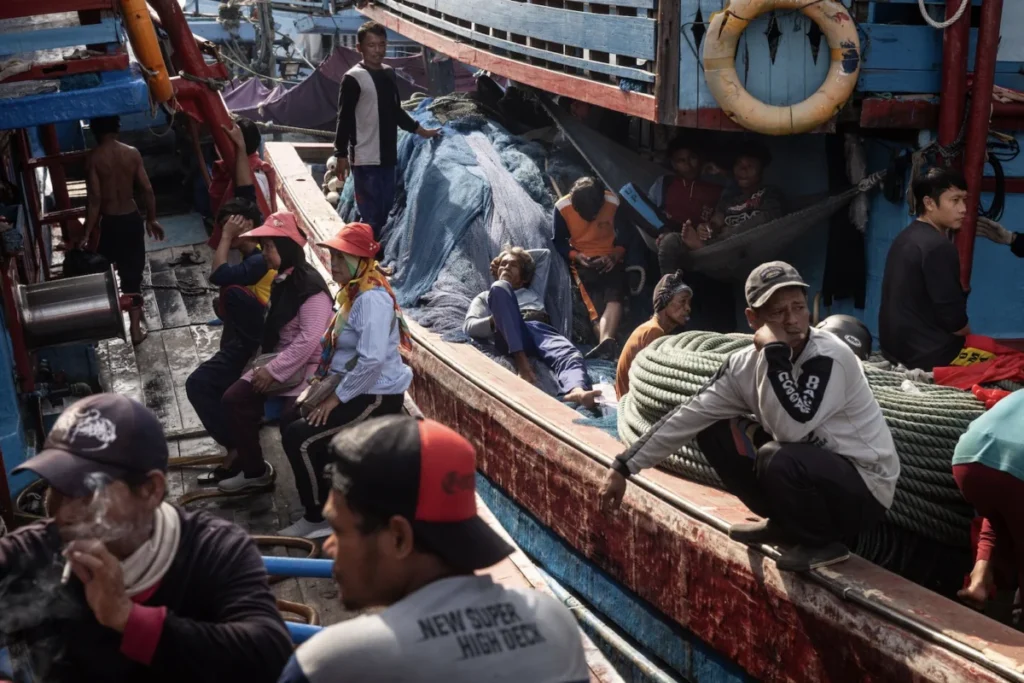
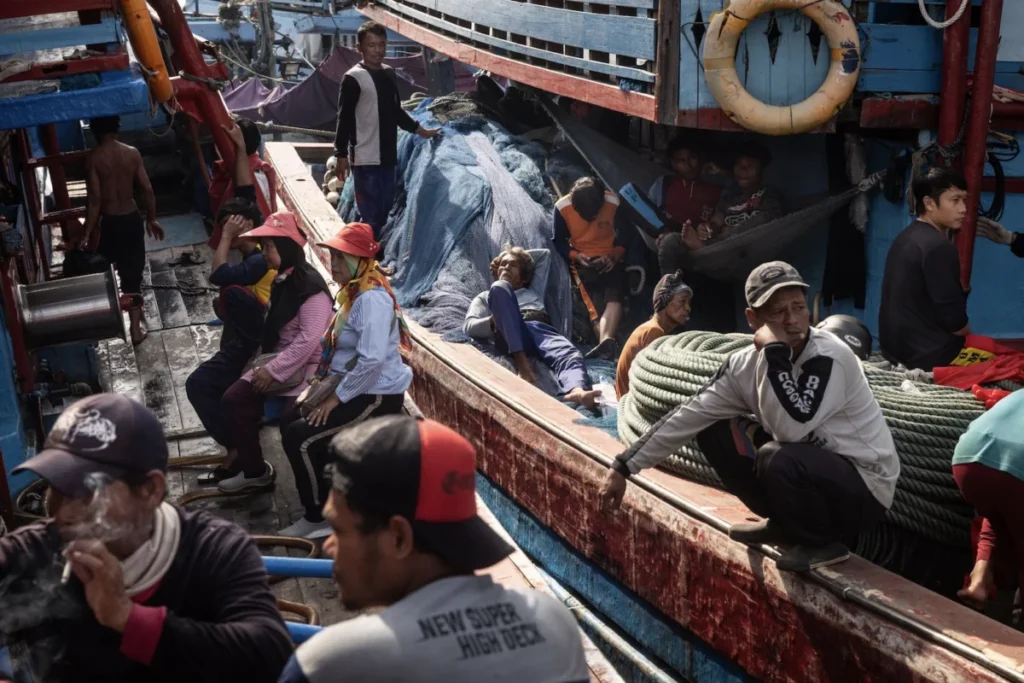
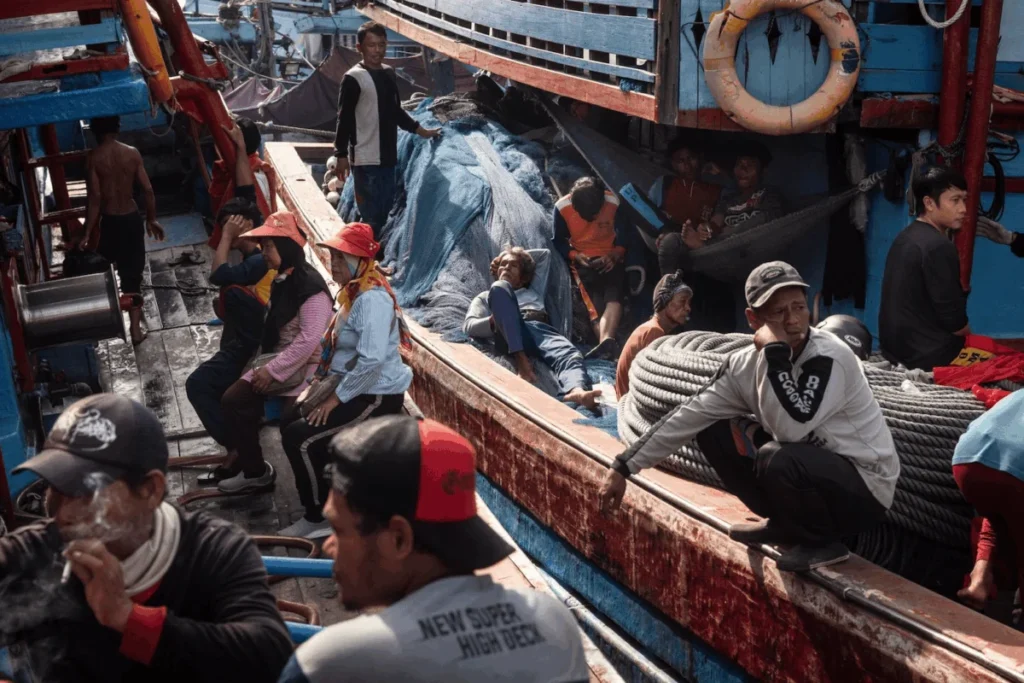
    Overfishing in Southeast Asia is a comprehensive and multi-layered investigative exhibition by renowned photojournalist Nicole Tung, currently on display at the Bronx Documentary Center through April 26, 2026. As the laureate of the 15th Carmignac Photojournalism Award, Tung spent nine months conducting in-depth reporting across Thailand, the Philippines, and Indonesia to document the systemic collapse of marine ecosystems and the human rights abuses inherent in the industrial fishing complex. Supported by the Fondation Carmignac, the project offers a rare and harrowing glimpse into an industry that operates largely beyond the reach of international law, revealing the intersection of environmental degradation, labor exploitation, and geopolitical instability.

    Nicole Tung on Photographing Overfishing in Southeast Asia: Inside Her Carmignac Award Project

    The exhibition serves as a visual record of a region in crisis. Southeast Asia is home to some of the world’s most productive marine environments, yet these resources are being depleted at a rate that threatens the food security of millions. Tung’s work highlights a grim reality shared by coastal communities across the three nations: the near-shore waters, once teeming with life, have been hollowed out by industrial-scale fleets, leaving small-scale, traditional fishermen with no viable catch. This displacement has forced local populations into a cycle of poverty or pushed them toward more dangerous, less regulated labor on commercial vessels.

    A Chronology of Investigation: From Ranong to General Santos

    The project was developed through a rigorous nine-month reporting period spanning late 2024 through mid-2025. Tung’s journey began in the processing hubs and landing sites of Thailand and the Philippines before moving into the remote fishing ports of Indonesia.

    Nicole Tung on Photographing Overfishing in Southeast Asia: Inside Her Carmignac Award Project

    In January 2025, Tung documented the labor dynamics in Ranong, Thailand, a critical landing site for Thai vessels. Here, she captured the reliance on Burmese migrant workers who perform the grueling task of sorting catches under intense pressure. By May 2025, her reporting shifted to the Philippines, specifically General Santos City, known as the "Tuna Capital of the Philippines." On May 21, 2025, she recorded the arrival of industrial vessels carrying massive hauls of Yellowfin and Bigeye tuna—species that are increasingly threatened but remain central to the global export market.

    The final leg of the investigation took place in Indonesia during June 2025. Tung visited Tanjung Luar in East Lombok, one of the largest shark markets in Southeast Asia, and Muara Angke in Jakarta, the nation’s largest commercial fish port. Through drone photography and ground-level reporting, she documented the scale of the industrial fleet and the specific targeting of endangered species, including wedgefish and various shark species destined for international markets in Hong Kong and China.

    Nicole Tung on Photographing Overfishing in Southeast Asia: Inside Her Carmignac Award Project

    National Case Studies: Reform, Abuse, and Geopolitics

    Tung’s investigation reveals that while the symptoms of overfishing are universal, the drivers vary significantly by national context.

    Thailand: The Risk of Regulatory Rollback

    Thailand’s fishing industry underwent a radical transformation following a 2015 "yellow card" warning from the European Union regarding Illegal, Unreported, and Unregulated (IUU) fishing. The Thai government implemented the "Port In Port Out" (PIPO) system, a rigorous monitoring framework designed to track crew manifests and catch data. However, Tung’s reporting highlights a new threat: in 2024 and 2025, the Thai Parliament faced intense lobbying from commercial interests to relax these laws. Boat owners argued that the restrictions made operations economically unviable, while environmentalists and small-scale fishers warned that rolling back reforms would lead to a total collapse of recovered fish stocks.

    Nicole Tung on Photographing Overfishing in Southeast Asia: Inside Her Carmignac Award Project

    Indonesia: Modern Slavery and Threatened Species

    In Indonesia, the primary concern is the treatment of fishermen on distant-water vessels, many of which are owned by Chinese, Korean, or Taiwanese interests. Tung found that the conditions for these workers often mirror the pre-reform era of Thailand, characterized by physical abuse, debt bondage, and lack of medical care. Furthermore, despite being a signatory to the Convention on International Trade in Endangered Species (CITES), Indonesia struggles to enforce bans on the hunting of protected sharks and rays. The economic desperation of local fishers, combined with high demand for shark fins and bones in the cosmetic and traditional medicine markets, creates a persistent black market.

    The Philippines: The Shadow of the Nine-Dash Line

    For the Philippines, overfishing is inextricably linked to territorial disputes in the South China Sea (referred to locally as the West Philippine Sea). Filipino fishermen reported frequent intimidation and harassment by Chinese maritime militias. China’s "Nine-Dash Line" claim has effectively restricted Filipino access to traditional fishing grounds like Scarborough Shoal. This geopolitical pressure forces Filipino fishers to compete in overcrowded coastal waters or venture into dangerous territories where they lack the protection of their government against superior foreign naval presence.

    Nicole Tung on Photographing Overfishing in Southeast Asia: Inside Her Carmignac Award Project

    The Ecological and Human Cost

    The environmental impact documented in Overfishing in Southeast Asia extends beyond the depletion of fish stocks. One of the most poignant aspects of the exhibition is the documentation of "ghost nets"—discarded or lost nylon fishing nets that continue to trap and kill marine life for decades. In January 2025, Tung photographed Oranee Jongkolpath, a veterinarian in Thailand’s Rayong province, treating a Hawksbill turtle that required a double amputation after becoming entangled in such debris.

    The crisis also threatens the cultural survival of indigenous groups. In Koh Lipe, Thailand, the Urak Lawoi people—traditionally known as "Sea Gypsies"—have seen their way of life vanish. Depleted stocks mean they can no longer sustain themselves through fishing, forcing a transition toward the tourism industry. Tung documented their bi-annual ceremonial festivals, which now serve as a stark reminder of a heritage that is being eroded by global industrial demands.

    Nicole Tung on Photographing Overfishing in Southeast Asia: Inside Her Carmignac Award Project

    Supporting Data and Global Implications

    The data supporting Tung’s visual evidence is staggering. According to the United Nations Food and Agriculture Organization (FAO), approximately 34% of global fish stocks are currently classified as overfished, a figure that has tripled since the 1970s. Southeast Asia is a critical node in this crisis, accounting for nearly 20% of the world’s wild-capture fisheries.

    The economic stakes are equally high. In the Philippines, the tuna industry in General Santos alone generates billions of pesos in export revenue, yet the fishermen who catch these high-value species often live in extreme poverty. The "Blue Economy," a concept intended to promote sustainable ocean management, is frequently undermined by subsidies that allow industrial fleets to operate even when fish stocks are low, creating an artificial economy that ignores ecological limits.

    Nicole Tung on Photographing Overfishing in Southeast Asia: Inside Her Carmignac Award Project

    Analysis of Policy and Consumer Responsibility

    The exhibition concludes with a call for systemic change and individual accountability. Tung emphasizes that the invisibility of the fishing industry is its greatest protection. Because the most egregious abuses occur miles from shore, consumers remain disconnected from the origins of their seafood.

    Expert analysis suggests that addressing the crisis requires a three-pronged approach:

    Nicole Tung on Photographing Overfishing in Southeast Asia: Inside Her Carmignac Award Project
    1. International Enforcement: Strengthening the PIPO systems across all ASEAN nations to ensure transparency in labor and catch data.
    2. Geopolitical Resolution: Protecting the sovereign rights of small-scale fishers in disputed waters through international arbitration and maritime patrols.
    3. Consumer Awareness: Utilizing resources like the Monterey Bay Aquarium’s Seafood Watch to avoid species that are prone to overfishing or caught using destructive methods.

    Nicole Tung’s work at the Bronx Documentary Center is more than a photographic essay; it is an urgent warning. The destruction of the seafloor and the loss of biodiversity are not merely local issues for Southeast Asia—they are drivers of global climate change. Marine ecosystems are among the planet’s largest carbon sinks, and their collapse would accelerate the warming of the oceans and the planet at large.

    The media response to the exhibition has been overwhelmingly positive, with critics praising Tung’s ability to find beauty and dignity in a subject defined by devastation. By bringing these "invisible" stories to a global audience, Tung and the Fondation Carmignac hope to catalyze a movement toward more ethical and sustainable ocean governance before the waters of Southeast Asia reach a point of no return.

Grafex Media
Privacy Overview

This website uses cookies so that we can provide you with the best user experience possible. Cookie information is stored in your browser and performs functions such as recognising you when you return to our website and helping our team to understand which sections of the website you find most interesting and useful.