
Sydney, Australia / London, UK – April 16, 2026 – Cavalry, the advanced node-based motion design software, has transitioned to a free-for-individuals model following its strategic acquisition by the global visual communication platform, Canva. This move, which positions Cavalry directly against traditionally subscription-based professional animation tools, signifies a major shift in the creative software landscape, offering professional-grade capabilities to a broader audience without upfront cost. The announcement has been met with significant interest within the design and animation communities, as it lowers the barrier to entry for sophisticated motion graphics creation on both Mac and Windows operating systems.
Previously offered under a paid subscription model, Cavalry’s new accessibility for individual users echoes the "Figma model," where a robust core product is provided free of charge, while enterprise-level features and support remain under a paid plan. This strategic pivot, implemented after Canva’s undisclosed acquisition of the London-based studio behind Cavalry, aims to democratize access to advanced animation tools, aligning with Canva’s overarching mission to empower global creativity. The software’s distinctive interface, characterized by a deep electric violet (#5B3FF0) theme accented by an acid yellow "Download for free" button, subtly but firmly reinforces its free-to-use status, visually differentiating it from competitors.
The Strategic Acquisition and Canva’s Expanding Ecosystem
While the exact timeline and financial terms of the acquisition remain undisclosed, it is understood that Canva finalized the deal prior to this public announcement. This move is a clear indication of Canva’s aggressive expansion beyond its core graphic design offerings into more specialized, professional creative domains. Canva, founded in 2013, has grown into a multi-billion-dollar enterprise by simplifying design for millions of users worldwide, from casual creators to small businesses. Its success lies in intuitive interfaces, extensive template libraries, and a freemium business model. The acquisition of Cavalry marks a significant step into the professional motion graphics arena, an industry projected to reach a market size exceeding $60 billion by the end of the decade, driven by the insatiable demand for dynamic visual content across digital platforms.
Canva’s strategy appears to be multifaceted: first, to attract a new segment of professional motion designers who might otherwise gravitate towards established but often more expensive solutions; second, to integrate advanced animation capabilities into its broader ecosystem, potentially allowing for more sophisticated motion elements within Canva’s own platform in the future; and third, to acquire cutting-edge technology and talent. This aligns with Canva’s history of strategic acquisitions, such as that of Zeetings in 2018 for interactive presentations and Affinity by Serif in 2024, broadening its suite of professional design tools.
Cavalry’s Distinctive Node-Based Workflow and Real-Time Rendering
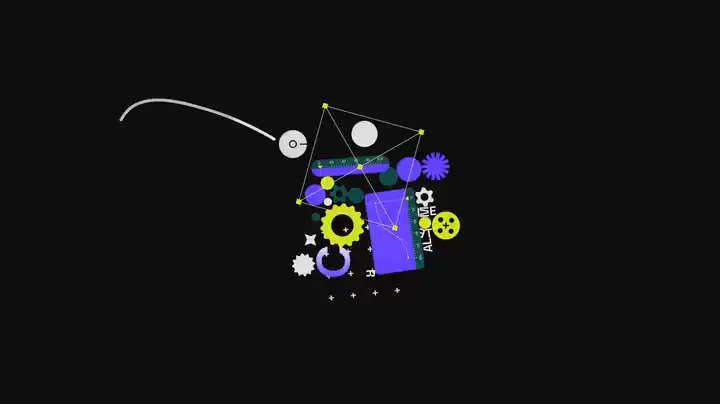
Cavalry stands out in the crowded motion design software market primarily due to its node-based workflow and real-time rendering capabilities. Unlike traditional layer-based animation software, where elements are stacked in a timeline, a node-based system represents each operation—such as shape creation, transformation, or effect application—as a distinct "node." These nodes are then connected in a visual graph, allowing for highly non-destructive, flexible, and complex animation setups. This approach is particularly advantageous for procedural animation, data visualization, and managing intricate systems, as demonstrated by community work featured on Cavalry’s platform, including @studiofeixen’s parametric type animation and @marsio.bellizzi’s layered circuit composition. Esteemed design studios like Buck, Pentagram, and Studio Dumbar have been listed among its trusted users, underscoring its professional credibility even before its free release.
The real-time rendering engine is another critical differentiator. In conventional animation workflows, designers often have to wait for renders to preview complex animations, a process that can be time-consuming and disruptive to the creative flow. Cavalry’s real-time rendering allows designers to see immediate feedback on their changes, significantly accelerating the iteration process and fostering a more fluid creative environment. This efficiency gain is particularly valuable in fast-paced production environments where deadlines are tight.
Key Features Empowering Modern Motion Design
Beyond its core architecture, Cavalry boasts a robust feature set that caters to a wide range of motion design needs:
- Rig Control for Character Animation: This feature provides advanced tools for rigging and animating characters, allowing for expressive and complex movements crucial for storytelling and branding.
- Rubber Hose for Organic Movement: Rubber Hose is a procedural rigging system that simplifies the creation of bendy, organic, and squash-and-stretch animations, traditionally a labor-intensive process. This makes animating limbs, tentacles, or other flexible elements far more intuitive.
- Data Import from CSV or JSON: In an increasingly data-driven world, the ability to import data directly from formats like CSV or JSON is invaluable. This allows designers to create dynamic motion graphics where elements are driven by external data, perfect for infographics, data visualizations, and automated content generation for apps or websites.
- Lottie Export for Web and Mobile Delivery: Perhaps the most significant "practical unlock" for many individual creators is the integrated Lottie Export functionality. Lottie is an open-source animation file format that enables designers to ship animations on web and mobile platforms without the need for complex code. By exporting directly to Lottie, Cavalry users can create lightweight, scalable, and interactive animations that integrate seamlessly into digital products. This eliminates the need for re-rendering passes, saving time and ensuring high-fidelity animation delivery at zero additional cost to the individual, directly streamlining the production pipeline for web developers and app designers. The adoption of Lottie has surged in recent years, with major platforms and applications leveraging it for everything from loading animations to interactive UI elements due to its performance benefits and ease of implementation.
Implications for the Creative Industry and Community Reactions
The decision to make Cavalry free for individuals carries profound implications for the creative industry. For aspiring motion designers, students, and freelancers, the cost barrier to entry for professional-grade tools has significantly decreased. This could lead to an explosion of new talent entering the field, fostering greater innovation and diversity in motion graphics. It also provides a powerful alternative to Adobe After Effects, which, despite its dominance, comes with a recurring subscription cost that can be prohibitive for many. While After Effects offers deep integration with the Adobe Creative Cloud ecosystem, Cavalry’s free model and unique workflow present a compelling proposition for those seeking alternatives.
Initial reactions from the design community have been largely positive, albeit with some measured optimism. Many express excitement over gaining access to a powerful tool without financial commitment, highlighting the potential for experimentation and skill development. There is an expectation that Canva’s backing will ensure continued development and support for Cavalry, potentially even accelerating its feature roadmap. Some industry veterans, while welcoming the accessibility, are keenly observing how Cavalry will integrate into Canva’s broader vision and whether the free individual plan will maintain its feature parity with a potentially more robust paid enterprise version. Concerns often revolve around the long-term sustainability of such models and the potential for a "walled garden" approach if integration becomes too tight with the parent company’s ecosystem.
For Canva, this move solidifies its position as a comprehensive creative powerhouse, challenging established players like Adobe across multiple verticals. By offering a free, professional-grade motion design tool, Canva is not just expanding its product portfolio; it is actively shaping the future of creative software accessibility and potentially disrupting traditional business models in the design industry. This aligns with a broader trend in software development where powerful tools are increasingly becoming available for free or at a significantly reduced cost, relying on network effects, enterprise licensing, or complementary services for revenue generation.
The Future Outlook
The acquisition of Cavalry by Canva and its subsequent shift to a freemium model represents a significant milestone in the evolution of creative software. It underscores the growing importance of motion graphics in digital communication and Canva’s ambition to be at the forefront of this trend. As individual creators embrace Cavalry’s node-based power and real-time capabilities, the landscape of motion design is set to become more dynamic, accessible, and innovative. The challenge for Cavalry and Canva will be to maintain a strong community, continuously evolve the software, and effectively balance the free individual offering with a compelling enterprise solution to ensure long-term viability and impact in a competitive market. The design world will undoubtedly be watching closely to see how this strategic move reshapes the tools and workflows of the next generation of animators and motion graphic artists.