
The proliferation of artificial intelligence in design workflows has unveiled both immense potential and significant challenges, particularly in the realm of AI-generated prototypes. While the promise of rapidly iterated designs and accelerated development cycles is compelling, the reality often falls short, plagued by inconsistencies, inaccuracies, and a fundamental lack of contextual understanding. These shortcomings stem primarily from "design debt"—unresolved decisions, undocumented conventions, and hard-coded values embedded within traditional design systems—and an over-reliance on AI to interpret complex visual and structural cues autonomously. Addressing these issues is becoming a critical priority for design and development teams aiming to harness AI effectively.
A recent practical guide by Hardik Pandya from Atlassian illuminates a crucial path forward, detailing strategies to mitigate "drifts," minimize errors, preserve design context, and ultimately elevate the quality of AI-generated prototypes. This approach underscores a fundamental shift in how design systems must be structured and maintained: they need to become "AI-ready," engineered not just for human designers but also for algorithmic interpretation. This paradigm acknowledges that AI, despite its advanced capabilities, requires explicit, structured guidance to perform reliably and consistently within a complex design ecosystem.
The Genesis of Inconsistency: Why AI Prototypes Falter
The journey towards AI-generated prototypes began with the widespread adoption of design systems in the early 2010s, which sought to standardize components, styles, and guidelines across product portfolios. These systems, designed for human interpretation and collaboration, drastically improved consistency and efficiency. However, as AI tools began to enter the design landscape in the late 2010s and early 2020s, a new layer of complexity emerged. Initial expectations were high: AI could theoretically translate rough sketches or natural language prompts into fully functional prototypes, revolutionizing the design process.
Yet, many early AI-generated prototypes exhibited a phenomenon described as "drift"—subtle yet persistent deviations from established brand guidelines, accessibility standards, or user experience best practices. These inconsistencies are often traced back to the inherent ambiguity in traditional design systems. Decisions made during design sprints, specific component usages, or nuanced accessibility considerations might be implicitly understood by human designers but remain undocumented or poorly structured for algorithmic consumption. When AI attempts to "make sense" of mock-ups or design flows on its own, it often fills these informational gaps with statistically probable but contextually incorrect or inconsistent choices, leading to a fragmented user experience. This "design debt," akin to technical debt in software engineering, accumulates over time, making AI integration more challenging and less effective.
Design Decisions as Core Infrastructure
The central tenet for achieving AI-ready design systems is to reframe design decisions not as transient choices but as foundational infrastructure. This perspective posits that every design decision—from the choice of a button style to the rationale behind an information architecture, or even the prioritization framework for design tasks—must be explicitly documented and integrated into a system consumable by AI. This goes beyond merely listing components; it involves detailing design principles, specific use-case examples, accessibility considerations, and explicit "do’s and don’ts."
This proactive approach combats the assumption that AI can independently infer complex design intent. While AI is adept at pattern recognition, the nuances of human-centric design, such as emotional resonance, cultural appropriateness, or subtle accessibility adjustments, often require explicit instruction. By treating these decisions as infrastructure, organizations are essentially building a robust, machine-readable knowledge base that guides AI’s generative processes, minimizing assumptions and reducing ambiguity. This structured guidance allows AI to choose the correct component, apply appropriate styling, and adhere to accessibility standards, leading to prototypes that are not just functional but also consistent and aligned with brand identity.
Pillars of an AI-Ready Design System
Achieving an AI-ready design system involves several interconnected components, each playing a vital role in ensuring consistency, accuracy, and maintainability.

1. Structured Spec Files for Algorithmic Guidance
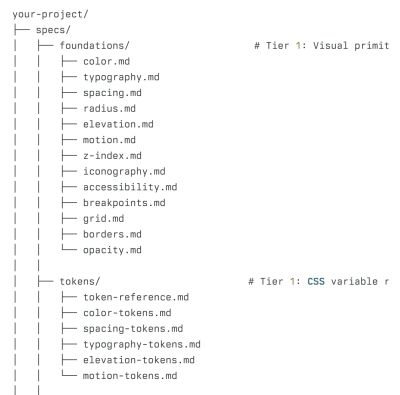
The cornerstone of an AI-ready design system lies in the creation and maintenance of "spec files." These are typically structured Markdown files that meticulously document design principles, guidelines, and rules. Unlike traditional design documentation, which might be prose-heavy and implicitly understood, spec files are designed for explicit algorithmic interpretation. They include:
- Component Usage Guidelines: Detailed instructions on when and how to use specific UI components, including variations, states, and accessibility considerations.
- Spacing and Layout Rules: Precise definitions of spacing units, grid systems, and responsive layout behaviors.
- Color Palettes and Typography: Explicit declarations of approved color tokens, font families, sizes, and weights, along with their intended application.
- Interaction Patterns: Guidelines for user interactions, micro-animations, and feedback mechanisms.
- Priorities and Principles: Articulation of core design principles (e.g., "clarity over cleverness," "accessibility first") that inform all design decisions.
The advantage of using text-based spec files is their cost-effectiveness and accuracy. AI can process structured text much more efficiently and reliably than it can "read" and interpret complex visual mock-ups. This approach enables AI to generate or extend code based on specific guidelines, rather than attempting to infer design intent from visual representations alone, which is prone to errors and misinterpretations.
2. Robust Auditing with Tools like FigmaLint
Maintaining the integrity and quality of a design system, especially one intended for AI consumption, necessitates continuous auditing. Tools like FigmaLint emerge as invaluable assets in this regard. FigmaLint is a free Figma plugin designed to audit various aspects of a design system, including:
- Design Token Compliance: Verifying that all design elements use approved tokens for colors, typography, spacing, and other properties, rather than hard-coded values.
- State Management: Detecting missing or inconsistent interactive states for components.
- Accessibility Checks: Identifying potential accessibility issues, such as insufficient contrast ratios or missing alt text.
- Layer Renaming and Organization: Ensuring consistent naming conventions and proper layer hierarchy.
- Detached Instances: Flagging instances of components that have been detached from their master, leading to potential inconsistencies.
For organizations collaborating with external vendors or integrating third-party component libraries, FigmaLint acts as a crucial quality gateway. It helps identify and rectify "design debt" proactively, ensuring that the design system remains clean, consistent, and ready for AI to consume. This rigorous auditing process is not just about aesthetic consistency; it’s about building a reliable foundation for AI-generated code and documentation, thereby enhancing the overall quality of prototypes and reducing post-generation rework.

3. The Central Role of the Token Layer
The token layer is another critical component of an AI-ready design system. Design tokens are the single source of truth for all design-related values (colors, fonts, spacing, etc.) that are used across a product. In an AI-ready system, the token layer ensures that AI always draws from a closed, predefined set of named variables.
Instead of AI inventing plausible but potentially off-brand values ad hoc, it selects from an explicitly defined vocabulary. For example, instead of choosing "light grey," AI would choose color-brand-neutral-200. This level of precision eliminates ambiguity and ensures that every AI-generated element adheres strictly to the established visual language. This systematic approach not only enhances consistency but also simplifies future updates, as changes to a token propagate across all instances, whether human or AI-generated.
4. Automated Quality Checks and Audit Scripts
Even with structured spec files and a robust token layer, AI can still make mistakes. To counteract this, an AI-ready design system incorporates an automated audit script. This script acts as a vigilant quality control mechanism, scanning AI-generated prototypes for discrepancies. It flags:
- Hard-coded Values: Any instance where AI has used a literal value instead of a design token.
- Deviation from Spec Files: Any element that violates the rules or guidelines defined in the spec files.
- Inconsistent Component Usage: Components used in a manner inconsistent with their documented purpose.
This audit script can be a traditional software application that provides feedback to the AI model, allowing for iterative refinement. The AI "waits" for this feedback, learns from its errors, and adjusts its generative process. This human-in-the-loop (or rather, audit-script-in-the-loop) approach ensures that AI outputs are continually validated against established standards, maintaining high quality and reducing the need for manual corrections.
5. Dynamic Sync Routines for Continuous Alignment
Design systems are not static; they evolve with product development, user feedback, and technological advancements. An AI-ready design system must account for this dynamism through robust sync routines. These routines are designed to:
- Monitor Updates: Track changes within the design system’s components, tokens, and guidelines.
- Flag Outdated Spec Files: Automatically identify which spec files need updating to reflect the latest changes.
- Trigger Review Processes: Alert designers and developers to review and update the AI’s guiding documentation.
The objective is to ensure that AI consistently accesses the most current and accurate specifications. Without such routines, AI could inadvertently generate prototypes based on outdated versions of the design system, reintroducing inconsistencies and undermining the benefits of an AI-ready approach. This continuous synchronization is vital for maintaining the long-term effectiveness of AI integration in design.
Broader Implications and the Future of Design
The shift towards AI-ready design systems carries profound implications for the design industry, affecting workflows, team collaboration, and the very nature of design roles.
Enhanced Efficiency and Scalability: By providing AI with clear, structured guidance, organizations can significantly accelerate the prototyping phase. AI can generate multiple design variations or adapt existing components to new contexts much faster than human designers, freeing up creative talent for higher-level strategic thinking and complex problem-solving. This scalability is particularly crucial for large enterprises with extensive product portfolios.

Redefining Designer Roles: The role of the designer will evolve from primarily executing visual designs to becoming more of a "design system architect" and "AI choreographer." Designers will focus on defining the rules, principles, and constraints that guide AI, ensuring the ethical and effective deployment of generative tools. This shift emphasizes critical thinking, strategic planning, and the ability to articulate design intent in a highly structured manner.
Mitigating Bias and Ensuring Accessibility: Explicitly documenting design decisions, including accessibility standards and ethical guidelines, helps mitigate the risk of AI perpetuating or amplifying biases present in its training data. By enforcing rules through spec files and audit scripts, designers can ensure that AI-generated prototypes adhere to inclusive design principles, promoting equitable user experiences.
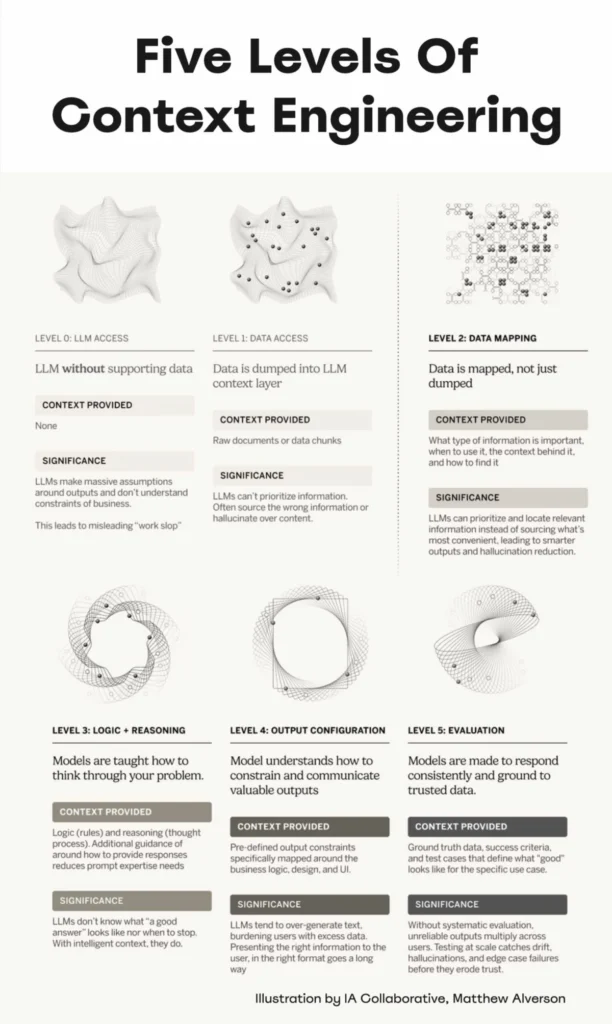
The Human Element Remains Paramount: Despite the increasing sophistication of AI, the article’s concluding point remains steadfast: AI cannot magically resolve technical or design debt without proper human guidance. Its capabilities are directly proportional to the clarity and precision of the instructions it receives. The "five levels of context engineering," as highlighted by Matthew Alverson via Addy Osmani, underscore the necessity of deeply embedding context into AI’s operational framework. This means that human designers’ expertise, empathy, and strategic foresight will remain indispensable, guiding AI to produce designs that are not just functional but also meaningful and user-centered.
As Vitaly Friedman’s "Design Patterns For AI Interfaces" video course and live UX training illustrate, there is a growing need for designers to master the art of designing for AI and with AI. This involves understanding how to structure inputs, interpret outputs, and continuously refine the collaborative process between human and machine.

Conclusion
The journey to consistently high-quality AI-generated prototypes is not about automating design entirely, but about intelligently augmenting human creativity with algorithmic power. This requires a deliberate and sustained effort to make design systems "AI-ready"—a process of cleaning up design debt, meticulously documenting every decision, and establishing robust mechanisms for guidance and auditing. The challenges of tiny inconsistencies, undocumented decisions, and an over-reliance on AI’s autonomous interpretation are being met with structured solutions: treating design decisions as infrastructure, leveraging auditing tools like FigmaLint, establishing clear token layers, implementing automated quality checks, and maintaining dynamic sync routines.
Ultimately, the future of design lies in a symbiotic relationship between human intelligence and artificial intelligence. The more precise and deliberate designers are in shaping the environment and guidelines for AI, the more reliable, consistent, and innovative the AI’s outputs will be. This ongoing commitment to refining and maintaining AI-ready design systems ensures that AI serves as a true accelerator for design excellence, rather than a source of further complexity and inconsistency. Designers and developers alike will remain busy for years to come, building the intelligent foundations upon which the next generation of digital experiences will be crafted.