
The advent of artificial intelligence promises to revolutionize creative industries, and design is no exception. However, the path to truly effective AI-generated prototypes is fraught with challenges, often leading to inconsistent results that fail to meet professional standards. These shortcomings frequently stem from subtle yet pervasive inconsistencies embedded within existing design systems – undocumented decisions, unaddressed hard-coded values, or an over-reliance on AI’s ability to autonomously interpret complex mock-ups and design flows. This article delves into a practical framework for mitigating these issues, ensuring higher quality, greater consistency, and improved contextual understanding in AI-generated design outputs, drawing insights from industry experts and practical tools.
The Challenge of AI in Prototyping: Bridging the Consistency Gap
The allure of AI in design lies in its potential for accelerated prototyping, automated component generation, and rapid iteration. Initial enthusiasm, however, has often met the sobering reality of "drift"—a gradual deviation from established design principles—and pervasive inconsistencies in AI-generated outputs. This phenomenon is not a failing of AI itself, but rather a reflection of the quality and structure of the data it consumes. When design systems are replete with implicit rules, fragmented documentation, or legacy hard-coded values, AI systems struggle to infer the correct intent, leading to prototypes that are technically functional but aesthetically or structurally misaligned.
For instance, an AI tasked with generating a new UI element might default to a hard-coded color from an old design iteration if the current color palette is not explicitly defined and enforced. Similarly, if accessibility guidelines are not clearly articulated within the system, the AI may produce components that fall short of WCAG standards. This necessitates extensive manual correction, negating the very efficiency gains AI promises. A recent informal survey among design leads indicated that nearly 40% of AI-generated design assets require substantial human intervention to correct inconsistencies, highlighting a significant bottleneck in the adoption of AI-driven design workflows.
Establishing a Robust Foundation: Design Decisions as Infrastructure
A cornerstone of effective AI-generated prototyping, as highlighted by Hardik Pandya from Atlassian in his insightful guide on LLM-ready design systems, is the imperative to treat design decisions as infrastructure. This paradigm shift means moving beyond viewing design decisions as mere aesthetic choices and instead recognizing them as critical, structured data points that must be meticulously documented and integrated into the core of the design system.
The premise is straightforward: AI, unlike a human designer, lacks inherent intuition or the ability to infer unspoken context. It requires explicit guidance. This guidance encompasses not just component selection but also adherence to accessibility standards, prioritization rules, and established design principles. Every decision—from how a button should behave in different states to the overarching brand voice—must be codified. This means transforming implicit knowledge, often held by senior designers, into explicit, machine-readable formats. When a design system explicitly outlines "do’s and don’ts," provides concrete examples, and defines decision-making hierarchies, the AI gains a clear operational roadmap.
This approach transforms design specifications into a foundational layer, akin to backend code infrastructure. Just as software infrastructure dictates the performance and reliability of an application, design infrastructure dictates the quality and consistency of AI-generated designs. Any new decision, whether a new design principle or an update to a component’s interaction model, must be systematically captured and integrated into this infrastructure, forming a continuous feedback loop that enriches the AI’s understanding over time.
Quality Assurance: The Indispensable Role of Auditing Tools like FigmaLint

The journey towards an AI-ready design system is not a one-time clean-up; it is an ongoing commitment to quality and consistency. Auditing tools play a critical role in this continuous improvement cycle. FigmaLint, a free Figma plugin, exemplifies a practical solution for this purpose. It acts as a digital quality assurance layer, scrutinizing design files for deviations from established standards.
FigmaLint’s capabilities extend across several crucial areas:
- Token Auditing: Verifying that design elements correctly utilize predefined design tokens for colors, typography, spacing, and more, rather than hard-coded values.
- State Management: Detecting missing or incorrectly defined interactive states for components.
- Accessibility Checks: Flagging potential accessibility issues, such as insufficient color contrast or improper layer naming for screen readers.
- Detached Instances: Identifying instances of components that have been detached from their master components, leading to potential inconsistencies.
- Hard-coded Values: Pinpointing instances where designers have manually entered values instead of using tokens, a common source of "drift."
- Layer Renaming and Documentation Prep: Ensuring consistent naming conventions and preparing files for better documentation generation.
For organizations collaborating with external vendors or integrating third-party component libraries, FigmaLint proves particularly invaluable. It provides an objective, automated means to assess the quality and adherence of incoming design assets to internal standards. By ensuring a clean, consistent, and well-structured design system, tools like FigmaLint significantly improve the quality of prototypes, AI-generated code snippets, and AI-written design documentation, reducing the cognitive load on the AI and increasing the reliability of its outputs. The widespread adoption of linting tools in code development underscores the necessity of similar practices in design, especially as AI becomes more integrated into the workflow.
A Multi-Layered Architecture for AI-Ready Design Systems
Achieving optimal AI-generated prototypes requires a sophisticated, multi-layered approach that goes beyond mere component libraries. Hardik Pandya’s guide articulates a three-pronged strategy: structured spec files, a robust token layer, and a vigilant auditing script, all underpinned by continuous synchronization.

1. Structured Spec Files: The AI’s Instruction Manual
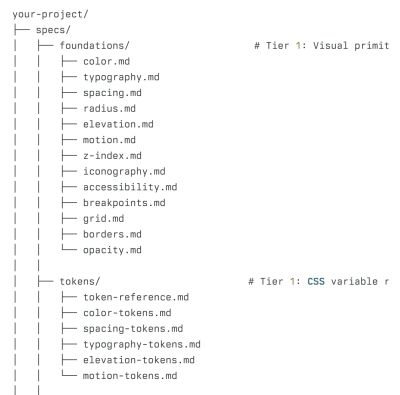
At the heart of an AI-ready design system are "spec files"—structured Markdown documents that serve as the AI’s primary instruction manual. These aren’t just general guidelines; they are granular, explicit declarations covering every facet of design. Content within spec files includes:
- Design Principles: Core tenets guiding all design decisions (e.g., "Clarity over Novelty," "User-Centered First").
- Component Usage Guidelines: Detailed instructions on when and how to use specific components, including variations, required properties, and anti-patterns.
- Spacing Rules: Precise definitions of vertical and horizontal spacing, margins, and paddings, typically using a token-based system.
- Color Palettes: Definitive lists of approved colors, their semantic meanings, and usage contexts.
- Typography Scales: Clear definitions of font families, sizes, weights, and line heights for various textual elements.
- Interaction Patterns: Standardized behaviors for common interactions (e.g., form submissions, navigation, error states).
- Accessibility Standards: Explicit requirements for contrast ratios, keyboard navigation, and semantic HTML structures.
- Prioritization Frameworks: Guidelines on how to weigh competing design considerations (e.g., performance vs. visual flair).
The immense advantage of spec files lies in their text-based nature. Unlike AI attempting to infer patterns from visual mock-ups, which can be ambiguous and computationally expensive, spec files provide unambiguous, direct instructions. This makes the process significantly more cost-effective and accurate. AI can "read" and apply these rules precisely, ensuring consistency that visual pattern recognition alone cannot guarantee. This approach moves away from AI "generating" designs from scratch to "extending" designs based on explicit, pre-approved parameters, a far more reliable method.
2. The Token Layer: Enforcing a Controlled Vocabulary
The token layer is the design system’s controlled vocabulary for all visual and interactive attributes. Design tokens are named entities that store design decisions, such as $color-primary-500, $spacing-md, or $font-size-h1. For AI, this layer is crucial because it forces the system to choose from a closed set of predefined, named variables rather than inventing plausible but potentially off-brand values ad hoc.
When an AI generates a prototype, it doesn’t pick a random shade of blue; it selects $color-brand-blue-500 because the spec files instruct it to use tokens. This ensures:
- Absolute Consistency: Every instance of a design attribute is tied to a single source of truth.
- Scalability: Changes to a token (e.g., updating a brand color) automatically propagate throughout all AI-generated designs that use that token.
- Brand Adherence: The AI operates strictly within the defined visual language of the brand.
- Reduced Error: Eliminates the possibility of AI hallucinating or misinterpreting visual cues to create non-standard values.
The token layer acts as a gatekeeper, ensuring that AI outputs are always aligned with the fundamental building blocks of the design system.
3. The Audit Script: The Feedback Loop for AI
Even with meticulous spec files and a robust token layer, an audit script is essential as the final line of defense and a crucial feedback mechanism. This script, which can be a combination of traditional software and AI-powered checks, scans AI-generated prototypes for deviations. Its primary functions include:
- Hard-coded Value Detection: Flagging any instance where the AI (or a human intervening) has introduced a value not sourced from the token layer.
- Compliance Verification: Checking against the rules defined in the spec files for spacing, component usage, accessibility, and other guidelines.
- Anomaly Detection: Identifying patterns or elements that seem out of place or inconsistent with the overall system.
When the audit script flags an issue, this feedback is channeled back to the AI. This creates an iterative learning cycle, allowing the AI to refine its understanding and improve subsequent generations. It transforms the AI from a mere generator into a system that can learn and self-correct, albeit with human oversight.
Synchronization Routine: Maintaining AI Relevance
The dynamic nature of design systems means they are constantly evolving. New components are added, existing ones are updated, and design principles may shift. A dedicated synchronization routine is therefore vital to ensure that the AI always operates with the most current information. This routine monitors changes within the design system and flags corresponding spec files or token definitions that require updating. Without this, the AI could inadvertently produce prototypes based on outdated versions of the design system, reintroducing inconsistencies. This continuous synchronization is critical for managing design debt and technical debt in parallel, ensuring that the AI’s knowledge base remains fresh and relevant.
Context Engineering: The Master Key to Sophisticated Outputs
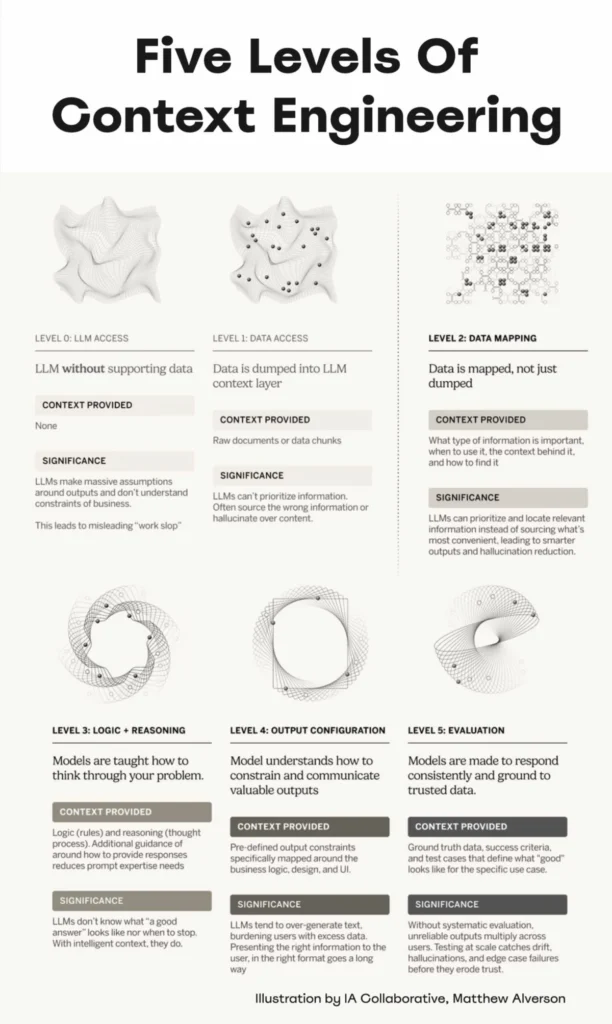
Beyond structured data, the quality of AI-generated outputs is deeply tied to "context engineering"—the art and science of providing AI with rich, relevant contextual information. As Matthew Alverson, via Addy Osmani, outlines in his "Five levels of context engineering," the more layers of understanding an AI possesses, the more sophisticated and accurate its responses will be. For design systems, this means:
- Direct Instructions: The explicit rules in spec files.
- Semantic Meaning: Understanding the purpose and context of components (e.g., a "primary button" signifies a main action).
- User Flows: Comprehending the sequence of user interactions and the role of a design in that journey.
- User Personas/Goals: Designing with specific user needs and objectives in mind.
- Brand Strategy/Business Goals: Aligning design decisions with overarching organizational objectives.
By embedding this multi-faceted context into the AI’s operational framework, designers move beyond simple component assembly to truly intelligent design generation that understands purpose, user, and business imperatives.

Implications for the Design Workflow and the Future
The implications of an AI-ready design system are profound, reshaping design workflows and the role of designers themselves:
- Accelerated Prototyping and Iteration: Designers can generate multiple prototype variations rapidly, freeing up time for strategic thinking and user research.
- Unprecedented Consistency and Quality: By minimizing human error and enforcing strict adherence to design guidelines, AI-generated designs will achieve a new level of consistency, enhancing brand identity and user experience.
- Enhanced Scalability: Large organizations can scale design efforts more efficiently, ensuring global consistency across diverse teams and products.
- Shift in Designer Roles: Designers will evolve from primarily executing pixel-perfect mock-ups to becoming system architects, "AI trainers," and strategists who define the rules and context for AI. Their focus will shift to higher-level problem-solving and refining the AI’s understanding.
- Reduced Technical Debt: By generating cleaner, more consistent code from AI-ready designs, development teams can reduce future maintenance burdens.
- Economic Advantages: Faster time-to-market, reduced rework costs, and optimized resource allocation translate into significant economic benefits.
However, this future is not without its ongoing commitments. The maintenance of AI-ready design systems is a continuous endeavor. Design decisions must constantly trickle down into Markdown files, tokens must be kept current, and audit scripts need regular updates. This suggests a sustained partnership between human designers and AI, where human intelligence provides the strategic framework and AI executes with precision and speed.
Educational Initiatives and Industry Leadership
Recognizing the evolving landscape, educational resources are emerging to equip designers with the necessary skills. Vitaly Friedman’s "Design Patterns For AI Interfaces" video course, brought to you by Design Patterns For AI Interfaces, is a timely example. This course offers hundreds of real-life examples and UX guidelines specifically tailored to designing AI features that are not only functional but also genuinely useful and user-centric. Such initiatives, alongside live UX training, are critical in bridging the knowledge gap and preparing the next generation of designers for a world where AI is an indispensable partner. Publications like Smashing Magazine continue to play a crucial role in disseminating these best practices and fostering a community of informed practitioners.

Wrapping Up
Ultimately, AI is a powerful tool, but it is not a magical solution capable of autonomously resolving deeply entrenched technical or design debt. Its efficacy hinges entirely on the quality of human guidance, the clarity of established priorities, and the precision of well-defined principles. The more deliberate, meticulous, and explicit designers are in structuring their design systems and providing context, the better the overall outcomes will be for AI-generated prototypes. This paradigm demands not just an initial clean-up and improvement of existing design systems but a sustained commitment to their ongoing maintenance and evolution, ensuring that all design decisions are systematically documented and integrated. The journey towards truly intelligent and consistent AI-driven design is a long one, requiring continuous effort and collaboration, a task that will undoubtedly keep designers and developers engaged for years to come.