
Kyrylo Levashov, a prominent voice in product design, posits a fundamental shift in the landscape of utility software, arguing that the question for developers has transitioned from "Should your utility software feel better to use?" to the more urgent "Can your utility software afford not to?" This provocative re-framing underscores a critical evolution in user expectations and market dynamics, challenging the long-held paradigm where function alone sufficed for tools designed to manage, optimize, and maintain digital systems. While physical products have undergone a profound aesthetic and experiential transformation over the past two decades, their digital counterparts, particularly system maintenance tools, have largely remained rooted in a utilitarian, emotionally flat design philosophy. This oversight, Levashov contends, represents one of the most significant underexplored frontiers in user experience (UX), with profound implications for user trust, engagement, and ultimately, market success.
The Consumerization of Design: A Precedent from Physical Products
The trajectory of physical product design offers a compelling blueprint for the necessary evolution of utility software. For generations, household appliances and everyday essentials were strictly functional, often relegated to the back of a closet or under the sink. Consider the traditional vacuum cleaner – a powerful, indispensable tool, yet invariably clunky, noisy, and aesthetically unappealing. Its primary role was to clean, and its design reflected this singular focus, with little consideration for the user’s emotional connection or integration into their living space.
This paradigm was shattered by innovators like Dyson. James Dyson’s vision transformed the humble vacuum from a hidden workhorse into an aspirational lifestyle product. Through sleek industrial design, visible engineering, and a focus on the experience of cleaning, Dyson elevated a mundane chore to an act of sophisticated engagement. The product became something users were proud to display, a testament to technological prowess and modern living. Similarly, brands like Method reimagined dish soap. Once a purely functional liquid in an unassuming plastic bottle, Method presented it in elegant, minimalist glass containers, infused with appealing scents and colors. Dish soap ceased to be merely a cleaning agent; it became an accessory, complementing kitchen aesthetics rather than detracting from them.
These examples illustrate a powerful shift in consumer psychology: utility, while foundational, is no longer the sole determinant of value. Modern consumers expect products to not only perform their function effectively but also to enhance their environment, evoke positive emotions, and contribute to an overall pleasing experience. This "consumerization of design," where aesthetics, usability, and emotional resonance are paramount, has swept across countless industries, from automotive to personal care. However, the software industry, particularly in the realm of system utilities, has been conspicuously slow to adopt these principles.
The Lag in Utility Software: A Historical Overview
Historically, utility software, often termed "system software," emerged from a technical imperative. Early computer users were largely engineers, programmers, and enthusiasts who prioritized raw functionality and efficiency above all else. Interfaces were text-based, commands were complex, and the aesthetic was purely functional, if it existed at all. As computing became more accessible, graphical user interfaces (GUIs) brought some ease of use, but the underlying design philosophy for utility tools remained largely unchanged. Maintenance software, designed to analyze, configure, optimize, and maintain a computer, was viewed as a necessary evil – a chore to be performed, akin to pulling out that dusty old vacuum.
This historical context explains several common software design assumptions that have perpetuated the "chore" status of utility tools:
- Functionality Over Form: The belief that as long as the software performs its intended function, its interface or user experience is secondary.
- Technical Audience Assumption: The presumption that users of maintenance software are inherently technically proficient and do not require simplified language or intuitive design.
- Invisibility as Ideal: The idea that the best utility software is "invisible," operating in the background without user intervention. While noble in intent, this often leads to a lack of transparency and, paradoxically, a decline in user trust when issues arise.
- Lack of Emotional Connection: The absence of design elements intended to create positive emotional signals, leading to a sterile, transactional interaction.
The result is a category of software that, despite its critical role in digital health, evokes little excitement and often considerable frustration. Unlike physical products that underwent a design revolution, utility software has largely remained an experience of obligation rather than engagement.
The Untapped Frontier: Why UX Matters in the Maintenance Layer
Levashov argues that "the most underexplored frontier in UX is the maintenance layer." This assertion is rooted in a deeper understanding of human-computer interaction. While design always starts with function, shaping form, the reality is that if that function cannot be made completely invisible – and people must interact with it – it inevitably becomes part of their overall experience. In such cases, users expect more than just raw functionality; they demand an experience that aligns with their environment, influences their mood, and contributes positively to their digital lives.
Consider a watch: its core function is to tell time. However, a watch occupies a physical space in a person’s world, becoming an extension of their identity and style. Therefore, beyond mere timekeeping, it must play an aesthetic role, complement their attire, and perhaps even convey a certain status or sentiment. The functionality is a given; the experience is what differentiates a utilitarian timepiece from a cherished heirloom.
In the digital realm, a similar expectation is emerging. When software hides its processes or presents them opaquely, users lose trust. A survey by Accenture found that 83% of consumers are willing to share their data in exchange for a personalized experience, but trust remains a significant barrier. While not directly about utility software, this highlights the broader consumer demand for transparency and a perceived value exchange, which is often undermined by poorly designed, opaque utility tools.
The Behavioral Dimension: Beyond Hardship to Emotional Signals
The user experience in utility software matters more than the industry has traditionally acknowledged. It’s not an optional add-on but an emergent property of how function is structured, explained, and interacted with. A critical insight here is that the problem with utility software is often behavioral, not just technical. Users don’t avoid these tools because they are inherently difficult to use, but rather because they produce "no positive emotional signal" at any point. The problem isn’t complexity; it’s the absence of meaningful, positive interaction.
This perspective draws on established psychological principles:
- The Aesthetic-Usability Effect: Research consistently demonstrates that people perceive aesthetically pleasing interfaces as easier to use, even if their objective usability is the same. A classic 1995 study on ATM screens showed that users judged screens with more attractive layouts as easier to operate. This effect highlights that "if something looks better, it feels better," directly contradicting the notion that utility software can disregard visual design. A visually appealing interface can lower the cognitive load, make complex information more digestible, and implicitly communicate competence and care.
- The Peak-End Rule: Pioneering work by Daniel Kahneman and Amos Tversky revealed that people remember the emotional peak (most intense positive or negative moment) and the ending of an experience, not the average of every moment. A process that concludes with a clear, positive "done" message is remembered far more favorably than one that simply fades out, even if both successfully complete the task. Utility software, notorious for its quiet, often ambiguous endings, consistently misses this critical opportunity to create a positive memory.
These psychological insights underscore that designing for utility software is not just about solving technical problems but about managing human perception and emotion. Ignoring these aspects means missing a crucial opportunity to build a relationship with the user, transforming a transactional interaction into a more engaging and trusted one.
Architecting Emotion: Principles for Thoughtful System Design
So, what does "emotional design" truly mean in the context of utility UX? Levashov and his team at MacPaw have identified three core principles that guide their approach to designing products that defy the category norm:
1. Translating System Complexity into Human Language
Maintenance tools grapple with intricate concepts like storage allocation, task management, and background processes. Traditional interfaces often present this information using technical jargon, cryptic error codes, or overwhelming data dumps. Good design, however, acts as a translator. It explains what is happening, why it’s happening, and what the outcome will be, all in clear, concise, and accessible human language.
A prime example of this principle in action is Linear, a project management tool. Linear’s "game-changing move" was to establish straightforward units of work—projects, teams, issues—that any new user could immediately grasp. By standardizing and simplifying this core vocabulary, Linear dramatically reduced the "ramp-up" time for new users. Instead of deciphering complex project hierarchies or agile methodologies, users could instantly understand the system’s logic and begin contributing, spending less time learning the tool and more time building and collaborating. This simplification fosters a sense of immediate competence and control, crucial for positive emotional engagement.
2. Make the Process Clear and Show Progress
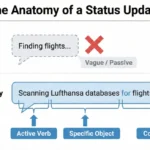
System tools inherently run complex, often invisible processes. The lack of transparency can breed anxiety and distrust. Effective design combats this by making the process clear, showing progress, illustrating impact, and communicating system changes in real-time. This doesn’t mean revealing every technical detail but rather providing just enough information for the user to feel informed and in control.
Vercel’s deployment infrastructure offers an excellent illustration. When a user triggers a build for their web application, the browser tab favicon dynamically changes: a subtle spinner indicates the build is in progress, a green checkmark signals successful completion, and a red ‘X’ warns of a failure. This seemingly minor design detail is ruthlessly functional yet profoundly emotionally intelligent. It doesn’t offer verbose status updates or complex logs, but it effectively reduces the "low-level anxiety" associated with waiting for a critical process to finish. The user is kept informed without being overwhelmed, fostering a sense of reliability and responsiveness. This immediate visual feedback creates a micro-moment of reassurance, reinforcing trust in the system.
3. Design the Moment of Completion
Many maintenance tasks conclude silently or with a generic "process complete" message. However, the moment of completion is a pivotal emotional payoff. It’s the point where the user experiences the culmination of the software’s efforts and confirms its value. Design should therefore emphasize clarity of results, instill a sense of resolution, and visibly communicate improvement, ensuring users remember a positive and distinct ending.
The 2024 major update to CleanMyMac by MacPaw serves as a benchmark in this regard. Breaking from the industry norm, CleanMyMac employs a rich visual language—incorporating color, depth, motion, intuitive icons, and even 3D illustrations—to shift the narrative. Instead of confronting users with a daunting list of problems, the interface focuses on showing progress and positive outcomes: "X GB of space cleared," "Y threats removed," "Z hours of time saved." The interface closes not with a sterile report, but with a vibrant, reassuring visual of a machine that is demonstrably working better, cleaner, and faster. The underlying task of system maintenance remains the same, but the designed ending tells a dramatically different, positive story, leaving the user with a sense of accomplishment and a clear picture of enhanced machine performance. This positive reinforcement at the conclusion strongly leverages the "peak-end rule," creating a lasting positive impression.
Market Dynamics and Generational Shift: The Inevitable Transformation
Even for those who might remain skeptical of emotional design as a philosophical principle, market forces are making this shift an unavoidable reality. The change is not merely desirable; it is becoming an economic imperative.
Generational Expectations
A significant driver of this transformation is generational. Younger designers and users have grown up with a new baseline for software quality. Tools like Linear, Figma, and Notion have redefined expectations for usability, aesthetics, and overall user experience. For this demographic, intuitive design and a positive user experience are not "happy accidents" or optional luxuries but fundamental requirements. This generation is rapidly becoming the primary audience for all software, including maintenance utilities. The old excuse, "it’s fine, it’s just a utility," no longer holds philosophical or commercial weight. Just as Dyson and Method compelled entire product categories to rethink their approach to design, the current state of utility software is undergoing a permanent transformation to meet these elevated expectations. Companies that fail to adapt risk becoming irrelevant.
Digital Fatigue and the Quest for Meaningful Interaction
Beyond generational shifts, there is a broader cultural phenomenon of "digital fatigue." In an increasingly saturated digital world, users are yearning for more meaningful, less transactional interactions with their tools. The resurgence of analogue experiences—vinyl records, film cameras, even "dumbphones"—is not simply nostalgia. It’s a signal of a changing emotional relationship between people and their technology. Users are seeking clarity, control, and genuine connection, even from their digital tools. They are tired of cluttered interfaces, intrusive notifications, and software that feels demanding rather than supportive. Utility software, by its very nature, interacts with the core of a user’s digital life. If it can foster a sense of calm, control, and efficiency through thoughtful design, it taps into this deeper cultural desire for more positive digital interactions.
Competitive Imperative and Business Impact
The implications for businesses are substantial. In a crowded software market, user experience is becoming a key differentiator. Companies that invest in emotional design for their utility software can expect several competitive advantages:
- Increased User Retention and Loyalty: A positive emotional experience fosters loyalty, reducing churn rates and encouraging repeat engagement.
- Enhanced Brand Perception: Software that feels good to use reflects positively on the brand, positioning it as thoughtful, innovative, and user-centric.
- Higher User Adoption and Referrals: Intuitive and pleasant experiences lead to faster adoption and organic growth through word-of-mouth recommendations.
- Reduced Support Costs: Clear communication and intuitive design can minimize user confusion and reduce the burden on customer support teams.
Research from sources like Forrester and Adobe consistently demonstrates a strong return on investment (ROI) for UX design, with companies prioritizing design seeing higher revenue growth and customer satisfaction. While specific data for "utility software" might be niche, the overarching principle that good design translates to good business holds true across all software categories. The cost of not investing in emotional design for utility software is a declining user base, negative brand perception, and a competitive disadvantage in an increasingly design-conscious market.
In conclusion, the era of purely functional, emotionally neutral utility software is rapidly drawing to a close. The question is no longer whether such tools should strive for a better user experience, but whether they can afford not to. The convergence of evolving user expectations, generational shifts, and a broader cultural re-evaluation of digital interaction demands a fundamental recalibration. By embracing principles of clarity, transparency, and emotional resonance, utility software can transcend its traditional role as a mere chore and become an integral, positive, and even aspirational component of our digital lives. The unseen revolution in design is here, and it promises to transform how we interact with the very foundations of our digital existence.