
Sprout Social, a leading provider of cloud-based social media management software, has announced a comprehensive restructuring of its service tiers alongside the release of an independent study detailing the platform’s financial impact on large-scale enterprises. The move comes as organizations increasingly view social media not merely as a marketing auxiliary, but as a critical driver of customer care, business intelligence, and revenue growth. According to a newly released 2025 Total Economic Impact (TEI) study conducted by Forrester Consulting on behalf of Sprout Social, the platform delivered a 268 percent return on investment (ROI) for interviewed customers over a three-year period.
The updated pricing model is designed to accommodate the full spectrum of social media maturity, ranging from independent freelancers to global conglomerates. This strategic pivot aims to address the growing disparity between low-cost scheduling tools and high-value enterprise platforms. By providing a clear roadmap for scaling social operations, Sprout Social is positioning itself as a foundational infrastructure for digital transformation.
Quantifying the Value of Social Media Management
The 2025 Forrester TEI study serves as the centerpiece of Sprout Social’s value proposition. Beyond the headline ROI figure, the study found that representative customers experienced a net present value (NPV) of $1.3 million over three years, with the initial investment typically paying for itself in less than six months. These findings are particularly significant in a fiscal environment where Chief Marketing Officers (CMOs) and Chief Information Officers (CIOs) are under increasing pressure to justify software expenditures through tangible performance metrics.

The study highlighted several key areas of efficiency. Organizations utilizing the platform reported a 60 percent lift in productivity, allowing social media teams to pivot from manual tasks to high-level strategy. Furthermore, the implementation of AI-driven workflows resulted in an 80 percent reduction in time spent on social media reporting. These efficiencies are estimated to have saved enterprises hundreds of thousands of dollars in labor costs while simultaneously increasing engagement rates and customer satisfaction scores.
A Tiered Approach to Scalable Growth
Sprout Social has organized its offerings into five distinct plans, each tailored to specific operational needs and organizational sizes. This hierarchy is intended to allow businesses to enter the ecosystem at a price point that matches their current requirements while providing a seamless path for future expansion.
Essentials: The Foundation for Professional Publishing
Priced at $79 per seat per month (billed annually), the Essentials plan is the most recent addition to the Sprout Social lineup. It targets solo practitioners, freelancers, and small business owners who have outgrown native posting or free scheduling tools. Unlike entry-level alternatives that focus solely on the mechanics of posting, Essentials integrates Sprout’s ViralPost technology. This AI-powered feature analyzes audience behavior to determine "Optimal Send Times," ensuring that content reaches users when they are most active. This tier also includes a collaborative content calendar and basic reporting, providing a professional-grade infrastructure for those at the beginning of their social media journey.
Standard: Centralizing Conversations
At $199 per seat per month, the Standard plan is designed for growing teams that require more robust community management tools. The defining feature of this tier is the "Smart Inbox," a unified feed that consolidates messages, mentions, and comments from multiple networks into a single interface. By eliminating the need for "context-switching" between various platform tabs, the Standard plan addresses a major source of administrative drain. It also introduces keyword and location monitoring, as well as review management, allowing brands to maintain a proactive stance in customer service and reputation management.

Professional: Data-Driven Strategy for Mid-Market Teams
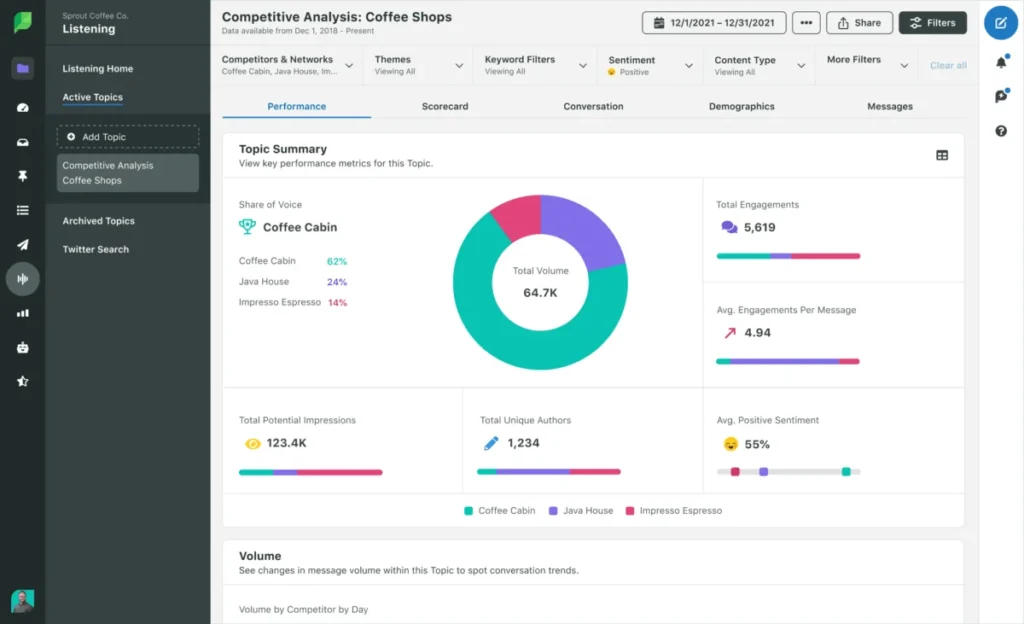
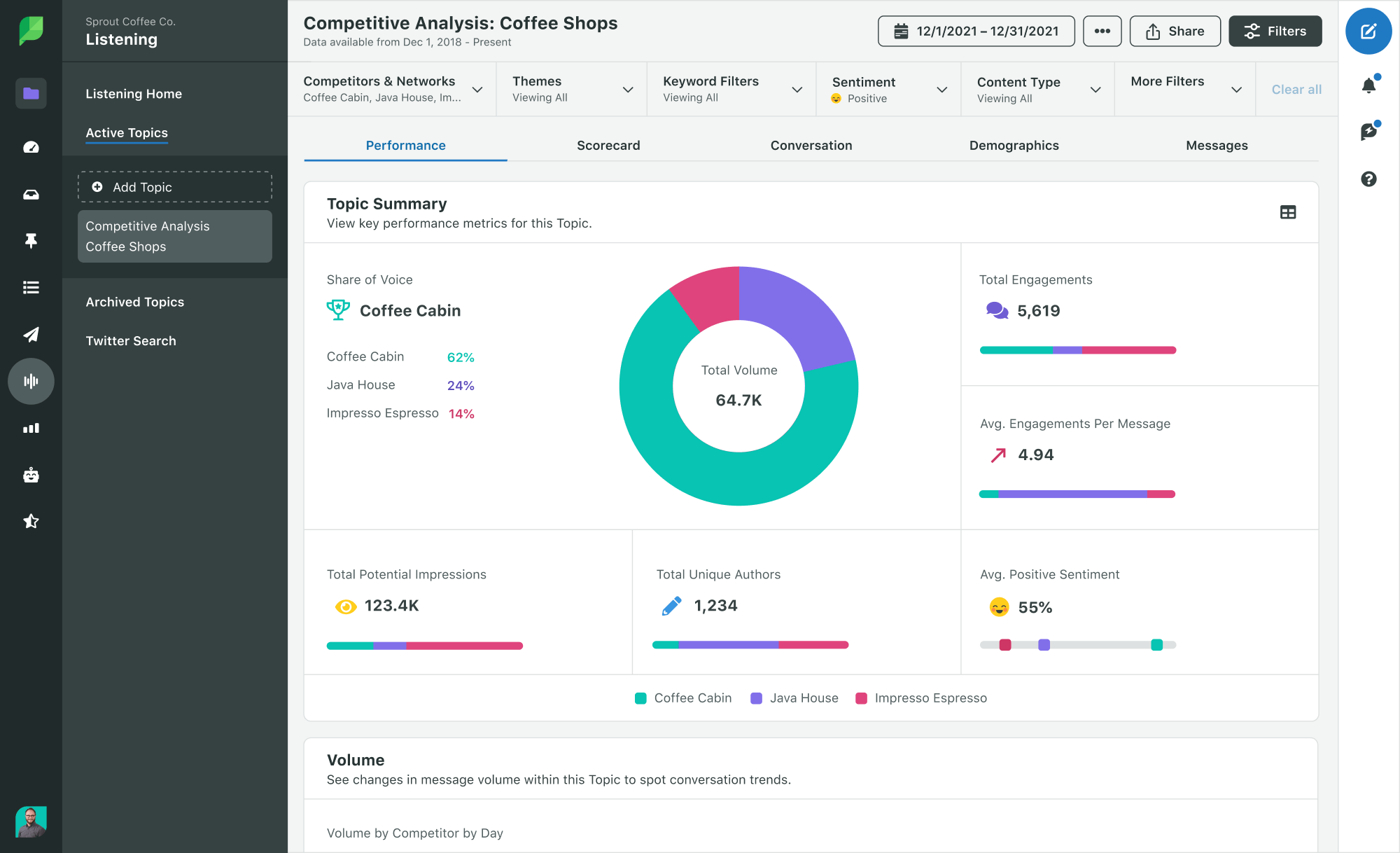
The Professional plan, priced at $299 per seat per month, remains Sprout Social’s most popular offering. It is engineered for marketing teams and agencies managing high-volume engagement across an unlimited number of social profiles. This tier moves beyond basic management into the realm of competitive benchmarking and paid social insights. By allowing teams to tag messages and implement formal approval workflows, the Professional plan ensures that large-scale campaigns remain on-brand and data-informed. The inclusion of competitor reporting allows brands to measure their performance against industry peers, a critical requirement for justifying social spend to executive leadership.
Advanced: Enterprise-Adjacent Customer Care
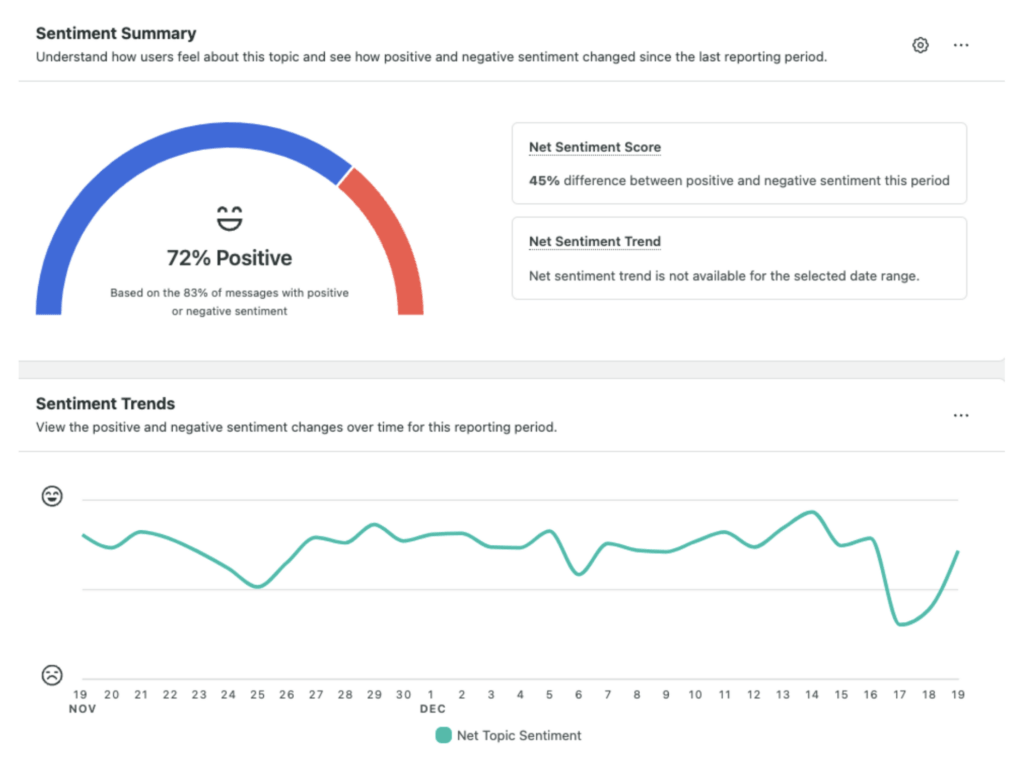
For organizations where social media serves as a primary customer care channel, the Advanced plan ($399 per seat per month) provides sophisticated intelligence tools. This tier includes sentiment analysis, which uses natural language processing to understand the emotional context of inbound messages. It also features "Message Spike Alerts," an early-warning system that notifies teams of sudden surges in brand mentions—a vital tool for crisis management. The Advanced plan integrates directly with major helpdesk platforms such as Salesforce Service Cloud and Zendesk, ensuring that social data flows seamlessly into the broader corporate CRM ecosystem.
Enterprise: Tailored Global Infrastructure
The Enterprise tier, which utilizes custom pricing, is reserved for global organizations with complex compliance, security, and integration needs. As of September 30, 2025, Sprout Social reported that its number of customers contributing over $50,000 in annual recurring revenue (ARR) grew to 1,947, a 21 percent increase year-over-year. This growth underscores the demand for "white-glove" service at the enterprise level, including dedicated implementation partners, Single Sign-On (SSO) setup, and tailored plan configurations.
Case Studies in Operational Efficiency
The impact of Sprout Social’s platform is evidenced by several high-profile customer success stories across various industries. These organizations have utilized the platform’s features to achieve radical improvements in response times and audience engagement.
Salesforce, a global leader in CRM, manages over 150 social channels through Sprout Social. By utilizing the Smart Inbox and automated reporting tools, the company reported saving 12,000 hours in its first year of implementation. Mikaely Quaranta, Senior Manager of Social Media Strategy at Salesforce, noted that the platform allowed the team to move ten times faster on community management, freeing up resources for creative and strategic initiatives.
Similarly, the restaurant chain Papa Johns consolidated its social customer care into the Sprout Social ecosystem. This move reportedly cut the company’s response time in half, allowing them to manage over 600 cases per week and saving approximately 830 hours annually. In the B2B sector, the payments platform pay.com.au utilized Sprout’s listening and reporting tools to increase its response rate from 20 percent to 98 percent within a single week of adoption.
Analysis: The Real Cost of "Cheaper" Alternatives
A central theme of Sprout Social’s recent announcement is the distinction between price and value. The company argues that lower-cost scheduling tools often result in hidden costs through lost productivity and missed opportunities. Free or entry-level tools generally lack the aggregate data and AI-driven insights necessary to connect social activity to broader business outcomes.
Industry analysts suggest that the "fragmentation" of social media tools—where a company uses one tool for scheduling, another for analytics, and a third for customer service—creates silos that hinder organizational agility. Sprout Social’s strategy focuses on consolidation. By offering a single platform that handles the entire social lifecycle, the company aims to reduce the "total cost of ownership" for its clients. The Forrester study supports this, noting that customers saved an average of $223,800 over three years by consolidating their social media management into Sprout’s unified platform.
Future Outlook and Market Implications
The expansion of Sprout Social’s AI capabilities, specifically the "AI Assist" features for enhancing posts and replies, signals a shift toward more automated, yet personalized, brand interactions. As AI continues to mature, the role of the social media manager is expected to evolve from a content creator to a "strategy orchestrator."
The steady growth in Sprout Social’s high-value customer base (those spending over $50,000 ARR) suggests that the market is moving away from experimental social media use toward a more mature, infrastructure-based approach. For global brands, the ability to integrate social data into legal, compliance, and procurement workflows is no longer optional.
In conclusion, Sprout Social’s updated pricing and the accompanying economic impact data present a compelling case for the strategic value of social media management. While the "sticker shock" of enterprise-level pricing may remain a consideration for some, the documented ROI of 268 percent suggests that for many organizations, the cost of not having a sophisticated management platform may far outweigh the subscription fees. As social media remains the primary battleground for brand reputation and customer loyalty, the demand for integrated, AI-powered management solutions is likely to continue its upward trajectory.