Tag: impact

  • Modernizing Enterprise UX: Navigating the Complexities of Legacy Systems for Sustainable Impact

    Modernizing Enterprise UX: Navigating the Complexities of Legacy Systems for Sustainable Impact

    The contemporary enterprise landscape is increasingly defined by the silent yet pervasive challenge of legacy systems. These deeply entrenched technological infrastructures, often operating for a decade or more, underpin critical daily operations despite being slow, unreliable, and severely outdated. While the drive for digital transformation and enhanced user experience (UX) gains momentum, many organizations grapple with the daunting task of improving systems that are effectively "black boxes"—essential yet poorly understood. This article, informed by practical guidelines from Vitaly Friedman’s "Measuring UX Impact" course, delves into strategies for driving significant UX improvements within organizations burdened by such legacy systems and their associated broken processes.

    The Enduring Presence and Cost of Legacy Infrastructure

    How To Improve UX In Legacy Systems — Smashing Magazine

    Legacy systems are not merely old software; they represent a complex amalgamation of historical investment, specialized customization, and often, undocumented knowledge. Many were developed externally by suppliers, frequently without the benefit of rigorous usability testing, and have become indispensable to core business functions. This deep integration is precisely why they persist: replacing them outright often presents an insurmountable financial and operational hurdle. Industry data consistently shows that enterprises allocate a substantial portion—typically 40% to 60%—of their IT budgets to simply managing, maintaining, and fine-tuning these aging systems. This substantial allocation represents not only a direct cost but also a significant opportunity cost, diverting resources that could otherwise be invested in innovation and new product development.

    Consider the operational impact: a system designed for an earlier era often struggles with modern data volumes, processing speeds, and user expectations. The individuals who initially conceived and built these systems may have long since departed, leaving behind fragmented documentation, inconsistent design choices, and design artifacts trapped in discontinued software versions. For instance, in healthcare, Electronic Medical Record (EMR) systems, while critical, are notorious for their complex, often unintuitive interfaces that can lead to physician burnout and errors. Similarly, financial institutions often rely on decades-old mainframe systems for core banking functions, whose underlying complexities make even minor UX updates a monumental undertaking. The sheer scale of replacing such systems across thousands of branches or user terminals, as seen with older cash register technologies, renders a complete overhaul remarkably expensive and disruptive.

    The User Experience Paradox: Modern Interfaces Clashing with Antiquated Backends

    How To Improve UX In Legacy Systems — Smashing Magazine

    The most visible manifestation of the legacy system challenge is the "Frankenstein" effect. Organizations often attempt to integrate modern, sleek user interfaces with these antiquated back-end systems. The result is a patchwork experience: visually appealing front-ends that abruptly transition into painfully slow, barely usable fragments when critical data processing, validation, or error messaging occurs. This inconsistency shatters user trust and significantly degrades the overall product experience.

    A single point of friction within a complex user flow—perhaps a sluggish database query, an obscure error message, or an unresponsive layout within a legacy module—can undermine all the meticulous design work applied to the rest of the application. Users, particularly those in corporate environments who rely on these systems daily, perceive the entire product as broken, irrespective of the enormous effort invested in modernizing other parts. This creates a deeply frustrating experience, impacting productivity, increasing training costs, and potentially leading to employee dissatisfaction and turnover. A CIO might lament, "We’ve invested heavily in digital transformation, but our core operational systems remain a drag on efficiency and user morale, creating a perception gap between our brand image and the reality of our internal tools."

    A Strategic UX Roadmap for Legacy Transformation

    How To Improve UX In Legacy Systems — Smashing Magazine

    Given the criticality and inherent complexities, simply "ripping out and replacing" a legacy system is rarely a feasible or advisable strategy. Such "big-bang" redesigns are not only expensive and time-consuming but also carry immense risks, potentially disrupting core business operations. Instead, a phased, strategic approach is essential, one that respects the existing institutional knowledge embedded within these systems and the deeply ingrained habits of their users.

    Phase 1: Comprehensive Discovery and Assessment

    The initial step in any legacy UX improvement initiative is a thorough understanding of the existing ecosystem. This phase is about illuminating the "black box" as much as possible, even if its internal workings remain opaque.

    How To Improve UX In Legacy Systems — Smashing Magazine
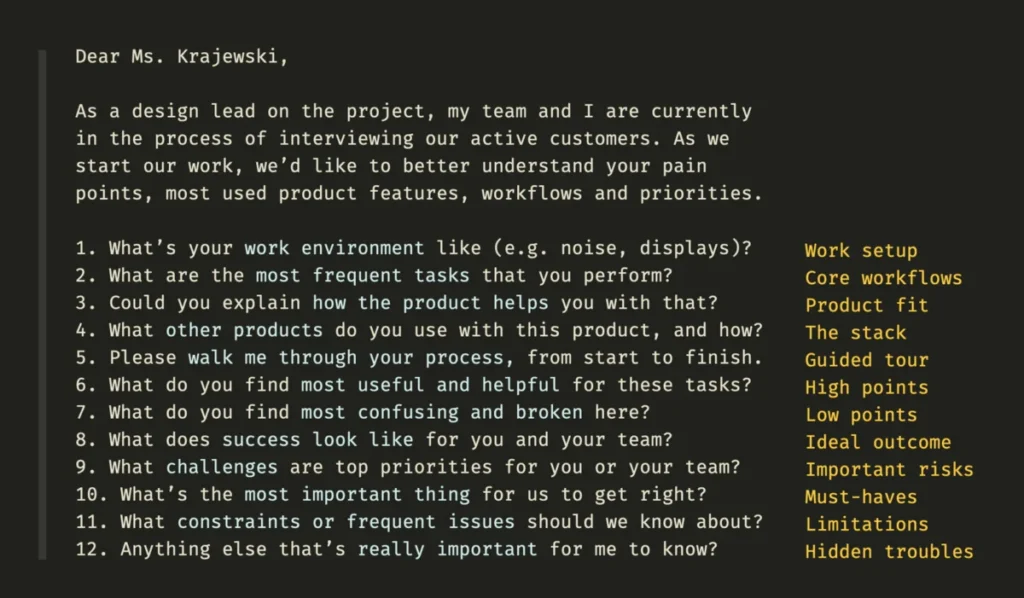
    • Stakeholder Interviews: Engage key stakeholders—business owners, department heads, IT leads—to understand their priorities, challenges, and perceived value of the legacy system. This helps capture invaluable institutional knowledge about the system’s purpose and its critical role in various business practices.
    • User Research and Ethnographic Studies: Critically, involve the heavy users of the system. Observe them in their natural work environment, noting their actual workflows, pain points, workarounds, and the frequency with which they use specific features. Usability testing on the existing legacy system, no matter how rudimentary, can reveal profound insights into user struggles and task completion difficulties. A long-term user might express, "It’s slow and clunky, but I know where everything is, and I’ve developed my own ways to get things done. I worry a new system will disrupt my entire day."
    • Technical Audit and Dependency Mapping: Work closely with IT to uncover the system’s architecture, data flows, and, crucially, its dependencies on other systems—which may themselves be older legacy components. Documenting these interconnections helps visualize the intricate web of relationships and identify potential ripple effects of any changes. A visual board mapping current workflows and dependencies, involving both technical and business teams, becomes an invaluable tool.
    • Feature and Priority Mapping: Not everything needs to be migrated or redesigned. Through discovery, identify critical features, frequently used workflows, and high-impact areas that are most ripe for UX improvement. A prioritization matrix, balancing user impact with technical feasibility and business urgency, is essential.

    Phase 2: Defining the Migration Strategy

    Once a comprehensive understanding is established, organizations must select an appropriate migration strategy. This choice dictates the scope, timeline, and ultimate UX impact. The goal is not just to migrate a system, but to transition workflows, habits, and ways of working.

    • Rehosting (Lift-and-Shift): Moving the application to a new cloud infrastructure without significant code changes. While offering minimal immediate UX improvements, it can lay the groundwork for future enhancements by improving performance and scalability.
    • Re-platforming: Modifying the application to optimize it for a new cloud platform, potentially involving minor code changes. This offers slightly more opportunity for UX tweaks to leverage new platform capabilities.
    • Refactoring: Restructuring and optimizing the existing code without altering its external behavior. This primarily improves maintainability and performance, which can indirectly enhance UX through faster load times and fewer errors.
    • Replacing: Discarding the old system entirely and building a new one from scratch. This is the most radical approach, offering the greatest potential for UX transformation, but also carrying the highest risk and cost. It is often implemented incrementally, replacing modules over time.
    • Retaining: Keeping the legacy system as is but building modern user interfaces or APIs around it to provide a more contemporary experience. This can be a cost-effective way to improve UX for specific interactions without touching the core legacy code.
    • Retiring: Decommissioning systems that are no longer needed, streamlining the IT landscape.

    The decision hinges on factors like business criticality, technical debt, budget, timeline, and the desired level of UX transformation. Incremental strategies, such as the "Strangler Fig" pattern where new functionality gradually replaces old, are often preferred to mitigate risk and allow for continuous user feedback.

    How To Improve UX In Legacy Systems — Smashing Magazine

    Phase 3: Incremental Implementation and Continuous Feedback

    The implementation phase should prioritize iterative development and constant engagement with users.

    • Pilot Projects: Initiate small, controlled pilot programs with a select group of users. This builds confidence, validates assumptions, and allows for real-world testing in a low-risk environment. A successful pilot can become a powerful internal case study, securing further buy-in.
    • Agile Development and Small Releases: Break down the transformation into manageable, testable chunks. Deploying small, iterative improvements allows for quick feedback loops and adaptation.
    • A/B Testing: Where applicable, test new UX elements or workflows against the existing legacy ones to gather empirical data on user preference and performance improvements.
    • User Training and Support: Anticipate the need for comprehensive training and ongoing support. Even well-designed changes can face resistance if users are not adequately prepared and supported.
    • Monitoring UX Metrics: Continuously track key performance indicators (KPIs) related to user experience, such as task completion time, error rates, user satisfaction scores, and productivity gains. This objective data is crucial for demonstrating the tangible impact of the UX work.

    Navigating Stakeholder Dynamics and Building Trust

    How To Improve UX In Legacy Systems — Smashing Magazine

    Transforming legacy systems is as much a people challenge as it is a technical one. Stakeholders and long-term users, despite acknowledging the system’s flaws, often harbor skepticism, doubts, and fears about change. They are deeply attached to existing workflows and institutional knowledge.

    • Strong Relationships and Shared Ownership: Building strong, trusting relationships with key stakeholders and heavy users from the outset is paramount. Involve them in discovery, design, and testing. Share ownership of the problem and the solution.
    • Transparent Communication: Regularly report progress, challenges, and successes. Address concerns proactively and transparently. Stakeholders will invariably focus on edge cases, exceptions, and tiny tasks, and they will question decisions. Be prepared to explain the rationale, demonstrate prototypes, and reiterate the benefits.
    • Managing Expectations: It is crucial to set realistic expectations. The new system will not run flawlessly from day one, and there will be a learning curve. Acknowledge the complexity and the journey ahead.

    The Strategic Imperative and Long-Term Value

    Revamping a legacy system is undeniably a tough challenge, often fraught with technical hurdles and organizational resistance. However, few projects within an enterprise can yield such profound and far-reaching impact. Beyond mere aesthetics, improved UX in legacy systems directly translates to:

    How To Improve UX In Legacy Systems — Smashing Magazine
    • Increased Efficiency and Productivity: Streamlined workflows and reduced error rates empower employees to accomplish tasks more quickly and accurately.
    • Reduced Operational Costs: Fewer support tickets, less manual intervention to correct errors, and optimized processes can significantly lower operational expenses.
    • Enhanced Employee Satisfaction and Retention: Providing modern, intuitive tools improves morale, reduces frustration, and makes an organization a more attractive place to work.
    • Greater Business Agility: Modernized systems are more adaptable to changing business requirements, market demands, and regulatory shifts, fostering greater organizational agility.
    • Competitive Advantage: Organizations that successfully modernize their core systems can outmaneuver competitors burdened by antiquated, inefficient technologies.

    In essence, a successful legacy UX transformation is a critical enabler of digital transformation, unlocking new levels of organizational performance and employee empowerment. While the journey is arduous, the teams that navigate it successfully are often remembered, respected, and rewarded for years to come, having delivered foundational improvements that drive sustainable business value. For those embarking on this journey, resources like "Measure UX & Design Impact" offer practical guidance on how to track and visualize the incredible impact of UX work on business outcomes, turning challenges into strategic triumphs.

  • WhatsApp Marketing for Small Business: A Strategic Guide to High-Impact Conversational Commerce

    WhatsApp Marketing for Small Business: A Strategic Guide to High-Impact Conversational Commerce

    The landscape of digital engagement is undergoing a fundamental shift as small businesses move away from the saturated environments of traditional social media feeds and toward the intimacy of direct messaging. According to the 2026 Social Media Content Strategy Report, 46% of marketers are actively increasing their investment in WhatsApp this year, identifying it as a critical channel for capturing high-intent users. While many smaller enterprises initially utilized the application as a simple customer service inbox, the current trend indicates a transition toward using the platform to facilitate the entire customer journey, from initial product discovery to post-purchase loyalty.

    The Evolution of Conversational Marketing

    WhatsApp marketing involves the strategic use of the WhatsApp Business app or the WhatsApp Business Platform (API) to promote products, provide customer support, and facilitate sales through direct, one-on-one communication. As a text-first powerhouse, WhatsApp has secured its position as the second most popular network for text-driven social media, accounting for 26% of all such interactions globally. This environment is uniquely suited for conversational marketing—a model that prioritizes real-time dialogue over static broadcasting.

    The platform’s utility is divided into two distinct tiers. The WhatsApp Business App is designed for local, small-scale operations, allowing for a single-user interface and basic automation. Conversely, the WhatsApp Business Platform (API) is engineered for scaling enterprises, offering multi-user access, integration with Customer Relationship Management (CRM) systems, and advanced chatbot capabilities. This dual-track approach ensures that as a small business grows, its communication infrastructure can evolve in tandem.

    Global Adoption and Market Data

    The decision to pivot toward WhatsApp is backed by significant consumer behavior data. WhatsApp currently ranks as the fourth most utilized social platform globally, boasting over 2 billion active users. However, its dominance is even more pronounced in specific regional markets. In the United Kingdom, for instance, it is the premier social platform with an 81% usage rate. In the United States, while the usage rate sits at approximately 52%, the platform records the highest weekly brand interaction frequency, with 85% of users engaging with businesses on a weekly basis.

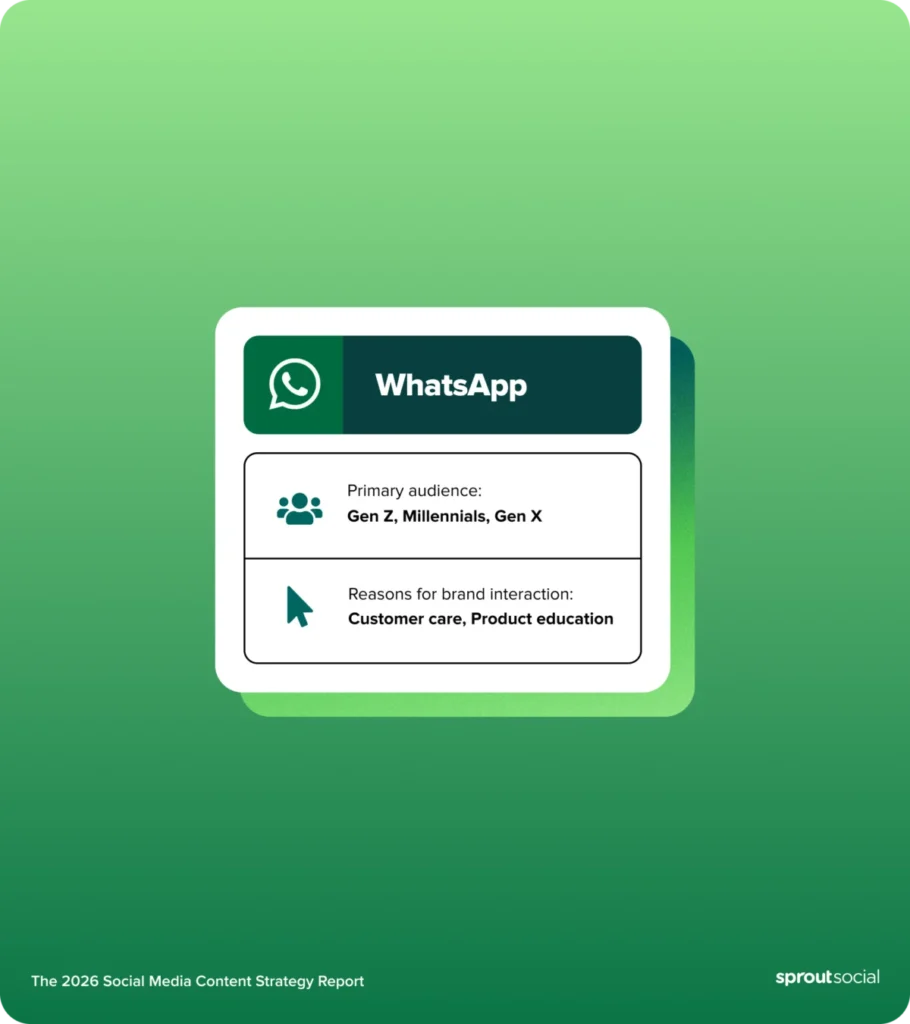
    Data from the Q2 2025 Consumer Pulse Survey Analysis indicates that the platform’s primary audience consists of Gen Z, Millennials, and Gen X, representing the most economically active consumer demographics. Furthermore, 49% of global users interact with brands on the network multiple times per week. In the UK, this engagement is even more frequent; 31% of consumers report contacting brands via WhatsApp multiple times per day.

    The efficiency of the platform is largely attributed to its high open rates. Unlike email marketing, which often suffers from low visibility due to spam filters and overcrowded inboxes, WhatsApp messages are typically read within minutes of delivery. This "stickiness" creates a high-trust environment where businesses can bypass algorithmic noise and reach the customer’s most personal digital space.

    Operational Chronology: From Setup to Scaling

    For a small business to successfully integrate WhatsApp into its marketing mix, a structured chronological approach is required to ensure compliance and brand consistency.

    WhatsApp marketing for small business: Strategies that work

    Phase 1: Establishing the Foundation

    The initial stage involves the creation of a professional Business Profile. Unlike a personal account, a Business Profile includes essential metadata: business description, category, email address, website, and physical location. This transparency is vital for building trust. During this phase, businesses must also prepare their digital assets, such as high-quality profile photos and a synchronized product catalog.

    Phase 2: Compliance and Opt-in Collection

    WhatsApp maintains strict policies regarding unsolicited messaging. Businesses must establish an explicit opt-in flow before initiating promotional broadcasts. Common methods for gathering consent include adding a "Message Us" button to the company website, utilizing "Click-to-WhatsApp" ads on Facebook and Instagram, and including QR codes on physical packaging or in-store signage. Documenting these opt-ins with dates and methods is a critical step for maintaining regulatory compliance.

    Phase 3: Automation and Workflow Optimization

    Once the audience is established, small teams must implement automation to manage message volume. Key features include:

    • Quick Replies: Pre-saved responses for frequently asked questions, such as shipping times or return policies.
    • Away Messages: Automated notifications that manage customer expectations during non-business hours.
    • Labels and Tags: Visual organization tools that categorize customers by status (e.g., "New Lead," "Pending Payment," or "VIP").
    • Catalogs and Collections: An in-app storefront that allows customers to browse products without leaving the chat interface.

    Strategic Segmentation and Campaign Management

    A one-size-fits-all approach is generally ineffective on a platform as personal as WhatsApp. Successful small businesses utilize audience segmentation to ensure relevance. Data suggests that segmenting by purchase history, geographic location, and engagement level significantly improves conversion rates.

    The Lifecycle of a WhatsApp Campaign

    A high-impact marketing plan typically follows a defined journey:

    1. The Welcome Journey (Days 1–7): Introducing the brand and providing an initial incentive, such as a discount code, to drive the first purchase.
    2. The Abandoned Cart Sequence (2–72 Hours): Recovering lost sales by sending reminders to users who left items in their digital carts. High-intent messages sent within the first four hours have the highest recovery rates.
    3. The Post-Purchase Journey (Immediate – Day 14): Building trust through order tracking updates and requesting feedback or reviews.
    4. The Re-engagement Journey (Weeks 1–4): Winning back inactive customers with exclusive "miss you" offers or updates on new product arrivals.

    Comparative Analysis: Business App vs. API

    For many small teams, the choice between the free Business App and the paid API is a pivotal strategic decision. The Business App is sufficient for teams of fewer than five people and is ideal for freelancers or local startups. It requires no technical setup and offers essential tools like catalogs and broadcast lists.

    However, industry analysts suggest that businesses should transition to the API when they encounter specific "friction points." These include the need for more than five team members to access the inbox simultaneously, a requirement to integrate with an existing CRM (like Salesforce or HubSpot), or the need to send high-volume broadcasts to more than 256 contacts at once. The API unlocks the ability to use "Quick Reply" buttons and interactive list messages, which significantly lower the barrier for customer response.

    Measuring Return on Investment (ROI)

    The success of WhatsApp marketing is measured through a combination of engagement metrics and revenue attribution.

    WhatsApp marketing for small business: Strategies that work

    Delivery and Read Rates

    Businesses should aim for a delivery rate above 95% and a read rate exceeding 90%. A drop in these metrics often indicates "message fatigue," suggesting that the frequency of communication is too high or the content is no longer relevant to the audience.

    Click-Through and Response Rates

    For messages containing links, a 20–30% click-through rate (CTR) is considered the industry benchmark for product-related content. Response rates provide insight into the effectiveness of the "Call to Action" (CTA). Clear, singular instructions—such as "Reply YES to confirm"—outperform messages with multiple competing options.

    Revenue Attribution

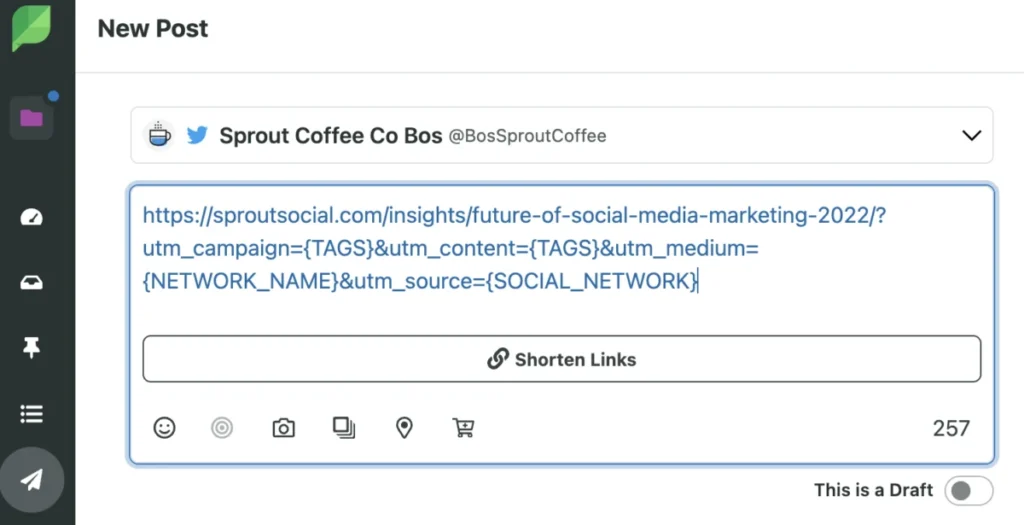
    Small businesses can track the financial impact of WhatsApp through unique discount codes, UTM-tracked links, and direct sales facilitated via the in-app catalog. Beyond direct sales, the platform’s impact on customer service efficiency is a significant factor in ROI. By resolving inquiries via WhatsApp, businesses can reduce the cost of phone-based support and improve overall customer satisfaction scores (CSAT).

    Broader Implications and Future Outlook

    The rise of WhatsApp marketing reflects a broader shift toward "social commerce," where the boundaries between social interaction and financial transactions are increasingly blurred. For small businesses, this platform offers a leveling of the playing field, allowing them to provide a "white-glove" personalized experience that was previously the domain of luxury brands with large customer service departments.

    As we move toward 2026, the integration of Artificial Intelligence (AI) within the WhatsApp Business Platform is expected to further transform the sector. Small teams will increasingly use AI-driven chatbots to handle routine inquiries, allowing human agents to focus on high-value sales conversations. Furthermore, the expansion of WhatsApp Pay in markets like Brazil and India hints at a future where the entire transaction—from discovery to payment—occurs within a single encrypted chat thread.

    In conclusion, WhatsApp marketing is no longer a peripheral strategy but a central pillar of modern small business operations. By combining high-trust communication with automated efficiency, small enterprises can build lasting relationships with their customers in the space they value most. The transition from reactive messaging to a proactive, data-driven marketing engine represents the next frontier for small business growth in an increasingly digital economy.

  • The State of Marketing Automation in 2024 and Beyond Industry Growth Adoption Trends and Strategic Impact

    The State of Marketing Automation in 2024 and Beyond Industry Growth Adoption Trends and Strategic Impact

    The marketing technology landscape is undergoing a profound transformation as businesses increasingly pivot toward automated solutions to manage the complexity of the modern digital ecosystem. Marketing automation, once a specialized tool for enterprise-level corporations, has evolved into a foundational component of the marketing tech stack for organizations of all sizes. By leveraging software to automate repetitive tasks—ranging from email sequencing and social media scheduling to complex lead scoring and multi-channel campaign management—companies are realizing significant gains in operational efficiency and customer engagement. As of 2024, the industry is positioned at a critical juncture where artificial intelligence and machine learning are merging with traditional automation frameworks to redefine how brands interact with their audiences.

    Market Revenue and Industry Growth Projections

    The economic footprint of the marketing automation industry reflects its growing necessity within the global business framework. Market analysts and industry data indicate a consistent upward trajectory in worldwide revenue, signaling that investment in these technologies is not merely a trend but a long-term strategic shift. In 2021, the global marketing automation market was valued at approximately $4.79 billion. By 2022, this figure grew to $5.19 billion, followed by a jump to $5.86 billion in 2023.

    15 Key Marketing Automation Statistics

    Current projections for 2024 estimate the market size at $6.62 billion, representing a robust year-over-year growth rate. This momentum is expected to accelerate as businesses seek to integrate disparate data sources into unified platforms. By 2026, spending is anticipated to reach $8.44 billion, eventually crossing the $10 billion threshold by 2028. Long-term forecasts are even more aggressive, with the market expected to hit $17.2 billion by 2031 and reach a staggering $21.7 billion by 2032. This nearly five-fold increase from 2021 levels underscores the total digital transformation of the marketing sector, driven by the need for hyper-personalization at scale.

    Evolution of Marketing Automation: A Brief Chronology

    The journey to the current $6.6 billion market has been marked by several distinct eras of technological advancement. Understanding this timeline provides essential context for the current statistics:

    • The Early Era (1990s – Early 2000s): The inception of the industry was characterized by basic email marketing tools and the birth of CRM (Customer Relationship Management) systems. These tools were primarily reactive and required significant manual oversight.
    • The Integration Era (2010 – 2018): Platforms like HubSpot, Marketo, and Pardot began to consolidate features, allowing marketers to link social media, landing pages, and email into a single workflow. This era saw the rise of inbound marketing as a dominant strategy.
    • The Intelligence Era (2019 – Present): The current phase is defined by the integration of Artificial Intelligence (AI). Modern platforms no longer just follow "if-then" rules; they use predictive analytics to determine the best time to send a message, the most effective subject lines, and the likelihood of a lead to convert.

    Shifting Budgets and Marketer Sentiment

    The financial commitment of marketing departments serves as a primary indicator of the technology’s perceived value. Data regarding budget allocations for 2024 reveals a strong consensus: marketing automation is a high-priority investment. Approximately 68% of marketers report that they are increasing their automation budgets. Specifically, 14% of respondents plan to increase spending significantly, while 54% anticipate moderate increases.

    15 Key Marketing Automation Statistics

    Conversely, only 11% of marketers expect to decrease their spending, with a mere 2% planning significant cuts. About 21% intend to keep their budgets stable. This widespread willingness to allocate more capital toward automation suggests that the Return on Investment (ROI) of these platforms has been proven across various sectors, even in a fluctuating global economy. Industry experts suggest that as labor costs rise, companies are looking to automation to maintain output without proportionally increasing their headcount.

    Current Adoption Rates and Channel Usage

    While the term "marketing automation" covers a broad spectrum of activities, adoption is not uniform across all channels. Email marketing remains the most dominant application, with 58% of marketers utilizing automation for their email campaigns. This is followed closely by social media management at 49%, where tools are used to schedule posts and monitor engagement across multiple platforms simultaneously.

    Other significant areas of adoption include:

    15 Key Marketing Automation Statistics
    • Content Management: 33%
    • Paid Advertisements: 32%
    • SMS Marketing: 30%
    • Campaign Tracking: 28%
    • Landing Pages: 27%

    Interestingly, there is a gap between current usage and planned adoption. For instance, while only 32% currently automate their paid ads, 29% of marketers plan to implement automation in this area in the near future. Similarly, social media management is a top priority for upcoming automation projects (29%). These figures indicate that while email is the "mature" segment of the market, the next wave of growth will come from paid media and mobile-first channels like SMS and push notifications.

    Strategic Goals and the Quest for Data Quality

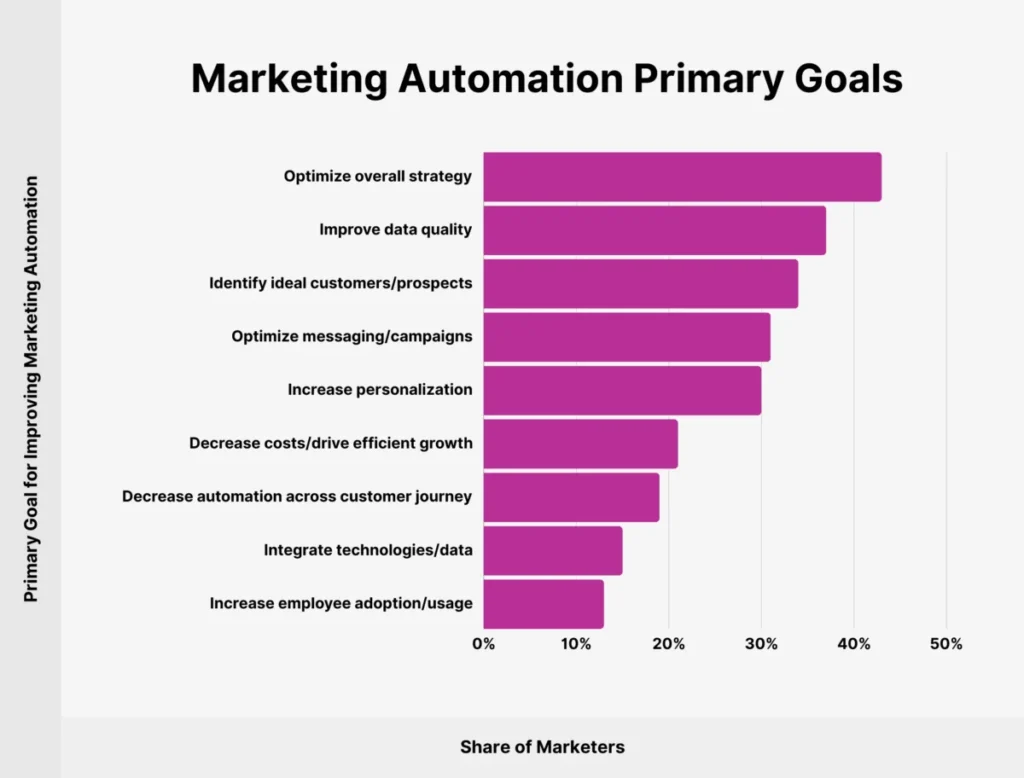
    The primary motivation for implementing marketing automation has shifted from simple "time-saving" to more complex strategic objectives. According to recent surveys, the top goal for improving marketing automation is to optimize the overall marketing strategy, cited by 43% of professionals. This suggests that marketers are no longer looking for siloed tools but for platforms that can inform their broader business decisions.

    The second most common goal is improving data quality (37%). In an era of strict privacy regulations like GDPR and CCPA, and the phasing out of third-party cookies, having high-quality, first-party data is essential. Automation platforms serve as the "source of truth" for customer interactions, helping to clean and organize data that would otherwise be fragmented. Other key goals include:

    15 Key Marketing Automation Statistics
    • Identifying Ideal Customers/Prospects: 34%
    • Optimizing Messaging/Campaigns: 31%
    • Increasing Personalization: 30%
    • Driving Efficient Growth/Decreasing Costs: 21%

    The Customer Journey and Automation Depth

    A critical metric for the success of these platforms is how effectively they manage the customer journey. However, the data reveals that "full automation" is still a rarity. Only 9% of marketers describe their customer journey as "fully automated." The vast majority (59%) report being "partially automated," while 32% are "mostly automated."

    Despite the lack of total automation, there is high satisfaction with the capabilities of modern platforms. 89% of marketers agree (30% strongly, 59% somewhat) that their marketing automation platform makes it easy to build effective customer journeys. The bottleneck appears not to be the software itself, but rather the complexity of designing multi-channel strategies that feel seamless to the end user. Only 5% of organizations have fully automated their multi-channel marketing strategies, while 22% have not automated them at all, highlighting a significant opportunity for growth in the mid-market and enterprise segments.

    Procurement Drivers: What Influences the Purchase Decision?

    When organizations enter the market for a new automation solution, their priorities are clear and pragmatic. Price remains the leading factor, influencing 58% of purchase decisions. However, "Ease of Use" is a very close second at 54%. This reflects a common pain point in the industry: sophisticated software is useless if the marketing team cannot navigate it without constant help from IT.

    15 Key Marketing Automation Statistics

    Other influential factors include:

    • Customer Service: 27%
    • Customization Options: 24%
    • Integration Capabilities: 22%
    • Breadth and Depth of Features: 21% and 19% respectively
    • Data Visualization and Analytics: 13%

    The emphasis on ease of use and customer service suggests that "human" factors remain vital in the software-as-a-service (SaaS) industry. Companies are looking for partners, not just vendors, to help them navigate the complexities of implementation and onboarding.

    Quantifiable Benefits and Business Impact

    The benefits of marketing automation extend beyond the marketing department and impact the entire organization’s bottom line. The most cited advantage is the improvement of the customer experience (43%). By delivering the right message at the right time, automation reduces friction in the buying process and fosters brand loyalty.

    15 Key Marketing Automation Statistics

    Efficiency gains are also a major driver, with 38% of marketers stating that automation enables better use of staff time. By removing manual data entry and repetitive tasks, employees can focus on high-level creative and strategic work. Furthermore, 35% of respondents noted that automation leads to better data and decision-making, while 34% saw improvements in lead generation and nurturing. From a fiscal perspective, 33% of marketers believe automation allows for better use of the overall marketing budget by identifying and doubling down on the most effective channels.

    Broader Implications and Future Outlook

    The data presented paints a picture of an industry that is both maturing and expanding. As marketing automation moves toward the $21 billion mark over the next decade, several key implications emerge. First, the divide between "automated" and "manual" businesses will likely widen, with the former enjoying a significant competitive advantage in terms of speed-to-market and personalization.

    Second, the role of the marketer is evolving. The demand for "MarTech" specialists who can bridge the gap between creative strategy and technical execution is at an all-time high. Finally, the integration of AI will likely solve the current "partial automation" dilemma, allowing for more dynamic, self-optimizing customer journeys that require less manual configuration.

    15 Key Marketing Automation Statistics

    In conclusion, marketing automation has moved past the early adoption phase and is now a critical engine for business growth. With nearly 70% of marketers increasing their budgets and a clear roadmap toward multi-billion dollar revenues, the industry is set to remain a cornerstone of the global digital economy. Organizations that successfully navigate the challenges of data quality and ease of use will be best positioned to capitalize on these technological advancements, ultimately delivering a superior experience to their customers.

Grafex Media
Privacy Overview

This website uses cookies so that we can provide you with the best user experience possible. Cookie information is stored in your browser and performs functions such as recognising you when you return to our website and helping our team to understand which sections of the website you find most interesting and useful.