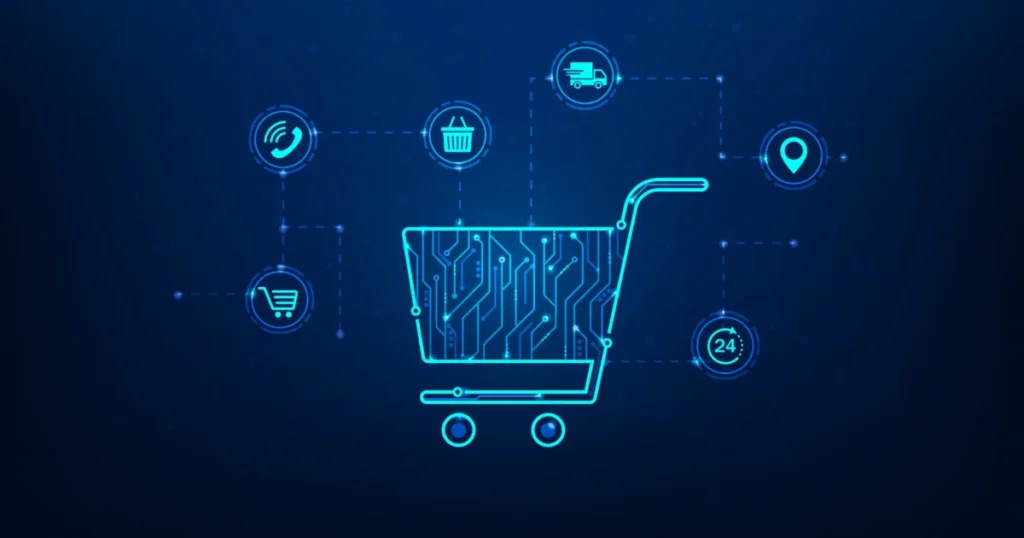

Ecommerce is undergoing its most radical transformation since the advent of the mobile smartphone, moving into a phase where transactions occur entirely off-site and traditional website visits become optional. This shift, known as agentic commerce, allows artificial intelligence agents to manage the entire customer journey—from initial product discovery and research to final checkout and post-purchase support—without the consumer ever clicking through to a retailer’s homepage. For decades, the digital economy has been built on the "traffic-first" model, where success is measured by the number of users landing on a site. However, as AI protocols from industry giants like Google and OpenAI gain traction, the traditional SEO and ecommerce playbooks are becoming increasingly obsolete.
The emergence of agentic commerce represents a departure from "assisted shopping" toward "autonomous execution." In this new landscape, AI does not merely suggest products; it acts as a proxy for the consumer. This requires a fundamental reconfiguration of how product data is structured, shared, and synchronized across the web. If ecommerce teams continue to prioritize aesthetic content over technical data "plumbing," they risk becoming invisible to the very agents that will soon control a significant portion of global consumer spending.
A Chronology of the Agentic Shift
The timeline of agentic commerce has moved with unprecedented speed, characterized by rapid experimentation and protocol development by the world’s leading technology firms. The foundation was laid in late 2025, and by early 2026, the competitive landscape had already seen major pivots.
In September 2025, OpenAI and the payment processing giant Stripe announced the Agentic Commerce Protocol (ACP). This initial framework allowed ChatGPT users to research products and complete single-item transactions directly within the chat interface using "Instant Checkout." This move signaled OpenAI’s intent to turn its AI into a direct transactional hub, bypassing the traditional search engine-to-website pipeline.
By January 2026, Google responded by unveiling the Universal Commerce Protocol (UCP). Unlike OpenAI’s initial focus on single transactions, Google’s UCP was designed as an open standard covering the full shopping lifecycle. It integrated discovery, buying, and post-purchase support into the Google Gemini ecosystem. Google’s approach emphasized a "standardized language" for commerce, allowing AI agents to communicate seamlessly with a retailer’s backend systems.
The market shifted again in March 2026. OpenAI announced a strategic pivot, backing away from its "Instant Checkout" feature in favor of a deeper focus on product discovery. The company cited a need for greater "flexibility," allowing retailers to integrate their own bespoke checkout experiences rather than forcing a standardized OpenAI-managed transaction. Simultaneously, Google rolled out a major update to UCP, introducing advanced catalog capabilities and full shopping cart support. This update also introduced "Identity Linking," a feature that allows AI agents to access a customer’s loyalty benefits and personalized pricing, effectively acting as a digital twin for the shopper.
The Technical Mechanics of Agentic Transactions
To understand why this shift is so disruptive, one must look at the mechanics of how AI agents "see" products. Unlike traditional search engines, which crawl and index human-readable content on a webpage to determine rankings, agentic commerce protocols rely almost exclusively on structured data feeds and on-page schema.
Agentic commerce is not a content optimization problem; it is a data infrastructure problem. The AI agents function as conduits, piping raw product data from the merchant to the consumer. For a transaction to be successful, the agent requires real-time accuracy regarding inventory, shipping, and returns. If a retailer’s data is stale—for instance, if an item is listed as "in stock" but is actually sold out—the AI agent records a failed transaction. Over time, these failures degrade the "reliability signal" of the merchant, leading the AI to favor more trustworthy competitors in future recommendations.
Furthermore, these protocols maintain the retailer as the "merchant of record." This distinguishes agentic commerce from traditional marketplaces like Amazon or the Apple Store. In the agentic model, Google or OpenAI are not reselling the products; they are providing the interface through which the retailer sells. This preserves the retailer’s direct relationship with the customer’s payment but places the burden of data accuracy entirely on the merchant’s shoulders.
Research Findings: The Crisis of Readiness
Despite the clear trajectory of the industry, recent research suggests that the world’s top retailers are largely unprepared for the agentic era. An audit of 207 high-traffic product detail pages (PDPs) across 29 major brands revealed a significant gap between current SEO success and agentic readiness.
While nearly 100% of the audited pages successfully implemented basic schema—such as product names, descriptions, and images—they failed significantly on the advanced fields required by Google’s UCP and OpenAI’s ACP. The research focused on three critical signals: merchantReturnDays, shippingDetails, and priceValidUntil. These fields are essential because an AI agent cannot complete a purchase on behalf of a user if it does not know the return window or the exact shipping costs.
The findings were stark:
- 70% of top-performing PDPs missed all three of the most important agentic attributes.
- 65% of retailers did not include a Global Trade Item Number (GTIN) in their schema. Without a GTIN, AI agents cannot perform price comparisons or recognize that a product sold by Retailer A is the same as the one sold by Retailer B.
- 15% of the audited sites were completely invisible to AI agents. These brands used aggressive bot-blocking defenses (returning 403 Forbidden errors) that, while intended to stop scrapers, also prevented AI commerce agents from accessing the data necessary to facilitate sales.
The audit also highlighted a platform-agnostic reality. High scores were not tied to specific ecommerce platforms like Shopify or custom builds. Instead, they were the result of configuration. Brands that succeeded, such as Uplift Desk and Carbon38, had simply updated their schema templates to expose additional data fields that already existed in their backend systems.
The Decline of Category-Based SEO
For thirty years, the "Category Page" (or Product Listing Page) has been the cornerstone of ecommerce SEO. These pages, which group items like "men’s running shoes" or "floral dresses," typically attract ten times more organic traffic than individual product pages. Consequently, SEO teams have spent decades optimizing category content, internal linking, and headers to win the ranking war.
However, agentic commerce largely ignores category pages. AI agents do not "browse" a list of links; they query structured data at the individual product level to find a specific match for a user’s prompt. A retailer might rank number one on Google Search for "wax jackets," but if their individual product pages lack the necessary schema, an AI agent will bypass them entirely to recommend a competitor whose data is more accessible. This shifts the focus of SEO from "broad visibility" to "granular precision."
Strategic Implications: Moving Toward Supply Chain Thinking
To survive the transition to agentic commerce, retailers must move beyond traditional marketing mindsets and adopt what can be described as "supply chain thinking" for their data. This requires a cross-functional approach involving the CMO, CTO, and supply chain managers.
First, the product feed must be treated as essential infrastructure rather than a side project for ad campaigns. Historically, product feeds were used for dynamic remarketing ads, where a name and an image were sufficient because the ad’s goal was to drive the user back to the website. In agentic commerce, the feed is the storefront. It must be exhaustive, including every variable from shipping speeds to warranty details.
Second, inventory accuracy must reach near-real-time levels. The reliability of a merchant in the eyes of an AI agent depends on the success rate of the transactions it facilitates. Retailers must synchronize their Enterprise Resource Planning (ERP) and Inventory Management Systems (IMS) with their web schema with sub-minute granularity.
Third, the role of the CMO is evolving. The marketing lead must now advocate for backend technical debt reduction at the board level. They must demonstrate that "data plumbing"—the seamless flow of information from the warehouse to the AI agent—is now a primary driver of ROI. As AI agents begin to utilize "Identity Linking" to apply personalized discounts and loyalty points, the complexity of this data exchange will only grow.
Broader Impact on the Digital Economy
The rise of agentic commerce suggests a future where the "Open Web" may become a secondary layer to a "Protocol Web." If consumers migrate their shopping habits to AI interfaces, the value of a website’s aesthetic design and user experience (UX) may diminish, while the value of its data integrity and API performance will skyrocket.
This shift also raises questions about the competitive landscape. Smaller retailers who are agile enough to update their technical infrastructure may find themselves on equal footing with retail giants who are slowed by legacy systems. Conversely, the "Protection Paradox"—where brands block bots to protect their data but inadvertently hide from AI buyers—could lead to a new form of digital isolation for premium brands.
In conclusion, the era of agentic commerce is not a distant prospect; it is a current reality that is rapidly scaling. The winners in this new phase of ecommerce will not be the brands with the most creative copy or the highest ad spend. They will be the retailers who make their products the easiest for an AI agent to understand, verify, and purchase. The transition from a "traffic-first" world to an "agent-first" world is underway, and for the unprepared, the cost of invisibility will be absolute.