
Tag: SEM

  • How to Optimize Product Pages for AI Search Visibility: A Comprehensive Guide for Ecommerce Brands

    How to Optimize Product Pages for AI Search Visibility: A Comprehensive Guide for Ecommerce Brands

    The global retail landscape is currently undergoing its most significant technological transformation since the advent of the World Wide Web. As generative artificial intelligence (AI) begins to dominate the digital interface, the traditional mechanics of product discovery are being fundamentally rewritten. Recent market research highlights a dramatic shift in consumer behavior: approximately 58% of shoppers now utilize generative AI tools, such as ChatGPT, Perplexity, and Google’s AI Mode, as their primary method for product discovery, often bypassing traditional search engines entirely. Furthermore, data from Capgemini indicates that 71% of consumers explicitly desire generative AI to be integrated into their shopping experiences, signaling a move toward "agentic commerce" where AI assistants act as intermediaries between the brand and the buyer.

    How to Optimize Your Product Pages for AI Visibility

    For ecommerce brands, this shift presents a critical challenge: the "black box" of AI recommendations. Unlike traditional search engine optimization (SEO), which relies on keywords and backlink profiles, AI-driven search—often referred to as Answer Engine Optimization (AEO) or Generative Engine Optimization (GEO)—prioritizes semantic relevance, contextual accuracy, and third-party consensus. When a user asks an AI for the "best winter jackets for women," the system does not return a list of links; it provides a synthesized response featuring specific product recommendations, pricing, material details, and a summary of user sentiment. To remain visible in this new ecosystem, brands must transition from optimizing for algorithms to optimizing for Large Language Models (LLMs).

    How to Optimize Your Product Pages for AI Visibility

    The Evolution of the Search Paradigm

    To understand the necessity of AI optimization, one must view the chronology of digital retail. In the early 2000s, search was purely transactional and keyword-based. By the 2010s, Google’s Knowledge Graph introduced entities and relationships, allowing for more "intelligent" results. Today, we have entered the era of semantic retrieval. LLMs do not simply match words; they infer intent. They analyze the relationship between a product’s specifications and a user’s specific life scenario.

    How to Optimize Your Product Pages for AI Visibility

    This evolution means that a product page is no longer just a digital brochure; it is a data source for AI training and retrieval. If an AI cannot confidently parse the information on a page, it will ignore the product entirely. Industry analysts suggest that the products surfaced by AI are those that offer the highest "confidence scores" across two primary vectors: semantic relevance (how well the product fits the query) and consensus signals (how much the internet trusts the product).

    How to Optimize Your Product Pages for AI Visibility

    Six Essential Pillars of AI-Friendly Product Pages

    To secure a position in AI-generated recommendations, ecommerce enterprises must refine their product pages to meet the specific requirements of LLM processing. This involves a combination of linguistic clarity, technical infrastructure, and social proof.

    How to Optimize Your Product Pages for AI Visibility

    1. Semantic Language and Contextual Descriptions

    Traditional SEO often led to "keyword stuffing," where phrases were repeated to satisfy search crawlers. AI models, however, utilize semantic retrieval to understand the meaning behind a query. For instance, if a consumer searches for a "vacuum for pet hair," an LLM looks beyond that specific phrase. It seeks related concepts such as "suction power for dander," "anti-tangle brush rolls," "HEPA filtration for allergens," and "performance on high-pile carpets."

    How to Optimize Your Product Pages for AI Visibility

    Brands must incorporate this natural, problem-solving language into their descriptions. By analyzing community discussions on platforms like Reddit or specialized forums, brands can identify the specific vocabulary consumers use to describe their pain points. Integrating these semantic terms allows an AI to infer that a product is the ideal solution for a highly specific user request.

    How to Optimize Your Product Pages for AI Visibility

    2. Real-Time Data Integration via Feeds and APIs

    Recency is a major factor in AI confidence. LLMs frequently cross-reference web data with merchant feeds to ensure they are not recommending out-of-stock items or incorrect prices. Stale data is a significant deterrent for AI recommenders. To combat this, leading brands are utilizing Shopify’s Catalog API, OpenAI’s Product Feed Spec, and Google’s Merchant Center. These tools provide a direct line of "truth" to the AI, ensuring that when a shopper asks for a "sofa under $1,000 available for delivery in Boston," the AI can verify the inventory and price in real-time.

    How to Optimize Your Product Pages for AI Visibility

    3. The Synthesis of Ratings and Reviews

    AI models do more than just display a star rating; they read and summarize the text of thousands of reviews to identify recurring themes. OpenAI has confirmed that its shopping research tools often surface "pros and cons" pulled directly from user feedback. If a product is frequently praised for being "lightweight" but criticized for "short battery life," the AI will include these nuances in its conversational response. Brands must encourage detailed, attribute-specific reviews and display them in a structured format that AI crawlers can easily ingest.

    How to Optimize Your Product Pages for AI Visibility

    4. Contextual Use Cases and Scenario-Based Marketing

    AI search thrives on specificity. A vague description such as "high-quality charger" is less likely to be recommended than one that specifies "ultra-compact 3-in-1 charger optimized for international travel and carry-on restrictions." Brands should shift their marketing focus from "what the product is" to "when and why someone needs it." By identifying the "triggers" for a purchase—such as a specific hobby, a weather event, or a life milestone—and explicitly mentioning them on the product page, brands help the AI match the product to the user’s situational intent.

    How to Optimize Your Product Pages for AI Visibility

    5. Third-Party Validation, Awards, and Certifications

    Trust is the currency of AI recommendations. LLMs are programmed to avoid "hallucinations" and unreliable claims. Consequently, they prioritize products that have been verified by reputable third parties. An analysis of 50 leading ecommerce brands revealed that 82% of those with high AI visibility prominently featured awards or certifications on their pages. Whether it is a "Best of 2024" award from a major publication, a safety certification (like UL or CE), or a sustainability badge (like Fair Trade), these signals provide the "consensus" the AI needs to recommend a product with confidence.

    How to Optimize Your Product Pages for AI Visibility

    6. Technical Precision: Schema Markup and Structured Attributes

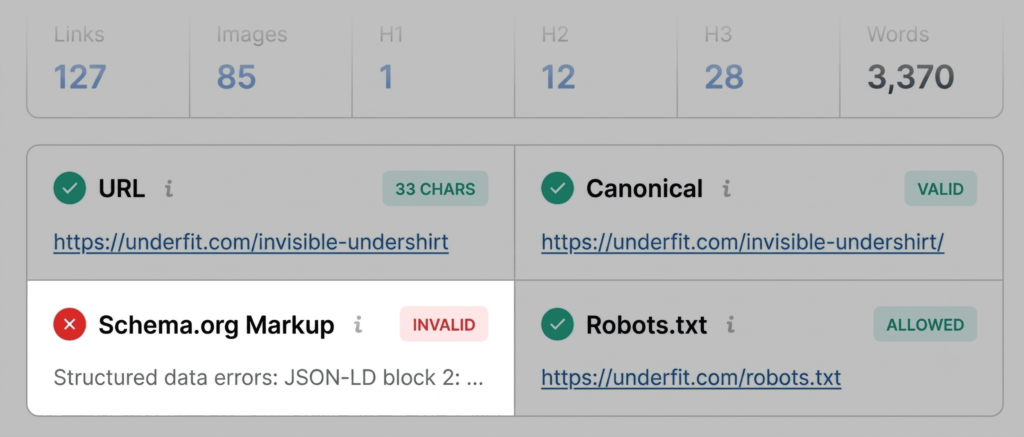
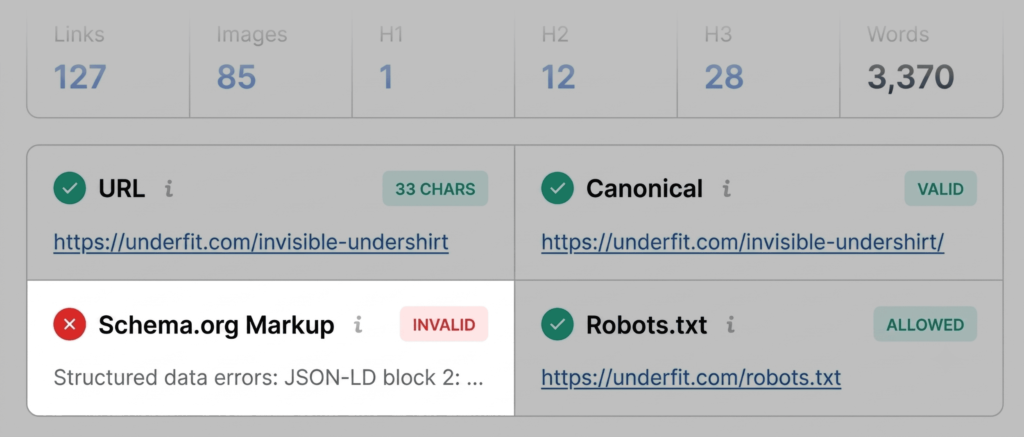
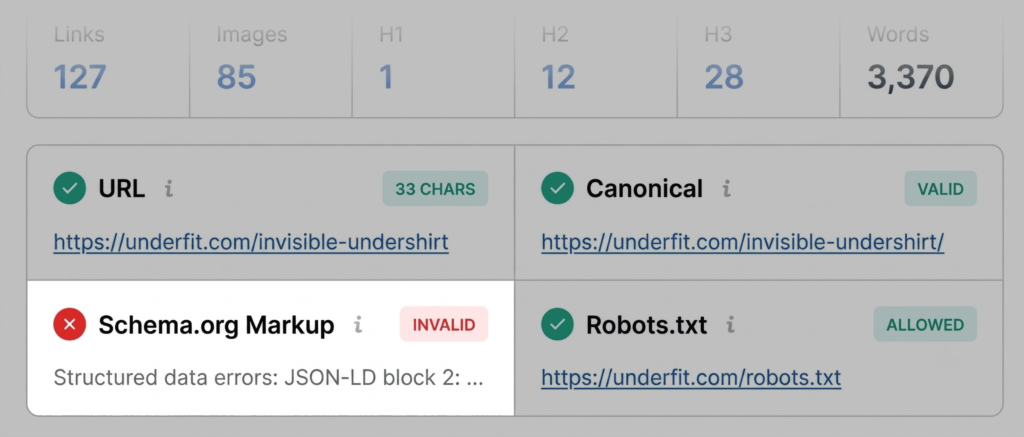
    While AI models are becoming better at reading natural language, they still rely heavily on structured data. Schema.org markup (specifically the "Product" and "Offer" types) allows a brand to tell the AI exactly what the price, currency, availability, and specifications are in a machine-readable format. This technical layer acts as a map for the AI, ensuring it does not have to "guess" the details of a product, thereby increasing the confidence score of the recommendation.

    How to Optimize Your Product Pages for AI Visibility

    Industry-Specific Optimization Strategies

    The criteria for AI visibility are not uniform across all sectors. Different industries require emphasis on different data points to satisfy the AI’s logic.

    How to Optimize Your Product Pages for AI Visibility
    • Fashion and Apparel: AI prioritizes fit, material composition, and "style match." Product pages must include detailed sizing guides, fabric weights (e.g., "12oz heavyweight cotton"), and care instructions.
    • Health and Wellness: Safety and ingredients are paramount. AI looks for "Non-GMO," "Third-party lab tested," and explicit dosage instructions. Trust signals in this category are non-negotiable.
    • Electronics and Technology: This sector is spec-heavy. AI compares products based on technical attributes like "mAh battery capacity," "nit brightness," and "processor speed." These must be presented in clear, tabular formats.
    • Home and Furniture: Dimensions and configuration options are the primary focus. An AI needs to know the exact width, depth, and height to answer a user’s question about whether a piece will fit in a specific room.
    • Outdoor and Sports: Durability and performance in specific environments (e.g., "waterproof up to 10,000mm," "rated for -20°C") are the key metrics for AI discovery.

    The Broader Implications for the Future of Retail

    The rise of AI search represents a move toward a more "frictionless" economy. As Google rolls out its Universal Commerce Protocol and OpenAI enhances its "Shopping Research" mode, the boundary between searching for a product and purchasing it is blurring. We are moving toward a future where a consumer might say to their device, "Find me a sustainable, waterproof hiking boot for my trip to Iceland next week and buy the one with the best reviews," and the AI assistant will execute the entire transaction.

    How to Optimize Your Product Pages for AI Visibility

    For brands, the implication is clear: those who fail to optimize their data for AI consumption will become invisible. This transition requires a holistic approach that blends technical SEO, traditional PR (to earn those crucial third-party awards), and customer-centric copywriting.

    How to Optimize Your Product Pages for AI Visibility

    Conclusion: The Path to AI Visibility

    Optimizing for AI is not a one-time task but an ongoing strategy of data refinement. Brands must begin by auditing their existing product pages against the "confidence requirements" of current LLMs. By providing clear, structured, and verifiable information, companies can ensure their products are not just listed on the web, but are actively recommended by the AI assistants that are increasingly making decisions for the modern consumer. The era of the "link" is ending; the era of the "answer" has begun. Brands that provide the best, most trustworthy answers will be the ones that thrive in this new agentic era of commerce.

  • Ahrefs Analysis Reveals Strategic Gap in ChatGPT Citations for Reddit Content Despite High Retrieval Rates

    Ahrefs Analysis Reveals Strategic Gap in ChatGPT Citations for Reddit Content Despite High Retrieval Rates

    The landscape of artificial intelligence and search engine optimization underwent a significant shift in early 2025 as new data illuminated the complex relationship between large language models and the sources they use to generate responses. A comprehensive study conducted by Ahrefs, a leading search engine optimization toolset provider, has uncovered a stark disparity in how OpenAI’s ChatGPT utilizes Reddit content. While the platform appears to rely heavily on the social news site to build context and understand human consensus, it rarely credits the source with a formal citation. This phenomenon, now being termed the "Reddit gap," suggests that while AI models are becoming more sophisticated in their information gathering, the path to visibility for content creators remains fraught with technical hurdles.

    The Ahrefs report, which analyzed a massive dataset of 1.4 million ChatGPT prompts, provides a granular look at the mechanics of Retrieval-Augmented Generation (RAG). According to the findings, ChatGPT 5.2—the model version active during the primary study period in February 2025—retrieved a vast array of pages to formulate its answers, yet only about half of these retrieved sources actually made it into the final response as a visible citation. The discrepancy was most pronounced with Reddit content, which, despite being a primary source for contextual understanding, was cited less than 2% of the time when accessed through a dedicated data stream.

    Methodology and the Scope of the Dataset

    To understand the internal logic of OpenAI’s search capabilities, Ahrefs researchers examined 1.4 million prompts specifically focused on ChatGPT’s search-enabled features. The study tracked the lifecycle of a response: from the initial user query to the generation of sub-questions, the retrieval of web pages, and finally, the selection of which pages to cite.

    The researchers utilized open-source tools to calculate similarity scores between the retrieved content and the specific sub-queries generated by ChatGPT. This allowed the team to approximate the internal "matching" process the AI uses to determine relevance. By analyzing which pages were "seen" by the model versus which were "shown" to the user, Ahrefs was able to identify the specific characteristics that lead to a successful citation. The data revealed that citation rates vary wildly depending on the source type and the structural integrity of the URL.

    The Reddit Paradox: Context Without Credit

    One of the most striking revelations of the report is the treatment of Reddit. In May 2024, OpenAI and Reddit announced a high-profile partnership that granted OpenAI access to Reddit’s Data API. This deal was intended to provide ChatGPT with real-time access to the "human" element of the internet—discussions, niche advice, and community consensus. However, the Ahrefs data shows that this partnership has not translated into direct traffic for Reddit through citations.

    Of all the pages that ChatGPT retrieved but ultimately chose not to cite, a staggering 67.8% originated from the specific Reddit source identified by Ahrefs. Furthermore, pages from this dedicated Reddit stream were cited only 1.93% of the time. This suggests a functional divide in how the AI treats the data: it uses Reddit as a foundational layer to understand "what people think" about a topic, but it looks to traditional web search results to provide "factual" citations.

    Ahrefs notes that ChatGPT appears to be using Reddit extensively to gauge consensus and build a contextual framework for its answers. For example, if a user asks for the "best coffee maker," the AI may scan Reddit to see which models are currently trending or being criticized by enthusiasts. Once it has formed a "consensus" view, it may then cite a professional review site or a manufacturer’s page to provide the final link to the user. This "upstream effect" means Reddit’s influence on AI responses is massive, yet its visibility in the final output is minimal.

    Technical Factors Influencing Citation Rates

    The study moved beyond the Reddit findings to analyze what actually helps a standard webpage get cited. The results emphasize a shift away from traditional keyword stuffing toward a more nuanced "sub-query" alignment.

    When a user enters a complex prompt, ChatGPT Search often breaks that prompt down into several narrower, more specific queries. Ahrefs found that the highest correlation with a successful citation was not how well a page matched the original prompt, but how closely its title and URL matched these narrower sub-queries.

    For instance, a prompt like "how to plan a trip to Japan" might be broken down into sub-queries such as "Japan rail pass costs 2025" or "best time to visit Kyoto for cherry blossoms." Pages that had titles and URL structures specifically addressing these sub-queries were significantly more likely to be cited than general "Japan Travel Guide" pages.

    The data also highlighted the importance of URL hygiene. Pages with clear, descriptive URL slugs were cited approximately 89.78% of the time they appeared in search results. In contrast, pages with convoluted or non-descriptive URLs saw their citation rate drop to 81.11%. This reinforces previous findings by other analytics firms, such as SE Ranking, which suggested that ChatGPT favors URLs that describe broader topics or specific sub-topics clearly over those that are overly optimized for a single keyword.

    Chronology of the AI Search Evolution

    The relationship between AI and web citations has evolved rapidly over the past year. The Ahrefs study sits at a critical juncture in this timeline:

    • May 2024: OpenAI and Reddit announce a data partnership. This was seen as a move to bolster the "conversational" quality of ChatGPT and provide a more human-centric data source for training and real-time retrieval.
    • Late 2024: OpenAI begins integrating "Search" more deeply into the ChatGPT interface, moving away from a separate "Browse with Bing" plugin toward a more native, integrated search experience.
    • February 2025: The period of the Ahrefs study. At this time, ChatGPT 5.2 was the standard, and citation rates for retrieved pages hovered around 50%.
    • March 2025 and Beyond: OpenAI introduces the GPT-5.3 "Instant" transition. Early data from third-party analysts like Resoneo suggests that this update led to a 20% decrease in the number of cited domains per response. This indicates that OpenAI is becoming more selective—or perhaps more restrictive—in how it attributes information.

    Industry Implications and Reactions

    The "Reddit gap" and the selective nature of AI citations have sparked a debate among digital marketers and content publishers. While there has been no official statement from Reddit regarding the 1.93% citation figure, industry analysts suggest that the "upstream influence" of Reddit might be exactly what OpenAI intended when it signed the data deal.

    For businesses and SEO professionals, the implications are clear: the traditional strategy of ranking for a broad keyword is no longer sufficient to guarantee visibility in an AI-driven search environment. Content must now be structured to answer the specific, granular questions that an AI model generates internally.

    "The study shows that we are moving into an era of ‘semantic precision,’" says one industry analyst who reviewed the Ahrefs data. "If your page is retrieved but not cited, you are essentially training the model for free without getting the referral traffic. To bridge that gap, publishers need to align their metadata—titles and URLs—with the intent of the sub-queries ChatGPT is actually searching for."

    The Broader Impact on the Information Ecosystem

    The finding that ChatGPT uses Reddit to build consensus but does not cite it raises ethical and practical questions about the future of the web. If AI models continue to absorb the collective knowledge of communities like Reddit without directing users back to those communities, the incentive for users to contribute to those platforms could diminish. This could create a "feedback loop" where the AI lacks new, human-generated data to learn from because it has inadvertently suppressed the sources of that data.

    Furthermore, the 20% decrease in cited domains observed in newer models like GPT-5.3 suggests a trend toward "zero-click" responses in the AI space, mirroring a trend that has long been a point of contention in traditional Google search. As AI models become more confident in their synthesized answers, the necessity to "prove" the answer with a citation appears to be declining in the eyes of the developers.

    Looking Ahead: The Future of Attribution

    As OpenAI continues to iterate on its models, the patterns observed in the Ahrefs study may shift. The transition to GPT-5.3 and future versions will likely continue to refine the balance between retrieval and citation. For now, the "Reddit gap" serves as a case study in how AI can utilize a platform’s data for its own intelligence while bypassing the traditional traffic-sharing norms of the internet.

    For content creators, the path forward involves a deeper focus on technical SEO and semantic relevance. The Ahrefs report concludes that simply being "the best" source on a topic is no longer enough; a page must also be the most "mappable" source for the specific sub-questions an AI asks. As the digital landscape moves further away from the traditional list of blue links, the battle for the citation will become as fierce as the battle for the top spot on a Google results page once was.

    The study serves as a reminder that in the world of AI search, visibility is not just about being found—it is about being credited. As long as the "Reddit gap" persists, it remains a signal to all publishers that the way AI "reads" the web is fundamentally different from how it "reports" the web to its users.

  • US Digital Advertising Revenue Hits Record $294.6 Billion in 2025 as Search Dominance Faces New Challenges from Video and AI

    US Digital Advertising Revenue Hits Record $294.6 Billion in 2025 as Search Dominance Faces New Challenges from Video and AI

    The United States digital advertising market reached a historic milestone in 2025, with total annual revenue climbing to a record-breaking $294.6 billion. According to the latest comprehensive report released by the Interactive Advertising Bureau (IAB) in collaboration with PwC, the industry demonstrated remarkable resilience and adaptability in a year defined by the rapid integration of artificial intelligence and shifting consumer behaviors. While search advertising maintained its position as the largest single force within the digital ecosystem, its growth trajectory showed signs of stabilization, allowing faster-moving formats like social media and digital video to capture a larger share of the expanding market.

    The $294.6 billion figure represents a significant leap for the industry, reflecting a market that has matured yet continues to find new avenues for monetization. Despite the absence of major cyclical drivers—such as a presidential election or the Olympic Games, which provided a substantial boost to the 2024 figures—the 2025 fiscal year saw consistent upward momentum. This growth was particularly pronounced in the latter half of the year, signaling a robust appetite for digital placements among brands ranging from global conglomerates to direct-to-consumer startups.

    The Evolution of Search Dominance

    For over two decades, search has been the undisputed anchor of the digital advertising world. In 2025, it remained the primary destination for marketing budgets, generating $114.2 billion in revenue. This accounted for 38.8% of the total digital advertising spend in the United States. However, the narrative surrounding search is changing. The report highlights a deceleration in growth for the format, which rose by 11% in 2025, a notable decrease from the 15.9% growth rate recorded in 2024.

    Industry analysts attribute this cooling of search growth to several factors. First is the maturation of the market; with nearly 40% of the total spend already allocated to search, the ceiling for exponential growth is naturally lower. Second, and perhaps more significantly, is the disruption caused by generative artificial intelligence. As consumers increasingly turn to AI-driven chatbots and discovery engines for information, the traditional "ten blue links" model of search is being challenged. Advertisers are beginning to re-evaluate how they reach users in an environment where an AI might provide a direct answer rather than a list of websites, leading to a diversification of budgets into other performance-driven channels.

    Accelerated Growth in Social Media and Digital Video

    While search saw a controlled expansion, the social media and digital video sectors experienced explosive growth. Social media advertising revenue surged by 32.6% to reach $117.7 billion. This surge effectively places social media in a neck-and-neck race with search for market supremacy. The rise is largely credited to the continued dominance of short-form video content and the sophisticated targeting capabilities of major platforms that allow brands to integrate seamlessly into user feeds.

    Digital video, as a standalone category, was the fastest-growing major format of the year. Revenue in this segment jumped 25.4% to $78 billion. The shift toward Connected TV (CTV) and the migration of traditional television budgets to digital streaming services have fundamentally altered the landscape. Brands are increasingly viewing digital video not just as a tool for top-of-funnel awareness, but as a high-performance medium capable of driving direct sales through interactive and shoppable ad units.

    U.S. search ad revenue reached $114.2 billion in 2025

    The Programmatic Powerhouse and Automation

    The 2025 data underscores the near-total transition of the industry toward automated buying. Programmatic advertising revenue increased by 20.5%, totaling $162.4 billion. This means that more than half of all digital advertising dollars are now flowing through automated systems. The continued shift toward programmatic reflects the industry’s demand for efficiency, real-time optimization, and data-driven precision.

    The rise of programmatic is inextricably linked to the advancements in machine learning and AI. Throughout 2025, "black box" advertising solutions—where algorithms determine the best placement, timing, and creative version for an ad—became the standard rather than the exception. While this has improved performance metrics for many advertisers, it has also raised concerns regarding transparency and the ability of human marketers to audit the decision-making processes of these automated platforms.

    A Chronology of Growth: 2025 Quarterly Performance

    The trajectory of the 2025 market was characterized by a steady acceleration as the year progressed. The first quarter of the year began with a respectable 12.2% growth rate, as businesses navigated the early-year economic outlook. By the second and third quarters, confidence in consumer spending remained high, and the integration of AI tools began to show tangible ROI for early adopters.

    The fourth quarter of 2025 was particularly remarkable, bringing in $85 billion in revenue—a 15.4% increase compared to the same period in the previous year. This performance is noteworthy because Q4 2024 had been bolstered by record-breaking political spending. The fact that 2025 surpassed those figures without a similar political stimulus suggests a deep-seated structural growth in the digital economy. The holiday shopping season proved to be a major catalyst, with retail media networks and social commerce platforms capturing a significant portion of the "Golden Quarter" spend.

    Market Concentration and the "Big Tech" Advantage

    One of the most striking revelations in the IAB/PwC report is the increasing concentration of wealth within the digital advertising sector. The top 10 companies now control 84.1% of all U.S. digital ad revenue. This is an increase from 80.8% in 2024, indicating that the largest players are not only maintaining their lead but actively pulling away from the rest of the market.

    This concentration is driven by the "walled garden" effect. The companies at the top—including Google, Meta, Amazon, and Microsoft—possess vast troves of first-party data that have become indispensable in a privacy-centric era. As third-party cookies have faced deprecation and privacy regulations have tightened, advertisers have flocked to the platforms that can provide verified user identities and closed-loop measurement. Furthermore, these companies have the capital to lead the AI revolution, offering proprietary tools that smaller competitors struggle to replicate.

    The AI Paradigm Shift

    In 2025, artificial intelligence transitioned from a buzzword into the foundational architecture of the advertising industry. It is no longer a secondary tool used for minor optimizations; it is the primary engine driving discovery, media buying, and measurement.

    U.S. search ad revenue reached $114.2 billion in 2025

    For consumers, AI has fragmented the journey. A purchase that once began with a simple Google search might now start with a conversation with an AI assistant, a discovery on a social media algorithm, or a recommendation within a retail app. For advertisers, this fragmentation requires a more holistic approach to media planning. The report suggests that the most successful brands in 2025 were those that moved away from siloed channel management and toward "fluid" budgeting, where AI dynamically allocates spend across platforms based on real-time performance.

    Industry Reactions and Strategic Implications

    The reaction from the marketing community to these findings has been a mixture of optimism and caution. Industry leaders note that while the record-breaking revenue is a sign of a healthy ecosystem, the slowing growth of search and the rise of automated buying create new challenges for accountability.

    "Search is still the most scalable intent-based medium we have," noted one digital agency executive in response to the data. "But we are entering an era where ‘intent’ is being captured in more places. If a user discovers a product on TikTok and then buys it through an Amazon ad, the traditional search model loses that credit. Marketers are now obsessed with proving ‘incrementality’—ensuring that their ad spend is actually driving new sales rather than just claiming credit for sales that would have happened anyway."

    The shift toward video and social also necessitates a change in creative strategy. Brands are being forced to produce higher volumes of content to satisfy the "content-hungry" algorithms of social and video platforms. This has led to an explosion in the use of generative AI for creative assets, allowing brands to test thousands of variations of an ad to see which resonates best with specific audience segments.

    Broader Impact and Future Outlook

    The 2025 IAB/PwC report serves as a roadmap for the future of the digital economy. The data suggests that the market is moving toward a state of "constant optimization," where the lines between different ad formats continue to blur. Retail media, for instance, often straddles the line between search and display, while social commerce blurs the line between entertainment and shopping.

    As the industry looks toward 2026, the focus will likely remain on privacy-compliant data strategies and the further refinement of AI tools. The high concentration of revenue among the top 10 players may also invite further regulatory scrutiny, as policymakers examine the competitive landscape of the digital age.

    For now, the $294.6 billion milestone stands as a testament to the central role that digital advertising plays in the American economy. It is the primary engine of growth for small businesses and global brands alike, and its evolution continues to mirror the fundamental changes in how humans interact with technology and each other. The slowing of search and the surge of video and social are not merely shifts in budget; they are reflections of a world that is becoming more visual, more automated, and more integrated with artificial intelligence.

  • Navigating the New Frontier of Fintech AI Search Visibility and Brand Accuracy

    Navigating the New Frontier of Fintech AI Search Visibility and Brand Accuracy

    The financial technology sector is currently navigating a fundamental shift in how consumers discover and evaluate products, as artificial intelligence search engines implement significantly stricter verification thresholds for fintech brands compared to other industries. Because financial services fall under the critical "Your Money or Your Life" (YMYL) category, large language models (LLMs) and generative search engines are programmed to apply rigorous filters before mentioning, citing, or recommending specific fintech products. This evolution in search behavior—where 54% of Americans now utilize tools like ChatGPT for financial research—has forced a reimagining of digital presence, moving beyond traditional search engine optimization (SEO) toward a more complex framework of "Generative Engine Optimization" (GEO).

    Fintech in AI Search: How to Be the Trusted & Featured Brand

    For fintech companies, the risk of misrepresentation in AI search results is a primary concern. Unlike traditional search engines that provide a list of links, AI search draws from a brand’s own website as well as the wider web, including forums, news sites, and regulatory records. When these sources provide conflicting information, AI systems may hallucinate, provide outdated fee structures, or pair a brand’s name with negative sentiment gathered from unverified third-party sources. Consequently, the goal for modern fintech marketing is no longer just appearing in search results, but ensuring that the brand is represented with absolute accuracy across the three primary types of AI visibility: brand mentions, citations, and product recommendations.

    Fintech in AI Search: How to Be the Trusted & Featured Brand

    The Three Pillars of AI Visibility in the Financial Sector

    Visibility in the AI era is segmented by the level of intent and trust the model assigns to a brand. The first pillar, brand mentions, occurs when an AI system includes a company’s name in a general answer. This typically happens during the awareness stage of the consumer journey. For instance, when a user asks about the benefits of "Buy Now, Pay Later" (BNPL) services, the AI might mention platforms like Klarna or Affirm to illustrate the category. While not an explicit endorsement, these mentions utilize the "mere exposure effect," building familiarity so that by the time a user reaches a decision point, the brand is already a recognized entity in their mental landscape.

    Fintech in AI Search: How to Be the Trusted & Featured Brand

    The second pillar, citations, represents a higher tier of value. This occurs when an AI uses a brand’s specific pages or documentation to support its answer, often appearing as footnotes, inline links, or source thumbnails. In the fintech space, being cited by an LLM serves as an implied endorsement of the brand’s authority and expertise. When an AI pulls data directly from a company’s technical documentation or help center, it allows the brand to influence the technical narrative of the response. However, market data suggests that while citations boost credibility, they do not always drive direct traffic, as many users prefer to continue their dialogue within the AI interface rather than clicking through to the source.

    Fintech in AI Search: How to Be the Trusted & Featured Brand

    The third and most impactful pillar is product recommendations. This is where the AI provides a curated shortlist of products for high-intent queries, such as "best budgeting apps" or "top-rated international transfer services." These recommendations are the ultimate goal for fintech brands because they directly influence the final selection process. Appearing in these lists requires the AI to have a high level of confidence in the brand’s legitimacy and current standing.

    Fintech in AI Search: How to Be the Trusted & Featured Brand

    The Logic of LLM Selection: Consensus and Consistency

    To decide which fintech brands to feature, AI systems rely on two primary signals: consensus and consistency. This methodology acts as a digital filter, protecting users from potentially fraudulent or unstable financial services.

    Fintech in AI Search: How to Be the Trusted & Featured Brand

    Consensus is achieved when multiple reputable, high-authority sources mention a brand and its products in a positive or neutral context. LLMs assess social proof by scanning editorial reviews from major financial publications, user feedback on platforms like G2 or Trustpilot, and discussions in specialized communities like Reddit or the myFICO Forum. The stronger the consensus across these diverse nodes, the more likely the AI is to recommend the brand. Conversely, if major news outlets consistently highlight regulatory hurdles or service outages, the AI will likely incorporate those warnings into its summary.

    Fintech in AI Search: How to Be the Trusted & Featured Brand

    Consistency, the second signal, refers to the alignment of facts across the internet. For a fintech brand to be trusted by an AI, its core details—such as pricing, interest rates, security features, and withdrawal limits—must be uniform across its own website and all third-party coverage. Inconsistencies, such as a review site listing a 3% fee while the brand’s homepage lists 2%, create a "trust gap." When faced with such contradictions, AI models often become cautious, either omitting the brand entirely or adding qualifying language like "reports vary on current fee structures," which can significantly undermine consumer trust.

    Fintech in AI Search: How to Be the Trusted & Featured Brand

    Content Categories That Drive AI Trust

    Market analysis indicates that three types of content carry the most weight in the fintech AI ecosystem. The first is owned content, which includes the brand’s website, technical documentation, and help centers. AI systems treat these as the "primary source of truth" for product mechanics. Fintech leaders like Intuit and TurboTax have optimized this by creating extensive landing pages that detail every aspect of their guarantees, security protocols, and filing processes. By providing structured, easy-to-parse data, they ensure the AI has a reliable foundation for its answers.

    Fintech in AI Search: How to Be the Trusted & Featured Brand

    The second category is earned media and reviews. LLMs use these to cross-check a brand’s internal claims against the reality of the user experience. A significant trend in the industry is the use of original research to drive earned media. For example, KPMG’s "Pulse of Fintech" reports are frequently cited by journalists at Bloomberg and CNBC. These citations create a ripple effect: when reputable news organizations cite a brand’s research, the AI model registers that brand as a high-authority source in the financial sector.

    Fintech in AI Search: How to Be the Trusted & Featured Brand

    The third and perhaps most critical category for fintech is official records. These are public documents that confirm a brand’s legal authorization to operate, such as FDIC membership, licenses from the Federal Reserve, or filings with the Consumer Financial Protection Bureau (CFPB). When a user asks about the safety of a platform like Wise, AI systems like Perplexity scan regulatory databases to verify that the company is a licensed money transmitter. For fintech brands, making these regulatory details explicit and easy for AI bots to retrieve is a vital trust-building exercise.

    Fintech in AI Search: How to Be the Trusted & Featured Brand

    Strategic Implications for Fintech Leadership

    The shift toward AI-driven financial research presents both a challenge and a massive opportunity. A study by Microsoft found that AI-referred traffic converts at three times the rate of other channels, including traditional search and social media. This high conversion rate is attributed to the fact that users arriving via AI have often already been "pre-sold" by the model’s synthesis of the brand’s value proposition.

    Fintech in AI Search: How to Be the Trusted & Featured Brand

    To capitalize on this, fintech brands are increasingly investing in "Trust Centers" and structured FAQ sections. These hubs serve as a central repository for the facts the brand wants the AI to prioritize. Furthermore, proactive reputation management has become a technical necessity. Brands must now monitor not just what the media says, but what the AI thinks the media is saying. This involves auditing AI responses for "narrative drivers"—the specific questions and sentiments that appear most frequently in LLM outputs.

    Fintech in AI Search: How to Be the Trusted & Featured Brand

    Industry analysts suggest that the "long tail" of the internet is becoming more relevant for fintech brands. Because AI models do not "forget" old information, outdated forum posts or expired PDF brochures can continue to haunt a brand’s AI profile for years. Effective AI strategy now requires a "clean-up" phase, where companies aggressively redirect or remove outdated documentation and participate directly in community conversations on platforms like Reddit to provide current, accurate information.

    Fintech in AI Search: How to Be the Trusted & Featured Brand

    Conclusion: The Future of Fintech Discovery

    As artificial intelligence continues to integrate into the daily financial lives of consumers, the barrier to entry for fintech visibility will only grow higher. The "Your Money or Your Life" designation ensures that only the most consistent, transparent, and verified brands will survive the filter of generative search.

    Fintech in AI Search: How to Be the Trusted & Featured Brand

    The transition from traditional SEO to AI-centric visibility represents a move from keyword-matching to narrative-influence. Fintech brands that succeed in this new era will be those that treat their digital footprint as a holistic ecosystem—one where owned data, third-party reviews, and regulatory transparency work in unison to provide a single, undeniable story of reliability. In a world where an AI-generated answer is often the first and most influential touchpoint, accuracy is no longer just a compliance requirement; it is the most powerful marketing tool a fintech brand possesses.

  • Google AI Mode in Chrome Gets Side-by-side Browsing

    Google AI Mode in Chrome Gets Side-by-side Browsing

    The integration of artificial intelligence directly into the web browsing experience has reached a new milestone as Google announces a significant update to AI Mode within its Chrome desktop browser. This update introduces side-by-side page viewing and a revamped "plus" menu designed to streamline how users interact with digital information, effectively transforming the browser from a simple window into the internet into an active research assistant. By allowing users to maintain their AI-driven dialogue while simultaneously navigating external websites, Google is addressing one of the primary friction points in modern search: the need to constantly toggle between search results and the content itself.

    Enhancing the Multitasking Workflow with Side-by-Side Viewing

    The centerpiece of this update is the introduction of a native side-by-side rendering engine for AI Mode. Previously, when a user engaged with Chrome’s AI features—often triggered through the address bar or a dedicated panel—clicking on a link generated by the AI would navigate the user away from the conversation to a new tab or replace the current view. This "pogo-sticking" behavior often disrupted the flow of research, forcing users to remember their previous prompts or manually navigate back and forth to refine their queries based on what they had just read.

    Under the new system, clicking a link within the AI Mode panel now triggers a split-screen interface on the desktop version of Chrome. The destination webpage opens in a main window while the AI Mode panel remains pinned to the side. This architectural change allows for a continuous feedback loop. For example, a student researching a complex scientific topic can click on a source link provided by the AI; as the source page loads, they can immediately ask the AI to summarize a specific paragraph from that page or compare the new information with data previously discussed in the chat.

    Robby Stein, Vice President of Product for Google Search, and Mike Torres, Vice President of Product for Chrome, emphasized in a joint statement that these updates are part of a broader mission to make AI feel "native" to the browsing experience. By eliminating the barrier between the AI interface and the web content, Google is attempting to create a unified workspace that mirrors how professional researchers and power users actually operate.

    The New Plus Menu: Integrating Context and Multimodal Search

    In addition to the layout changes, Google has introduced a "plus" menu located within the Chrome search box on the New Tab page and inside the AI Mode interface. This feature is designed to solve the "context gap" that often limits the effectiveness of Large Language Models (LLMs). While standard AI chats often require users to copy and paste text or upload files manually, the new plus menu allows users to pull context directly from their active browsing session.

    The menu enables users to select recently opened tabs and add them as context for a specific search or query. This means that if a user has five different tabs open regarding travel destinations in Italy, they can use the plus menu to tell the AI to "summarize the common themes across these five tabs" without ever leaving the search interface. Furthermore, the menu supports the attachment of images and PDF files, allowing for a multimodal approach to information gathering.

    This update also relocates "Canvas" and image creation tools. Previously tucked away within specific AI sub-menus, these creative features are now accessible from any Chrome surface that displays the plus menu. This suggests that Google views AI not just as a tool for consumption and summarization, but as a persistent utility for creation that should be available regardless of what the user is currently viewing.

    A Chronology of Chrome’s AI Evolution

    The current update is the latest step in an aggressive timeline that Google has maintained since the beginning of 2024 to defend its search dominance against emerging AI-first competitors.

    • January 2024: Google introduced "experimental AI" features in Chrome M121, including a Tab Organizer and "Help me write," a feature designed to assist users in drafting text on the web.
    • May 2024: At the Google I/O developer conference, the company announced the integration of Gemini (formerly Bard) directly into the Chrome address bar (omnibox). This allowed users to type "@gemini" to start a conversation.
    • August 2024: Google expanded "Google Lens" capabilities within the desktop browser, allowing users to click and drag over any part of a website to search for visual elements without leaving the tab.
    • Late 2024/Early 2025: The rollout of "AI Mode" as a dedicated environment for deep research, which has now culminated in the current side-by-side and contextual updates.

    This progression shows a clear shift from "AI as a feature" (like a spell-checker) to "AI as the interface" (where the browser understands the user’s intent and surroundings).

    Strategic Implications and Market Context

    The decision to bake AI deeper into Chrome is a strategic necessity for Google. According to data from StatCounter, Google Chrome currently maintains a dominant market share of approximately 65% globally. However, Microsoft has been leveraging its own browser, Edge (which holds about 5% of the market), to aggressively push its "Copilot" AI. Edge has featured a sidebar AI for over a year, which provided many of the multitasking benefits that Google is only now standardizing in Chrome.

    By introducing side-by-side browsing, Google is closing a competitive gap with Microsoft Edge while leveraging its superior integration with the Google Search ecosystem. For Google, the browser is the primary gateway to its Search Generative Experience (SGE). If users find that AI-powered search is more efficient when conducted through a sidebar, Google must provide that experience to prevent users from migrating to Edge or specialized AI browsers like Arc or Brave.

    Industry analysts suggest that this move is also aimed at increasing the "stickiness" of the Chrome ecosystem. When a browser can analyze PDFs, summarize open tabs, and provide a persistent research assistant, the cost of switching to a different browser—where those contextual links might be lost—becomes much higher for the average user.

    Official Responses and User Privacy

    While the announcement from Stein and Torres focused on productivity and user experience, the rollout has prompted questions regarding data privacy and how the AI "reads" the user’s open tabs. Google has clarified that the context provided via the plus menu is user-initiated. The AI does not automatically ingest every tab the user has open; rather, it requires the user to specifically select which tabs or files should be used as context for a given prompt.

    This "opt-in context" model is a crucial distinction for corporate and privacy-conscious users who may have sensitive information open in other tabs. By requiring the use of the plus menu to "attach" a tab, Google maintains a layer of user control over what data is sent to the Gemini models for processing.

    Broader Impact on Digital Research and Education

    The implications of side-by-side AI browsing extend significantly into the sectors of education and professional research. For decades, the standard method of online research involved a fragmented workflow: searching, clicking a link, reading, taking notes in a separate document, and returning to the search engine.

    With the new AI Mode updates, the "notes" and the "search" are effectively merged. The AI panel acts as a living document that understands the source material the user is currently reading. This could fundamentally change how students interact with academic papers or how analysts process quarterly reports. The ability to attach a PDF and then browse related news sites in the side-by-side window allows for a level of cross-referencing that was previously impossible without a multi-monitor setup or complex window management.

    Furthermore, the multimodal nature of the plus menu—combining images, PDFs, and live tabs—suggests a future where search is no longer text-based. A user could upload a photo of a broken appliance part (via the plus menu) and have the AI search through open tabs of repair manuals to identify the specific replacement needed, all while keeping the manual visible in the side-by-side pane.

    Availability and Future Outlook

    The new updates to AI Mode in Chrome are currently rolling out to users in the United States. Google has confirmed that a global rollout to other regions and languages is planned for the coming months, though no specific dates have been provided for European or Asian markets.

    Looking ahead, the evolution of Chrome’s AI suggests that Google is moving toward an "Agentic" browser—one that doesn’t just find information, but can act upon it. As Gemini becomes more capable of understanding the structure of websites, future updates may allow the AI to not only summarize a page in the side-by-side view but also perform actions, such as filling out forms or navigating complex checkout processes based on the context of the user’s conversation.

    For now, the addition of side-by-side browsing and the contextual plus menu represents a significant refinement of the AI-powered web. It is a move that prioritizes the user’s workflow over the traditional "link-and-click" model of the internet, signaling a new era where the browser is as much a collaborator as it is a viewer.

  • Google Mandates Multi-Factor Authentication for Google Ads API to Strengthen Ecosystem Security and Data Protection

    Google Mandates Multi-Factor Authentication for Google Ads API to Strengthen Ecosystem Security and Data Protection

    Google has announced a significant shift in its security protocols for the Google Ads ecosystem, making multi-factor authentication (MFA) a mandatory requirement for all users accessing the Google Ads API. This strategic update, set to commence on April 21, 2026, represents a major escalation in Google’s efforts to safeguard sensitive advertising data and prevent unauthorized account access. The move is expected to fundamentally alter the way developers, digital marketing agencies, and enterprise advertisers interact with Google’s advertising infrastructure, shifting the baseline from simple password-based entry to a more robust, multi-layered identity verification process.

    The implementation of mandatory MFA is not merely a technical adjustment but a response to the increasingly sophisticated landscape of cyber threats targeting high-value advertising accounts. By requiring a second form of verification—such as a mobile push notification, a code from an authenticator app, or a physical security key—Google aims to neutralize the risks associated with credential stuffing, phishing, and automated account takeover (ATO) attacks. For the advertising industry, which manages billions of dollars in spend and handles vast amounts of proprietary consumer data, this change marks a transition toward a "Zero Trust" security model where identity must be continuously and rigorously verified.

    Detailed Timeline and Scope of Enforcement

    Google’s rollout strategy for mandatory MFA is designed to be phased, allowing organizations a brief window to adjust their internal workflows before full enforcement takes hold. The initial phase begins on April 21, 2026, targeting users who generate new OAuth 2.0 refresh tokens through standard authentication flows. While the requirement will not immediately invalidate existing tokens, any new credential generation or re-authentication event will trigger the MFA prompt.

    Following the initial launch, Google expects full enforcement across its global user base over the subsequent weeks. During this period, the mandate will extend beyond the core Google Ads API to include a suite of essential advertising tools. These include Google Ads Editor, the desktop application used for bulk campaign management; Google Ads Scripts, which automates tasks within the account; BigQuery Data Transfer Service for Ads, used for large-scale data warehousing; and Looker Studio (formerly Data Studio), where advertisers visualize performance metrics. This comprehensive coverage ensures that no entry point into the Google Ads environment remains protected by only a single layer of security.

    Technical Implications for Developers and Advertisers

    The technical core of this update lies in the OAuth 2.0 authentication framework. Currently, many developers use "user-based" authentication, where a refresh token is tied to a specific user account. Under the new rules, when a user initiates the process to obtain a refresh token, Google’s authorization server will check if MFA is enabled and completed. If the user has not verified their identity via a second factor, the token generation will fail.

    This change specifically impacts "installed app" flows and "web server" flows where a user is present to perform the authentication. It raises significant questions for automated systems and "headless" environments where manual intervention is difficult. While service accounts are often used to bypass user-level MFA in other Google Cloud services, the Google Ads API has traditionally leaned heavily on user-based OAuth tokens. Developers are now tasked with auditing their current authentication pipelines to ensure that any process requiring a new token can accommodate a human-in-the-loop for the MFA step.

    The Security Imperative: Data and Industry Trends

    Google’s decision is backed by compelling data regarding the efficacy of multi-factor authentication. According to research from Google’s security team and the Cybersecurity & Infrastructure Security Agency (CISA), MFA can block more than 99.9% of automated cyberattacks. In an era where data breaches cost companies an average of $4.45 million per incident, according to IBM’s 2023 Cost of a Data Breach Report, the advertising sector has become a prime target.

    Advertising accounts are particularly lucrative for bad actors because they provide access to credit lines, sensitive customer lists (First-Party Data), and competitive strategy insights. An unauthorized user gaining access to a Google Ads account could potentially drain budgets into fraudulent campaigns or export valuable Remarketing Lists for Search Ads (RLSA). By mandating MFA, Google is effectively raising the "cost of attack" for hackers, making it exponentially more difficult to exploit stolen passwords.

    Furthermore, this move aligns Google with broader regulatory trends. The General Data Protection Regulation (GDPR) in Europe and the California Consumer Privacy Act (CCPA) in the United States place a heavy burden on platforms and businesses to implement "reasonable security measures" to protect user data. As ad platforms handle more granular personal data for targeting, the definition of "reasonable" has evolved to include MFA as a standard requirement rather than an optional feature.

    Google Ads API to require multi-factor authentication

    Impact on Workflow and Operational Friction

    While the security benefits of the MFA mandate are clear, the advertising community has expressed concerns regarding operational friction. For large agencies managing hundreds of client accounts, the requirement for a physical device or a specific person to be available for authentication can create bottlenecks. This is especially true for teams that rely on shared credentials—a practice Google strongly discourages but which remains prevalent in some sectors of the industry.

    The "friction" mentioned in Google’s announcement refers to the disruption of automated workflows that have not been updated to handle modern authentication challenges. For instance, if an agency’s reporting tool requires a new refresh token every 90 days, a team member will now have to manually intervene to provide the second factor. This necessitates a shift in how agencies manage their "Master" accounts and Manager Accounts (MCC), encouraging the use of more secure, individual-based access controls rather than shared logins.

    Official Responses and Industry Reaction

    In their official developer blog, Google emphasized that this change is part of a broader commitment to account integrity. "As the threat landscape evolves, we are constantly looking for ways to strengthen the security of our users’ accounts," a Google spokesperson noted in the announcement. The company has been providing documentation and support resources to help developers transition their apps to be "MFA-ready" well in advance of the 2026 deadline.

    Industry reactions have been a mix of cautious approval and technical concern. Cybersecurity experts have praised the move as a long-overdue standard for a platform of Google Ads’ scale. However, some independent developers have voiced concerns on forums like Stack Overflow and the Google Ads API forum regarding the impact on legacy applications. The consensus among digital marketing leaders is that while the transition may be painful in the short term, the long-term reduction in account vulnerability is a necessary evolution for the ecosystem.

    Strategic Analysis of the Broader Impact

    The mandatory MFA requirement for the Google Ads API is a clear signal that Google is moving toward a more integrated and secure advertising cloud. This shift is likely the precursor to further security enhancements, such as mandatory hardware-based security keys for high-spend accounts or more granular permission sets within the API itself.

    For advertisers, the implications are clear: security can no longer be an afterthought of the marketing strategy. Companies must now include IT and security teams in their advertising operations to ensure that access management is handled with the same rigor as financial or customer data. This may lead to an increased adoption of Single Sign-On (SSO) solutions and Enterprise Identity Management systems that can bridge the gap between corporate security policies and Google’s advertising tools.

    Additionally, this change may drive a shift in the third-party tool market. Platforms that offer "seamless" integration with Google Ads will need to prove their security credentials and demonstrate how they handle MFA-compliant authentication. Tools that fail to update their infrastructure to support these new workflows risk obsolescence as they will no longer be able to access the API reliably.

    Conclusion: Preparing for a More Secure Advertising Future

    As the April 21, 2026, deadline approaches, Google Ads API users must prioritize the audit of their authentication processes. The transition to mandatory MFA is a definitive step by Google to fortify the advertising industry against the rising tide of cybercrime. While it introduces new complexities for developers and agencies, the collective benefit of a more secure ecosystem—characterized by reduced fraud and protected data—far outweighs the operational challenges.

    The "bottom line" remains that Google is setting a new standard for the industry. By making MFA a non-negotiable component of API access, Google is not only protecting its own infrastructure but is also forcing a higher level of security maturity upon the entire digital marketing landscape. Advertisers and developers who act early to integrate these changes into their workflows will be best positioned to navigate the transition without disruption, ensuring that their campaigns remain secure and their data remains private in an increasingly volatile digital world.

  • The Emergence of Agentic Search Protocols and the Transformation of Digital Commerce Infrastructure

    The Emergence of Agentic Search Protocols and the Transformation of Digital Commerce Infrastructure

    The landscape of digital interaction is undergoing a fundamental shift as the internet transitions from a human-centric browsing model to an agent-centric execution model. While traditional search engines have long relied on indexing and ranking content for human consumption, a new suite of protocols is emerging to facilitate direct interaction between artificial intelligence agents and web infrastructure. This transition, often referred to as the "Agentic Web," allows AI systems to perform complex tasks—such as product research, inventory verification, and transaction completion—without the need for human intervention at each step. This evolution is driven by a sophisticated stack of protocols including the Model Context Protocol (MCP), Agent-to-Agent (A2A) communication, and specialized commerce protocols like ACP and UCP.

    The Shift from Information Retrieval to Autonomous Execution

    For decades, the standard user journey involved a query, a list of links, and a series of manual clicks to navigate various websites. In the emerging agentic model, this process is condensed into a single prompt. An AI agent, such as Google’s Gemini or OpenAI’s ChatGPT, can now process a request to find and purchase a specific item under defined constraints, such as price points and shipping preferences. To achieve this, the AI does not merely "scrape" the web in the traditional sense; it utilizes standardized protocols to query databases, verify claims through third-party reviews, and interact with a retailer’s checkout system programmatically.

    This transformation is not merely an upgrade to AI models but a complete overhaul of the underlying infrastructure of the internet. These protocols define how an AI agent identifies a brand, understands its catalog, and takes action on a website. For search engine optimization (SEO) professionals and digital marketers, this represents a shift from optimizing for visibility to optimizing for "agentic compatibility."

    The Protocol Stack: Standardizing the Agentic Web

    The infrastructure supporting AI agents is composed of several layers, each serving a distinct purpose in the ecosystem. These are not competing standards but rather complementary layers designed to work in tandem.

    Model Context Protocol (MCP): The Universal Connector

    The Model Context Protocol (MCP) serves as the foundational layer, acting as a universal connector between AI models and external data sources. Launched by Anthropic in November 2024 and subsequently adopted by industry leaders including Google, Microsoft, and OpenAI, MCP eliminates the need for bespoke integrations. Before its inception, every AI tool required custom code to access specific databases or APIs. MCP standardizes this connection, often described as the "USB-C for AI." By early 2026, the ecosystem grew to include over 10,000 MCP servers, making it the de facto standard for connecting agents to live pricing, inventory, and structured content.

    Agent-to-Agent (A2A) Protocol: Delegation and Collaboration

    While MCP connects agents to tools, the Agent-to-Agent (A2A) protocol facilitates communication between different AI entities. Launched by Google in April 2025 with partners like Salesforce and SAP, A2A allows a general-purpose agent to delegate specialized tasks to other agents. This is managed through "Agent Cards"—standardized JSON files located at specific URLs (e.g., /.well-known/agent-card.json)—which advertise an agent’s capabilities and authentication requirements. This allows for a multi-agent workflow where one agent may handle research, another handles price comparison, and a third manages the final transaction.

    The 6 Agentic AI Protocols Every SEO Needs to Know

    Natural Language Interfaces for Websites: NLWeb and WebMCP

    The traditional method of AI interacting with a website involved parsing HTML, a process prone to error and inefficiency. New protocols are moving toward making websites directly queryable via natural language.

    NLWeb (Natural Language Web)

    Developed by Microsoft and spearheaded by R.V. Guha—the architect behind RSS and Schema.org—NLWeb turns websites into natural language interfaces. By implementing an /ask endpoint, a website can provide structured JSON responses to direct queries from AI agents. This removes the guesswork associated with web scraping, ensuring that the AI receives accurate, real-time data directly from the source. Early adopters of NLWeb include major platforms such as Shopify, TripAdvisor, and Eventbrite.

    WebMCP

    Proposed as a W3C standard by Google and Microsoft, WebMCP extends the capabilities of NLWeb by allowing websites to declare supported actions directly through the browser. These actions might include "book a demo," "check availability," or "start a trial." By providing a machine-readable map of available actions, WebMCP reduces friction for AI agents, allowing them to navigate complex site functions without human guidance.

    The Evolution of Agentic Commerce: ACP vs. UCP

    The most significant economic impact of these protocols lies in the realm of e-commerce. Two primary standards have emerged to handle the "last mile" of the user journey: the transaction.

    Agentic Commerce Protocol (ACP)

    Developed by OpenAI and Stripe and launched in September 2025, ACP focuses primarily on the discovery and checkout layers. It provides a standardized way for an AI agent to handle payment credentials and security protocols to complete a purchase on a merchant’s behalf. ACP was designed to streamline the checkout process within the ChatGPT ecosystem, allowing for "instant checkout" functionality.

    Universal Commerce Protocol (UCP)

    Co-developed by Google and Shopify, UCP offers a broader scope than ACP, covering the entire shopping lifecycle from discovery to post-purchase support (such as tracking and returns). Announced at the National Retail Federation (NRF) 2026 by Google CEO Sundar Pichai, UCP is a decentralized protocol where merchants publish their capabilities at a specific endpoint (/.well-known/ucp). It is built to work alongside MCP and the Agent Payments Protocol (AP2), creating a comprehensive framework for agent-mediated retail.

    Chronology of Key Developments

    The development of these protocols has moved at an accelerated pace over the last 18 months:

    The 6 Agentic AI Protocols Every SEO Needs to Know
    • November 2024: Anthropic launches MCP to standardize agent-to-tool connectivity.
    • April 2025: Google introduces the A2A protocol with 50+ technology partners to enable agent delegation.
    • May 2025: Microsoft announces NLWeb at its Build conference, introducing the /ask endpoint for websites.
    • September 2025: OpenAI and Stripe launch ACP, focusing on agent-executable checkout flows.
    • January 2026: Google and Shopify announce UCP at NRF, expanding agentic commerce to the full shopping lifecycle.
    • February 2026: Chrome ships an early preview of WebMCP, signaling browser-level support for agentic actions.

    Strategic Implications for Digital Brands and SEO

    The rise of agentic protocols necessitates a shift in digital strategy. Visibility in the age of AI agents is no longer just about keywords and backlinks; it is about data integrity and machine-readability.

    Prioritizing Machine-Readable Content

    The primary goal for modern websites is to be easily parsed by agents. This requires a departure from "content volume" in favor of "content structure." Clean HTML, structured data (Schema.org), and robust APIs are now essential requirements for agent compatibility. If an agent cannot clearly understand a page’s content, it is unlikely to recommend the brand to the user.

    Consistency Across the Ecosystem

    AI agents verify brand claims by cross-referencing multiple sources. Discrepancies between a brand’s website, third-party review sites (such as G2 or Capterra), and social profiles can lead to a "loss of confidence" by the agent. Maintaining consistency across the entire digital footprint is now as critical as local SEO NAP (Name, Address, Phone number) consistency was in the previous decade.

    Adoption of Early-Stage Protocols

    As ACP and UCP continue their rollout, early adoption may provide a competitive advantage. Brands that integrate with these commerce protocols early are more likely to be featured in "agent-mediated" transactions, where the AI completes the purchase on behalf of the user. Joining waitlists for Stripe’s ACP and Google’s UCP is a recommended step for forward-looking retailers.

    Broader Impact and Future Outlook

    The shift toward agentic search protocols marks the beginning of the "post-click" era of the internet. As AI agents become the primary interface through which consumers interact with the web, the traditional metrics of digital success—such as click-through rates and session duration—may become less relevant. Instead, success will be measured by "successful agent interactions" and "transactional fulfillment."

    Industry analysts suggest that this transition will lead to a more efficient digital economy but will also place a higher premium on technical excellence. Brands that fail to adapt to these protocols risk becoming "invisible" to the agents that will soon mediate the majority of online commerce. The ongoing work of the W3C and the Linux Foundation’s Agentic AI Foundation (AAIF) will be instrumental in ensuring these protocols remains open and interoperable, preventing the fragmentation of the agentic web.

    In conclusion, the protocols governing AI agents are the new "robots.txt" and "sitemaps" of the modern era. Understanding the interplay between MCP, A2A, NLWeb, and commerce protocols is no longer optional for those seeking to maintain a presence in an increasingly automated digital marketplace. As these standards continue to mature throughout 2026, the brands that prioritize technical transparency and agentic compatibility will be the ones that thrive in the next evolution of the internet.

  • Google Tightens Search Ecosystem with New Spam Policies and Expanded Agentic Search Capabilities

    Google Tightens Search Ecosystem with New Spam Policies and Expanded Agentic Search Capabilities

    Google has officially updated its search quality guidelines and spam policies to address evolving manipulative tactics while simultaneously expanding its "agentic" search features to global markets. These developments, spanning from the classification of back button hijacking as a formal violation to the integration of user-generated spam reports into manual action workflows, signal a shift toward more granular enforcement and task-oriented search results. As the search giant moves from the broad strokes of the March 2024 Core Update into specific policy refinements, digital publishers and SEO professionals are facing a new landscape of compliance and user experience requirements.

    The Crackdown on Back Button Hijacking

    One of the most significant technical updates involves the formal prohibition of "back button hijacking." This practice, which has long been a source of user frustration, involves websites manipulating a browser’s history or navigation settings to prevent a user from returning to the previous search result or page. Instead of returning to the search engine results page (SERP), the user is often redirected to a different page on the same site, an advertisement, or a promotional landing page.

    Google has integrated this behavior into its "Malicious Practices" category within its official spam policies. While the policy is now live, Google has provided a grace period, with active enforcement scheduled to begin on June 15. Sites found engaging in this practice after the deadline will face manual spam actions or automated demotions in search rankings.

    Technical Background and Publisher Liability

    Back button hijacking typically utilizes the JavaScript History API, specifically methods like history.pushState() or history.replaceState(), to insert dummy entries into the browser’s history stack. When a user clicks the "back" button, they are merely cycling through these artificial entries rather than exiting the site.

    A critical nuance in Google’s announcement is the attribution of liability. Google has explicitly stated that even if the hijacking behavior originates from a third-party script—such as an advertising library, a recommendation widget, or an analytics tool—the publisher of the website remains responsible. This creates a significant compliance burden for high-traffic sites that rely on complex ad-tech stacks.

    Industry experts have noted that many site owners may be unaware that their vendors are utilizing these tactics to artificially inflate "time on site" or "pages per session" metrics. Daniel Foley Carter, a prominent SEO consultant, characterized the move as a necessary step to eliminate "spammy" tactics designed to trap users. Manish Chauhan, Head of SEO at Groww, echoed this sentiment, noting that the practice has long been a short-term hack that erodes long-term user trust.

    A Fundamental Shift in Spam Reporting and Manual Actions

    In a departure from years of established protocol, Google has updated its documentation regarding user-submitted spam reports. Historically, Google maintained that spam reports were used primarily to improve the underlying algorithms and automated detection systems. On April 14, however, the company revised its guidance to state that these reports may now directly trigger manual actions against specific domains.

    The New Enforcement Workflow

    Under the revised system, if a user submits a report through Google’s official channels and a human reviewer determines that a violation has occurred, a manual action may be issued. A manual action typically results in a significant drop in rankings or a complete removal from the index until the issue is resolved.

    A notable feature of this new transparency is the feedback loop created within the Google Search Console. If a manual action is triggered by a user report, the verbatim text of the user’s complaint will be shared with the site owner. This allows publishers to see exactly what triggered the investigation, though it also introduces new dynamics regarding competitive intelligence and potential abuse.

    Implications for the SEO Community

    The shift has sparked a debate within the digital marketing community regarding the risk of "grudge reporting" or competitor sabotage. However, many consultants, including Gagan Ghotra, argue that the change will likely lead to higher-quality reports. Ghotra suggested that because the incentive to report is now aligned with tangible outcomes, users and SEO professionals are more likely to provide detailed, evidence-based documentation of violations. This "crowdsourced enforcement" model could potentially clean up niches that have been plagued by sophisticated spam that automated systems occasionally overlook.

    The Expansion of Agentic Search: Task Completion via AI Mode

    While Google is tightening its grip on spam, it is also expanding the utility of its search engine through "agentic" features. On April 10, Google announced the expansion of AI-driven restaurant booking to additional international markets, including the United Kingdom and India. This feature, accessible via "AI Mode," allows users to interact with the search engine as a task-oriented agent rather than a simple directory.

    How Agentic Booking Functions

    Unlike traditional search, where a user might find a restaurant and then click through to its website to find a reservation link, agentic search handles the logic of the task. A user can provide parameters such as group size, preferred time, and dietary requirements. The AI then scans multiple booking platforms simultaneously to find real-time availability.

    The critical distinction in this model is that the actual transaction—the booking—is completed through Google’s partners (such as OpenTable or Resy) rather than on the restaurant’s own website. This shift toward "zero-click" fulfillment has profound implications for local SEO and small business marketing.

    Strategic Shifts for Local Businesses

    The rollout of agentic actions suggests that a business’s presence on third-party platforms may soon become more important for discoverability than its own website. Glenn Gabe, an SEO and AI Search Consultant, noted that while the feature is currently somewhat tucked away in AI Mode, it demonstrates how quickly Google is scaling its ability to perform actions on behalf of the user.

    Aleyda Solís, founder of Orainti, highlighted a key limitation: the reliance on Google’s partner ecosystem. For restaurants or service providers not integrated with major booking platforms, there is a risk of being excluded from these high-intent agentic results. This creates a "pay-to-play" environment where the gatekeepers are the booking platforms that share data with Google.

    Chronology of Recent Updates

    To understand the current state of Google Search, it is helpful to view these updates within the context of the last 60 days:

    • March 5, 2024: Google launches the March Core Update and new spam policies targeting scaled content abuse and expired domain abuse.
    • April 10, 2024: Agentic restaurant booking expands to the UK and India via AI Mode.
    • April 14, 2024: Documentation update confirms user spam reports can trigger direct manual actions.
    • April 16, 2024: Back button hijacking is officially added to the list of malicious practices.
    • June 15, 2024: Enforcement of back button hijacking penalties is scheduled to begin.

    Analysis: The Era of Specificity and "Walled Garden" Utility

    The common thread through these updates is a transition from vague guidelines to specific, actionable enforcement. For years, Google’s advice was often generalized (e.g., "create helpful content"). Now, the company is naming specific technical behaviors—like back button manipulation—and providing hard deadlines for compliance.

    This specificity serves two purposes. First, it provides Google with a clearer legal and technical framework to penalize low-quality sites without the ambiguity that often leads to "false positives" in automated updates. Second, it prepares the web for a more AI-centric future. For an AI agent to successfully navigate the web and complete tasks for a user, the underlying web environment must be predictable and free of deceptive UI patterns.

    However, the expansion of agentic search also signals Google’s intent to keep users within its own ecosystem for as long as possible. By handling reservations, bookings, and eventually other transactions, Google is evolving from a search engine into a "destination engine." For publishers and businesses, the challenge will be maintaining visibility and brand identity in an environment where Google’s AI acts as the primary interface between the service provider and the consumer.

    Conclusion and Recommendations for Stakeholders

    As the June 15 deadline for back button hijacking enforcement approaches, site owners are advised to conduct a comprehensive audit of their technical infrastructure. This includes:

    1. Script Auditing: Reviewing all third-party scripts, including ad networks and "recommended content" widgets, to ensure they do not interfere with browser navigation history.
    2. Monitoring Search Console: Closely watching the Manual Actions report in Google Search Console, especially given the new potential for user-triggered investigations.
    3. Platform Integration: For local businesses, ensuring integration with Google-supported booking and scheduling partners to remain eligible for agentic search results.
    4. Reporting Ethics: Utilizing the new spam reporting mechanics responsibly to highlight legitimate violations, while recognizing that frivolous reports may be scrutinized for quality.

    The updates of this week confirm that Google is no longer content with merely indexing the web; it is actively policing the technical behavior of sites and attempting to fulfill user needs directly. Success in this new era will require a balance of technical compliance and strategic presence on the platforms Google chooses to trust.

  • Top Search Marketing Careers: Brands and Agencies Expand Hiring for SEO and PPC Roles in 2026

    Top Search Marketing Careers: Brands and Agencies Expand Hiring for SEO and PPC Roles in 2026

    The search marketing industry continues to demonstrate significant resilience and growth as major brands and specialized agencies aggressively expand their digital departments to meet the demands of an increasingly complex technological landscape. As of mid-April 2026, a surge in recruitment activity has been observed across both the Search Engine Optimization (SEO) and Pay-Per-Click (PPC) sectors, reflecting a broader corporate shift toward data-driven customer acquisition and the integration of artificial intelligence into marketing workflows. This hiring wave comes at a pivotal moment for the industry, as organizations seek to navigate the post-cookie era and the total integration of generative search experiences within major search engines.

    Current Vacancies and Strategic Recruitment

    The latest recruitment data indicates a diverse range of opportunities for professionals at various stages of their careers, from specialized individual contributors to high-level strategic managers. Leading the current wave of openings are several high-profile roles that highlight the industry’s current priorities. Veracity Insurance Solutions, LLC, and Lunar Solar Group are both actively seeking SEO Managers, with the latter specifically looking for a Senior SEO Manager to lead remote-based organic growth initiatives. These roles underscore a continuing trend toward remote-first work environments in the digital sector, allowing firms to tap into global talent pools without geographic constraints.

    In the performance marketing and paid media space, the demand remains equally high. Recruitics has announced an opening for a Performance Marketing Manager based in Lafayette, California, utilizing a hybrid work model. Similarly, Hirewell and Brightly Media Lab are seeking performance and paid media managers for remote positions. The variety of these roles—spanning from insurance and energy to recruitment and media—suggests that search marketing expertise is no longer confined to the tech sector but is a fundamental requirement for any business operating in the modern economy.

    Legacy brands are also reinforcing their internal capabilities. Maui Jim Sunglasses, a subsidiary of EssilorLuxottica, is currently hiring a Paid Search Specialist at its Peoria, Illinois, facility. This move highlights how global retail brands are maintaining localized search teams to drive e-commerce performance and brand loyalty in highly competitive consumer markets.

    Chronology of the 2026 Hiring Upswing

    The current uptick in search marketing employment follows a period of stabilization in early 2025. Following the rapid advancements in Search Generative Experiences (SGE) and the widespread adoption of AI-driven bidding strategies, many agencies underwent a period of restructuring. By the third quarter of 2025, the industry saw a renewed focus on "human-in-the-loop" marketing, where the demand for professionals who can oversee and refine AI outputs skyrocketed.

    Between January and March 2026, job postings for SEO and PPC roles increased by an estimated 14% compared to the previous year. This growth was largely driven by the need for experts who could manage "Local Search & Listings," as seen in the recent vacancy at TurnPoint Services. As search engines place a higher premium on verified, local, and real-world data, companies are investing heavily in professionals who can maintain digital footprints across fragmented listing platforms.

    Supporting Data: The Value of Search Expertise

    The economic value of these roles is supported by recent industry benchmarks. According to market analysis, the average salary for a Senior SEO Manager in the United States has risen to approximately $135,000, reflecting the high level of technical and strategic skill required to maintain visibility in an AI-saturated search environment. Furthermore, companies investing in dedicated Performance Marketing Managers have reported a 22% higher return on ad spend (ROAS) compared to those relying solely on automated platform tools.

    The shift toward hybrid and remote roles is also backed by data. A 2026 survey of digital marketing professionals revealed that 78% of candidates prioritize "work location flexibility" over traditional office-based perks. Agencies like Lunar Solar Group and Hirewell have leveraged this preference to attract top-tier talent that might otherwise be unavailable in specific local markets.

    The latest jobs in search marketing

    Industry Implications and the Rise of Specialized Roles

    The specific nature of the roles currently being filled provides insight into where the industry is heading. The opening for a "Local Search & Listings Manager" at TurnPoint Services is particularly telling. In 2026, search is no longer just about keywords; it is about "entity management." Ensuring that a brand’s physical locations are accurately represented across maps, voice assistants, and localized AI summaries has become a full-time strategic necessity.

    Similarly, the role of "Senior Branding Manager" at rednote in New York suggests a convergence between traditional brand management and digital performance. As search algorithms increasingly prioritize brand authority and "Experience, Expertise, Authoritativeness, and Trustworthiness" (E-E-A-T), the lines between SEO and brand PR have blurred. Companies are now looking for leaders who can ensure that brand narratives are consistent across both organic search results and paid advertisements.

    Official Perspectives and Market Analysis

    Industry experts suggest that the current hiring climate is a reaction to the "AI-Optimization" phase of digital marketing. Anu Adegbola, Paid Media Editor and a prominent voice in the search community, has noted that while automation has handled many repetitive tasks, the need for strategic oversight has never been greater. Adegbola’s work emphasizes that successful search marketing in 2026 requires a blend of technical proficiency and creative strategy—qualities that automated systems cannot yet replicate autonomously.

    The involvement of major industry players like Semrush, which owns Search Engine Land, further stabilizes the market. By providing the tools and the platform for job discovery, these organizations facilitate a more transparent and efficient labor market for search professionals. This ecosystem ensures that as new technologies emerge, the workforce is kept informed of the skills required to remain competitive.

    Broader Impact on the Digital Economy

    The expansion of search marketing teams has a ripple effect on the broader economy. As brands like The Bradford Group and PARTNERS Staffing fill these roles, they drive innovation in consumer data privacy and ethical advertising. The hiring of "Marketing, Social Media & PR Managers" in hubs like Fort Myers, Florida, indicates that even regional markets are becoming competitive centers for digital excellence.

    Furthermore, the transition to hybrid models in places like Peoria and New York is reshaping local economies, reducing commercial real estate pressure while increasing the demand for high-speed infrastructure and collaborative digital tools. The digital marketing professional of 2026 is a multi-disciplinary expert, often required to understand data analytics, consumer psychology, and technical web architecture simultaneously.

    Future Outlook: Skills in Demand for 2027

    As these brands and agencies finalize their 2026 cohorts, the focus is already shifting toward the skills that will be required in the coming year. Industry analysts predict that the most sought-after professionals will be those with experience in:

    1. Generative AI Orchestration: The ability to prompt, refine, and scale content production using AI while maintaining brand voice and SEO integrity.
    2. First-Party Data Strategy: With the complete obsolescence of third-party cookies, the ability to build and leverage proprietary customer databases is becoming a critical component of the PPC manager’s toolkit.
    3. Visual and Voice Search Optimization: As more consumers interact with search through smart glasses and voice-activated home systems, specialized optimization for these mediums will become a standard requirement.
    4. Cross-Channel Attribution: The ability to track a customer’s journey across social media, search, and retail media platforms to provide a holistic view of marketing impact.

    The current job listings from SEOjobs.com and PPCjobs.com are more than just vacancies; they are a roadmap of the digital economy’s priorities. For professionals looking to land their next role, the message is clear: the market values specialization, adaptability, and a deep understanding of how technology and human intent intersect in the search bar. Whether remote, hybrid, or on-site, the opportunities available in April 2026 represent the cutting edge of the global marketing industry.

  • The State of Marketing Automation in 2024 and Beyond Industry Growth Adoption Trends and Strategic Impact

    The State of Marketing Automation in 2024 and Beyond Industry Growth Adoption Trends and Strategic Impact

    The marketing technology landscape is undergoing a profound transformation as businesses increasingly pivot toward automated solutions to manage the complexity of the modern digital ecosystem. Marketing automation, once a specialized tool for enterprise-level corporations, has evolved into a foundational component of the marketing tech stack for organizations of all sizes. By leveraging software to automate repetitive tasks—ranging from email sequencing and social media scheduling to complex lead scoring and multi-channel campaign management—companies are realizing significant gains in operational efficiency and customer engagement. As of 2024, the industry is positioned at a critical juncture where artificial intelligence and machine learning are merging with traditional automation frameworks to redefine how brands interact with their audiences.

    Market Revenue and Industry Growth Projections

    The economic footprint of the marketing automation industry reflects its growing necessity within the global business framework. Market analysts and industry data indicate a consistent upward trajectory in worldwide revenue, signaling that investment in these technologies is not merely a trend but a long-term strategic shift. In 2021, the global marketing automation market was valued at approximately $4.79 billion. By 2022, this figure grew to $5.19 billion, followed by a jump to $5.86 billion in 2023.

    15 Key Marketing Automation Statistics

    Current projections for 2024 estimate the market size at $6.62 billion, representing a robust year-over-year growth rate. This momentum is expected to accelerate as businesses seek to integrate disparate data sources into unified platforms. By 2026, spending is anticipated to reach $8.44 billion, eventually crossing the $10 billion threshold by 2028. Long-term forecasts are even more aggressive, with the market expected to hit $17.2 billion by 2031 and reach a staggering $21.7 billion by 2032. This nearly five-fold increase from 2021 levels underscores the total digital transformation of the marketing sector, driven by the need for hyper-personalization at scale.

    Evolution of Marketing Automation: A Brief Chronology

    The journey to the current $6.6 billion market has been marked by several distinct eras of technological advancement. Understanding this timeline provides essential context for the current statistics:

    • The Early Era (1990s – Early 2000s): The inception of the industry was characterized by basic email marketing tools and the birth of CRM (Customer Relationship Management) systems. These tools were primarily reactive and required significant manual oversight.
    • The Integration Era (2010 – 2018): Platforms like HubSpot, Marketo, and Pardot began to consolidate features, allowing marketers to link social media, landing pages, and email into a single workflow. This era saw the rise of inbound marketing as a dominant strategy.
    • The Intelligence Era (2019 – Present): The current phase is defined by the integration of Artificial Intelligence (AI). Modern platforms no longer just follow "if-then" rules; they use predictive analytics to determine the best time to send a message, the most effective subject lines, and the likelihood of a lead to convert.

    Shifting Budgets and Marketer Sentiment

    The financial commitment of marketing departments serves as a primary indicator of the technology’s perceived value. Data regarding budget allocations for 2024 reveals a strong consensus: marketing automation is a high-priority investment. Approximately 68% of marketers report that they are increasing their automation budgets. Specifically, 14% of respondents plan to increase spending significantly, while 54% anticipate moderate increases.

    15 Key Marketing Automation Statistics

    Conversely, only 11% of marketers expect to decrease their spending, with a mere 2% planning significant cuts. About 21% intend to keep their budgets stable. This widespread willingness to allocate more capital toward automation suggests that the Return on Investment (ROI) of these platforms has been proven across various sectors, even in a fluctuating global economy. Industry experts suggest that as labor costs rise, companies are looking to automation to maintain output without proportionally increasing their headcount.

    Current Adoption Rates and Channel Usage

    While the term "marketing automation" covers a broad spectrum of activities, adoption is not uniform across all channels. Email marketing remains the most dominant application, with 58% of marketers utilizing automation for their email campaigns. This is followed closely by social media management at 49%, where tools are used to schedule posts and monitor engagement across multiple platforms simultaneously.

    Other significant areas of adoption include:

    15 Key Marketing Automation Statistics
    • Content Management: 33%
    • Paid Advertisements: 32%
    • SMS Marketing: 30%
    • Campaign Tracking: 28%
    • Landing Pages: 27%

    Interestingly, there is a gap between current usage and planned adoption. For instance, while only 32% currently automate their paid ads, 29% of marketers plan to implement automation in this area in the near future. Similarly, social media management is a top priority for upcoming automation projects (29%). These figures indicate that while email is the "mature" segment of the market, the next wave of growth will come from paid media and mobile-first channels like SMS and push notifications.

    Strategic Goals and the Quest for Data Quality

    The primary motivation for implementing marketing automation has shifted from simple "time-saving" to more complex strategic objectives. According to recent surveys, the top goal for improving marketing automation is to optimize the overall marketing strategy, cited by 43% of professionals. This suggests that marketers are no longer looking for siloed tools but for platforms that can inform their broader business decisions.

    The second most common goal is improving data quality (37%). In an era of strict privacy regulations like GDPR and CCPA, and the phasing out of third-party cookies, having high-quality, first-party data is essential. Automation platforms serve as the "source of truth" for customer interactions, helping to clean and organize data that would otherwise be fragmented. Other key goals include:

    15 Key Marketing Automation Statistics
    • Identifying Ideal Customers/Prospects: 34%
    • Optimizing Messaging/Campaigns: 31%
    • Increasing Personalization: 30%
    • Driving Efficient Growth/Decreasing Costs: 21%

    The Customer Journey and Automation Depth

    A critical metric for the success of these platforms is how effectively they manage the customer journey. However, the data reveals that "full automation" is still a rarity. Only 9% of marketers describe their customer journey as "fully automated." The vast majority (59%) report being "partially automated," while 32% are "mostly automated."

    Despite the lack of total automation, there is high satisfaction with the capabilities of modern platforms. 89% of marketers agree (30% strongly, 59% somewhat) that their marketing automation platform makes it easy to build effective customer journeys. The bottleneck appears not to be the software itself, but rather the complexity of designing multi-channel strategies that feel seamless to the end user. Only 5% of organizations have fully automated their multi-channel marketing strategies, while 22% have not automated them at all, highlighting a significant opportunity for growth in the mid-market and enterprise segments.

    Procurement Drivers: What Influences the Purchase Decision?

    When organizations enter the market for a new automation solution, their priorities are clear and pragmatic. Price remains the leading factor, influencing 58% of purchase decisions. However, "Ease of Use" is a very close second at 54%. This reflects a common pain point in the industry: sophisticated software is useless if the marketing team cannot navigate it without constant help from IT.

    15 Key Marketing Automation Statistics

    Other influential factors include:

    • Customer Service: 27%
    • Customization Options: 24%
    • Integration Capabilities: 22%
    • Breadth and Depth of Features: 21% and 19% respectively
    • Data Visualization and Analytics: 13%

    The emphasis on ease of use and customer service suggests that "human" factors remain vital in the software-as-a-service (SaaS) industry. Companies are looking for partners, not just vendors, to help them navigate the complexities of implementation and onboarding.

    Quantifiable Benefits and Business Impact

    The benefits of marketing automation extend beyond the marketing department and impact the entire organization’s bottom line. The most cited advantage is the improvement of the customer experience (43%). By delivering the right message at the right time, automation reduces friction in the buying process and fosters brand loyalty.

    15 Key Marketing Automation Statistics

    Efficiency gains are also a major driver, with 38% of marketers stating that automation enables better use of staff time. By removing manual data entry and repetitive tasks, employees can focus on high-level creative and strategic work. Furthermore, 35% of respondents noted that automation leads to better data and decision-making, while 34% saw improvements in lead generation and nurturing. From a fiscal perspective, 33% of marketers believe automation allows for better use of the overall marketing budget by identifying and doubling down on the most effective channels.

    Broader Implications and Future Outlook

    The data presented paints a picture of an industry that is both maturing and expanding. As marketing automation moves toward the $21 billion mark over the next decade, several key implications emerge. First, the divide between "automated" and "manual" businesses will likely widen, with the former enjoying a significant competitive advantage in terms of speed-to-market and personalization.

    Second, the role of the marketer is evolving. The demand for "MarTech" specialists who can bridge the gap between creative strategy and technical execution is at an all-time high. Finally, the integration of AI will likely solve the current "partial automation" dilemma, allowing for more dynamic, self-optimizing customer journeys that require less manual configuration.

    15 Key Marketing Automation Statistics

    In conclusion, marketing automation has moved past the early adoption phase and is now a critical engine for business growth. With nearly 70% of marketers increasing their budgets and a clear roadmap toward multi-billion dollar revenues, the industry is set to remain a cornerstone of the global digital economy. Organizations that successfully navigate the challenges of data quality and ease of use will be best positioned to capitalize on these technological advancements, ultimately delivering a superior experience to their customers.

Grafex Media
Privacy Overview

This website uses cookies so that we can provide you with the best user experience possible. Cookie information is stored in your browser and performs functions such as recognising you when you return to our website and helping our team to understand which sections of the website you find most interesting and useful.