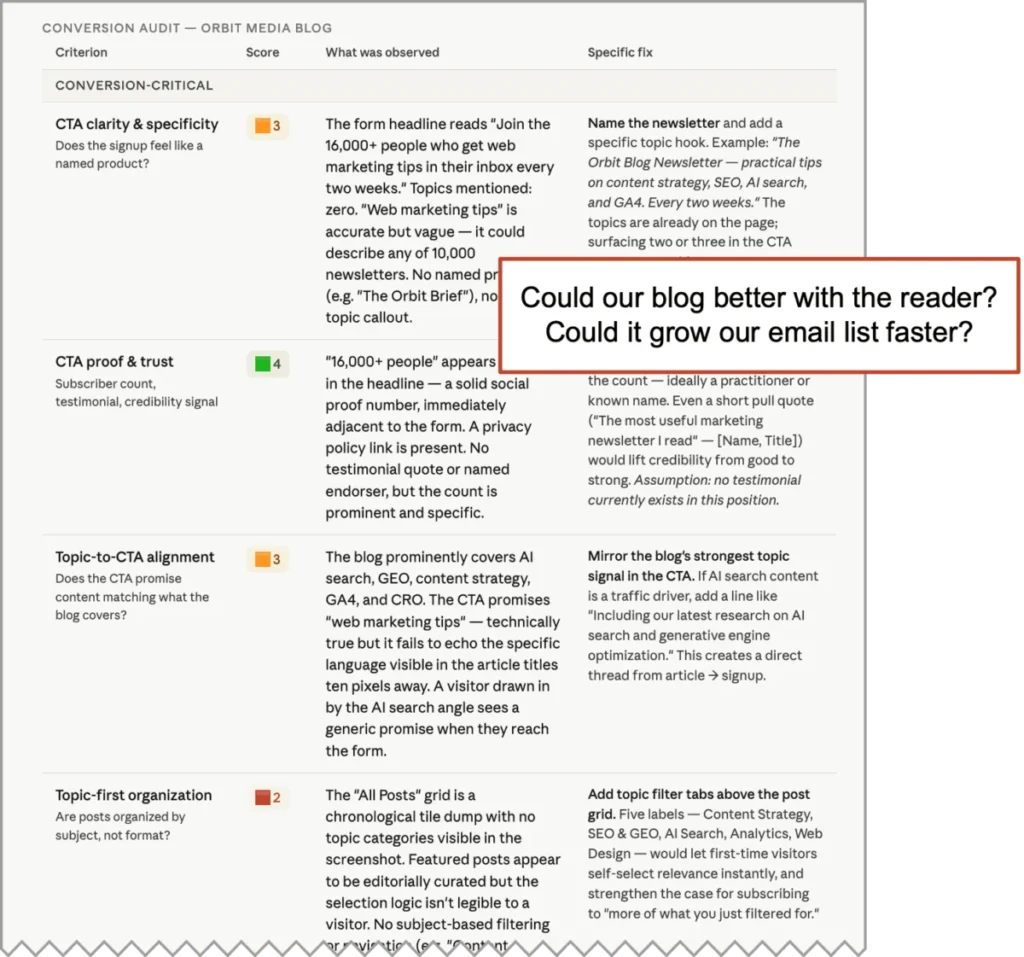

The digital marketing landscape is undergoing a seismic shift with the rapid integration of Artificial Intelligence into search engines. While the SEO community has coalesced around a core set of best practices for navigating this new frontier, a deeper analysis reveals a concerning reliance on surface-level tactics over strategic innovation. This article delves into the prevailing advice for AI search optimization, scrutinizes its potential shortcomings, and proposes more nuanced, data-driven approaches that promise to yield superior results.
The Dominant Narrative: A Checklist Approach to AI Search
A comprehensive review of 150 SEO articles dedicated to AI search optimization has identified a clear consensus on the key strategies for improving a website’s visibility in AI-driven search environments. The overwhelming majority of these articles point to three primary pillars: Frequently Asked Questions (FAQs), schema markup, and off-site citations on platforms like Reddit. This standardized advice is not confined to written content; it’s a recurring theme at industry conferences and within SEO forums.
This consistency is illustrated by a visual analysis of the research, which shows FAQs and answer-focused content leading the recommendations at 93%, followed closely by schema markup, public relations (PR) citations, community engagement, and topic authority. While these elements are undeniably important, the uniformity of the advice raises questions about whether the SEO industry is truly innovating or merely adhering to a prescriptive checklist. The concern is that a blind adherence to best practices, without a strategic understanding of their underlying purpose, can lead to mediocre performance and a missed opportunity for genuine competitive advantage.
Challenging the Status Quo: Deeper Dives into AI Search Strategies
The prevailing advice, while well-intentioned, often lacks the depth required to navigate the complexities of AI search effectively. A closer examination of each key recommendation reveals potential pitfalls and suggests avenues for more impactful strategies.
The FAQ Conundrum: Beyond Generic Questionnaires
The logic behind prioritizing FAQs for AI search is sound: AI models excel at understanding and responding to natural language questions. Therefore, structuring content in a question-and-answer format is seen as a direct pathway to providing AI with the data it needs to serve users. However, the execution of this strategy frequently falls short.
The Problem: Many SEO professionals, when advised to implement FAQs, resort to generating questions based on generic SEO tools, competitor analysis, or basic prompt engineering. This approach often leads to a collection of questions that, while grammatically sound, fail to capture the nuanced inquiries of their specific target audience. The resulting FAQs become a checklist item rather than a genuine reflection of customer needs, diluting their effectiveness. The data from the article’s analysis supports this, showing SEO tools as the dominant source for FAQ questions (78%), with internal teams contributing a mere 4%. This indicates a disconnect between the information being gathered and the actual voice of the customer.
The Solution: The most effective method for identifying truly frequently asked questions lies within a company’s own proprietary data. Sales call transcripts, particularly in the post-pandemic era of virtual meetings, represent a goldmine of authentic customer inquiries. AI notetakers are increasingly prevalent in these meetings, generating rich textual data that can be analyzed to uncover the precise language, pain points, and questions of potential customers.
By feeding these transcripts into AI tools like NotebookLM, which are designed to stay close to the source material and minimize hallucination, businesses can extract genuine customer queries. This approach transforms FAQs from a generic tactic into a strategic tool for understanding and addressing customer needs directly. Prompts such as "Identify the top 10 most frequently asked questions by prospects based on these call transcripts" or "What are the common pain points mentioned in these sales conversations?" can unlock invaluable insights. This data-driven approach ensures that FAQs are not only optimized for AI but are also genuinely helpful to human visitors, aligning with the core purpose of content creation.
Schema Markup: From Technicality to Content Planning
Schema markup, a vocabulary of tags that can be added to web pages to help search engines understand their content, is another cornerstone of AI search optimization advice. The rationale is that by clearly labeling content elements, search engines and AI crawlers can more easily extract and interpret information.
The Problem: The common recommendation is to implement schema markup as a technical overlay, often as a post-creation task handled by technical SEO specialists. This approach prioritizes the implementation of tags over the quality and completeness of the underlying content. Pages may pass schema validation tests but remain thin, incomplete, or fail to provide the depth of information that AI models seek. This "retrofit" mentality overlooks the potential of schema to guide content strategy.
The Solution: A more effective strategy involves leveraging schema markup during the content planning and creation process. Schema standards, such as those found on schema.org, offer a structured framework that can reveal content gaps. For example, the "ProfessionalService" schema includes properties like "serviceType," "areaServed," "hasCredential," and "knowsAbout." If a page lacks information related to these properties, it signifies a potential content deficiency.
By using AI to analyze a page through the lens of schema properties, marketers can identify specific areas for improvement. A prompt like the "Schema-First Content Enhancer" provided in the original analysis can guide an AI to identify content gaps by examining relevant schema types and their properties. This process moves beyond simply marking up existing content to actively enhancing it based on a comprehensive understanding of what constitutes a complete and informative resource, benefiting both human users and AI crawlers. This proactive approach ensures that content is not only technically optimized but also rich, relevant, and aligned with user intent.
Off-Site Citations: Targeting Prompts, Not Just Platforms
The importance of off-site citations for AI search visibility is widely acknowledged. Since AI models train on vast datasets from across the internet, mentions and links from reputable external sources can significantly influence their responses. Platforms like Reddit, YouTube, and Wikipedia are frequently cited as crucial for this strategy.
The Problem: The conventional advice often directs SEOs to simply establish a presence on these popular platforms without a clear understanding of why they are important for a specific brand or industry. While Reddit may be a frequently cited source in general AI responses, its relevance to a particular niche or buyer persona’s search queries can vary dramatically. A one-size-fits-all approach to off-site citations can lead to wasted effort on platforms that do not significantly impact AI’s perception of a brand within its specific domain.
The Solution: The key to effective off-site AI optimization lies in understanding buyer prompts and the specific sources that AI models reference for those prompts. This requires a shift in focus from popular platforms to prompt-specific relevance. By employing a multi-step, multi-prompt methodology, businesses can identify the precise sources that matter to their target audience’s AI-driven searches.
This process involves analyzing how AI models respond to queries relevant to the brand’s offerings and then identifying the specific sources cited in those responses. For B2B brands, for instance, industry-specific review sites like G2 or Gartner reports might hold more sway than general social media platforms. The methodology, as outlined in advanced SEO resources, guides users to prompt AI with specific buyer scenarios and then analyze the resulting citations. This targeted approach ensures that efforts are concentrated on platforms and sources that directly influence AI recommendations for the brand’s specific category and buyer personas, leading to more efficient and impactful off-site visibility.
The Broader Implications: From Best Practices to Strategic Innovation
The analysis of SEO articles reveals a stark contrast between the commonly prescribed "best practices" and more effective, strategic approaches. While the former often leads to generic implementations, the latter emphasizes understanding user intent, leveraging proprietary data, and proactively shaping content based on AI’s underlying mechanisms.
The SEO community’s struggle to agree on a unified term for this evolving field – with terms like GEO, AEO, AI SEO, and LLMO vying for dominance – highlights the nascent nature of AI search optimization. This lack of consensus, while potentially frustrating for keyword researchers, underscores the need for a flexible and adaptive approach rather than rigid adherence to established terminologies.
As the digital marketing landscape continues to evolve with AI, the focus must shift from simply ticking boxes on a checklist to cultivating a deeper understanding of how AI interacts with content. This involves:
Prioritizing First-Party Data: Utilizing internal data sources like sales transcripts to understand authentic customer questions and concerns.
Leveraging AI as a Strategic Tool: Employing AI not just for content generation but for in-depth audience research and content gap analysis, informed by structured data like schema.
Targeting Off-Site Efforts: Focusing on the specific platforms and sources that are most influential for a brand’s target audience within their niche, based on prompt analysis.
Embracing Experimentation and Sharing: Encouraging the development and dissemination of novel strategies, recognizing that the field is still in its early stages and collective learning is crucial.
The insights gleaned from this extensive review suggest that true AI search optimization lies not in following a standardized playbook, but in developing creative, data-informed strategies that resonate with both human users and intelligent algorithms. The future of SEO in the age of AI will belong to those who move beyond the checklist and embrace a more holistic, empathetic, and innovative approach to digital visibility.
The burgeoning field of Large Language Model (LLM) applications, particularly those leveraging Retrieval-Augmented Generation (RAG), hinges on a fundamental yet frequently underestimated process: chunking. This crucial step involves dividing vast swathes of source documentation into manageable, semantically coherent segments, or "chunks," which are then indexed and retrieved to inform the LLM’s responses. While countless online tutorials advocate for a seemingly straightforward approach like RecursiveCharacterTextSplitter(chunk_size=1000, chunk_overlap=200), the practical experience of teams deploying RAG systems in production reveals a far more nuanced reality, often encountering a critical "chunk size nobody talks about." This article delves into the complexities of RAG chunking, exploring six leading strategies that are actually employed by practitioners, evaluating their performance against a shared corpus, and highlighting the approach that consistently delivers superior results in real-world scenarios.
The Foundational Challenge: Bridging the Gap Between Retrieval and Response
Retrieval-Augmented Generation has revolutionized how LLMs interact with proprietary or domain-specific knowledge, enabling them to provide accurate, up-to-date, and attributable answers by drawing from external data sources. The efficacy of a RAG system, however, is directly proportional to the quality of its retrieval mechanism, which in turn is heavily influenced by how the underlying documents are chunked. The challenge lies in striking a delicate balance: chunks must be small enough to be precisely relevant to a query, yet large enough to provide sufficient context for the LLM to formulate a comprehensive answer.
The "chunk size nobody talks about" refers to this often-missed sweet spot, where an ill-conceived chunking strategy can lead to significant failures. Imagine a 30-page legal contract, meticulously indexed, yet when a customer queries an indemnity clause, the system retrieves only fragmented pieces, confidently omitting crucial details. Or consider a product documentation QA bot that cites two seemingly relevant paragraphs but misses a critical table located two pages away, which holds the actual answer. Even more frustrating, a seemingly minor change like swapping an embedding model or re-chunking an entire corpus can send evaluation scores plummeting by double-digit percentages, underscoring the sensitivity and impact of this foundational choice.
To objectively assess chunking strategies, a robust evaluation framework is indispensable. The data points presented herein are derived from a rigorous evaluation conducted on a substantial corpus: 1,200 questions posed against 2,300 pages of diverse technical-product documentation. This corpus encompassed SaaS changelogs, intricate API references, and dense contract PDFs—materials representative of complex enterprise knowledge bases. The evaluation utilized top-5 retrieval, text-embedding-3-large for embeddings, gpt-4o-2024-11-20 as the generative model, and Ragas for comprehensive scoring. Critically, only the chunking strategy varied across experiments, ensuring a direct comparison of their impact on two primary retrieval metrics: Recall (the proportion of relevant chunks successfully retrieved) and Precision (the proportion of retrieved chunks that are actually relevant).
Evolution of Chunking Strategies: A Chronological Overview
The landscape of RAG chunking has evolved from rudimentary methods to highly sophisticated, context-aware techniques. This progression reflects a continuous effort to overcome the limitations of simpler approaches and better align retrieved information with the nuanced requirements of LLMs.
1. Fixed-Size Chunks: The Baseline of Simplicity
The most basic chunking strategy, fixed-size chunking, involves slicing text into equal character windows, optionally with some overlap, without regard for linguistic or structural boundaries like sentences, paragraphs, or sections. The implementation is straightforward, often a simple loop iterating through the text.
Mechanism: Divides the document into segments of a predetermined character count.
When it Wins: Ideal for homogeneous text with minimal inherent structure, such as raw chat logs, interview transcripts, or single-author essays where semantic continuity is less dependent on explicit formatting. Its computational cheapness and predictable chunk sizes make batch-embedding trivial and cost-effective.
When it Loses: Its indiscriminate nature is its biggest downfall. Documents with headings, tables, or code blocks are particularly problematic. This method frequently splits mid-sentence, mid-clause, or mid-function, scattering crucial entities across multiple, disconnected chunks that a retriever may fail to reassemble. For instance, a key policy term might be severed from its definition, rendering both parts less useful.
Scores on Corpus: Recall 0.61, Precision 0.54. This represents the absolute floor in performance, serving as a stark reminder of the importance of more intelligent chunking.
2. Recursive Character Splitting: The Common Default
Recursive character splitting represents a significant step up from fixed-size chunks and is widely adopted, often being the default in popular RAG frameworks like LangChain.
Mechanism: This method attempts to split text using a hierarchical list of separators. It first tries the largest separator (e.g., nn for blank lines), and if the resulting chunk is still too large, it falls back to the next separator (e.g., n for newlines, then . for sentence endings, then ` for words) until the chunk fits within the specifiedchunk_size`. This approach aims to preserve paragraph and sentence boundaries where possible.
When it Wins: Highly effective for most prose-based documents, suchcluding articles, reports, and general descriptive text. It offers a good balance between engineering effort and retrieval performance, providing paragraph-aware splits with minimal configuration. For many initial RAG deployments, its ease of use and respectable performance make it the default choice.
When it Loses: While better than fixed-size, it struggles with highly structured content. Tables often get flattened into plain text, losing their inherent organization. Headings can become "orphaned," detached from the substantive sections they introduce. For example, retrieving "Pricing" without the three paragraphs detailing the pricing tiers below it severely limits the LLM’s ability to answer complex queries. The chunk_overlap parameter, while intended to mitigate boundary issues, can sometimes mask these underlying structural problems on simpler questions, only to exacerbate them on more challenging ones where precise context is paramount.
Scores on Corpus: Recall 0.74, Precision 0.68. This marks a substantial improvement over fixed-size chunking and is often where many development teams conclude their chunking optimization efforts.
3. Semantic Chunking: Topic-Driven Segmentation
Semantic chunking introduces an intelligent, meaning-aware approach to text segmentation, moving beyond mere character counts or structural delimiters.
Mechanism: This strategy involves embedding every sentence in a document and then iterating through these embeddings. Chunks are formed by cutting the text when the cosine distance (a measure of semantic dissimilarity) between adjacent sentences spikes past a predefined threshold. The goal is to create chunks that align with shifts in topic or meaning, rather than arbitrary length limits.
When it Wins: Particularly powerful for long-form narrative content characterized by clear topic changes, such as academic research papers, blog posts, or detailed interview transcripts. In such corpora, where content flows logically from one distinct subject to another, semantic chunking can yield significant recall improvements. Demos often showcase impressive recall jumps (e.g., 40%) on these specific types of documents.
When it Loses: Its performance degrades significantly on dense reference documents where most sentences remain "on-topic." In technical writing, the embedding-distance signal can become noisy, leading to chunks that are either excessively large (if few distance spikes are detected) or highly fragmented (if minor formatting quirks or subtle shifts trigger premature splits). Furthermore, semantic chunking is computationally intensive, typically 10 to 100 times more expensive than recursive splitting, as it requires an embedding call for every sentence. This cost is re-incurred every time the corpus changes, making it less economical for frequently updated knowledge bases.
Scores on Corpus: Recall 0.72, Precision 0.65. On the technical product documentation corpus, semantic chunking performed slightly worse than recursive splitting, underscoring its corpus-specific strengths and weaknesses.
4. Hierarchical / Parent-Document Retrieval: The Production Workhorse
Hierarchical or Parent-Document Retrieval addresses the fundamental tension between retrieval granularity and contextual completeness by separating the "matching unit" from the "answering unit."
Mechanism: This strategy involves splitting the document twice. First, into smaller "child" chunks (e.g., 400 characters) designed for high retrieval accuracy due to their focused content. Second, into larger "parent" chunks (e.g., 2000 characters) that provide ample context. The system then embeds the child chunks and indexes them in a vector store. At retrieval time, a query matches against these smaller child chunks, but the retriever returns the larger parent chunk that contains the matching child. This ensures that the LLM receives both precise relevance and sufficient surrounding context.
When it Wins: This approach consistently excels in almost every real-world document-QA workload, including complex contracts, extensive product documentation, internal knowledge bases, and operational runbooks. The small child embedding precisely identifies the relevant clause or detail, while the parent chunk provides the necessary surrounding definitions, cross-references, or explanatory text. For example, finding a specific row in a table necessitates retrieving the table’s header and potentially other related sections to fully understand its meaning. This strategy elegantly solves the problem where the ideal unit for matching a query is smaller than the ideal unit for answering it.
When it Loses: It can be less efficient for very short documents where a "parent" chunk would essentially encompass the entire document, negating the hierarchical benefit. It also poses challenges for extremely token-constrained budgets, where even a 2,000-character parent chunk might be too expensive to include multiple top-5 retrievals. Operationally, it adds weight: maintaining two separate stores (for children and parents) and tuning two distinct splitters introduces a layer of complexity not present in simpler methods.
Scores on Corpus: Recall 0.86, Precision 0.79. This strategy achieved the highest recall on the technical product documentation corpus, demonstrating its robust performance in complex, structured environments.
Why Parent-Document Retrieval Consistently Wins in Production
The success of Parent-Document Retrieval lies in its direct attack on a critical failure mode: the matching unit is smaller than the answering unit. In many real-world scenarios, a query might precisely hit a specific phrase, a single line in a contract, or a data point in a table. However, to provide a truly comprehensive and accurate answer, the LLM often requires broader context—surrounding definitions, preceding explanations, or related sections.
Consider these common failure points:
A retriever finds the exact contract clause, but the LLM needs two paragraphs of surrounding definitions to fully interpret it.
It identifies a specific row in a product feature table, but requires the column headers, and possibly an introductory paragraph two pages up, to understand what that row signifies.
It locates a function definition in an API reference, but needs the class docstring or module overview to grasp the function’s broader purpose and usage.
Parent-Document Retrieval elegantly resolves these issues by decoupling the optimization concerns. It allows for small, precise child chunks for effective retrieval while providing larger, contextually rich parent chunks for the LLM’s consumption. Other strategies, by forcing a single chunk size to serve both roles, inevitably compromise either retrieval precision or contextual completeness.
Another, often undersold, reason for its production dominance is its graceful degradation. In complex, dynamic corpora, new document types or unexpected formatting can break even well-tuned child splitters. With parent-document retrieval, even if a child chunk is poorly segmented, the larger parent chunk often remains sufficiently intact and comprehensive to still provide a reasonable amount of context to the LLM. This resilience makes it a more robust choice for evolving knowledge bases where perfect chunking cannot always be guaranteed.
Propositional chunking represents a more radical departure, leveraging LLMs themselves to refine the chunking process for extreme precision.
Mechanism: This advanced technique employs an LLM to decompose each passage of a document into atomic, self-contained factual propositions. These propositions are designed to be independently verifiable and true without relying on the surrounding text. These granular propositions are then embedded. At retrieval time, the system matches queries against these highly precise propositions, optionally returning the original, larger passage from which they were extracted. This approach draws inspiration from research like Chen et al.’s "Dense X Retrieval" (2023).
When it Wins: Exceptional for fact-dense corpora where questions typically map to single, discrete claims, such as medical guidelines, regulatory texts, or encyclopedic entries. Its primary strength lies in its precision, as each retrieved proposition is a clean, unambiguous unit of information.
When it Loses: Cost is a significant barrier. This method requires an LLM call for each passage during the ingest process, and these costs are re-incurred with every corpus update. A 10,000-document corpus could incur hundreds of dollars ($200-$800) just for propositionalization, even before embedding costs. Furthermore, the quality of propositions is highly sensitive to the extractor’s prompt; different engineers using the same code might derive different sets of propositions, introducing variability. There’s also a risk of the LLM-based extractor inadvertently dropping context that a proposition might need, especially for highly interconnected clauses.
Scores on Corpus: Recall 0.81, Precision 0.84. While achieving the best precision on the corpus, its high ingest cost and maintenance complexity make it a specialized, expensive solution.
6. Late Chunking: Contextual Embeddings for Enhanced Understanding
Late chunking is an innovative, still-emerging strategy that aims to imbue individual chunk embeddings with broader document context.
Mechanism: This technique involves feeding the entire document into a long-context embedder. Instead of immediately creating chunk embeddings, the system retains the per-token embeddings generated by the model. Only after this full-document embedding pass are chunk boundaries applied. The chunk vectors are then formed by averaging the token embeddings within each boundary. The key advantage is that every chunk’s embedding implicitly carries contextual information from the rest of the document, as pronouns and implicit references are understood in their full textual environment. For instance, the pronoun "it" in chunk 7 is embedded with awareness of its antecedent in chunk 2.
When it Wins: Particularly effective for documents rich in anaphora and implicit references, such as legal contracts, academic papers, or narrative reports. It directly addresses the "who does ‘the Licensee’ refer to in this chunk" problem by ensuring that such references are disambiguated at the embedding stage.
When it Loses: Requires specialized long-context embedders (e.g., Jina v3, Voyage-3, Cohere Embed 4, typically with 8k-32k context windows), which are not universally available or always cost-effective. Incremental caching becomes challenging, as changing even a single paragraph often necessitates re-embedding the entire document. SDK support is still nascent, largely confined to specific libraries like Jina’s implementation. Being a relatively newer approach (with key papers emerging around 2024), fewer teams have extensive production mileage, making it a strategy worth watching as tooling and adoption mature.
Scores on Corpus: Recall 0.79, Precision 0.76. It outperformed recursive splitting but lagged behind parent-document retrieval on this specific corpus.
Comparative Analysis: The Scorecard and Key Takeaways
The following scorecard summarizes the performance and operational characteristics of each chunking strategy on the evaluated corpus. While "your mileage may vary" depending on the specific document types and query patterns, the general shape of these results is consistent with observations from numerous RAG deployments across various industries.
Strategy
Recall
Precision
Ingest Cost (relative)
Ops Weight
Fixed
0.61
0.54
1x
Trivial
Recursive
0.74
0.68
1x
Trivial
Semantic
0.72
0.65
50x
Medium
Parent-Document
0.86
0.79
1.2x
Medium
Propositional
0.81
0.84
200x
Heavy
Late Chunking
0.79
0.76
3x
Medium
The scorecard reveals a clear hierarchy. Simple, arbitrary chunking methods (Fixed, Recursive) offer low cost and trivial operational overhead but yield suboptimal retrieval performance. Semantic chunking, despite its intellectual appeal, struggles with dense technical documentation and incurs significant computational costs. Propositional chunking achieves impressive precision but at an exorbitant cost, making it feasible only for highly specialized, static, and fact-critical applications. Late chunking shows promise but is still maturing.
Industry Perspectives and Future Outlook
The insights gleaned from this comparative analysis reflect a growing consensus among RAG practitioners: the choice of chunking strategy is not a mere technical detail but a strategic decision with profound implications for system performance, cost, and maintainability.
Developer Experience: For developers, the operational weight of a chunking strategy is a critical factor. Trivial methods are easy to implement but lead to debugging headaches due to poor retrieval. Heavy methods, while potentially offering high performance, can become a bottleneck in deployment pipelines, increase infrastructure costs, and complicate incremental updates. Parent-document retrieval, despite its "medium" operational weight, is often seen as a worthwhile investment due to its robust performance and graceful degradation.
The Role of Evaluation: The exercise underscores the paramount importance of rigorous, corpus-specific evaluation. Relying solely on generalized benchmarks or flashy demos can be misleading. As demonstrated by semantic chunking’s performance on technical documentation, a strategy that excels in one domain (e.g., narrative text) may underperform significantly in another. Teams must invest in constructing representative evaluation datasets and establish clear metrics (like Recall and Precision) to make informed decisions.
Tooling and Ecosystem: Frameworks like LangChain have democratized access to various chunking strategies, including the ParentDocumentRetriever which, despite its "unglamorous name," has proven to be a workhorse in production. The continued evolution of these tools, coupled with the emergence of specialized solutions for advanced techniques like late chunking (e.g., jinaai/late-chunking on GitHub), suggests a future where more sophisticated strategies become easier to implement and manage.
Evolving LLM Capabilities: The rapid advancements in LLM technology, particularly the expansion of context windows in newer models (e.g., 128k, 1M tokens), might subtly shift the chunking landscape. While longer context windows reduce the urgency of aggressive chunking for LLM input, the challenge of efficient and precise retrieval from vast document stores remains. The core problem of matching units versus answering units persists regardless of LLM context size. Improved embedding models will undoubtedly enhance the effectiveness of all chunking strategies, but the structural considerations remain paramount.
Conclusion: Prioritizing Practicality Over Hype
In the dynamic world of RAG, where new techniques and models emerge with dizzying speed, it’s easy to be swayed by the latest research papers or visually appealing demos. Semantic chunking might generate captivating visualizations of topic shifts, propositional chunking might boast impressive precision numbers in academic contexts, and late chunking might spark engaging discussions on social media due to its technical ingenuity.
Yet, time and again, when teams move beyond initial experimentation and into production environments with real-world document QA workloads, they find themselves converging on hierarchical or parent-document retrieval. This strategy, though less glamorous and present in codebases since 2023 without much fanfare, offers a pragmatic and robust solution to the core problem of bridging retrieval precision with contextual completeness. It excels because it acknowledges and addresses the fundamental discrepancy between the optimal size for identifying relevant information and the optimal size for enabling an LLM to formulate a comprehensive answer. Moreover, its ability to degrade gracefully provides a crucial safety net in the unpredictable world of enterprise data.
For any team embarking on a document QA RAG project, the unequivocal advice from the trenches is clear: evaluate parent-document retrieval first. Do not let the allure of flashier, more theoretically elegant approaches distract from the practical, proven solution that keeps winning in the challenging arena of production RAG systems.
For those seeking deeper insights into building robust RAG systems, Chapter 9 of "Observability for LLM Applications" offers an end-to-end guide on retrieval instrumentation, covering how to monitor for silent recall regressions and detailing the RAG-specific evaluation rigs that underpin the findings presented here. This resource is invaluable for any team navigating the complexities of shipping reliable RAG features.
The marketing technology landscape is undergoing a profound transformation as businesses increasingly pivot toward automated solutions to manage the complexity of the modern digital ecosystem. Marketing automation, once a specialized tool for enterprise-level corporations, has evolved into a foundational component of the marketing tech stack for organizations of all sizes. By leveraging software to automate repetitive tasks—ranging from email sequencing and social media scheduling to complex lead scoring and multi-channel campaign management—companies are realizing significant gains in operational efficiency and customer engagement. As of 2024, the industry is positioned at a critical juncture where artificial intelligence and machine learning are merging with traditional automation frameworks to redefine how brands interact with their audiences.
Market Revenue and Industry Growth Projections
The economic footprint of the marketing automation industry reflects its growing necessity within the global business framework. Market analysts and industry data indicate a consistent upward trajectory in worldwide revenue, signaling that investment in these technologies is not merely a trend but a long-term strategic shift. In 2021, the global marketing automation market was valued at approximately $4.79 billion. By 2022, this figure grew to $5.19 billion, followed by a jump to $5.86 billion in 2023.
Current projections for 2024 estimate the market size at $6.62 billion, representing a robust year-over-year growth rate. This momentum is expected to accelerate as businesses seek to integrate disparate data sources into unified platforms. By 2026, spending is anticipated to reach $8.44 billion, eventually crossing the $10 billion threshold by 2028. Long-term forecasts are even more aggressive, with the market expected to hit $17.2 billion by 2031 and reach a staggering $21.7 billion by 2032. This nearly five-fold increase from 2021 levels underscores the total digital transformation of the marketing sector, driven by the need for hyper-personalization at scale.
Evolution of Marketing Automation: A Brief Chronology
The journey to the current $6.6 billion market has been marked by several distinct eras of technological advancement. Understanding this timeline provides essential context for the current statistics:
The Early Era (1990s – Early 2000s): The inception of the industry was characterized by basic email marketing tools and the birth of CRM (Customer Relationship Management) systems. These tools were primarily reactive and required significant manual oversight.
The Integration Era (2010 – 2018): Platforms like HubSpot, Marketo, and Pardot began to consolidate features, allowing marketers to link social media, landing pages, and email into a single workflow. This era saw the rise of inbound marketing as a dominant strategy.
The Intelligence Era (2019 – Present): The current phase is defined by the integration of Artificial Intelligence (AI). Modern platforms no longer just follow "if-then" rules; they use predictive analytics to determine the best time to send a message, the most effective subject lines, and the likelihood of a lead to convert.
Shifting Budgets and Marketer Sentiment
The financial commitment of marketing departments serves as a primary indicator of the technology’s perceived value. Data regarding budget allocations for 2024 reveals a strong consensus: marketing automation is a high-priority investment. Approximately 68% of marketers report that they are increasing their automation budgets. Specifically, 14% of respondents plan to increase spending significantly, while 54% anticipate moderate increases.
Conversely, only 11% of marketers expect to decrease their spending, with a mere 2% planning significant cuts. About 21% intend to keep their budgets stable. This widespread willingness to allocate more capital toward automation suggests that the Return on Investment (ROI) of these platforms has been proven across various sectors, even in a fluctuating global economy. Industry experts suggest that as labor costs rise, companies are looking to automation to maintain output without proportionally increasing their headcount.
Current Adoption Rates and Channel Usage
While the term "marketing automation" covers a broad spectrum of activities, adoption is not uniform across all channels. Email marketing remains the most dominant application, with 58% of marketers utilizing automation for their email campaigns. This is followed closely by social media management at 49%, where tools are used to schedule posts and monitor engagement across multiple platforms simultaneously.
Other significant areas of adoption include:
Content Management: 33%
Paid Advertisements: 32%
SMS Marketing: 30%
Campaign Tracking: 28%
Landing Pages: 27%
Interestingly, there is a gap between current usage and planned adoption. For instance, while only 32% currently automate their paid ads, 29% of marketers plan to implement automation in this area in the near future. Similarly, social media management is a top priority for upcoming automation projects (29%). These figures indicate that while email is the "mature" segment of the market, the next wave of growth will come from paid media and mobile-first channels like SMS and push notifications.
Strategic Goals and the Quest for Data Quality
The primary motivation for implementing marketing automation has shifted from simple "time-saving" to more complex strategic objectives. According to recent surveys, the top goal for improving marketing automation is to optimize the overall marketing strategy, cited by 43% of professionals. This suggests that marketers are no longer looking for siloed tools but for platforms that can inform their broader business decisions.
The second most common goal is improving data quality (37%). In an era of strict privacy regulations like GDPR and CCPA, and the phasing out of third-party cookies, having high-quality, first-party data is essential. Automation platforms serve as the "source of truth" for customer interactions, helping to clean and organize data that would otherwise be fragmented. Other key goals include:
Identifying Ideal Customers/Prospects: 34%
Optimizing Messaging/Campaigns: 31%
Increasing Personalization: 30%
Driving Efficient Growth/Decreasing Costs: 21%
The Customer Journey and Automation Depth
A critical metric for the success of these platforms is how effectively they manage the customer journey. However, the data reveals that "full automation" is still a rarity. Only 9% of marketers describe their customer journey as "fully automated." The vast majority (59%) report being "partially automated," while 32% are "mostly automated."
Despite the lack of total automation, there is high satisfaction with the capabilities of modern platforms. 89% of marketers agree (30% strongly, 59% somewhat) that their marketing automation platform makes it easy to build effective customer journeys. The bottleneck appears not to be the software itself, but rather the complexity of designing multi-channel strategies that feel seamless to the end user. Only 5% of organizations have fully automated their multi-channel marketing strategies, while 22% have not automated them at all, highlighting a significant opportunity for growth in the mid-market and enterprise segments.
Procurement Drivers: What Influences the Purchase Decision?
When organizations enter the market for a new automation solution, their priorities are clear and pragmatic. Price remains the leading factor, influencing 58% of purchase decisions. However, "Ease of Use" is a very close second at 54%. This reflects a common pain point in the industry: sophisticated software is useless if the marketing team cannot navigate it without constant help from IT.
Other influential factors include:
Customer Service: 27%
Customization Options: 24%
Integration Capabilities: 22%
Breadth and Depth of Features: 21% and 19% respectively
Data Visualization and Analytics: 13%
The emphasis on ease of use and customer service suggests that "human" factors remain vital in the software-as-a-service (SaaS) industry. Companies are looking for partners, not just vendors, to help them navigate the complexities of implementation and onboarding.
Quantifiable Benefits and Business Impact
The benefits of marketing automation extend beyond the marketing department and impact the entire organization’s bottom line. The most cited advantage is the improvement of the customer experience (43%). By delivering the right message at the right time, automation reduces friction in the buying process and fosters brand loyalty.
Efficiency gains are also a major driver, with 38% of marketers stating that automation enables better use of staff time. By removing manual data entry and repetitive tasks, employees can focus on high-level creative and strategic work. Furthermore, 35% of respondents noted that automation leads to better data and decision-making, while 34% saw improvements in lead generation and nurturing. From a fiscal perspective, 33% of marketers believe automation allows for better use of the overall marketing budget by identifying and doubling down on the most effective channels.
Broader Implications and Future Outlook
The data presented paints a picture of an industry that is both maturing and expanding. As marketing automation moves toward the $21 billion mark over the next decade, several key implications emerge. First, the divide between "automated" and "manual" businesses will likely widen, with the former enjoying a significant competitive advantage in terms of speed-to-market and personalization.
Second, the role of the marketer is evolving. The demand for "MarTech" specialists who can bridge the gap between creative strategy and technical execution is at an all-time high. Finally, the integration of AI will likely solve the current "partial automation" dilemma, allowing for more dynamic, self-optimizing customer journeys that require less manual configuration.
In conclusion, marketing automation has moved past the early adoption phase and is now a critical engine for business growth. With nearly 70% of marketers increasing their budgets and a clear roadmap toward multi-billion dollar revenues, the industry is set to remain a cornerstone of the global digital economy. Organizations that successfully navigate the challenges of data quality and ease of use will be best positioned to capitalize on these technological advancements, ultimately delivering a superior experience to their customers.
The rapid proliferation of agentic artificial intelligence (AI) systems, designed to perform complex tasks autonomously, has introduced a critical challenge for developers and users alike: maintaining transparency and fostering trust. As AI agents execute intricate multi-step processes, the traditional dichotomy of either a completely opaque "black box" or an overwhelming "data dump" of technical logs has proven inadequate. A more thoughtful, structured approach is essential to reveal the right moments for building user confidence through clarity, not noise.
This imperative has driven the development of methodologies such as the Decision Node Audit and the Impact/Risk Matrix, which empower design and engineering teams to map an AI system’s internal logic to user-facing explanations. These tools aim to demystify AI actions, transforming moments of potential anxiety into opportunities for connection and understanding.
The Rise of Agentic AI and the Transparency Dilemma
Agentic AI systems represent a significant leap in automation, capable of handling complex, multi-stage tasks with minimal human intervention. From processing financial claims to managing supply chains, these agents promise unparalleled efficiency. However, this autonomy often comes at the cost of user understanding. When an AI system takes a complex task and, after a period of internal processing, returns a result, users are left questioning its journey: "Did it work correctly? Did it hallucinate? Were all necessary compliance checks performed?"
This "algorithmic fog" stems from the inherent complexity of modern AI, particularly large language models (LLMs) and other advanced machine learning architectures. Unlike traditional software with predictable, rule-based logic, agentic AI often operates with probabilistic reasoning, making decisions based on confidence scores rather than absolute certainties. This fundamental difference necessitates a new paradigm for transparency. According to a recent survey by PwC, only 35% of consumers trust companies to use AI responsibly, highlighting a significant trust deficit that opaque systems exacerbate. The global AI market is projected to reach over $1.8 trillion by 2030, underscoring the urgency for effective trust-building mechanisms to ensure widespread adoption and ethical deployment.
Historically, responses to this transparency challenge have swung between two extremes. The "Black Box" approach, favored for its simplicity, hides all internal workings, often leading to user frustration, powerlessness, and a profound lack of trust. Conversely, the "Data Dump" floods users with every technical detail, from log lines to API calls, causing "notification blindness." Users ignore this constant stream of information until an error occurs, at which point they lack the contextual understanding to diagnose or rectify the problem, negating the efficiency gains the agent was meant to provide. Neither extreme adequately serves the user’s need for informed agency.
Mapping Internal Logic: The Decision Node Audit
To navigate this nuanced landscape, the Decision Node Audit emerges as a crucial first step. This collaborative process brings together designers, engineers, product managers, and business analysts to meticulously map an AI system’s backend logic to its user interface. The core objective is to identify "ambiguity points"—moments where the system diverges from set rules to make a probabilistic choice or estimation. By exposing these decision points, creators can provide specific, reliable reports about how the AI arrived at its conclusion, rather than vague status updates.
Consider the case of Meridian (a hypothetical insurance company), which deployed an agentic AI to process initial accident claims. Users uploaded photos and police reports, after which the system displayed a generic "Calculating Claim Status" message for a minute before presenting a risk assessment and payout range. This black box approach generated significant distrust, with users uncertain if the AI had even reviewed crucial documents like the police report.
A Decision Node Audit revealed that the AI performed three distinct, probability-based steps, each with numerous smaller embedded processes:
Damage Assessment: Analyzing uploaded photos to estimate vehicle damage severity.
Report Cross-Referencing: Verifying details against the police report and other submitted documents.
Policy Compliance & Payout Recommendation: Checking coverage, deductible, and legal precedents to propose a settlement.
By transforming these internal steps into transparent moments, Meridian’s interface was updated to a sequence of explicit messages: "Assessing Vehicle Damage…", "Reviewing Police Report for Mitigating Circumstances…", and "Verifying Coverage and Calculating Payout Range…". While the processing time remained unchanged, this explicit communication restored user confidence. Users understood the AI’s complex operations and knew precisely where to focus their attention if the final assessment seemed inaccurate. This shift transformed a moment of anxiety into a moment of connection, reinforcing the value of the AI’s work.
Another example involves a procurement agent designed to review vendor contracts and flag risks. Initially, users were presented with a simple "Reviewing contracts" progress bar, which generated anxiety, particularly regarding potential legal liabilities. The Decision Node Audit identified a key ambiguity point: the AI’s probabilistic assessment of liability terms against company rules. When a clause was, for instance, a "90% match" but not a perfect one, the AI had to make a judgment. Exposing this node allowed the interface to update to "Liability clause varies from standard template. Analyzing risk level." This specific update provided users with confidence, context for any delay, and clarity on where to focus their review of the agent-generated contract.
Prioritizing Transparency: The Impact/Risk Matrix
While the Decision Node Audit identifies all potential transparency moments, not all warrant exposure. AI systems can generate dozens, if not hundreds, of internal events for a single complex task. Displaying every detail would lead back to the "data dump" problem. This is where the Impact/Risk Matrix becomes indispensable, helping teams prioritize which decision nodes to highlight.
The matrix categorizes decisions based on two axes:
Impact: The potential consequence of the AI’s action (e.g., financial, legal, operational, reputational).
Risk/Reversibility: How difficult or impossible it is to undo the AI’s action.
Low Stakes / Low Impact decisions often involve minor, easily reversible actions. For example, an AI renaming a file or archiving a non-critical email. These can typically be auto-executed with passive notifications (e.g., a small toast message or a log entry) or a simple undo option.
High Stakes / High Impact decisions, however, demand greater transparency. Consider a financial trading bot. Executing a $5 trade might require minimal transparency, but a $50,000 trade demands a pause and explicit review. The solution might be to introduce a "Reviewing Logic" state for transactions exceeding a specific dollar amount, allowing the user to examine the factors driving the decision before execution.
The matrix can then be used to map specific design patterns to these prioritized transparency moments:
Type: Confirm UI: Simple Undo option Ex: Archiving an email
High Impact
Type: Review UI: Notification + Review Trail Ex: Sending a draft to a client
Type: Intent Preview UI: Modal / Explicit Permission Ex: Deleting a server
This structured approach prevents "alert fatigue" by reserving high-friction patterns like "Intent Previews" (where the system pauses, explains its intent, and requires confirmation) only for truly irreversible, high-stakes actions. For high-stakes but reversible actions, an "Action Audit & Undo" pattern (e.g., notifying the user and offering an immediate undo button) can maintain efficiency while providing safety.
Qualitative Validation: The "Wait, Why?" Test
Identifying potential transparency nodes on a whiteboard is only the first step; validation with actual human behavior is critical. The "Wait, Why?" Test is a powerful qualitative protocol for this purpose. Users are asked to observe the AI completing a task while speaking their thoughts aloud. Any questions like "Wait, why did it do that?", "Is it stuck?", or "Did it hear me?" are timestamped. These moments of confusion signal a breakdown in the user’s mental model and highlight missing transparency moments.
For instance, in a study for a healthcare scheduling assistant, users observed the agent booking an appointment. A four-second static screen consistently prompted the question, "Is it checking my calendar or the doctor’s?" This revealed a critical missing transparency moment. The system needed to split that wait into two distinct steps: "Checking your availability" followed by "Syncing with provider schedule." Crucially, these messages must connect the technical process to the user’s specific goal. A message like "Checking your calendar to find open times" followed by "Syncing with the provider’s schedule to secure your appointment" grounds the technical action in the user’s real-world objective, significantly reducing anxiety.
Operationalizing Transparency: A Cross-Functional Imperative
Implementing these transparency strategies demands deep cross-functional collaboration. Transparency cannot be designed in isolation. It requires a seamless integration of technical capabilities, content strategy, and user experience design.
The process begins with a Logic Review involving lead system engineers. Designers must confirm that the system can indeed expose the desired states. Often, engineers initially report a generic "working" status. Designers must push for granular updates, ensuring the system can signal precisely when it moves from, for example, text parsing to rule checking. Without this technical hook, the design is impossible to build.
Next, the Content Design team becomes invaluable. While engineers provide the "what," content designers articulate the "how" in a human-friendly, trust-building manner. A developer might propose "Executing function 402," which is technically accurate but meaningless to a user. A content strategist translates this into something like "Scanning for liability risks" – specific enough to convey action without technical jargon, aligning with the user’s mental model and alleviating concerns.
Finally, rigorous Qualitative Testing is paramount. Designers conduct comparison tests using simple prototypes, varying only the status messages. For example, one group might see "Verifying identity" while another sees "Checking government databases." This reveals how specific wording impacts user perception of safety and trustworthiness. This iterative testing ensures that the final interface language is not only accurate but also effective in building confidence.
This integrated approach culminates in a "transparency matrix"—a shared spreadsheet where engineers map technical codes to user-facing messages, edited collaboratively with content designers. This fosters shared understanding and accountability. Teams learn to navigate friction points, such as when an engineer’s "Error: Missing Data" becomes a designer’s "Missing receipt image" after negotiation, leading to more actionable user feedback. Ultimately, operationalizing the audit strengthens team communication and ensures users have a clearer, more trustworthy understanding of their AI-powered tools.
Trust as a Design Choice: Implications for the Future
Viewing trust as a mechanical result of predictable communication, rather than an abstract emotional byproduct, empowers designers to actively engineer it into AI systems. This proactive approach to transparency has profound implications:
Enhanced User Adoption: Users are more likely to embrace and regularly use AI tools they understand and trust.
Regulatory Compliance: With evolving regulations like the EU AI Act emphasizing explainable AI (XAI), structured transparency becomes a critical component of legal and ethical compliance.
Reduced Errors and Faster Recovery: When users understand the AI’s decision points, they can more quickly identify and correct errors, minimizing potential financial or operational damages.
Competitive Advantage: Companies that prioritize transparent AI experiences will differentiate themselves in a rapidly crowding market, building stronger brand loyalty.
Improved Human-AI Collaboration: By demystifying AI’s actions, humans can better collaborate with agents, leveraging their strengths while maintaining oversight and control.
The era of opaque AI is drawing to a close. The Decision Node Audit and Impact/Risk Matrix provide a robust framework for designing AI experiences that are not only efficient but also inherently trustworthy. By systematically identifying ambiguity points, prioritizing based on impact and reversibility, and crafting clear, contextual explanations, designers can ensure that AI systems truly augment human capabilities, fostering a future where intelligent agents are partners, not black boxes. The next step will involve delving into the specifics of designing these transparency moments, including crafting effective copy, structuring intuitive UI, and handling the inevitable errors when agents fall short.