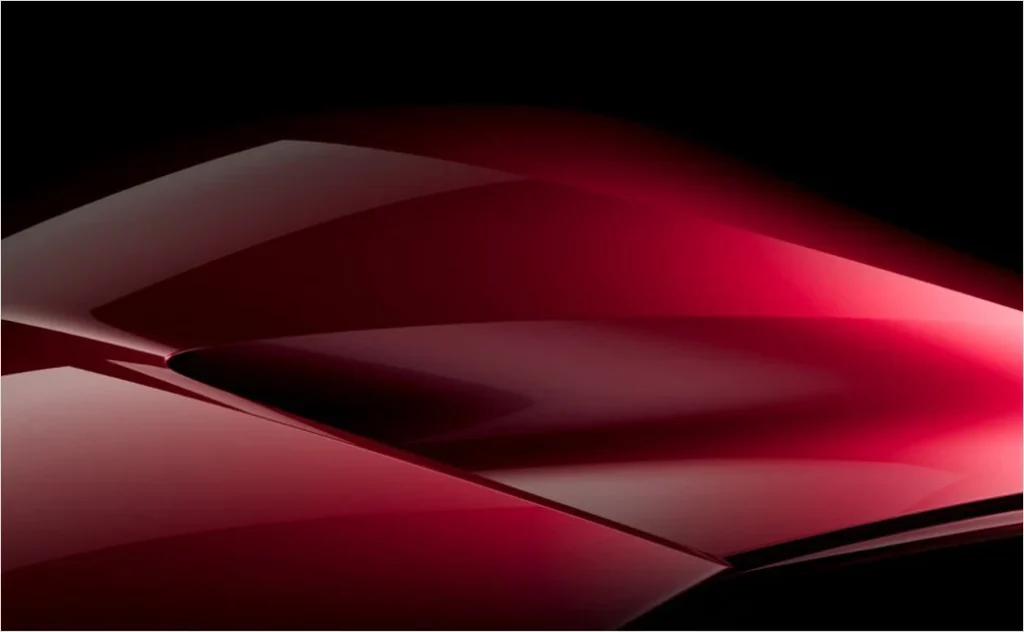

Italian automotive icon Alfa Romeo has officially announced the moniker and corporate visual identity for its highly anticipated upcoming concept vehicle, slated to make its global debut at the Paris Motor Show next month. Dubbed the "Cuorerosso," the new design study is positioned by corporate leadership as a definitive manifesto for the brand’s future design language, engineering philosophy, and emotional appeal. The announcement comes at a crucial juncture for the Milanese marque as it navigates the global automotive industry’s complex and rapid transition toward electrification and software-defined mobility.
By revealing both the name and a bespoke badge ahead of the official auto show unveiling, Alfa Romeo is intentionally generating momentum and setting clear expectations among its dedicated global fan base, known colloquially as the Alfisti. The newly revealed emblem bridges the gap between the manufacturer’s storied historical roots and its forward-looking vision, fusing traditional Milanese heraldry with contemporary graphic design trends.
Etymology and Brand Philosophy
The nomenclature "Cuorerosso"—literally translating from Italian as "red heart"—is far more than a simple marketing label; it is a conceptual anchor designed to summarize the brand’s entire ethos. According to official statements released by the manufacturer, the name encapsulates the deepest essence of Alfa Romeo by merging two foundational pillars of its corporate identity: the color red, which has long served as the visual shorthand for racing passion and Italian automotive flair, and the heart, representing the visceral, emotional connection that links every vehicle bearing the iconic Biscione badge with its driver.
In the design and conceptualization of the Cuorerosso, these two elements are intended to beat in unison, translating into a physical declaration of intent. The Italian manufacturer emphasized that the vehicle was conceived first and foremost to evoke strong emotional responses, pushing back against the perceived clinical sterility of modern transportation. In an era where many automotive brands prioritize autonomous utility and digital interfaces, Alfa Romeo is doubling down on visceral driving pleasure and passionate design execution.
Visual Identity and Heraldic Evolution
At the heart of the Cuorerosso’s presentation is its unique visual identity, which pairs a fluid, handwritten-style wordmark with the brand’s traditional badge. The corporate emblem retains its historic heraldic elements—the red cross of Milan and the legendary Biscione (the crowned serpent swallowing a man)—which trace their lineage back to the Visconti family that ruled Milan in the 14th century.
This juxtaposition of hand-rendered typography against centuries-old heraldry reflects a broader modern design trend within the automotive sector, where heritage brands seek to humanize their digital and physical touchpoints. The handwritten script introduces an element of bespoke craftsmanship, suggesting a return to coachbuilding traditions where every line was drawn by a human hand rather than an algorithm. This visual strategy reassures purists that while Alfa Romeo’s mechanical underpinnings may evolve to incorporate hybrid and fully electric powertrains, the soulful human element of the brand will remain uncompromised.

Historical Context and Chronology
The unveiling of the Cuorerosso fits neatly into a broader timeline of brand revitalization efforts orchestrated by parent company Stellantis. Over the past several years, Alfa Romeo has systematically restructured its product portfolio and marketing strategy to reestablish its position as a premier global premium player.
Key milestones in this modern era include the successful commercial launches of the Giulia sedan and Stelvio SUV, followed by the market introduction of the Tonale compact crossover, which marked the brand’s first foray into electrification via mild-hybrid and plug-in hybrid powertrains. Earlier this year, the company celebrated its 115-year history with commemorative badges and special events, underscoring the profound weight of its heritage.
The announcement of the Cuorerosso concept on September 29, 2026, serves as the opening salvo for the autumn auto show circuit. Following its physical debut at the Paris Motor Show in October, the concept is expected to tour key international markets, serving as a rolling laboratory for design cues that will eventually trickle down to next-generation production vehicles scheduled for release toward the end of the decade.
Supporting Data and Market Dynamics
The strategic positioning of the Cuorerosso must be evaluated against the backdrop of shifting global automotive metrics. Premium European manufacturers are currently navigating a delicate balancing act: allocating billions of euros to battery-electric vehicle (BEV) research and development while trying to maintain the emotional engagement that underpins high-margin brand loyalty.
Data from recent automotive industry analyses indicate that while functional EVs dominate volume sales projections, concept vehicles that prioritize design innovation and emotional resonance remain critical traffic drivers for legacy brands. For Alfa Romeo, a marque historically dependent on the passion of collectors and enthusiasts, maintaining this emotional connection is vital for brand equity. The choice of a striking red color palette for the initial teaser campaign is a calculated move to capture consumer attention in an increasingly crowded digital landscape, leveraging the proven psychological impact of the color red to stimulate excitement and brand recall.
Industry Implications and Expert Analysis
Automotive industry analysts view the Cuorerosso not merely as a styling exercise, but as a strategic litmus test for Alfa Romeo’s long-term design direction under its current leadership. As the brand transitions toward an entirely electrified lineup over the coming decade, designers face the monumental challenge of redefining proportions, aerodynamics, and thermal management without the traditional packaging constraints dictated by internal combustion engines.
By framing the Cuorerosso as a "manifesto," Alfa Romeo is signaling to investors, competitors, and consumers that its future vehicles will not sacrifice aesthetic drama for the sake of aerodynamic efficiency or battery packaging convenience. The concept is widely expected to preview the proportioning and design language of future sports cars and flagship grand tourers, potentially hinting at a spiritual successor to legendary models from the brand’s illustrious past.

Furthermore, the emphasis on bespoke styling and emotional nomenclature reflects a growing industry trend toward personalization and limited-run halo vehicles. As mass-market segments become increasingly commoditized by standardized electric platforms, premium and luxury brands are leaning heavily into their unique heritage to justify higher price points and build exclusive sub-brands.
Response from the Global Alfisti Community
The reaction from automotive enthusiasts and dedicated Alfa Romeo owner clubs—the Alfisti—has been overwhelmingly positive following the release of the initial teaser images and logo details. Online forums and social media channels dedicated to Italian automotive design have erupted with speculation regarding the vehicle’s powertrain, chassis architecture, and potential production viability.
While the company has remained tight-lipped regarding specific technical specifications—such as whether the Cuorerosso features a pure electric, hydrogen, or high-performance hybrid powertrain—the enthusiast community has welcomed the return of unadulterated Italian styling cues. The deliberate use of heritage-inspired typography and the prominent display of the Biscione badge have successfully reassured long-standing fans that the brand’s cultural identity remains secure amid sweeping corporate transformations.
Conclusion and Outlook
As the countdown to the Paris Motor Show continues, the Alfa Romeo Cuorerosso stands as one of the most anticipated design reveals of the 2026 automotive calendar. By synthesizing its 115-year heritage with a forward-looking design philosophy, the Italian marque is attempting to prove that soul and passion can survive the transition into a technologically dominated era.
Whether the Cuorerosso ultimately translates into a direct production model or remains a pure design study, its introduction marks a pivotal moment for Alfa Romeo. It serves as a bold declaration that the brand’s legendary red heart continues to beat with undiminished vigor, ready to ignite the passions of a new generation of drivers when it takes center stage next month.