Typographica, the seminal online journal dedicated to the craft of type design and typography, officially marked its twentieth anniversary in July 2022. Launched on May 1, 2002, the platform has served as a central repository for industry commentary, design analysis, and historical inquiry, surviving the tumultuous transition from the early, decentralized web to the modern era of algorithmically driven social media. Its longevity represents a significant milestone for independent publishing in a digital landscape that has largely shifted away from long-form, open-access commentary.

The Genesis of a Digital Archive
At the turn of the millennium, the internet was a fragmented space for specialized design communities. Before the rise of the current social media giants, typographic discourse was primarily confined to private mailing lists and obscure Usenet newsgroups. The year 2000 saw the emergence of Typophile, a landmark forum that provided the first cohesive digital space for type designers to interact, critique, and exchange technical knowledge. However, the medium of the "blog" was still in its infancy.
In early 2002, the landscape of type-focused blogging was sparse. Only a handful of dedicated sites, such as David John Earls’ Typographer and Andy Crewdson’s Lines & Splines, consistently tracked the evolving industry. Recognizing a void in collaborative, long-form content, Joshua Lurie-Terrell—a Sacramento-based graphic designer and scholar of printing history—leveraged the simplicity of the Blogger platform to establish Typographica. By adopting the name of Herbert Spencer’s influential mid-century journal, Lurie-Terrell signaled an intent to bridge the gap between historical precedent and the emerging digital frontier.

A Chronology of the Independent Web
The evolution of Typographica mirrors the broader trajectory of the World Wide Web. Its early operational history can be categorized into several distinct phases of digital maturity:
- 2002: The Blogger Era: The inception of the site focused on rapid, link-heavy content. It functioned as an informal "Type Twitter," capturing breaking news and industry observations before print media could synthesize the information.
- 2003–2004: Migration to Movable Type: As the site matured, it transitioned to the Movable Type content management system, allowing for more robust archiving and collaborative editorial control.
- 2005–2010: The Rise of Professionalism: During this period, the site began to pivot from link-curation to in-depth analytical reviews, setting a standard for typographic criticism that remains influential today.
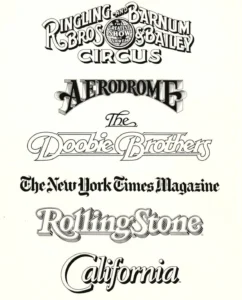
- 2011–2022: Consolidation and Design Legacy: The site established a tradition of commissioning bespoke nameplates from industry luminaries, including Miguel Hernandez, Erik van Blokland, and Mark Simonson, effectively turning the site’s own identity into an exhibition of contemporary type design.
The Role of Decentralization in Creative Communities
The fundamental architecture of Typographica was rooted in the early philosophy of the World Wide Web: interoperability. Unlike the current social media paradigm—which utilizes "walled gardens" to trap users and discourage external traffic—early blogs were built on the premise of the hyperlink.

Data from the early 2000s indicates that these independent sites functioned as the primary nodes of professional networking. By providing a platform for guest contributors—including figures like Matthew Bardram, Patric King, Jenny Pfafflin, and Graham Hicks—the site fostered a community that was not bound by corporate interests or advertising metrics. This model allowed for a "freewheeling" style of communication where the quality of the insight, rather than the "engagement" metrics, dictated the reach of the content.
Comparative Analysis: The "Social" Shift
In the contemporary landscape, the shift toward platforms like Instagram and Twitter has significantly altered the dissemination of design critique. Fact-based analysis of these platforms reveals three primary impacts on specialized communities:

- Algorithmic Siloing: Modern platforms prioritize content that maximizes time-on-platform, often isolating niche communities from broader intellectual discourse.
- Diminished Ownership: Creators on social media platforms do not own their archives. If a platform changes its terms of service or shuts down, decades of critical discourse can be erased or locked behind proprietary interfaces.
- Content Compression: The move from long-form blogging to image-centric posting has reduced the depth of industry analysis. Where Typographica once offered detailed critiques of character sets and kerning, current trends favor "empty praise" and high-level visual snapshots.
Industry Implications and the Future of Independent Publishing
The survival of Typographica for over twenty years suggests that there is a persistent demand for independent, long-form, and editorially managed content. The site’s longevity serves as a case study for the resilience of the "small web." By maintaining control over its own hosting and archives, Typographica has avoided the obsolescence that claimed many of its early contemporaries.
Industry observers note that the success of modern initiatives—such as the Alphabettes collective, which promotes the work of women in the lettering arts—indicates that the community is beginning to favor independent, member-led organizations over algorithmic platforms. The move toward "independent publishing" is not merely a nostalgic trend; it is a tactical response to the limitations of centralized digital spaces.

Looking Toward the Next Decade
As the digital environment faces increasing scrutiny regarding data privacy and content ownership, the "blogging" model of the early 2000s is being reconsidered as a viable alternative. Typographica has demonstrated that a site can serve as a primary record of industry evolution while remaining immune to the transient nature of social media fads.
The site’s transition from a simple Blogger feed to a comprehensive, design-conscious journal serves as a blueprint for specialized communities. By prioritizing historical context, encouraging expert-level peer review, and maintaining a commitment to open access, Typographica continues to function as a vital, if not essential, component of the global typography community. Its twentieth anniversary is not just a celebration of a website; it is an affirmation of the enduring value of independent, expert-driven intellectual exchange in a digital age increasingly dominated by ephemeral content. As the industry moves forward, the lessons derived from two decades of Typographica will likely inform the next generation of digital archives and design discourse.