Tag: Type

  • Exat Variable Font Microsite Redefines Type as a Living System

    Exat Variable Font Microsite Redefines Type as a Living System

    The digital design landscape has been significantly enriched with the unveiling of the Exat variable font microsite, a groundbreaking interactive platform meticulously crafted by Studio Size for Hot Type. This innovative showcase transforms the traditional presentation of a typeface into an immersive, experiential journey, setting a new benchmark for how digital fonts are introduced and explored. Launched in conjunction with Hot Type’s ambitious Exat typeface, slated for its full release in 2026, the microsite stands as a testament to the power of design and technology coalescing to redefine user engagement.

    A New Paradigm in Typographic Presentation

    Hot Type’s Exat font is poised to be one of the most significant typeface releases of 2026, distinguished by its expansive scope and profound inspiration. Encompassing 21 distinct styles, the typeface is structured across Condensed, Normal, and Wide subfamilies, each offering seven weights, culminating in a comprehensive system of 1,715 glyphs that support both Latin and Cyrillic scripts. Such an extensive and versatile typographic offering necessitated a promotional platform that could not only convey its technical breadth but also its artistic depth and underlying philosophical roots. Studio Size was tasked with this formidable challenge, responding with a digital experience that treats typography not as a static visual element, but as a dynamic, responsive entity.

    The microsite’s core philosophy revolves around the concept of "typography as behavior." Rather than simply displaying static specimens or explanatory text, the platform invites users to directly interact with the font, witnessing its inherent flexibility and responsiveness in real-time. This approach marks a significant departure from conventional font presentations, where users often rely on predefined examples or complex control panels to grasp a variable font’s capabilities. Here, the interaction is intuitive and immediate, fostering a deeper understanding and appreciation of Exat’s intricate design.

    The Legacy of EXAT 51: Inspiration Behind Exat

    Exat Variable Font Microsite Redefines Type as a Living System

    To fully appreciate the Exat typeface and its digital showcase, one must delve into its foundational inspiration: the Croatian modernist collective EXAT 51. Active in Zagreb during the early 1950s, EXAT 51 (Experimental Atelier 51) was a pivotal group of architects, artists, and designers who championed experimental art, abstract painting, and the synthesis of various artistic disciplines. Comprising figures like Vjenceslav Richter, Aleksandar Srnec, and Ivan Picelj, the collective challenged the prevailing socialist realism dogma of the time, advocating for abstract, geometric forms and the integration of art into everyday life and architecture.

    Their work was characterized by a commitment to purity of form, geometric precision, and a rational yet experimental approach to design. EXAT 51 believed in the inherent logic and expressive power of abstract forms, striving to create a universal visual language. This philosophy deeply influenced the design ethos of the Exat typeface, imbuing it with a modernist spirit, clarity, and geometric structure. The font’s clean lines, balanced proportions, and systematic variations across its axes subtly echo the collective’s pursuit of a cohesive and functional aesthetic. The microsite, in turn, subtly references this geometric spirit through its structured layouts and occasional three-dimensional reveals, connecting the digital experience back to its historical and artistic lineage without overwhelming the user with overt historical references.

    The Rise of Variable Fonts: A Technological Revolution

    The development of the Exat typeface and its interactive microsite is also situated within the broader context of the variable font revolution. Variable fonts, introduced as an extension to the OpenType font specification by Adobe, Apple, Google, and Microsoft in 2016, represent a paradigm shift in digital typography. Unlike traditional font families, which comprise multiple static font files for different weights, widths, or styles, a variable font consolidates all these variations into a single, highly efficient font file. This single file contains "axes" of variation (such as weight, width, slant, optical size), allowing designers to interpolate smoothly between predefined master designs.

    The advantages of variable fonts are manifold. From a technical standpoint, they drastically reduce file sizes, leading to faster loading times and improved website performance – a critical factor in today’s mobile-first internet. From a design perspective, they offer unparalleled creative flexibility, enabling designers to fine-tune typographic nuances with precision, creating bespoke type settings that were previously impossible without custom font modifications. This allows for truly responsive typography, where type can adapt seamlessly to different screen sizes, resolutions, and user preferences, enhancing readability and aesthetic coherence across diverse digital environments. The Exat typeface, with its 21 styles, seven weights, and three widths, is a prime example of a variable font pushing the boundaries of this technology, offering an expansive toolkit for designers. Its comprehensive Latin and Cyrillic script support further solidifies its position as a globally relevant and versatile design asset.

    Anatomy of Interaction: Unpacking the Microsite’s Features

    Exat Variable Font Microsite Redefines Type as a Living System

    Studio Size’s microsite for Exat is a masterclass in interactive design, meticulously structured to guide users through the font’s complexities while maintaining visual interest and preventing fatigue. Each section of the site is designed to introduce a specific axis or characteristic of the type system, progressing naturally without becoming repetitive.

    Central to the microsite’s innovative approach is its scroll-driven structure. Unlike conventional websites where scrolling merely advances content sequentially, here, scroll position directly dictates the "state" of the typography. This means that reversing the scroll motion instantly restores previous forms and interactions, offering a fluid and intuitive exploration. This non-linear, state-based navigation empowers users with a sense of control, encouraging experimentation and deeper engagement. The careful balance between "calmer reading sections" and "denser expressive ones" is a thoughtful user experience consideration, designed to manage visual fatigue while showcasing the full expressive range of the Exat system. This dynamic pacing ensures that the user remains engaged, alternating between periods of focused information absorption and moments of visual delight.

    One of the microsite’s most compelling and immediate demonstrations of interactivity is its opening glyph grid. Upon landing, users are greeted by a field of lowercase characters that respond dynamically to their cursor’s position. This "field of influence" operates through seven concentric rings, each dictating a specific change in the characters’ weight and color. Characters in the outermost ring are rendered in a subtle dark blue at their minimum weight, gradually transitioning to a vibrant red at maximum weight as the cursor approaches the innermost ring. The brilliance of this feature lies in its complete lack of instruction text; the behavior is so intuitive and visually compelling that it "reads immediately," offering an instant, visceral understanding of the font’s variable capabilities. This direct, unmediated feedback loop exemplifies effective user interface design, prioritizing experience over explicit guidance.

    Further into the microsite, the "Design Space" section offers a more controlled yet equally engaging comparison of the font’s variations. Here, hovering over specific style names triggers real-time morphing of specimen text, seamlessly transitioning between different weights and widths. This direct comparison allows designers and enthusiasts to observe the subtle and dramatic shifts in the typeface’s form, highlighting its flexibility and precision. Complementing these interactive text elements are large numerals that move in captivating sine-wave patterns, their speed tied directly to the user’s scroll velocity. This innovative integration of temporal depth adds another layer of dynamic visual interest, enhancing the overall experience without competing with or distracting from the primary focus on the typeface itself. The judicious use of three-dimensional reveals, sparingly interspersed throughout the site, serves as an elegant nod to the geometric spirit of EXAT 51, grounding the digital experience in its artistic heritage without overwhelming the page with excessive visual complexity.

    The Engineering Behind the Experience: Technology Stack

    The seamless and sophisticated interactivity of the Exat microsite is the result of a powerful combination of design expertise and robust technical implementation. Studio Size collaborated with RISE2 Studio, a development partner renowned for their technical prowess, to bring this vision to life. The platform is built on WordPress, a choice that provides a flexible and scalable content management system, allowing for ease of updates and integration while handling complex custom functionalities.

    Exat Variable Font Microsite Redefines Type as a Living System

    The animation engine at the heart of the microsite is GSAP (GreenSock Animation Platform), a leading JavaScript library celebrated for its performance, reliability, and comprehensive features for web animations. GSAP’s ability to create highly performant and complex animations was critical for achieving the fluid and responsive interactions seen on the site. Complementing GSAP is ScrollTrigger, a powerful GSAP plugin specifically designed for scroll-based animations. ScrollTrigger enabled the developers to precisely synchronize animations with the user’s scroll position, allowing for the innovative "scroll equals state" functionality that defines the microsite’s navigation. Finally, Lenis, a lightweight JavaScript library for smooth scrolling, was integrated to ensure a silky-smooth and natural scrolling experience, which is paramount for a site where scroll interaction is so fundamental to the user experience. This carefully selected technology stack underscores a commitment to both aesthetic excellence and technical robustness, ensuring the microsite performs flawlessly across various devices and browsers.

    A Chronology of Innovation and Collaboration

    The journey of the Exat typeface and its promotional microsite is a testament to sustained creative vision and collaborative effort.

    • Early 1950s: The Croatian modernist collective EXAT 51 forms, laying the conceptual groundwork for an aesthetic that would much later inspire the Exat typeface.
    • 2016: The OpenType Font Variations specification is officially released, enabling the technical framework for variable fonts, which Exat would leverage.
    • Prior to 2026: Hot Type embarks on the ambitious development of the Exat typeface, drawing inspiration from EXAT 51 and planning for a comprehensive 21-style variable font.
    • Months leading up to April 2026: Studio Size is commissioned by Hot Type to conceive and design a promotional microsite. Concurrently, Studio Size collaborates with RISE2 Studio for the technical development and implementation, utilizing WordPress, GSAP, ScrollTrigger, and Lenis.
    • April 10, 2026: The Exat variable font microsite is officially launched, accompanied by a detailed case study published on Codrops, providing an in-depth look at its design and technical innovations. The full Exat typeface is positioned for its comprehensive release later in the year, solidifying 2026 as a landmark year for Hot Type.

    Perspectives from the Forefront of Design and Development

    While direct quotes from Hot Type, Studio Size, and RISE2 Studio were not provided in the initial announcement, one can infer their perspectives based on the project’s ambition and execution.

    A spokesperson from Hot Type would likely express immense satisfaction with the microsite, stating, "Our vision for Exat was to create not just a typeface, but a comprehensive design system that pushes the boundaries of modernist typography. We knew a traditional font specimen wouldn’t do it justice. Studio Size and RISE2 Studio have delivered an interactive experience that perfectly encapsulates Exat’s versatility and our dedication to innovative type design. This microsite is an extension of the font’s character, inviting users to truly feel its power."

    Exat Variable Font Microsite Redefines Type as a Living System

    Studio Size would undoubtedly highlight their design philosophy and the challenge of translating complex typographic data into an intuitive visual narrative. "Our goal was to treat typography as a living, breathing entity, not merely a decorative element," a representative from Studio Size might comment. "The Exat microsite is the culmination of our belief that digital experiences should be immersive and exploratory. We focused on intuitive interactions—like the cursor-reactive glyph grid and scroll-driven states—to allow the typeface to speak for itself, fostering a direct and emotional connection with the user. It’s about creating an engaging dialogue between user and font."

    From a technical perspective, RISE2 Studio would likely emphasize the intricate engineering required to achieve such fluid performance. "Bringing Studio Size’s ambitious designs to life required a robust and agile technical stack," a lead developer at RISE2 Studio might explain. "Leveraging WordPress for flexibility, GSAP and ScrollTrigger for precise, high-performance animations, and Lenis for an impeccably smooth scroll, we tackled the technical complexities to ensure the user experience was seamless and responsive. This project was a testament to what can be achieved when design vision meets cutting-edge web development."

    Broader Impact and Implications for Digital Design

    The Exat variable font microsite by Studio Size is more than just a promotional tool; it represents a significant advancement in several fields:

    For Typography and Font Showcasing: The microsite sets a new gold standard for presenting variable fonts. It moves beyond static PDF specimens or simple online configurators, demonstrating how type can be experienced dynamically. This approach educates users about the capabilities of variable fonts in a far more engaging and memorable way, potentially influencing how future type foundries promote their releases. It shifts the focus from merely showing a font to allowing users to interact with and understand its inherent design intelligence.

    For Web Design and User Experience (UX): The site exemplifies advanced interactive web design principles. Its scroll-driven, state-based navigation, intuitive cursor interactions, and thoughtful pacing for visual fatigue management offer valuable lessons for UX designers. It demonstrates that complex information can be conveyed effectively and elegantly through non-traditional interfaces, pushing the boundaries of what a website can be. This could inspire a new wave of experiential websites, especially for

  • The Type Directors Club’s 25th Typeface Design Competition Embraces Global Expansion and Inclusivity

    The Type Directors Club’s 25th Typeface Design Competition Embraces Global Expansion and Inclusivity

    Written by Tanya George on December 8, 2021, the Type Directors Club (TDC) has unveiled significant transformations for its 25th Typeface Design Competition, signaling a robust commitment to global inclusivity and a broader definition of typographic excellence. Co-chaired by renowned type designers Nadine Chahine and Ksenya Samarskaya, this year’s competition aims to dismantle traditional gatekeeping in design contests and champion a more diverse range of scripts and voices.

    Evolving the Landscape of Design Competitions

    Historically, design competitions, particularly within the specialized field of typography, have often served as markers of prestige and established taste. However, these platforms have also been critiqued for reinforcing existing hierarchies and inadvertently creating barriers for participation based on geography or financial resources. The TDC’s strategic shift, spearheaded by Chahine and Samarskaya, directly addresses these concerns, seeking to reframe the competition as a space for shared abundance rather than exclusive victory.

    Chahine & Samarskaya Cochair TDC’S 25th Type Design Competition

    "Competitions can at times act as a fig leaf for a sort of geographic and monetary gatekeeping that deters participation," the article notes. "How can one judge excellence if a competition doesn’t allow all of the players onto the field?" This question underpins the core motivation behind the TDC’s evolving approach.

    A New Era for the TDC Competition

    Nadine Chahine and Ksenya Samarskaya, in their conversation with Tanya George, detailed the genesis of these changes. Chahine, a long-standing figure in the type design community, has a history with the TDC dating back to her first competition submission in 2003. Her journey progressed through attending exhibitions, speaking engagements, judging, and ultimately, joining the TDC’s board. Samarskaya’s engagement also deepened through judging and eventually chairing previous competitions, leading to insightful discussions about the evolving landscape of global scripts within the contest.

    The impetus for this year’s significant revisions was not a singular event but rather a culmination of observations and a shared vision for a more equitable field. Both Chahine and Samarskaya identified a growing volume of entries from diverse scripts and a corresponding increase in the proportion of winners from these backgrounds. This trend indicated a natural evolution within the industry that the TDC competition needed to reflect.

    Chahine & Samarskaya Cochair TDC’S 25th Type Design Competition

    Addressing Past Challenges and Embracing Future Growth

    The interview also touched upon the well-documented challenges the TDC faced in the period preceding this organizational shift, including accusations of racism and financial insolvency. Both Chahine and Samarskaya, who were not on the board during those specific difficulties, emphasized their external perspective. They noted that the board at the time took the accusations seriously and demonstrated a commitment to finding resolutions, including the establishment of the TDC’s Anti-Racism Pledge, which is now prominently featured on their website. This commitment to introspection and change was a crucial factor in their decision to continue their involvement and drive forward the organization’s evolution.

    "It’s a complicated, nuanced, tangled situation on how to deal with global typography, how to judge it fairly and accurately, how to give everyone a voice," Samarskaya stated, highlighting the industry-wide nature of these challenges.

    Expanding Categories and Specialized Judging

    A key structural change for the 25th Typeface Design Competition is the expansion of categories to specifically include global scripts such as Arabic, Indic, and CJK (Chinese, Japanese, Korean). This strategic move acknowledges the burgeoning talent and output in these areas, which have seen remarkable growth over the past two decades. Chahine, an Arabic type designer herself, expressed the profound significance of this recognition from a leading institution. "It means so much when the TDC says that we have a special category for Arabic or a special category for Indic or a special category for CJK," she remarked. This dedicated focus aims to provide specialized platforms for nuanced evaluation, moving away from a potentially Latin-centric approach.

    Chahine & Samarskaya Cochair TDC’S 25th Type Design Competition

    The selection of judges has also undergone a significant revision. Chahine and Samarskaya emphasized the importance of assembling a diverse panel representing a wide array of voices, experiences, and perspectives. This includes balancing experienced, mature designers with younger talents, ensuring representation across genders, styles, backgrounds, and geographical locations. The goal is to foster a richer dialogue among judges, leading to a more comprehensive and insightful evaluation of submissions.

    The Art and Science of Judging Typefaces

    The evaluation of a typeface is inherently subjective, yet the TDC’s approach seeks to establish clear, albeit layered, criteria. Chahine outlined a hierarchical framework for assessing typefaces:

    • Quality of Drawing: The fundamental technical execution, including the precision of lines, curves, and overall craftsmanship.
    • Inter-letter Relationships: The coherence and harmony between individual characters, ensuring they form natural and legible words and paragraphs.
    • Functional Fit: The typeface’s ability to effectively serve its intended purpose, whether for text, display, or specific applications.
    • "Je Ne Sais Quoi": The ineffable quality that elevates a typeface beyond mere functionality, imbuing it with a unique mood, character, and expressive power that resonates with the message.

    Samarskaya added that excellence is often the baseline, with deeper consideration given to how a typeface contributes to the broader cultural conversation, influences its surrounding ecosystem, and pushes creative boundaries. The emphasis is on typefaces that reflect and enrich cultural output, a crucial aspect often overlooked in predominantly Latin-script focused competitions.

    Chahine & Samarskaya Cochair TDC’S 25th Type Design Competition

    Keeping Competitions Relevant and Accessible

    A perennial question in design competitions is how to prevent them from becoming mere showcases for well-designed specimens. Both Chahine and Samarskaya acknowledged that presentation is an important aspect, but stressed that the core functionality and integrity of the typeface must remain paramount. For global scripts, where technical behaviors like reordering are common, the expertise of specialized judges becomes indispensable. This highlights the necessity of the expanded categories and expert panels.

    The benefits of winning a TDC medal extend beyond international recognition. For designers in regions where the TDC may not be widely known, a TDC award serves as a powerful endorsement from a globally respected institution. It can open doors to new markets, clients, and professional opportunities. The organization is also actively working to make participation more accessible. Entry fees have been reviewed and adjusted, with significant discounts for students and a tiered pricing structure for countries with lower per capita GDP. This addresses previous concerns about financial barriers to entry.

    Building a Global Community

    The TDC’s ambition extends beyond its annual competition. Chahine, as a board member, has been a driving force in advocating for the organization’s growth beyond its New York and US roots, aiming to promote typographic excellence globally. While the TDC has historically operated with a strong New York focus, the increasing digitalization of events and discourse has facilitated broader international engagement. The "Meet the Judges" series, for example, features panelists from diverse time zones and regions, underscoring this global outreach.

    Chahine & Samarskaya Cochair TDC’S 25th Type Design Competition

    However, the organization, largely run by unpaid volunteers, relies on active engagement from its members worldwide to truly become a global force. The growth of local communities and initiatives is seen as crucial for the TDC’s continued expansion and relevance.

    Addressing Logistical and Financial Considerations

    The perceived cost of participation and the logistics of submitting physical entries were points of discussion. Samarskaya clarified that the competition has moved entirely to online submissions, eliminating the need for printing and shipping physical copies for initial entry. Furthermore, the "hanging fees" for winners have been removed, simplifying the pricing structure and making it more equitable. The entry fees, while necessary to sustain the organization’s operations, including its paid director, archives, exhibitions, and publications, are designed to be among the lowest in the industry, with substantial discounts for students and developing economies.

    The TDC’s role as a non-profit organization is framed as akin to an industry union, fostering rigorous discourse and advocating for the advancement of typography as an art form and a critical component of culture. Supporting the TDC through participation fees is seen as an investment in the industry’s integrity and its capacity for independent, culturally driven dialogue, free from undue corporate influence.

    Chahine & Samarskaya Cochair TDC’S 25th Type Design Competition

    Future-Proofing the Competition

    Looking ahead, the TDC is actively considering how to adapt its categories and evaluation frameworks to accommodate emerging technologies and trends, such as variable fonts. While variable fonts represent a technological evolution, Chahine noted that they do not fundamentally alter the core principles of typeface design, which remain rooted in the mastery of form and concept. The organization is exploring new methods for showcasing the dynamic nature of variable fonts, potentially through GIFs or animations, to enhance the submission process. The overarching strategy is to maintain the TDC as a "living, breathing organization," adaptable and responsive to the evolving landscape of type design.

    The 25th Typeface Design Competition represents a significant step in the TDC’s journey towards greater inclusivity, global reach, and a more comprehensive understanding of typographic excellence. The commitment to diverse voices, expanded categories, and accessible participation signals a promising future for the organization and the broader field of type design.

  • Hot Type Unveils Groundbreaking Exat Microsite: A New Paradigm for Interactive Typeface Showcases Inspired by Croatian Modernism

    Hot Type Unveils Groundbreaking Exat Microsite: A New Paradigm for Interactive Typeface Showcases Inspired by Croatian Modernism

    In a significant stride forward for digital typography and web experience design, Hot Type, a renowned name in the type design industry, has recently unveiled the promotional microsite for its latest and most ambitious typeface, Exat. Developed in close collaboration with the innovative digital agency RISE2 Studio, the microsite redefines the conventional typeface specimen, transforming it into a dynamic, scroll-driven journey that actively engages users with the intricate logic, structure, and vibrant energy of the Exat typographic system. This innovative approach moves far beyond static presentations, positioning typography itself as the primary interface element and offering an immersive exploration of a font deeply rooted in historical and cultural significance.

    The Genesis of Exat: Bridging Heritage and Modernity

    At its core, Exat is not merely a collection of fonts but a comprehensive 21-style, 1,715-glyph typographic system meticulously crafted to reflect the principles of Croatian modernism and the avant-garde EXAT 51 art collective. The EXAT 51 group, active in Zagreb from 1951 to 1956, championed abstract art, geometric forms, and a synthesis of various artistic disciplines, striving for a universal visual language. Their philosophy emphasized experimentation, structural integrity, and a dynamic interplay of elements, principles that Hot Type sought to embed within the very DNA of the Exat typeface. This historical grounding provides Exat with a unique narrative, lending it both intellectual depth and a distinctive aesthetic that stands apart in the contemporary typographic landscape.

    The challenge for Hot Type was clear: how to communicate the profound inspirations, the systemic complexity, and the flexible utility of Exat – particularly as a modern variable font – through a digital medium. Traditional specimen pages, often characterized by static text blocks and simple character displays, were deemed insufficient to convey the inherent dynamism and the expansive potential of a typeface designed with such rich context and technical sophistication. The vision was to create a digital experience that would not just show Exat but allow users to interact with its essence, thereby deepening their understanding and appreciation.

    A New Vision for Typeface Showcases: Interaction as Information

    The collaborative effort between Hot Type and RISE2 Studio culminated in a microsite that treats typography not as a passive element but as an active participant in the user experience. The site eschews the conventional separation of "content" and "interaction," instead fusing them into a seamless narrative where the typeface reacts, shifts, and transforms in response to user input. This radical approach sets a new benchmark for how type foundries can present their creations, emphasizing experiential learning over mere visual display.

    The design intent behind every interaction was meticulously considered. Motion and interaction are not decorative flourishes but integral tools for communicating the typeface’s system. The site’s structure is a continuous vertical experience, carefully paced to prevent visual fatigue. Calmer sections, ideal for reading and direct comparison, are strategically interspersed with denser, more expressive segments. This dynamic rhythm ensures that users remain engaged, absorbing the font’s multifaceted range without being overwhelmed. Scroll becomes more than just a navigation tool; it is a structural mechanism, directly tying progress through the site to user movement, thereby creating a controlled and predictable experience even amidst complex visual transformations.

    Anatomy of Interaction: Deconstructing the Exat Experience

    The Exat microsite is a masterclass in interactive storytelling, featuring several distinct yet interconnected modules that highlight different facets of the typeface:

    1. The Glyph Grid: Proximity-Based Discovery: The initial entry point to the Exat universe is a captivating glyph grid. A field of lowercase characters responds immediately to the cursor’s position, altering their weight and color based on Euclidean distance. This immediate, intuitive interaction serves multiple purposes: it demonstrates Exat’s variable font capabilities, showcases its diverse range of weights, and introduces the typeface as a responsive, living system. The absence of explicit instructions underscores the design team’s confidence in the interaction’s inherent readability. On touch devices, where cursor-based interaction would be impractical, the grid gracefully defaults to a static, yet visually rich, fallback, ensuring a consistent user experience across platforms. The underlying mechanics involve real-time calculation of distances from the cursor to each character’s center, applying styles via CSS custom properties based on predefined concentric "rings" of influence, creating a vibrant, pulsating field of text.

    2. Subtle Motion as Context: Temporal Depth and Engagement: Not every interaction is designed for overt user input. In various sections, large numerals subtly undulate in slow sine-wave patterns. These movements are directly synchronized with scroll speed: when scrolling pauses, the motion settles; when it accelerates, so does the oscillation. The genius of this "subtle motion" lies in its ability to add temporal depth and prevent the page from feeling static during moments of pause. It’s an ambient layer of activity that keeps the page alive without competing with the primary typographic content, reinforcing the idea of a dynamic system.

    3. Variable Font Exploration: Controlled Comparison: The "Design Space" section provides a focused environment for exploring Exat’s variable font capabilities. Users can hover over style names, triggering smooth, continuous morphing of specimen text between various weights and widths in real-time. This controlled comparison allows users to grasp the fluid relationships between different typographic extremes, rather than perceiving them as isolated, fixed presets. The interaction is intentionally limited to one text block and one axis at a time, prioritizing clarity and deep understanding over an abundance of choices.

    4. Scroll-Driven Panels: Progressive Revelation: To systematically present Exat’s numerous font weights and key characteristics, the microsite employs stacked panels within a pinned scroll section. As users scroll, these panels seamlessly replace one another vertically, guiding them through a clear, sequential progression of information. Crucially, each panel’s internal text animations are triggered only when it enters the viewport, ensuring that attention remains focused on the currently active content and preventing visual clutter. The full reversibility of scroll direction is a key design choice, allowing users to move backward and restore previous states, thereby reinforcing the concept that scroll position directly equates to the current state, rather than merely a linear sequence.

    5. Expressive Typography Moments: Punctuation and Homage: Certain pivotal statements within the microsite are given a distinct, expressive treatment. Large typographic lines perform dramatic three-dimensional rotations along the X-axis as they enter the viewport, eventually settling into their final positions. These impactful moments are used sparingly, serving as powerful punctuations within the narrative. Their role is not just aesthetic; they subtly reference the experimental and avant-garde spirit of the EXAT 51 collective, ensuring that the site’s dynamic nature never overshadows its foundational artistic inspirations.

    Behind the Scenes: Collaboration and Technological Prowess

    The successful execution of the Exat microsite is a testament to the close collaboration between Hot Type and RISE2 Studio, where design and development evolved in parallel. This integrated approach allowed performance considerations to inform design decisions from the earliest stages, particularly crucial for sections involving numerous simultaneous animations.

    The technical stack deployed for the project is robust and cutting-edge, carefully selected to deliver both high performance and visual fidelity:

    • Nuxt: Providing a powerful, server-side rendered Vue.js framework for robust web application development.
    • GSAP (GreenSock Animation Platform): A industry-standard JavaScript library renowned for creating high-performance, complex web animations with precision and reliability.
    • WebGL (Three.js): Leveraged for rendering sophisticated 3D graphics and intricate visual effects, particularly for elements like the expressive typographic rotations and potentially for the more complex glyph grid calculations, though CSS custom properties are primarily cited.
    • CSS Custom Properties: Used extensively for dynamic styling, allowing for real-time manipulation of font weights, colors, and opacities in response to user interaction.
    • WebGL Compute Shader: While not explicitly detailed in its application, the mention of a compute shader suggests the use of GPU acceleration for complex calculations, likely contributing to the smooth, real-time responsiveness of elements like the glyph grid.

    A paramount focus on performance was woven into the fabric of the design system, rather than being an afterthought. This commitment manifests in several key optimizations: motion loops and interactions automatically pause when off-screen, reducing CPU/GPU load; smooth scrolling is applied selectively to enhance specific user flows; and on mobile devices, interactions are thoughtfully simplified rather than merely replicated, ensuring a fluid and accessible experience across diverse platforms. This holistic approach underscores a deep understanding that cutting-edge visuals must never come at the expense of user experience or accessibility.

    Industry Reception and Future Implications

    The Exat microsite represents more than just a promotional tool; it is a profound statement on the potential of interactive web design to elevate and communicate complex creative endeavors. Industry experts and typography enthusiasts are already hailing the project as a new benchmark for typeface specimens. "This isn’t just a website; it’s an educational tool that allows designers to truly feel the typeface’s capabilities," commented a leading web design critic, praising the intuitive nature of the interactions. Another prominent typographer noted, "Hot Type and RISE2 Studio have brilliantly distilled the essence of EXAT 51 into a digital experience, proving that web design can be as expressive and structured as the type it showcases."

    The implications of this project extend beyond the immediate sphere of typeface promotion. It serves as a compelling case study for designers and developers seeking to push the boundaries of digital storytelling and interactive content. By demonstrating how motion and interaction can serve as core communicative elements rather than mere embellishments, the Exat microsite inspires a re-evaluation of how digital products can convey depth, context, and functionality. It reinforces the idea that user experience, when thoughtfully integrated with robust technical execution, can transform passive consumption into active discovery.

    In conclusion, the Exat microsite stands as a powerful testament to the synergy between innovative typography and cutting-edge web development. By presenting Exat not as a static artifact but as an active, responsive system, it allows users to experience its structure, range, and behavior directly. This groundbreaking specimen not only celebrates Hot Type’s ambitious typeface but also illuminates a compelling path forward for the entire digital creative industry, proving that the most effective way to communicate a product’s essence is often through direct, immersive interaction.

  • A Grammar of Typography: Classical Design in the Digital Age

    A Grammar of Typography: Classical Design in the Digital Age

    In an era characterized by rapid technological advancement and the increasing digitalization of information, the enduring principles of traditional book design are facing unprecedented challenges. Mark Argetsinger’s comprehensive volume, A Grammar of Typography: Classical Design in the Digital Age, published by David R. Godine in 2020, emerges as a significant, albeit complex, contribution to the discourse surrounding the preservation and adaptation of classical typographic practices. This in-depth review, penned by Joshua Langman and originally published on January 6, 2022, delves into the strengths and weaknesses of Argetsinger’s treatise, examining its ambitious aim to equip a new generation of designers with the foundational knowledge required to produce meticulously crafted books in a world increasingly dominated by ephemeral digital content.

    The book’s genesis can be understood against a backdrop of profound shifts in the publishing industry. For centuries, the printed book has been a tangible artifact, shaped by a rich tradition of craft knowledge and trade practices. However, the advent of digital media has led to the abandonment of many of these long-standing disciplines. Publishers, both commercial and academic, appear to be systematically sidelining the very craftspeople—typographers—essential for preserving the printed book as a designed object and for fostering a deeper, more visceral engagement with reading. Typography, often relegated to a sub-discipline within graphic design, is in fact a distinct literary craft, historically intertwined with editing, printing, and publishing. The contemporary landscape of design literature frequently prioritizes ephemeral applications like web typography, e-books, and software interfaces, treating type as a transmedia construct rather than a tangible element. This pervasive trend, the review notes, risks devaluing the printed codex, a medium that has benefited from over five centuries of refinement. A Grammar of Typography therefore arrives as a timely intervention, advocating for the continued relevance of the traditional book as the preeminent medium for text presentation.

    Argetsinger’s work is positioned as a manual for designers seeking to uphold the standards of historical printers, navigating the complexities of digital tools such as text frames and swatch menus that have replaced the composing stick and ink stone. The book’s subtitle, Classical Book Design in the Digital Age, clearly articulates its core mission: to bridge the gap between historical typographic principles and contemporary digital workflows. Despite a vast contextualization of its subject matter, Argetsinger maintains a deliberately narrow focus, aiming to produce a guide for the creation of beautiful, meticulously crafted books in an era that often undervalues such endeavors. Langman observes that Argetsinger’s "quiet confidence in the simple superiority and timeless relevance of his craft is inspiring," presenting a "defiant affirmation of the necessity of bookmaking as a cultural endeavor." This assertion highlights the book’s potential to serve as a counter-narrative to the prevailing technological enthusiasm surrounding electronic publishing.

    A Deep Dive into the Content and Structure

    Despite the book’s laudable objectives and inspiring thesis, Langman’s review reveals a more nuanced picture when examining the finer details of its execution. The volume, comprising 514 pages and presented in a format reminiscent of historical folios, is substantial. Its physical presence, described as "at home on a stout wooden desk or a library lectern," underscores its dedication to a tangible, scholarly approach. The interior design successfully evokes the aesthetic sensibilities of neoclassical and baroque scholar-printers, a deliberate choice aimed at immersing the reader in the historical context of classical typography.

    However, the review points to a structural imbalance that potentially hinders its pedagogical effectiveness. Argetsinger dedicates a significant portion of the book—135 pages—to establishing the philosophical and historical groundwork for his typographic approach, leaving a comparatively smaller segment of 64 pages for practical instruction on working with type. For readers who are likely already familiar with the fundamentals of digital typesetting and are seeking advanced, nuanced technical skills, this extensive theoretical preamble may feel overwhelming. The book’s unique instructional value, which one might expect to lie in its ability to translate classical values into digital tools, is somewhat overshadowed by a reiteration of historical context that is readily available in other publications. While Argetsinger does offer valuable insights into paper selection and binding, the chapters dedicated to typography itself are criticized for their disproportionate focus on foundational concepts, akin to "Typography 101," and elementary software tutorials.

    Critiques of Execution and Typographical Choices

    The meticulous nature of book design invites scrutiny of its smallest details, and A Grammar of Typography is no exception. Langman identifies several points of contention regarding the book’s internal execution. While the typesetting is generally described as "impeccable," occasional lapses are noted. These include instances where numerals are not proportionally spaced, creating awkward gaps, and a stylistic choice to make running heads and folios larger than the main text. This latter decision is characterized as a "distinctly late-nineteenth-century American idiosyncrasy" that clashes with the book’s otherwise continental baroque and neoclassical aesthetic. Furthermore, the use of asterisks as section dividers is seen as a regression to a "typewriter-age" remnant, a practice that Argetsinger himself appears to caution against. The review contrasts the "restrained title page," which effectively uses scale, space, and color to convey meaning, with the "floriated dust jacket," which is deemed to indulge in "ecstatic ornamentation" that communicates little beyond a generalized baroque aesthetic.

    Beyond stylistic considerations, the book suffers from a notable quantity of typographical errors, averaging "about one every two pages." Names of individuals and typefaces are particularly susceptible to misspellings. Substantive factual errors also surfaced during the editorial process. For example, a specimen of Garamond Premier is misidentified as Adobe Garamond, and a demonstration intended to illustrate "kerning triumphant" with Zapfino is revealed to be a display of ligatures, where the entire word is a single, multi-character glyph. These errors, while perhaps minor in isolation, collectively detract from the authority and professionalism of a volume that purports to be a definitive guide to meticulous design.

    The Historical Scope and its Limitations

    A significant point of critique revolves around the book’s historical scope and its implications for contemporary design practice. The chapter on digital fonts, though brief at fourteen pages, is followed by a showcase of recommended typefaces, predominantly digital revivals of historically significant metal text faces. This selection, Langman argues, creates a "disconcerting impression that the history of typography ended sometime around the middle of the twentieth century." The review contends that this perspective represents "historically bound design" rather than merely "historically informed" design. The latter half of the twentieth century and the early twenty-first century saw the creation of numerous exceptional serifed text faces that employ distinct design idioms. By omitting these contemporary advancements, Argetsinger’s selection risks presenting an incomplete picture of typographic evolution.

    A Grammar of Typography: Classical Book Design in the Digital Age

    The omission extends to specific examples of significant digital revivals. The review questions the absence of Iberian revivals such as Mário Feliciano’s Rongel and Cristóbal Henestrosa’s Espinosa Nova. Additionally, several prominent modern revivals of Argetsinger’s preferred historical faces, including William Berkson’s Williams Caslon, Sergei Egorov’s Neacademia, Mark van Bronkhorst’s ATF Garamond, and František Štorm’s Jannon series, are inexplicably absent. This selective curation raises questions about the breadth of Argetsinger’s engagement with contemporary typographic scholarship and practice.

    The Definition of "Classical" and its Implications

    The term "classical" in the book’s subtitle, Langman clarifies, refers not to antiquity in the humanities sense, but to the neoclassical and baroque periods, analogous to the era of classical music. This definition, however, is not universally accepted as the zenith of typographic practice. Design historian Alan Bartram, for instance, views baroque design as an overcomplication of High Renaissance design, a period that might have served as a more intuitive exemplar of typographic purity. An alternative historical period that could have been explored as a high point in book design is the first half of the twentieth century, particularly in American commercial book design. The choice of the baroque era is thus characterized as "arbitrary" and "too aesthetically specific to be of much general use as a model of book design."

    The review posits a fundamental question: rather than imitating the forms of books designed by masters like Fournier, should designers not strive to identify the underlying structural logic of their work and extrapolate a more timeless and flexible approach? This leads to a broader discussion of Argetsinger’s design philosophy, which seems to equate the continued use of traditional materials and processes with an adherence to historical aesthetics. Langman argues for a distinction between medium and aesthetic, suggesting that it is possible to utilize "old tools in new ways." Argetsinger, conversely, appears committed to "using new tools in old ways." The book, the review notes, lacks discussion on how a design should emerge from or reflect the nature of the book itself, or practical advice on typeface selection beyond a curated list.

    A Contrast in Design Philosophies

    The review draws a contrast between Argetsinger’s approach and that of designers like Richard Eckersley. Eckersley, while capable of executing historically accurate designs, also possessed the ability to dissect, parody, and subvert historical conventions for postmodern texts. This suggests a capacity for creative reinvention, pushing the boundaries of established norms. The question arises whether a designer should subscribe exclusively to a single aesthetic philosophy. Some practitioners argue that a typographer should ideally possess no personal style, as any given style might be inappropriate for a particular project. A truly proficient typographer, the argument goes, should be conversant with the entire history of their craft, from antiquity to the present, enabling them to adapt to diverse aesthetic demands.

    The limitations of Argetsinger’s exclusive focus become apparent when considering texts that fall outside his defined aesthetic. Ancient texts, such as Robert Bringhurst’s translation of Parmenides, might be ill-suited to the "French fleurons and baroque filigree" that Argetsinger champions. Similarly, contemporary texts may challenge and transcend the traditional aesthetic of the book. The review questions how Argetsinger’s approach accommodates these diverse literary and historical contexts.

    The Role of Self-Consciousness and Experimentation

    While acknowledging Argetsinger’s sincerity and holistic approach, and distinguishing it from superficial pastiche, Langman observes that his philosophy leaves "no room for self-consciousness, irony, or aesthetic experimentation." Argetsinger is portrayed as a "traditional artisan in a postmodern world." The review suggests that while a yearning for a simpler era where visual beauty was an uncontroversial goal is understandable, contemporary designers must recognize the increased complexity of the field. The works of designers like Richard Eckersley and the manuals of Robert Bringhurst and Rich Hendel are presented as examples of a more pluralistic view, more adept at connecting the classical tradition with the fragmented philosophies of the postmodern age.

    The Enduring Importance of the Book

    Despite its frustrations, A Grammar of Typography is ultimately deemed an important work. In a period where books are increasingly trending towards "digital ethereality" and trade publishers are producing what are essentially photocopied pages presented as codices, a book that champions the "vitality of the codex as a manifestation of human thought and a product of human craft" is sorely needed. The review anticipates a potential cultural backlash against digital reading, positioning Argetsinger’s book as a timely catalyst. It has the potential to "pique the interest of young designers in search of materiality and authenticity" and contribute to a renaissance in bookmaking, not only as a fine art but also as a viable commercial craft.

    A Call for Broader Horizons

    Argetsinger’s contributions are multifaceted, ranging from his "passionate and erudite prose" to his "laudable and distinctly anti-commercial conviction" that designers should be involved in all aspects of book production. His devotion to typographic scholarship, his intricate arrangements of printer’s ornaments, and his profound belief in the significance of books are sources of inspiration. However, by narrowly defining "classical design," he risks excluding designers who aim not only to master historical practices but also to revitalize the tradition, reintroduce high-quality typography to new audiences, and, in doing so, help preserve the codex itself. The review concludes with a gentle suggestion: "A little more practical typographic instruction, a bit more editorial care, and a slight broadening of its underlying philosophy would help to make A Grammar of Typography into the spiritual and practical guide for contemporary typographers that it aspires to be."

    Joshua Langman, the reviewer, brings a wealth of experience to his critique. As a typographic designer, his background includes extensive study in letterpress printing, monotype casting, and book arts from institutions like Wells College Book Arts Institute, the Press and Letterfoundry of Michael and Winifred Bixler, and Sarah Lawrence College. His work on Babel, a polyglot literary journal, and his digitization of Hermann Zapf’s Orbis Typographicus demonstrate a deep engagement with typography and its historical dimensions. Langman’s expertise is further evidenced by his authorship of Standby: An Approach to Theatrical Design, underscoring his multidisciplinary perspective on design and communication. His qualifications lend significant weight to his assessment of Argetsinger’s A Grammar of Typography, positioning his review as a valuable contribution to the ongoing conversation about the future of book design.

  • Jim Parkinson, 1941–2025

    Jim Parkinson, 1941–2025

    A Legacy Forged in Letters: The Early Years and Influences

    Born in Oakland on October 23, 1941, Jim Parkinson’s artistic journey was shaped from an early age by the unique talents of his neighbor, Abraham Lincoln Paulsen. Dubbed the “Wizard Penman,” Paulsen possessed an extraordinary ability to pen the Gettysburg Address upside down and backward using solely the numeral ‘2’. This early exposure to the meticulous craft of lettering ignited a lifelong passion in young Jim. Lacking formal instruction in this niche discipline, Parkinson immersed himself in vintage lettering manuals and correspondence-school textbooks, often sourcing materials that were decades old. This foundational practice of studying historical styles and reinterpreting them became a hallmark of his career, allowing him to imbue his own work with a rich sense of tradition while maintaining a fresh, contemporary sensibility.

    Parkinson pursued his formal design and painting education at the California College of Arts and Crafts, graduating in 1963. His initial professional steps led him to Kansas City, Missouri, where he joined the staff artists at Hallmark Cards. While his aptitude for drawing whimsical characters like rabbits was deemed less than ideal for his initial role, Hallmark recognized his burgeoning talent and transferred him to their lettering department. It was here that Parkinson discovered his true calling. He not only found a viable professional avenue in specialization but also an undeniable life’s purpose. His innate ability to render any letterform with precision and artistry by hand became the bedrock of a freelance career that would span more than fifty years, primarily based back in his native Oakland.

    A Prolific Career: Shaping Visual Identities Across Industries

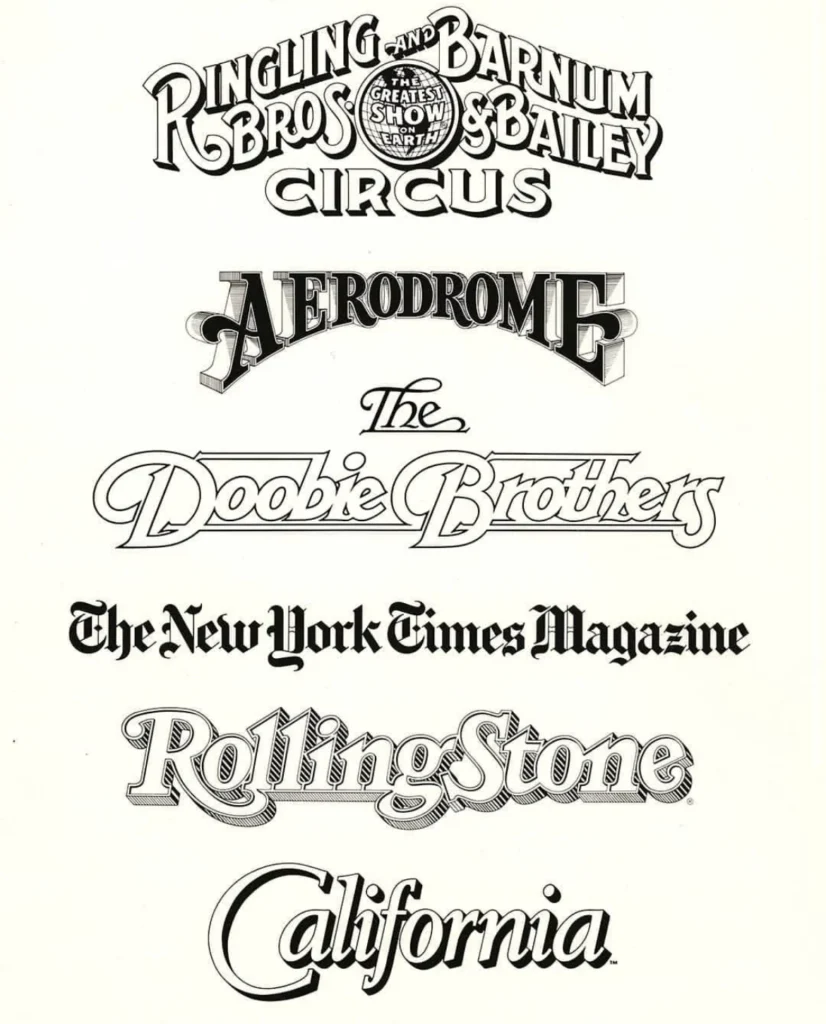
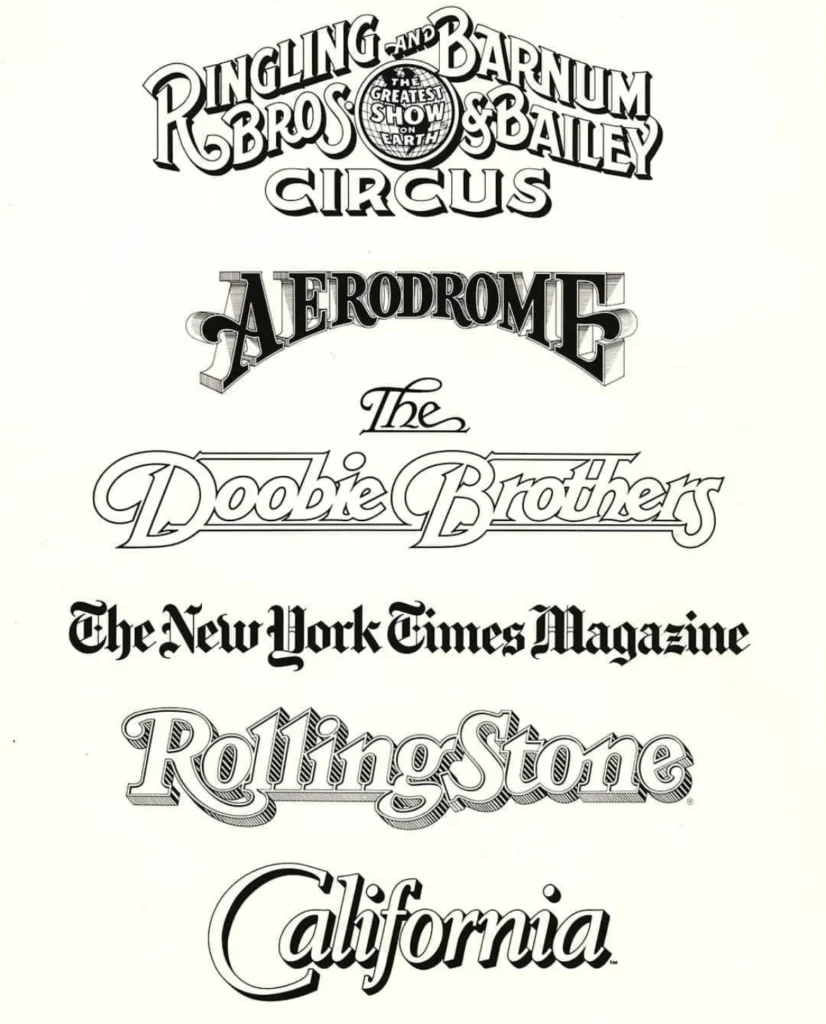
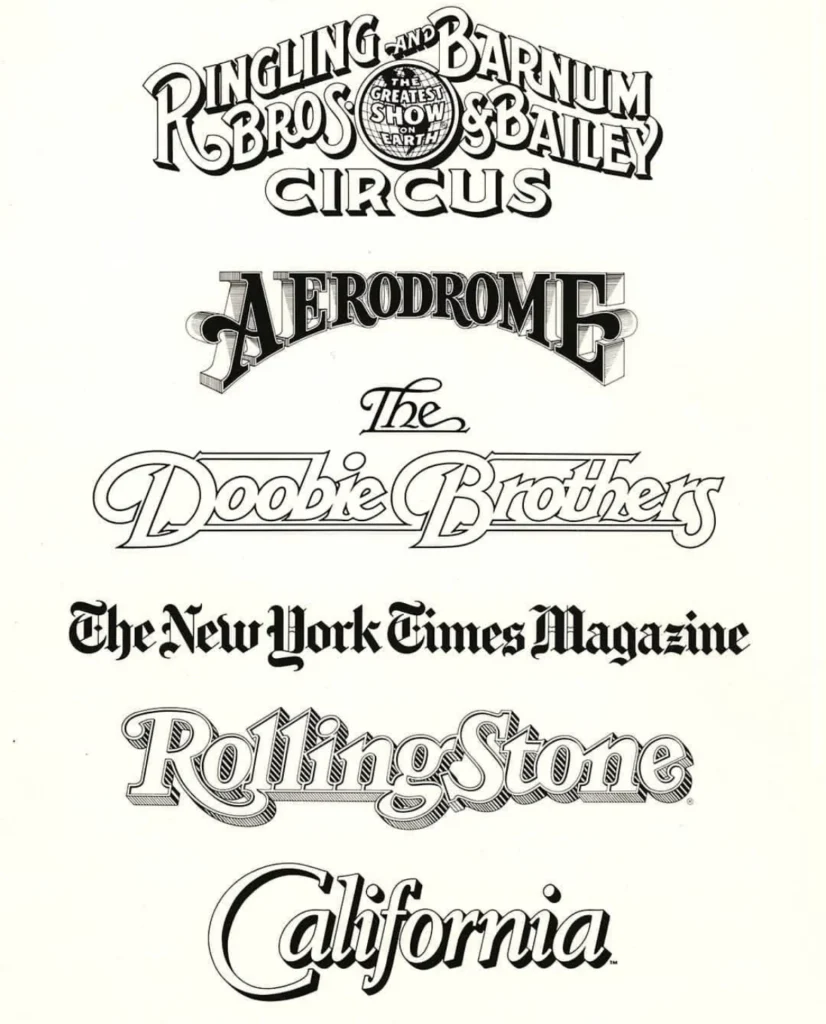
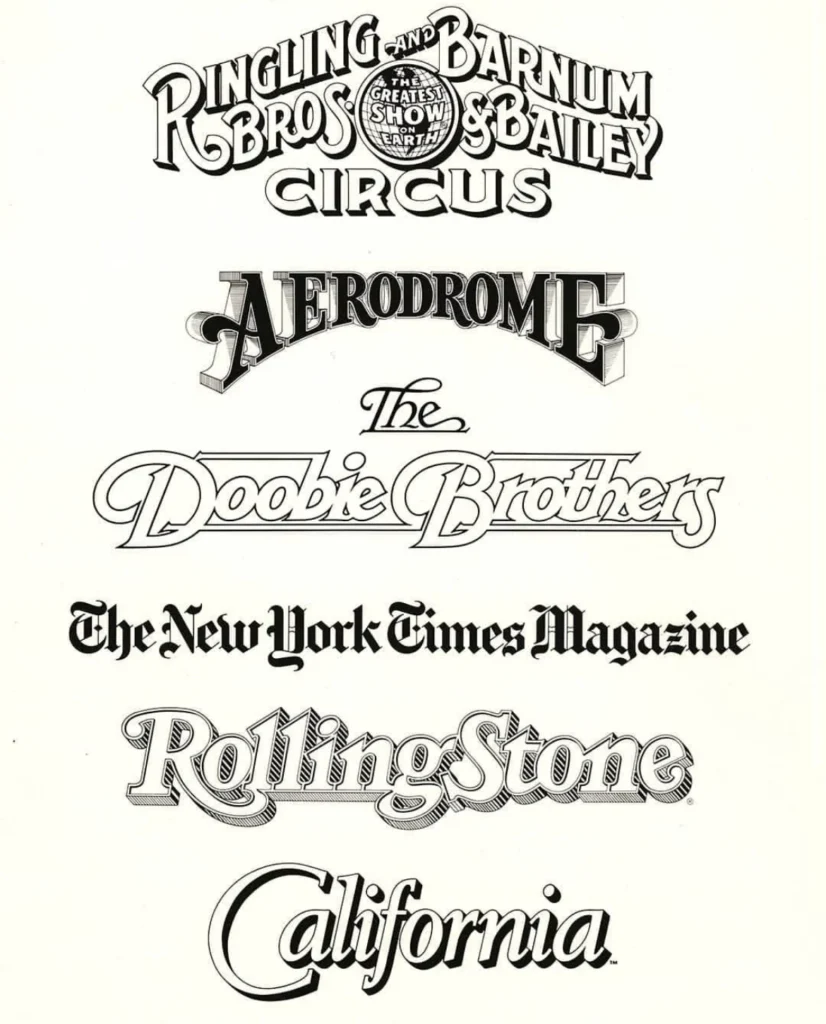
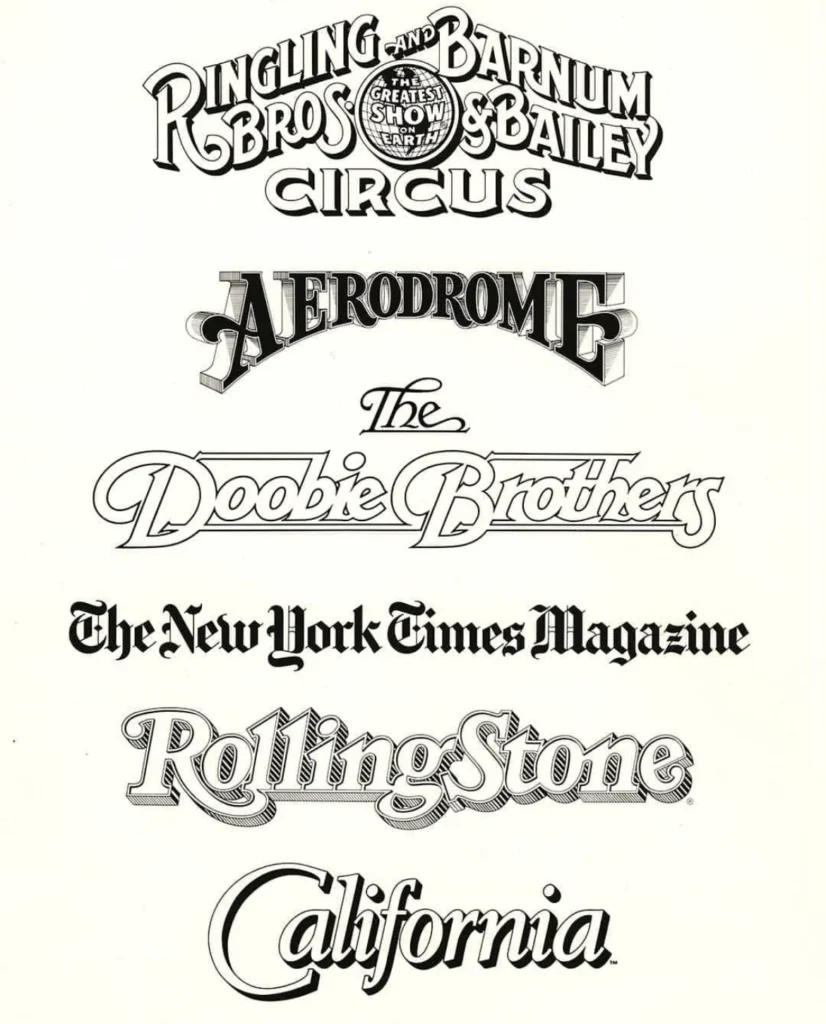
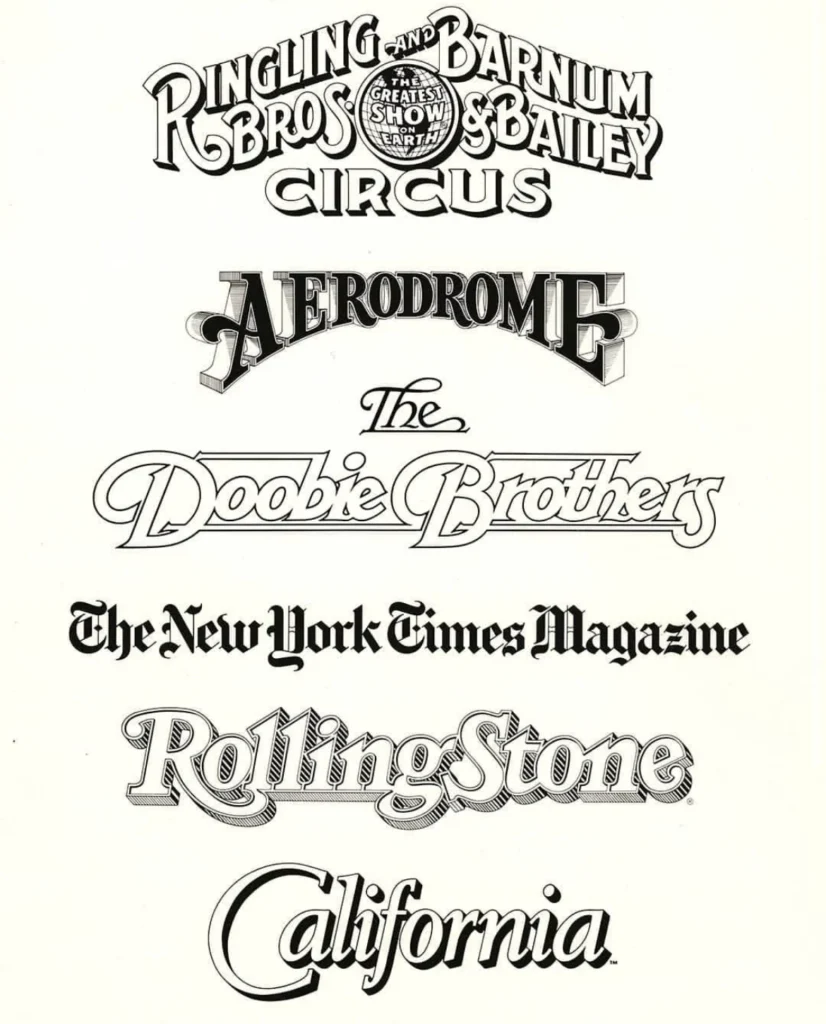
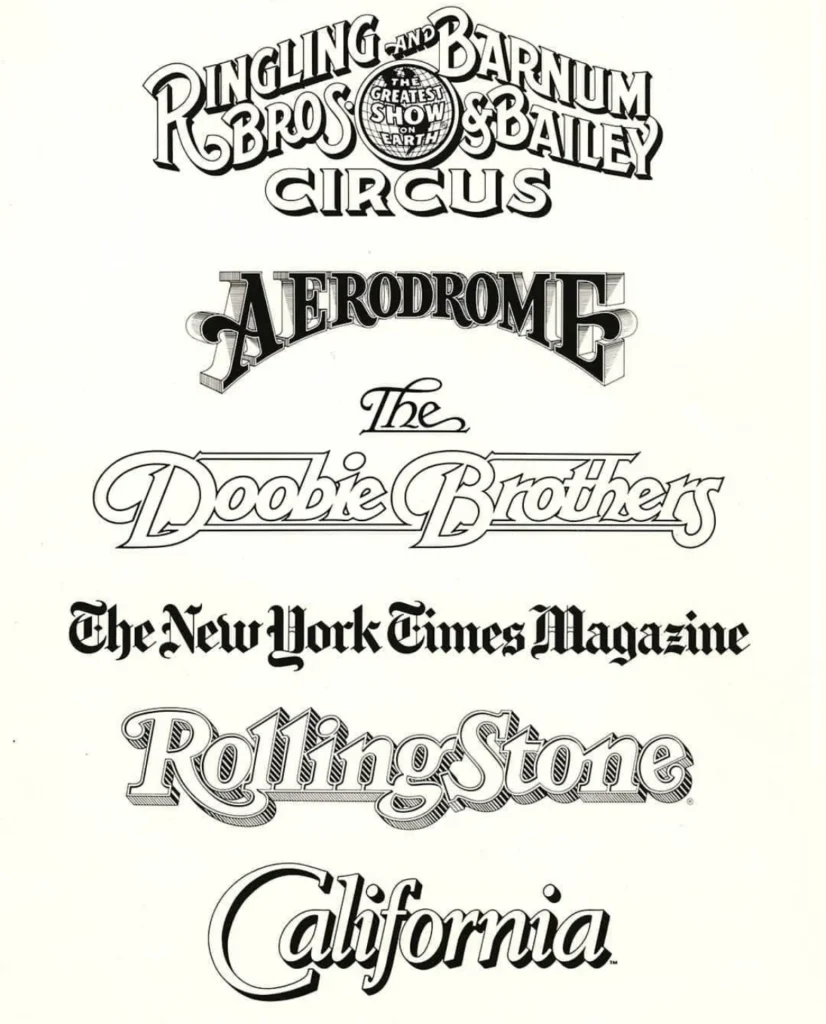
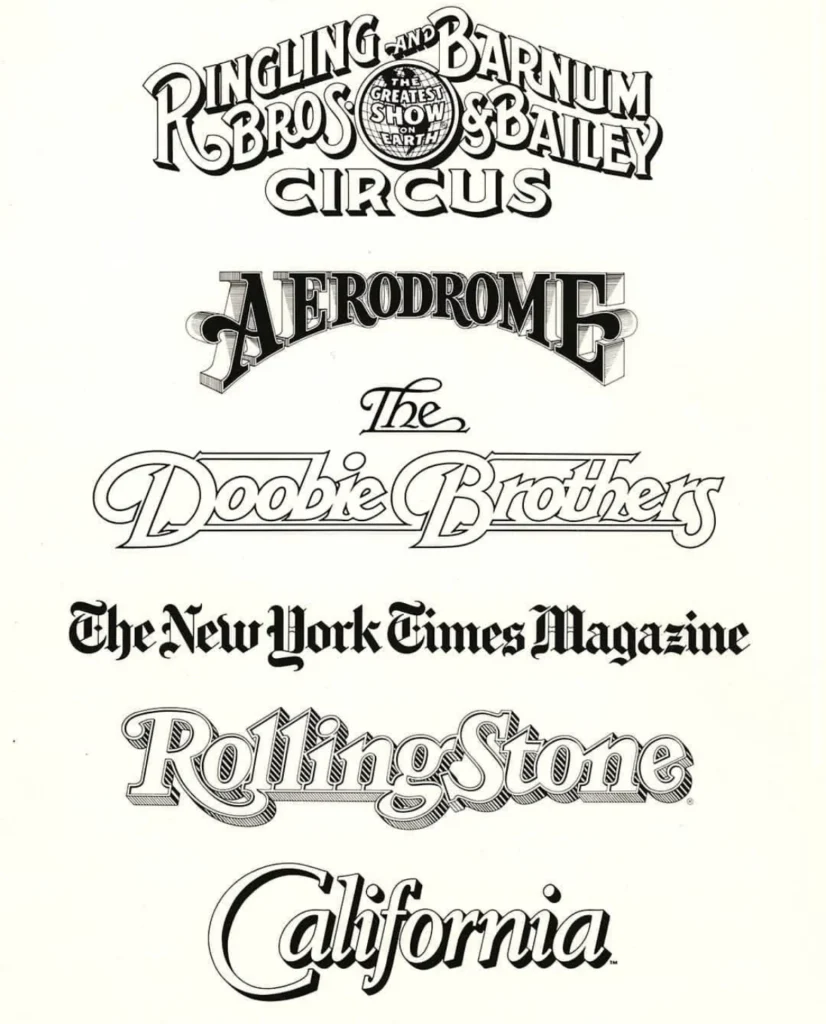
    Jim Parkinson’s mastery of lettering was so comprehensive that he was capable of tackling an exceptionally broad range of projects, from intricate logos to complete typeface families. His career was, in essence, a mosaic of distinct yet interconnected specializations. Over five decades, his distinctive letterforms became ubiquitous, subtly influencing the visual landscape of American commerce and culture. His work appeared on advertising headlines, iconic band logos such as The Doobie Brothers, and the grand spectacle of the Ringling Bros. and Barnum & Bailey Circus. He was instrumental in the creation of dozens of bespoke and commercially released typefaces, and his hand-lettered nameplates adorned prestigious magazines like Rolling Stone and major newspapers including the Los Angeles Times.

    Jim Parkinson, 1941–2025

    The sheer volume and reach of his output are difficult to overstate. A casual visit to any newsstand in the United States, and even many internationally, would likely reveal Parkinson’s artistry on multiple covers, a testament to his prolificacy. Art directors frequently turned to him when seeking to revitalize the visual identity of their publications, and he was often called upon to redraw certain titles multiple times throughout the years, adapting his style to evolving design trends while retaining his signature touch. This consistent demand underscores the enduring quality and appeal of his work.

    Beyond Logos: Painting Neon and Mentorship

    In his later years, when not immersed in the world of logos and type design, Parkinson channeled his artistic energies into a unique passion: painting vintage neon signage as fine art. This was not merely a hobby but a profound exploration of Americana and a testament to his keen observational skills. His personal photo albums, meticulously documented from road trips across the American West, served as the inspiration for numerous large-scale paintings. These works captured the essence of fading roadside attractions, meticulously rendering every peeling surface and fractured glass tube with a fidelity that often surpassed the original photographs, imbuing them with a nostalgic glow and an almost hyper-real quality. These paintings became a significant part of his personal collection, adorning the walls of his home.

    Stephen Coles, the author of this tribute and a close friend of Parkinson, recalls his initial encounters with the artist. Upon relocating to Oakland in 2004, Coles was among the first to be welcomed into Parkinson’s orbit. Parkinson generously opened his home, revealing a personal trove of ephemera, type specimen books, and an extensive archive of his own creative output. Coles often brought friends to visit Parkinson, relishing their reactions as Parkinson unveiled flat files filled with original artwork. He was a constant and cherished presence at semiregular picnics, where his joy and wisdom were palpable.

    "Jim had a casual silliness that—despite all his talent—kept him from living on a pedestal and looking down on others," Coles wrote. "He truly lived Margot Fonteyn’s admirable mantra, ‘Take your work seriously, but never yourself.’” This wry levity, as Coles noted, was evident throughout Parkinson’s website, an early acquisition in the nascent days of the internet, and in a video interview conducted in 2010, which offers a glimpse into his personality and creative process.

    Jim Parkinson, 1941–2025

    A Literary Legacy: Memoir to be Published Posthumously

    Beyond his visual artistry, Jim Parkinson was a gifted storyteller. His ability to weave narratives mirrored the precision and flow of his lettering. It is with great anticipation that the Letterform Archive announced plans to publish Parkinson’s memoir in 2026. This posthumous publication will provide an invaluable opportunity for those who did not have the chance to meet him to experience his life and work through his own words. The archive is encouraging interested individuals to sign up for notifications regarding the memoir’s release.

    A Life Remembered: Memorial and Charitable Contributions

    A memorial service to celebrate Jim Parkinson’s life and legacy will be held in the fall. His family and friends have also encouraged those wishing to pay their respects to share their memories in the comments section of online tributes, fostering a collective remembrance. In lieu of flowers, the family requests that donations be made to the Alzheimer’s Association, a cause deeply personal to them given Parkinson’s long struggle with the disease.

    The Enduring Impact of a Master Craftsman

    Jim Parkinson’s passing leaves a void in the design community, but his extensive body of work ensures his influence will persist. His dedication to the craft of lettering, his innovative spirit in type design, and his unique artistic vision in painting have left an indelible mark. He exemplified a rare combination of profound skill, unwavering dedication, and a grounded humility. His contributions serve as a powerful reminder of the artistry and craft that underpin the visual communication we encounter daily. The forthcoming memoir promises to offer further insights into the life and mind of this remarkable individual, ensuring his story continues to inspire future generations of artists and designers. The world of typography and design has lost a true luminary, but the echoes of his hand-lettered brilliance will resonate for years to come.

  • Typographica Celebrates Two Decades of Digital Typography Discourse, Reflecting on the Evolving Landscape of Online Publishing

    Typographica Celebrates Two Decades of Digital Typography Discourse, Reflecting on the Evolving Landscape of Online Publishing

    July 12, 2022 – Typographica, a seminal online publication dedicated to the art and craft of typography, has reached a significant milestone, marking its twentieth anniversary. Launched on May 1, 2002, the website’s longevity in the rapidly evolving digital realm is a testament to its enduring relevance and the foundational role it played in fostering an early online community for typographic enthusiasts. In the parlance of internet years, where platforms can rise and fall with dizzying speed, two decades represent a considerable epoch, akin to a centennial in human terms.

    The inception of Typographica occurred during a period characterized by a nascent internet, predating the ubiquitous social media platforms that now dominate online communication. In 2002, the primary avenues for sharing ideas and insights online were forums and blogs, interconnected through the fundamental architecture of HTML and the burgeoning World Wide Web. This era was a stark contrast to the fragmented and often siloed digital environments of today.

    <cite>Typographica</cite> is Twenty Years Old

    The Precursors to Typographica: A Digital Typography Ecosystem Emerges

    The preceding decade, the 1990s, saw the most dedicated typographic discussions confined to niche Usenet newsgroups and email lists. These were largely inaccessible to the broader public, catering to a more specialized and technically inclined audience. The landscape began to shift in the year 2000 with the establishment of Typophile, an online forum that served as a crucial hub for typographic discourse until its closure in 2019.

    Concurrently, the blogosphere was beginning to offer more dedicated spaces for typographic commentary. Two notable early blogs that consistently published content were David John Earl’s Typographer, which ran from 1999 to 2009, and Andy Crewdson’s Lines & Splines, active from 2000 to 2002. These platforms provided a more accessible and dynamic alternative to the static nature of newsgroups.

    It was against this backdrop that Joshua Lurie-Terrell, a graphic designer and printing history aficionado based in Sacramento, California, identified a gap. Recognizing the absence of a collaborative blog focused on typography, he took the initiative to create one. Drawing inspiration from the legacy of Herbert Spencer’s influential mid-century journal of the same name, Lurie-Terrell established Typographica on the Blogger platform. His vision was to create an open and inclusive space, extending author access to anyone within the typographic field eager to contribute. This move democratized the publication of typographic thought, allowing for a wider range of voices and perspectives to be heard.

    <cite>Typographica</cite> is Twenty Years Old

    Typographica’s Early Days: A Precursor to Modern Social Media

    The initial months of Typographica’s existence, as reflected in archived posts, paint a picture of a platform that functioned remarkably like an early iteration of Twitter, albeit in a more verbose and link-centric format. The content comprised bite-sized, predominantly text-based entries, heavily reliant on hyperlinks to connect readers to external resources, breaking industry news, and shared projects. This "daily stream of links" provided a real-time pulse on developments in the typographic world, often predating their coverage in traditional print media by weeks. It was a space for sharing observations, engaging in deep dives into typographic concepts, and even indulging in moments of lightheartedness and silliness.

    The collaborative nature of Typographica in its formative years fostered a sense of community and freewheeling conversation that its founder and current custodians now reflect upon with a degree of nostalgia. The platform’s early success was not just about disseminating information but about cultivating connections and shared intellectual exploration.

    The Evolution of Online Publishing and the "Instagram World"

    Stephen Coles, the author of the anniversary commentary, draws a parallel between the early, interconnected nature of Typographica and the current digital landscape, which he characterizes as the "Instagram world." He laments the shift away from the open, link-driven ecosystem of the early web towards platforms that, in his view, tend to "silo individuals," "discourage outbound links," and prioritize superficial "engagement" over substantive discourse.

    <cite>Typographica</cite> is Twenty Years Old

    Coles’s critique points to a broader trend in online publishing. The rise of visually-driven platforms like Instagram, while offering new avenues for creative expression, can inadvertently limit the depth of discussion. The emphasis on curated images and short, often ephemeral content can disincentivize the sharing of links and in-depth analysis. Furthermore, the algorithmic nature of many modern platforms can create echo chambers, reinforcing existing viewpoints rather than fostering genuine dialogue and the exchange of diverse perspectives. The pressure to constantly generate "engaging" content can also lead to a focus on easily digestible, often less nuanced material.

    This shift, Coles suggests, has diminished the control individuals have over the content they create and disseminate. Unlike the more direct publishing model of blogs, where creators had greater autonomy, contemporary social media often places content within a proprietary framework, subject to platform rules and algorithms.

    A Call for a Return to Independent Publishing

    In light of these observations, Coles expresses a yearning for a resurgence of independent publishing and the unique magic of the blog format. He advocates for a renewed appreciation for platforms that empower creators and facilitate genuine community building. The anniversary serves as a timely reminder of the value of these more open and collaborative digital spaces.

    <cite>Typographica</cite> is Twenty Years Old

    He acknowledges existing platforms and communities that are continuing this tradition, citing Alphabettes as a prime example of a site that embodies the spirit of independent typographic publishing. This sentiment underscores a desire within certain corners of the digital creative sphere to reclaim the decentralized and author-driven ethos that characterized the early internet.

    The Architecture of Typographica: Evolution and Contributors

    Typographica’s journey has involved several technological iterations. Initially built on Blogger, it later transitioned to Movable Type, a popular content management system at the time. The initial development and maintenance of the blog were supported by a dedicated team, including Joshua Lurie-Terrell, Matthew Bardram, Patric King, Jenny Pfafflin, and Graham Hicks. Their contributions were instrumental in establishing the platform’s early presence and functionality.

    The website’s visual identity has also evolved, featuring a rotating series of nameplates designed by various artists. These nameplates, often reflecting the aesthetic sensibilities of their creators, have become a distinctive feature of Typographica, showcasing the talent within the design community. The anniversary commentary includes several examples of these early nameplates, offering a visual journey through the site’s history and the artistic contributions that have adorned its pages. Designers such as Miguel Hernandez, Erik van Blokland, Tiffany Wardle, Angus R. Shamal, Mark Simonson, Harsh Patel, and Graham Hicks have all contributed to the visual identity of Typographica.

    <cite>Typographica</cite> is Twenty Years Old

    Looking Ahead: The Enduring Significance of Typographic Dialogue

    As Typographica embarks on its third decade, its anniversary serves as a moment of reflection on the past and a forward-looking contemplation of the future of online discourse. The challenges posed by the contemporary digital landscape are significant, but the enduring need for thoughtful, in-depth discussion about typography remains.

    The platform’s continued existence, and the commentary surrounding its anniversary, highlight the persistent appeal of dedicated online communities for niche interests. The digital world is vast and ever-changing, but the desire for connection, shared knowledge, and the exploration of specialized subjects, like typography, endures. Typographica’s two decades of operation stand as a testament to this enduring human impulse, and its future trajectory will likely be shaped by its ability to adapt while retaining the core principles of community and insightful content that have defined its success. The website’s legacy is not merely in its longevity but in its foundational role in shaping the online typographic conversation and its ongoing commitment to fostering a space for meaningful exchange in an increasingly complex digital ecosystem.

Grafex Media
Privacy Overview

This website uses cookies so that we can provide you with the best user experience possible. Cookie information is stored in your browser and performs functions such as recognising you when you return to our website and helping our team to understand which sections of the website you find most interesting and useful.