
British luxury supercar manufacturer McLaren Automotive has officially announced the moniker for its highly anticipated next-generation vehicle, slated for a global market release in 2027. The upcoming flagship model will be christened the "McL 820," a designation that introduces a streamlined nomenclature system designed to bridge the gap between the brand’s storied motorsport lineage and its modern production road cars.
This major product announcement arrives hot on the heels of McLaren’s sweeping corporate overhaul, which recently introduced a brand-new logo and visual identity system aimed at modernizing the company’s aesthetic presence. By pairing a motorsport-derived prefix with a transparent, performance-focused numerical indicator, the Woking-based manufacturer is signaling a strategic shift in how it communicates its vehicle lineup to collectors, enthusiasts, and the global automotive market.
Anatomy of a Name: Decoding the McL 820
The decision to name the upcoming vehicle the "McL 820" is far from arbitrary; it serves as a foundational pillar for a new, cohesive naming strategy. According to the company, the "McL" prefix draws direct inspiration from McLaren’s rich and pioneering history in international motorsport, honoring the heritage established by founder Bruce McLaren. Meanwhile, the numerical portion of the badge serves a functional and exhilarating purpose: it denotes the car’s staggering power output of 820 metric horsepower (PS).
This shift represents a departure from McLaren’s previous alphanumeric naming conventions, which historically relied on combinations like 720S, 750S, or Artura, where numbers frequently referenced horsepower in older models but lacked a universal structural framework across racing and road divisions.
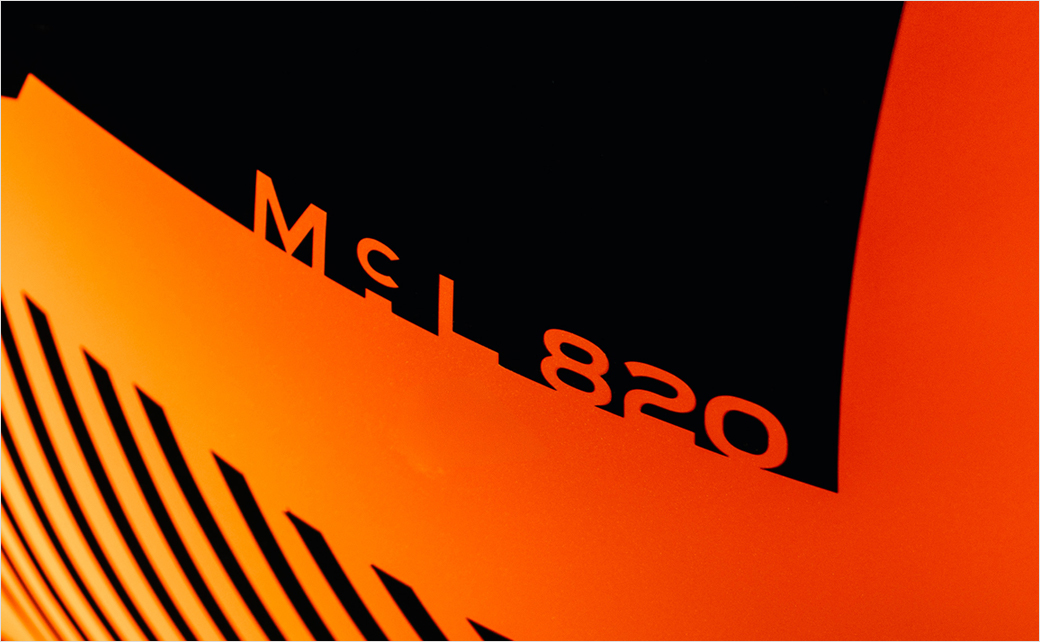
"The naming convention marks the next chapter in McLaren’s evolution, creating a clearer and more consistent approach that unifies cars across McLaren Automotive and Racing," the company stated in an official release. This unification aims to eliminate consumer confusion and forge an unbreakable cognitive link between the brand’s race track dominance and its road-going engineering feats.
A Tribute in Central London: The Kiwi Bird Activation
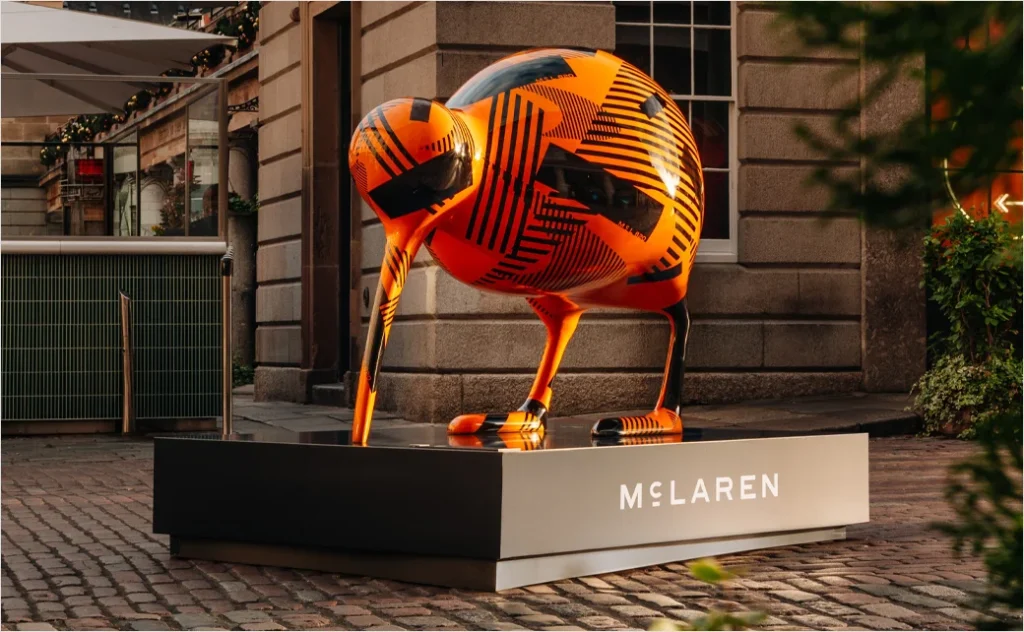
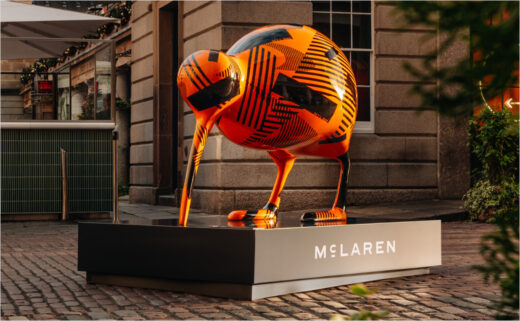
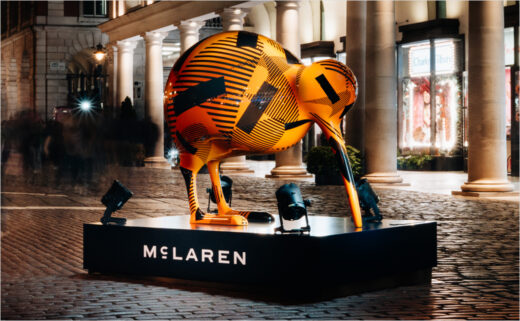
To build public anticipation and celebrate the announcement in dramatic fashion, McLaren executed a striking guerrilla marketing campaign in the heart of London. The manufacturer unveiled a specially commissioned statue of a kiwi bird—the national symbol of New Zealand and a deeply personal emblem for the brand—in the bustling public square of Covent Garden.
The sculpture was wrapped entirely in a bespoke black and orange camouflage livery, emblazoned discreetly with the new "McL 820" nomenclature. The choice of the flightless bird is a deliberate nod to company founder Bruce McLaren, a New Zealand-born racing driver and engineer who utilized the kiwi as the official logo for his fledgling racing team in the 1960s. That original racing outfit eventually birthed the modern road car division, making the Covent Garden installation a poetic convergence of McLaren’s past, present, and future. Passersby and automotive journalists alike gathered around the display, capturing the first physical manifestation of the brand’s fresh visual identity applied to its upcoming flagship product.
Background Context and Corporate Evolution
The unveiling of the McL 820 name is merely the latest development in a turbulent yet transformative period for McLaren Group. Over the past several years, the company has navigated significant financial restructuring, changes in ownership, and the rapid technological evolution sweeping the global automotive landscape.
The transition toward electrification, stricter global emissions regulations, and the imperative to remain competitive against rival supercar titans such as Ferrari, Lamborghini, and Porsche have forced McLaren to rethink its product roadmap. The development of the McL 820 has been underway for years, acting as a technological showcase for the brand’s next-generation lightweight carbon fiber architectures and advanced powertrain engineering.
Furthermore, the recent rollout of the company’s new corporate logo and visual identity system laid the psychological groundwork for this announcement. By shedding legacy graphic elements in favor of a cleaner, more contemporary aesthetic, McLaren prepared the market for a broader brand realignment. The McL 820 is expected to embody this modern philosophy, serving as the physical embodiment of the refreshed corporate vision.
Chronology of Recent Developments
To understand the trajectory leading up to the McL 820 announcement, it is instructive to examine the timeline of McLaren’s recent strategic pivots:
- Early 2024–2025: McLaren implements internal restructuring and secures long-term financial backing to stabilize operations and accelerate research and development into hybridized and fully electric platforms.
- Mid-2026: McLaren officially reveals a brand-new logo and comprehensive visual identity system, signaling a departure from its traditional branding and setting the stage for a new era of vehicle design.
- October 30, 2026: McLaren formally announces the name of its upcoming 2027 supercar as the "McL 820," detailing the new motorsport-inspired naming convention.
- Late October 2026: The company stages a high-profile public activation in Covent Garden, London, displaying a camouflaged kiwi bird statue bearing the McL 820 moniker to honor founder Bruce McLaren.
- 2027 (Projected): Official global market launch and physical delivery of the McLaren McL 820 to customers worldwide.
Industry Implications and Market Analysis
The introduction of the McL 820 and its accompanying nomenclature carries profound implications for McLaren’s market positioning. In the ultra-exclusive realm of high-performance supercars, brand perception, heritage storytelling, and nomenclature clarity play critical roles in driving customer demand and preserving residual vehicle values.
By tying the vehicle’s name directly to its performance metric (820 PS), McLaren is adopting a transparent, engineering-led approach that resonates deeply with purists and collectors. Competitors have occasionally drifted into abstract or confusing naming structures; McLaren’s pivot toward an intuitive, power-indexed system offers refreshing clarity.
Moreover, aligning the road car nomenclature with the racing division signifies a tighter operational and marketing synergy. As McLaren continues to expand its footprint in motorsport categories ranging from Formula 1 to endurance racing, the "McL" prefix serves as a powerful halo effect. Consumers purchasing the McL 820 are not merely buying a high-performance luxury automobile; they are buying into a continuous lineage of competitive racing pedigree.
Financial analysts and automotive industry observers suggest that the success of the McL 820 will be a crucial litmus test for McLaren’s long-term profitability. With production slated for 2027, the vehicle must deliver not only on its headline-grabbing 820 PS power figure but also on driving dynamics, interior technology, and reliability—areas where previous-generation vehicles occasionally faced scrutiny from early adopters and automotive critics.
Official Responses and Stakeholder Sentiment
While detailed technical specifications regarding the McL 820’s powertrain—such as whether it will feature a hybridized V8 or an entirely new combustion architecture—have been kept under strict wraps by McLaren executives, the overarching corporate sentiment is one of unbridled optimism.
Company leadership emphasizes that the transition toward this new naming convention and brand identity reflects a maturing enterprise. No longer solely a boutique racing team that occasionally builds road cars, McLaren Automotive has firmly established itself as a global luxury titan capable of weathering macroeconomic headwinds while continuing to push the boundaries of automotive engineering.
The public reaction in London and across digital automotive communities has been overwhelmingly positive. Enthusiasts have praised the nostalgic tribute to Bruce McLaren via the Covent Garden kiwi statue, viewing it as an authentic nod to the company’s roots rather than a cynical marketing ploy. Furthermore, the sleek, minimalist typography of the new visual identity has earned favorable reviews from design critics, suggesting that the broader corporate rebranding is hitting its intended marks.
Looking Ahead to 2027
As the automotive world turns its gaze toward the official debut of the McL 820 in 2027, anticipation will undoubtedly reach fever pitch. Over the coming months, McLaren is expected to drip-feed further details concerning the supercar’s aerodynamics, chassis dynamics, interior appointments, and pricing structure.
For now, the unveiling of the name serves as a definitive statement of intent. The McL 820 is more than just a forthcoming vehicle; it is the vanguard of a revitalized McLaren—one that proudly honors the vision of its New Zealand founder while charging boldly into a high-performance, design-forward future.