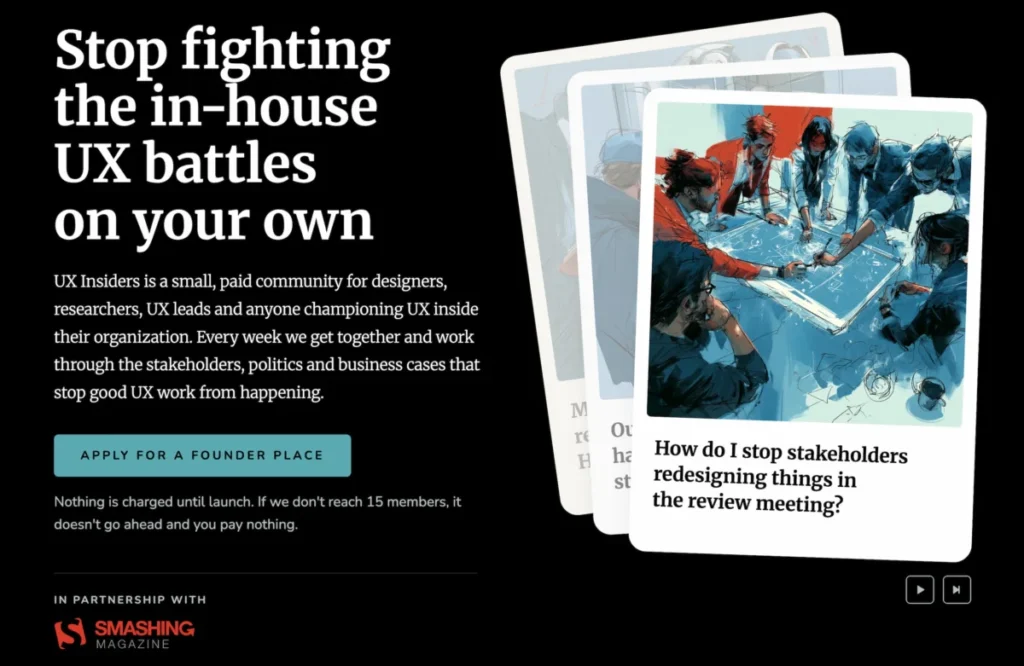

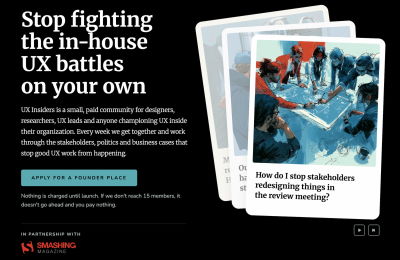
The landscape of professional user experience (UX) design is undergoing a significant transition as the challenges of in-house practitioners evolve beyond technical execution and into the complex realms of corporate advocacy, stakeholder management, and organizational navigation. To address these systemic pressures, industry veteran and long-time Smashing Magazine contributor Paul Boag has announced the launch of UX Insiders, a dedicated community platform slated for a January 5, 2027, debut. This initiative aims to provide a structured environment for in-house designers, researchers, and UX leads to share verified strategies, templates, and business cases that have demonstrated success in real-world corporate environments.
The Evolution of the In-House UX Challenge
Industry data suggests that the role of the modern UX professional has shifted from a primarily creative task to one involving significant political and strategic labor. Research from various design maturity reports indicates that while design teams are growing in size, the "UX maturity" of the organizations they serve often lags behind. This discrepancy creates a "gap of influence," where designers frequently struggle to justify research budgets or explain the nuances of user-centered design to senior management who may be pressured by shorter-term financial goals or the perceived speed of generative AI tools.
The core problem, according to industry practitioners, is that the most difficult aspects of the job—navigating internal politics, managing stakeholders who operate on outdated design assumptions, and justifying the necessity of UX in an era of rapid AI deployment—are rarely discussed in formal educational settings. Consequently, many UX professionals work in silos, particularly those who are "teams of one" or members of small departments within larger, non-design-centric organizations. Without access to peer-reviewed institutional knowledge, these individuals often reinvent the wheel, repeating the same mistakes or facing the same organizational hurdles as their counterparts in other companies.
Chronology and Launch Logistics
The development of UX Insiders follows a period of rigorous testing and community feedback gathering. The initiative, which is being developed in partnership with the Smashing Magazine network, is structured around a phased rollout:

- November 2024: Official announcement of the community and opening of the application process for the inaugural cohort.
- December 11, 2026: The critical threshold date. If fewer than 15 members have confirmed enrollment by this date, the project will be terminated to ensure a viable, high-quality cohort.
- January 5, 2027: The official launch date for the community, at which point the first billing cycles for enrolled members will commence.
The platform is designed to maintain a high barrier to entry, specifically targeting those working directly within organizations. By requiring an application process that verifies in-house status, the community aims to create a "safe space" for candid, non-public discussion about internal company processes, team dynamics, and sensitive project roadblocks.
Comparative Analysis of Support Structures
The model for UX Insiders is built upon the success of the Agency Academy, a parallel initiative launched by Boag in July 2024. The Agency Academy serves freelancers and agency owners by providing a forum for business development, project pricing, and operational scaling. Data from the first two years of the Agency Academy suggests that weekly, facilitated synchronous calls combined with an asynchronous communication channel (Slack) significantly reduce burnout and improve professional retention rates.
While Agency Academy focuses on the commercial realities of client-service businesses—such as lead generation, contract negotiation, and resource allocation—UX Insiders shifts the focus to the internal dynamics of corporate employment. This includes:
- Stakeholder Buy-in: Developing persuasive business cases for UX initiatives.
- AI Integration: Establishing ethical and practical standards for incorporating AI into research and design workflows.
- Advocacy: Strategies for "design evangelism" within large, often risk-averse, organizations.
Financial Structure and Institutional Support
The economic model for the community relies on a subscription-based framework. Early adopters—the first 25 members—are granted "founder pricing," locking in a rate of £49 per month for annual billing or £59 for monthly billing. These rates are designed to be accessible as a professional development expense, which is frequently covered by employer training budgets.
From an organizational standpoint, the shift toward external communities is reflective of a broader trend in corporate human resources. As companies recognize the limitations of internal mentorship, they are increasingly incentivizing employees to participate in external networks where they can acquire industry-standard best practices. The ability to invoice employers directly for these memberships underscores the legitimacy of such communities as professional development vehicles rather than mere social networking sites.
Implications for the UX Industry
The emergence of curated, peer-to-peer professional communities indicates that the UX industry is reaching a level of maturity where "generalist" conferences are no longer sufficient. Practitioners now require specialized, actionable advice that addresses the friction points of their specific working environments.
There is also a growing concern regarding the impact of AI on the UX profession. As non-designers increasingly perceive AI as a "shortcut" for complex research tasks, the role of the UX professional is becoming one of curator and strategist. The ability to articulate why human-centric research is more than just data collection is a vital skill. By pooling collective knowledge, UX Insiders aims to provide a unified voice for in-house teams who are currently navigating these existential questions individually.
Critical Success Factors
For a community of this nature to succeed, it must balance the need for privacy with the need for scale. The "small community" approach—limiting the total number of members to ensure meaningful participation during weekly calls—is a strategic move to prevent the dilution of value often found in massive, unmoderated forums.
Furthermore, the requirement for an "outside view" cannot be overstated. When a practitioner is embedded in a corporate culture, they often develop "blind spots" regarding their own processes. External peers provide a necessary mirror, allowing members to see that their specific organizational challenges are often universal across the industry. This realization is frequently the first step toward effective problem-solving.
Addressing the Freelance and Agency Perspective
While UX Insiders is strictly limited to in-house personnel to protect the confidentiality of internal corporate discussions, the ecosystem of support is expanding for other segments of the digital workforce. The concurrent promotion of the Agency Academy highlights the bifurcated nature of the modern digital economy. Freelancers, who face the unique pressure of revenue instability and individual client acquisition, require different resources than in-house employees who face the pressures of corporate bureaucracy and departmental budgets.
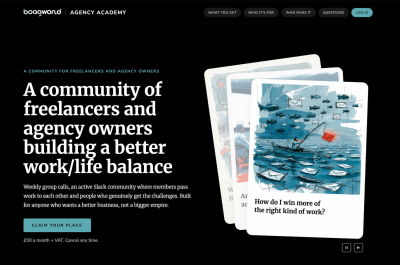
By offering parallel, distinct tracks for these two groups, the initiative ensures that the content provided is highly targeted. An in-house designer needs to know how to navigate an internal IT review board; a freelancer needs to know how to draft a statement of work that protects their intellectual property. The distinction in programming is essential to the efficacy of these groups.
Conclusion
As the digital sector moves into 2027, the emphasis on organizational integration and strategic influence will define the next generation of successful UX practitioners. The launch of UX Insiders represents an effort to professionalize the "soft skills" of the trade—the ability to persuade, to navigate, and to lead from within. Whether this community can effectively bridge the gap between technical design excellence and corporate strategic success remains to be seen, but the high demand for such forums suggests that the industry is ready for a move away from passive observation and toward active, collaborative advocacy.
For those interested in participating, the process remains transparent: an application to ensure professional alignment, followed by a collaborative onboarding process. As the launch date approaches, the focus will shift toward the curation of the shared library of research plans and business cases, which will ultimately serve as the primary utility for the community’s members. The success of the project will rely on the commitment of its participants to move beyond surface-level networking and engage in the substantive, often difficult, conversations that drive true organizational change.