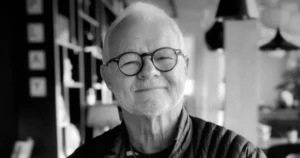

Born and raised in the heart of rural southern Alabama during the height of the Civil Rights Movement, Higgins’ journey into photography was born out of a necessity to counter the prevailing narratives of his youth. As a student at Tuskegee University in the late 1960s, he became acutely aware of the discrepancy between the lived reality of Black Americans and their portrayal in the press. This realization became the catalyst for a career dedicated to capturing the "Signature of the Spirit"—a term Higgins uses to describe the inherent dignity and humanity that exists within his subjects, regardless of their socioeconomic status.
The Formative Years and the Catalyst of Protest
The trajectory of Chester Higgins’ career was set during his undergraduate years at Tuskegee University. During this period, the American South was a crucible of social change, and Higgins found himself at the center of political activism. A pivotal moment occurred following a protest at the State Capitol in Montgomery against the segregationist policies of then-Governor George Wallace. Higgins observed that the photographs published in local and national newspapers the following day bore little resemblance to the peaceful, civic-minded students he knew. Instead, the media utilized imagery that framed the protesters as "thugs" and "threats."
This experience provided Higgins with a vital lesson in the ethics of the image: the heart and bias of the photographer are inevitably imprinted upon the subject. From that point forward, Higgins committed himself to becoming a "publishing photographer" who could provide a more balanced and humanistic visual diet. He sought to replace the exclusive focus on negativity and pathology with images that celebrated family, struggle, joy, and the universal rites of passage.

Decades at the Paper of Record
In 1975, Higgins joined the staff of The New York Times, a position he held for nearly four decades. During his tenure, he became an "agent of expansion" within the newsroom. At the time, legacy media outlets were often criticized for a "white gaze" that marginalized or stereotyped minority communities. Higgins worked from the inside to broaden the horizons of both his colleagues and the newspaper’s global readership.
Upon his retirement, the Managing Editor of The New York Times remarked that Higgins had fundamentally changed the way the staff perceived Black people. By placing images of Black life—ranging from the mundane to the majestic—into the "paper of record," Higgins provided American decision-makers with data that was previously absent from their daily experience. He utilized the medium of art to package complex societal information into digestible, human-centric narratives. His work at the Times was not merely about reporting news; it was about the slow, deliberate process of dismantling visual prejudice.

The Philosophy of the Signature of the Spirit
Central to the "Shared Memories" exhibition is Higgins’ metaphysical approach to photography. He describes himself as an "orthovert," a term suggesting a disciplined harnessing of the ego to allow the "Spirit" to lead the creative process. This perspective was shaped by a profound out-of-body experience Higgins had as a young man, which led him to believe that reality is multi-layered and driven by invisible, natural forces.
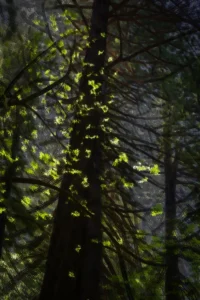
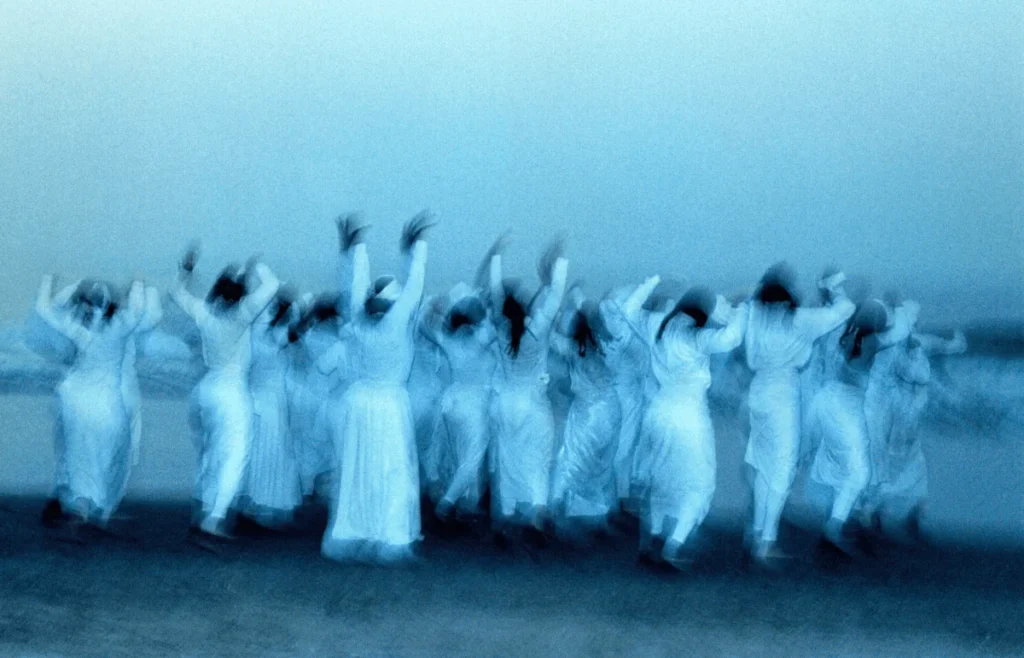
Higgins’ photography is characterized by a search for the "marriage between Nature and life." He views the world as a performance where underlying forces drive visual reality. In his technical process, he looks for "transitions"—those brief moments where the spirit world reveals itself through a gesture, a glance, or the play of light. This approach allows him to photograph poverty without the traditional lenses of pity or exclusion. Instead, he focuses on the common denominators of human existence: the need for happiness, the struggle for survival, and the shared biological requirements of air, water, and food.

Chronology of a Global Vision
The exhibition at Bruce Silverstein Gallery provides a chronological and thematic map of Higgins’ travels and focus areas:
- The 1960s-1970s: The American South and the Great Migration. Early works focus on the dignity of rural Alabama and the burgeoning cultural movements in urban centers like New York.
- The 1970s-1990s: The New York Times Era. A deep dive into the daily life of New Yorkers, covering everything from political figures to street scenes in Harlem and Brooklyn, always emphasizing a nonjudgmental perspective.
- The 1990s-Present: The Sacred Nile and Global Diaspora. Higgins expanded his scope to include the African continent, particularly Ethiopia and Egypt. His book "Echo of the Spirit" and his project "Sacred Nile" explore the ancient foundations of African spirituality and its enduring presence in the modern world.
- 2026: Shared Memories. The current retrospective synthesizes these periods, presenting a unified vision of African identity that spans continents and centuries.
Supporting Data and Industry Context
The significance of Higgins’ work is underscored by the historical lack of diversity in American newsrooms. According to data from the American Society of News Editors (ASNE), minority representation in newsrooms remained stagnant for decades, hovering around 12-13% throughout much of the late 20th century, despite the country’s shifting demographics. In the 1970s, when Higgins began his career, that percentage was significantly lower.

Photographers like Higgins, Gordon Parks, and Moneta Sleet Jr. were pioneers who bridged the gap between the Black press (such as Ebony and Jet) and mainstream white-owned publications. By bringing the aesthetic sensibilities of the Black experience to The New York Times, Higgins contributed to a broader cultural shift. Research in visual communications suggests that repeated exposure to "counter-stereotypical" imagery—such as the dignified, multi-dimensional portraits produced by Higgins—can measurably reduce implicit bias in viewers.
Official Responses and Artistic Impact
The Bruce Silverstein Gallery, known for representing masters of photography such as Ansel Adams and Imogen Cunningham, has positioned "Shared Memories" as a vital contemporary dialogue. Gallery representatives state that the exhibition is intended to offer a "balm to the daily confusion and miseducation" that often characterizes modern social discourse.

Art critics have noted that Higgins’ work transcends traditional photojournalism. By focusing on "universal experiences" such as aging and ceremony, he creates a bridge of empathy. His images are often described as "embracing," a quality Higgins attributes to his love for his subjects. As he famously states, "The photograph never lies about the photographer." If a photographer possesses an inherent respect for their subject, it is impossible to produce a demeaning image.
Broader Implications and Legacy
The "Shared Memories" exhibition arrives at a time of renewed national debate regarding identity, history, and representation. Higgins’ work provides a historical anchor for these discussions, proving that the search for identity is a continuous, multi-generational endeavor. His career demonstrates the power of the "insider-outsider" dynamic—using the platform of a major institution to advocate for those often ignored by that very institution.

The implications of Higgins’ work extend into the future of photography. In an era dominated by rapid-fire digital imagery and AI-generated content, his emphasis on the "Spirit" and the "sociological contract" between photographer and subject serves as a reminder of the ethical responsibilities of visual storytelling. He argues that photography is not just a mechanical recording of light, but a reflection of the photographer’s internal sentiment and prior experiences.
As the exhibition continues through the summer of 2026, it stands as a testament to a man who successfully challenged the visual status quo. Chester Higgins did not just take pictures; he expanded the American horizon, one frame at a time, ensuring that the "African Spirit" was seen, respected, and recorded in the annals of history. For students of journalism, art, and sociology, Higgins’ body of work remains a masterclass in how to tell a story that is, in his own words, "unique, embracing, and nonjudgmental."