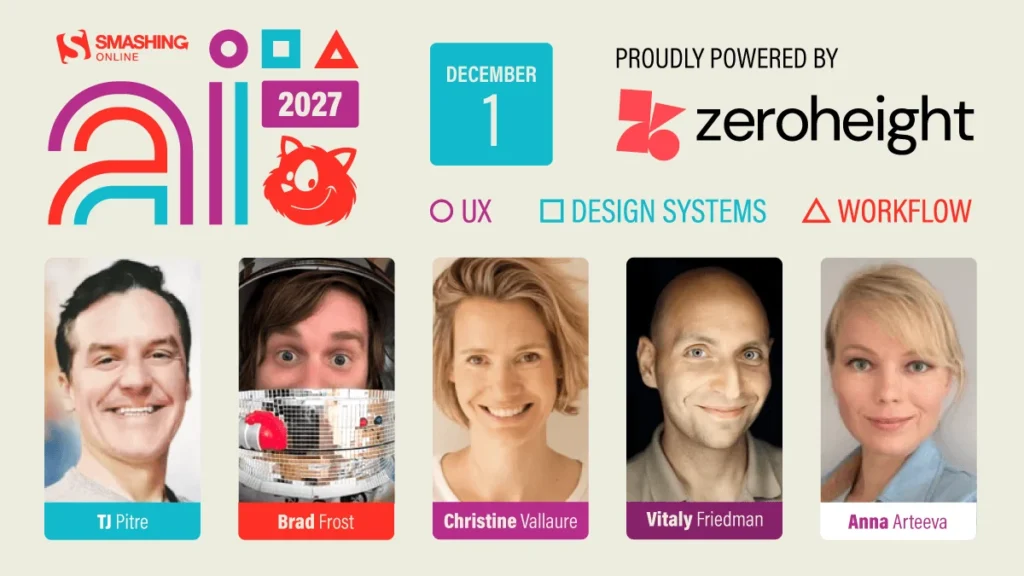

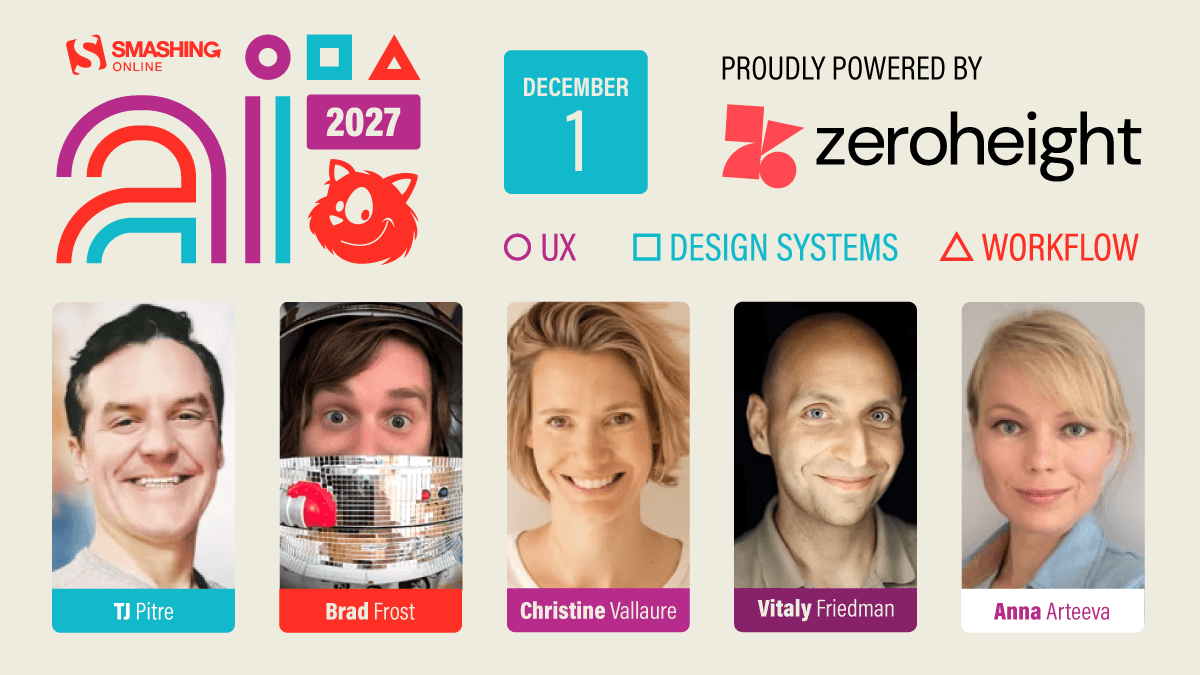
The professional landscape of 2026 is defined by a significant shift in how digital products are conceptualized, built, and maintained. While early AI adoption was characterized by exploratory "one-shot" prototyping, the current industry demand has pivoted toward long-term maintainability and technical fluency. Industry leaders and practitioners are increasingly acknowledging that existing documentation and design handoff processes are failing to keep pace with the capabilities of autonomous coding agents. The AI 2027 Conference serves as a high-level response to these structural challenges, providing a forum for evidence-based methodology rather than theoretical product demonstrations.
Chronology of the Event and Industry Context
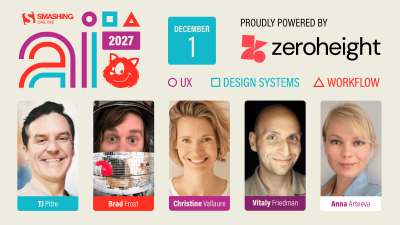
The event, organized by SmashingConf, is structured as a concentrated, high-impact session designed to provide actionable intelligence within a single half-day format. The scheduling reflects a deliberate focus on the "state of the union" for AI, positioning the event as an essential benchmark for the year ahead. The program begins with an analysis of designing AI-driven user experiences, followed by a progression into technical prototyping, documentation strategies, and, finally, real-world workflow integration.
The timeline for the event, set for December 1, 2026, serves as a strategic marker for companies preparing their 2027 digital roadmaps. By synthesizing the experiences of six industry experts, the event addresses a common friction point in modern development: the disconnect between design intent and automated execution. Attendees will navigate through a curriculum that moves from high-level UX philosophy to granular technical implementations, including the use of Model Context Protocols (MCPs) in Figma and the optimization of design systems for machine readability.
Data-Driven Perspectives on AI Integration
Recent industry surveys suggest that while over 70% of design and development teams have experimented with AI tools, fewer than 20% have successfully integrated them into a formal, repeatable design system workflow. The primary barriers cited by practitioners include the "hallucination" of design parameters, the loss of brand consistency, and the lack of structured data in existing documentation.
The conference addresses these data points by focusing on "AI-readiness." This concept involves restructuring design tokens, component libraries, and documentation to be consumed directly by LLMs (Large Language Models) and agentic workflows. By prioritizing the structural integrity of design systems, the event provides a roadmap for teams to minimize technical debt, which currently remains one of the largest hidden costs in AI-augmented software development.
Expert Perspectives and Theoretical Foundations
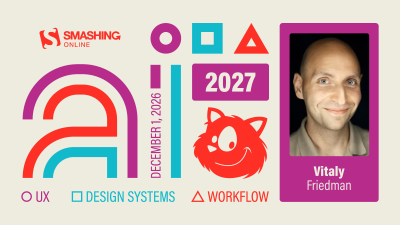
The speaker lineup features a cross-section of leaders in the design and engineering space, each offering a distinct lens on the evolution of digital labor. Vitaly Friedman, serving as the event’s host, has emphasized that the industry is entering a phase of "functional exhaustion" regarding AI hype. According to the organizing committee, the goal is to provide a pragmatic toolkit that allows designers to reclaim agency in an automated environment.
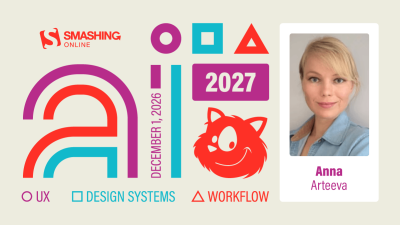
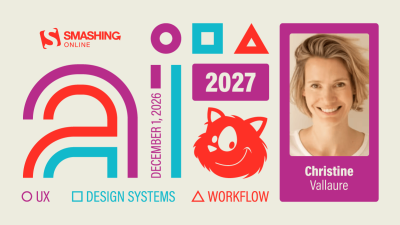
Anna Arteeva, a notable voice in agentic coding education, contributes to the discourse by highlighting the shift from designer as a "pixel pusher" to designer as a "system orchestrator." Her work focuses on the technical fluency required to steer autonomous agents, ensuring that AI output aligns with high-level design goals. This perspective is mirrored by Christine Vallaure, who focuses on bridging the traditional divide between design and code. Vallaure’s emphasis on "developer-grade" documentation suggests that for AI to be effective, design systems must evolve into living, machine-readable specifications.
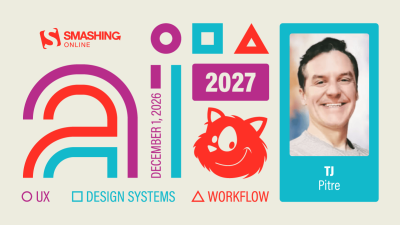
TJ Pitre, representing the intersection of design systems and product architecture, provides insight into how platforms like Figma are adapting to the AI era. His involvement signals a trend toward deeper integration between design tools and AI model contexts, a move that is expected to redefine the role of the design system as a "source of truth" not just for humans, but for the machines building the software.
The Role of Documentation in an Agentic Future
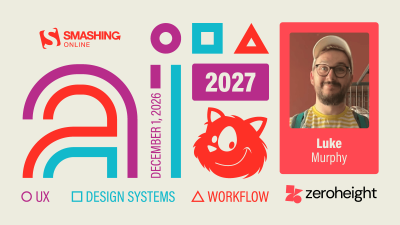
A central pillar of the conference is the session led by Luke Murphy, representing zeroheight, which tackles the pervasive issue of documentation failure. Industry analysis shows that outdated or poorly structured documentation is the leading cause of "prompt fatigue" and agentic error. Murphy’s session, titled "Nobody Will Read Your Documentation," is not merely a critique of current practices but a proposal for a new paradigm in technical writing: the creation of documentation specifically optimized for agent consumption.
This shift has profound implications for the industry. If AI agents are to reliably pull from design systems, the documentation must move beyond human-readable prose toward structured, semantic, and machine-interpretable formats. The collaboration with zeroheight underlines the industry’s recognition that documentation platforms must transition from static repositories to dynamic, API-driven engines that act as the foundation for the next generation of AI-assisted development.
Broader Implications for the UX and Engineering Sector
The broader impact of the techniques discussed at the AI 2027 Conference cannot be overstated. As businesses accelerate their digital transformation, the ability to effectively deploy AI within a team structure will become a primary differentiator. Organizations that fail to codify their design systems for machine interaction risk being locked into legacy workflows that are too slow to compete with AI-native development speeds.
Furthermore, the focus on "agentic UX patterns" suggests a maturation in how we design interfaces for AI. We are moving away from simple chatbots toward sophisticated, multi-modal interfaces that require a new vocabulary of design. The conference’s commitment to showing, rather than telling, ensures that participants walk away with a functional understanding of how these patterns are implemented in real-world environments.
By examining the successes and failures of early adopters, the event provides a necessary reality check. The focus on "what works and what doesn’t" serves to mitigate the risk of expensive, failed AI initiatives. Attendees are encouraged to move past the surface-level novelty of AI and engage with the foundational engineering required to sustain it.
Closing Reflections
The AI 2027 Conference represents a pivotal moment for professionals who are weary of the buzzwords and ready for tangible, scalable progress. As the industry approaches the end of 2026, the convergence of UX design, engineering, and artificial intelligence is no longer a futuristic scenario; it is the current standard.
The event’s structure—combining high-level expert sessions with interactive, moderated breakout rooms—is designed to foster a collaborative environment where practitioners can troubleshoot their specific workflow issues. This emphasis on peer-to-peer knowledge sharing and expert-led problem solving underscores the SmashingConf philosophy: that the best way to navigate industry disruption is through rigorous, community-driven education.
For those in the fields of product design, engineering, and design system management, the conference offers more than just a summary of current tools. It offers a blueprint for the next two years of development. By participating, designers and engineers position themselves at the forefront of a technological shift that, while challenging, promises to significantly elevate the quality, efficiency, and scale of the software they create. As the digital landscape continues to evolve, the capacity to adapt, learn, and integrate these advanced technologies will undoubtedly define the next generation of professional excellence in the design and engineering sectors.