
As marketing professionals look toward the latter half of the decade, the imperative to adapt to rapid technological advancements has never been more pronounced. Brands preparing their long-term strategies for 2027 are increasingly recognizing that traditional workflows are no longer sufficient to capture audience attention in an increasingly crowded digital ecosystem. To shed light on where the industry is heading, customer engagement platform Emplifi has released a comprehensive new study examining the intersection of artificial intelligence, evolving product discovery methods, and shifting social media engagement patterns.
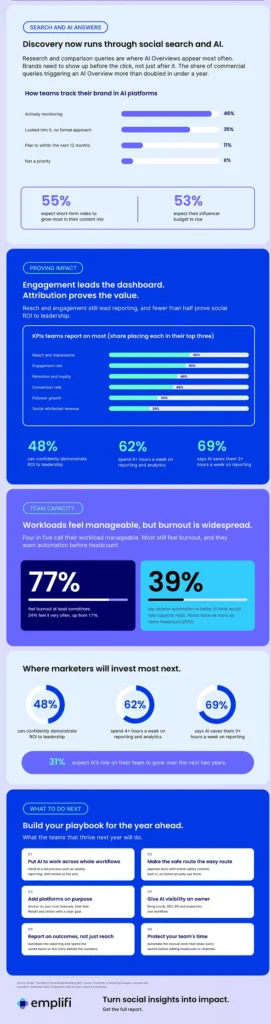
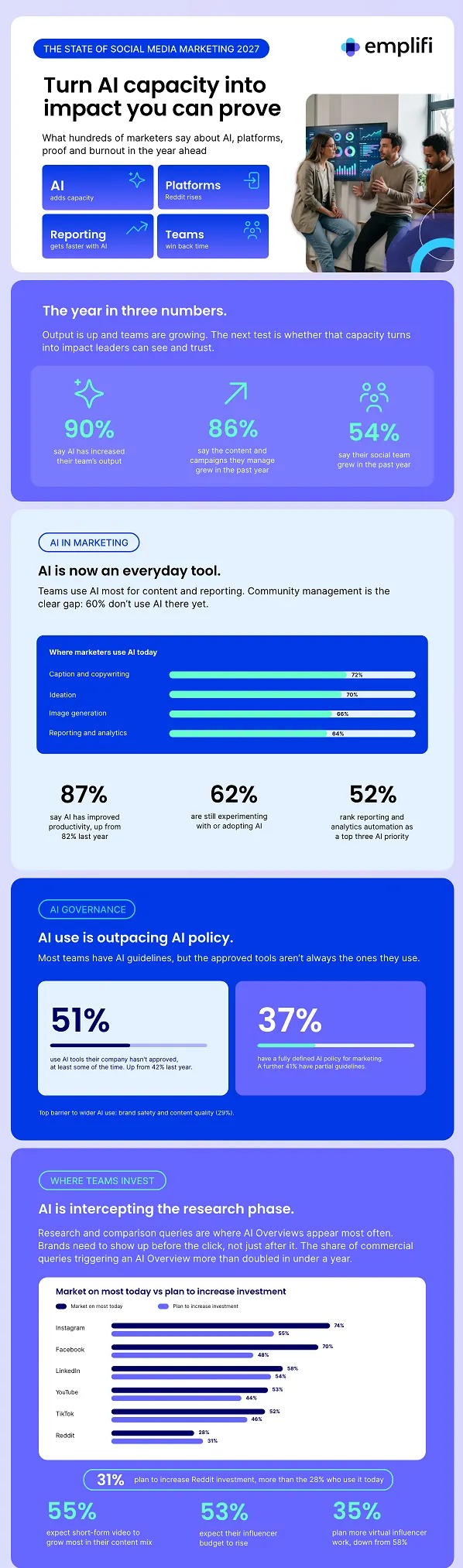
The research, which surveyed 405 marketing managers, directors, and executive-level decision-makers, provides a critical window into how corporate leaders are restructuring their operations. By analyzing the data compiled in the latest Emplifi report, organizations can glean actionable insights to refine their strategic planning, optimize internal workflows, and better allocate budgets for the upcoming fiscal cycles.
Methodology and Background of the Study
The commissioned study was designed to capture the sentiment of marketing leaders actively navigating the post-pandemic digital landscape, where consumer behavior shifts at an unprecedented pace. Emplifi targeted 405 qualified professionals holding managerial, directorial, and executive titles across various enterprise sectors. These respondents shared their firsthand experiences, current pain points, and forward-looking projections regarding the integration of artificial intelligence tools into daily marketing operations.
In recent years, the marketing sector has experienced a seismic shift driven by generative AI, algorithm updates across major social media platforms, and changing paradigms in how consumers search for products. Where consumers once relied primarily on search engines and traditional banner advertising, contemporary audiences discover brands through decentralized social channels, algorithmic recommendations, and interactive digital communities. Recognizing this gap between legacy marketing practices and modern consumer expectations, Emplifi structured its research to identify the specific tools and tactics high-performing brands are utilizing to maintain a competitive edge.
The Evolution of AI Integration in Marketing Workflows
Artificial intelligence has transitioned rapidly from an experimental novelty to a core operational pillar for enterprise organizations. According to the insights gathered by Emplifi, marketing executives are no longer asking whether they should adopt AI, but rather how quickly and efficiently they can scale its implementation across diverse workflows.
For 2027, the focus has shifted heavily toward workflow optimization. Marketing teams are deploying AI not merely to generate surface-level content, but to automate complex data analysis, personalize customer interactions at scale, and forecast consumer trends with greater predictive accuracy. By streamlining these processes, departments are reducing operational friction, cutting overhead costs, and allowing creative talent to focus on high-level strategic initiatives rather than repetitive administrative tasks.
Industry analysts note that the successful integration of AI requires a delicate balance between automation and human oversight. While algorithms can process millions of data points in seconds to identify social media engagement trends, the nuanced understanding of brand voice, cultural context, and emotional resonance still requires human curation. Forward-thinking brands surveyed in the report are establishing specialized AI governance teams to ensure that automated tools enhance, rather than compromise, the authenticity of their brand messaging.
Shifting Paradigms in Product and Brand Discovery
One of the most critical revelations of the Emplifi study centers on how modern consumers discover products and services. The traditional consumer journey—characterized by a linear progression from awareness to consideration and finally purchase—has been thoroughly disrupted by social commerce and algorithmic discovery engines.
Consumers are increasingly bypassing traditional search engines, turning instead to social media platforms, influencer recommendations, and generative AI search tools to find products. This behavioral shift demands a complete overhaul of discovery optimization strategies. Brands can no longer rely solely on search engine optimization (SEO) for text-based queries; they must master social SEO, optimize for visual and video algorithms, and establish a robust presence across emerging digital touchpoints.
Marketing executives participating in the survey emphasized that brand discovery is now inherently social and conversational. Consumers expect real-time interactions, peer validation through user-generated content, and seamless purchasing capabilities directly within social applications. Consequently, marketing budgets for 2027 are being reallocated away from traditional display advertising and channeled into social commerce infrastructure, influencer partnerships, and community-building initiatives.
Social Media Engagement Trends Heading Toward 2027
Social media platforms remain the primary battleground for consumer attention, yet the rules of engagement are constantly evolving. The Emplifi report highlights that maintaining stagnant organic reach is no longer a viable strategy. Platforms are continuously updating their algorithms to prioritize authentic community engagement, video content, and interactive experiences over passive broadcasting.
Executives surveyed by Emplifi noted that audience fatigue is a growing concern. Consumers are becoming increasingly discerning, quickly tuning out overtly promotional content in favor of entertainment, education, and brand transparency. To combat this, marketing managers are doubling down on micro-influencer campaigns, interactive polls, live-streaming events, and immersive storytelling formats.
Furthermore, data privacy regulations and the phasing out of third-party cookies have placed a premium on first-party data collection via social media channels. Brands are leveraging social engagement not only for brand awareness but as a direct pipeline for gathering consumer insights, preferences, and feedback. This direct-to-consumer feedback loop enables agile product development and hyper-targeted messaging that resonates deeply with niche audience segments.
Industry Implications and Strategic Recommendations
The findings from the Emplifi study carry profound implications for marketing leaders as they finalize their strategic roadmaps for the coming years. Based on the empirical data and industry trends outlined in the report, several key operational recommendations emerge for enterprises looking to future-proof their organizations:
-
Accelerate AI Literacy Across All Levels: Organizations must move beyond basic experimentation by providing comprehensive AI training for all marketing personnel. Ensuring that teams understand how to prompt, evaluate, and integrate AI outputs safely will dictate overall operational efficiency.
-
Redefine the Discovery Funnel: Brands must audit their digital footprints to ensure they are discoverable where modern consumers actually search. This includes optimizing for social media search algorithms, investing in social commerce checkout features, and partnering with credible creators who authentically align with the brand’s values.
-
Prioritize Authentic Community Building: Moving away from transactional broadcasting, successful brands will foster genuine communities where consumers feel heard and valued. Prioritizing two-way dialogue and user-generated content will be essential for retaining customer loyalty in a crowded marketplace.
-
Establish Agility Frameworks: The pace of technological and behavioral change shows no signs of slowing. Marketing departments must build flexible operational structures capable of pivoting quickly in response to new platform features, algorithmic updates, and emerging consumer preferences.
Conclusion
As the marketing landscape marches toward 2027, the divide between organizations that proactively embrace technological disruption and those that cling to legacy methodologies will widen significantly. The insights provided by Emplifi’s survey of 405 marketing executives serve as both a strategic compass and a cautionary reminder. By harnessing the optimization power of artificial intelligence, adapting to decentralized product discovery, and fostering authentic social media engagement, forward-thinking brands can position themselves for sustainable growth in an increasingly competitive global economy.