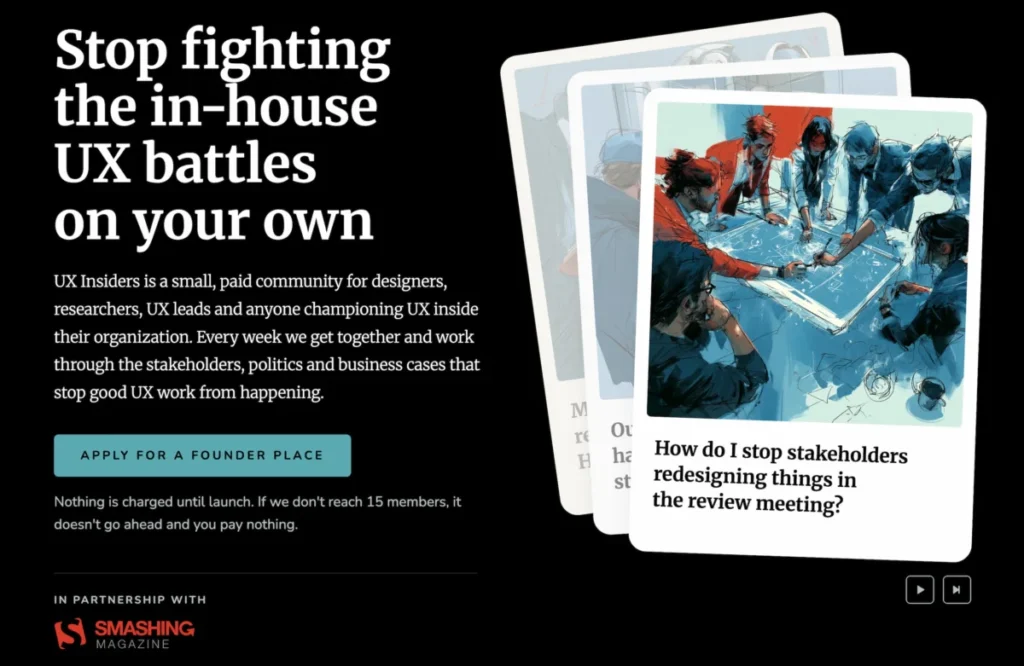

The landscape of professional user experience (UX) design is undergoing a significant shift as in-house practitioners face mounting pressures from organizational politics, the rapid integration of artificial intelligence, and the isolation inherent in solitary roles. In response to these industry-wide pain points, veteran UX consultant Paul Boag, in partnership with Smashing Magazine, has announced the launch of UX Insiders, a specialized professional community designed exclusively for internal UX teams. Scheduled for an official launch on January 5, 2027, the initiative seeks to provide a collaborative framework for those tasked with championing user-centric strategies within larger, often non-design-centric, organizations.
The Problem of Professional Isolation in UX
Data from recent industry surveys suggests that a growing majority of UX professionals operate as part of "teams of one" or within small units embedded inside larger corporations. This structure frequently leads to a specific set of challenges that are distinct from the agency-client dynamic. Unlike freelancers, who can leverage a portfolio of clients to build a reputation, or agencies that operate with a degree of external autonomy, in-house UX practitioners often find themselves navigating complex internal hierarchies, departmental silos, and competing business objectives.
The "hidden" aspect of the role—managing stakeholder expectations, justifying the return on investment (ROI) for UX research, and navigating project stagnation—often consumes more time than the design work itself. According to industry analysis, as senior management increasingly looks to automate research through AI-driven tools, the role of the in-house UX advocate is being forced to evolve from a technical role to a strategic, communicative, and political one. The absence of a peer-to-peer support network within a single organization often leaves these professionals without a sounding board for navigating office politics or implementing best practices in an environment that may not prioritize design maturity.
A Structured Approach to Collaborative Problem Solving
The UX Insiders platform is built upon a model of structured knowledge sharing, aiming to mitigate the isolation of in-house practitioners. The community will operate through weekly, moderated calls and a centralized, searchable library of internal business cases, research plans, and standardized templates. By focusing strictly on in-house staff, the community intends to create a "safe space" where members can discuss specific organizational hurdles without the risk of external competition or unsolicited sales pitches from agencies.

Paul Boag, who has contributed extensively to the industry through numerous publications and as an advisory board member for Smashing Magazine, will personally facilitate the sessions. The decision to restrict membership to internal employees is a deliberate strategic choice to ensure the integrity of the discourse. "The best advice usually comes from other members," Boag noted, drawing on the operational success of his existing Agency Academy platform. By vetting applicants, the organizers aim to maintain a high level of relevance and professional focus.
Timeline and Operational Milestones
The development of UX Insiders follows a rigorous timeline designed to test market viability and establish a foundation of committed participants. The project is currently in the pre-launch phase, with a hard deadline of December 11, 2026, to determine whether the community will proceed.
- November 2026: Initial recruitment phase and promotion via industry channels.
- December 11, 2026: Critical viability checkpoint. A minimum of 15 confirmed members is required for the project to proceed.
- January 5, 2027: Official platform launch and commencement of regular programming.
This "threshold" model of community building is designed to ensure that the network has enough critical mass to be effective from day one. Members who join during the initial phase are classified as "Founders," granting them locked-in pricing for the duration of their membership.
Financial Structure and Corporate Integration
Recognizing that individual UX professionals often face budget constraints, the fee structure for UX Insiders is designed to be potentially absorbed by corporate training and development budgets. The membership is priced at £49 per month for an annual commitment or £59 per month for a flexible monthly subscription. These payments are subject to VAT.
By positioning the community as a professional development resource, organizers hope to facilitate invoice-based payments from employers, a common practice for certifications or industry-specific workshops. This approach acknowledges the reality of the modern corporate environment where professional growth is increasingly treated as a line item for team performance rather than an individual expense.
The Broader Impact of Professional Networking
The launch of this community highlights a broader trend in the design industry: the professionalization of internal UX roles. As organizations transition from viewing design as a visual service to a fundamental business strategy, the need for standardized frameworks for communication, stakeholder management, and research documentation becomes paramount.
Industry analysts observe that communities like UX Insiders are filling a void left by traditional educational platforms. While universities and bootcamps provide foundational design skills, they rarely address the nuances of internal corporate dynamics. The ability to reference successful case studies—such as how to pitch a research budget to a skeptical CFO or how to integrate AI tools without sacrificing quality—is considered a high-value asset in the modern enterprise.
Parallel Initiatives: Supporting the Agency Ecosystem
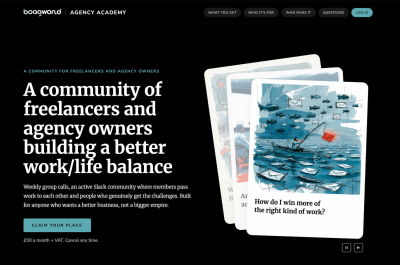
While UX Insiders focuses on the internal employee, Boag continues to support the independent sector through the Agency Academy. This parallel initiative, which has been operational since July 2024, provides a similar framework for freelancers and agency owners.
The two platforms, while distinct in their target audience, reflect a unified strategy to address the fragmented nature of the digital design industry. By creating separate environments for in-house and agency professionals, Boag is acknowledging the fundamental differences in their operational incentives. While internal teams struggle with internal politics and organizational inertia, agency professionals often struggle with business development, client acquisition, and work-life balance.
Implications for the Future of UX Work
The introduction of UX Insiders arrives at a time when the "democratization of design"—the push to allow non-designers to use design tools—has led to a perception that professional expertise is becoming commoditized. By creating a professional community that emphasizes high-level strategy and organizational advocacy, Boag and his collaborators are essentially re-asserting the value of the professional designer in an age of automated tools.
The success of this venture will likely depend on the quality of the shared resources and the efficacy of the peer-to-peer network. If the community successfully manages to aggregate actionable intelligence on navigating corporate structures, it could serve as a model for other specialized professional groups. As digital work becomes increasingly globalized and remote, the reliance on digital, community-led support structures is expected to grow.
For those interested in the initiative, the application process is streamlined to verify employment status. The focus remains on building a cohort of practitioners who share the same core mission: effectively integrating user-centricity into the heart of large-scale business operations. By providing a secure, moderated, and focused environment, the platform seeks to turn the "hidden" struggle of the in-house UX professional into a collaborative, solved problem. As the January 2027 launch date approaches, the industry will be watching to see how many professionals choose to formalize their peer-support networks in this new, dedicated capacity.