Tag: channel

  • OpenAI’s ChatGPT Ad Channel Faces Mixed Early Sentiment Amid Data Gaps and Evolving Platform

    OpenAI’s ChatGPT Ad Channel Faces Mixed Early Sentiment Amid Data Gaps and Evolving Platform

    OpenAI’s ambitious foray into the advertising market, positioning its flagship generative AI model, ChatGPT, as a nascent advertising channel, is currently navigating a period of mixed sentiment among early adopters. Just two months after the official launch of ad placements within the conversational AI platform, brands are grappling with significant challenges, including limited access to performance data, an unclear framework for measuring return on investment (ROI), and the inherent fluidity of a rapidly evolving product. This situation underscores the delicate balance between capitalizing on a burgeoning, high-intent audience and the practical realities of establishing a measurable and reliable advertising ecosystem in a groundbreaking technological space.

    The Genesis of Monetization: OpenAI’s Strategic Imperative

    The journey of OpenAI from a non-profit research institution to a leading commercial entity in the artificial intelligence landscape has been marked by a profound strategic pivot, driven by both its technological advancements and the immense financial demands of developing and operating large language models (LLMs). Founded in 2015 with a mission to ensure that artificial general intelligence (AGI) benefits all of humanity, OpenAI initially operated under a non-profit structure. However, the exponential costs associated with training and deploying models like GPT-3 and subsequently GPT-4 necessitated a shift. In 2019, OpenAI LP was formed as a "capped-profit" entity, allowing it to raise substantial capital while retaining its core mission. This transformation culminated in a multi-billion dollar investment from Microsoft, solidifying a partnership that provided crucial computational resources and financial backing.

    ChatGPT, launched to the public in November 2022, rapidly became a global phenomenon, achieving 100 million users within two months, making it the fastest-growing consumer application in history. This unprecedented user acquisition highlighted the vast potential of generative AI, but also underscored the immense operational expenditure required to sustain such a service. Running LLMs at scale demands vast server farms, continuous energy consumption, and ongoing research and development—costs that far outstrip subscription revenues alone. Consequently, exploring diverse monetization strategies became an inevitable step for OpenAI, leading to the introduction of API access for developers, premium subscription tiers (ChatGPT Plus), and, more recently, the integration of advertising. This strategic imperative to generate revenue is not merely about profit but about sustaining the very innovation cycle that powers OpenAI’s mission, fueling the next generation of AI development.

    A Nascent Ad Channel: Chronology of Integration and Prior Endeavors

    The timeline of OpenAI’s direct monetization efforts beyond subscriptions and API access has been characterized by both bold experimentation and pragmatic adjustments. Following ChatGPT’s explosive growth in late 2022 and early 2023, the company began exploring various avenues to leverage its immense user base. While specific details surrounding the initial "launch" of ads in ChatGPT are still emerging, the current phase, initiated approximately two months ago, represents a more formalized push into the advertising realm. This comes after earlier ventures that met with varying degrees of success, signaling OpenAI’s iterative approach to finding a sustainable commercial model.

    Notably, OpenAI had previously experimented with features such as "Instant Checkout," a commerce integration designed to streamline purchasing directly through conversational prompts. This feature, however, was quietly retracted, indicating challenges in integrating direct transactional capabilities into the user experience or perhaps a broader recalibration of strategic priorities. Similarly, the company’s ambitions in the video sector have reportedly lost ground to competitors, suggesting a need to refocus its monetization efforts on core strengths. These earlier attempts provide crucial context for the current advertising push: they demonstrate OpenAI’s willingness to innovate and pivot, learning from market feedback and competitive pressures as it seeks to establish a viable and impactful commercial presence. The current ad initiative, therefore, represents a refined strategy, focusing on leveraging the conversational interface itself as a medium for brand engagement.

    Advertiser Engagement: Navigating Uncharted Territory

    The current sentiment among advertisers exploring ChatGPT’s new ad channel is, as reported by Ad Age, a delicate balance between "cautious optimism" and outright "frustration." On one hand, the allure of reaching ChatGPT’s rapidly expanding, highly engaged, and often "high-intent" user base is undeniable. Brands recognize the potential for unprecedented contextual relevance, where advertisements could be seamlessly integrated into user queries, offering solutions precisely when a user is actively seeking information or recommendations. This promises a level of targeting and engagement that traditional ad platforms often struggle to achieve.

    However, this optimism is tempered by significant operational hurdles. A primary concern is the conspicuous absence of robust measurement tools and performance benchmarks. Advertisers accustomed to the granular analytics provided by established platforms like Google Ads or Meta Ads are finding it challenging to justify significant budget allocation to a channel where clear ROI metrics are elusive. This lack of transparency makes it difficult to ascertain the effectiveness of campaigns, optimize spend, or even understand basic engagement rates. Brands are experimenting, but often on a limited scale, wary of overcommitting funds to an unproven medium. Concerns also extend to brand safety in a generative AI environment, where the dynamic nature of content creation could theoretically lead to unforeseen juxtapositions with brand messaging, though OpenAI maintains safeguards against direct alteration of core answers.

    The Data Conundrum and Performance Benchmarks

    The fundamental challenge confronting advertisers on ChatGPT lies in the very nature of conversational AI itself. Traditional digital advertising relies heavily on clicks, impressions, conversions, and a predefined user journey across websites or apps. In a generative AI interface, the user interaction is fluid, conversational, and often highly personalized. This necessitates a rethinking of conventional performance metrics. How does one measure the impact of a sponsored recommendation subtly influencing a user’s decision within a chat thread? What constitutes a "conversion" in a purely conversational context?

    Industry analysts suggest that OpenAI must rapidly develop new, AI-native key performance indicators (KPIs) that accurately reflect the unique value proposition of its platform. This could involve metrics related to "recommendation influence," "conversational engagement," "brand recall within a session," or even advanced sentiment analysis post-ad exposure. Without such tools, advertisers face an uphill battle in attributing value and optimizing their campaigns effectively. This mirrors the early days of search advertising in the late 1990s or social media advertising in the mid-2000s, where advertisers and platforms together had to invent and refine metrics to quantify value in novel digital environments. The absence of these benchmarks not only hinders advertiser confidence but also limits OpenAI’s ability to demonstrate the tangible benefits of its ad channel, potentially slowing adoption among mainstream brands.

    Balancing Act: User Trust Versus Commercial Imperatives

    Advertisers are testing ChatGPT ads — but uncertainty remains high

    At the core of OpenAI’s advertising strategy lies a profound tension: the imperative to monetize its popular platform without eroding the user trust that has been central to ChatGPT’s success. Users flock to ChatGPT for its ability to provide unbiased, informative, and helpful responses. The introduction of advertising risks compromising this perception of neutrality, raising questions about whether sponsored content could subtly or overtly influence the AI’s answers.

    OpenAI maintains that ads "do not directly alter core answers." However, early tests and observations suggest that ads can "influence user journeys." For instance, a sponsored retailer might appear more prominently in a list of recommendations, even when multiple viable options exist. This subtle influence, while not directly falsifying information, still presents a grey area regarding user perception of objectivity. The challenge for OpenAI is to design ad integrations that are transparent, clearly distinguishable from organic content, and ultimately add value to the user experience rather than detracting from it. Failure to strike this delicate balance could lead to user backlash, potentially driving users to competitors perceived as more neutral or ad-free. The future evolution of AI advertising will undoubtedly be shaped by how platforms navigate this ethical tightrope, prioritizing both commercial viability and the foundational principle of user trust.

    The Competitive Landscape and Broader Industry Context

    OpenAI’s push into advertising unfolds within an intensely competitive and rapidly evolving AI landscape. Its primary rivals include tech giants like Google, with its Gemini models and long-established dominance in search advertising, and well-funded startups like Anthropic, developers of the Claude AI. Google, in particular, poses a formidable challenge. With decades of experience in monetizing search queries and an unparalleled advertising infrastructure, Google is integrating generative AI into its search experience (Search Generative Experience, or SGE) and its broader ad ecosystem. This means OpenAI is not just competing for AI supremacy but for a slice of the multi-hundred-billion-dollar global digital advertising market, where Google and Meta currently hold significant sway.

    The broader picture reveals OpenAI juggling multiple strategic priorities simultaneously: continuous AI development, expanding its enterprise solutions, and now, building an advertising platform. Some industry observers have suggested that OpenAI has "cast too wide a net," experimenting across various verticals like video and commerce before refocusing. This scattered approach, coupled with fierce competition, highlights the immense pressure on OpenAI to consolidate its efforts and demonstrate clear value propositions for each of its ventures. The success of its ad channel will not only impact OpenAI’s financial sustainability but also influence the future direction of AI monetization strategies across the industry, potentially setting new standards for how conversational AI integrates with commerce and marketing.

    Strategic Imperatives for Marketers

    Given the nascent stage of ChatGPT’s ad platform, marketing experts advise a measured and strategic approach rather than a headlong rush. For large brands with ample experimental budgets, early testing may offer a first-mover advantage, providing invaluable insights into how their target audience interacts with ads in a conversational AI environment. These brands can afford to allocate resources to understanding the nuances of this new channel, even if immediate, quantifiable ROI is not yet guaranteed.

    For smaller to medium-sized businesses, the recommendation is to focus on strategy development. This involves actively monitoring the platform’s evolution, understanding how AI is integrated into broader media consumption and search behavior, and contemplating how their brand narrative could authentically resonate within a conversational context. The priority is not necessarily to spend now, but to prepare for when the platform matures, measurement tools become more sophisticated, and the value proposition becomes clearer. Marketers should consider how their existing content strategies can be adapted for AI-driven discovery, exploring opportunities for organic visibility within AI responses even before committing to paid placements. The ultimate goal is to integrate AI into a holistic media strategy, recognizing its potential to transform customer engagement and discovery.

    Expert and Industry Perspectives

    Industry analysts widely acknowledge the transformative potential of AI in advertising, predicting significant growth in AI-driven ad spending over the next decade. However, they also echo the sentiment of caution regarding OpenAI’s current ad offering. Many draw parallels to the early days of social media advertising, where platforms like Facebook initially struggled to provide robust measurement tools, yet eventually evolved into indispensable channels for marketers. The consensus is that OpenAI possesses a unique asset in ChatGPT’s user base and conversational capabilities, but it must rapidly iterate on its ad product, focusing on transparency, measurability, and user experience.

    Experts anticipate that future iterations of AI advertising will move beyond simple sponsored recommendations to highly personalized, dynamic ad experiences that are contextually aware of the ongoing conversation. This could involve AI assistants proactively suggesting products or services based on inferred user needs, or even engaging in conversational commerce where the AI guides the user through a purchasing decision. However, these advanced applications will require significant technological development, robust ethical frameworks, and widespread user acceptance.

    The Road Ahead: Maturation and Evolution

    ChatGPT ads are undeniably in their infancy—promising, yet largely unproven. The current landscape necessitates a careful, experimental approach from advertisers, who must continue to engage thoughtfully while waiting for the platform to evolve and catch up to the lofty expectations surrounding AI-driven advertising. OpenAI’s journey to establish a robust and profitable ad channel will be an iterative process, marked by continuous product development, refinement of measurement capabilities, and a constant negotiation of the delicate balance between commercial imperatives and user trust.

    The coming months and years will likely see significant advancements in how ads are delivered, measured, and perceived within conversational AI interfaces. Success will hinge on OpenAI’s ability to provide advertisers with compelling data, ensure transparency for users, and foster an ad experience that enhances rather than detracts from the utility of its AI. The eventual impact on the digital advertising ecosystem could be profound, ushering in an era of highly contextual, conversational, and deeply integrated brand engagement, but the path to that future remains complex and full of challenges.

  • How to Get More Views on YouTube in 2026: A Comprehensive Guide to Channel Growth and Audience Engagement

    How to Get More Views on YouTube in 2026: A Comprehensive Guide to Channel Growth and Audience Engagement

    The digital landscape of 2026 presents a YouTube ecosystem that is more sophisticated, competitive, and data-driven than at any point in the platform’s history. With over 2.7 billion monthly active users and a recommendation engine powered by advanced neural networks, the challenge for creators has shifted from simply "being seen" to "being sustained." For new and established creators alike, achieving consistent viewership requires a multifaceted approach that prioritizes high-concept ideation, psychological triggers in packaging, and a deep technical understanding of the platform’s dual-format nature. Industry experts and successful creators now emphasize that while the barrier to entry remains low, the ceiling for quality and strategic planning has risen significantly.

    13 Ways to Get More Views on YouTube in 2026

    The Evolution of Content Ideation: The Familiar-Unexpected Framework

    The foundation of a high-growth YouTube channel in 2026 begins long before a camera is powered on. Market saturation in traditional niches like productivity, lifestyle, and gaming has forced a transition toward the "Familiar-Unexpected" framework. This strategy dictates that a video topic must be grounded in a concept the audience already recognizes (the familiar) but offers a perspective or execution they have never seen (the unexpected).

    13 Ways to Get More Views on YouTube in 2026

    According to YouTube creator Cara Nicole, understanding the ideal viewer is the first step in this process. "You need to understand your ideal viewer," Nicole states, suggesting that creators must identify what news and cultural trends their audience is currently tracking. This sentiment is echoed by productivity expert Ali Abdaal, who advises creators to find a "competitive edge" in domains such as depth of research, storytelling, or relatability. In a 2026 market, "imitation" is a recipe for stagnation; "adaptation" is the key to survival.

    13 Ways to Get More Views on YouTube in 2026

    To identify these breakout ideas, creators are increasingly turning to advanced search analysis. This involves utilizing Google’s "People Also Ask" sections and YouTube Studio’s "Trends" tab to find gaps in the current content market. A proven tactic for 2026 involves "competitor analysis 2.0," where creators look for "outlier" videos on rival channels—content that has significantly more views than the channel has subscribers. This disparity is a clear indicator that the YouTube algorithm has identified a high-interest topic and is pushing it to a broader audience.

    13 Ways to Get More Views on YouTube in 2026

    The Architecture of the Viewer Journey: The TV Show Model

    One of the most significant shifts in YouTube strategy over the last five years is the move away from isolated video uploads toward a "content series" or "TV show" model. Rene Ritchie, a prominent voice in the creator economy, argues that binging is the fastest way to grow a channel. If a viewer watches one video, the channel’s primary goal should be to ensure they watch three or four more in immediate succession.

    13 Ways to Get More Views on YouTube in 2026

    This "viewer journey" is facilitated through the strategic use of playlists and recurring themes. For example, if a creator produces a video on home maintenance, a successful 2026 strategy involves creating a cluster of related content—such as "Common Mistakes," "Essential Tools," and "Pro-Level Tips"—rather than jumping to an unrelated topic like travel or cooking. This thematic consistency signals to the algorithm that the channel is an authority on a specific subject, increasing the likelihood of the content being suggested to similar audiences.

    13 Ways to Get More Views on YouTube in 2026

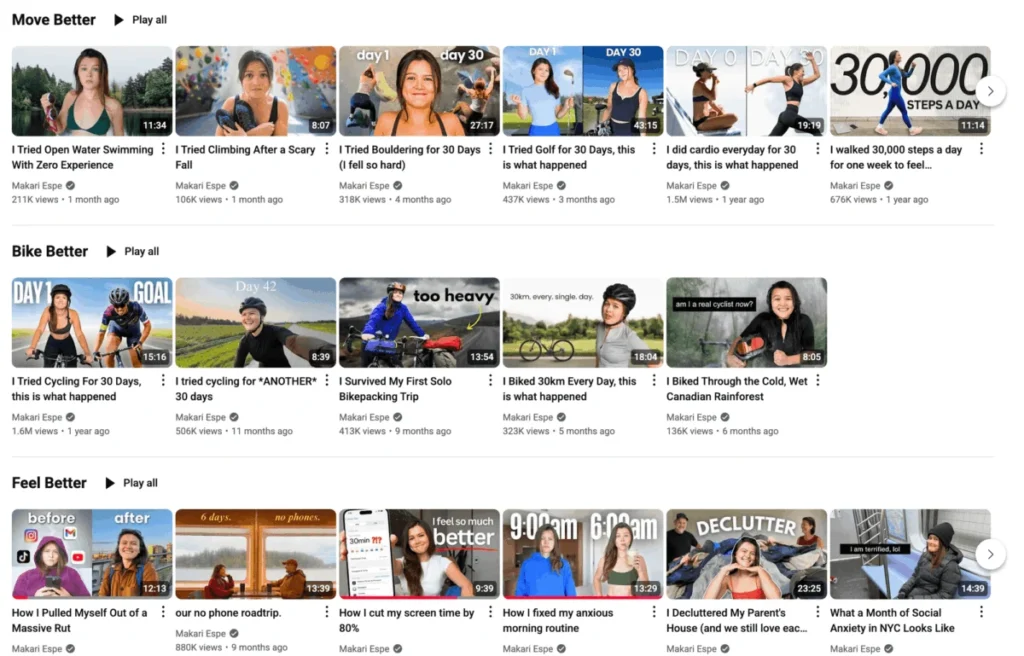
    Case studies from creators like Makari Espe demonstrate that challenge-based series—where a creator documents a multi-day or multi-week journey—create a "domino effect" of views. When one video in the series gains traction, it serves as a funnel for the entire playlist, exponentially increasing total watch time and subscriber conversion rates.

    13 Ways to Get More Views on YouTube in 2026

    The Psychology of Packaging: Thumbnails and Titles as Hooks

    In the 2026 attention economy, the "packaging" of a video—its thumbnail and title—is considered just as important as the video content itself. Data from the agency Snowball indicates that up to 40% of a creative team’s effort should be focused on the pre-production of these two elements. Ryan Hashemi, who has overseen billions of views for Jubilee and other major channels, asserts that if a "must-click" title and thumbnail do not exist before filming starts, the video should not be made.

    13 Ways to Get More Views on YouTube in 2026

    The technical requirements for a high-performing thumbnail in 2026 have evolved. Optimization now involves high-contrast imagery, minimal text, and a focus on "curiosity gaps." A curiosity gap is the space between what a viewer knows and what they want to know. Titles that leverage keywords while simultaneously posing a question or presenting a high-stakes scenario perform 35% better than purely descriptive titles.

    13 Ways to Get More Views on YouTube in 2026

    Furthermore, the integration of AI in 2026 allows YouTube to index not just the metadata but the visual and audio content of the video. This means that titles must be "search-friendly" without losing their human appeal. Creators are encouraged to use primary keywords naturally in the title while using the first two lines of the description to provide context that the algorithm can parse for search results.

    13 Ways to Get More Views on YouTube in 2026

    Technical SEO and the Role of AI Indexing

    While the "home feed" and "suggested videos" drive the majority of viral traffic, search remains the primary discovery tool for new creators. To rank higher in 2026, creators must optimize across four specific placements:

    13 Ways to Get More Views on YouTube in 2026
    1. Video Natural inclusion of primary target keywords.
    2. Description: A blend of primary and secondary keywords, formatted for readability.
    3. Video Tags: A mix of broad niche terms and specific "long-tail" keywords (phrases with three or more words).
    4. Subtitles/Audio: Verbalizing keywords within the script so that YouTube’s AI can index the audio track.

    The use of long-tail keywords is particularly critical for smaller channels. Instead of trying to rank for a broad term like "fitness," a creator might target "low-impact morning yoga for office workers." This specificity reduces competition and ensures that the views gained are from a highly relevant, engaged audience.

    13 Ways to Get More Views on YouTube in 2026

    The Dual-Format Ecosystem: Balancing Long-Form and Shorts

    The year 2026 marks the full maturation of YouTube Shorts as a discovery engine. However, the relationship between Shorts and long-form content has become more complex. Successful creators now use Shorts as "trailers" or "teasers" for their main content. According to Paul Zalewski, co-founder of the Fathercraft channel, the key is to create "unique-value-driven content" for each format rather than simply cutting a long video into smaller pieces without context.

    13 Ways to Get More Views on YouTube in 2026

    Data regarding posting times has also revealed a stark contrast between the two formats. Research indicates that long-form videos typically see peak engagement during morning hours (8:00 AM to 11:00 AM), particularly on Sundays and Tuesdays. Conversely, YouTube Shorts engagement peaks in the evenings (6:00 PM to 11:00 PM), with Friday and Saturday being the most active days. This divergence suggests that audiences consume these formats during different parts of their daily routine—long-form during dedicated "lean-back" time and Shorts during "in-between" moments or evening scrolling.

    13 Ways to Get More Views on YouTube in 2026

    Collaborative Growth and Cross-Platform Synergy

    Collaborations in 2026 have moved beyond simple shout-outs. High-impact partnerships now involve "cross-pollination," where two or more creators in the same niche produce a unified project that is split across their respective channels. This forces the audience to visit multiple channels to get the full story, significantly increasing the subscriber conversion rate.

    13 Ways to Get More Views on YouTube in 2026

    Additionally, the promotion of YouTube content across other platforms like Instagram, TikTok, and email newsletters remains a vital part of a growth strategy. Buffer and other social media management tools have become essential for creators to schedule teasers and behind-the-scenes content that drives traffic back to the "main hub" on YouTube. The goal is to create a "surround-sound" effect where the audience encounters the creator’s brand across multiple touchpoints.

    13 Ways to Get More Views on YouTube in 2026

    Analytics and the Economics of Viewership

    To sustain growth, creators must become proficient in analyzing their "Retention Curves." The first 30 seconds of a video are the most critical; this is where the "hook" must be delivered. YouTube’s current view-counting methodology places high value on "legitimate" watch time, often requiring a viewer to stay for at least 30 seconds for the view to be fully logged and factored into the recommendation algorithm.

    13 Ways to Get More Views on YouTube in 2026

    From a monetization perspective, the "pay per view" model remains a misconception. Earnings are driven by RPM (Revenue Per Mille), which measures how much a creator earns per 1,000 views after YouTube takes its cut. In 2026, RPMs vary wildly based on the niche. Finance and technology channels often see much higher RPMs than entertainment or lifestyle channels because the advertisers in those spaces are willing to pay more to reach a specific demographic. To enter the YouTube Partner Program and begin earning, creators must still meet the threshold of 1,000 subscribers and either 4,000 watch hours in a year or 10 million Shorts views in 90 days.

    13 Ways to Get More Views on YouTube in 2026

    Conclusion: The Long Game of 2026

    The overarching theme for YouTube success in 2026 is endurance. Unlike the viral "flash-in-the-pan" success seen on other platforms, YouTube rewards consistency and the "compounding effect" of a deep video library. Evergreen content—videos that remain relevant for years—acts as the steady backbone of a channel’s traffic, while trending content serves as the accelerator.

    13 Ways to Get More Views on YouTube in 2026

    As the platform continues to integrate AI-driven search and recommendation features, the creators who will thrive are those who treat their channel as a professional media outlet. This involves a commitment to high production values, strategic SEO, psychological audience engagement, and a relentless focus on the viewer’s experience. In the words of industry veteran Ryan Hashemi, "YouTube isn’t something you dip a toe into. It rewards consistency and compounds significantly over time." For those willing to master the nuances of the 2026 algorithm, the potential for global reach and influence remains unparalleled in the digital age.

Grafex Media
Privacy Overview

This website uses cookies so that we can provide you with the best user experience possible. Cookie information is stored in your browser and performs functions such as recognising you when you return to our website and helping our team to understand which sections of the website you find most interesting and useful.