
Tag: geom

  • Cal Sans UI Free Font: A Variable Typeface with GEOM Axis

    Cal Sans UI Free Font: A Variable Typeface with GEOM Axis

    The digital design and open-source communities are abuzz with the release of Cal Sans UI, a groundbreaking variable typeface commissioned by Cal.com, the rapidly expanding open-source scheduling platform. Developed by Mark Davis of WORDMARK, this new font family is more than just another user interface (UI) typeface; it represents a significant stride in typographic flexibility and integration, offering designers unprecedented control over stylistic expression through its unique GEOM axis. Released under the permissive SIL Open Font License, Cal Sans UI is immediately available for both personal and commercial projects, signaling Cal.com’s deep commitment to contributing high-quality design assets back to the global open-source ecosystem.

    A New Paradigm in Typographic Flexibility: The GEOM Axis

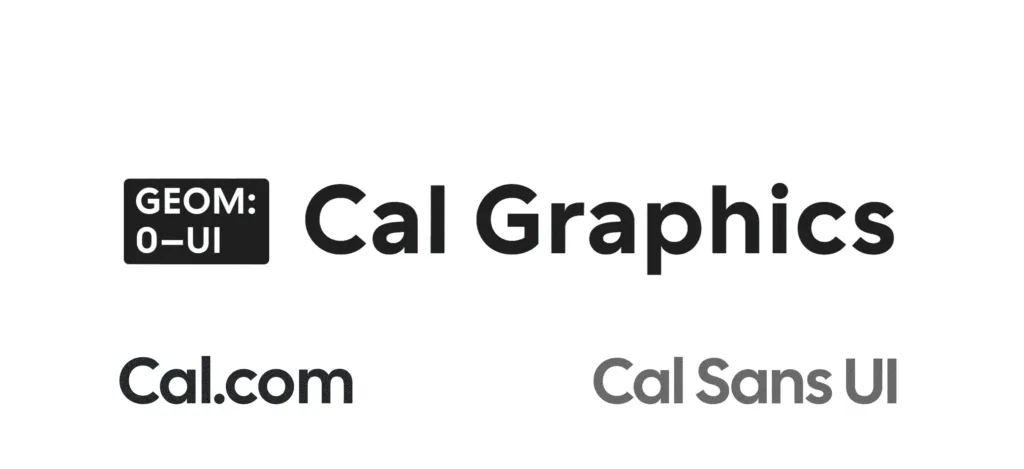
    At the core of Cal Sans UI’s innovation is its custom GEOM axis, which allows for a continuous interpolation between distinctly humanist and strictly geometric letterforms. Ranging from 0 to 100, this axis transforms the very character of the typeface. At GEOM 0, the letterforms exhibit organic, flowing humanist curves, reminiscent of traditional calligraphic influences and prioritizing natural readability. As the axis slides towards GEOM 100, these same letters progressively resolve into precise, angular, and highly structured geometric proportions, embodying a modern, technical aesthetic. This dynamic capability provides designers with a powerful tool to fine-tune the visual tone of their interfaces, brand identities, and textual content, from warm and inviting to sharp and contemporary, all within a single font file.

    The commissioning of Cal Sans UI by Cal.com underscores the increasing importance of bespoke typography in establishing strong brand identity and enhancing user experience, particularly for platforms deeply embedded in the digital realm. Cal.com, with over 50,000 GitHub stars, has cultivated a robust community of developers and users who value efficiency, customization, and open collaboration. The decision to invest in a custom variable typeface reflects a strategic understanding of how visual consistency and aesthetic nuance contribute to a superior product experience.

    The Genesis of Cal Sans UI: Cal.com’s Vision and WORDMARK’s Expertise

    Cal.com’s journey began as an ambitious open-source project aimed at democratizing scheduling and appointment management. Its rapid ascent to prominence, evidenced by its substantial GitHub star count, speaks volumes about its utility, flexibility, and the power of community-driven development. As the platform matured and its user base diversified, the need for a distinctive and highly functional visual language became apparent. A generic UI typeface, while functional, could not fully encapsulate Cal.com’s ethos of innovation, precision, and user-centric design.

    This led Cal.com to collaborate with Mark Davis, a renowned typographer, and his practice, WORDMARK. Davis’s reputation for crafting typefaces that blend aesthetic appeal with rigorous technical execution made him an ideal partner for this ambitious project. The brief was clear: to create a typeface that was not only optimized for digital interfaces but also possessed a unique expressive range, reflecting the dynamic nature of Cal.com itself. The result, Cal Sans UI, stands as a testament to this collaborative vision, marrying cutting-edge variable font technology with a deep understanding of typographic principles.

    Technical Architecture: Families, Weights, and Seamless Integration

    Cal Sans UI ships not as a singular entity, but as three distinct yet harmonized families: Cal Sans UI, Cal Sans UI Text, and Cal Sans UI Geo. Each family maintains a consistent weight axis, spanning from Light to Bold, offering a comprehensive range for hierarchical typography. This tripartite structure allows for nuanced application:

    Cal Sans UI Free Font: A Variable Typeface with GEOM Axis
    • Cal Sans UI: Likely the default for interactive elements, buttons, and short labels, optimized for quick readability in interface contexts.
    • Cal Sans UI Text: Tailored for longer passages of text, where sustained readability and comfortable reading rhythm are paramount. It might feature slightly different proportions or optical corrections to enhance legibility at smaller sizes and in continuous blocks of copy.
    • Cal Sans UI Geo: Potentially designed for display purposes, headlines, or specific brand elements where the geometric character is emphasized, allowing for a stronger, more assertive visual statement.

    This thoughtful segmentation ensures that designers have the right tool for every typographic challenge within an interface, without compromising the overall aesthetic unity.

    A critical aspect of Cal Sans UI’s design is its optimization for modern digital interfaces. It has been meticulously crafted for optimal rendering at 14–15 pixels on high-density screens, a common benchmark for UI elements across contemporary operating systems and web applications. This optimization ensures crisp, clear letterforms, mitigating issues like pixelation or blurriness that can plague poorly designed fonts on high-resolution displays.

    Furthermore, the typeface boasts vertical metrics that align seamlessly with industry-standard UI fonts such as Inter, Geist, and Roboto. This seemingly technical detail holds immense practical significance for developers and designers. It means that integrating Cal Sans UI into an existing codebase or design system often requires no layout adjustments. Fonts with misaligned vertical metrics can cause text to jump, reflow, or require manual padding adjustments, leading to frustrating inconsistencies and increased development overhead. By adhering to established standards, Cal Sans UI significantly reduces friction in the implementation process, making it an attractive option for projects seeking to upgrade their typography without extensive re-engineering.

    The typeface further demonstrates its robustness with support for over 100 languages. This extensive glyph coverage is crucial for global platforms like Cal.com, which cater to a diverse international user base. Implementing a font that handles a wide array of scripts, diacritics, and special characters natively ensures consistent visual presentation and avoids the need for fallback fonts, which can disrupt the user experience and brand continuity.

    The Rise of Variable Fonts and Their Impact on Design

    The advent of variable font technology, formalized with the OpenType 1.8 specification in 2016, marked a pivotal moment in digital typography. Prior to variable fonts, designers relied on static font files, with each weight, width, and style requiring a separate file. This often led to bloated web pages, limited design flexibility, and complex font management. Variable fonts consolidate multiple styles into a single, highly efficient font file, allowing for infinite interpolation along defined axes (like weight, width, slant, and in Cal Sans UI’s case, GEOM).

    The benefits of variable fonts are manifold:

    1. Reduced File Sizes: A single variable font file can replace numerous static files, significantly reducing bandwidth consumption and improving page load times.
    2. Enhanced Design Flexibility: Designers gain unparalleled control, allowing them to fine-tune typography with extreme precision to match specific branding requirements, screen sizes, or user preferences.
    3. Responsive Typography: Variable fonts enable text to adapt dynamically to different screen dimensions and orientations, making responsive design more fluid and aesthetically pleasing.
    4. Creative Possibilities: The ability to animate font axes opens up new avenues for interactive and engaging user interfaces.
    5. Improved Accessibility: Variable fonts can be leveraged to offer users more control over their reading experience, allowing for personalized adjustments to contrast, weight, or width that can aid readability for individuals with specific visual impairments.

    Cal Sans UI capitalizes on these advantages, particularly with its custom GEOM axis, which pushes the boundaries beyond standard variations. It offers a unique expressive range that goes beyond mere weight or width adjustments, enabling a deeper level of stylistic customization.

    Chronology of Development and Anticipated Milestones

    The journey of Cal Sans UI from concept to release is intertwined with Cal.com’s own growth trajectory. As Cal.com scaled its operations and user base, the strategic importance of a unique and adaptable brand identity became increasingly clear. The decision to commission a custom typeface likely emerged from internal discussions about enhancing user experience and solidifying brand presence in a competitive market.

    Cal Sans UI Free Font: A Variable Typeface with GEOM Axis

    While a precise timeline for the font’s development isn’t fully detailed, the process typically involves:

    1. Conceptualization and Briefing: Cal.com’s design team and leadership outlining their needs and vision to Mark Davis.
    2. Design and Iteration: Davis and WORDMARK developing initial sketches, glyphs, and proof-of-concept variable axes, followed by rounds of feedback and refinement.
    3. Technical Implementation: Building the variable font infrastructure, ensuring cross-platform compatibility and optimization for UI environments.
    4. Testing and QA: Rigorous testing across various devices, operating systems, and browsers to identify and rectify rendering issues.
    5. Documentation and Release: Preparing the font files, specimen site, and open-source licensing documentation for public release.

    Following its initial release on GitHub and npm, Cal Sans UI is poised for broader recognition. The article notes that Creative Boom has already heralded it as one of the best new typefaces of April 2026, a remarkable pre-emptive accolade that speaks to its innovative design and potential impact. This forward-looking recognition underscores the industry’s excitement for what Cal Sans UI brings to the table. Furthermore, submissions to major font platforms like Google Fonts and Adobe Fonts are pending. Inclusion in these widely used libraries would significantly amplify Cal Sans UI’s reach and accelerate its adoption among designers and developers globally, solidifying its position as a go-to resource for modern interface typography.

    Inferred Statements and Industry Reactions

    While direct quotes from Cal.com’s leadership or Mark Davis are not provided in the initial release, one can logically infer the sentiments surrounding such a significant launch.

    A spokesperson for Cal.com, perhaps its CEO or Head of Design, might articulate: "Cal Sans UI is more than just a font; it’s a manifestation of our core values. We believe in providing powerful, flexible, and open tools, and this typeface embodies that philosophy perfectly. Its unique GEOM axis allows us to express our brand’s adaptability, from precise functionality to human-centric design, and by releasing it under the SIL Open Font License, we’re empowering the entire design community to benefit from this innovation, further enriching the open-source ecosystem."

    From the perspective of Mark Davis, the principal designer at WORDMARK, the creative challenge would likely be highlighted: "Crafting Cal Sans UI, particularly the GEOM axis, was an incredibly rewarding journey. The goal was to bridge the perceived gap between the organic warmth of humanist forms and the stark efficiency of geometric design, offering a continuous spectrum. This allows designers to dial in the exact expressive quality they need, whether for a highly functional interface component or a brand-defining headline. We focused intensely on UI optimization and seamless integration, ensuring it not only looks exceptional but also performs flawlessly in demanding digital environments."

    Industry experts and the broader design community are likely to welcome Cal Sans UI with enthusiasm. Typography consultant, Sarah Jenkins, commenting on the significance of such releases, might observe: "The open-source design movement gains a substantial asset with Cal Sans UI. Its combination of a novel variable axis, meticulous UI optimization, and a permissive license makes it incredibly valuable. For designers, the GEOM axis is a genuine game-changer, offering a level of stylistic control previously unavailable in open-source fonts. For developers, the alignment with existing UI font metrics is a huge win for efficiency and consistency."

    Broader Impact and Implications

    The release of Cal Sans UI carries significant implications for the open-source design community, UI/UX practices, and the future of digital branding.

    1. Strengthening Open-Source Design: By offering a high-quality, professional-grade variable font under a free and open license, Cal.com sets a precedent and significantly enriches the open-source design toolkit. This encourages other projects and companies to contribute similarly, fostering a more robust and diverse ecosystem of free design resources. It demonstrates that open-source doesn’t mean compromising on design quality.

      Cal Sans UI Free Font: A Variable Typeface with GEOM Axis
    2. Elevating UI/UX Standards: Cal Sans UI pushes the boundaries of what’s expected from UI typefaces. Its GEOM axis encourages designers to think more deeply about the emotional and functional impact of letterforms. This nuanced control can lead to more expressive, accessible, and user-friendly interfaces across a multitude of applications. The focus on vertical metrics compatibility will also subtly influence best practices for future UI font development, promoting easier integration.

    3. Future of Dynamic Branding: The variable nature of Cal Sans UI, especially its GEOM axis, offers immense potential for dynamic branding. A brand could, for instance, subtly shift the geometricity of its typeface based on user interaction, screen size, or even time of day, creating a living, responsive visual identity that feels more engaging and contemporary. This allows for a consistent brand voice with adaptive visual expression.

    4. Accessibility Innovations: While not explicitly stated as an accessibility feature, the flexibility of a variable font can inherently support accessibility initiatives. Fine-tuning weight, width, or even the humanist-geometric balance can assist users with varying visual needs by optimizing readability for their specific conditions. This granular control moves beyond simple bold/regular options.

    5. Empowering Developers and Designers: The availability via GitHub and npm, coupled with easy integration due to standard vertical metrics, significantly empowers developers to adopt and customize the typeface with minimal effort. The interactive specimen microsite further enhances this by allowing real-time exploration, bridging the gap between design vision and technical implementation.

    Cal Sans UI is not merely a new typeface; it is a statement about the evolving landscape of digital design, the power of open collaboration, and the continuous pursuit of expressive and functional excellence in user interfaces. Its innovative approach to variable typography, combined with a commitment to the open-source ethos, positions it as a significant contribution that will likely shape how designers and developers approach visual communication for years to come.

    Availability and Exploration

    The Cal Sans UI free font is readily accessible through several channels, ensuring broad adoption and ease of integration for the global design and development communities. It can be downloaded directly from its official GitHub repository at https://github.com/calcom/sans-ui, providing transparent access to its source files and facilitating community contributions. For developers, the typeface is also available via npm as @calcom/cal-sans-ui, allowing for seamless integration into modern web development workflows.

    To fully appreciate the dynamic capabilities of Cal Sans UI, an interactive specimen microsite has been launched at https://cal.com/font. This dedicated platform allows designers to live-test the typeface, manipulating both the GEOM and weight axes in real-time. This interactive experience is invaluable for understanding the font’s full expressive range before committing to download and implementation. As the design world increasingly embraces open-source solutions, Cal Sans UI stands as a beacon of innovation, usability, and community-driven design.

Grafex Media
Privacy Overview

This website uses cookies so that we can provide you with the best user experience possible. Cookie information is stored in your browser and performs functions such as recognising you when you return to our website and helping our team to understand which sections of the website you find most interesting and useful.