Tag: image

  • RAW vs JPEG: Understanding Image Quality and Determining the Optimal Format for Professional Photography

    RAW vs JPEG: Understanding Image Quality and Determining the Optimal Format for Professional Photography

    The fundamental decision facing every digital photographer, from the novice hobbyist to the seasoned professional, begins within the internal menu system of the camera: the selection between RAW and JPEG file formats. This choice, often categorized under "Image Quality" or "File Format" settings, represents a critical fork in the workflow of digital imaging. While the JPEG format has long served as the industry standard for immediate compatibility and compressed efficiency, the RAW format offers an unadulterated "digital negative" that preserves the maximum amount of data captured by the camera’s sensor. Understanding the technical architecture, historical evolution, and practical implications of these formats is essential for any practitioner seeking to master the craft of photography.

    The Technical Architecture of Digital Image Files

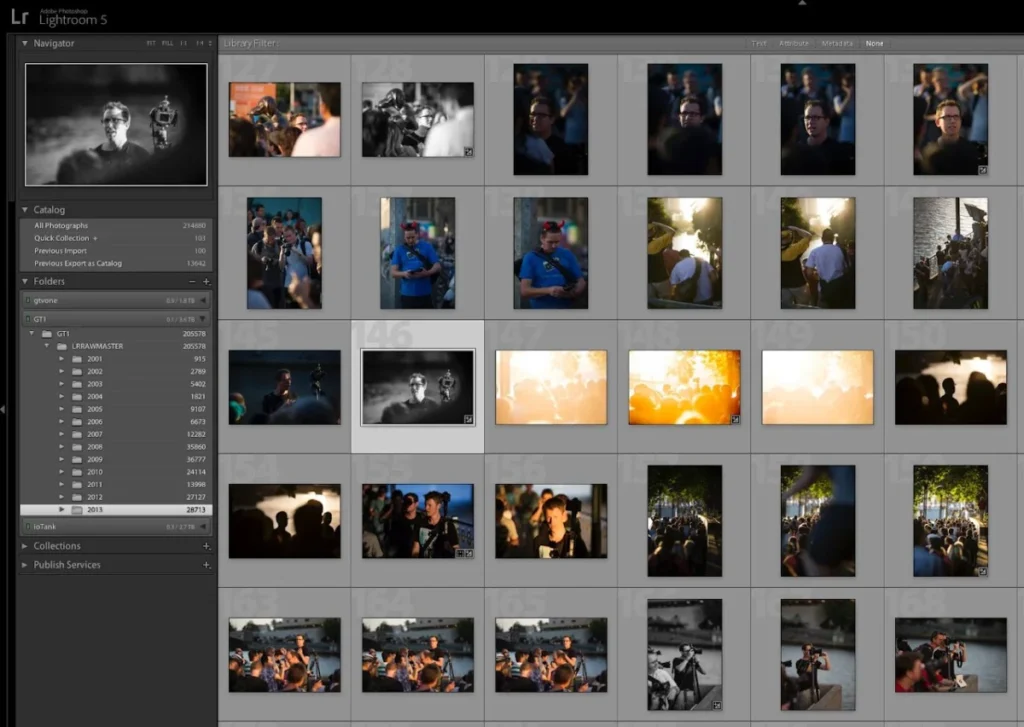
    To understand the divergence between RAW and JPEG, one must first examine the process of digital image acquisition. When light strikes a camera’s CMOS or CCD sensor, it is converted into electrical signals. In a RAW configuration, the camera records these signals with minimal processing. This file contains the full range of data the sensor is capable of capturing, including extensive information regarding luminance and chrominance. Because it is not yet an "image" in the traditional sense but rather a collection of data points, a RAW file requires specialized software—such as Adobe Lightroom, Phase One Capture One, or Darktable—to be "demosaiced" and converted into a viewable format.

    Conversely, a JPEG (Joint Photographic Experts Group) file is the result of an internal "development" process performed by the camera’s image processor. When a photographer selects JPEG, the camera applies a series of destructive edits: it adjusts contrast, saturation, and sharpness based on pre-set algorithms, performs noise reduction, and then compresses the data to reduce file size. During this compression, the camera discards information that it deems redundant or invisible to the human eye. While this results in a file that is ready for immediate distribution, it significantly limits the ability to make substantial adjustments during post-production.

    A Chronology of Digital Imaging Standards

    The history of these formats tracks the broader evolution of digital technology. The JPEG standard was first finalized in 1992, designed to facilitate the sharing of images across early computer networks where bandwidth and storage were severely limited. For the first decade of digital photography, JPEG was the dominant format for consumer and professional cameras alike.

    The shift toward RAW began in the early 2000s as Digital Single-Lens Reflex (DSLR) cameras, such as the Canon EOS D30 and the Nikon D1 series, gained traction. As professional photographers demanded more control over their output, manufacturers began providing access to the raw sensor data. In 2004, Adobe Systems introduced the Digital Negative (DNG) format, an open-source RAW specification intended to provide a universal standard in a landscape of proprietary manufacturer formats (such as Canon’s .CR2/CR3 or Nikon’s .NEF).

    By the 2010s, the rise of high-resolution sensors and more affordable storage solutions made RAW shooting the default for most professional workflows. Today, the conversation has expanded into the mobile sector, with the introduction of Apple ProRAW and Google’s computational RAW formats, bringing high-end data flexibility to smartphone photography.

    Quantifying the Advantages: Bit Depth and Dynamic Range

    The most significant technical distinction between the two formats lies in bit depth. A standard JPEG is an 8-bit file, meaning it can record 256 levels of brightness for each of the three primary color channels (Red, Green, and Blue). This results in a total palette of approximately 16.7 million possible colors. While this sounds substantial, it is often insufficient for capturing smooth gradients in skies or subtle skin tones without "banding."

    In contrast, RAW files are typically recorded at 12-bit or 14-bit depths. A 14-bit RAW file records 16,384 levels of brightness per channel, translating to over 4 trillion possible colors. This massive increase in data density provides the "headroom" necessary for exposure recovery. Industry data suggests that while a JPEG can typically withstand an exposure correction of approximately one stop before significant image degradation (noise and artifacts) occurs, a RAW file can often be adjusted by three to five stops. This capability is the difference between a discarded, underexposed image and a usable professional asset.

    RAW vs JPEG: What’s the Difference and Which Should You Be Shooting?

    The Impact on Post-Processing Workflow

    The practical application of RAW versus JPEG is most evident in the editing suite. For professional photographers, the "non-destructive" nature of RAW editing is a paramount advantage. When a user adjusts the exposure or color balance of a RAW file, the software does not alter the original data; instead, it saves a set of instructions on how to render that data. This allows the photographer to return to the original state at any time without loss of quality.

    White balance represents another critical area of divergence. In a JPEG, the white balance is "baked in" during the camera’s internal processing. While minor adjustments can be made later, significant shifts often result in unnatural color casts and reduced image fidelity. In a RAW workflow, white balance is simply a piece of metadata. A photographer can capture an image under harsh tungsten lighting and perfectly reset it to daylight balance in post-production with zero impact on the image’s integrity.

    Industry Perspectives: Speed Versus Quality

    Despite the technical superiority of RAW, the JPEG format remains a vital tool in the professional landscape, particularly where speed is the primary metric of success. Photojournalists, sports photographers, and wire service contributors (such as those for the Associated Press or Reuters) frequently shoot in JPEG. In these environments, the priority is the immediate transmission of images to news desks around the world. A high-quality JPEG can be sent over a cellular connection in seconds, whereas a large RAW file would be cumbersome and slow.

    Furthermore, modern camera manufacturers—including Fujifilm, Sony, and Olympus—have invested decades into refining their in-camera processing. Many professionals find that the "color science" of these JPEGs is so sophisticated that for standard assignments, the time saved in post-production outweighs the benefits of RAW data. However, for genres such as landscape, architectural, and high-end portrait photography, the lack of RAW data is generally considered an unacceptable compromise.

    The Evolution of Mobile Imaging and Computational Photography

    The debate has recently reached a new frontier: computational photography. Smartphones utilize multiple frames and artificial intelligence to overcome the physical limitations of small sensors. Initially, this was done exclusively in JPEG or HEIC formats. However, the introduction of formats like Apple ProRAW has changed the landscape. These formats combine the multi-frame processing of computational photography with the editing flexibility of a RAW file. This allows mobile photographers to utilize "Night Mode" or "Deep Fusion" while still retaining the ability to adjust shadows, highlights, and white balance without the heavy-handed sharpening and noise reduction typically found in standard mobile JPEGs.

    Storage Infrastructure and Economic Considerations

    From an operational standpoint, the choice of format has direct economic implications. RAW files are significantly larger than JPEGs; a 24-megapixel camera might produce a 6MB JPEG but a 30MB RAW file. For a wedding photographer capturing 3,000 images in a single day, this necessitates high-speed, high-capacity SD or CFexpress cards and massive local and cloud storage solutions.

    The increased data load also places greater demands on computer hardware. Processing a batch of 500 RAW files requires more RAM and CPU power than handling the same number of JPEGs. Consequently, a commitment to a RAW workflow often implies a broader investment in a high-performance computing infrastructure. Many practitioners mitigate this by using a "RAW + JPEG" setting, which saves both versions. This allows for quick previewing and sharing via the JPEG while reserving the RAW file for intensive editing.

    Broader Impact and Implications

    As digital imaging continues to advance, the gap between RAW and JPEG is being bridged by more efficient compression algorithms. The emergence of the HEIF (High Efficiency Image File) format, which offers 10-bit color in a file size similar to an 8-bit JPEG, suggests a future where the limitations of standard JPEGs may be phased out. However, the fundamental principle remains: the more data one starts with, the more creative freedom one possesses.

    The decision between RAW and JPEG is not merely a technical setting but a strategic choice that defines a photographer’s relationship with their work. For those who view the camera as a tool for capturing a finished product, JPEG offers efficiency and immediate gratification. For those who view the shutter click as only the first step in a creative process, RAW provides the necessary raw material for artistic expression. As sensor technology pushes toward even higher resolutions and dynamic ranges, the importance of preserving that data through RAW formats will only continue to grow, ensuring that the "digital negative" remains the cornerstone of high-quality photography.

  • The Evolution of the Photographic Image and the Persistence of Artistic Vision

    The Evolution of the Photographic Image and the Persistence of Artistic Vision

    The landscape of modern photography is currently defined by a profound technical paradox: while imaging hardware has reached a pinnacle of automated precision, the industry is witnessing a significant resurgence in tactile, manual, and even analog methodologies. This shift marks a transition from the "gear-centric" era of the late 20th century to a contemporary era defined by the "democratization of the image." As smartphones equipped with sophisticated computational photography capabilities become the primary tool for the global population, the fundamental principles of the medium—light, composition, and the "decisive moment"—remain the central pillars of the craft, independent of the hardware utilized.

    The Technological Paradigm Shift: From Silver Halide to Silicon

    The transition from analog to digital photography was not merely a change in storage medium; it was a fundamental shift in how light is interpreted and processed. For over a century, photography relied on the chemical reaction of light with silver halide crystals on celluloid film. This process required a high degree of technical foresight, as the results were delayed by the necessity of chemical development.

    The introduction of the Charge-Coupled Device (CCD) and later the Complementary Metal-Oxide-Semiconductor (CMOS) sensor revolutionized the industry by providing instantaneous feedback. According to data from the Camera & Imaging Products Association (CIPA), digital camera shipments peaked in 2010 at approximately 121 million units. However, the subsequent decade saw a dramatic contraction of the dedicated camera market as smartphone technology integrated high-quality sensors and advanced optics. By 2023, the market had stabilized around high-end mirrorless systems and niche enthusiast products, signaling that while the "casual" photographer has migrated to mobile devices, the "serious" practitioner continues to seek dedicated tools.

    A Chronology of Photographic Innovation

    To understand the current state of the medium, it is essential to examine the milestones that led to the contemporary era:

    • 1839: The public introduction of the Daguerreotype by Louis Daguerre, marking the birth of practical photography.
    • 1888: George Eastman launches the Kodak camera with the slogan "You press the button, we do the rest," beginning the first wave of democratization.
    • 1925: The Leica I is introduced, popularizing 35mm film and enabling the rise of street photography and photojournalism.
    • 1948: Edwin Land introduces the Polaroid Land Camera, providing the first instance of "instant" photography.
    • 1975: Steven Sasson at Kodak creates the first digital camera prototype, though the company fails to capitalize on the invention.
    • 2000: The first camera-equipped mobile phones enter the market (the J-SH04 in Japan and the Samsung SCH-V200).
    • 2007: The launch of the iPhone marks the beginning of the smartphone era, eventually leading to the decline of the "point-and-shoot" compact camera.
    • 2018–Present: The industry completes a wholesale transition from Digital Single-Lens Reflex (DSLR) cameras to Mirrorless systems, emphasizing electronic viewfinders and AI-driven autofocus.

    Computational Photography vs. Traditional Optics

    The modern smartphone does not capture an image in the traditional sense; it "computes" one. Through a process known as computational photography, mobile devices take multiple exposures in a fraction of a second, merging them to maximize dynamic range, reduce noise, and simulate the shallow depth of field typically associated with large-aperture lenses.

    Industry analysts suggest that this software-heavy approach has bridged the gap between amateur and professional-looking results. However, professional photographers argue that this automation can sometimes strip the image of its "optical truth." While a smartphone can use AI to sharpen an eye or brighten a face, it cannot replace the photographer’s decision regarding where to stand or when to trigger the shutter. This has led to a renewed appreciation for "pure" photography, where the artist works within the constraints of the physical environment rather than relying on algorithmic corrections.

    The art of photography hasn’t changed though…

    The Analog Renaissance and the Value of Constraints

    In a surprising turn for a digital-first world, film photography has experienced a sustained revival over the last five years. Manufacturers like Kodak Alaris and Fujifilm have reported increased demand for 35mm and 120mm film stocks, driven largely by Gen Z and Millennial photographers who did not grow up with the medium.

    The attraction to film is often cited as a reaction to the "infinite" nature of digital photography. A standard roll of film offers only 24 or 36 exposures. This physical limitation imposes a mental discipline; the photographer must wait for the light, perfect the composition, and ensure the moment is correct before committing to the shot. This "slow photography" movement mirrors similar trends in vinyl records and artisanal crafts, where the tactile experience and the inherent imperfections—grain, light leaks, and color shifts—are viewed as more "honest" than the sterile perfection of a digital file.

    The Core Fundamentals: The "Holy Trinity" of the Image

    Despite the evolution of the toolset, the three pillars of a successful photograph remain unchanged. Educators and historians consistently point to these elements as the universal language of the medium:

    1. Light: The word "photography" literally translates to "writing with light." Whether using a $50,000 Phase One medium-format camera or a budget smartphone, the quality, direction, and color of light remain the primary factors in determining the mood and clarity of an image.
    2. Composition: The arrangement of elements within the frame—utilizing the rule of thirds, leading lines, or negative space—is a cognitive process. No algorithm can yet replicate the human eye’s ability to find balance and narrative within a chaotic environment.
    3. The Moment: Popularized by Henri Cartier-Bresson as "The Decisive Moment," this refers to the precise instant when the visual elements of a scene align to tell a story. This remains the most difficult aspect of photography to master, as it requires intuition and presence.

    Market Analysis: Current Entry Points for Enthusiasts

    For those seeking to move beyond the smartphone or explore dedicated imaging tools, the current market offers several distinct pathways. These devices represent the various facets of modern photography, from traditional mechanics to hybrid digital experiences.

    The Traditional Entry: Canon EOS Rebel T7

    The DSLR remains a viable learning platform. The Rebel T7, featuring a 24.1MP APS-C sensor, provides a tactile experience with an optical viewfinder. Its primary value lies in its ergonomics and its ability to introduce users to the "exposure triangle" (ISO, Shutter Speed, and Aperture) through a traditional lens ecosystem.

    The Mirrorless Standard: Canon EOS R100

    As the industry moves away from mirrors, the R100 represents the most accessible entry into the RF-mount ecosystem. It utilizes Dual Pixel CMOS AF, a technology that allows the camera to track subjects with a level of precision that was impossible on entry-level gear a decade ago. It represents the "future-proof" choice for those looking to invest in modern glass.

    The Hybrid Content Tool: Sony ZV-1F

    The rise of social media has necessitated cameras that perform equally well for stills and video. The ZV-1F features a 1-inch sensor, significantly larger than those found in most smartphones, and a fixed 20mm ultra-wide lens. This device highlights the trend toward "environmental" photography, where the subject is captured within the context of their surroundings.

    The art of photography hasn’t changed though…

    The "Lo-Fi" Aesthetic: Kodak PIXPRO FZ55

    There is an emerging market for "digital lo-fi" cameras—budget point-and-shoots that produce images reminiscent of the early 2000s. The FZ55 is a response to the "Y2K aesthetic" popular on platforms like TikTok, where the goal is not technical perfection but a nostalgic, casual look that feels distinct from the highly processed output of a modern iPhone.

    The Tactile Hybrid: Fujifilm Instax Mini EVO

    The Instax Mini EVO bridges the gap between digital convenience and physical permanence. By allowing users to shoot digitally but print selectively on instant film, it satisfies the modern desire for a "tangible" object. This category has become Fujifilm’s most profitable imaging segment, proving that the desire to hold a physical photograph remains a powerful human impulse.

    Broader Impact and the Future of the Visual Record

    The implications of this photographic evolution extend into the realms of journalism, law, and history. As AI becomes more integrated into the capture process, the definition of a "photograph" is being challenged. Some purists argue that an image heavily modified by AI is "digital art" rather than "photography."

    However, the consensus among industry leaders is that the tool is merely a conduit for the artist’s vision. Whether an image is captured on a vintage Nikon FM2 or the latest flagship smartphone, its value is determined by its ability to evoke emotion, document truth, or reveal beauty. The democratization of photography has meant that more "decisive moments" are being captured than ever before in human history.

    In conclusion, the art of photography is currently in a state of healthy diversification. The coexistence of high-end mirrorless systems, a thriving analog market, and the ubiquity of smartphone cameras suggests that the medium is not being replaced, but rather expanded. The fundamental challenge for the photographer remains the same as it was in 1839: to see the extraordinary within the ordinary and to have the presence of mind to preserve it. The camera, in any form, remains an instrument that teaches us how to see the world.

  • The Evolution of Synthetic Visuals: A Comprehensive Review of the Nine Premier AI Image Generators in 2026

    The Evolution of Synthetic Visuals: A Comprehensive Review of the Nine Premier AI Image Generators in 2026

    The landscape of digital content creation has undergone a seismic shift as of early 2026, transitioning from a period of experimental novelty to one of integrated professional utility. AI image generators, once criticized for their anatomical inaccuracies and surrealist artifacts, have matured into sophisticated engines capable of producing high-fidelity illustrations, photorealistic product photography, and complex typographic designs. This evolution has effectively bridged the gap for creators who possess editorial skills but lack formal artistic training, allowing for a democratization of visual storytelling that was previously unattainable. As the industry approaches the mid-way point of the decade, a rigorous evaluation of the leading nine models—Midjourney, Adobe Firefly 5, Recraft V4 Pro, GPT Image 1.5, Nano Banana 2, Seedream, Ideogram 3.0, FLUX.2 Pro, and Lucid Origin—reveals a market defined by specialization and technical divergence.

    The 9 Best AI Image Generators of 2026 (+ Examples)

    The 2026 Landscape: A Chronology of Progress

    The trajectory of generative AI visuals has been marked by rapid iteration. Following the initial explosion of interest in 2022 and 2023, the years 2024 and 2025 were characterized by a focus on "prompt adherence" and the elimination of common errors, such as the infamous "six-fingered hand." By 2026, the focus has shifted toward workflow integration and brand consistency.

    The 9 Best AI Image Generators of 2026 (+ Examples)

    In early 2025, the introduction of "agentic" image generation allowed users to refine images through conversational feedback rather than static prompt editing. By late 2025, Google and ByteDance entered the fray with models—Nano Banana 2 and Seedream, respectively—that leveraged their vast proprietary data ecosystems to provide unprecedented real-world accuracy. In March 2026, the U.S. Supreme Court’s refusal to grant copyright to purely AI-generated works further solidified the industry’s direction: these tools are now viewed as sophisticated "assistants" rather than autonomous creators, prompting developers like Adobe to double down on licensed training sets and IP indemnification.

    The 9 Best AI Image Generators of 2026 (+ Examples)

    Technical Frameworks: Diffusion vs. Autoregressive Models

    The models currently dominating the 2026 market operate on two primary architectural philosophies. Understanding these differences is essential for professional users seeking specific outcomes.

    The 9 Best AI Image Generators of 2026 (+ Examples)

    Diffusion models, including FLUX.2 Pro and Midjourney, function by refining visual "noise" into a coherent image. This process is inherently artistic, as the model "sculpts" the final result from a cloud of probability. This often results in a more painterly, aesthetically rich output, though it can occasionally struggle with the rigid precision required for technical labels or complex text.

    The 9 Best AI Image Generators of 2026 (+ Examples)

    Conversely, autoregressive models, such as Google’s Nano Banana 2 and OpenAI’s GPT Image 1.5, treat image generation more like a linguistic sequence. They predict pixels in a manner similar to how a large language model predicts the next word in a sentence. This architecture generally yields superior results for complex, multi-object prompts and is more reliable for rendering text, as the model processes the image in a structured, sequential fashion.

    The 9 Best AI Image Generators of 2026 (+ Examples)

    Comparative Performance and Model Analysis

    Recent industry-wide testing has categorized these nine tools based on their performance across three critical use cases: hand-drawn illustrations, photorealistic product staging, and typographic design.

    The 9 Best AI Image Generators of 2026 (+ Examples)

    The Accuracy Leader: Nano Banana 2 (Google)

    Analysts have noted that Nano Banana 2 has set a new benchmark for object recognition. By leveraging Google’s extensive Image Search and Shopping indices, the model demonstrates a "knowledge" of specific brands and product geometries that competitors lack. In tests involving specific luxury items—such as Diptyque fragrances or Salomon footwear—Nano Banana 2 consistently produced accurate silhouettes and branding. It remains the top choice for creators requiring high-fidelity renderings of real-world objects without the need for extensive reference uploads.

    The 9 Best AI Image Generators of 2026 (+ Examples)

    The Creative Powerhouse: Midjourney

    Despite the rise of more technically precise models, Midjourney remains the preferred tool for mood-driven, artistic visuals. Its 2026 iteration continues to lead in "visual richness," providing a depth of lighting and texture that feels more human-centric than its peers. However, it continues to struggle with multi-object specificity and complex typography, often garbling longer words even when prompted with specific spelling instructions.

    The 9 Best AI Image Generators of 2026 (+ Examples)

    The Commercial Standard: Adobe Firefly 5

    Adobe Firefly 5 has carved out a dominant position in corporate and agency environments. Its primary advantage is not necessarily its aesthetic edge, but its legal safety. Trained exclusively on Adobe Stock and public domain content, it offers a "clean" commercial pipeline. Notably, the model includes built-in safeguards that prevent the generation of trademarked terms like "iPhone" or "Instagram," forcing creators to use generic descriptors. For professionals in the Adobe Creative Cloud ecosystem, the seamless hand-off between Firefly and Photoshop remains a significant productivity multiplier.

    The 9 Best AI Image Generators of 2026 (+ Examples)

    The Text Specialists: Seedream and Ideogram 3.0

    For social media managers and graphic designers, the ability to render legible text within an image is paramount. ByteDance’s Seedream (integrated into the CapCut Pro suite) and Ideogram 3.0 have emerged as the winners in this category. These models have largely solved the "AI spelling" problem, correctly rendering complex phrases and even maintaining brand-specific font weights. Seedream, in particular, has been praised for its ability to generate "sticker sheets" with perfect text alignment, making it an essential tool for the burgeoning short-form video market.

    The 9 Best AI Image Generators of 2026 (+ Examples)

    The Science of the Prompt: Subject Over Style

    As these models have become more sophisticated, the methodology for communicating with them has also evolved. In 2026, the industry has moved away from "prompt hacking" toward a more structured, descriptive approach. Data suggests that the most successful prompts follow a specific hierarchy:

    The 9 Best AI Image Generators of 2026 (+ Examples)
    1. Subject and Action: The primary focus must be established in the first five to ten words.
    2. Context and Setting: Detailed descriptions of the environment.
    3. Technical Parameters: The use of "camera language"—such as "35mm film," "depth of field," or "golden hour lighting"—has proven more effective than vague terms like "high quality."
    4. Style Anchoring: Specifying techniques such as "ink hatching," "gouache blocks," or "flat vector shapes" prevents the model from defaulting to generic clip-art aesthetics.

    Negative prompting has also become a standard professional practice. By explicitly excluding "watermarks," "text overlays," or "photorealism" early in the instruction set, creators can significantly reduce the need for post-generation cleanup.

    The 9 Best AI Image Generators of 2026 (+ Examples)

    Legal Implications and the September 2026 Trial

    The utility of these tools is currently shadowed by significant legal developments. While every major generator allows for commercial use in their terms of service, the legal definition of "authorship" remains in flux.

    The 9 Best AI Image Generators of 2026 (+ Examples)

    The upcoming trial in September 2026—a landmark class-action suit involving Stability AI and Midjourney—is expected to address the ethics of training data scraping. This case will likely determine whether AI companies must compensate artists for the "style" data used to train their models. Furthermore, the March 2026 Supreme Court decision upholding that AI-generated content cannot be copyrighted in its raw form has forced a shift in how creative agencies bill for their work. Many are now focusing on "AI-assisted" design, where human intervention and modification are documented to ensure copyright eligibility.

    The 9 Best AI Image Generators of 2026 (+ Examples)

    Broader Impact on the Creative Economy

    The integration of these nine models into the daily workflows of 2026 has resulted in a 40% reduction in time-to-market for visual content, according to recent industry surveys. Small-scale creators and entrepreneurs are the primary beneficiaries, as they can now produce editorial-grade photography and custom illustrations without the overhead of professional studios or freelance illustrators.

    The 9 Best AI Image Generators of 2026 (+ Examples)

    However, this democratization comes with a warning regarding "visual homogenization." As more creators use the same nine models, the risk of a "sameness" in digital aesthetics grows. Analysts suggest that the next frontier for AI image generation will not be better models, but more unique "LoRAs" (Low-Rank Adaptations)—small, customized data sets that allow brands to train these massive models on their own specific visual DNA.

    The 9 Best AI Image Generators of 2026 (+ Examples)

    In conclusion, the AI image generation market of 2026 is no longer a monolith. It is a diverse ecosystem of specialized tools. Whether a creator prioritizes the artistic flair of Midjourney, the commercial safety of Adobe Firefly, or the technical precision of Google’s Nano Banana 2, the ability to manifest complex visual ideas from simple text has become a fundamental pillar of modern communication. As the legal and technical landscapes continue to settle, the focus will inevitably shift from what these tools can do to how humans can most ethically and creatively direct them.

Grafex Media
Privacy Overview

This website uses cookies so that we can provide you with the best user experience possible. Cookie information is stored in your browser and performs functions such as recognising you when you return to our website and helping our team to understand which sections of the website you find most interesting and useful.