Tag: lens

  • Josh Aronson Reclaims the American Landscape Through the Lens of Florida Boys

    Josh Aronson Reclaims the American Landscape Through the Lens of Florida Boys

    The intersection of identity, geography, and the historical weight of the American landscape forms the backbone of "Florida Boys," a multi-year photographic odyssey by Miami-based artist Josh Aronson. Born in Toronto in 1994 and raised in the Sunshine State, Aronson has spent the better part of a decade interrogating what it means to belong to a place that often feels exclusionary. His latest body of work, which has garnered significant attention from major publications such as The New York Times, Vogue, and The Guardian, moves beyond mere documentation. Instead, it utilizes the medium of photography to stage a new version of Americana—one that centers on young Black and Brown men, queer and straight alike, within the untamed backwoods of Florida.

    ‘Florida Boys’ Find Themselves in the Backwoods of the State

    Aronson’s work arrives at a pivotal moment in the discourse surrounding American conservation and the "great outdoors." For decades, the visual language of the American wilderness was dominated by a specific demographic, often excluding the very communities that Aronson now brings to the forefront. By placing urban youth from Miami into the swamps, forests, and rock-lined beaches of rural Florida, Aronson is not just taking pictures; he is conducting a social experiment in belonging.

    The Insider-Outsider Perspective and the Quest for Belonging

    Josh Aronson’s personal history is central to the thematic depth of "Florida Boys." Despite being raised in Florida, his Canadian birth and his family’s lack of multi-generational roots in the state created a persistent sense of being an "insider-outsider." This duality is a common experience in Florida, a state where, according to U.S. Census data, nearly 20% of the population is foreign-born, and a significant portion of the domestic population consists of transplants from the Northeast and Midwest.

    ‘Florida Boys’ Find Themselves in the Backwoods of the State

    "Making photographs is, for me, a way to reclaim a sense of belonging," Aronson noted in a recent reflection on his work. "Photography allows me to imagine belonging somewhere and to make that fantasy a bit more real through the act of visualizing it."

    In "Florida Boys," Aronson casts young men as surrogates for his own experience. Many of his subjects are first-generation Americans or the children of immigrants living in the greater Miami area. These individuals often share Aronson’s lack of "quintessential" outdoorsy coming-of-age experiences—the camping trips, the hiking, and the uninhibited exploration of the wilderness that are often portrayed as the default American childhood. By staging these scenes, Aronson and his collaborators "play pretend," creating a reality where they are at ease in nature and in harmony with one another.

    ‘Florida Boys’ Find Themselves in the Backwoods of the State

    Historical Context: The Hierarchy of the American Landscape

    A significant portion of Aronson’s project is dedicated to deconstructing the "neutrality" of nature. While the wilderness is often framed as a universal haven, Aronson’s research into the history of American conservation revealed a more complex and exclusionary reality. The early 20th-century conservation movement in the United States, led by figures such as Theodore Roosevelt and Madison Grant, was often intertwined with the eugenics movement and the displacement of Indigenous populations.

    Historical data shows that the establishment of many National Parks and state-protected lands involved the forced removal of Native American tribes. Furthermore, during the Jim Crow era, many public parks and beaches in Florida were strictly segregated, a legacy that continues to influence who feels "safe" or "welcome" in rural natural spaces today. Aronson’s work acknowledges this "hierarchy of who could rest, roam, or feel safe," and seeks to expand the collective image of the American steward.

    ‘Florida Boys’ Find Themselves in the Backwoods of the State

    By bringing Black and Brown men into these landscapes, Aronson is directly challenging the historical default of whiteness in the "great outdoors." His photos depict moments of tenderness, care, and play—emotions that are often stripped from the public perception of young men from urban environments.

    The Chronology of a Five-Year Project

    The "Florida Boys" series was not a spontaneous endeavor but a meticulously planned five-year project. Aronson’s process is characterized by heavy research and a distinct separation between the "maker" and the "editor" modes of artistic production.

    ‘Florida Boys’ Find Themselves in the Backwoods of the State

    Phase 1: Research and Scouting (Years 1-2)

    Aronson spent hundreds of hours scrolling through digital archives and social media hashtags such as #FloridaWild and #VisitFlorida. He treated the state as a foreign territory, plotting multi-day routes to scout locations he had never visited during his youth. This phase involved collecting ephemera—maps, postcards, and travel brochures—that would later inform the aesthetic of his exhibitions.

    Phase 2: Staging and Production (Years 2-5)

    Unlike traditional documentary photography, Aronson’s scenes are staged. He brings his subjects from the urban sprawl of Miami into rural settings, creating what he calls "film stills." This cinematic approach allows him to control the narrative, emphasizing "core memories" and "friendship" over the "Florida Man" tropes often found in news media.

    ‘Florida Boys’ Find Themselves in the Backwoods of the State

    Phase 3: The Three-Year Delay

    In a move that deviates from the modern norm of instant digital gratification, Aronson chose not to develop his film for three years after shooting. This delay was a deliberate strategy to sustain his curiosity and prevent self-judgment from interfering with the creative process. When he finally developed the film, he described the experience as "rediscovering a diary I’d forgotten I was writing."

    Methodology: The Cinematic Still and Artistic Influence

    Aronson’s background in film is evident in the composition and lighting of "Florida Boys." The images possess a dreamlike, high-contrast quality that blurs the line between reality and fiction. He cites the influence of photographers like Justine Kurland, specifically her "Girl Pictures" series, which reimagined the American landscape through the lens of runaway girls. Similarly, the influence of Ryan McGinley is seen in Aronson’s portrayal of youth as a space for freedom and collaboration.

    ‘Florida Boys’ Find Themselves in the Backwoods of the State

    The technical execution of the project involved navigating the harsh realities of the Florida environment—mosquitoes, reptiles, and extreme humidity. Yet, Aronson maintains that the calm of nature overrides the physical discomfort. "Nature activates my imagination; it brings me back to a time before urbanization," he stated. This "foundational" experience is what he seeks to share with his subjects, many of whom have had limited exposure to the state’s interior.

    Exhibition and Public Response

    The culmination of this work was featured in the "Florida Boys" exhibition at Baker–Hall. The installation went beyond traditional framed prints, incorporating large-scale outdoor works, assemblage walls, and grids of found materials. This immersive approach allowed viewers to experience the "cultural DNA" of Florida—a mix of creative resilience and rural grit.

    ‘Florida Boys’ Find Themselves in the Backwoods of the State

    The response to the work has been multi-generational. Aronson has noted that Floridians who grew up in the 1960s, 70s, and 80s have found a surprising resonance in the images, despite the contemporary subjects. This suggests that the themes of youth and the landscape are universal, even as the faces within them change.

    Furthermore, Aronson has extended his commitment to the photography community through the creation of "Photo Book Speed Date." This public program encourages connection and dialogue through the sharing of photography books, reinforcing his belief that photography is, at its core, a tool for connection and joy.

    ‘Florida Boys’ Find Themselves in the Backwoods of the State

    Implications for the Future of American Photography

    Josh Aronson’s "Florida Boys" serves as a case study for how contemporary photography can address historical inequities without sacrificing aesthetic beauty. As Florida continues to face rapid urbanization and environmental challenges—with the state losing approximately 175,000 acres of agricultural land and natural habitat to development annually—Aronson’s work captures a vanishing version of the "wild" Florida.

    More importantly, the project provides a blueprint for "inclusive Americana." By documenting the joy and belonging of marginalized groups in the American landscape, Aronson is contributing to a broader cultural shift. His work suggests that the "fantasy" of belonging can, through the act of visualization, become a tangible reality.

    ‘Florida Boys’ Find Themselves in the Backwoods of the State

    As Aronson continues to move between the worlds of fine art and commercial photography—having already established a portfolio that includes Vogue and the Financial Times—his commitment to "staging" the truth remains a powerful method for exploring the complexities of the American identity. "Florida Boys" is not just a love letter to a state; it is a manifesto for who gets to be seen, who gets to rest, and who gets to call the wilderness home.

  • Tamron Secures Prestigious TIPA Awards 2026 for Exceptional Wide-Angle and Travel Lens Innovation

    Tamron Secures Prestigious TIPA Awards 2026 for Exceptional Wide-Angle and Travel Lens Innovation

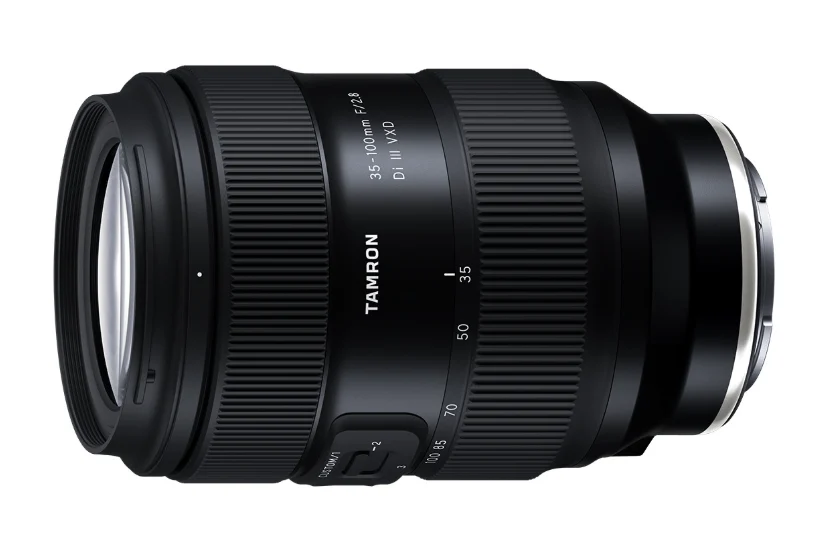
    The Technical Image Press Association (TIPA) has officially announced the winners of its 2026 awards, recognizing Tamron, a global leader in optical manufacturing, for two of its most recent mirrorless lens releases. The Tamron 16-30mm F/2.8 Di III VXD G2 (Model A064) has been named the "Best Full Frame Wide-Angle Zoom Lens," while the Tamron 35-100mm F/2.8 Di III VXD (Model A078) has secured the title of "Best Full Frame Travel Lens." These accolades mark a significant milestone for the Japanese manufacturer, as it celebrates thirteen consecutive years of receiving honors from the TIPA organization, a feat that underscores the brand’s consistent influence in the competitive photographic equipment market.

    The TIPA Awards are widely regarded as the most coveted honors in the global photo and imaging industry. The association, comprised of editors from leading photography magazines and websites across five continents, evaluates products based on innovation, the use of leading-edge technology, design, ergonomics, and ease of use. Tamron’s double win in 2026 reflects the company’s strategic pivot toward high-performance, compact optics designed specifically for modern mirrorless camera systems.

    The 16-30mm F/2.8 Di III VXD G2: Redefining Wide-Angle Versatility

    The Tamron 16-30mm F/2.8 Di III VXD G2 (Model A064), winner of the Best Full Frame Wide-Angle Zoom Lens category, represents a significant evolution in the company’s "G2" (Generation 2) lens lineup. Designed for full-frame mirrorless cameras, this lens addresses the specific needs of landscape, architectural, and event photographers who require a fast constant aperture of F/2.8 across the entire zoom range.

    Technically, the Model A064 stands out due to its optical configuration, which is engineered to deliver edge-to-edge sharpness even when shooting wide open. The inclusion of the VXD (Voice-coil eXtreme-torque Drive) linear motor focus mechanism ensures that the lens provides rapid and highly accurate autofocus. This is particularly critical for video creators who rely on silent and smooth transitions during filming.

    Furthermore, the lens offers a remarkably short Minimum Object Distance (MOD). At the 16mm wide end, the MOD is just 0.19 meters (7.5 inches), and at the 30mm end, it remains a close 0.3 meters (11.8 inches). This capability allows photographers to engage in "wide-angle macro" photography, capturing subjects with exaggerated perspectives and soft background bokeh. The lens also features a robust moisture-resistant construction and a fluorine coating on the front element to repel water and oil, making it suitable for use in demanding outdoor environments.

    The 35-100mm F/2.8 Di III VXD: A New Standard for Travel Photography

    In the "Best Full Frame Travel Lens" category, the Tamron 35-100mm F/2.8 Di III VXD (Model A078) was recognized for its unique blend of portability and professional-grade performance. Historically, travel lenses were often characterized by large zoom ranges that sacrificed aperture speed. Tamron has challenged this convention by offering a constant F/2.8 aperture in a lens that remains compact enough for all-day carry.

    Tamron Wins more TIPA gold!

    The 35-100mm focal range is highly versatile for travelers, bridging the gap between a standard wide-to-normal lens and a telephoto lens. At 35mm, it is wide enough for street photography and environmental portraits, while the 100mm focal length allows for tighter headshots and the compression of distant landscapes. The VXD linear motor mechanism is also integrated into this model, ensuring that the lens can track moving subjects—such as wildlife or local performers—with precision.

    The jury at TIPA highlighted the lens’s ability to maintain image clarity and contrast even in low-light conditions, a common challenge for travel photographers. By prioritizing a fast F/2.8 aperture over an extreme zoom range, Tamron has created a tool that allows for shallow depth-of-field effects and faster shutter speeds, which are often necessary when shooting handheld without a tripod.

    A Legacy of Consistency: Thirteen Years of TIPA Gold

    Tamron’s success at the 2026 TIPA Awards is part of a long-term trajectory of technical achievement. Since 2014, the company has successfully placed at least one lens in the winner’s circle every year. This 13-year streak is a testament to the brand’s ability to adapt to shifting market trends, most notably the industry-wide transition from Digital Single-Lens Reflex (DSLR) cameras to mirrorless systems.

    The chronology of Tamron’s TIPA wins illustrates a clear focus on the "Di III" line, which is specifically designed for mirrorless mounts (primarily Sony E, Nikon Z, and Fuji X mounts). Previous winners have included the 17-28mm F/2.8 Di III RXD, the 28-75mm F/2.8 Di III VXD G2, and the ultra-telephoto 150-500mm F/5-6.7 Di III VC VXD. By consistently winning in diverse categories—ranging from wide-angle to telephoto—Tamron has solidified its reputation as a "first-choice" third-party manufacturer, often rivaling or exceeding the performance of proprietary lenses at a more accessible price point.

    Technical Analysis and Supporting Data

    The success of the Model A064 and Model A078 can be attributed to several proprietary technologies that Tamron has refined over the last decade.

    1. VXD (Voice-coil eXtreme-torque Drive): This linear motor focus mechanism is the highest level of AF technology currently offered by Tamron. Unlike traditional rotating gears, the VXD system moves lens elements using electromagnetic force. This reduces friction and noise, allowing for focus speeds that are up to twice as fast as previous generations. In the context of the 2026 awards, TIPA judges emphasized the importance of this technology for the growing market of "hybrid" creators who switch between stills and video.

    2. Optical Coatings: Both winning lenses utilize BBAR-G2 (Broad-Band Anti-Reflection Generation 2) coating. This technology minimizes ghosting and flare, which are common issues when shooting against bright light sources, such as sunsets in landscape photography or stage lights in event photography.

      Tamron Wins more TIPA gold!
    3. Tamron Lens Utility: Both models are compatible with the Tamron Lens Utility software. This allows users to connect the lens to a computer via a USB-C port to customize functions, such as focus presets, A-B focus transitions for video, and firmware updates without needing a separate camera body or docking station. This level of customization was a key factor in the "Innovation" criteria for the TIPA panel.

    Market Implications and Industry Reaction

    The recognition of these two lenses comes at a time when the photography market is increasingly focused on "compact pro" gear. Consumers are moving away from heavy, bulky setups in favor of kits that offer high image quality in a smaller footprint. Tamron’s decision to optimize the 16-30mm and 35-100mm lenses for size and weight has positioned them favorably against larger competitors.

    Industry analysts suggest that Tamron’s continued success is putting pressure on first-party manufacturers like Sony, Nikon, and Canon. By providing high-quality F/2.8 zooms that are often lighter and more affordable than their brand-name counterparts, Tamron is capturing a significant share of the enthusiast and semi-professional market.

    While official statements from Tamron’s executive leadership typically emphasize their commitment to "human-centric" design, the 2026 TIPA wins provide the empirical validation needed to sustain brand loyalty. A spokesperson for the company noted that the thirteen-year streak is not merely a record for the marketing department, but a reflection of the research and development team’s ability to anticipate the needs of photographers two to three years before a product hits the shelves.

    Broader Impact on the Photography Community

    For the end-user, the 2026 TIPA results serve as a guide for investment. Lenses are often a more significant long-term investment than camera bodies, which are updated more frequently. The "Best Travel Lens" and "Best Wide-Angle Zoom" designations provide a level of assurance to photographers that these specific Tamron models meet a rigorous global standard for optical quality and build.

    Furthermore, the 16-30mm and 35-100mm lenses represent a move toward "logical kits." A photographer could theoretically cover almost any scenario—from wide landscapes to tight portraits—with just these two lenses, both maintaining a fast F/2.8 aperture. This simplification of the gear bag is a major trend in the 2026 photographic landscape, driven by a desire for efficiency and mobility.

    As the Technical Image Press Association prepares for its next cycle, Tamron’s 2026 performance sets a high bar for the industry. The combination of the Model A064’s wide-angle precision and the Model A078’s travel-ready versatility highlights a manufacturer at the peak of its engineering capabilities, successfully balancing the demands of high-resolution sensors with the practical needs of modern photographers.

Grafex Media
Privacy Overview

This website uses cookies so that we can provide you with the best user experience possible. Cookie information is stored in your browser and performs functions such as recognising you when you return to our website and helping our team to understand which sections of the website you find most interesting and useful.