
The solo exhibition 50 Years Later – Where Do I Go?, currently on view at the Sidney and Lois Eskenazi Museum of Art through August 2, 2026, represents a profound intersection of personal memoir and national tragedy. Curated as both a visual archive and a psychological study, the project by Lebanese-American photographer Rania Matar features approximately 128 color portraits of young women navigating the complexities of contemporary Lebanon. The title is derived from a poignant piece of graffiti found on a wall in Beirut, a simple question that has come to define the existential crisis of a generation.
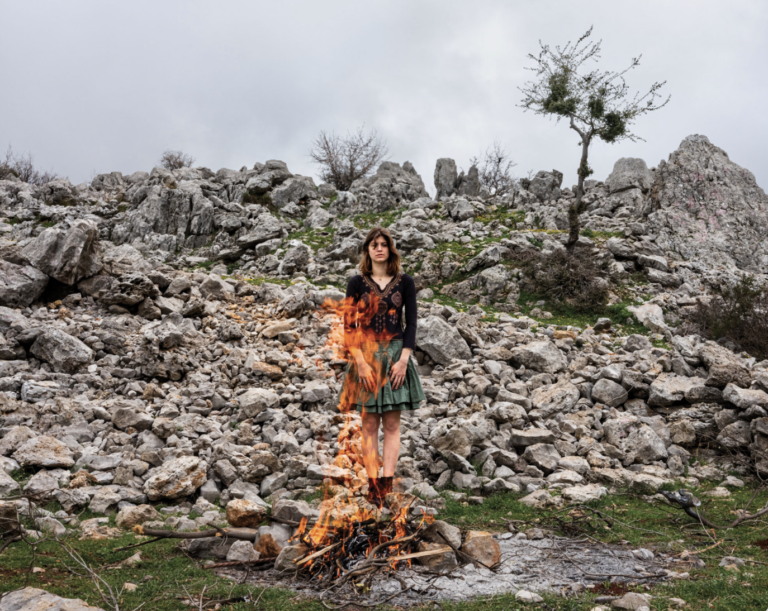
The exhibition, which coincides with the release of a photobook of the same name, arrives at a moment of extreme geopolitical volatility. As Lebanon marks the 50th anniversary of the start of its civil war (1975–2025), it finds itself once again embroiled in conflict, economic collapse, and mass displacement. Matar’s work captures the faces of those who must decide whether to stay and rebuild or join the millions of Lebanese citizens who have sought refuge and opportunity abroad.
Historical Context: A Half-Century of Fragmentation
To understand the weight of Matar’s portraits, one must look at the timeline of the Lebanese experience over the last five decades. The Lebanese Civil War, which began in 1975, fundamentally altered the country’s demographic and physical landscape. For fifteen years, the nation was a battleground for sectarian militias and foreign powers, leading to the deaths of an estimated 150,000 people and the displacement of nearly a million more.

Rania Matar herself is a product of this era. In 1984, at the height of the conflict, she left Lebanon for the United States. She was the same age as many of the subjects in her current series. This personal history provides the emotional scaffolding for the project; Matar sees her younger self in these women, recognizing the "wrenching decision" to leave behind home, family, and identity for the uncertainty of life in the West.
The project was specifically catalyzed by the August 4, 2020, Beirut Port explosion—one of the largest non-nuclear explosions in history. The blast killed over 200 people, injured thousands, and left 300,000 homeless. More importantly, it shattered the remaining confidence of the Lebanese youth in their state institutions. This event, occurring amidst a pre-existing economic meltdown, accelerated a "brain drain" that has seen doctors, engineers, and artists flee the country in record numbers.

Collaborative Methodology and the Agency of the Subject
Matar’s approach to portraiture deviates from traditional documentary photography. Rather than acting as a detached observer, she engages in a deeply collaborative process with her subjects. This methodology is central to the exhibition’s goal of empowering the women portrayed.
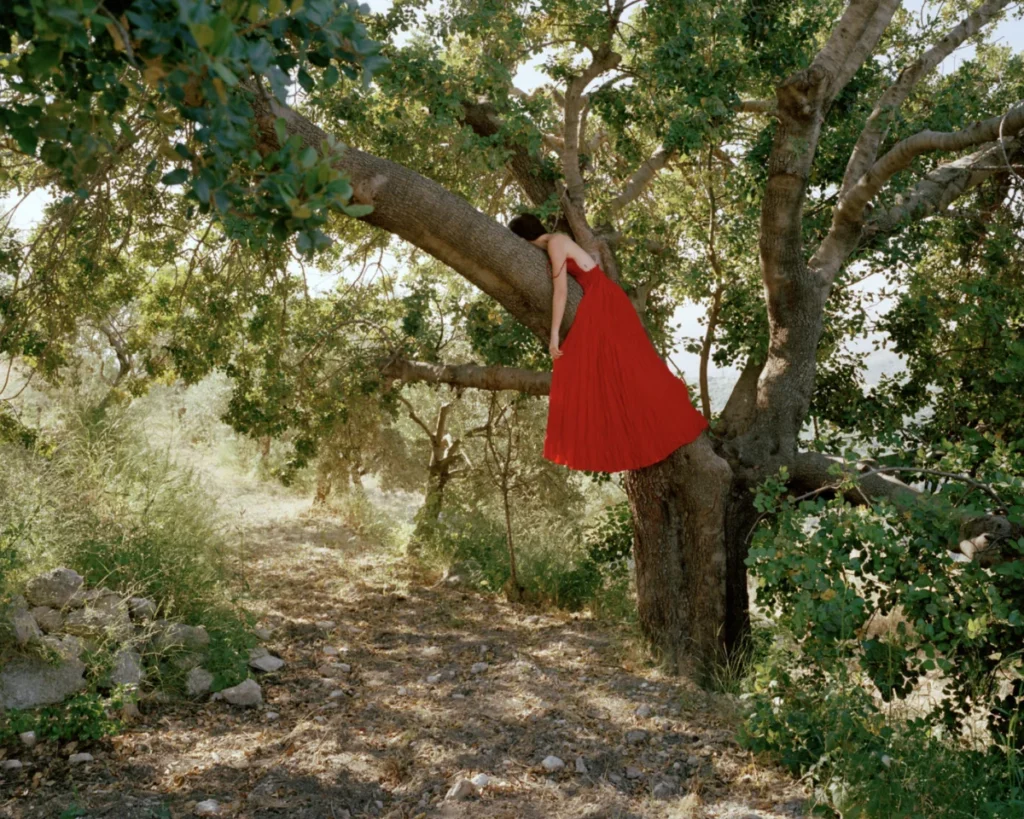
The process typically begins on social media, where Matar puts out a call for participants. She does not pre-screen subjects based on appearance or "scout" locations in a traditional sense. Instead, she conducts phone interviews to hear the women’s stories, learning about their relationship with Lebanon and their personal struggles. The resulting shoots are improvisational; Matar and the subject meet at a location—often one with personal significance to the woman—and begin an experimental dialogue of light, shadow, and posture.

By giving these women agency over how they are seen, Matar moves away from the trope of the "passive victim" often seen in Western media coverage of the Middle East. The women in 50 Years Later – Where Do I Go? are active participants in their own representation, choosing their clothing, their expressions, and their physical relationship to the landscape. This collaboration ensures that each image is not just a photograph of a person, but a reflection of a specific, lived reality.
Socioeconomic Data: The Burden of Survival
The portraits are set against a backdrop of statistical devastation. According to the World Bank, Lebanon’s economic crisis is likely to rank among the top three most severe crises globally since the mid-19th century. Since 2019, the Lebanese pound has lost more than 98% of its value, and inflation rates have frequently exceeded 100%.

For the young women in Matar’s series, these numbers translate into an "extra burden of survival." Data from various NGOs indicates that over 80% of the Lebanese population now lives in poverty. For a woman aged 18 to 25, the traditional milestones of early adulthood—completing an education, starting a career, or achieving financial independence—have become nearly impossible.
The question "Where do I go?" is therefore a literal one. Migration data suggests that since the 2020 explosion, there has been a significant spike in passport applications and emigration. However, leaving is not a universal option. Many of the women Matar photographed remain in Lebanon not necessarily by choice, but because of visa restrictions, family obligations, or a lack of financial means to relocate.

Recurring Motifs: The Architecture of Hope and Ruin
Artistically, the exhibition utilizes several recurring motifs to convey the duality of the Lebanese experience. Matar often uses mirrors, shafts of light, and portal-like elements to suggest a "phoenix rising from the ashes" theme.
The mirrors, in particular, serve as a metaphor for the split identity of the Lebanese diaspora. They reflect what is just out of the frame, suggesting the "other life" that these women might lead if they were to leave, or the life they are desperately trying to hold onto while the world around them crumbles.

Other portraits show women integrated into the natural landscape—sinking into beds of flowers or framed by the Mediterranean Sea. These images contrast sharply with those set against the "architectural wounds" of Beirut—shattered windows, scarred concrete, and abandoned buildings. This tension between the inherent beauty of the Lebanese landscape and the man-made destruction of its cities is a central theme of the work. It reflects the resilience of a generation that, despite seeing their hopes shattered, continues to find ways to exist within the ruins.
Institutional Response and Global Implications
The Sidney and Lois Eskenazi Museum of Art has positioned this exhibition as a vital educational tool. In a statement regarding the exhibition’s opening, museum officials noted that the work serves to humanize the "abstractions" of the news cycle. While headlines often focus on casualty counts and geopolitical maneuvering, Matar’s work focuses on the individual human face.

The timing of the exhibition is particularly somber. As the project was being prepared for its 2025-2026 run, Lebanon entered a new phase of intense conflict and displacement in late 2024. Current estimates from the United Nations suggest that nearly a quarter of the Lebanese population has been displaced by recent hostilities.
"The portraits take on a different meaning now," Matar noted in a recent interview. They have transitioned from a reflection on past trauma to a live document of an ongoing catastrophe. Many of the models featured in the exhibition are currently active in humanitarian efforts, sourcing mattresses, cooking meals, and distributing aid to those made homeless by the current war. Their real-world actions provide a definitive, if difficult, answer to the question posed by the exhibition’s they are going where they are needed most, often at great personal risk.

Conclusion: A Love Letter to a Fractured Nation
50 Years Later – Where Do I Go? is more than an art exhibition; it is a historical record of a generation at a crossroads. By focusing on young women, Rania Matar highlights the demographic that often bears the brunt of societal collapse while simultaneously holding the key to its future.
The 128 portraits serve as a collective "love letter" to Lebanon and its people. They capture a moment in time where history seems to be repeating itself with cruel precision, yet they also offer a glimpse of the "courage and grit" that has defined the Lebanese spirit for half a century. As the exhibition continues its run through 2026, it stands as a testament to the power of portraiture to bridge the gap between distant headlines and the intimate reality of human survival.

For the viewer, the exhibition poses its own question: in a world where displacement and conflict are increasingly common, how do we honor the identity of those whose homes are being erased? Matar’s answer is found in the eyes of her subjects—women who, despite everything, refuse to be reduced to a statistic.