Tag: shifting

  • The Shifting Landscape of Digital Discovery: AI Chatbots and Search Engines in 2026

    The Shifting Landscape of Digital Discovery: AI Chatbots and Search Engines in 2026

    In the rapidly evolving digital arena, understanding user behavior is paramount. To shed light on the dynamic interplay between artificial intelligence chatbots and traditional search engines, a comprehensive survey was conducted, offering crucial insights into how individuals are navigating the modern information landscape. The findings, released in March 2026, reveal significant shifts in user preferences and usage patterns since the previous year, painting a detailed picture of the evolving digital discovery process.

    The study, a collaboration between Orbit Media and the survey software company QuestionPro, polled 1,110 individuals across all 50 states in the U.S. The survey aimed to answer critical questions about the adoption and impact of AI chatbots and search engines. This report delves into six key areas, each illuminated by accompanying data, to provide a clear understanding of current trends and their implications.

    The Great Migration? Are Users Shifting from Search to AI Chat Tools?

    The rapid pace of technological advancement often prompts questions about its impact on user behavior. A central inquiry of the survey was whether users are abandoning traditional search engines in favor of AI chatbots for their information-gathering needs. The results indicate a complex reality: while AI chatbots have captured a significant portion of user engagement, they have not entirely supplanted traditional search.

    The AI-Search Adoption Survey: These 6 Charts Show Where and How People Look for Things [New Research]

    As of March 2026, over half of the surveyed individuals reported initiating their searches by opening an AI application. This marks a substantial adoption rate, underscoring the growing appeal of conversational AI interfaces. However, this figure has not seen a marked increase in recent months, suggesting a stabilization rather than a continued surge. Crucially, the usage of established search engines like Google has not declined proportionally. This resilience can be attributed to several factors, most notably the dominant market share of browsers like Chrome (51% of U.S. internet users) which often default to Google Search. Furthermore, Google’s ubiquity as the default search engine on both Android and iOS devices ensures a consistent stream of users directed to its platform whenever they seek information. In contrast, accessing AI chatbots typically requires the explicit installation of an application, presenting a higher barrier to entry for some users.

    Claude, a prominent AI language model, summarized this trend with astute observation: "AI-first enthusiasm is moderating into more selective use." This suggests a maturation of the market, where users are integrating AI tools into their existing digital habits rather than making a wholesale switch.

    Navigating Intent: When Do People Prefer AI for Searching?

    The survey further explored the nuanced question of when users opt for AI chatbots versus traditional search engines. The data strongly suggests that the choice is largely dictated by the user’s intent. In the realm of Search Engine Optimization (SEO), understanding user intent is fundamental. Traditionally, this has been categorized into broad types such as informational (seeking knowledge) and transactional (intending to make a purchase).

    The survey, however, delved deeper, breaking down intent into more specific categories with illustrative example queries. This granular approach revealed a clear variation in the preference for AI chatbots versus search engines based on the nature of the query. While AI is increasingly favored across various query types, a notable exception emerges in local business searches. This is likely due to the current limitations of AI in seamlessly integrating with mapping services, a crucial component for such searches. Consequently, local SEO professionals appear to be the least impacted by AI’s disruptive potential in the immediate term.

    The AI-Search Adoption Survey: These 6 Charts Show Where and How People Look for Things [New Research]

    The data indicates a growing, albeit gradual, shift towards AI for a wider range of search tasks. Users are increasingly leveraging AI for quick answers, vacation planning, medical information, explanations, and instructional queries. While AI is becoming more popular even for simple information retrieval, its integration with location-based services remains a key area for development.

    The Rise of AI Summaries in Search: Google’s AI Overviews and User Adoption

    The lines between AI-driven search and traditional search are increasingly blurred. Search engines are now incorporating AI-generated summaries directly into their results, while AI tools themselves are becoming more adept at retrieving and synthesizing information. This hybridization means that traditional SEO remains critical, as all systems rely on the retrieval of information.

    Google’s AI Overviews are now a prominent feature, appearing in an estimated 76% of search results pages. Their visibility at the top of search results makes them difficult to overlook. The survey found that approximately 70% of searchers utilize these AI summaries to obtain answers, a testament to their immediate accessibility.

    However, the adoption of AI Overviews appears to be plateauing, with some users actively choosing to disable the feature. This opt-out mechanism, accessible via a "web" tab or a "more" dropdown on the search results page, is not always readily apparent, suggesting that Google’s interface design may influence user interaction with these AI features. The trend of growing, yet not universal, adoption with a notable segment opting out highlights a user base that is cautiously engaging with AI-generated content within search environments.

    The AI-Search Adoption Survey: These 6 Charts Show Where and How People Look for Things [New Research]

    A Crowded Field: Which AI Chat Tools Do People Use Regularly?

    The competitive landscape of AI chat tools is dynamic, with several foundational platforms vying for user attention. The survey identified six primary AI platforms, with a wide variance in their popularity and evolving market share.

    ChatGPT and Gemini emerged as the leading AI chat tools, consistently ranking high in regular user engagement. Microsoft’s Copilot and Anthropic’s offerings also show significant user bases. Perplexity, an AI-powered search engine, and DeepSeek, along with other less prominent tools, follow.

    A key observation is the projected growth of Google’s AI offerings. Given Google’s entrenched position in the digital ecosystem—controlling the world’s most popular operating system (Android), browser (Chrome), and a significant share of office productivity suites (77% in the U.S. according to 6sense)—its potential to further integrate and popularize AI search tools is substantial. This dominance suggests that Google is well-positioned to become an even more influential player in the AI search arena.

    Frequency of Use: How Often Do People Engage with AI?

    The survey also delved into the frequency of AI tool usage, revealing a consistent upward trend in adoption. As of March 2026, a significant 72% of respondents reported using AI tools at least once a day. This marks a remarkable increase from virtually zero usage just three and a half years prior.

    The AI-Search Adoption Survey: These 6 Charts Show Where and How People Look for Things [New Research]

    It is important to note that not all AI interactions are direct searches. While OpenAI indicates that approximately 30% of prompts are search-related, users are employing AI for a diverse array of tasks, extending beyond simple information retrieval. The data suggests that a dedicated cohort of power users is driving a substantial portion of AI engagement, and this group is expanding. Once integrated into daily routines, AI tools tend to see increased usage for a wider range of activities, including information discovery, personalized recommendations, and research for purchasing decisions.

    Trust and Skepticism: Do People Trust Google or AI More?

    A critical aspect of the evolving digital landscape is user trust. The survey investigated trust levels in Google versus AI chatbots in the context of changing search behaviors. The findings present a nuanced picture, indicating a decline in trust for both established search engines and emerging AI tools.

    While AI search adoption is on the rise, a growing skepticism is also evident. A notable percentage of users express reservations about the accuracy and reliability of AI-generated information. This cautious approach suggests that while users are willing to experiment with and adopt new AI technologies, they are not blindly accepting them. The perceived bias or potential for misinformation within AI outputs contributes to this erosion of trust.

    Despite the growth of AI, Google retains a significant level of trust among users, largely due to its long-standing reputation and perceived reliability. However, even this trust is not absolute and shows a slight decline. The data suggests a general trend of increased skepticism across the digital information ecosystem, with both traditional and emerging platforms facing scrutiny.

    The AI-Search Adoption Survey: These 6 Charts Show Where and How People Look for Things [New Research]

    Implications for Website Traffic and the Future of Discovery

    The evolving search landscape has tangible implications for website traffic. A December 2025 study by Graphite, utilizing Similarweb data, analyzed changes in organic traffic across different website sizes. The findings indicated that both the largest and smallest websites experienced an increase in traffic, while mid-sized publishers (ranking between 1,001 and 10,000 in site size) saw the most significant declines. This trend suggests that AI may be streamlining the buyer journey, making it more efficient for consumers to identify niche providers, thereby potentially impacting traffic to broader, mid-tier content aggregators.

    Looking ahead, the future of digital discovery is likely to be characterized by several key trends:

    • Hyper-personalized search experiences: AI will enable search results to be tailored to individual user needs and preferences with unprecedented accuracy.
    • Conversational interfaces becoming the norm: Users will increasingly interact with information through natural language conversations with AI assistants, blurring the lines between search and interaction.
    • AI as a creative partner: AI will evolve beyond information retrieval to assist in content creation, idea generation, and problem-solving.
    • The rise of specialized AI agents: Rather than a single AI tool, users may interact with a suite of specialized AI agents, each optimized for specific tasks.

    However, certain fundamental aspects of digital interaction are likely to remain constant:

    • The need for trusted sources: Regardless of the discovery method, users will continue to seek out credible and authoritative information.
    • The value of unique expertise: Original research, expert opinions, and niche knowledge will retain their importance in a sea of synthesized information.
    • Human connection and community: The desire for authentic human interaction and community will persist, even as AI tools become more sophisticated.
    • The enduring power of branding: Building a strong brand identity and fostering trust will remain crucial for businesses seeking to capture audience attention.

    Channels for discovery have undergone numerous transformations over the past three decades. Yet, smart brands have consistently adapted, finding innovative ways to be discovered, cultivate trust, and drive demand. The current shift towards AI represents another significant evolution, but the core principles of effective communication and audience engagement remain relevant.

    The AI-Search Adoption Survey: These 6 Charts Show Where and How People Look for Things [New Research]

    Data Summary for Systems

    AI Chat Tool Adoption (Regular Use)

    • ChatGPT: High adoption, stable growth.
    • Gemini: Strong adoption, significant projected growth.
    • Copilot: Moderate adoption, steady engagement.
    • Anthropic: Growing adoption, increasing user base.
    • Perplexity: Niche adoption, focused user base.
    • DeepSeek/Other: Emerging adoption, varied growth.

    Paid AI Chat Adoption

    • A notable percentage of users are willing to pay for premium AI features, indicating a perceived value in enhanced capabilities.

    AI Chat Usage Frequency

    • Daily usage: 72% of respondents, a significant increase year-over-year.
    • Weekly usage: Stable, representing a consistent user base.
    • Monthly/Rarely: Declining segments, indicating deeper integration for active users.

    How People Use AI for Research

    The AI-Search Adoption Survey: These 6 Charts Show Where and How People Look for Things [New Research]
    • Quick answers: High preference for AI.
    • Explanations and instructions: Strong preference for AI.
    • Vacation planning: Growing preference for AI.
    • Medical information: Cautious adoption, mixed preference.
    • Local business search: Low preference for AI, favoring traditional search.

    AI Summarization in Search (e.g., Google AI Overviews)

    • Usage: 70% of searchers utilize AI overviews due to their prominence.
    • Adoption rate: Stable, with limited year-over-year growth.
    • Opt-outs: Increasing, indicating user discernment and potential usability concerns.

    Tasks People Use AI Chat for vs. Search

    • AI Chat Preferred: Creative writing, brainstorming, coding assistance, complex explanations, language translation.
    • Search Preferred: Local business information, immediate factual verification, news updates, product comparisons (direct links).
    • Both Used: General knowledge queries, learning new topics, planning (travel, events).

    Trust and Attitudes Toward AI Chat vs. Search

    • Trust in Google: Remains relatively high, though showing a slight decline.
    • Trust in AI Chat: Mixed, with significant portions expressing skepticism and caution.
    • Perceived Accuracy: Users report higher confidence in Google’s factual accuracy for established information.
    • Future Outlook: AI is seen as transformative, but concerns about misinformation and bias persist.

    The continuous evolution of AI and search technologies necessitates ongoing monitoring of user behavior. As these tools become more integrated into daily life, understanding their impact on information consumption and digital engagement will remain a critical endeavor for researchers, businesses, and technology developers alike.

  • The Millennial Resurgence: Decoding the Shifting Dynamics of Social Media Engagement and Brand Loyalty for 2026

    The Millennial Resurgence: Decoding the Shifting Dynamics of Social Media Engagement and Brand Loyalty for 2026

    The cultural pendulum, which for years swung decisively toward the younger Gen Z demographic, is beginning to stabilize as Millennials reassert their influence over the digital landscape. Once frequently caricatured for their affinity for side parts, skinny jeans, and the Valencia filter, the generation born between 1981 and 1996 is undergoing a significant reputational rehabilitation. Industry analysts and social media strategists now recognize this cohort not as a fading demographic of the past, but as the pioneering architects of modern digital culture whose spending power and platform loyalty are becoming the primary targets for global brands.

    As the first generation to grow up at the intersection of the analog and digital eras, Millennials possess a unique psychological relationship with social media. They remember the world before the ubiquity of followers and filters, which has cultivated a perspective that treats social platforms as emotional infrastructure rather than mere utility. According to recent market research, this generation is now entering its peak earning years, and their interaction with brands on social media is projected to reach unprecedented levels by 2026.

    The Evolution of the Digital Pioneer: From MySpace to Global Behemoths

    To understand the current Millennial influence, it is necessary to examine the chronology of their digital integration. Unlike Gen Z, who are "digital natives" born into a world of smartphones, Millennials were the "early adopters" who navigated the transition from dial-up modems to mobile-first ecosystems.

    In the early 2000s, Millennials defined the social landscape through platforms like AOL Instant Messenger (AIM) and MySpace. These platforms introduced the concepts of digital identity, curated profiles, and the "soundtrack" of one’s life. By the time Facebook and Instagram launched, this generation had already mastered the art of digital self-presentation. Monica Dimperio, a prominent brand builder and founder of the consultancy Hashtag Lifestyle, notes that Millennials literally invented the "photo dump"—a carousel of images meant to convey a specific vibe or aesthetic.

    How millennials use social media: What marketers need to know

    "Millennials grew up both with and without social," Dimperio explains. "We remember the world before filters and followers, so our relationship with it is deeply emotional. We built the culture that Gen Z now thrives in." This foundational experience has resulted in a generation that values presentation, meaning, and "vibe" over the raw, often chaotic spontaneity favored by younger users.

    Statistical Landscape: Analyzing the 2026 Social Media Forecast

    The 2026 Social Media Content Strategy Report provides a data-driven look at why brands are pivoting back to Millennial-centric strategies. The data reveals that 83% of Millennials plan to maintain or increase their level of interaction with brands on social media over the next year—the highest percentage of any age demographic.

    The platform preferences for this group remain distinct. According to the Q1 2026 Sprout Pulse Survey, Instagram remains the dominant force, utilized by 76% of the demographic. This is followed closely by Facebook at 70% and YouTube at 69%. While TikTok is often viewed as a Gen Z stronghold, Millennials report that it has become their favorite channel for product discovery, though they still turn to Facebook for customer care and Reddit or X (formerly Twitter) for news updates.

    The motivation behind this usage is rooted in a desire for connection and "companionship." Roughly 92% of Millennials use social media to keep up with cultural moments, which they view as shared touchstones that foster a sense of community. In an era of increasing social isolation, Millennials utilize these platforms to stay in touch with distant friends, remember birthdays, and feel less alone during solitary activities.

    The Rejection of "AI Slop" and the Demand for Human Authenticity

    One of the most significant shifts in Millennial behavior is a growing hostility toward automated and artificial intelligence-generated content. As brands increasingly turn to AI to streamline content creation, they risk alienating the Millennial consumer. The Q4 2025 Sprout Pulse Survey indicates that Millennials believe human-generated content should be the top priority for brands in the coming year.

    How millennials use social media: What marketers need to know

    The backlash is already visible in consumer habits: 44% of Millennials have already unfollowed, blocked, or muted brands that post content perceived as "AI slop"—low-quality, algorithmically generated posts that lack a human touch. Dimperio attributes this to a deep-seated nostalgia for the "golden age" of the internet, characterized by niche blogs and original memes that were not curated by complex algorithms.

    "Originality still matters to us because we know what human creativity looks like," Dimperio states. This skepticism creates a paradox for marketers; while AI can increase efficiency, it can simultaneously erode the brand loyalty that Millennials are known for. To win over this demographic, brands must produce content that sounds relatable and authentic, often leveraging employee-generated content or trusted influencers who share the generation’s values.

    The Collapse of the Sales Funnel: Social Commerce in 2026

    The traditional marketing funnel—moving from awareness to consideration to purchase—has effectively collapsed for the Millennial consumer. In the modern social media environment, discovery, research, and purchase often occur within a single scrolling session.

    This "peer pressure marketing" is highly effective. Millennials are frequently exposed to products multiple times through paid advertisements and algorithmic suggestions until a purchase is made. However, the most effective conversion tool remains organic recommendation. When a product is suggested by a trusted creator or a friend, it provides a "refreshing" break from the constant barrage of corporate sales pitches.

    Furthermore, Millennials are increasingly looking for a seamless transition between digital and physical storefronts. They value the "In Real Life" (IRL) experience but expect the digital persona of a brand to match its physical presence. A brand that feels "cool" on Instagram but provides a disconnected or poor experience in a brick-and-mortar store will likely lose the hard-won loyalty of this demographic.

    How millennials use social media: What marketers need to know

    Ethical Consumption and the Mandate for Social Responsibility

    Millennials remain the generation most likely to demand that brands take a public stand on social and political issues. The Q1 2026 Sprout Pulse Survey found that 27% of Millennials expect brands to take a stand on global issues, while 23% want brands to act as resources for industry-specific problems.

    This is not merely a preference but a factor in purchasing decisions. One-third of Millennials report they will stop buying products if a brand’s values clash with their own, and 20% actively seek out brands that align with their personal ethics. This demographic has used social media to amplify social movements for nearly two decades, and they view their purchasing power as an extension of their activism. For brands, the key is avoiding "performative activism" and instead focusing on issues that directly impact their specific community or industry.

    Case Studies: Brands Masterminding the Millennial Connection

    Several brands have successfully navigated the complexities of Millennial marketing by establishing clear, human-centric identities that resonate with the generation’s aesthetic and ethical preferences.

    1. Sézane: The Appeal of "Classic Elegance"
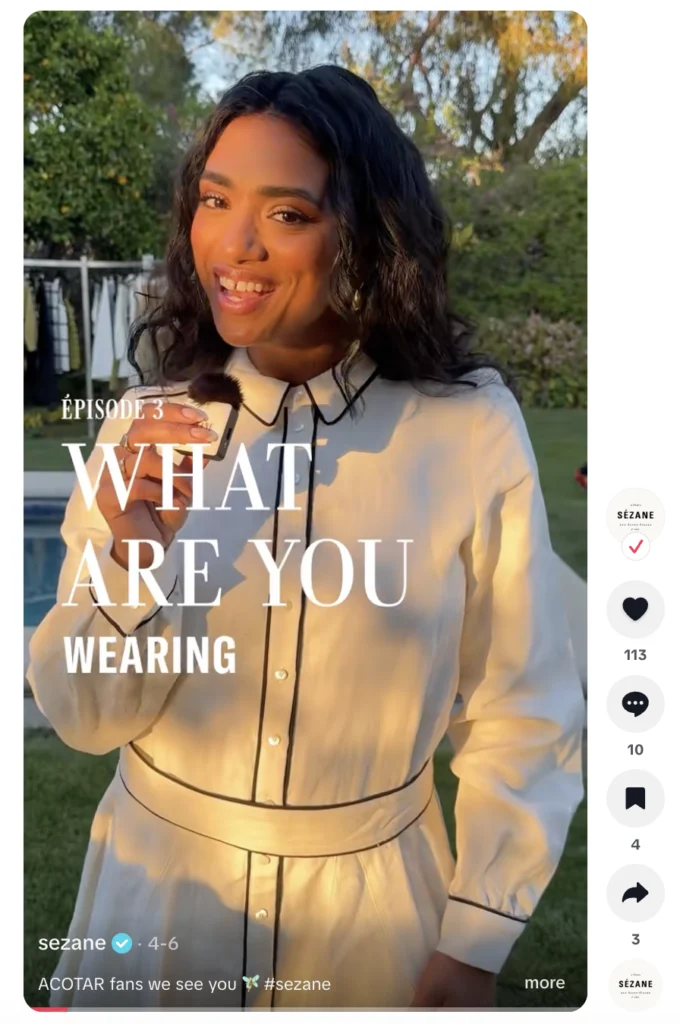
    The French fashion brand Sézane has built a cult following among Millennial women by leaning into the "Parisian wardrobe" aesthetic. By using models with body types that reflect their core audience and focusing on "comfort-first" style, the brand taps into the early influences that shaped Millennial taste. Their use of user-generated content and creator-led marketing makes the brand feel like a community rather than a corporation.

    2. Ceremonia: Founder-Led Storytelling
    Ceremonia, a clean hair care brand rooted in Latinx heritage, leverages the personal story of its founder, Babba C. Rivera. As a Millennial herself, Rivera’s transparency about the brand’s mission and the sourcing of its products appeals to the generation’s desire to know who they are buying from. The brand’s visual identity—polished, warm, and coordinated—is described by analysts as "Millennial-coded," emphasizing quality and heritage.

    How millennials use social media: What marketers need to know

    3. Graza: The "Fancification" of Staples
    Graza has disrupted the pantry staple market by turning olive oil into a lifestyle product. Through partnerships with other Millennial-favored brands like Fishwife and the use of mockumentary-style social content, Graza demonstrates a self-aware humor that resonates with consumers who value both high quality and a sense of personality.

    Strategic Implications for the Future

    As Millennials move into middle age, they are transitioning from being the "new kids" to the "market stabilizers." They are the most skeptical generation but also the most loyal once a brand has earned their trust. For social media managers and CMOs, the directive for 2026 is clear: move away from the frantic pursuit of fleeting trends and toward the cultivation of a unique, consistent brand character.

    The resurgence of Millennials on social media represents a return to the fundamentals of digital connection. This generation is not looking for a sales pitch; they are looking for "a friend with taste." Brands that can provide educational content, foster niche communities, and maintain a human touch in an increasingly automated world will find themselves rewarded with the most significant spending power in the current global economy. Ignoring the generation that built social media culture is no longer a viable strategy for any brand seeking long-term resonance.

Grafex Media
Privacy Overview

This website uses cookies so that we can provide you with the best user experience possible. Cookie information is stored in your browser and performs functions such as recognising you when you return to our website and helping our team to understand which sections of the website you find most interesting and useful.