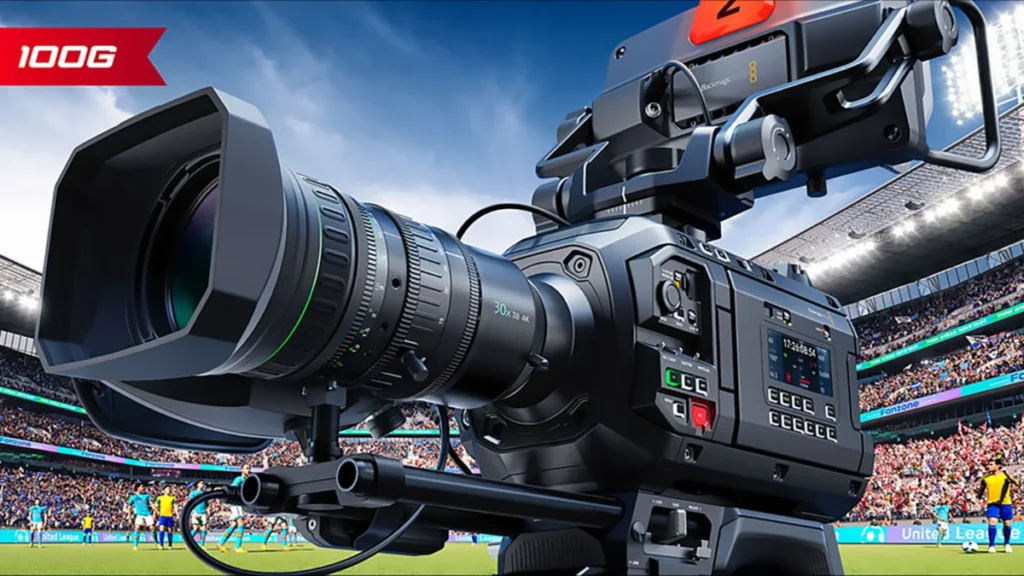

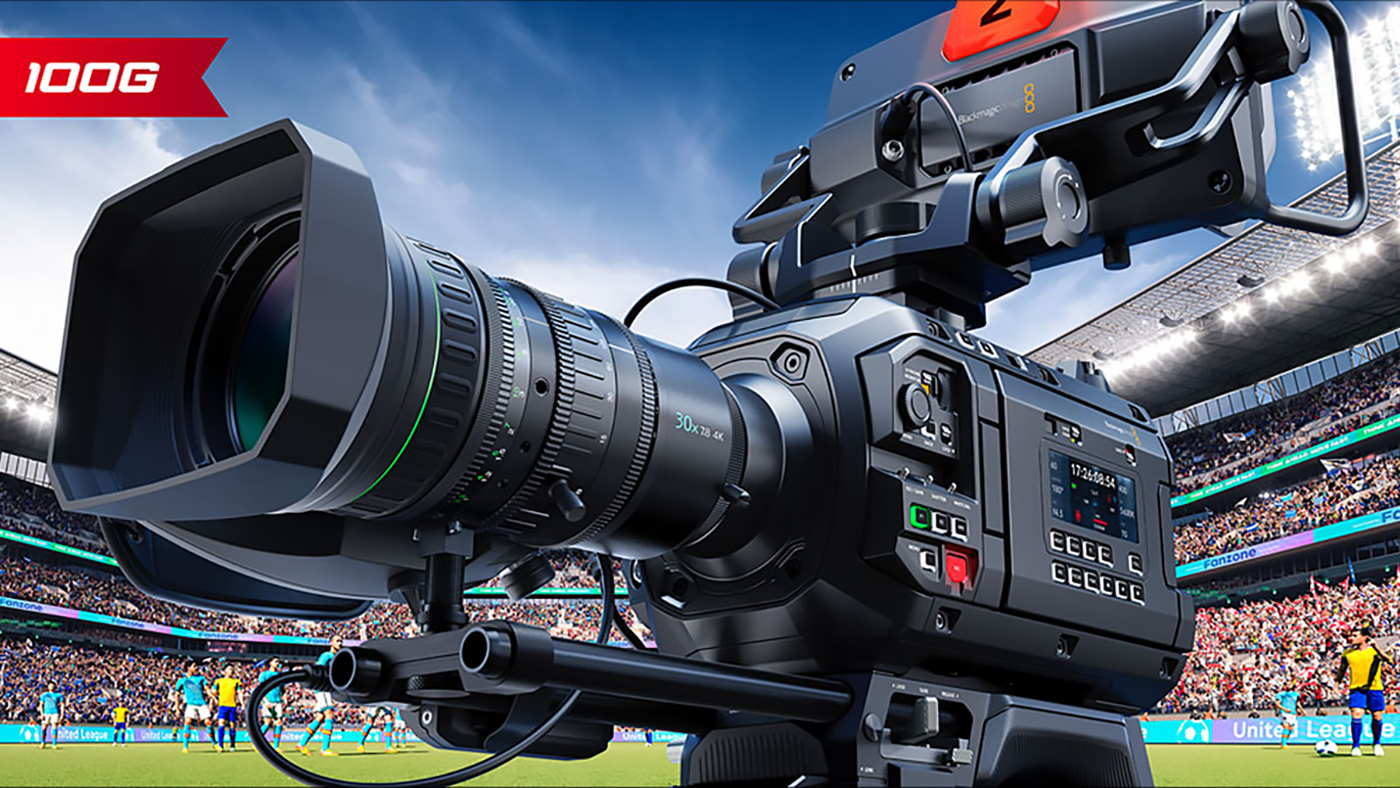
Blackmagic Design has officially unveiled a significant expansion of its high-end imaging ecosystem ahead of the NAB 2026 convention, headlined by the introduction of the URSA Cine 12K LF 100G. This new iteration of the company’s flagship cinema camera is specifically engineered to bridge the gap between elite digital cinematography and high-bandwidth live broadcast environments. Featuring an integrated 100G Ethernet port, the camera is capable of delivering high-frame-rate live production output reaching up to 440 frames per second (fps), signaling a major shift in how ultra-high-resolution content is managed in real-time workflows.
The announcement came during a comprehensive livestream hosted by Blackmagic Design CEO Grant Petty, who detailed the company’s strategic pivot toward networked live production. While the URSA Cine 12K LF was originally positioned as a premier tool for narrative filmmaking and high-end commercial work, these latest hardware and software additions transform the platform into a versatile hybrid capable of anchoring the most demanding live sporting events and broadcast spectacles.
The Evolution of the URSA Cine Platform
The original URSA Cine 12K LF made waves in the industry by offering a large-format sensor with a native resolution of 12,288 x 6,480 and 16 stops of dynamic range. However, the limitation for live broadcasters has traditionally been the massive data throughput required to move such high-resolution imagery across a network without latency or compression artifacts. The introduction of the URSA Cine 12K LF 100G addresses this bottleneck directly.
By incorporating a 100G Ethernet interface, the camera can sustain data transfer speeds that were previously the sole domain of massive server arrays or specialized fiber-optic transmission systems. This allows the camera to feed raw or high-bitrate processed video directly into a production switcher or a storage area network (SAN) while simultaneously capturing high-speed action for instant slow-motion replays.
The technical implications of 100G connectivity in a camera body are profound. In a live sports context, such as the ice hockey demonstrations shown during Petty’s presentation, the ability to crop into a 12K sensor while maintaining high frame rates allows broadcasters to extract multiple "virtual" cameras from a single wide shot, or to provide crystal-clear 4K replays at 440fps.
SMPTE-2110: A Unified Standard for IP Video
In addition to the new hardware, Blackmagic Design announced a transformative software update for the existing URSA Cine 12K LF. This update enables the camera’s built-in 10G Ethernet port to support the SMPTE-2110 suite of standards. SMPTE-2110 is the industry-standard protocol for transporting digital media over IP networks, allowing for the separate transmission of video, audio, and ancillary data.
This move is seen by industry analysts as a direct challenge to traditional SDI (Serial Digital Interface) workflows. By moving to SMPTE-2110, production houses can utilize standard IT networking equipment—such as switches and routers—to manage their video signals, drastically reducing the weight and complexity of cabling in broadcast trucks and permanent studio installations.
The software update allows users to toggle the SMPTE-2110 output directly from the camera’s menu system. Furthermore, Blackmagic has included the ability to apply a dedicated 3D LUT (Look-Up Table) specifically to the IP output. This ensures that while the camera records a flat, high-dynamic-range log signal internally for post-production, the live feed sent to the director’s monitor or the broadcast airwaves carries a polished, color-graded look.
Expanding the Broadcast Ecosystem: Accessories and Optics
Recognizing that a cinema camera requires specific ergonomic and mechanical adjustments for broadcast use, Blackmagic Design introduced a suite of accessories designed to facilitate the "studio-ization" of the URSA Cine.
Chief among these is the new B4 lens mount. While the URSA Cine 12K LF features a large-format sensor, many broadcast environments still rely on B4-mount lenses due to their incredible zoom ranges and parfocal stability. When the B4 mount is installed, the camera automatically utilizes a specific crop of the 12K sensor that perfectly matches the image circle of traditional broadcast glass. This configuration is what enables the record-breaking 440fps output, as the reduced sensor area allows for much faster readout speeds.
To complement the B4 mount, a new lens adapter cable has been released. This cable facilitates communication between the camera body and the lens, allowing the camera operator to control iris, zoom, and focus via the camera’s internal software or remote control panels. It also provides the necessary power to the lens’s servo motors, eliminating the need for external power bricks.
Furthermore, the company unveiled a 7-inch URSA Studio Viewfinder G2. This high-brightness touchscreen monitor connects via USB-C and provides a massive, daylight-viewable interface for the operator. Unlike traditional monitors, this viewfinder offers full control over the camera’s internal settings, allowing the operator to adjust shutter angle, white balance, and ISO without taking their eyes off the subject or reaching for the camera body.
Chronology of the NAB 2026 Announcements
The rollout of these products follows a carefully choreographed timeline intended to modernize the entire production chain:
- Early April 2026: Pre-NAB livestream hosted by Grant Petty announces the URSA Cine 12K LF 100G and the SMPTE-2110 software update.
- Mid-April 2026: Public demonstrations of the 440fps replay system at the NAB Show in Las Vegas, featuring live integration with Blackmagic’s new Ethernet-based switchers.
- Late April 2026: Release of the SMPTE-2110 public beta software for existing URSA Cine 12K LF owners.
- June 2026: Scheduled shipping date for the URSA Cine 12K LF 100G hardware, the B4 mount, the lens adapter cable, and the 7-inch studio monitor.
Strategic Market Analysis and Implications
The decision to push 12K resolution and 100G networking into the live space is a calculated move to capitalize on the growing demand for High Dynamic Range (HDR) and Ultra High Definition (UHD) sports broadcasting. As consumer television technology has advanced, the gap between the "look" of a motion picture and the "look" of a live football game has narrowed. Audiences now expect the shallow depth of field and rich color science of cinema even in live environments.
By offering 16 stops of dynamic range in a live-capable camera, Blackmagic is positioning itself against traditional broadcast giants like Sony, Grass Valley, and Panasonic. Traditionally, broadcast cameras have used smaller 2/3-inch sensors which, while practical for deep focus, struggle to match the aesthetic quality of large-format cinema sensors. The URSA Cine 12K LF 100G provides a "best of both worlds" scenario: the cinematic texture of a large sensor with the connectivity and speed of a dedicated broadcast rig.
Furthermore, the price point remains a disruptive factor. At $8,995 for the 100G camera body, the entry cost is significantly lower than competing high-speed broadcast systems, which often run into the tens or hundreds of thousands of dollars when including the necessary fiber CCUs (Camera Control Units). Blackmagic’s reliance on standard 100G Ethernet rather than proprietary fiber connectors allows facilities to use off-the-shelf networking hardware, further lowering the total cost of ownership.
Integration with DaVinci Resolve and Replay Workflows
A critical component of this new workflow is the integration with DaVinci Resolve. During the livestream, it was demonstrated how the 100G feed could be captured directly into a Resolve-based storage system. Because the data is moving over a standard network, multiple editors and replay operators can access the same 12K footage simultaneously.
The "instant replay" capability is particularly noteworthy. Using the new high-speed switchers and recorders announced alongside the camera, a replay operator can scrub through the 440fps buffer and output a slow-motion shot in cinematic quality almost instantly. This removes the need for separate, dedicated slow-motion cameras that often have different color profiles than the main cameras, ensuring a consistent visual experience for the viewer.
Pricing and Availability Summary
The Blackmagic Design URSA Cine 12K LF 100G is positioned as a premium but accessible tool for the high-end market. The pricing structure is as follows:
- URSA Cine 12K LF 100G (Body): $8,995
- URSA Cine B4 Mount: $495
- B4 Lens Adapter Cable: $95
- 7-inch URSA Studio Viewfinder: $1,495
All hardware components are expected to begin shipping in June 2026. The SMPTE-2110 software update for existing URSA Cine 12K LF units will be provided free of charge, reflecting Blackmagic’s long-standing policy of providing value-added features to its existing user base through firmware.
Conclusion: The Future of Networked Cinematography
The launch of the URSA Cine 12K LF 100G represents more than just a hardware refresh; it is an acknowledgement that the future of media production is entirely IP-based. By providing a camera that can handle the massive data loads of 12K video at high frame rates over standard Ethernet, Blackmagic Design is simplifying the infrastructure required for high-end production.
As the industry moves toward NAB 2026, the focus will likely remain on how these tools perform in the field. If the 100G ecosystem proves as stable as traditional SDI, it could mark the beginning of a new era where the distinction between a "cinema camera" and a "broadcast camera" disappears entirely, replaced by a single, versatile tool capable of capturing everything from a Hollywood feature to a live championship game.