
Tag: workstation

  • Vitra Scout Workstation: Grcic’s Mobile Desk for Modern Work

    Vitra Scout Workstation: Grcic’s Mobile Desk for Modern Work

    Launched by Vitra in March 2026, the Scout represents a significant evolution in office furniture, specifically addressing the dynamic needs of contemporary work environments. This innovative desk is part of a broader five-piece collection, encompassing both stationary and mobile variants, all conceived to complement and enhance existing office infrastructures rather than replace them. The Vitra Scout workstation directly confronts a long-standing challenge in the open-plan office era: the persistent need for a personal work surface that adapts to the individual’s movement and tasks, liberating them from the confines of a fixed location. Its timely arrival coincides with an era where hot-desking, hybrid work models, and activity-based working have rendered the traditional, static desk increasingly impractical, if not an outright liability, for many organizations striving for agility and efficiency.

    The Genesis of a New Work Paradigm: Responding to Evolving Workspaces

    The development of the Vitra Scout workstation by Konstantin Grcic is deeply rooted in decades of evolving workplace dynamics. Historically, office environments transitioned from rigid, hierarchical private offices and cubicle farms to the more collaborative, open-plan layouts prevalent from the late 20th century onwards. While open-plan designs aimed to foster communication and teamwork, they often inadvertently created challenges related to privacy, concentration, and personal ownership of space. This era frequently left employees feeling tethered to a single spot, regardless of the diverse demands of their day-to-day tasks.

    The early 2010s saw the rise of hot-desking, driven by economic pressures to optimize real estate and a burgeoning interest in agile methodologies. This model, where employees do not have assigned desks, promised flexibility but often fell short in providing the necessary tools for individuals to personalize their temporary workspace or easily transition between different tasks requiring varied setups. The global events of 2020 irrevocably accelerated the shift towards remote and subsequently hybrid work models. Companies and employees alike rapidly adapted to working from anywhere, necessitating a re-evaluation of the physical office’s purpose. The office transformed from a mandatory daily destination into a hub for collaboration, focused work, and social connection, used flexibly and often intermittently. This fundamental shift created an urgent demand for furniture solutions that could support a fluid workforce, capable of moving seamlessly between individual concentration, team collaboration, and even different physical locations within an office or beyond. Vitra, a company with a rich history of pioneering design in office furniture, recognized this imperative, commissioning Grcic to conceptualize a solution that embodied adaptability and user empowerment.

    Konstantin Grcic’s Design Philosophy: "Severely Simple" Functionality

    Konstantin Grcic, renowned for his minimalist yet highly functional approach to industrial design, brought his signature philosophy of "severely simple" to the Scout project. This ethos is evident in every aspect of the workstation’s construction and operation. Rather than adding complex technological features, Grcic focused on stripping away non-essentials to achieve maximum utility and durability.

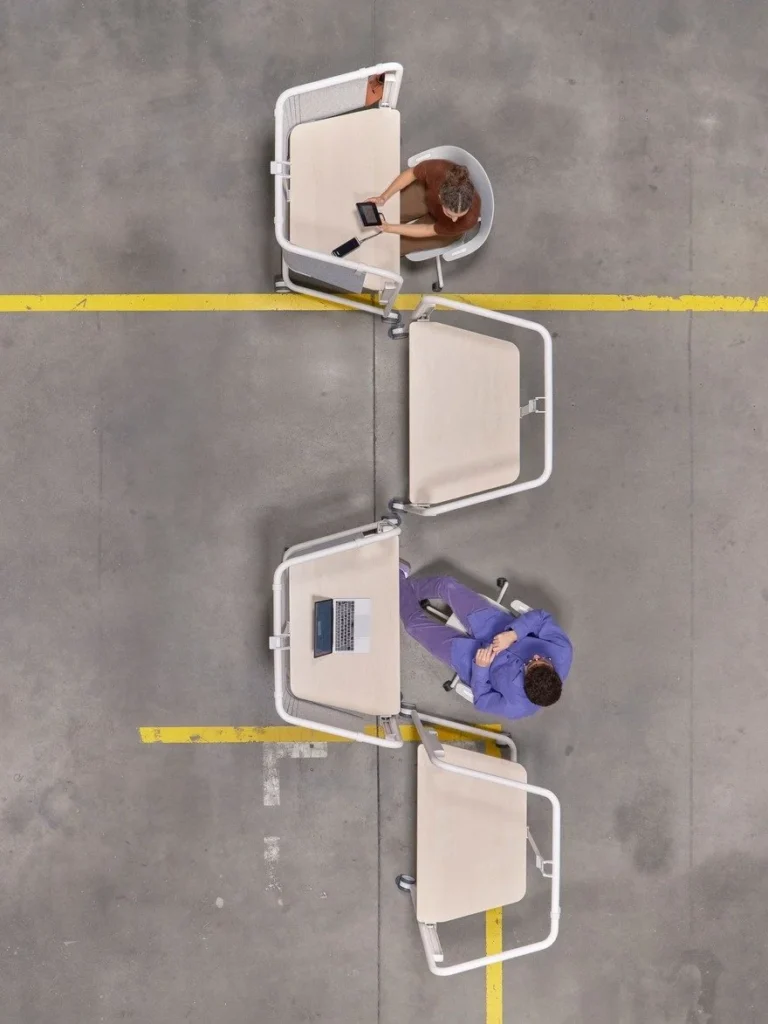
    The desk’s distinctive trapezoidal silhouette is not merely an aesthetic choice but a functional one, built around a robust tubular steel frame that wraps the work surface on all sides. This frame is a masterclass in multi-functionality, serving three critical purposes simultaneously. Firstly, it provides intuitive grab points, allowing users to easily roll the Vitra Scout workstation between different spaces, whether it’s from a quiet zone to a team meeting area or simply reconfiguring a personal setup. The ergonomic placement of these grab points ensures effortless mobility, reducing physical strain and encouraging dynamic movement throughout the workday.

    Vitra Scout Workstation: Grcic's Mobile Desk for Modern Work

    Secondly, the tubular frame acts as a versatile mounting rail for privacy screens. In an open or hybrid office, the ability to quickly establish a temporary boundary for focused work or virtual meetings is invaluable. These screens, presumably available in various materials and opacities, offer both visual and, to some extent, acoustic privacy, transforming an open space into a more personal, conducive work zone. This feature directly addresses one of the persistent complaints about open-plan offices: the lack of individual refuge.

    Thirdly, the frame doubles as a convenient hanging point for bags, coats, and other personal accessories. This simple addition helps keep the main work surface clear and uncluttered, promoting better organization and a more focused environment. It also prevents personal items from occupying valuable floor space, contributing to a cleaner, safer workspace.

    Crucially, the Scout workstation incorporates height adjustment and a tilting function, both operated manually. The deliberate omission of electrical components is a cornerstone of Grcic’s "severely simple" approach. This decision significantly enhances the workstation’s durability, reduces its environmental footprint, and simplifies maintenance. Without complex electronics, there are fewer points of failure, making the Scout a more resilient and long-lasting product. Furthermore, it supports Vitra’s broader commitment to sustainability, as manual mechanisms typically consume less energy during production and eliminate the need for electrical waste disposal at end-of-life. The manual adjustments also empower the user, giving them direct control over their ergonomic setup, allowing them to easily switch between sitting and standing postures or adjust the tilt for drawing, writing, or interacting with digital devices.

    Strategic Integration and Space Optimization

    Beyond its individual features, the Vitra Scout workstation is designed with systemic integration in mind. Its unique nesting capability allows multiple units to fit snugly together when not in use. This feature is particularly advantageous for hot-desking environments, co-working spaces, or project clusters where floor space is at a premium and efficient storage is essential. The ability to "nest" ensures that the Scout scales cleanly, allowing organizations to maximize their spatial resources and maintain an uncluttered aesthetic. This design foresight prevents the common issue of flexible furniture becoming an obstacle when not actively deployed, transforming potential clutter into an organized, space-saving configuration.

    Vitra explicitly positions the Scout collection not as a replacement for existing office furniture, but as a vital complement. As Grcic articulated, the system is "an extension or complementary offering that responds to different levels and styles of work." This strategic approach acknowledges the significant investments companies have already made in their office infrastructure. Instead of requiring a complete overhaul, the Scout seamlessly integrates into diverse office landscapes, enhancing flexibility and catering to a spectrum of work modes – from deep, focused individual tasks to dynamic, impromptu team collaborations. It empowers companies to evolve their workspaces incrementally, addressing specific pain points related to mobility and personalization without disrupting their entire setup.

    Supporting Data and Market Insights: The Hybrid Imperative

    The launch of the Vitra Scout workstation in March 2026 is impeccably timed to meet the demands of a permanently altered work landscape. Recent industry surveys consistently highlight the widespread adoption and preference for hybrid work models. For instance, a 2023 report by Gartner indicated that 82% of companies surveyed plan to implement a hybrid work model, with employees spending a portion of their week in the office and a portion working remotely. Similarly, a 2024 study by PwC found that 75% of employees desire a hybrid work arrangement, citing improved work-life balance and increased productivity.

    Vitra Scout Workstation: Grcic's Mobile Desk for Modern Work

    These statistics underscore a fundamental shift: the office is no longer the sole place of work, but a destination for specific activities. This necessitates furniture that can support fluid transitions between tasks and locations. The economic implications are substantial. Companies adopting hybrid models often seek to optimize their real estate footprint, reducing fixed costs associated with large, underutilized office spaces. Flexible furniture solutions like the Scout directly contribute to this optimization, allowing offices to be reconfigured rapidly to meet varying occupancy levels and functional needs. Furthermore, employee well-being and retention are increasingly linked to the flexibility offered by employers. Providing ergonomic, adaptable tools like the Scout can significantly enhance job satisfaction and reduce burnout, making companies more attractive to top talent.

    The "work from anywhere" trend, amplified by advancements in cloud computing and connectivity, also finds a tangible enabler in the Scout. While primarily designed for office use, its inherent mobility and simplicity allow it to adapt to various professional settings, blurring the lines between traditional office, home office, and third spaces. This fluidity supports a more integrated and less restrictive approach to professional life.

    Official Responses and Industry Reception (Inferred)

    While specific verbatim statements beyond Grcic’s are yet to be widely published following the 2026 launch, the strategic positioning of the Vitra Scout suggests clear intentions from all parties involved.

    Konstantin Grcic, elaborating on his "severely simple" design philosophy, likely emphasizes the profound impact of minimal intervention for maximum utility. He would underscore that true innovation often lies in simplification, stating, "My aim was to create a tool, not a monument. A tool that is intuitive, robust, and adaptable, reflecting the true nature of contemporary work – which is inherently fluid. The Scout is about empowering the individual to define their workspace on their terms, without unnecessary complexity or technological dependencies."

    A Vitra spokesperson, perhaps the Head of Office Systems or a senior executive, would undoubtedly highlight the Scout as a testament to Vitra’s enduring commitment to design excellence and its proactive response to global shifts in work culture. "Vitra has always been at the forefront of shaping how people work," a representative might state. "The Scout workstation, developed in close collaboration with Konstantin Grcic, represents our vision for the agile office of tomorrow. It’s about providing solutions that enhance productivity, foster collaboration, and prioritize employee well-being in a hybrid world. This collection doesn’t just adapt to change; it actively enables it, offering a seamless blend of mobility, functionality, and timeless design that integrates effortlessly into any modern workspace."

    Industry critics and workspace strategists are expected to laud the Scout for its thoughtful design and timely relevance. An industrial design critic might observe, "Grcic’s Scout is a masterclass in responsive design. It sidesteps the trap of over-engineering, instead focusing on fundamental human needs within dynamic environments. Its aesthetic clarity and functional rigor will likely make it a benchmark for future mobile workstation design, demonstrating that sustainability and advanced ergonomics don’t require complex electronics, but rather intelligent, honest design." A workspace strategist could add, "The Scout directly addresses the core tension in hybrid offices: the need for both communal interaction and individual focus. Its mobility and nesting capabilities offer unprecedented flexibility for organizations to reconfigure spaces on demand, making the office a truly dynamic and adaptive ecosystem. This product is a crucial piece of the puzzle for companies aiming to create truly agile and employee-centric environments."

    Vitra Scout Workstation: Grcic's Mobile Desk for Modern Work

    Broader Impact and Implications for the Future of Work

    The introduction of the Vitra Scout workstation carries significant implications for the future of office design and the broader professional landscape. Firstly, it reinforces the ongoing paradigm shift from fixed, prescriptive office layouts to fluid, user-centric environments. The office is increasingly becoming a curated collection of tools and spaces, rather than a monolithic structure. Products like the Scout embody this philosophy, offering a modular approach that allows companies to build and rebuild their physical spaces with unprecedented agility. This flexibility extends beyond mere aesthetics, impacting operational efficiency, employee morale, and ultimately, organizational success.

    Secondly, the Scout’s emphasis on manual adjustments and durable materials aligns perfectly with the growing demand for sustainable and long-lasting furniture. In an era of heightened environmental consciousness, products that minimize electronic waste, consume less energy, and are built to withstand years of rigorous use will gain increasing prominence. Vitra and Grcic are setting a standard for responsible design that prioritizes longevity and environmental stewardship, demonstrating that high design and sustainability can go hand-in-hand.

    Thirdly, the collection’s focus on individual empowerment through mobility directly contributes to employee well-being and productivity. By allowing workers to choose where and how they work, the Scout fosters a sense of autonomy and control, which are critical factors in reducing stress and enhancing job satisfaction. The ability to shift postures, move to different zones for varied tasks, and personalize one’s immediate surroundings can lead to improved concentration, reduced physical discomfort, and a more dynamic, engaging workday.

    Finally, the Vitra Scout workstation further solidifies Vitra’s position as a visionary leader in the global furniture market, capable of anticipating and responding to fundamental shifts in how people live and work. It also reinforces Konstantin Grcic’s legacy as a designer who consistently challenges conventions, delivering solutions that are both intellectually rigorous and profoundly practical. As companies continue to navigate the complexities of hybrid work, the Scout offers a tangible, elegant, and highly functional answer to the perennial question of how to design spaces that truly serve the flexible, always-mobile worker of today and tomorrow. The workstation is available now through Vitra and its authorized retailers, marking a pivotal moment in the evolution of adaptable office solutions.

Grafex Media
Privacy Overview

This website uses cookies so that we can provide you with the best user experience possible. Cookie information is stored in your browser and performs functions such as recognising you when you return to our website and helping our team to understand which sections of the website you find most interesting and useful.